Last updated 2026-07-25
TL;DR
No-till food plot seed means drilling or broadcasting into standing residue or sprayed-out vegetation instead of tilling first. It works well for clover, oats, and brassicas like turnips, and it saves soil moisture and erosion. Timing depends on species and your zone: clover and oats go in late summer to early fall, turnips 60-90 days before first frost.
what is a food plot and why does no-till matter
A food plot is a planted patch of forage or grain on hunting ground, built to feed deer and other wildlife and to give hunters a predictable place to watch or hunt from. Plots range from quarter-acre kill plots tucked in the timber to five-acre destination fields planted in clover or beans. The USDA Natural Resources Conservation Service treats food plots as a wildlife habitat practice, and NRCS conservation programs in several states will actually cost-share seed and lime for wildlife food plots when they're part of a broader habitat plan [1]. No-till just describes how you get seed into the ground. Instead of plowing and disking a seedbed, you either drill seed directly through the sod or dead residue with a no-till drill, or you spray out existing vegetation with glyphosate and broadcast seed on top (sometimes called "spray and pray," though it works better than the name suggests when timed right). The appeal for hunters with limited equipment is real. You don't need a tractor and disk. A four-wheeler, a tow-behind sprayer, and a broadcast spreader will get a no-till plot in the ground. The tradeoff is that seed-to-soil contact matters more with no-till, and weed and residue management has to happen before you plant, not after. For a rundown on picking species before you get to planting method, see food plot whitetail.
how does no-till food plot planting actually work
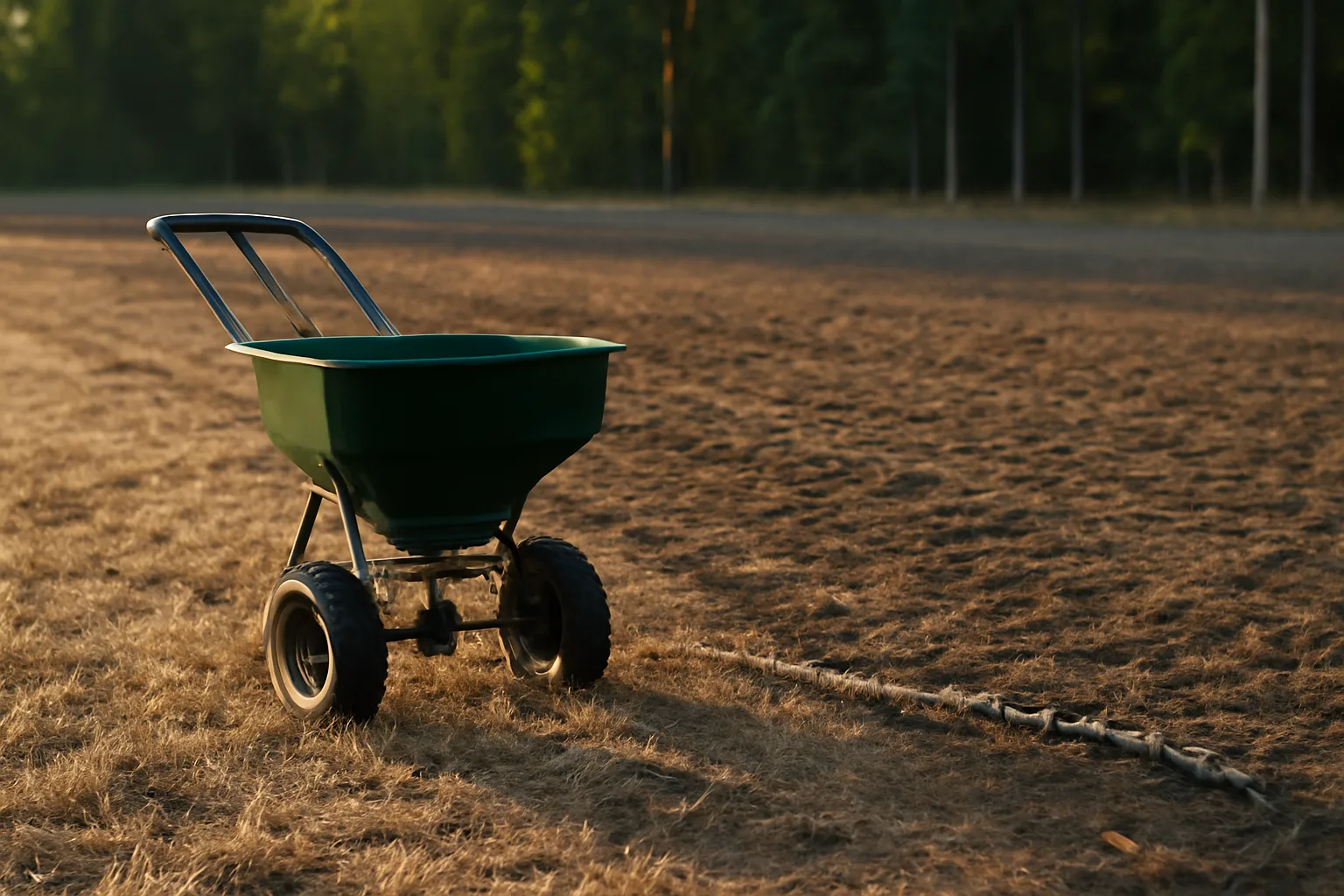
There are two honest paths to a no-till plot, and neither one requires a disk. The first is a no-till drill. These machines cut a slot through sod or residue, drop seed at a set depth, and close the slot behind it. Many state wildlife agencies and conservation districts loan these out; check with your local NRCS office or state extension for equipment-share programs before buying one, since a decent used no-till drill runs $3,000 to $8,000 [1]. The second path, and the one most food plotters actually use, is spray, broadcast, and drag (or spray, broadcast, and let rain do the work). You kill existing vegetation with a glyphosate application 2 to 3 weeks ahead of planting, broadcast your seed with a hand or ATV spreader, and either drag a section harrow, chain, or even a piece of chain-link fence over it to improve seed-to-soil contact. Rain finishes the job. Small seeds like clover and brassicas do fine broadcast on the surface if there's decent soil contact and moisture. Bigger seeds like oats, soybeans, and cereal grains need actual burial, generally a half inch to an inch and a half deep, or germination rates drop hard. That's the biggest mistake first-time no-till planters make: they broadcast oats or beans onto sprayed sod and get 30% germination instead of 85%, because the seed just sits on top and dries out or gets eaten. Soil test first, always. Extension services like Penn State and Mississippi State both recommend testing soil at least every 2 to 3 years for food plots, and a no-till plot won't fix a pH problem. If your test says pH 5.2, no amount of clever no-till timing changes that; you still need lime, and pelletized lime works faster on the surface than ag lime if you can't incorporate it [2].
when to plant food plots for deer
Timing depends entirely on species and your zone, but the two big windows are late summer into early fall for perennials and cool-season annuals, and spring for warm-season annuals like soybeans and corn. Most of the Midwest and Upper South plant fall food plots between mid-August and mid-September, giving cool-season species like clover, brassicas, and cereal grains time to establish before frost. In the Deep South and lower Southeast, that window slides later, often September into October, since summer heat lingers longer. In the Upper Midwest and Northeast, plant earlier, often late July through August, because the growing season closes faster. A rough rule from several land-grant extension guides: for brassicas and turnips, count backward 80 to 100 days from your area's average first hard frost. For clover and cereal grains, aim for 4 to 6 weeks before first frost so plants can root in before winter dormancy [2] [3]. Spring plots (soybeans, corn, cowpeas) go in after your last frost date, typically April through June depending on latitude, same as row-crop agriculture in your area. Check your state extension's planting date guide, since these are calibrated to local frost data, not national averages. For a full walk through zone-by-zone calendars, deer food plot seed breaks down regional windows in more depth.
when to plant oats for deer
Plant oats for deer food plots in late summer to early fall, generally 6 to 8 weeks before your first expected frost, so plants reach 6 to 10 inches of growth before cold slows them down. In most whitetail country that lands between mid-August and mid-September. Oats germinate fast, often within 5 to 7 days in warm soil, and deer hit them hard as soon as they emerge, which is both the appeal and the risk. A small plot of fall oats can get grazed to the dirt by mid-October if you don't pair it with something else. Many hunters mix oats with a clover or brassica so the oats provide quick fall attraction while the other species matures for winter. Oats aren't frost-hardy like winter wheat or cereal rye. A hard freeze will kill them back, while wheat and rye keep growing into winter and green back up in spring. If you want a plot that lasts past a few frosts, consider blending oats with winter rye rather than planting oats alone. No-till oats need actual seed depth, not a surface broadcast. Drill them at three-quarters to one inch deep, or broadcast then drag/cultipack immediately. Surface-broadcast oats with no incorporation often germinate poorly, especially in dry falls.
do deer like clover and is it worth planting
Yes, deer consistently rank clover among their most preferred forages, and it holds up as a food plot staple because it regrows after grazing and delivers 20-25% crude protein in good stands, according to forage testing summarized by university extension programs [2]. Clover is also a perennial in most cases, so a well-maintained stand can produce for 3 to 5 years before you need to reseed. White clovers (Ladino types especially) tend to handle grazing pressure better than red clover, since they spread by stolons and recover from heavy browsing. Red clover grows more upright, yields more total tonnage per acre, but can thin out faster under constant pressure. Clover is one of the best species for no-till establishment because the seed is tiny and doesn't need deep burial. A light broadcast onto a sprayed-out or mowed field, followed by a light drag or cultipacking, is often all it needs. Clover seed sitting exposed on bare soil with good moisture will still germinate reasonably well, which is part of why it's a go-to for minimal-equipment plots. The catch: clover needs decent soil fertility and a pH close to 6.0 to 7.0 to really produce. Get a soil test through your local extension office before you plant, since clover in acidic, unlimed ground will limp along at half its potential no matter how well you seed it. For species-specific comparisons, deer food plots covers clover against other perennial options.
when to plant turnips for deer and how they fit no-till
Plant turnips for deer 80 to 100 days before your area's first expected fall frost, which lands most plots in the window from late July in northern states to early September in the Deep South. Turnips need that runway to build both leaf mass and the bulb, and deer often ignore the bulbs until after a hard frost converts starches to sugars, making the plant sweeter and more palatable [3]. This frost-triggered palatability shift is one of the most-cited food plot facts, and it's the reason turnip plots often see little deer use in October, then get hammered in December and January. If you're hunting turnips early season, don't expect much traffic; they're built for late season. Turnip seed is small and works well in no-till broadcast systems. Spray out the plot 2 to 3 weeks ahead, broadcast turnip seed at roughly 4 to 6 pounds per acre (much less than most people think; overseeding wastes money and produces spindly plants), and drag lightly or let rain settle it in. Turnips also do well blended with clover or cereal grains, giving you a mixed plot that offers early-season graze from the clover/grain and late-season tonnage from the turnip bulbs and tops. One caution: brassicas including turnips need adequate sulfur and boron for bulb development, something a soil test will flag if it's missing. Extension soil labs typically report this on a standard food plot or forage panel.
do deer eat sorghum and does it work in a plot
Deer do eat sorghum, both the grain heads and the young leafy growth, but it's more of a secondary or screening species than a primary attractant crop. Grain sorghum (milo) produces seed heads deer and turkey will feed on into winter, and the standing stalks double as screening cover along field edges or plot borders. Sorghum isn't typically a first-choice food plot seed on its own, mainly because deer usually prefer soybeans, corn, or clover when given the option, and sorghum takes real summer heat and a longer season to mature (roughly 90 to 120 days), similar to corn. It's more common in the South and lower Midwest, where the growing season supports it, than in northern zones with shorter summers. In a no-till setting, sorghum is planted like corn: it needs actual seed placement at three-quarters to one and a half inches deep, not a surface broadcast, so a no-till drill or a planter attachment does the job better than a spin spreader. If you're set up for no-till corn, sorghum drops in the same way, and some hunters use it as a drought-tolerant alternate when corn struggles.
what are deer's favorite foods and does that change by season
Deer don't have one universal favorite food; preference shifts by season, region, and what's available naturally, but research and long-term food plot data point to a consistent shortlist: soybeans and clover during the growing season, acorns and other hard mast in fall, and brassicas plus cereal grains in late fall and winter once frost sweetens them. A widely cited whitetail nutrition study from the University of Georgia and similar land-grant research found soybeans can deliver over 30% crude protein in the vegetative stage, making them one of the highest-value spring and summer forages available in a plot setting. Acorns, when they're on the ground, will often pull deer off a planted plot entirely for weeks, since the fat and carbohydrate content of mast is hard for any plot forage to match. This is why serious plotters plant a mix of crops timed across the season rather than one field of one thing. A destination plot in soybeans feeds deer all summer, a fall plot of clover, oats, and brassicas covers September through winter, and native or planted mast trees fill the gaps a plot can't. For picking a mix based on your specific goals, a soil test result, and equipment on hand, our $99 Custom Food Plot Plan builds a species and planting schedule around your ground; your soil test lab is still the final word on lime and fertilizer rates, we just help translate that into a planting plan.
do deer like honey or anything sweet, and does it belong in a plot
There's no real evidence deer seek out honey specifically, and it's not a legitimate food plot or attractant strategy anywhere serious research has looked. Deer are drawn to sugar content in forage, which is exactly why frost-sweetened brassicas and turnips get hit hard in late fall; the plant's starches convert to simple sugars after a freeze, and deer key in on that [3]. That's a natural, in-plant process, not the same as pouring something sweet on the ground. More importantly, using bait, including sugar-based attractants like syrups or molasses products, to draw deer is regulated or banned outright in many states, and the rules vary a lot. Wisconsin, for instance, prohibits baiting and feeding in counties where CWD or bovine TB has been found, with exceptions and boundaries that shift year to year [4]. Michigan's DNR maintains its own baiting and feeding ban structure tied to disease management zones [5]. Before you put out anything besides a planted crop, check your state wildlife agency's current baiting and feeding regulations, since a food plot is legal nearly everywhere but supplemental feeding or bait piles often are not.
which food plot species handle no-till planting best
| White/Ladino clover | Broadcast + light drag | Surface to 1/4 in | Late summer/early fall or early spring | |
|---|---|---|---|---|
| Red clover | Broadcast + light drag | Surface to 1/4 in | Late summer/early fall or early spring | |
| Oats | Drill or broadcast + cultipack | 3/4 to 1 in | 6-8 weeks before first frost | |
| Winter wheat/rye | Drill or broadcast + cultipack | 1 to 1.5 in | 4-6 weeks before first frost | |
| Turnips/brassicas | Broadcast + light drag | Surface to 1/4 in | 80-100 days before first frost | |
| Soybeans | Drill strongly preferred | 1 to 1.5 in | After last spring frost | |
| Corn | Drill or planter required | 1.5 to 2 in | After last spring frost, soil 50°F+ | |
| Grain sorghum | Drill or planter required | 3/4 to 1.5 in | Late spring, warm soil | The pattern: small, round seeds (clover, brassicas) tolerate surface broadcast because they only need light soil contact and moisture. Larger seeds (beans, corn, sorghum, oats) need actual burial or germination drops fast. If your only equipment is a spreader and a drag, lean your plot mix toward clover, brassicas, and cereal grains rather than beans or corn. |
Some species are built for no-till broadcast planting, others really need drilled or covered seed to germinate well. Here's how the common food plot options stack up. | Species | No-till method | Seeding depth | Best planting window |
what equipment do you actually need for a no-till plot
At minimum: a way to kill existing vegetation, a way to spread seed, and a way to get seed-to-soil contact. That's it. You don't need a tractor. A basic setup looks like: a 4-wheeler or side-by-side, a tow-behind boom or boomless sprayer for glyphosate, a broadcast spreader (even a hand-crank one works on small plots), and something to drag, a section harrow, a chain-link section, or a homemade drag made from a pallet or cattle panel. Total cost for a bare-bones setup, if you're buying new, often lands in the $500 to $1,500 range depending on sprayer size and spreader quality; used equipment drops that substantially. If you're stepping up, a no-till drill changes what species you can plant reliably, since it buries seed at a controlled depth in one pass. Some state F&W agencies and county conservation districts rent or loan no-till drills to landowners for wildlife plantings; it's worth a call before you buy one outright [1]. A soil probe and a slow-release fertilizer spreader round out the list. None of this replaces a soil test though. Guessing at lime and fertilizer rates on a no-till plot wastes money and gives you a mediocre stand no matter how well you time the planting. For seed selection matched to your setup and ground, deer food plot seed and food plot seed go deeper on variety selection.
how do you fix a failed no-till plot
Most no-till failures trace back to one of three problems: poor seed-to-soil contact, wrong seeding depth for the species, or planting into a drought with no rain in the forecast. If germination looks patchy 10-14 days after planting, dig a few spots and look. Seed still sitting on the surface, dry and un-germinated, tells you contact failed; you likely needed a heavier drag pass or should have drilled instead of broadcast. Seed buried too deep (common with small seed like clover pushed in by an aggressive drag) tells you to lighten up next time. If weeds came back through a thin stand, your burndown timing was probably off. Two to three weeks between spray and plant gives glyphosate time to work through the plant, but weeds emerging after that window won't be controlled and will outcompete a thin new stand. Drought is the one variable you can't fully control. Extension programs generally recommend planting food plots ahead of a forecasted rain window rather than on a fixed calendar date, since a week's difference in planting date matters far less than germinating into moisture [2]. If you missed your window and it's bone dry, it's often smarter to wait a week or two for rain than to plant into dust and burn seed cost for nothing.
Frequently asked questions
Do deer eat sorghum?
Yes. Deer eat grain sorghum heads and young sorghum growth, especially into fall and winter, but it's usually a secondary plot species behind soybeans, corn, and clover. It also works well as screening cover along plot edges since the stalks stand tall and dense.
Do deer eat clover?
Yes, clover is one of deer's most consistently preferred forages. Good clover stands run 20-25% crude protein and regrow after grazing, which is why it's a food plot staple across nearly every whitetail region, from Ladino white clover to red clover blends.
When should you plant food plots for deer?
Fall perennials and cool-season annuals (clover, brassicas, oats, wheat) generally go in mid-August through September in most whitetail range, earlier in the north and later in the Deep South. Spring plots like soybeans and corn go in after your last frost date, typically April through June.
Do deer like clover more than other plot species?
Deer show strong, consistent preference for clover, ranking it among top forages in browse studies, though soybeans often outrank it in crude protein during the growing season. Clover's advantage is that it regrows after heavy grazing and lasts multiple seasons as a perennial.
When do you plant oats for deer food plots?
Plant oats 6 to 8 weeks before your first expected fall frost, usually mid-August to mid-September in most regions. Oats germinate fast (5-7 days) but aren't frost-hardy, so pair them with winter wheat or rye if you want the plot to last past the first hard freeze.
When do you plant turnips for deer?
Plant turnips 80 to 100 days before your area's first expected frost, generally late July to early September depending on latitude. Deer often ignore turnip bulbs until after a hard frost sweetens the plant through starch-to-sugar conversion, so turnip plots peak in late season, not early fall.
What is a food plot?
A food plot is a planted area of forage, grain, or brassica crop on hunting land, established specifically to feed deer and other wildlife and to create a predictable spot to hunt or observe from. Plots range from small quarter-acre kill plots to multi-acre destination fields.
What are deer's favorite foods?
There's no single favorite; preference shifts by season. Soybeans and clover lead during the growing season, acorns and hard mast dominate fall when available, and frost-sweetened brassicas and cereal grains take over in late fall and winter.
Do deer like honey?
There's no real evidence deer specifically seek out honey. What they do respond to is sugar content in forage, which is why frost-sweetened turnips and brassicas get hit hard in late fall. Sugar-based attractants are also often restricted under state baiting and feeding laws, so check local rules first.
Can you no-till plant a food plot without a drill?
Yes, for small-seeded species. Spray out existing vegetation, broadcast clover, brassica, or turnip seed with a hand or ATV spreader, then lightly drag or let rain settle it in. Larger seed like beans, corn, and oats need actual burial and germinate poorly on a surface broadcast alone.
How deep should you plant no-till food plot seed?
It depends on the species. Clover, brassicas, and turnips need only surface contact to a quarter inch. Oats need three-quarters to one inch. Soybeans and corn need one to two inches. Planting small seed too deep or large seed too shallow both cause poor germination.
Do you need to spray before no-till planting a food plot?
Almost always, yes. Killing existing grass and weeds with a glyphosate application 2 to 3 weeks before planting removes competition for the new seedlings. Skipping this step is one of the most common reasons no-till plots come in thin or get choked out by weeds.
Sources
- USDA Natural Resources Conservation Service, Wildlife Habitat practices: NRCS conservation programs can cost-share wildlife food plot practices including seed, lime, and equipment access
- Mississippi State University Extension, Establishing Wildlife Food Plots: Clover crude protein content, planting timing guidance for perennials, and rain-timing recommendation over fixed calendar dates
- University of Tennessee Extension, Brassicas for Deer: Turnip and brassica planting window of 80-100 days before frost and frost-triggered sugar conversion increasing palatability
- Wisconsin Department of Natural Resources, Baiting and Feeding Regulations: Wisconsin prohibits baiting and feeding deer in counties with CWD or bovine TB detections
- Michigan Department of Natural Resources, Baiting and Feeding Order: Michigan DNR maintains baiting and feeding restrictions tied to disease management zones