Last updated 2026-07-25
TL;DR
Most food plot species need 4-6 hours of direct sun minimum. Clover and brassicas tolerate partial shade best; corn, soybeans, and sorghum need full sun. In heavy timber shade, plant a shade-tolerant clover blend or skip planting and manage a natural browse opening with a hinge-cut or timber stand improvement instead.
how much shade can a deer food plot actually handle
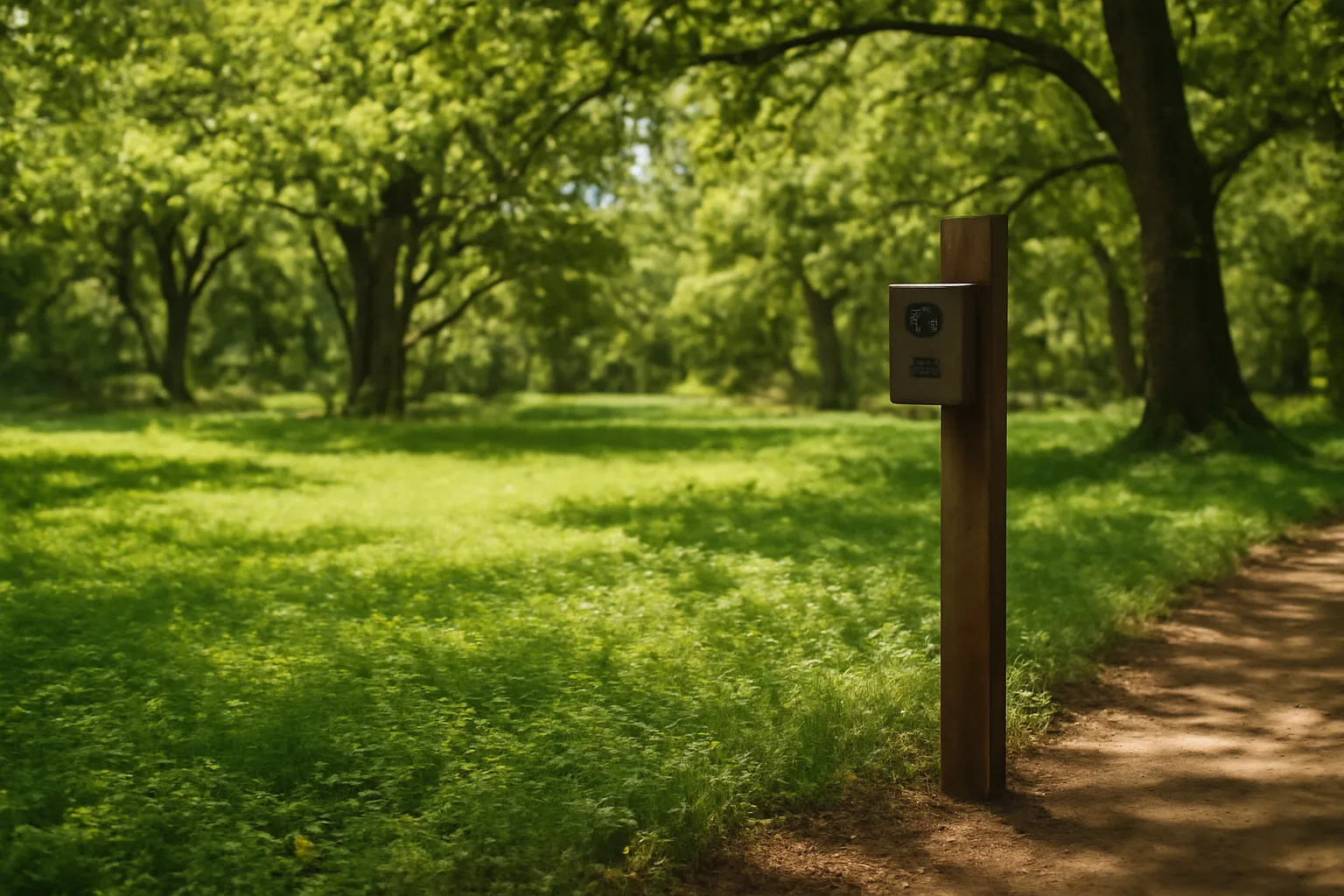
Most food plot crops need at least 4 to 6 hours of direct sunlight a day to grow well. Below that, yields drop fast and weeds start winning the fight for light and nutrients. Foresters and wildlife biologists generally sort light into three bands: full sun is anything over 6 hours, partial shade is 3 to 6 hours, and full shade is under 3 hours. Deer food plot crops, bred for open agricultural fields, behave like sun-loving row crops even when we plant them in the woods. A clover plot tucked under a broken canopy with dappled light most of the day can still produce a usable stand. A plot boxed in by mature oaks with a tight canopy overhead is fighting an uphill battle no matter what you plant. Canopy density matters more than tree count. Ten scattered white oaks with high, open crowns let more light through than three tight-canopied maples. If you can stand in the plot at midday in July and see your shadow sharply defined on the ground, you've got enough light for something. If the light is soft and diffuse with no real shadow, you're in trouble. Soil moisture competition is the other half of the shade problem that people forget. Tree roots pull water and nutrients out of that topsoil long before your clover gets a shot at them. A shaded plot isn't just short on light, it's usually short on water and fertility too, even with a fresh soil test and lime application. If you're planning a new plot and shade is a concern, run a Custom Food Plot Plan before you buy seed. For $99 one time, it accounts for your site conditions, including canopy cover, so you're not guessing at species selection.
what is a food plot
A food plot is a planted area, usually somewhere between a quarter acre and several acres, seeded with forage crops specifically to feed and attract deer or other wildlife. It's different from a farm field in purpose only. The agronomy is the same dirt, same seed, same fertilizer math, just aimed at holding deer on your ground and improving nutrition rather than harvesting a cash crop. Most land managers plant two types: annual plots (brassicas, cereal grains, sorghum) that get replanted every year, and perennial plots (clover, chicory, alfalfa) that persist for 3 to 5 years with proper maintenance. Plots done wrong, poor drainage, wrong species, no soil test, waste money and don't hold deer any better than a mowed field edge. A shaded food plot is still a food plot. It just needs species selected for lower light and a manager who accepts a smaller margin for error on everything else, timing, fertility, weed control.
what are the best shade-tolerant food plot species
| White clover | 4 hours | Good | |
|---|---|---|---|
| Red clover | 4-5 hours | Good | |
| Brassicas (turnip, rape) | 4-5 hours | Moderate | |
| Oats | 5-6 hours | Moderate | |
| Winter wheat/rye | 5-6 hours | Moderate | |
| Chicory | 5 hours | Moderate | |
| Soybeans | 6+ hours | Poor | |
| Corn | 6-8 hours | Poor | |
| Grain sorghum | 6-8 hours | Poor | Clover's edge comes from its low growth habit and shallow but efficient root system, plus its tolerance for cooler, moister soil, conditions common under a broken canopy. It won't produce like a full-sun clover field, but it'll survive and keep producing some green forage through the season. If your plot gets under 4 hours of direct sun, honestly, planting anything is a gamble. At that point I'd rather see a hunter do a timber stand improvement project (hinge-cutting a few trees, opening the canopy) than spend money on seed that's going to get outcompeted by shade-tolerant weeds and ferns within a month. |
Clover is the most shade-tolerant common food plot species, followed by brassicas like turnips and rape, then cereal grains like oats and winter wheat. Corn, soybeans, and sorghum need full sun and generally fail in anything less. Here's how the common species stack up on light needs, based on general agronomic tolerance data used across university forage programs: | Species | Minimum sun needed | Shade tolerance |
do deer like clover
Yes. Clover is one of the most consistently preferred food plot forages for whitetail deer, and it's also one of the most forgiving to grow, including in partial shade. It's high in protein, commonly cited in the 20 to 30 percent crude protein range for good stands, and stays palatable through most of the growing season. White clover varieties (Ladino types especially) handle mowing, moderate shade, and repeated grazing pressure better than almost any other plot species. That's why it shows up in nearly every mix marketed for shaded or wooded plot sites. Red clover grows taller and tolerates drier soil a bit better, but doesn't handle as much foot and grazing traffic. The catch with clover in shade: expect a thinner stand and slower spring green-up than a full-sun clover field. You're not going to get the same tonnage per acre. But deer will still find it and use it, especially in early spring and fall when it's often the most digestible thing available.
do deer eat sorghum
Yes, deer eat grain sorghum, both the standing grain heads and the young plants, but sorghum needs full sun and isn't a shade-plot option. It's mostly planted as a summer annual for its combination of grain production and cover value, and it does double duty as a screening plant in some plot designs. Grain sorghum needs a long, warm growing season and 6 to 8 hours of direct sun to fill out seed heads properly. That's consistent with general row-crop agronomy guidance for sorghum grown as livestock feed. In shade, sorghum gets leggy, produces poor seed heads, and falls over. If you're working a shaded site, skip sorghum entirely and put your summer annual budget into something like forage soybeans in the sunniest corner you've got, or just stick to clover and brassicas across the whole plot.
when to plant food plots for deer
Planting windows depend entirely on your USDA plant hardiness zone and whether you're planting a spring/summer annual or a fall plot. As a general framework across the whitetail's range: spring plots (soybeans, corn, sunn hemp) go in after your last frost date, typically April through June depending on latitude, and fall plots (brassicas, cereal grains, clover) go in 60 to 90 days before your first fall frost so plants mature before hard freeze. The USDA Plant Hardiness Zone Map is the standard reference point for matching planting windows to your specific location, and it's updated using 1991-2020 climate normals from over 13,000 weather stations. A hunter in zone 7 (much of the mid-South) might plant fall brassicas in late August, while a zone 4 hunter in the Upper Midwest needs to get seed in the ground by early August to beat frost. Shaded plots don't shift this calendar much, but they do compound the risk of a late or early frost catching a slower-growing, light-starved stand before it matures. If you're planting in shade, err toward the early end of your region's fall planting window rather than the late end.
when to plant oats for deer
Oats are typically planted as a fall food plot crop, 60 to 75 days before your first expected frost, so they establish a leafy stand before cold weather. In much of the whitetail range this lands somewhere between late August and mid-September, though southern zones can plant into October. Oats germinate fast, often within 5 to 7 days in warm soil, and deer hit young oat shoots hard as soon as they emerge. They're a good partial-shade option too, tolerating down to about 5 hours of direct sun better than corn or soybeans will. Oats do winterkill in cold climates once temperatures drop into the low teens or single digits for extended periods, so in the northern tier they function as a fall-only annual rather than a plant-once, hunt-all-winter crop. Pairing oats with brassicas or a cereal rye in the same mix extends palatability further into winter since rye handles hard freezes better.
when to plant turnips for deer
Turnips go in the ground 80 to 100 days before your first fall frost, which in most of the whitetail's range means late July through late August. They need that lead time to bulb out before cold weather locks in, and a hard frost actually improves palatability by converting starches to sugars in the leaves and bulbs. Turnips handle partial shade reasonably well, similar to other brassicas, needing around 4 to 5 hours of direct sun. In heavier shade the bulbs stay small and the plant puts more energy into leaf growth, which isn't necessarily bad since deer often eat the tops before they ever touch the bulb. If your shaded plot is more about early-fall greens than a late-winter bulb crop, that outcome isn't a failure, it's just a different use of the same planting. One practical note: turnip seed is tiny, roughly 150,000 seeds per pound, so it's easy to overseed. A light broadcast rate (2 to 4 pounds per acre for turnips alone, less in a mix) is usually plenty, and thinner shaded stands don't need less seed to compensate. If anything, cutting the rate slightly in shade reduces competition among seedlings for the light that is available.
what are deer's favorite foods
There's no single universal answer because deer preference shifts by region, season, and what's available naturally, but soybeans, acorns, clover, and standing corn consistently rank as top preferred foods across whitetail research. Deer are highly selective browsers, and studies tracking preference through cafeteria-style trials and rumen content analysis show acorns, especially from the white oak family, often get chosen over agricultural crops when both are available in the fall. Among planted food plot crops, soybeans in their vegetative stage draw heavy summer browsing pressure, sometimes enough to wipe out a small plot before it ever reaches maturity. Clover ranks consistently high across nearly every regional study because of its season-long availability and digestibility. Brassicas gain preference specifically after a frost sweetens them, meaning a turnip plot that gets ignored in October can get hammered in December. The honest answer for any specific property is: it depends on what else is growing nearby. A soybean field is far less attractive to deer surrounded by 10,000 acres of soybeans than the same plot surrounded by hardwood timber with no other ag nearby. Preference is relative to local food availability, not a fixed hierarchy.
do deer like honey
There's no credible wildlife research supporting deer seeking out honey as a food source, and it isn't part of any recognized whitetail diet study or food plot recommendation. Deer are herbivores adapted to browse, forbs, mast, and agricultural forages, not sweet liquids or animal-produced foods like honey. This question likely comes from confusion with commercial deer attractant products, some of which use molasses or sugar-based scents as an additive to draw deer to a mineral site or feeder, not from any documented preference for honey itself. If you're looking to boost palatability of a food plot, a proven soil fertility program (phosphorus and potassium especially, guided by your soil test) does more for forage sugar content and deer use than any additive poured on top. Also worth checking: most states regulate baiting and supplemental feeding differently from food plots, and rules vary widely by state. Check your state wildlife agency's current baiting and feeding regulations before using any attractant product on your property.
how do you improve a food plot that's too shaded to plant
If your plot gets under 4 hours of direct sun, the fastest fix isn't a different seed blend, it's removing trees. Selective thinning or hinge-cutting the trees closest to the plot's south side (in the northern hemisphere, the sun tracks south, so trees on that edge cast the longest shadows across your plot) opens the most light for the least amount of cutting. State forestry extension programs recommend targeting a residual basal area and canopy opening based on your goals, whether that's food plot light or general habitat improvement. A consulting forester or your state forestry agency can mark trees for you at low or no cost in many states, and some cost-share programs exist through USDA's NRCS for habitat-focused timber work. Short of full removal, even limbing up low branches on the plot's sunny side or removing understory brush that's blocking morning and afternoon light helps meaningfully. You don't need to clear-cut an acre to turn a 3-hour plot into a 5-hour plot. Sometimes five or six well-chosen trees make the difference. If cutting trees isn't an option (leased ground, timber value, personal preference), your best move is picking the most shade-tolerant blend available (a clover-heavy mix over a corn or soybean plan) and accepting a lower-yield, lower-maintenance plot rather than fighting the site every year.
should you even plant a food plot in heavy shade
Sometimes the better answer is no. If a spot gets less than 3 hours of direct sun and you can't open the canopy, you're often better off managing it as a natural browse area or bedding cover instead of forcing a planted plot. Natural forbs, native browse, and soft mast under a broken canopy often outproduce a struggling planted stand in deep shade, and they cost nothing in seed or fuel. A timber stand improvement project that opens small gaps (a quarter acre to half acre) through selective cutting can generate more deer food, through the flush of browse and forbs that follow increased sunlight to the forest floor, than the same effort spent trying to establish turnips under a closed canopy. This is really a site-by-site call, and it's one reason a soil test alone doesn't answer the question. Your soil test tells you pH and nutrient levels; it says nothing about your canopy cover. A Custom Food Plot Plan factors in both, since fertility and sunlight are the two inputs that decide whether a plot is worth planting at all.
Frequently asked questions
Do deer eat sorghum?
Yes, deer eat both grain sorghum seed heads and young plants, and it's a common summer annual food plot crop. It needs 6 to 8 hours of full sun to produce grain properly, so it's a poor choice for shaded plots. In shade, sorghum grows leggy and often falls over before heading out.
Do deer like clover?
Deer strongly prefer clover, especially white clover varieties, because of its high protein content (often 20 to 30 percent crude protein) and long season of availability. Clover also handles partial shade better than most food plot species, making it the top pick for wooded or edge plantings that get 4 to 6 hours of sun daily.
When to plant deer food plots?
Timing depends on your USDA hardiness zone and crop type. Spring/summer annuals go in after your last frost, typically April through June. Fall plots (brassicas, cereal grains, clover) go in 60 to 90 days before your first fall frost, so anywhere from late July to mid-September depending on latitude.
When to plant oats for deer?
Plant oats 60 to 75 days before your area's first expected fall frost, typically late August to mid-September in much of the whitetail range, later in southern zones. Oats germinate in 5 to 7 days and tolerate partial shade (around 5 hours of sun) better than corn or soybeans.
When to plant turnips for deer?
Plant turnips 80 to 100 days before your first fall frost, usually late July through late August depending on region. Turnips need that lead time to bulb properly, and a hard frost actually improves palatability by converting starches to sugars in the leaves and bulbs.
What is a food plot?
A food plot is a planted area of forage crops, from a quarter acre to several acres, seeded specifically to feed and attract deer or other wildlife rather than for harvest as a cash crop. It uses the same soil, seed, and fertilizer principles as farming, just aimed at wildlife nutrition and hunting.
What are deer's favorite foods?
Soybeans, acorns (especially white oak family), clover, and standing corn consistently rank as top preferred whitetail foods across research and field observation. Preference shifts by season and local availability though; a crop surrounded by miles of the same crop draws less attention than the same plot in a food-scarce area.
Do deer like honey?
No credible wildlife research shows deer seeking out honey. They're herbivores adapted to browse, forbs, mast, and forage crops. Confusion likely comes from commercial attractant products using molasses or sugar additives, not any documented deer preference for honey itself.
How many hours of sun does a food plot need?
Most food plot crops need at least 4 to 6 hours of direct sunlight daily to grow well. Full sun (over 6 hours) suits corn, soybeans, and sorghum. Partial shade (4 to 6 hours) still supports clover, brassicas, oats, and winter wheat, though yields drop compared to full-sun plots.
What's the best food plot seed for a shaded area?
White or red clover is the most shade-tolerant common food plot species, followed by brassicas like turnips and rape. Both handle down to roughly 4 to 5 hours of direct sun. Avoid corn, soybeans, and sorghum in shaded sites since all three need 6 or more hours to produce well.
Can you improve a shaded food plot without cutting trees?
Yes, to a point. Limbing up low branches on the plot's sunny side and clearing understory brush both let in meaningful extra light without removing mature trees. It won't turn a 2-hour plot into a full-sun field, but it can bump a marginal 3-hour site into workable territory for clover or brassicas.
Is it worth planting a food plot in heavy shade?
Below about 3 hours of direct sun, planting often isn't worth the seed cost. A better option is managing the area as natural browse or bedding cover, or doing a small timber stand improvement cut to open sunlight, which often produces more deer food through natural browse response than a struggling planted stand.
Does a soil test account for shade when planning a food plot?
No. A soil test measures pH and nutrient levels only; it says nothing about canopy cover or sunlight hours. Sun exposure has to be assessed separately, on site, ideally at midday during the growing season, before choosing species or committing to a shaded planting location.
Sources
- USDA Forest Service, Silviculture terminology reference on light availability classes: Full sun, partial shade, and full shade definitions used for wildlife plantings
- Pennsylvania Game Commission, food plot and habitat guidance: State wildlife agency food plot and habitat management guidance
- USDA Natural Resources Conservation Service, Plant Fact Sheet: White Clover: Relative shade tolerance and light requirements of white clover
- Kansas State University Research and Extension, Grain Sorghum Production Handbook C-687: Sunlight and growing season requirements for grain sorghum
- Oklahoma State University Extension, Forage Oat production fact sheet PSS-2586: Fall planting window and germination timeline for oats
- USDA Forest Service, Fire Effects Information System species summary for Quercus alba: White oak acorn preference among deer relative to other food sources