Last updated 2026-07-25
TL;DR
A deer food plot is a planted area of forage or grain meant to feed and hold deer on your ground. Clover, oats, and brassicas like turnips are the most reliable seeds, planted in spring (clover) or 60 to 90 days before first frost (fall annuals). Deer eat all of these readily once established, though preference shifts with season and local food availability.
What is a food plot, exactly?
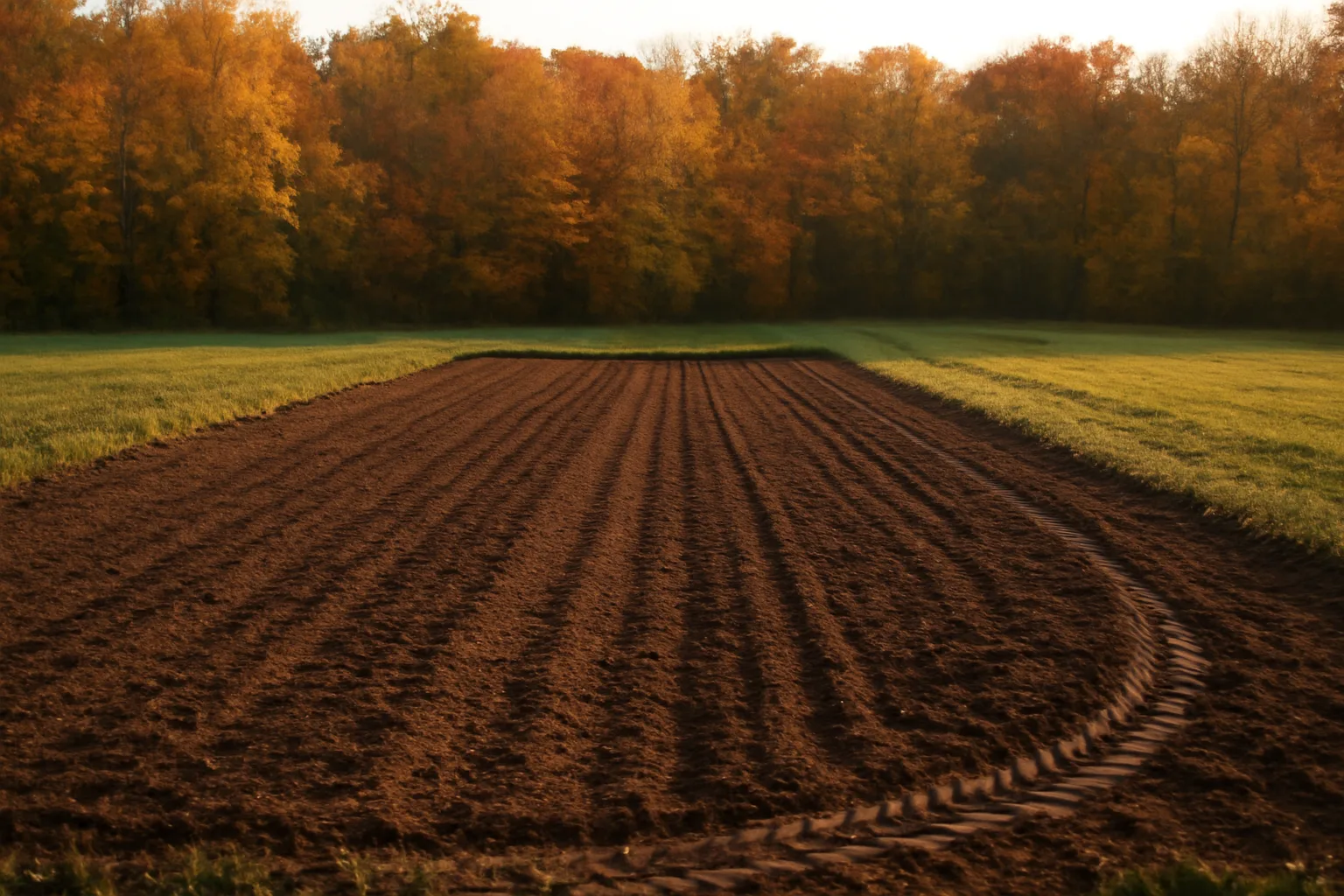
A food plot is a small planted field, usually somewhere between a quarter acre and five acres, seeded with forage that deer will eat. That's it. No mystery to the concept, though people overthink the execution constantly. Most plots fall into two camps: perennial plots (clover, alfalfa, chicory) that you plant once and maintain for two to five years, and annual plots (oats, brassicas, sorghum, cereal grains) that you replant every year, often twice a year in a spring/fall rotation. Land-grant extension programs generally describe food plots as a wildlife habitat management tool used to supplement natural browse, not replace it. A plot does two jobs for a hunter. It concentrates deer activity somewhere you can watch it, and it adds nutrition during stress periods (late summer drought, post-rut recovery, deep winter in northern climates). It does not replace the need for good bedding cover or a healthy natural browse base. If your property has 40 acres of mature closed-canopy timber and no early successional growth, a one-acre clover plot won't fix your deer problem by itself. For a broader look at how plot types compare, see food plot whitetail and deer food plots.
When to plant food plots for deer (by region and season)
| Deep South (zone 8-9) | Mid-Sept to mid-Oct | Mid-March to April | |
|---|---|---|---|
| Mid-South / transition (zone 7) | Late Aug to mid-Sept | April | |
| Midwest / Mid-Atlantic (zone 6) | Mid-Aug to early Sept | Late April to May | |
| Upper Midwest / Northeast (zone 4-5) | Late July to mid-Aug | May | A soil test, not a calendar, should still drive your fertility decisions. Your soil test lab's recommendations are the actual authority on lime and fertilizer rates for your dirt; treat regional planting windows as timing guidance layered on top of that. |
Timing depends on what you're planting and where you live, more than any single calendar date. The two windows that matter are spring (April to June, for warm-season annuals and perennials) and late summer to early fall (mid-July through September, for cool-season annuals like brassicas and cereal grains). As a rule of thumb, cool-season fall plots (oats, wheat, rye, clover, brassicas) should go in the ground 60 to 90 days before your area's average first hard frost, so the plants have time to establish a root system and some leaf mass before growth slows. Mississippi State University Extension Publication 2887 recommends planting brassicas and cereal grains from mid-August through mid-September in most of the Southeast, adjusting earlier for northern latitudes [1]. Spring/summer plots (clover, chicory, soybeans, iron clay peas, sorghum) generally go in after your last frost date, once soil temperatures hit the mid-50s Fahrenheit or warmer, which for most of the whitetail's range falls between mid-April and early June. Here's a rough framework, adjust against your local extension's frost-date data rather than treating this as gospel: | Region | Fall annuals (brassica, oats, wheat) | Spring/summer (clover, beans, sorghum) |
When to plant clover for deer
Plant clover in early spring (as soon as the ground can be worked, generally March through May depending on latitude) or in late summer to early fall (August to September) when soil moisture is more reliable. Both windows work; many food plot managers prefer fall planting because it avoids competing with spring weed pressure. Clover is a perennial, so you're making a longer commitment than with an annual. Once established, a good clover stand can last three to five years with proper mowing and fertility, according to Penn State Extension guidance on white clover, which notes it tolerates close grazing and rebounds well under pressure. Soil pH matters more for clover than for almost anything else you'll plant. Clover wants a pH between 6.0 and 7.0. Below that, nitrogen-fixing rhizobia bacteria struggle, and the plant just sits there looking sad no matter how much fertilizer you throw at it. If your soil test comes back at 5.2, lime first, plant clover later. That's not optional. A light cover crop of oats seeded with fall clover gives you fast early cover and a nurse crop while the clover establishes its root system.
Do deer like clover? Is it really a favorite food?
Yes, deer generally prefer clover over almost anything else you can plant, provided it's a quality stand. It's one of the most consistently preferred food plot forages across published deer diet studies and extension trial data. Clover offers 20 to 25 percent crude protein in good growing conditions, which lines up well with a lactating doe's or antler-growing buck's protein needs. The Noble Research Institute lists clover among the top-rated food plot forages for both palatability and digestibility [2]. The caveat: clover only stays a favorite while it's actively growing and hasn't gone to seed or gotten shaded out by grass and broadleaf weeds. A neglected, weedy, five-year-old clover plot loses appeal fast. Deer will walk past it for a soybean field or acorn flat any day. Mowing clover to 4 to 6 inches every few weeks during the growing season keeps it in a vegetative, high-protein stage deer actually want to eat.
When to plant oats for deer
Plant oats for a fall food plot 6 to 8 weeks before your area's first expected frost, generally August through mid-September across most of the whitetail's range, and again in early spring (March to April) if you want a spring grazing option, though oats are mostly used as a fall/winter annual. Oats germinate fast, often in 5 to 10 days under good soil moisture, and they green up quickly, which makes them a popular early-season attractant plot. They're also cheap. Seed typically runs somewhere in the $15 to $30 per 50-pound bag range depending on the season and supplier, making oats one of the most budget-friendly options in the fall annual lineup. Oats aren't especially cold-hardy compared to winter wheat or cereal rye. In the Upper Midwest and Northeast, a hard freeze can kill oats back to nothing by late November, which is fine if you're targeting early bow season food but a problem if you want standing forage into January. If you need late-winter tonnage, blend oats with wheat or rye, which survive much colder temperatures and will regrow in spring.
When to plant turnips for deer
Plant turnips 60 to 90 days before your first fall frost, which for most of the country lands between late July and early September. Turnips need that lead time to bulb out and build sugar content before cold weather hits. Here's the part people get wrong constantly: turnips (and other brassicas like radish and rape) aren't very palatable when first planted. Deer often ignore a brand-new turnip plot for the first month or two. Then a hard frost hits, converts some of the plant's starches to sugars, and suddenly deer hammer it. University extension forage agronomy research on brassicas documents this frost-triggered sugar conversion, which is why brassica plots often see their heaviest use in November and December rather than September [3]. Turnip tops (the leafy greens) get eaten first, usually starting a few weeks after planting once frost hits. The bulbs themselves often don't get touched until deep winter, sometimes not until snow cover limits other food sources. If you're in a region with mild winters and no hard freeze, don't expect the same sugar-conversion effect, brassicas will still get eaten but the late-season spike may not show up as dramatically.
Do deer eat sorghum?
Yes, deer eat grain sorghum (milo), both the standing seed heads and the young green growth, though it's generally considered a secondary or supplemental plot option rather than a top-tier draw compared to clover or soybeans. Sorghum is more commonly grown as a summer annual for cover and a late-season grain source, especially in the Midwest and South where deer and other wildlife (including turkey and quail) will work the standing heads through fall and winter. It also holds up well to drought and heat, which makes it a reasonable choice for late-summer plots in areas where clover and soybeans struggle in July heat. One real consideration: sorghum contains compounds (dhurrin) that can convert to cyanide-like compounds under certain stress conditions, mainly drought stress or frost damage to young regrowth. This is a known agronomic issue in livestock forage sorghum. University of Nebraska-Lincoln Extension publication G2088 covers prussic acid poisoning risk in sorghum forages in detail [4]. It's mainly a grazing-livestock management concern rather than a documented whitetail deer problem, but it's worth knowing if you're relying on sorghum as a major forage component rather than a grain/cover plot.
What is a deer's favorite food, really?
There's no single universal answer, deer preference shifts by season, region, and what's locally available, but the research is pretty consistent on a short list of favorites: acorns (especially white oak group), soybeans, clover, and other legumes rank at or near the top across most studies and extension surveys. Acorns are the heavyweight. Mississippi State University Extension Publication 2887 notes that acorns can make up over 50 percent of a deer's fall diet in years with a good mast crop, because of their high fat and carbohydrate content going into winter [1]. No planted food plot competes with a good acorn drop in terms of raw preference during that window. Among planted options, soybeans and clover are the most consistent winners in preference trials and hunter observation. Soybeans in particular offer both a high-protein grazing option in summer and a standing grain crop through fall, if deer densities don't wipe out the plot before it pods (a real risk in high-density areas; soybean plots often need to be fenced or planted at larger acreage to survive early browsing pressure). Outside of planted crops and mast, deer favor whatever is highest in protein and easiest to digest relative to what else is on the landscape at that moment. In a corn-heavy agricultural region, a small food plot competes against thousands of acres of standing corn and soybeans and might get comparatively light use. On timbered ground with no ag nearby, that same plot becomes the best food source for miles.
Do deer like honey? (And other odd food plot questions)
Deer don't eat honey in any meaningful, documented way as part of their natural diet. Whitetails are herbivores; their digestive system (a four-chambered rumen adapted to break down plant cellulose) isn't built around animal-derived foods like honey. Some hunters have reported deer investigating or licking sweet substances out of curiosity or mineral-seeking behavior, but there's no wildlife agency or extension guidance recommending honey as an attractant, and it's not a documented food plot practice anywhere in the research. If you're chasing a sweet-scent or mineral-style attractant, that's a different category from food plot planting entirely, and it usually falls under bait or supplemental feeding rules rather than habitat planting. Many states regulate or outright ban baiting and supplemental feeding, separate from food plot rules, often due to chronic wasting disease (CWD) concerns around concentrating deer at a feed source. Check your state wildlife agency's current regulations before using any mineral, scent, or feed product, rules vary widely and change often, especially in CWD management zones.
How do you choose the right seed for your property?
Start with a soil test. That's not a throwaway line, it's the actual first step, because pH and existing fertility determine what will grow well before you even think about deer preference. Most extension soil labs (land-grant university labs, often run through your state's cooperative extension office) will test for pH, phosphorus, potassium, and organic matter for somewhere around $10 to $20 per sample, and return lime and fertilizer recommendations specific to the crop you tell them you're planting. That lab is the authority on your dirt, not a blog post, not a bag of seed, and not a general planting calendar. Follow their lime and fertilizer numbers over anything generic you read online, including this article. After the soil test, the second filter is sunlight and drainage. Clover and brassicas want at least 4 to 6 hours of direct sun and don't tolerate standing water. Sorghum and soybeans want full sun and decent drainage too, but sorghum handles drought stress better than almost anything else on this list. Third filter: how much time do you realistically have. A perennial clover plot, once established, needs mowing 3 to 5 times a season and minimal replanting for years. An annual rotation (fall brassica, spring beans) means you're in the field twice a year with a drill or spreader, every year, indefinitely. Be honest about which one you'll actually maintain. If you want a starting point tailored to your specific soil test results, acreage, and region rather than a generic seed bag recommendation, that's the exact gap a Custom Food Plot Plan is built to fill, a $99 one-time plan based on your inputs, not a subscription. It's general planning guidance built from your numbers, not a site visit or a replacement for your soil lab's specific lime and fertilizer recommendation.
What equipment do you actually need to plant a food plot?
For a small plot (under 2 acres), you can get by with a hand spreader, a rented or borrowed disc or tiller, a cultipacker or drag, and a sprayer for burn-down herbicide. Total cost renting equipment for a weekend often lands well under what a single deer stand costs. For larger acreage or repeat annual planting, an ATV or UTV-mounted disc, drag harrow, and broadcast spreader (or a no-till drill if you're planting into standing residue) pays for itself over a few seasons compared to rental fees. A no-till drill in particular solves a lot of problems on ground you can't easily till, and it puts seed at a consistent depth, which matters a lot for small-seeded species like clover that fail badly if buried too deep. Seed-to-soil contact is the single most common failure point for new plotters. Broadcasting seed onto bare dirt and walking away, without a drag or cultipacker to press it in, is the number one reason plots fail to germinate evenly. If you take away one piece of equipment advice from this whole article, it's this: always firm the seed into the soil after broadcasting, don't just scatter and hope.
How much seed do you need per acre?
| Clover (ladino/white) | 8-10 | 6-8 | |
|---|---|---|---|
| Oats | 100-120 | 80-100 | |
| Winter wheat | 120-150 | 90-120 | |
| Turnips/brassica blend | 5-8 | 4-6 | |
| Soybeans (forage type) | 60-90 | 50-70 | |
| Grain sorghum | 8-12 | 6-10 | These figures are general ranges pulled from common extension and seed-industry planting guides; always check the specific bag label for the variety you bought, since seed size and germination rate shift these numbers up or down. For more on choosing between blends and straight species, see deer food plot seed and food plot seed. |
Seeding rates vary a lot by species and whether you're broadcasting or drilling. Broadcast rates typically run 1.5 to 2 times higher than drilled rates because germination and stand establishment are less consistent on the surface. | Seed | Broadcast rate (lb/acre) | Drilled rate (lb/acre) |
Do you need to fence or rotate plots to protect them from overbrowsing?
On high deer-density ground, yes, often. A newly planted soybean or clover plot can get browsed down to nothing before it ever establishes a root system if deer numbers outpace what the plot produces. This is one of the most common reasons first-year food plots fail. A simple temporary electric fence or even a section of woven wire around a portion of the plot during establishment lets the plant get past the seedling stage before deer hit it hard. Some managers plant larger acreage specifically to outpace browsing pressure rather than fencing at all, the logic being that deer can't eat five acres down to dirt as fast as they can a quarter acre. Crop rotation between fields (moving your annual plot to a different spot each year, or alternating a legume year with a grain year) also helps break disease and pest cycles and rebuild soil nitrogen naturally, since legumes like clover and soybeans fix nitrogen in the soil for the following crop.
Frequently asked questions
Do deer eat sorghum?
Yes. Deer eat both young sorghum growth and mature grain heads, though it's generally a secondary plot choice behind clover or soybeans. It handles heat and drought well, making it useful for late-summer plots in hot climates, but watch for cyanide-compound risk in stressed or frosted young regrowth, a known issue in forage sorghum agronomy.
Do deer eat clover?
Yes, clover is one of the most consistently preferred food plot forages in extension research and hunter observation, offering 20 to 25 percent crude protein when actively growing. Preference drops sharply once a stand gets weedy, goes to seed, or gets shaded out, so regular mowing during the growing season keeps it appealing.
When should I plant deer food plots?
Fall annuals like oats, wheat, and brassicas go in 60 to 90 days before your area's first frost, roughly late July through mid-September depending on latitude. Spring/summer plantings (clover, soybeans, sorghum) go in after your last frost, once soil temperatures hit the mid-50s Fahrenheit, generally April through June.
Do deer like clover more than other food plot options?
In most comparisons, yes, clover ranks at or near the top for preference and digestibility, especially during spring and summer growth. Late in fall, brassicas and standing grain can pull deer away from clover, and a good acorn drop will out-compete almost any planted forage.
When should I plant oats for deer?
Plant oats 6 to 8 weeks before your area's first expected frost, typically August through mid-September across most of the whitetail range. Oats germinate fast (5 to 10 days) and green up quickly but aren't very cold-hardy, so blend with wheat or rye if you need forage surviving into deep winter.
When is the best time to plant food plots for deer overall?
There isn't one single best date, it depends on species and region. As a general framework, cool-season fall plots go in 60 to 90 days before first frost, and warm-season spring/summer plots go in after last frost once soil warms into the mid-50s Fahrenheit. Check your local extension office's frost-date charts for your specific county.
When should I plant turnips for deer?
Plant turnips 60 to 90 days before your first fall frost, usually late July through early September depending on region. Deer often ignore turnips at first; palatability jumps after a hard frost converts starches to sugars, which is why turnip plots often see their heaviest use in November and December rather than right after planting.
What is a food plot exactly?
A food plot is a planted area, usually a quarter acre to several acres, seeded with forage or grain to feed deer and other wildlife. It supplements natural browse and concentrates deer activity for observation and hunting; it doesn't replace the need for good bedding cover and a healthy natural food base on the property.
What is a deer's favorite food?
Acorns, especially white oak acorns, can make up over half a deer's fall diet in good mast years, according to Mississippi State University Extension. Among planted crops, soybeans and clover rank highest for preference and protein content, though actual preference shifts constantly based on season and what else is available locally.
Do deer like honey?
No, not in any documented, meaningful way. Deer are herbivores with a rumen built for plant cellulose, not animal-derived foods like honey. There's no extension or wildlife agency guidance recommending honey as a food plot or attractant strategy; any anecdotal interest is likely curiosity or mineral-seeking, not a real food preference.
How big should a food plot be?
Most hunting-focused food plots run a quarter acre to two acres for a small property, up to several acres on larger ground meant to feed a herd through winter. Smaller plots work well as hunting/observation plots near stand sites; larger acreage helps outpace browsing pressure in high deer-density areas.
Do I need a soil test before planting a food plot?
Yes, strongly recommended. A soil test (often $10 to $20 through your state's cooperative extension office) tells you pH and fertility levels, which determine lime and fertilizer needs specific to your ground. Skipping this step is the most common reason plots underperform even when the seed choice and timing are right.
Is baiting the same as a food plot, legally?
No, and rules differ significantly by state. Food plots (planted, standing crops) are generally treated differently under law than baiting or supplemental feeding (piles of grain, minerals, or feed placed on the ground). Many states regulate or ban baiting separately, often due to chronic wasting disease concerns; always check your state wildlife agency's current regulations before using any feed or mineral product.
Sources
- USDA Natural Resources Conservation Service, Wildlife Habitat Management: Food plots are one piece of a broader wildlife habitat plan alongside cover and native forage, not a standalone fix.
- Mississippi State University Extension Publication 2887, Feeding and Food Plots for White-tailed Deer: Acorns can make up over 50 percent of a deer's fall diet in good mast years; recommended planting windows for brassicas and cereal grains in the Southeast.
- Noble Research Institute, Food Plots for White-tailed Deer: Clover ranks among the most preferred and digestible food plot forages for whitetail deer.
- University of Tennessee Extension, Brassicas: A Fall/Winter Forage for Deer, SP731: Brassica palatability increases after frost converts plant starches to sugars, driving late-season use spikes.
- University of Nebraska-Lincoln Extension, Prussic Acid Poisoning in Sorghum Forages (G2088): Sorghum can develop cyanide-related compounds (prussic acid) under drought or frost stress, a documented forage management risk.