Last updated 2026-07-24
TL;DR
Deer eat whatever is most digestible and available: forbs and browse most of the year, acorns and soybeans in fall, and cereal grains or brassicas after frost sweetens them. Clover is a proven favorite; sorghum works mainly as a screen or grain source, not a preferred forage. Plot timing runs roughly April through August depending on species and zone.
What is a food plot, exactly?
A food plot is a planted patch of forage or grain, usually somewhere between a quarter acre and a few acres, put in to give deer (and often turkey, rabbits, and other wildlife) a concentrated, reliable food source on ground you own or lease. It's not the same as a wildlife feeder and it's not bait in most states' legal definitions, though the line between a plot and baiting gets blurry in a few jurisdictions, so check your state wildlife agency's regulations before you plant near a stand you plan to hunt over. Food plots usually fall into two rough categories. Annual plots get planted fresh each year with things like brassicas, cereal grains, or soybeans, and they're built for a specific season, often late fall through winter. Perennial plots, mostly clover and some alfalfa mixes, get seeded once and then mowed, sprayed, and fertilized for three to five years before you have to start over. The point of a plot isn't really to feed the whole deer herd all year. It's to supplement natural browse, hold deer on your property longer, and give you a place to hunt where deer show up predictably during shooting light. Cooperative extension programs describe food plots as a wildlife habitat management tool that works best alongside, not instead of, natural forage and cover. If you want a plan built around your specific soil test, acreage, and region rather than a generic seed bag label, that's the kind of thing a food plot whitetail plan is built to solve.
What do deer eat naturally, without a plot?
Whitetail deer are browsers, not grazers, and their natural diet shifts hard by season. In spring and early summer they hit tender forbs, new leaf growth, and agricultural crops where available. In summer they lean on soft mast (berries), row crops, and broadleaf weeds. In fall, acorns become the single most important food source in most of the whitetail's range, and deer will travel well off their normal range to find a good mast crop. In winter, when almost everything else is gone, they fall back on woody browse: twigs, buds, and stems of shrubs and young trees. USDA Forest Service research on whitetail habitat consistently ranks acorns as a preferred, high-energy food when they're available, because a good mast year can supply more digestible energy per acre than almost anything a hunter can plant [1]. That's part of why a plot planted in a year with a bumper acorn crop can look like a total bust. The deer aren't avoiding your plot because something's wrong with it. They're just eating for free in the timber. Deer are also highly selective foragers. Research summarized by university extension wildlife programs shows deer diet composition changes month to month based on what's most digestible and highest in crude protein at that moment, more than what's most abundant [2]. That selectivity is exactly why plot species choice and timing matter so much, and why a single-species plot rarely performs as well as a plot with two or three things growing that mature at different points.
Do deer like clover, and is it really their favorite?
Yes. Clover is one of the most consistently preferred food plot forages across the whitetail's range, and it's the forage most state wildlife agencies and extension programs recommend as a baseline perennial plot. White clover and red clover both test out at 20 to 30 percent crude protein in vegetative growth stages, which is well above most native browse [3]. Clover's advantage isn't just protein. It regrows fast after grazing, tolerates mowing, and comes back year after year if you keep weeds and soil pH in check, so you're not replanting from scratch every spring. That makes it the closest thing to a low-maintenance perennial plot option, though "low-maintenance" still means mowing two to four times a season and staying on top of broadleaf weed competition. The tradeoff is that clover isn't great in a hot, dry summer without decent soil, and it can get grazed into the dirt in high-deer-density areas before it has a chance to establish, especially in year one. Most experienced planters recommend a nurse crop of oats when seeding clover in spring, both to hold soil and to give deer something to eat besides the clover seedlings while they establish. If you're deciding what to actually put in the ground, deer food plot seed breaks down clover blends against other perennial and annual options side by side.
What are deer's favorite foods overall?
| White/red clover | 20-30% [3] | Spring through fall | Good, dormant in hard freeze | |
|---|---|---|---|---|
| Soybeans (forage type) | 25-30% in leaf | Summer through early fall | Poor, killed by first hard frost | |
| Brassicas (turnips, radish) | 15-20% tops, high sugar bulbs | Late fall to winter, after frost | Excellent | |
| Oats | 12-20% depending on stage | Fall planting through early winter | Moderate, dies back in hard winter | |
| Grain sorghum | 9-11% | Standing grain in winter | Good standing structure | Sources for protein ranges: land-grant extension forage guides [3] [4]. |
There's no single universal answer because preference shifts by season, region, and what's available, but a few things show up again and again in food habit studies and extension guidance as high-preference items: acorns (especially white oak family acorns, which are lower in tannins than red oak acorns), soybeans in the growing and pod stages, clover, and standing corn once it dries down in fall. Among plantable options, soybeans and clover consistently rank at or near the top of preference studies and hunter surveys, largely because of protein content and palatability. Brassicas (turnips, radishes, rape) rank lower in summer but climb sharply in preference after the first hard frost, because frost converts starches to sugars and makes the greens and bulbs much more palatable. Here's a rough comparison of how common plot species stack up on a few practical measures. These are general patterns from extension variety trial data and field observation, not lab-precise rankings, since actual deer preference varies by local deer density, competing natural food, and regional soil. | Species | Crude protein (approx.) | Peak attraction window | Frost tolerance |
Do deer eat sorghum?
Yes, deer eat sorghum, but it's not high on their preference list compared to soybeans, clover, or corn. Grain sorghum (milo) is mostly valuable in a plot for two reasons that have nothing to do with taste preference: it stands up well through winter weather, and it's a solid late-season energy source once other annuals are gone or buried in snow. Deer will browse young sorghum shoots some in summer, and they'll clean up dropped or standing grain heads in late fall and winter, especially once softer, higher-preference food is gone. It's also commonly planted as a screening or cover crop around plots and stand access routes because it grows tall and dense, which is arguably its bigger practical use for most hunters. Extension row-crop guidance on grain sorghum notes it's a drought-tolerant option that performs on marginal soils where corn struggles [4], which is part of why it shows up in food plot mixes on poorer ground. If your goal is maximum deer attraction, sorghum shouldn't be your main species. If your goal is late-season standing grain plus visual cover, it earns a spot in the mix.
Do deer like honey, or is that a myth?
There's no real research or wildlife agency guidance suggesting deer seek out honey as a food source, and it isn't a legitimate food plot or attractant strategy. Deer diets are built around forbs, browse, mast, and grain, not sugar sources like honey. Some commercial deer attractant sprays include sweet scent components (molasses, sugar beet extracts, apple or persimmon flavoring) because deer do respond to sweet, ripe fruit smells in the wild, and that may be where the honey question comes from. Spreading actual honey or sugar products in the field also runs into the same legal gray zone as any other supplemental feeding or bait product. A lot of states classify placing food substances to attract game as baiting, with specific distance and timing rules from a stand, and some ban it outright during deer season. Check your state wildlife agency's baiting and feeding regulations before using any attractant product, honey included, because the legal status varies a lot state to state and can carry real penalties.
When to plant food plots for deer, in general terms
Timing splits into two windows almost everywhere in whitetail country: a spring/summer planting window for warm-season annuals and perennials, and a late-summer window for fall/winter annuals. The exact dates shift by USDA plant hardiness zone and local first/last frost dates, so a state or regional extension frost date table is worth five minutes of your time before you plant anything [5]. Spring plots (clover, soybeans, warm-season annual blends) generally go in after your last frost date, when soil temps are reliably above 50 to 55 degrees Fahrenheit. That's late April into May across most of the Midwest and Upper South, and can push into June in the far north. Fall plots (brassicas, cereal grains, winter peas) get planted in a window timed backward from your first fall frost, usually 60 to 90 days before that date depending on species. That puts most brassica and cereal grain planting somewhere between late July and early September across the whitetail's range, with northern states planting earlier and the Deep South planting into September or even October. The single biggest planting mistake extension agronomists flag is planting fall brassicas and cereal grains too late, before the plant has enough growing season left to bulk up before frost. A brassica planted three weeks late might not develop enough of a bulb or leaf mass to matter. Working backward from your average first frost date, using your state's cooperative extension frost date charts, is the most reliable way to nail this [5]. For a full month-by-month regional breakdown, deer food plots covers zone-specific calendars in more detail than a general timing rule can.
When to plant oats for deer
Oats get planted twice a year in most regions, and the right window depends on what you want them for. As a fall food source, plant oats 6 to 8 weeks before your first expected fall frost, which lands most oat plantings between mid-August and mid-September depending on latitude. Oats germinate fast, usually within 7 to 10 days in warm soil, and deer will hit young oat shoots almost immediately. As a spring nurse crop for clover or alfalfa, oats get planted at the same time as the perennial seed, right after your last spring frost, to hold soil and give quick green-up while the slower perennial establishes. Oats aren't especially frost-hardy compared to brassicas. A hard freeze in the low 20s Fahrenheit will usually kill oat foliage back, though the plant often holds some feed value into early winter in milder zones. That makes oats a strong early-to-mid fall plot and a weaker choice if your main goal is a food source that lasts into January. Cereal rye is the more cold-hardy cousin if you need something standing through a hard winter.
When to plant turnips for deer
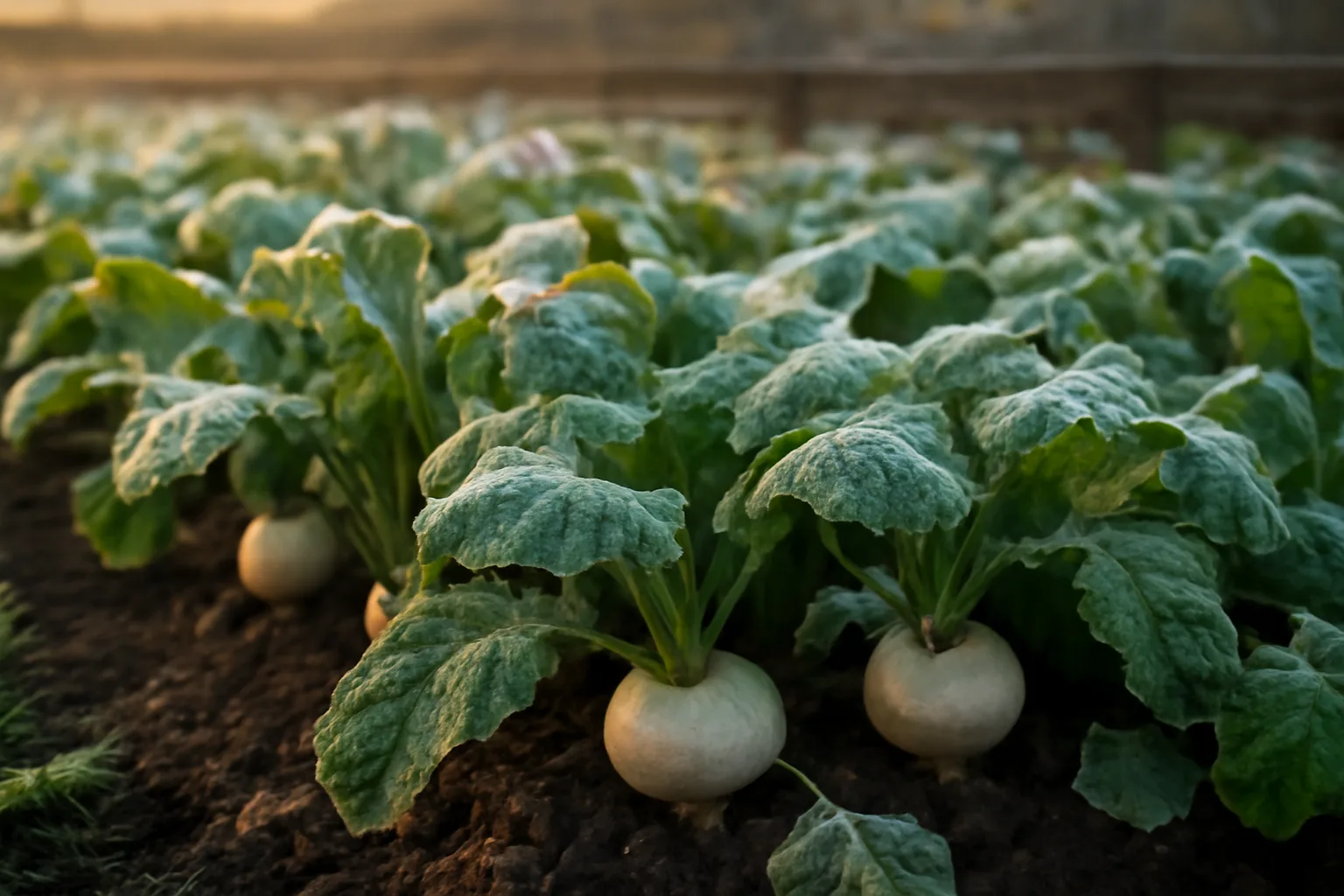
Turnips are a fall brassica, planted in the same late-summer window as other brassicas: roughly 80 to 90 days before your first expected fall frost. In practical terms that's late July through mid-August across most of the whitetail range, with earlier planting in the northern tier and slightly later planting acceptable in the Deep South. Turnips need that lead time because the plant is doing two jobs before frost: building leaf mass and bulking up the root bulb underground. If you plant too late, you'll get thin, spindly plants with little bulb development, and deer preference drops accordingly since there's less sugar-rich bulb to dig up. Here's the part that surprises new planters: deer often ignore turnip tops and bulbs completely for the first month or two after planting, even though the plants look great. That's normal, not a failure. Turnips (and other brassicas) contain glucosinolates that make them fairly bitter until a hard frost converts starches to sugars, at which point deer preference on the same plot can flip overnight from ignored to hammered. University extension forage publications confirm this frost-driven palatability shift is well documented in brassica species [6]. If you're hunting a turnip plot, the two to four weeks after your first hard frost is usually the highest-traffic window of the whole season.
Do deer eat clover, and how does it compare to other plot species?
Yes, and it's worth repeating because clover comes up constantly in this conversation for good reason: it's one of the highest crude-protein, most consistently grazed forages you can plant, tested at 20 to 30 percent crude protein in extension forage analyses [3]. Deer will hit a good clover stand from spring green-up through fall, and in mild winter climates it can stay somewhat available even into early winter. Where clover loses to other options is late fall and winter in colder zones, once it goes dormant, and in the first six to eight weeks after planting, when it's vulnerable to overgrazing before the root system establishes. That's why a lot of experienced planters run clover as their spring/summer perennial anchor plot and pair it with a fall annual plot (brassicas or cereal grain) elsewhere on the property, rather than trying to make one plot do everything year-round. If you're comparing clover against soybeans, brassicas, or cereal grains for a specific piece of ground, food plot seed and domain food plot seed both go deeper into blend selection by soil type and region.
How does soil testing change what you should plant?
Soil pH and fertility drive plot success more than species choice does, and this is the part hunters skip most often. Clover in particular struggles below a soil pH of 6.0, and most land-grant extension guidance recommends a target pH of 6.0 to 6.5 for clover and alfalfa specifically, with lime applied months ahead of planting since it takes time to move through the soil profile [7]. A basic soil test, available for a small fee (often $10 to $20) through most state land-grant university soil labs, tells you your current pH, phosphorus, and potassium levels, and gives you a lime and fertilizer recommendation specific to the crop you tell them you're planting . That recommendation from your soil test lab is the actual authority on how much lime and fertilizer to apply, not a generic bag label or a blog post, because soil chemistry varies a lot even within the same county. Skipping the soil test is the single most common reason a plot underperforms. Planting clover into soil sitting at pH 5.2 without lime is a common and expensive mistake; the seed germinates, struggles, and gets outcompeted by weeds within a month, and the hunter blames the seed or the deer when it was really a lime problem from the start. This is also where a general planting plan reaches its limit. A $99 Custom Food Plot Plan through plot-plan-builder can turn your soil test numbers and acreage into a specific species and fertilizer plan for your region, but your soil test lab's own lime and fertilizer recommendation is still the final word on your ground specifically.
What equipment do you actually need to plant a food plot?
For a small plot (under an acre), a lot of hunters get by with an ATV or UTV, a small disc or cultipacker, a hand-crank or ATV-mount broadcast spreader, and a sprayer for herbicide. For anything over a couple acres, a tractor with a disc, drag harrow, and a seeder starts paying for itself in time saved, though renting or borrowing equipment is common and reasonable for a first-year plot. The steps that matter more than the horsepower behind them: killing existing vegetation (usually with glyphosate two to three weeks ahead of planting), getting decent seed-to-soil contact (a light disc or drag, not a rototiller turning everything into powder), and planting at the right depth for the species (many brassica and clover seeds are tiny and need to sit almost on the surface, just barely covered). Soil compaction and poor drainage kill more plots than bad seed does. If water sits on your plot after rain, that's worth fixing with tillage or drainage before you worry about which clover variety to buy.
Frequently asked questions
Do deer eat sorghum?
Yes, but it's not a top preference food. Deer browse young sorghum shoots some in summer and clean up standing grain in late fall and winter. Its bigger value is as a drought-tolerant, cold-hardy standing crop and visual screen, not as a first-choice attractant like soybeans or clover.
Do deer eat clover?
Yes, clover is one of the most consistently preferred food plot forages, testing at 20 to 30 percent crude protein in vegetative growth according to extension forage data. Deer graze it from spring through fall in most regions, though it goes dormant in cold winters and needs six to eight weeks to establish before it can handle heavy grazing pressure.
When should you plant food plots for deer?
Spring annuals and perennials like clover and soybeans go in after your last frost date, usually late April into June depending on zone. Fall annuals like brassicas and cereal grains get planted 60 to 90 days before your first fall frost, generally late July through September. Check your state extension's frost date charts for exact local timing.
When do you plant oats for deer plots?
For a fall food plot, plant oats 6 to 8 weeks before your first expected fall frost, typically mid-August to mid-September. Oats germinate in 7 to 10 days and green up fast, but a hard freeze in the low 20s Fahrenheit usually kills the foliage, so oats work best as an early-to-mid fall food source, not a winter-long one.
When do you plant turnips for deer?
Plant turnips 80 to 90 days before your first expected fall frost, roughly late July to mid-August across most of the whitetail range. Deer often ignore turnip tops and bulbs until after the first hard frost, when starches convert to sugars and palatability jumps sharply, so the weeks right after frost are usually the best hunting window.
What is a food plot?
A food plot is a planted area, usually a quarter acre to a few acres, seeded with forage or grain to supplement deer's natural diet and concentrate deer activity for hunting or herd health. It's distinct from a feeder or bait pile in most state definitions, though rules on planted attractants near a stand vary, so check your state wildlife agency's regulations.
What are deer's favorite foods?
Preference shifts by season and region, but acorns (especially white oak family), soybeans in leaf and pod stage, clover, and standing corn rank consistently high in food habit studies. Brassicas rank low until after a hard frost, then preference can jump sharply because frost converts starches to sugars.
Do deer like honey?
There's no evidence deer seek out honey as a food source; their diet is built around forbs, browse, mast, and grain, not sugar sources like honey. Some attractant products use sweet scents that mimic ripe fruit, which deer do respond to in the wild, but plain honey isn't a real plot or attractant strategy, and spreading it may fall under baiting rules in some states.
Do deer eat acorns more than planted food plot crops?
In a heavy mast year, yes, often by a wide margin. USDA Forest Service research notes acorns supply high digestible energy per acre when available, and deer will travel off their normal range for a good mast crop, which is part of why plots sometimes see less traffic in bumper acorn years.
How long does a clover food plot last before you need to replant?
A well-maintained clover plot, mowed a few times a season and kept weed-free, typically lasts three to five years before stand thinning and weed pressure make replanting worthwhile. Soil pH maintenance based on periodic soil testing extends stand life; letting pH drift low shortens it.
Is it legal to plant a food plot near where you hunt?
In most states, a planted food plot is legally distinct from baiting or supplemental feeding, but rules vary a lot, including some states with specific distance requirements between planted or baited areas and a hunting stand. Always confirm current rules with your state wildlife agency before planting near a stand you intend to hunt.
What ruins a food plot faster than choosing the wrong seed?
Skipping a soil test. Planting clover or brassicas into soil with a pH below 6.0 without applying lime is one of the most common and costly food plot mistakes, since low pH locks up nutrients and lets weeds outcompete the seedlings within weeks, regardless of seed quality.
Sources
- USDA Forest Service, Southern Research Station, White-tailed Deer Habitat: acorns are a preferred high-energy whitetail food source when available
- University of Georgia Extension, Deer Food Habits and Nutrition: deer diet composition shifts monthly based on digestibility and protein availability
- University of Kentucky Cooperative Extension, Clover for Wildlife Food Plots: white and red clover test at roughly 20 to 30 percent crude protein in vegetative stages
- Kansas State University Extension, Grain Sorghum Production Handbook: grain sorghum is drought tolerant and performs on marginal soils where corn struggles
- NOAA National Centers for Environmental Information, Freeze/Frost Data: regional first and last frost dates vary and should guide fall/spring planting windows
- University of Tennessee Extension, Establishing and Maintaining Wildlife Food Plots: clover and alfalfa require soil pH of roughly 6.0 to 6.5 for good establishment
- USDA Natural Resources Conservation Service, Soil Testing: soil tests through land-grant labs give site-specific pH and fertility recommendations for a small fee