Last updated 2026-07-24
TL;DR
A biologic deer plot is just a planted food plot, usually a mix of forages like clover, oats, or turnips grown to attract and feed deer through hunting season. It differs from bait piles or mineral licks because it's a growing crop, legal almost everywhere, and it takes soil prep, the right seed for your zone, and 60 to 90 days to mature.
what is a food plot (and what does 'biologic' mean here)
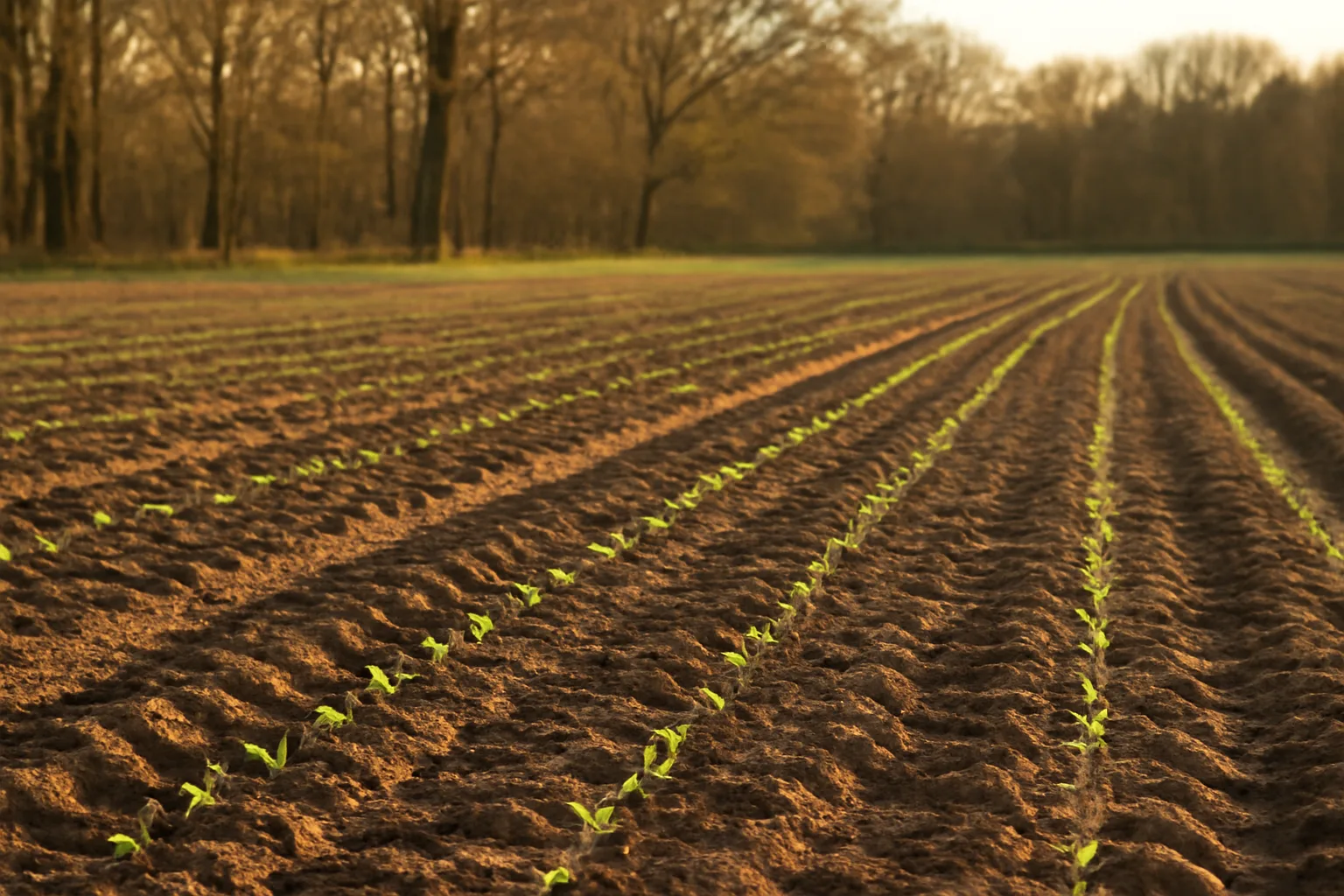
A food plot is a planted area, usually a quarter acre to a few acres, seeded with forage that deer and other wildlife will eat. Some companies and hunters use the word "biologic" to distinguish a planted, growing food source from a bait pile, a mineral lick, or a supplemental feeder. The idea is that a biologic plot works through natural plant growth and soil biology rather than trucking in corn or protein pellets. There's no official regulatory definition of "biologic plot." It's marketing and hunter shorthand more than a legal category. But the distinction matters practically: in most states, planting a food plot on your own land is legal management, while dumping bait (corn, salt blocks, sugar beets, apples) to attract deer for hunting is restricted or banned in a lot of jurisdictions. Michigan restricts baiting and feeding of deer and elk across most of the state through its Wildlife Conservation Order, citing the risk of spreading chronic wasting disease and bovine tuberculosis through concentrated feeding sites [1]. A standing food plot, planted and left to grow, is a different thing entirely from a bait pile under that kind of rule. So when someone says "biologic deer plot," they usually mean a legitimate planted plot, cover crop or forage blend, fertilized and limed like any other small field, designed to hold and feed deer from late summer through winter. If you want a structured breakdown of plot categories (annuals vs perennials, food vs cover, etc), the food plot whitetail guide covers the basic types side by side.
do deer like clover, and is it worth planting
Yes. Clover is one of the most consistently used food plot forages in whitetail country, and it's a perennial, meaning one planting can produce forage for three to five years with good management. White clovers (ladino types) and red clover both show up in forage trials as high in crude protein, often 25 to 30 percent in vegetative growth stages, well above what most native summer browse offers [2]. Clover's biggest strength is season length. It greens up early in spring, stays productive through summer if you mow and manage weed competition, and keeps some growth going into fall in many zones. That's different from an annual brassica or grain plot that gets one shot each year. The tradeoff is establishment. Clover needs a well-prepared seedbed and correct pH, generally 6.0 to 6.5 for good establishment, and it's slower to bulk up than something like oats [3]. It also needs mowing two to four times a season to keep it from getting shaded out by grass and weeds. If you want low-maintenance tonnage fast, clover isn't the answer. If you want a plot that keeps producing for years with less annual seed cost, it's hard to beat, and it ranks at or near the top of preferred plantings in most whitetail range, competing mainly with soybeans in summer and brassicas in fall.
what are deer's favorite foods, really
There's no single ranked list that holds true everywhere, because preference shifts by region, season, and what's available naturally. But across food plot research and forage guides, a few things show up again and again as high-preference: soybeans and clover in summer, acorns whenever they're dropping, and brassicas (turnips, radishes, rape) after a hard frost sweetens the leaves and bulbs. Acorns often beat anything you plant. White oak acorns in particular are lower in tannins and more digestible than red oak acorns, and deer will shift almost entirely onto acorns during a good mast year, food plot or not. That's not a planting failure on your part. It's just a preference deer have evolved with for thousands of years. Among planted crops, soybeans (grazed heavily in the vegetative stage), clover, and cool-season brassicas after frost tend to top most hunter and biologist rankings. Corn is eaten but it's a low-protein energy source, mostly valuable in late winter. Chicory and forage peas also test well in university plot trials for both tonnage and deer use.
do deer eat sorghum
Yes, deer will eat sorghum, both the grain heads and the leaves, but it's not a top-tier deer plot crop on its own. Sorghum (grain sorghum or milo) is more commonly planted as a dove field crop or a screening/cover crop in food plot mixes, valued more for the standing cover and seed heads it holds into winter than for being a preferred deer forage. Some food plot blends include forage sorghum or sorghum-sudangrass as a nurse crop, something that grows fast and gives newly planted clover or brassicas some shade and wind protection while they establish. Deer will browse the young leaves, and turkey and dove use the grain heavily. But if sorghum is your only planting, don't expect it to pull deer the way soybeans or clover will. If you're picking a species list for a new plot, sorghum is a reasonable minor component in a diverse mix, not a headline crop.
do deer like honey (and does it belong in a food plot)
Deer are not drawn to honey specifically, and honey isn't a food plot ingredient. This question usually comes from confusion with mineral and attractant products, some of which use molasses or sugar-based scents, or from crops like sugar beets and forage turnips that develop naturally sweet, sugary tissue after frost. There's no wildlife research showing deer seek out honey in the wild or that it has any use as bait or attractant beyond generic sugar draw, which itself is restricted or banned as baiting in many states. If you're trying to add sweetness that deer actually respond to at scale, that's what brassicas and sugar beets are for: cold weather converts starches to sugars in the bulbs and leaves, and deer key in hard on that once temperatures drop.
when to plant food plots for deer
| Deep South (Zone 8-9) | Late March to April | Late Aug to early Oct | |
|---|---|---|---|
| Mid-South / Transition (Zone 7) | April to early May | Mid Aug to mid Sept | |
| Midwest / Mid-Atlantic (Zone 6) | Late April to May | Early Aug to early Sept | |
| Upper Midwest / Northeast (Zone 4-5) | Mid May to early June | Mid July to mid Aug | For a season-by-season breakdown built around your specific frost dates, the deer food plots guide walks through regional calendars in more depth. |
Timing depends almost entirely on your frost dates and whether you're planting a spring/summer plot or a fall plot, and that varies a lot by latitude. As a rule of thumb, warm-season plots go in after your last spring frost, and cool-season fall plots go in 60 to 90 days before your first fall frost so the plants mature before hard cold hits. In practice that means spring plantings (soybeans, forage sorghum, warm-season annuals) go in anywhere from late April in the Deep South to early June in the northern tier. Fall plantings (brassicas, cereal grains, clover establishment) usually happen from mid-July through early September, again shifting later the further north you are. Here's a rough breakdown by general US zone. These are generalized windows, not guarantees, check your local extension office or state agency forage calendar for your specific county, since microclimates and elevation shift things by a couple weeks either direction. | Region | Spring/summer plot window | Fall plot window |
when to plant oats for deer
Oats are a cool-season cereal grain, and they're best planted in late summer to early fall, generally 6 to 8 weeks before your average first frost date [4]. That gives oats time to establish a leafy stand before growth slows in cold weather. Oats are highly palatable to deer while young and green, often preferred over wheat or rye in early fall, though they're also the least cold-hardy of the common cereal grains and can die back hard after repeated hard freezes in northern zones [4]. Because of that limited cold tolerance, oats work best as an early-to-mid fall draw, not a plot you're counting on to still be green in January in Wisconsin. In the Deep South, oats can be planted later, into October, and stay productive most of the winter since freezes are lighter and less frequent. A lot of hunters plant oats in a blend with clover or brassicas: the oats come up fast and give deer something to eat within a few weeks, while the slower clover or turnips establish underneath and take over as the oats fade.
when to plant turnips for deer
Turnips and other brassicas need to go in the ground 80 to 90 days before your first hard frost, since they need that full season to bulb out and reach peak palatability [5]. Planting too late means you get leafy growth but small or no bulbs, and planting too early in still-hot late summer can lead to poor germination or bolting. For most of the whitetail range that puts brassica planting somewhere between late July (northern states) and early September (southern states). The frost timing matters agronomically too: brassica leaves and turnip bulbs convert starches into sugars after a hard freeze, which is exactly why deer use goes up sharply in late fall and winter on these plots [6]. A turnip plot that looks ignored in October can get hammered in December once a couple of frosts have hit it. If you're building out a full-season plan and want species and soil steps specific to your property, this is where the site's $99 Custom Food Plot Plan is built to help: you enter your zone, soil test results, and equipment, and get a species and timing plan instead of guessing off a generic chart.
how do I test and prep soil before planting a biologic plot
Every serious food plot starts with a soil test, not a seed bag. Most land-grant universities run soil test labs for $10 to $20 per sample and turn results around in a couple weeks, giving you pH, phosphorus, potassium, and lime and fertilizer recommendations specific to the crop you tell them you're planting [3]. Most food plot forages, clover and brassicas especially, want a soil pH between 6.0 and 7.0. Below that, phosphorus and other nutrients become less available to the plant even if they're technically in the soil [3]. If your test comes back at 5.2, no amount of fertilizer fixes that until lime raises the pH, and lime takes months to fully react in the soil, which is why fall testing for a spring plot (or vice versa) beats testing the week you plant. Your soil test lab, not a blog or a seed bag label, is the real authority on how much lime and fertilizer your specific field needs. Recommendations vary by soil type, crop, and yield goal, so treat any general number here as a starting point, not a final answer for your dirt.
what equipment do I actually need to plant a plot
You don't need a tractor to plant a small food plot, but you do need some way to break ground, get seed-to-soil contact, and control weeds. At minimum that's a way to kill or till existing vegetation (herbicide and a sprayer, or a disc/tiller), a way to spread seed (hand-crank spreader is fine under an acre), and a way to firm the seedbed (a drag harrow, a chain-link mat, or even driving an ATV over it works for small seed like clover and brassicas). For larger openings, a small tractor or UTV with a disc harrow, a cultipacker, and a broadcast spreader on the back covers most of what a hunter needs for plots up to a few acres. Skip the expensive no-till drill unless you're planting several acres a year, and it makes the most sense to rent or borrow one for that first big planting rather than buy. For a full rundown of gear by plot size and budget, deer food plot seed and food plot seed both cover seed selection and mix components in more depth than fits here.
is a biologic plot legal, and does it count as baiting
In most states, a planted food plot is legal and is explicitly not considered baiting, but the rules on baiting and supplemental feeding (piling corn, using mineral blocks, automatic feeders) vary a lot by state and sometimes by county or region within a state. Michigan's Wildlife Conservation Order prohibits baiting and feeding deer across most of the state outside of a small number of exceptions, a rule the state adopted specifically to slow the spread of chronic wasting disease and bovine TB [1]. A standing food plot is treated differently under that regulation because it's a growing crop, not a concentrated feed source. Other states restrict baiting only in counties with confirmed chronic wasting disease, and some have no baiting restrictions at all. Before you plant, and separately before you use any supplemental feed or mineral products, check your state wildlife agency's current regulations, because this is one of the fastest-changing rule areas in deer hunting and last year's rule may not be this year's rule.
what should go in my first plot's seed mix
For a first-time plot, a simple two-or-three-species mix beats a complicated one. A common, well-tested combination is a cereal grain (oats or winter wheat) with a brassica (turnips or radishes) for fall, or clover with a small amount of chicory for a plot you want to keep going for years. The cereal grain comes up fast and gives early season draw and some erosion control for the slower brassica. The brassica bulbs mature and sweeten by late fall, extending the plot's usefulness into winter. If you want a perennial instead of replanting every year, a ladino clover blend with 5 to 10 percent chicory is a well-documented combination in extension forage trials, giving both quick spring growth and drought tolerance from the chicory's deep taproot [2]. Avoid overcomplicating a first plot with six or eight species. More species means more competing germination requirements, more chances something in the mix fails, and more cost. Start simple, see what works on your soil, then adjust next season.
how big should a food plot be, and what if I only have a small property
There's no minimum size requirement, and plots from a quarter acre to several acres all work depending on your goal. Small plots (quarter to half acre) tucked into timber tend to function more as attraction and bedding-adjacent food, pulling deer in close for bow season. Larger plots (2 to 5 acres or more) function more as destination feeding fields, often better suited to gun season or if your goal is tonnage of forage over the whole season. If you're on a small leased or owned property, a well-placed quarter-acre clover plot in a low-pressure pocket often outperforms a bigger, more exposed field, because deer use small plots more confidently when they feel secure getting to them. Size matters less than placement, sunlight (most food plot species need at least 4 to 6 hours of direct sun), and soil quality.
Frequently asked questions
What is a food plot in simple terms?
A food plot is a planted patch of forage crops, like clover, brassicas, or cereal grains, grown specifically to feed and attract deer or other wildlife. It's an active agricultural planting, not a bait pile, and it usually needs the same soil prep, fertilizer, and seed selection as any small farm field.
Do deer eat sorghum?
Yes, deer browse sorghum leaves and will eat the grain heads, but sorghum isn't a top deer draw compared to soybeans or clover. It's more often planted as a screening or nurse crop in food plot blends, or as a dove field crop, than as a standalone deer attractant.
Do deer like clover?
Yes, clover is one of the most consistently high-use food plot forages across whitetail range. It offers 25 to 30 percent crude protein in vegetative growth and, as a perennial, can produce forage for three to five years from one planting with proper mowing and weed control.
When should I plant food plots for deer?
Warm-season plots go in after your last spring frost; cool-season fall plots go in 60 to 90 days before your first fall frost. Exact dates vary widely by latitude, from late March in the Deep South to early June in the northern tier for spring plots.
When do I plant oats for deer?
Plant oats 6 to 8 weeks before your average first fall frost. Oats are a fast-growing, highly palatable cool-season grain, but they're the least cold-hardy cereal grain option and can die back after repeated hard freezes, especially in northern states.
When do I plant turnips for deer?
Plant turnips and other brassicas 80 to 90 days before your first hard frost, generally late July through early September depending on your region. They need the full season to bulb out, and their palatability jumps after a hard frost converts starches to sugars.
What are deer's favorite foods?
Acorns, especially white oak acorns, often top the list when available. Among planted crops, soybeans, clover, and frost-sweetened brassicas rank consistently high in extension forage trials and hunter observation, though preference shifts by region and season.
Do deer like honey?
No, honey isn't a documented deer attractant and it's not a food plot ingredient. The confusion usually comes from sugar-based mineral or scent products, or from brassicas and sugar beets, which naturally turn sweet after frost and draw deer heavily in late fall.
Is planting a food plot considered baiting in my state?
In most states, no, a standing planted food plot is legal and distinct from baiting or supplemental feeding, which some states restrict or ban, especially in CWD management zones. Rules vary by state and sometimes by county, so check your state wildlife agency's current regulations before planting or feeding.
What's the minimum soil pH for a good food plot?
Most food plot species, especially clover, do best between pH 6.0 and 6.5, according to land-grant extension soil guides. Below that range, nutrients like phosphorus become less available to plants even when soil test levels look adequate, so lime is often the first input needed, not fertilizer.
How much does a soil test cost before planting a plot?
Most university extension soil labs charge $10 to $20 per sample and return pH, phosphorus, potassium, and lime and fertilizer recommendations within a couple of weeks. It's the cheapest input in the whole plot budget and the one most likely to prevent a wasted planting.
Do I need a tractor to plant a food plot?
No. Under an acre, a hand-crank spreader, a way to kill existing vegetation (herbicide or hand tools), and something to firm the seedbed (a drag harrow or even an ATV pass) is enough. A small tractor with a disc and cultipacker helps a lot on larger plots but isn't required to start.
Sources
- Michigan Department of Natural Resources, Wildlife Conservation Order, Baiting and Feeding of Deer and Elk (Order 2.53): Michigan restricts baiting and feeding of deer and elk across most of the state, citing disease transmission risk
- University of Wisconsin-Madison Extension, Forage Legumes, Cooperative Extension Publication A2911: Clover crude protein levels and perennial persistence in food plot forage trials
- University of Missouri Extension, Soil Testing and Food Plots: Recommended soil pH range of 6.0 to 6.5 for clover and general food plot establishment, and soil test lab cost and turnaround
- USDA Forest Service, Southern Research Station, General Technical Report SRS-101, Oaks and Acorns for Wildlife: White oak acorns are lower in tannins and more digestible than red oak acorns, driving deer preference during mast years
- University of Georgia Extension Circular 1183, Wildlife Food Plots: Sorghum's role as a cover/screening and dove-field crop rather than a primary deer forage
- Oklahoma State University Extension Fact Sheet PSS-2130, Oats for Wildlife Food Plots: Oats should be planted 6 to 8 weeks before first frost and have lower cold tolerance than wheat or rye
- Clemson Cooperative Extension, Brassicas for Deer Food Plots, Land-Grant Press LGP 1037: Brassicas need 80 to 90 days before first hard frost to bulb properly
- Wisconsin Department of Natural Resources, Baiting and Feeding Regulations: Wisconsin restricts baiting and feeding of deer in counties affected by CWD, with zones updated periodically