Last updated 2026-07-26
TL;DR
The best way to plant a food plot is soil test, correct pH and fertility per the report, kill existing vegetation, plant into a firm seedbed at the right depth (broadcast small seeds shallow, drill grains deeper), and time planting to your USDA hardiness zone and the species' frost tolerance. Skipping the soil test wastes more money than any other single mistake.
What is a food plot, exactly?
A food plot is a planted patch of forage or grain on hunting land, built to feed deer and other wildlife and to give hunters a predictable place to see them. Plots range from quarter-acre kill plots tucked into a bedding edge to five-acre or larger field plantings meant to hold deer through winter. Most state wildlife agencies treat a planted food plot differently than a pile of corn or minerals dumped on the ground. Planting and growing a crop, even one deer will eat, is legal almost everywhere. Baiting (placing feed to attract game) is regulated or banned in many states, and the line between the two can get technical around things like mineral licks, protein pellets, or leftover grain left in a field after harvest. Check your state wildlife agency's current regulations before you do anything that isn't straight broadcasting or drilling seed into the ground. This matters even more in states with chronic wasting disease concentration rules that restrict feeding and baiting more tightly, since those rules sometimes touch food plots too, depending on size and layout. The practical goal of a plot is nutrition and attraction at the same time. A well-grown clover or brassica plot delivers protein or carbohydrates deer actually need, especially late summer through winter when natural browse quality drops. A poorly grown plot, thin, weedy, planted too late, is really just an expensive weed patch that deer walk past.
When to plant food plots for deer (by region and season)
Timing is the single biggest lever you control, and it depends on species and your frost dates more than any calendar date. Cooperative extension offices tie planting windows to average first and last frost dates for a reason: seed that goes in too early or too late either fails to establish or gets hammered by heat or cold before it can take hold. Spring plots (clover, chicory, some brassica blends meant for summer forage) go in after soil temperatures warm and the last frost has passed, generally April through May in the Midwest and Upper South, later into May or even June in the northern tier. Perennial clover seedlings are frost tolerant once established but the tiny emerging shoots can be set back hard by a late freeze. Fall plots (brassicas, cereal grains, annual clovers) are timed backward from your first fall frost date, not forward from summer. Extension guidance for brassicas like turnips commonly recommends planting roughly 60 to 90 days before the first killing frost, which in much of the whitetail range lands somewhere between late July and early September. Wait too long and the plants never bulb out or build the sugar reserve that makes them attractive after frost. Plant too early in hot, dry August conditions and you risk stand failure before fall rains arrive. Cereal grains like oats and winter wheat have more flexibility. They germinate fast, tolerate a wider soil temperature range, and can be planted from late summer into mid-fall depending on zone. As a rough national framework: Zone 3-4 (Upper Midwest, Northern New England) plant fall plots by early August; Zone 5-6 (Central states) by mid-to-late August; Zone 7 and south by mid-September into early October. These are starting points, not guarantees. Your local extension office's frost date tables are the actual authority, and a $99 Custom Food Plot Plan can convert that into specific dates for your ZIP code and species mix, but it's still general guidance, not a substitute for your soil test lab's specific recommendations.
How do you prepare the ground before planting?
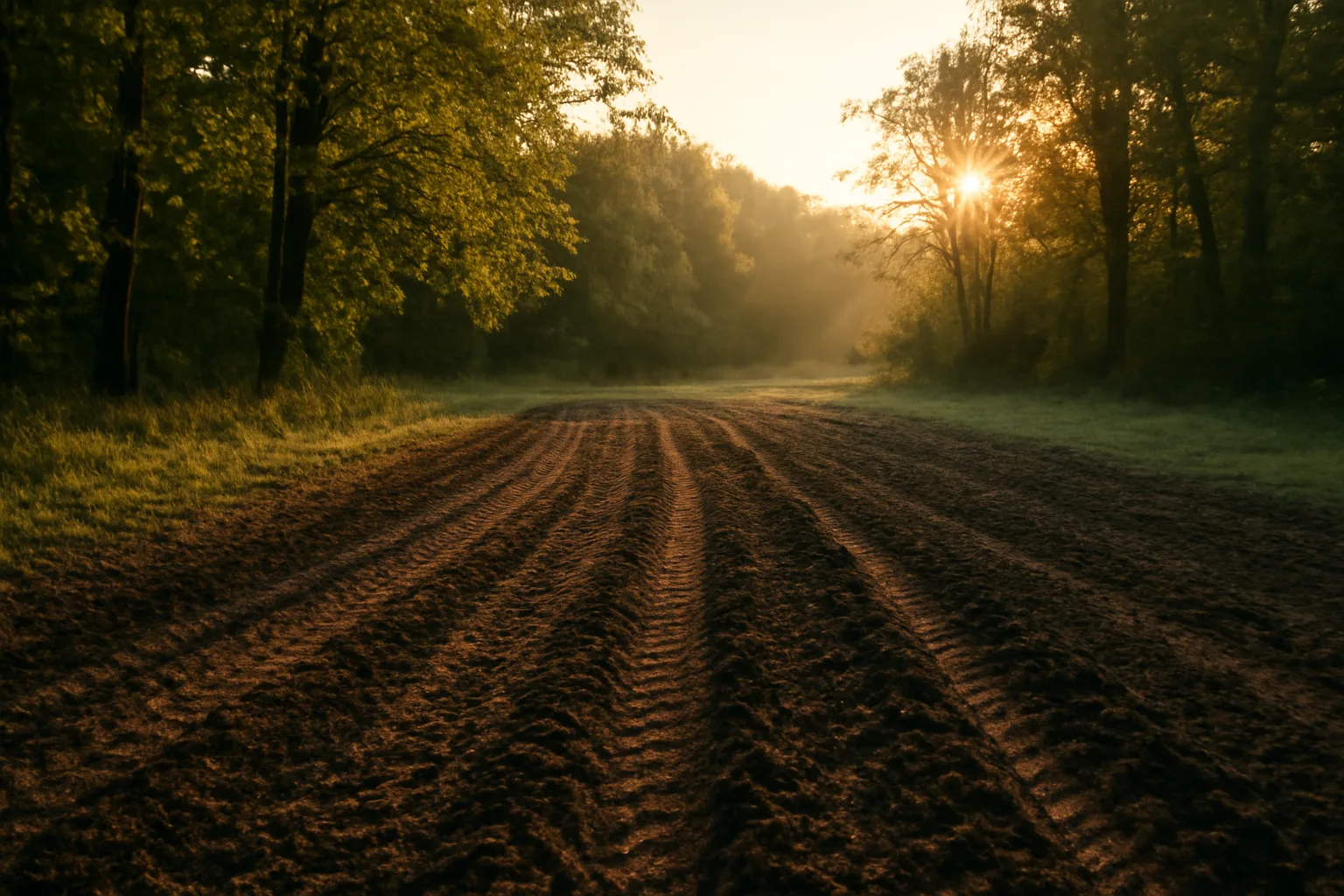
Preparation decides more of the outcome than seed selection does. Extension agronomists consistently rank weed control and soil fertility ahead of variety choice for plot success, and that lines up with what shows up in the field: a mediocre seed blend on a clean, correctly limed seedbed beats a premium blend thrown into sod or acidic dirt. Start with a soil test. A basic test through a land-grant university soil testing lab commonly costs somewhere in the $7 to $20 range per sample depending on the state and the panel requested, and it tells you soil pH and levels of phosphorus, potassium, and other nutrients. The University of Missouri's Soil and Plant Testing Laboratory, for example, publishes its routine test fee on its own fee schedule, and rates like it are typical across land-grant labs nationally. Most food plot species (clover especially) want a pH between 6.0 and 7.0. Below that, lime is not optional. Purdue University Extension notes that in acidic soils, nutrients like phosphorus become chemically tied up and unavailable to plants even when soil test levels look adequate, which is why correcting pH has to come before or alongside any fertilizer decision [1]. Your soil test lab's specific lime and fertilizer recommendation is the authority here, not a generic rate off a bag or forum post. Kill existing vegetation before you plant, either with tillage, a burndown herbicide, or both. Standing sod and weeds compete directly with new seedlings for light, water, and nutrients, and thick grass sod is one of the most common reasons a broadcast clover planting fails to establish. Once the ground is clean, work it to a firm, fine seedbed for small-seeded species. A loose, fluffy seedbed swallows small seeds too deep. The old rule of thumb, walk across a worked plot and if your boot print sinks more than half an inch, it's too loose, still holds up in practice.
What's the actual best way to plant the seed (broadcast vs drill vs till-in)?
| Broadcast + cultipack/drag | Clover, chicory, brassica mixes | ATV spreader, drag harrow or cultipacker | Moderate, depends on follow-up pass | |
|---|---|---|---|---|
| No-till drill | Any seed size, especially into existing sod or residue | No-till drill (owned, rented, or co-op) | High, most consistent | |
| Disk/till then broadcast or drill | New ground, compacted soil, heavy weed pressure | Disk or tiller, tractor | High if packed after | If you're only planting an acre or two and don't own a drill, broadcasting into a well-worked, firm seedbed and cultipacking afterward gets you most of the way there for small seeds. For grain-heavy blends or larger acreage, renting or borrowing a no-till drill from a local co-op or conservation district is worth the day it takes. Mixing seed sizes in the same bag before planting causes its own problem: small and large seeds separate in a spreader hopper, so a clover-and-oat blend often ends up with oats in one end of the plot and clover in the other. Planting in two passes at two different settings, or choosing single-species plantings, avoids that. |
There's no single universal method. The right technique depends on seed size and your equipment. Small seeds (clover, chicory, most brassica mixes) want shallow planting, typically 1/4 inch deep or even just pressed into the surface. Broadcasting followed by a light drag or cultipacker works well. A no-till drill set to a very shallow depth also works and often gives more even stands than hand broadcasting, since seed-to-soil contact is more consistent. Larger seeds (oats, wheat, soybeans, corn) need to go deeper, generally 1 to 2 inches, and benefit from being drilled or disked in rather than left on the surface. Broadcasting large seed and hoping rain works it in is the least reliable method and wastes a meaningful share of the seed to birds and rot. Here's a quick comparison of the three main planting methods: | Method | Best for | Equipment needed | Typical seed-to-soil contact |
Do deer eat clover, and is it worth planting?
Yes. Deer eat clover readily, and it's one of the most reliable food plot species across the whitetail range. White clover and red clover both show up repeatedly in state wildlife agency and extension forage recommendations because deer use them heavily through spring and summer and the plants are perennial, so a single planting can produce forage for three to five years with proper mowing and fertility upkeep. Clover's protein content, often cited in extension forage tables in the 20 to 30 percent crude protein range depending on growth stage and management, makes it valuable during antler growth and lactation in late spring and summer, a period when natural browse quality is often lower. The University of Georgia Extension's forage quality work on clover and other legumes supports that general range for well-managed stands [2]. It's not a magic bullet, but among perennial plot options it has one of the best track records for both attraction and actual nutrition delivered. The tradeoff is establishment time and mowing. Clover needs a clean, limed, fairly fine seedbed, and it takes a full season to get properly established before it can take heavy browsing pressure. It also needs mowing two or three times a season to keep it from getting stemmy and losing palatability, and it will not tolerate deep shade or standing water. For readers comparing species options more broadly, food plot seed breaks down blends by region and goal, and deer food plot seed covers specific cultivar choices.
When to plant turnips for deer
Turnips go in the ground roughly 60 to 90 days before your area's average first fall frost date, which for most of the whitetail range falls somewhere between late July in the far north and mid-September farther south. Planting depth is shallow, about 1/4 to 1/2 inch, into a firm, weed-free seedbed. Turnips are a fall and winter food source specifically. The plant needs a hard frost or two to convert starches to sugars, which is what makes the bulbs and tops suddenly palatable in November and December after deer largely ignored them in September and October. That delayed-attraction pattern trips up a lot of first-time planters who assume the plot failed because deer aren't touching it in early fall. Give it time and cold weather. Brassica seed is tiny (roughly 150,000 to 220,000 seeds per pound depending on variety), so it's easy to way overseed a plot. Most extension and seed company guidance recommends 3 to 5 pounds per acre for straight turnip plantings, less if blended with other brassicas or grains. Overseeding wastes money and produces spindly, crowded plants that never bulb properly.
When to plant oats for deer
Oats are one of the most forgiving food plot grains for timing. They germinate fast, in as little as 5 to 7 days in warm soil, and tolerate a wide planting window, generally late August through September in northern and central zones, stretching into early-to-mid October farther south. Oats work well as a standalone fall attractant or mixed with brassicas and cereal rye. Deer hit young oat shoots hard in September and October, and the plant will keep producing new growth after grazing as long as temperatures stay above roughly the mid-20s Fahrenheit. Unlike winter wheat or rye, oats generally winterkill in the northern half of the country once temperatures drop into the teens and below for sustained periods, which is fine if you want a fall-only plot and don't need spring regrowth. Planting depth for oats is 1 to 1.5 inches, deeper than clover or brassica seed, and a drill gives much better results than broadcasting because the seed needs real soil contact and coverage to germinate reliably.
Do deer eat sorghum, and does it belong in a plot?
Deer do eat sorghum, both the grain heads and the young foliage, but it's a secondary plot choice rather than a first pick for most hunters. Grain sorghum is more commonly grown as a standing grain crop for winter cover and late-season food in regions where corn is expensive or drought risk is high, since sorghum tolerates dry conditions better than corn. The practical downside is competition from other wildlife, birds especially, which can strip a sorghum head before deer season even opens. It also needs warm soil to germinate, so it's a late-spring planting (after soil hits around 60 degrees Fahrenheit), putting it on the same calendar as corn and soybeans rather than fall brassicas. For most food plot budgets, sorghum makes more sense as part of a diverse warm-season blend or standing grain plot than as a standalone planting. It's not a wasted choice, but it's not where most hunters should spend their first plot dollars either.
Do deer like honey, and does it matter for food plots?
No, this isn't a real food plot consideration, and it's worth addressing directly because the question comes up. Deer are not drawn to honey as a natural food source, and there's no legitimate agronomic or attraction-science basis for using it in a plot or as an attractant. Deer diets run to browse, forbs, mast (acorns and other nuts), agricultural crops, and in fall, high-carb foods like corn and soybeans, not sugary substances like honey. Where this question sometimes originates is confusion with commercial deer attractant products that use sweet scents or molasses-based minerals, which is a different category entirely (and one regulated as bait or attractant under many state rules, not as a food plot). If you're trying to boost attraction, put the effort into soil fertility and species selection instead. A well-fertilized clover or brassica plot outperforms any scent or sweetener product for actual nutrition and sustained use.
What are deer's favorite foods, really?
Deer preference shifts by season, region, and what's available, so there's no single ranked list, but research and extension forage data point to consistent patterns. Acorns are consistently one of the most preferred fall foods where oaks are present; white oak acorns in particular are lower in tannins and more palatable than red oak acorns, and deer will often shift almost entirely onto acorns during a heavy mast year, ignoring planted plots in the process. Among planted crops, soybeans (as both a growing-season forage and a fall grain source) and corn rank near the top for total food value, which is why they anchor a lot of larger food plot programs on ag ground. Clover is a strong warm-season preference, brassicas and cereal grains take over in cold weather, and natural browse (woody stems, forbs) fills the gaps year-round, particularly in late winter when almost nothing else is available. The honest answer for a hunter planning a plot: preference is less useful than availability and timing. A less-preferred food that's the only thing green and growing in your area in October will get eaten hard. A preferred food planted at the wrong time, or overwhelmed by a mast year, might sit untouched. That's why matching species to your specific calendar and soil matters more than chasing whatever blend claims to be a deer's favorite. Deer food plots covers regional species selection in more depth, and food plot whitetail covers plot placement and design.
How much seed, fertilizer, and lime does a typical plot need?
Rates vary by species and by what your soil test actually shows, but rough per-acre benchmarks help with budgeting before you get your specific numbers back. Clover is typically seeded at 6 to 8 pounds per acre for a straight white clover stand. Brassicas run much lower, 3 to 5 pounds per acre for turnips alone, up to around 8 to 10 pounds per acre for multi-species brassica blends. Oats are seeded much heavier by weight, commonly 100 to 130 pounds per acre (roughly 2 to 3 bushels), since the seed itself is large and germination rates lower than small-seeded legumes. Lime rates depend entirely on your starting pH and soil buffer capacity, which is exactly why a soil test matters more than a generic rate. Extension guidance commonly cites lime applications in the 1 to 2 ton per acre range to correct moderately acidic soil, but some soils need far more and some need none. Purdue University Extension's fertility guidance points out that lime recommendations depend on buffer pH testing, more than water pH, which is another reason a real lab report beats a guess [1]. Fertilizer needs likewise depend on your test results for phosphorus and potassium specifically; nitrogen needs differ sharply between legumes (which fix their own nitrogen once established) and grasses or brassicas (which need it applied). Your soil test lab's report is the final word on lime and fertilizer rates for your specific field. A general plan, whether free advice from a forum or a paid service like a Custom Food Plot Plan, can tell you what's typical and help you build a planting calendar, but it can't replace what your own dirt actually needs.
What equipment do you actually need to plant a food plot well?
You can plant a small plot with hand tools and a lot of patience, but a few pieces of equipment make the difference between a decent stand and a great one. A disk or tiller to break ground, a cultipacker or drag harrow to firm the seedbed before and after seeding, and a broadcast spreader (hand-crank for very small plots, ATV-mounted for anything over half an acre) cover most small-plot needs. A no-till drill is the single biggest upgrade if you're planting into existing sod, crop residue, or larger acreage, since it handles seed depth and soil contact far more consistently than broadcasting. Many conservation districts, soil and water conservation offices, or farm co-ops rent drills by the day, which is often the most cost-effective route for a hunter planting one or two plots a year rather than buying a drill outright. A soil pH meter or sending in samples for the real lab test, a sprayer for burndown herbicide, and a way to mow (bushhog or ATV mower) round out a practical setup.
How does the best method change by region and zone?
Regional differences matter more for timing than for method. The core planting techniques, clean seedbed, correct depth, proper lime and fertility, hold everywhere. What shifts is the calendar. Northern zones (roughly USDA hardiness zones 3-4) have a short fall establishment window and often see turnips and oats planted by early August, with spring clover plantings pushed into May because of lingering frost risk. Central zones (5-6) have more flexibility, with fall plantings often running from mid-August through mid-September. Southern zones (7 and warmer) can plant fall brassicas and grains later, often into October, but face a different challenge: summer heat and drought stress can hit spring and early summer plantings hard, so timing around rainfall becomes as important as timing around frost. Your local extension office publishes frost date tables specific to your county, and that's a better source than any national zone map for exact dates. Combining that local data with your soil test results is really the whole formula for the best way to plant a food plot: right species, right ground, right calendar.
Frequently asked questions
Do deer eat sorghum?
Yes, deer eat both grain sorghum heads and young foliage, but it's usually a secondary or supplemental plot crop rather than a first choice. It competes with birds for the grain and needs warm soil to germinate, putting it on the same planting window as corn and soybeans. It works best mixed into a diverse warm-season blend.
Do deer eat clover?
Yes, clover is one of the most reliably eaten and nutritionally valuable food plot plants, with crude protein often in the 20 to 30 percent range depending on growth stage. White and red clover both show up heavily in extension forage recommendations and can produce usable forage for three to five years once established with proper mowing and fertility.
When should you plant deer food plots?
Spring plots (clover, chicory) go in after your last frost date, generally April through May depending on zone. Fall plots (brassicas, oats, cereal grains) are timed backward from your first fall frost, typically 60 to 90 days ahead, landing anywhere from late July in the far north to mid-September or later farther south.
Do deer like clover more than other food plot options?
Deer show strong, consistent preference for clover during spring and summer, and it ranks among the most palatable perennial plot species in extension research. Preference shifts seasonally, though; deer often switch heavily to acorns during fall mast years and to brassicas or grains once frost hits, regardless of available clover.
When should you plant oats for deer?
Plant oats from late August through September in northern and central zones, stretching into early-to-mid October farther south. Oats germinate in as little as 5 to 7 days in warm soil and are best drilled 1 to 1.5 inches deep rather than broadcast, since they need firm soil contact to establish well.
When should turnips be planted for deer?
Turnips go in 60 to 90 days before your area's average first fall frost date, roughly late July to mid-September depending on region. They need a hard frost afterward to convert starches to sugars, which is why deer often ignore turnip plots in early fall and hit them hard in November and December.
What exactly is a food plot?
A food plot is a planted area of forage, grain, or brassica crop on hunting land, grown specifically to feed deer and other wildlife and to give hunters a predictable place to observe or hunt them. It differs legally from baiting in most states because it's a grown crop rather than placed feed; check your state wildlife agency's specific rules.
What is a deer's favorite food overall?
There's no single favorite; acorns (especially white oak) rank among the most preferred fall foods where available, and deer often abandon plots entirely during a heavy mast year. Among planted crops, soybeans, corn, and clover rank consistently high, but availability and timing usually matter more to actual use than raw preference.
Do deer like honey?
No, honey isn't a meaningful deer food or attractant. Deer diets run to browse, forbs, mast, and agricultural crops, not sugary substances. Confusion sometimes comes from molasses-based mineral or attractant products, which are a separate, often regulated category and not part of legitimate food plot planning.
Should I broadcast or drill food plot seed?
Broadcasting works fine for small seeds like clover and brassicas if you drag or cultipack afterward for seed-to-soil contact. Larger seeds like oats, wheat, and beans do better drilled 1 to 2 inches deep, since broadcasting large seed onto the surface wastes a meaningful share to birds and rot.
How deep should food plot seed be planted?
Small seeds like clover, chicory, and brassicas want about 1/4 inch deep, sometimes just pressed onto the surface. Larger seeds like oats, wheat, corn, and soybeans need 1 to 2 inches of coverage. Planting too deep is one of the most common reasons small-seeded plots fail to emerge.
How important is a soil test before planting a food plot?
It's the single most cost-effective step in the whole process, typically in the $7 to $20 per sample range through a land-grant extension lab. It tells you exact lime and fertilizer needs; skipping it commonly means wasted fertilizer money and stunted growth from uncorrected soil pH, since acidic soil ties up nutrients before plants can use them.
Sources
- Purdue University Extension, Managing Soil pH for Crop Production (AY-267 series content, Purdue Agronomy): Acidic soil ties up nutrients like phosphorus and reduces availability even when fertilizer is applied, and lime rates depend on buffer pH testing
- University of Georgia Extension, Forage Legumes (Bulletin 1347): Clover crude protein commonly falls in the 20-30 percent range depending on growth stage
- Purdue University Extension, Grain Sorghum (Milo) production guidance: Grain sorghum tolerates dry conditions better than corn and needs warm soil to germinate
- University of Missouri Extension: Describes best practices for establishing and maintaining clover as a forage for deer.
- Iowa State University Extension: Provides guidance on oat planting timing and agronomic practices applicable to food plot oats.