Last updated 2026-07-25
TL;DR
Plant clover and chicory for spring/summer protein, brassicas (turnips, radishes) and cereal grains (oats, wheat) for fall, and soybeans or corn where acreage allows season-long food. Match species to your USDA hardiness zone, soil pH, and a soil test. Most cool-season plots go in 6-8 weeks before first frost; warm-season plots go in after last frost.
What is a food plot, exactly?
A food plot is a planted patch of forage or grain, usually somewhere between a quarter acre and several acres, put in specifically to attract and feed deer (and often other wildlife) on land you own, lease, or manage. It's not the same as a wildlife opening left to grow up in weeds, though a badly managed plot can turn into one. Most plots fall into two broad categories: annual plots you replant every year (brassicas, cereal grains, soybeans, corn) and perennial plots that persist for 3-5 years with mowing and maintenance (clover, chicory, alfalfa). The USDA Natural Resources Conservation Service treats food plots as a wildlife habitat practice under its Farm Bill conservation programs, and NRCS conservation practice standards cover wildlife habitat plantings as part of that work [1]. A plot's job is to fill a specific nutritional or attraction gap on your property. Spring and summer plots feed lactating does and antler growth. Fall plots pull deer during hunting season and carry them into winter. The best properties usually run more than one type at once, which is where a lot of first-time planters get overwhelmed by choice. If you're mapping out your whole property rather than one plot, food plot whitetail covers the bigger-picture layout side of this.
What do deer actually prefer to eat, and does that match what we plant?
Deer are browsers first. Studies on whitetail diet composition consistently show that natural browse (woody plants, forbs, mast like acorns) makes up the bulk of a wild deer's year-round diet, with agricultural crops and food plots acting as high-value supplements, especially during stress periods (late summer heat, post-rut recovery, deep winter) [2]. So there's no single "favorite food" in a lab-tested sense, but there are consistent patterns from decades of plot use and forage preference trials at land-grant universities. Clover and soybeans rank at the top for palatability and use across most of the whitetail's range, according to preference trials and extension forage recommendations from universities like Mississippi State and Penn State [3] [4]. Acorns, when available, often outcompete everything you plant, because deer evolved on mast, not on annual ryegrass. That's not a knock on food plots. It just means plots work best as a supplement to, not a replacement for, good natural habitat. Brassicas (turnips, radishes, rape) get eaten hard, but usually later in the season after a frost sweetens the leaves and bulbs by converting starches to sugars. Cereal grains like oats and wheat get hit early and often, especially by young deer and does with fawns.
Do deer eat clover, and is it worth planting?
Yes. Clover is one of the most consistently preferred food plot forages across whitetail range, and it's the closest thing to a default answer for "what should I plant" that exists in this hobby. White clover (Ladino types) and red clover both get heavy use, and extension forage guides list clover among the highest-protein, most digestible forages available for a food plot, often running 25-30% crude protein in vegetative growth stages [4]. Do deer like clover more than other options? In head-to-head plot use, yes, especially in spring and early summer when deer need protein for antler growth and lactation. The catch is that clover needs a soil pH close to neutral (6.0-7.0) to thrive, and most raw woodland soil in the eastern and midwestern US runs more acidic than that without lime. If your soil test comes back at 5.2, don't skip liming and expect the clover to perform. It won't. Clover is a perennial, so a well-maintained stand can run 3-5 years before you need to replant. Mow it 2-3 times a season to knock back weeds and keep growth vegetative and tender, since deer avoid clover once it goes to stem and flower. If you want a low-maintenance, high-return plot and you're only planting one thing this year, clover is usually the answer.
When should you plant food plots for deer?
| 3-4 (northern MN, WI, ME, MT) | Late May-early June | Late July-mid August | |
|---|---|---|---|
| 5-6 (IA, IL, OH, PA, VA) | Mid May-early June | Mid August-early September | |
| 7-8 (NC, SC, GA, TN, AR) | Late April-May | Early-mid September | |
| 9 (FL, S. TX, S. LA) | March-April | Late September-October | These windows aren't guarantees. Local rainfall, a late frost, or a drought year will shift things. Check your state land-grant extension office's specific planting calendar before you buy seed, since a Georgia planting date applied in Michigan will fail. If you want help translating a soil test and zone into an actual mix and schedule, that's exactly what a Custom Food Plot Plan is built to do; it's a $99 one-time plan based on your soil test, region, and goals, not a guarantee of deer activity. |
Timing is regional, and it's the single most common mistake new planters make; they follow a bag's generic instructions instead of their own zone. The rule of thumb from extension programs is to plant cool-season annuals and perennials 6-8 weeks before your area's average first frost date, and warm-season annuals after your last spring frost date once soil has warmed [5]. Here's a rough framework by USDA Plant Hardiness Zone, cross-referenced against typical extension planting windows [5]: | Zone | Spring/summer plot window | Fall plot window |
When should you plant turnips for deer?
Turnips go in as a fall brassica planting, typically 60-90 days before your first hard frost, since turnips need that frost to convert starches into sugars and become genuinely palatable. Plant too early in hot weather and you risk bolting or flea beetle damage before the plant establishes; plant too late and the bulbs won't size up before ground freeze. In Zone 5-6 country, that usually means late July through mid-August. In Zone 7-8, you can push into early-mid September. Turnips want a firm, fine seedbed and shallow planting depth (a quarter inch or less), broadcast at roughly 4-6 lbs per acre if planted alone, less if blended with other brassicas or grains. One honest note: deer often ignore turnip tops and bulbs early in the season and hammer them hard in late fall and winter once other food sources thin out and a couple of frosts have hit. Don't panic if your turnip plot looks untouched in October. That's normal, not a failure.
When should you plant oats for deer, and do deer eat sorghum?
Oats are a cool-season cereal grain, planted in late summer for fall/winter plots or in early spring for a quick spring plot. For fall plots, most extension guides put oat planting 6-8 weeks before first frost, similar timing to brassicas and often blended with them [5]. Oats germinate fast (5-10 days in good soil temps) and get hit hard by deer within the first few weeks of emergence, arguably harder and earlier than brassicas. Oats aren't cold-hardy everywhere. In Zone 3-4, oats will winterkill completely once temps drop into the teens and lower, so they function as a fall attraction plot, not a winter food source. In Zone 6 and south, oats often survive milder winters and provide some green forage into early winter. Sorghum is a different story. Grain sorghum and forage sorghum do get browsed by deer, particularly the grain heads in fall, and it's a legitimate warm-season plot option in the southern half of the whitetail's range where heat and drought tolerance matter more than in the north [6]. But deer preference for sorghum runs well behind soybeans, corn, and cereal grains in most comparative plantings, and it's more commonly used as a dove field or wildlife cover crop than a primary deer attractant. If you're planting sorghum specifically to draw deer, treat it as a secondary or blend component, not your main plot.
What about corn, soybeans, and other warm-season options?
Corn and soybeans are the biggest-tonnage, highest-energy options available, and they're what most large-acreage food plot programs (and commercial ag) run for both deer and turkey. Soybeans in particular test extremely high in preference trials; extension research on whitetail forage selection consistently ranks soybeans among the top choices when available, alongside clover [3]. The tradeoff is acreage and browse pressure. A half-acre soybean plot on a property with a heavy deer herd routinely gets mowed to nothing by July, before the plant ever sets a pod. Extension recommendations generally suggest a minimum of 3-5 acres of beans, or protection with electric fencing on smaller plots, to get the plant past the vulnerable early growth stage and into a mature, high-yield crop that survives into fall [3]. Corn works similarly. It needs real acreage (2+ acres is a rough minimum on most properties) and decent fertility to be worth the input cost, since corn is a heavy nitrogen feeder. On small lease properties under 2 acres of plantable ground, both crops are often a poor return on seed and labor compared to clover, brassicas, or cereal grains, which tolerate browse pressure better at the seedling stage.
Do deer like honey, and does that matter for food plots?
No, this isn't really a food plot question, but it comes up because of "honey hole" terminology and some old-timer talk about sweet attractants. Deer are not documented to have any particular preference for honey as a food source; whitetail diet studies focus on browse, forbs, mast, and agricultural forage, and honey doesn't appear in any of the standard forage or diet composition research [2]. What's likely happening is confusion with mineral and molasses-based attractants, which do use sugar/molasses as a carrier for salt and minerals deer do seek out. Some of those products are legal in some states and considered bait or supplemental feeding in others, so check your state wildlife agency's regulations before using any mineral or attractant product, separate from a planted food plot . Planted forage (clover, brassicas, grains, beans) is regulated differently than bait/feed piles in most states, but the line varies, so don't assume.
How do you pick species based on your soil test?
Your soil test is the actual authority here, not a generic seed bag recommendation. A test from your county extension office or a private ag lab tells you current pH, phosphorus, potassium, and organic matter, and from that you (or your lab's agronomist) can calculate exact lime and fertilizer needs. Clover and alfalfa want pH 6.0-7.0 and won't persist well below 5.5 without lime correction. Brassicas are more tolerant, doing reasonably well down to pH 5.5, though they still respond to lime and nitrogen. Cereal grains (oats, wheat, rye) are the most forgiving of marginal, lower-pH soil among common plot species, which is part of why they're a common "first plot on rough dirt" choice. Lime takes time to work. Often 6-12 months to fully react with soil and shift pH, according to most land-grant soil fertility guides, so if your test shows you need 2 tons per acre of ag lime, get it down as early as possible relative to planting, ideally the season before. If you're planting this fall on soil you haven't limed yet, pick a more acid-tolerant species (oats, wheat, brassicas) rather than forcing clover onto a 5.0 pH field and wondering why it struggled. A soil test costs very little, usually $10-20 through a state extension lab, and it's the cheapest insurance you can buy against wasting a season's seed and fertilizer budget. For a more detailed rundown of seed options by soil and region, see deer food plot seed and food plot seed.
What's a reasonable food plot mix for someone planting one plot this year?
If you can only manage one plot, a clover/chicory perennial blend gives you the best return over multiple years, spring through fall coverage, and the lowest annual labor once it's established. Mow it a few times a season, spot-spray or lightly disc and overseed in year three or four, and it'll carry a property for years. If you specifically want a hunting-season attraction plot and don't mind replanting every year, a brassica/cereal grain blend (say, turnips or radishes mixed with oats and a little winter wheat) timed 6-8 weeks before your first frost gives you early-season grain attraction and late-season bulb/leaf attraction from the same plot. If you have 3+ acres and want tonnage for summer nutrition and fall/winter standing grain, soybeans or corn (fenced or planted at scale to outpace browse pressure) is the move, understanding it's a bigger cash and equipment investment. For general planning across a whole property rather than one plot, deer food plots and deer for food cover multi-plot strategy in more depth.
What equipment do you actually need to plant a food plot?
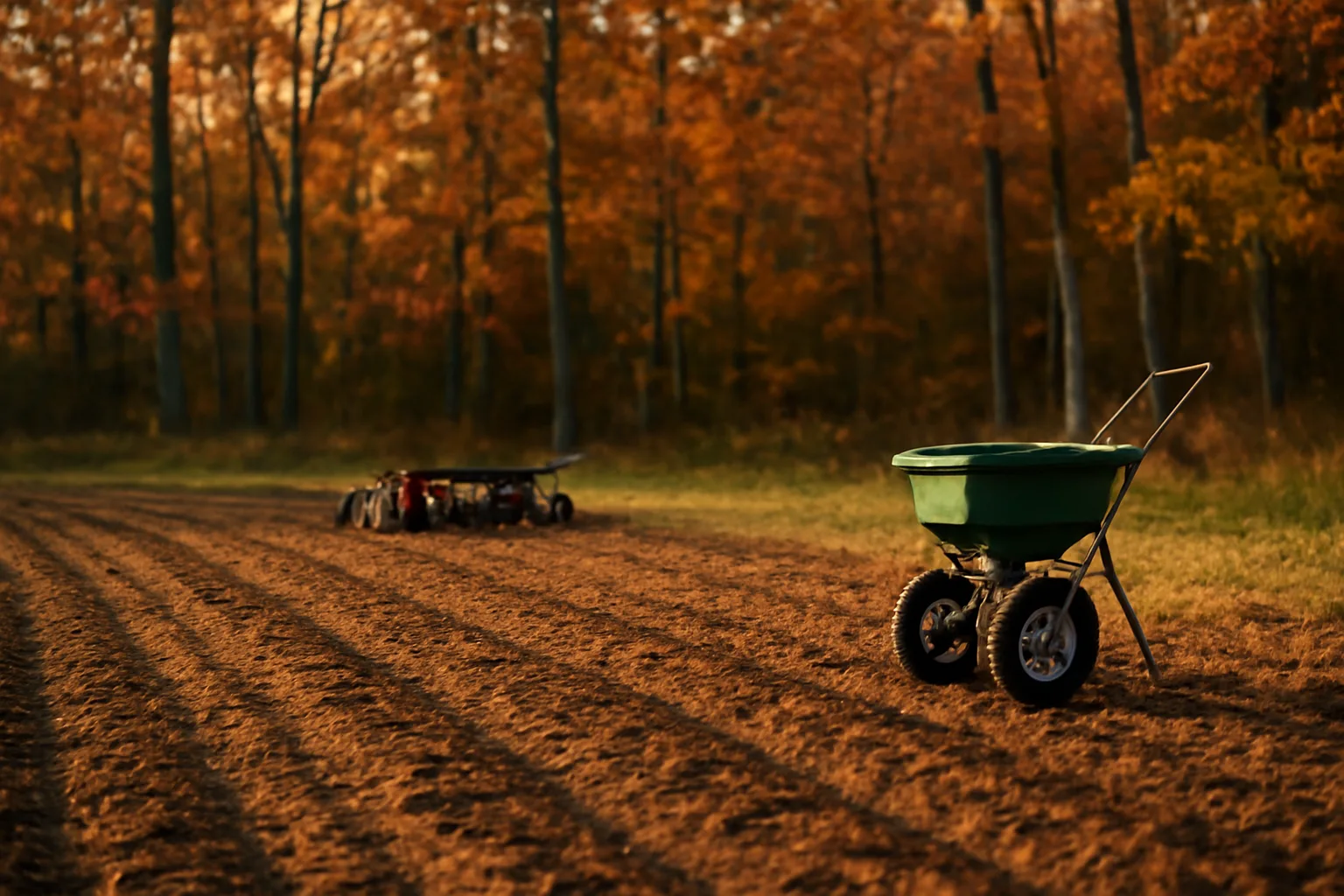
At minimum: a way to kill existing vegetation (herbicide and a sprayer, or a disc), a way to work the seedbed (disc, tiller, or no-till drill), a way to spread seed (broadcast spreader, or a drill for small-seeded species like clover that need shallow, even depth), and a way to pack the seed in (cultipacker, roller, or even driving over it with an ATV in a pinch). NRCS wildlife habitat guidance and most state extension food plot bulletins emphasize seed-to-soil contact as the number one failure point for new planters; broadcasting clover or brassica seed onto rough, cloddy ground without any packing step is one of the most common reasons a plot fails to establish [1]. If you're on a budget, a $150-300 tow-behind broadcast spreader and a rented or borrowed disc will get a small plot in the ground. You don't need a $40,000 no-till drill for a half-acre clover plot, though it helps on larger acreage or heavier clay soils.
Frequently asked questions
Do deer eat sorghum?
Yes, deer will eat grain sorghum and forage sorghum, especially the seed heads in fall, and it's a viable warm-season, drought-tolerant option in southern food plots. Preference trials generally rank it behind soybeans, corn, and cereal grains though, so it works best as part of a blend rather than a standalone attraction plot.
Do deer like clover?
Yes, clover is one of the most consistently preferred food plot forages across whitetail range, especially in spring and summer when protein demand is high for antler growth and lactation. It needs soil pH near 6.0-7.0 to perform well, so lime according to a soil test before planting if your ground runs acidic.
When should you plant oats for deer?
Plant oats for a fall plot roughly 6-8 weeks before your area's average first frost date, often blended with brassicas or winter wheat. Oats germinate in 5-10 days and get browsed heavily right after emergence. In Zone 3-4, oats winterkill and function only as a fall plot, not a winter food source.
When is the best time to plant food plots for deer?
Cool-season annuals and perennials (clover, brassicas, oats, wheat) go in 6-8 weeks before first frost for fall plots, or in spring after the last frost for a spring/summer plot. Warm-season plots (soybeans, corn, sorghum) go in after soil has warmed following your last spring frost. Exact dates depend on your USDA hardiness zone and local extension calendar.
When should turnips be planted for deer food plots?
Turnips go in 60-90 days before your first hard frost, typically late July through mid-August in Zone 5-6, or into early September in Zone 7-8. They need frost exposure to sweeten and become palatable, so don't expect heavy use until after a few frosts hit, usually late fall into winter.
What exactly is a food plot?
A food plot is a planted area of forage or grain crops, from a quarter acre up to several acres, established specifically to feed and attract deer or other wildlife on managed land. It's distinct from natural browse or an unmanaged wildlife opening, and it's recognized as a wildlife habitat practice under USDA NRCS conservation programs.
What are deer's favorite foods, more than food plot crops?
Natural browse and mast (acorns especially) make up most of a wild deer's diet year-round, with clover and soybeans ranking as the most preferred planted forages when available. There's no single scientifically ranked "favorite," but consistent preference data puts acorns, clover, and soybeans near the top across most whitetail range.
Do deer like honey or sweet attractants?
There's no research showing deer specifically prefer honey. What people usually mean is molasses-based mineral or attractant products, which use sugar as a carrier for salt and minerals deer do seek. Check your state wildlife agency's rules first, since mineral and attractant use is regulated separately from planted food plots in many states.
What should a beginner plant in their first food plot?
A clover/chicory perennial blend is the most forgiving, longest-lasting option for a first plot, provided you lime to a 6.0-7.0 pH per your soil test. If you want a fall hunting-season plot instead, a brassica and cereal grain blend (turnips or radishes with oats or wheat) planted 6-8 weeks before frost is a solid beginner choice.
How big does a food plot need to be to work?
There's no fixed minimum, but under an acre puts you at risk of browse pressure wiping out soybeans or corn before they mature. Clover, brassicas, and cereal grains tolerate smaller plots (quarter acre to half acre) better because deer browse the leaves without killing the whole plant the way they can with young beans or corn.
Do I need to lime before planting a food plot?
If your soil test shows pH below 6.0, yes, especially for clover or alfalfa. Lime takes 6-12 months to fully react and shift soil pH, so apply it as early as possible relative to planting. If you're planting soon without time to lime, choose a more acid-tolerant species like oats, wheat, or brassicas instead.
Is it legal to use mineral licks or feed as part of a food plot program?
It depends entirely on your state. Some states allow mineral supplementation and even baiting for hunting, others prohibit it or restrict it seasonally, and definitions of "bait" vary. Check your specific state wildlife agency's regulations before using anything beyond planted forage, since rules differ from how they treat standing food plots.
Sources
- USDA Natural Resources Conservation Service, Field Office Technical Guide, Conservation Practice Standard: Upland Wildlife Habitat Management (Code 645): Food plots are recognized as a wildlife habitat conservation practice under USDA NRCS Farm Bill programs
- Warren, R.J., "Deer Overabundance," Wildlife Society Bulletin, Vol. 25, No. 2 (1997), pp. 213-214, JSTOR: Natural browse and mast make up the majority of wild deer diets, with food plots as supplemental high-value forage
- University of Kentucky Cooperative Extension, AGR-52, Clover Variety Performance Test: Clover forages provide high crude protein (roughly 25-30%) during vegetative growth and require near-neutral soil pH
- University of Tennessee Extension, PB1621, Wildlife Food Plots: Cool-season food plots should be planted 6-8 weeks before the average first frost date in a given region
- USDA NRCS Plant Guide, Sorghum bicolor (L.) Moench, Grain Sorghum: Grain sorghum is used as a wildlife food source and tolerates heat and drought better than many alternative warm-season crops
- Congressional Research Service, "The Lacey Act: Compliance Issues for the Wood Products Industry" is not applicable; see state wildlife agency regulations index for baiting and feeding rules, e.g. Michigan DNR, Baiting and Feeding Order: Wildlife feeding and attractant regulations vary by state and are handled separately from planted forage food plots