Last updated 2026-07-25
TL;DR
Deer Creek Seed Company sells food plot blends (clover, brassica, cereal grain mixes) aimed at hunters planting small acreage. The seed itself is ordinary ag-grade seed repackaged with hunting branding, so match the bag to your soil test and zone rather than the marketing. Planting windows run late summer for fall annuals, spring for perennial clover.
what is deer creek seed company and what do they sell
Deer Creek Seed Company is one of several smaller seed brands marketed directly to hunters, selling bagged blends of clover, brassica (turnips, radish, rape), cereal grains (oats, wheat, rye), and some proprietary mixes under hunting-branded labels. They compete in the same aisle as Whitetail Institute, Biologic, and Antler King. Here's the thing worth knowing before you spend money: almost every hunter-branded seed company buys base seed from the same regional ag seed suppliers, then blends and bags it under their own label. The clover in a $40 bag of "Trophy Clover" is very often the same ladino or red clover variety a farmer buys in bulk for a fraction of the price. That doesn't make the hunter blends useless. Some do add legitimate value: pre-mixed ratios that are hard to replicate at home, inoculant already applied to legume seed, or brassica blends tuned for a specific maturity window. What it does mean is you should read the tag. Every seed bag sold in the US has to carry a label showing species, variety (if stated), germination percentage, purity, and test date, per USDA seed labeling rules under the Federal Seed Act [1]. If a bag doesn't list a specific clover variety, or lists "variety not stated," you're paying brand markup for a commodity product. That's fine if the price is fair. It's not fine if you're paying triple. For planning purposes, treat any Deer Creek product the same way you'd treat seed from a farm co-op: check the species mix, check the seeding rate on the tag, and match it to what your soil test says your dirt can support. A bag of clover on a field with a pH of 5.2 is going to underperform no matter whose logo is on the label.
what is a food plot, exactly
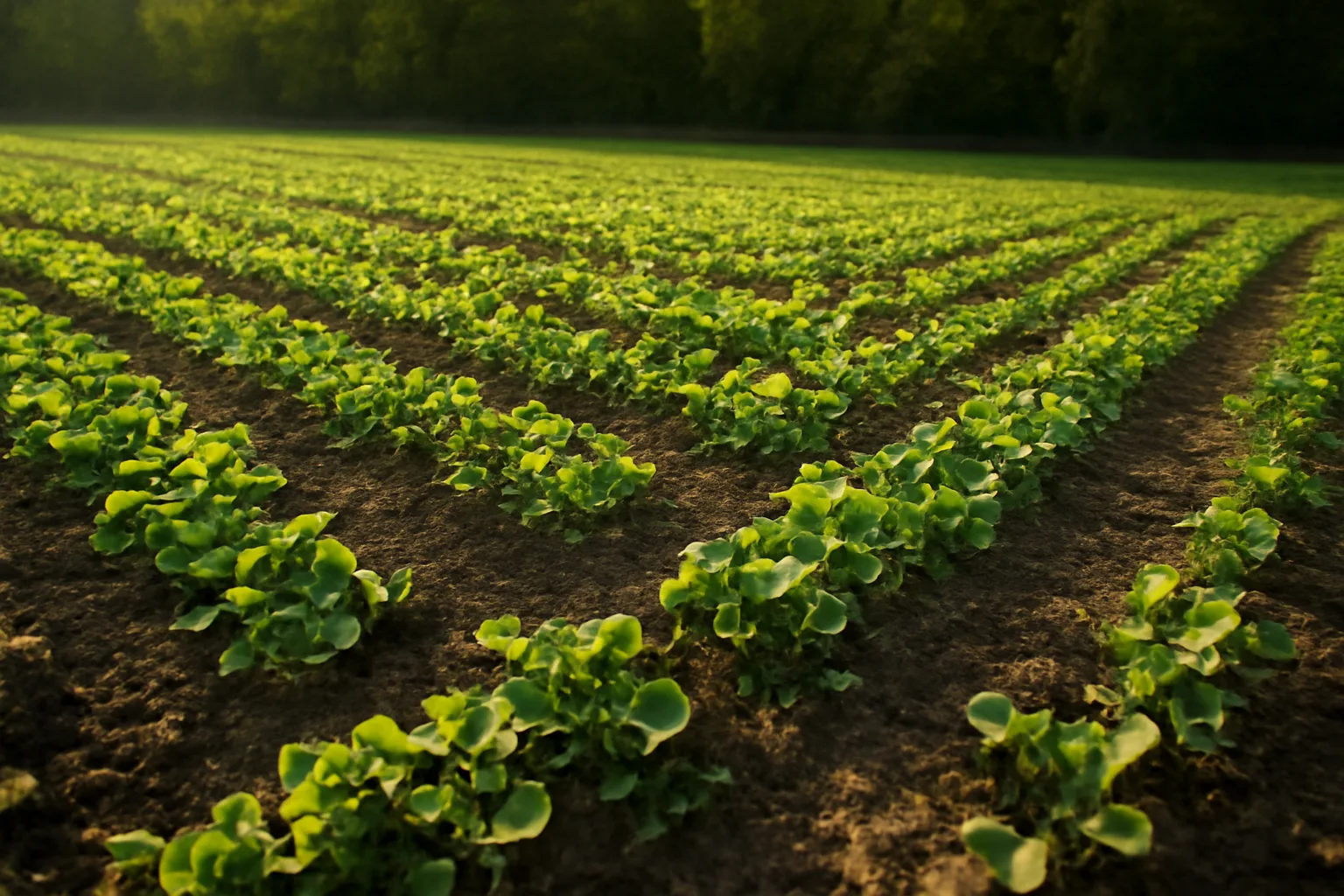
A food plot is a planted patch of forage, usually somewhere between a quarter acre and several acres, established specifically to attract and feed deer or other wildlife on land you own, lease, or manage. It's not a lawn and it's not a farm field in the commercial sense, though it uses the same agronomy: tillage or no-till drilling, lime and fertilizer based on soil test results, and a planting calendar tied to your growing zone. Most hunters build two kinds of plots. Annual plots get replanted every year, usually with brassicas, cereal grains, or soybeans, and they're built to peak in fall when hunting season opens. Perennial plots, mostly clover or alfalfa, get seeded once and then mowed and maintained for two to five years before they need to be reseeded. State wildlife agencies generally treat food plots as a land management practice, not as baiting, as long as the plants are rooted and growing rather than piled or spread loose on the ground. That distinction matters a lot legally. Baiting and supplemental feeding rules vary by state and sometimes by county (chronic wasting disease zones often have stricter feeding bans), so check your state wildlife agency's current regulations before you plant, and definitely before you consider anything like mineral licks or spread grain. Cooperative extension services, run through land-grant universities in partnership with USDA, are usually the best neutral source for local food plot agronomy [2].
when to plant food plots for deer
Timing splits into two seasons, and which one matters to you depends on what you're planting. Spring planting (roughly April through June, depending on latitude) is for perennial clover, alfalfa, and warm-season annuals like soybeans, cowpeas, and sorghum. These need soil temperatures reliably above 50 to 60°F and a full growing season to establish before winter. Late summer planting (roughly late July through early September in the North, extending into October in the Deep South) is for fall annuals: brassicas (turnips, radish, rape), cereal grains (oats, wheat, rye), and clover frost-seeded or drilled to establish before cold weather. This is the bigger window for most whitetail hunters because it's timed to have forage peaking right as hunting season opens and continuing to feed deer through fall and into winter. The exact date depends entirely on your zone. A hunter in southern Georgia is planting brassicas in September; a hunter in northern Minnesota needs seed in the ground by mid-August to get enough growth before frost. University extension planting guides, built off USDA Plant Hardiness Zone data, are the most reliable free source for this by county. If you want it done for you rather than cross-referencing three different PDFs, a food plot whitetail plan built to your zip code saves the guesswork.
when to plant oats for deer
Plant oats 60 to 90 days before your first hard fall frost, which for most whitetail range in the US lands somewhere between late July and early September. Oats are a cool-season annual grain that germinates fast, often within 5 to 7 days in warm, moist soil, and they're one of the most reliably attractive plantings for early season deer hunting because deer hit young oat shoots hard. Oats don't survive deep winter cold the way winter wheat or rye does. In northern zones they'll usually die back after repeated hard freezes, while winter rye can keep growing through much of the winter and green back up in early spring. That makes oats a great choice if your goal is fall attraction and you don't care about spring regrowth, and a weaker choice if you want a plot that carries deer through late winter. Seeding rate for oats alone typically runs 2 to 3 bushels per acre (roughly 64 to 96 pounds, since a bushel of oats weighs about 32 pounds) when drilled, per land-grant agronomy guides. Broadcast rates run higher, often 3 to 4 bushels per acre, because germination and seed-to-soil contact are less reliable without drilling.
do deer eat sorghum
Yes, deer eat sorghum, both the grain heads and the young leaves, but it's more of a secondary or late-season food source than a first-choice attractant. Grain sorghum (milo) is planted as a warm-season crop, typically after soil temperatures hit 60°F or higher, and it matures over a long season, often 90 to 120 days. Where sorghum earns its place in a plot rotation is standing winter forage. The grain heads persist into winter and deer, along with turkey and other wildlife, will work a standing sorghum field hard once easier food sources are gone. It's also more drought-tolerant than corn, which makes it a reasonable substitute in drier regions or on soil that struggles to hold moisture. Sorghum isn't usually the top pick for a primary hunting plot because deer tend to prefer softer, more digestible forage (clover, brassica leaves, soybeans) when it's available. Think of sorghum as a late-winter insurance crop, not the plot you're building a stand over in October.
do deer eat clover and do deer like clover
Yes, deer eat clover readily, and it's widely considered one of the most consistently preferred food plot forages available. Clover, whether ladino white clover, red clover, or alsike clover, offers high protein content, often in the 25 to 30 percent crude protein range for young growth, and stays palatable through most of the growing season because it regrows quickly after grazing. What makes clover valuable beyond raw preference is duration. A well-maintained clover plot can produce forage from spring green-up through the first hard frosts of fall, and often keeps some green growth into early winter in milder zones. That's a lot more feeding days per acre than a single-season annual gives you. Clover does have real maintenance requirements. It needs a soil pH generally in the 6.0 to 7.0 range to thrive, mowing two to four times a season to knock back weed competition and keep growth tender, and it can thin out over time from overgrazing or drought stress. University extension trial data consistently ranks white and red clover among the top preferred forages in deer feeding studies, alongside soybeans and certain brassicas [3]. If you're starting from bare ground, deer food plot seed blends built around clover are a reasonable low-risk starting point for a perennial plot.
when to plant turnips for deer and do deer eat them
Plant turnips 80 to 100 days before your first expected frost, which usually puts the seeding window somewhere between late July and early September depending on your zone. Turnips are a brassica, and deer eat both the leaves and the bulb, though the timing of preference matters: deer often ignore the bulbs early in the season and hit the leafy tops first, then switch to digging up and eating the bulbs after a few hard frosts convert starches to sugars and make them sweeter. That frost-sweetening effect is the reason turnip plots are famous for late-season hunting. A field that deer mostly ignore in October can turn into the hottest spot on the property by December once repeated freezes have hit it. Seeding rate for turnips alone is small, typically 2 to 4 pounds per acre broadcast, because the seed is tiny and a little goes a long way. Turnips are commonly blended with radish or rape in commercial brassica bags, and that blend approach tends to spread out the preference window a bit rather than betting everything on bulb sweetening timing lining up with your hunting dates.
what are deer's favorite foods overall
There's no single universal answer, because deer preference shifts by season, region, and what's locally available, but research and long-running food plot trials point to a consistent shortlist: soybeans, clover, and certain brassicas rank at or near the top across most whitetail range, alongside natural browse like acorns and honeysuckle where it's available. Acorns deserve a specific mention because in years with a strong mast crop, deer will often abandon planted food plots almost entirely in favor of free acorns on the ground. This is one of the most common frustrations hunters run into: a plot that produced great sightings the year before goes dead quiet in a heavy acorn year, and it's not because the plot failed, it's because deer are following the easiest, highest-fat food source available. State forestry and wildlife agencies track mast conditions regionally, and it's worth checking your state's mast survey (many state wildlife agencies publish one) before assuming a plot problem when it might be an acorn year. Soybeans stand out in university feeding trials for both tonnage produced per acre and consistent deer preference through the growing season, though they need fencing or a large enough planted area to survive heavy early browse pressure while plants are small. Clover and brassica round out the reliable list. Corn is eaten but is more valuable as a late-season energy source than a top preference food.
do deer like honey and does bait food help attract them
Deer don't naturally forage for honey the way bears do, and there's no credible evidence that honey or honey-based products meaningfully attract deer. Deer are herbivores built to digest plant fiber through a four-chambered rumen system, not a species drawn to sugary animal-produced substances the way omnivores are. Any "deer attractant" claiming honey as a key ingredient is riding on scent and sugar appeal in a general sense, not a documented deer food preference. What actually works as attractant-grade product is usually sugar, salt, or mineral based (where legal), or scent products mimicking food or estrus. But here's the bigger issue: many states classify any placed substance meant to draw deer to a spot, whether it's corn, mineral blocks, apple scent, or a commercial attractant, as baiting, and baiting rules vary enormously by state and even by county within CWD management zones. Some states allow baiting outright, some ban it entirely, and some allow it outside CWD zones but ban it within them. Check your state wildlife agency's current regulations before using any attractant product, including scent-based or mineral products, because this is one of the areas where getting it wrong carries real legal consequences, more than a wasted purchase.
how do you pick between deer creek seed and other food plot seed brands
| Hunter-branded clover blend (Deer Creek, Whitetail Institute, etc.) | $25-60 for 4-8 lb bag | Pre-inoculated seed, marketing, sometimes a proprietary variety blend | |
|---|---|---|---|
| Generic ag-grade ladino/red clover (farm co-op) | $3-8 per pound | Same base genetics in many cases, no inoculant, no marketing | |
| Hunter-branded brassica blend | $20-40 for 4-5 lb bag | Pre-mixed turnip/radish/rape ratios, convenience | |
| Generic brassica seed (individual species) | $2-6 per pound | Same species, you mix your own ratio | The honest takeaway: hunter-branded seed isn't a scam, but it's rarely a bargain either. You're paying for convenience, pre-mixed ratios, and sometimes inoculant that's already applied. If you're comfortable buying species separately and mixing your own blend, a farm co-op or food plot seed supplier selling ag-grade seed by the pound will almost always beat the hunter-branded price per viable pound. Where I'd spend the premium: small quantities for a half-acre plot where the difference between a $30 bag and a $15 bag of raw seed isn't worth the extra trip to a farm supply store. Where I wouldn't: anyone planting more than 2 or 3 acres a year should be buying in bulk from an ag seed dealer, full stop. |
Price per pound of viable seed is the number that actually matters, not the brand story on the bag. Take the bag price, divide by the pounds of seed, then multiply by the germination percentage on the tag to get your real cost per pound of viable seed. Compare that number across brands before deciding anything. Here's a rough comparison of what you're typically choosing between in the hunter-branded seed space versus generic ag seed for the same species: | Product type | Typical price range | What you're paying for |
how soil testing changes what you plant
None of the seed choice matters much if your soil chemistry can't support the plant. A soil test, run through your state's land-grant university extension lab or a private ag lab, tells you your current pH, phosphorus, potassium, and organic matter, and gives you a specific lime and fertilizer recommendation based on what you're planting. Clover and alfalfa are the pickiest, generally wanting pH in the 6.0 to 7.0 range for good nitrogen fixation from their root nodules. Brassicas and cereal grains tolerate a wider range, often down to pH 5.5, though yields still drop as soil gets more acidic. If your test comes back at 5.0 or lower, and it's common in wooded, previously unfarmed ground, no seed blend is going to perform well until lime has had time to work, and lime takes months, sometimes a full season, to fully adjust soil pH after application [4]. This is also where a lot of hunter-branded seed marketing oversells itself. No blend, however good, overrides a soil pH or nutrient problem. Your soil test lab is the actual authority here; treat any seed company's fertility recommendation on the bag as a generic starting point, not a substitute for your specific test results. If you've got a soil test in hand and want a straightforward plan built around your actual numbers and your zone's planting dates, that's exactly the gap a $99 Custom Food Plot Plan is built to fill: species picks, seeding rates, and a calendar matched to your dirt and your latitude, not a generic bag label.
putting together a realistic plot plan
Start with the soil test, not the seed catalog. Get your pH and nutrient numbers first, because they determine which species are even worth planting on that ground this year. Next, split your acreage between a perennial clover plot (if you have the ground and want multi-year, low-replant-cost forage) and an annual fall plot (brassica, cereal grain, or a blend) timed to peak during hunting season. Most small-acreage hunters do best with one plot in each category rather than putting everything into a single species. Then work backward from your first frost date to find your planting window, cross-check it against your extension office's specific recommendation for your county, and buy seed (whatever brand, at whatever price per viable pound makes sense) with enough lead time to actually get it in the ground on schedule. A deer food plots overview is a good next stop if you're still deciding how many plots to run and how to split acreage between annual and perennial types.
Frequently asked questions
Do deer eat sorghum?
Yes. Deer eat both the leaves and grain heads of sorghum, though it's usually a secondary food source rather than a top preference. It shines as standing winter forage since the grain heads persist late into the season after softer food sources are gone or buried under snow.
Do deer eat clover?
Yes, and clover is one of the most consistently preferred food plot forages available. Young clover growth often runs 25 to 30 percent crude protein, and it regrows quickly after grazing, giving deer a long feeding window from spring through fall in most zones.
Do deer like clover more than other food plot plants?
University extension trial data consistently ranks clover near the top of preferred forages, usually alongside soybeans and certain brassica varieties. Preference does shift with season and local food availability, so a heavy acorn year can pull deer off clover temporarily even if clover is thriving.
When should I plant food plots for deer?
Spring (April to June) for perennial clover and warm-season annuals like soybeans; late summer (late July to early September in most zones) for fall annuals like brassicas, oats, and cereal grains. The exact date depends on your first frost date and local extension recommendations for your county.
When should I plant oats for deer?
Plant oats 60 to 90 days before your area's first hard fall frost, generally late July through early September depending on latitude. Oats germinate fast, often in 5 to 7 days, and are a strong early season attractant, but they usually die back with hard winter cold unlike winter rye.
When should I plant turnips for deer?
Plant turnips 80 to 100 days before your first expected frost, typically late July through early September. Deer often ignore the bulbs early and eat the leafy tops first, then switch to bulbs after repeated frosts convert starches to sugars, which is why turnip plots peak in December in many zones.
What is a food plot?
A food plot is a planted area of forage, usually a quarter acre to several acres, established on hunted or managed land to feed and attract deer or other wildlife. It uses standard agronomy: soil testing, lime and fertilizer, and a planting calendar tied to species and growing zone, same as any small farm field.
What are deer's favorite foods?
Preference shifts by season and region, but soybeans, clover, and certain brassicas rank consistently high in food plot studies, alongside natural browse like acorns. In heavy acorn years, deer often prefer free mast over any planted food plot, which is a common and normal cause of a plot going quiet.
Do deer like honey?
No credible evidence supports honey as a deer attractant. Deer are herbivores with a four-chambered rumen built for plant fiber, not sugary animal-derived substances. Any attractant marketed around honey is relying on general sugar or scent appeal, not a documented deer food preference.
Is Deer Creek seed the same as generic ag seed?
Often, yes, at the base species level. Hunter-branded seed companies, including Deer Creek, frequently source the same regional ag varieties sold in bulk through farm co-ops, then blend and bag them with hunting branding. Check the seed tag for named varieties and germination percentage before assuming the premium price buys better genetics.
How much does it cost to plant a food plot?
Costs vary widely by size, seed choice, and whether you already own equipment. Seed alone can run anywhere from $2 to $8 per pound for generic ag seed up to $10+ per pound-equivalent for hunter-branded bags, plus lime, fertilizer, and fuel or rental costs for tillage and planting equipment.
Do I need to worry about baiting laws if I plant a food plot?
Generally no, because a rooted, growing food plot is treated differently from bait (piled or spread loose feed) under most state regulations. But rules vary by state and sometimes by county, especially inside CWD management zones, so check your state wildlife agency's current regulations before adding any supplemental feed or mineral products alongside your plot.
What soil pH do I need for a deer food plot?
It depends on species. Clover and alfalfa want pH 6.0 to 7.0 for good growth and nitrogen fixation. Brassicas and cereal grains tolerate more acidic soil, often down to pH 5.5, though yields drop as acidity increases. A soil test from your local extension lab gives you the exact number and lime recommendation for your ground.
Sources
- USDA Agricultural Marketing Service, Federal Seed Act: seed sold in the US must carry a label showing species, variety, germination percentage, purity, and test date
- USDA National Institute of Food and Agriculture, Cooperative Extension System: cooperative extension services operate through land-grant universities in partnership with USDA to provide local agronomy guidance
- University of Missouri Extension, Soil Test Interpretation and Lime Recommendations: lime application takes months to fully adjust soil pH after application
- University of Georgia Extension: recommendations on planting dates and species selection for deer food plots, including oats and clover
- Oklahoma State University Extension: planting schedule recommendations for cool-season and warm-season food plot crops