Last updated 2026-07-24
TL;DR
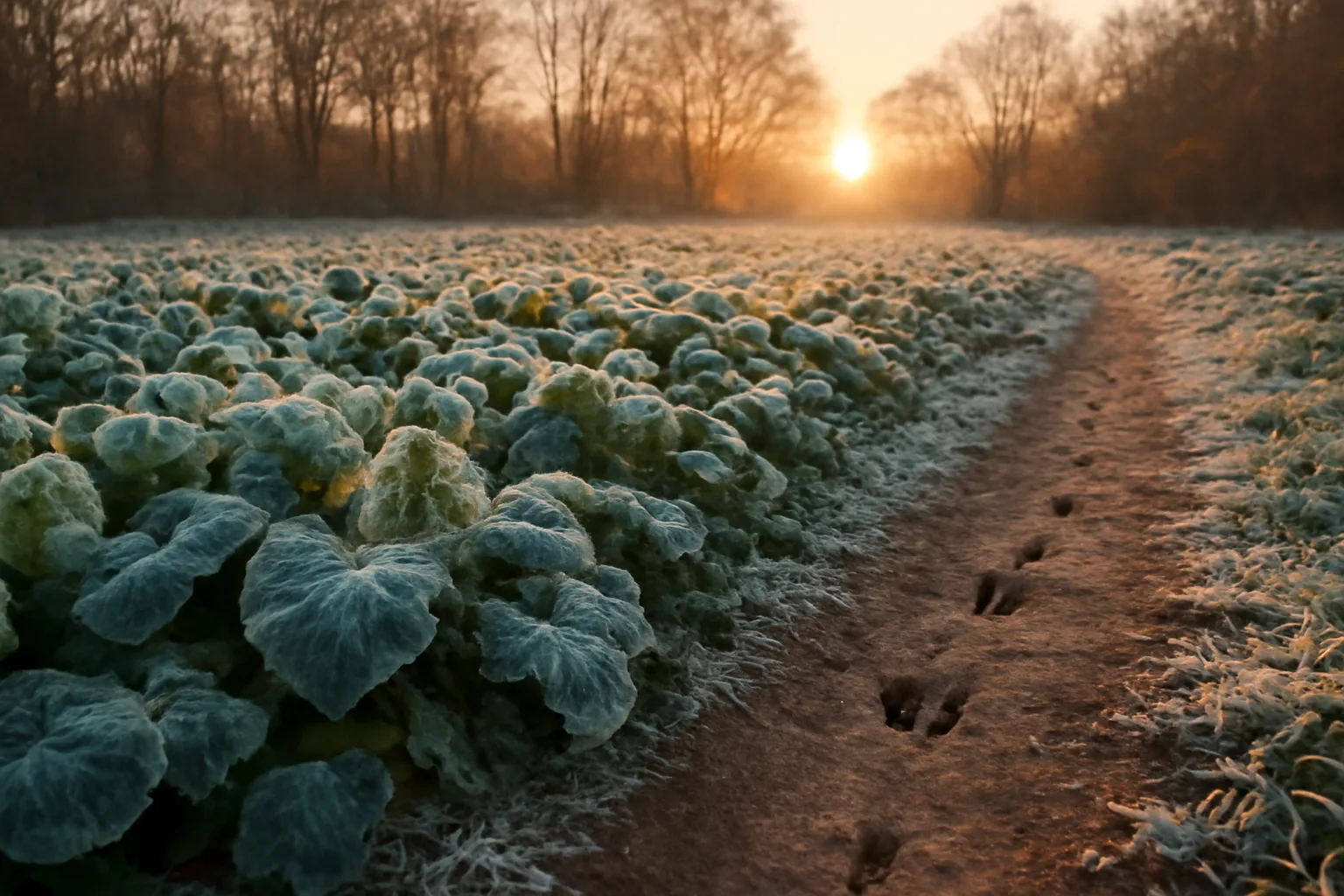
A brassica food plot mix combines turnips, forage radish, rape, and sometimes kale to feed deer high-tonnage, cold-tolerant forage from early fall through winter. Plant 60-90 days before your first killing frost, generally late July through August in the North and August through early September in the transition zone. Deer often ignore brassicas until frost sweetens the leaves and bulbs.
What is a food plot, and where does brassica fit in?
A food plot is a planted patch on hunting or wildlife land, usually a fraction of an acre to a few acres, seeded with forage that deer or other wildlife will eat. Most hunters plant them to concentrate deer activity for observation and hunting, and to add nutrition during stress periods like late winter or antler growth season. Brassica plots are one category within that broader food plot toolbox. Brassicas are a family of cool-season broadleaf plants (Brassica napus, Brassica rapa, Raphanus sativus) that includes turnips, rape, kale, and forage radish. They're planted for tonnage and for a specific trick of plant biology: after a hard frost, brassica leaves and bulbs convert starches to sugars, which makes them taste sweeter and pulls deer in hard during late fall and winter [1]. If you're building out a full rotation, a brassica plot pairs well with a food plot whitetail strategy that also includes a summer annual or a perennial clover block for spring and summer coverage. Brassicas are not a spring or summer plot. They're strictly a fall-into-winter play, and that timing detail trips up more first-year planters than any other mistake on this list.
When to plant food plots for deer, generally?
Timing splits into two seasons: spring/summer plots (clover, chicory, soybeans, cowpeas) and fall plots (brassicas, cereal grains, annual clovers). Brassicas belong strictly in the fall camp. The general rule from most state wildlife agencies and extension offices is to plant brassica-based fall plots 60 to 90 days before your area's average first killing frost, so the plants have time to bulb up and grow leaf mass before growth slows [2]. That means, working backward from frost dates: if your first frost lands around October 1, you want brassica seed in the ground by late July to early August. If frost doesn't show until mid-November, you have until early September. Checking your county's average first frost date through NOAA is worth five minutes before you buy seed. Spring plots for warm-season forage (soybeans, clover establishment, cowpeas) generally go in after your last frost date, once soil temps are consistently above 50°F. That's a separate planting window and a separate topic; if you're deciding between a spring legume plot and a fall brassica plot, our deer food plots overview breaks down the full-season plan.
When to plant turnips for deer specifically?
Turnips need roughly 60 to 90 days from seeding to full maturity, and most state extension recommendations put the planting window at late July through August in northern and mid-latitude states, sliding into early September in the transition zone and parts of the Southeast [2]. Plant too early and turnips bolt or get overtaken by summer weeds and heat stress. Plant too late and you get leaf growth but small or no bulbs before the ground freezes. Seeding rate for pure turnip plots runs about 4 to 6 pounds per acre broadcast, drilled slightly lower. Turnips want a fine, firm seedbed since the seed is tiny, similar in size to clover seed, and needs good soil contact at a shallow depth (1/4 inch or less). Broadcasting onto a cultipacked seedbed and rolling again after seeding works better than drilling for most small-plot growers who don't have a no-till drill calibrated for tiny seed. Bulb turnip varieties (like Purple Top) are bred for a large storage root deer will paw up and eat in mid to late winter after leaves are gone. Forage turnip varieties (like Pasja) put more energy into leaf tonnage and less into bulb size, which matters if you're hunting early season leaf browse rather than late-season bulb digging.
When to plant oats for deer, and how do they fit with brassicas?
Oats are a cereal grain, not a brassica, but they're the most common companion seed in a fall brassica blend. Oats germinate fast (5 to 7 days in good conditions), give deer something green to eat within two to three weeks of planting, and act as a nurse crop that shades out weed competition while the slower brassicas establish [2]. Plant oats in the same window as your brassicas, generally August through mid-September depending on zone, so they mature together. Oats alone don't handle deep cold as well as brassicas or winter wheat. Hard freezes in the teens can kill oat forage outright, while brassica bulbs and leaves keep feeding deer well into winter. That's exactly why most commercial fall blends mix the two: oats for early-season attraction and fast tonnage, brassicas for the long game once temperatures drop. If you're seeing a lot of "deer are ignoring my oats" complaints in September, that's usually not a planting mistake. Deer often prefer other food sources (acorns, standing crops, browse) early in fall when they're not under nutritional stress, then shift hard to plots once natural food thins out.
Do deer eat sorghum, and does it belong in a fall mix?
Deer will eat grain sorghum seed heads and will browse young sorghum forage, but it's a minor player in most brassica-focused fall plots. Grain sorghum is more commonly planted as a standalone summer annual for dove fields or as a tall screening/bedding cover crop, not blended into cool-season brassica plots [3]. Sorghum is a warm-season grass planted after last frost, which puts its planting window months apart from a fall brassica plot's window. If you're seeing sorghum in a bagged "deer blend," it's likely there for structure and screening cover as much as forage value, especially in blends marketed for turkey or upland bird habitat that double as deer cover. For a straight fall brassica plot meant to draw deer to sugar-rich forage after frost, sorghum isn't doing much work and isn't worth the extra seed cost.
Do deer eat clover, and do deer like clover?
Yes, deer eat clover readily, and most wildlife biologists rank it among the most consistently used food plot forages available. White clover and red clover are both perennial legumes, high in protein, and they regrow after grazing, which makes them a strong spring-through-fall forage base [1]. Clover isn't a brassica and isn't a fall-only plant; it's a perennial that, once established, can produce for multiple years with proper mowing and fertility maintenance. Many hunters run clover as their spring/summer plot and brassicas as their fall plot on separate fields, which covers the calendar without asking one plant to do a job it wasn't built for. If clover is your main plot type, our deer food plot seed guide covers variety selection and establishment in more depth. One real tradeoff: clover needs soil pH in the 6.0 to 6.5 range to perform well and needs decent drainage. Brassicas tolerate a wider pH range, roughly 5.3 to 6.8, and heavier soils better. If your soil test comes back low pH and you haven't limed yet, brassicas are more forgiving in year one while lime works into the soil profile.
What are deer's favorite foods, ranked by what the data shows?
There's no single universal answer here; deer preference shifts by region, season, and what's naturally available. But repeated forage preference observations and extension guidance put a consistent short list at the top: acorns (when available, often outranking planted forages entirely), soybeans, clover, and brassicas after a frost event. A frequently cited overview from the Noble Research Institute describes how deer selection changes seasonally: legumes and soybeans get hit hardest in summer when protein demand is highest, while brassicas see a sharp uptick in use after the first hard frost converts starches to sugars [1]. This is why so many "deer aren't touching my turnips" reports come in during warm early falls, and why the same plot gets hammered three weeks later once frost hits. Bottom line: there isn't one "favorite" food, there's a seasonal rotation, and a smart food plot plan matches forage type to the time of year deer actually need that nutrition.
Do deer like honey, and does that matter for food plots?
No. Deer don't seek out honey, and it has no real place in food plot planning. Deer are herbivores that browse forbs, browse, mast, and agricultural crops; they don't forage for honey or honeycomb the way bears do. This question shows up in search likely because of confusion with commercial deer attractant products with "honey" or sweet-scented names, or because people are Googling around general deer diet curiosity. If you're looking for a genuine sugar-driven attraction strategy, that's exactly what a frosted brassica plot delivers naturally: cold-triggered starch-to-sugar conversion in turnip and radish bulbs, no bottled attractant required.
How much brassica seed do you need, and what's a solid mix ratio?
| Purple top turnip | 4-6 | 60-90 | 1/4 inch or less | |
|---|---|---|---|---|
| Forage radish (tillage radish) | 6-10 | 60-80 | 1/4 to 1/2 inch | |
| Rape (forage rape) | 4-6 | 80-90 | 1/4 inch | |
| Kale | 4-6 | 70-90 | 1/4 inch | |
| Oats (as companion) | 60-100 | 5-7 days to germinate | 1 to 1.5 inches | A common DIY blend ratio for a half-acre to acre plot: 2/3 of your rate in a turnip/radish mix, 1/3 in oats or winter rye as a nurse crop. Don't just dump full rates of each species listed above together; that overseeds the plot and creates crowding. Cut each component's individual rate roughly in half to a third when blending two or three species. Broadcast into a clean, firm seedbed, then cultipack or drag to firm soil contact. Brassica seed is small enough that planting too deep is the most common failure mode for first-time growers. |
Seeding rates vary by species and by whether you're planting a monoculture or blend. Here's a general reference table pulled from common extension and state agency seeding guidance [2] [2]: | Species | Seeding rate (broadcast, lbs/acre) | Days to maturity | Planting depth |
How do zone and frost timing change the brassica planting calendar?
| Upper Midwest / Northern tier | Mid-September to early October | Mid-July to early August | |
|---|---|---|---|
| Mid-South / Transition zone | Mid-October to early November | Early August to early September | |
| Deep South | Mid-November to December | Late August to mid-September | These are general windows, not guarantees. A late-summer drought can stall germination even inside the right window, and a warm fall can delay the sugar conversion that makes brassicas attractive. Check your specific county frost data through your state extension office or NOAA climate normals before locking in a date. If you're planning multiple plot types across a property (a spring clover field, a summer bean field, a fall brassica plot), the seasonal-calendars approach of building a full-year rotation avoids the trap of treating each plot as a one-off decision. |
Brassica planting dates shift meaningfully by USDA hardiness zone and regional frost timing, since the whole strategy depends on hitting maturity right as frost arrives. Here's a rough regional planting window based on typical first frost dates and the 60-90 day maturity rule [2] [2]: | Region | Typical first frost | Brassica planting window |
What soil prep and fertility does a brassica plot actually need?
Brassicas are more forgiving than clover on pH, tolerating a range roughly from 5.3 to 6.8, but they're still heavy feeders that respond well to nitrogen [2]. A soil test is the only way to know what your specific field needs; guessing on fertilizer wastes money and can underfeed or overfeed the plot. General extension guidance for brassica forage plots suggests nitrogen rates in the 40 to 80 pounds per acre range, split between a pre-plant application and a possible side-dress if you're growing a full season crop, plus phosphorus and potassium based on soil test recommendations rather than a blanket rate [2]. Your soil test lab's recommendation is the actual authority here, not a bag label or a forum post. Labs calibrate recommendations to your specific soil chemistry and crop, and that's worth trusting over generic rate charts. A firm, weed-free seedbed matters more for brassicas than for most food plot crops because the seed is so small. Spraying out existing vegetation 2 to 3 weeks before planting, then disking or no-till drilling into a clean bed, gives better establishment than broadcasting into standing weeds and hoping for the best.
Should you plant a straight brassica plot or blend it with other species?
A straight turnip or radish monoculture works, but it puts all your eggs in one basket if that particular species has a bad establishment year. Blending 2 to 3 species (a turnip/radish mix plus oats or winter rye) spreads out risk and extends the plot's attraction window, since oats draw deer in early while the brassica bulbs are still developing underground. Some hunters also blend in a small percentage of winter wheat or cereal rye, which handles hard freezes better than oats and can carry the plot's green attraction into December and January in milder climates. If you want the full plot open across seasons rather than a single fall push, pairing this brassica plot with a separate perennial clover field, discussed in our domain food plot seed breakdown, covers spring and summer while the brassica field does its job in fall and winter. One honest caveat: don't expect deer activity guarantees from any blend. Weather, hunting pressure, and surrounding ag fields all affect how hard deer hit a given plot in a given year, and no seed mix overrides those variables.
What state rules should you check before planting or hunting over a food plot?
Food plots themselves are legal everywhere as a habitat practice, but the line between a food plot and illegal baiting gets blurry depending on your state, and rules vary widely. Some states classify any harvested or exposed grain, mineral, or supplemental feed pile as bait, while a growing, rooted crop like a brassica plot is generally treated differently and is legal to hunt over in most states, but not all. Definitions of "exposed" versus "growing" crop differ by state code. Before you plant with hunting-over intentions, check your state wildlife agency's specific baiting and feeding regulation page. Some states also restrict feeding or baiting statewide due to Chronic Wasting Disease concerns, which can affect food plot rules in CWD management zones specifically, even when the general state rule allows hunting over standing crops. Federal CWD herd certification rules under 9 CFR Part 55 shape some of the underlying state program structure, even though day-to-day baiting law is set at the state level [4]. This is genuinely state-specific and sometimes county-specific in CWD zones, so a five-minute check of your state agency's current regulations before season is worth more than any generic advice here.
How do you actually build a planting plan instead of guessing?
Everything above gives you the general framework: match species to season, check your frost date, test your soil, pick a blend that fits your region and goals. Where it gets specific is your actual field: your soil test numbers, your frost date, your acreage, and what you're trying to accomplish (early season food, late-season draw, or year-round nutrition). If you want that turned into an actual planting plan rather than piecing it together from seed bag labels, PlotSeason's $99 one-time Custom Food Plot Plan takes your soil test results, location, and goals and builds out species selection, seeding rates, and a planting calendar specific to your property. It's general guidance built from your numbers, not a substitute for your soil test lab's specific lime and fertilizer recommendations, which remain the actual authority on your field's chemistry. For readers who want to keep researching before committing to a plan, our food plot seed and deer for food guides cover the broader species landscape beyond brassicas specifically.
Frequently asked questions
Do deer eat sorghum in food plots?
Deer will browse young sorghum and eat mature seed heads, but sorghum is a warm-season grain planted in spring/summer, not part of a fall brassica blend. It's more common in dove field or screening cover plantings than in cool-season deer plots aimed at fall and winter attraction.
Do deer eat clover, and is it better than brassica?
Yes, deer eat clover heavily and it's one of the most consistently used food plot forages, especially spring through fall. It's not "better" than brassica, it does a different job: clover is a perennial spring/summer protein source, while brassica is a fall/winter tonnage and sugar source after frost.
When should I plant food plots for deer overall?
Split your calendar into two windows: spring plots (clover, soybeans, cowpeas) go in after your last frost when soil hits 50°F, and fall plots (brassicas, cereal grains) go in 60-90 days before your first killing frost, generally late July through early September depending on your zone.
Do deer like clover more than other legumes?
Deer show strong, consistent preference for clover, particularly white clover, largely because of its high protein content and regrowth after grazing. Preference varies by region and season though; soybeans and cowpeas often outcompete clover for attention in mid-summer.
When should I plant oats for deer food plots?
Plant oats in the same window as fall brassicas, generally August through mid-September depending on your region's frost timing. Oats germinate in 5-7 days and give deer green forage fast, but they don't handle hard freezes as well as brassica bulbs, so they work best as an early-season companion, not the whole plot.
When is the best time to plant turnips for deer?
Plant turnips 60-90 days before your area's average first killing frost so bulbs mature as cold arrives. That's typically mid-July to early August in northern states, and August into early September through the transition zone and parts of the Southeast.
What exactly is a food plot?
A food plot is a planted area, often a fraction of an acre to a few acres, seeded specifically to provide forage for deer or other wildlife. Hunters plant them to boost nutrition during stress periods and to concentrate animal activity for observation and hunting purposes.
What are deer's favorite foods overall?
There's no single favorite; preference shifts by season. Acorns often outrank planted forage when available, soybeans and clover dominate in summer when protein demand is high, and brassicas surge in preference after the first hard frost converts bulb and leaf starches into sugar.
Do deer like honey or sweet attractants?
No, deer don't seek out honey as a natural food source; they're herbivores focused on forbs, browse, and mast. Confusion likely comes from commercial attractant branding. A frosted brassica plot creates natural sugar content in bulbs and leaves without needing any bottled additive.
Can I plant brassicas and clover in the same plot?
Not really as a season-long mix; they're grown on different calendars with different soil pH preferences (clover wants 6.0-6.5 pH, brassicas tolerate down to 5.3). Most hunters plant them in separate fields or rotate a field between a spring clover stand and a fall brassica planting.
How much brassica seed do I need per acre?
For a turnip/radish blend, plan on roughly 4-6 pounds per acre of turnip seed or 6-10 pounds per acre of forage radish if planted alone, cut down when blending species. Always broadcast onto a firm seedbed and plant shallow, around 1/4 inch deep, since brassica seed is small.
Is hunting over a brassica food plot legal, or does it count as baiting?
In most states, a standing, rooted crop like a brassica plot is treated differently from bait piles and is legal to hunt over, but rules vary by state and some CWD management zones add extra restrictions. Check your specific state wildlife agency's current baiting and feeding regulations before hunting over any plot.
Sources
- USDA NRCS, Conservation Practice Standard: Wildlife Habitat Planting (Code 420): Food plots and wildlife habitat plantings are treated as a conservation practice, not a full replacement for natural browse
- Noble Research Institute, Food Plots for Deer: Brassica palatability increases after a hard frost converts starches to sugars
- USDA NRCS Plant Guide, Grain Sorghum (Sorghum bicolor): Sorghum classification as a warm-season grain crop
- Electronic Code of Federal Regulations, 9 CFR Part 55, Chronic Wasting Disease Herd Certification Program: Federal CWD herd certification program rules that inform state-level feeding and baiting restrictions in CWD zones
- Michigan State University Extension: Brassicas such as turnips serve as a valuable late-season forage addition to deer food plots
- University of Arkansas Cooperative Extension Service: Recommendations for clover establishment and its palatability as forage for deer
- USDA NRCS Plant Guide: Oat (Avena sativa) growth characteristics and use as a forage crop relevant to fall food plot mixes