Last updated 2026-07-26
TL;DR
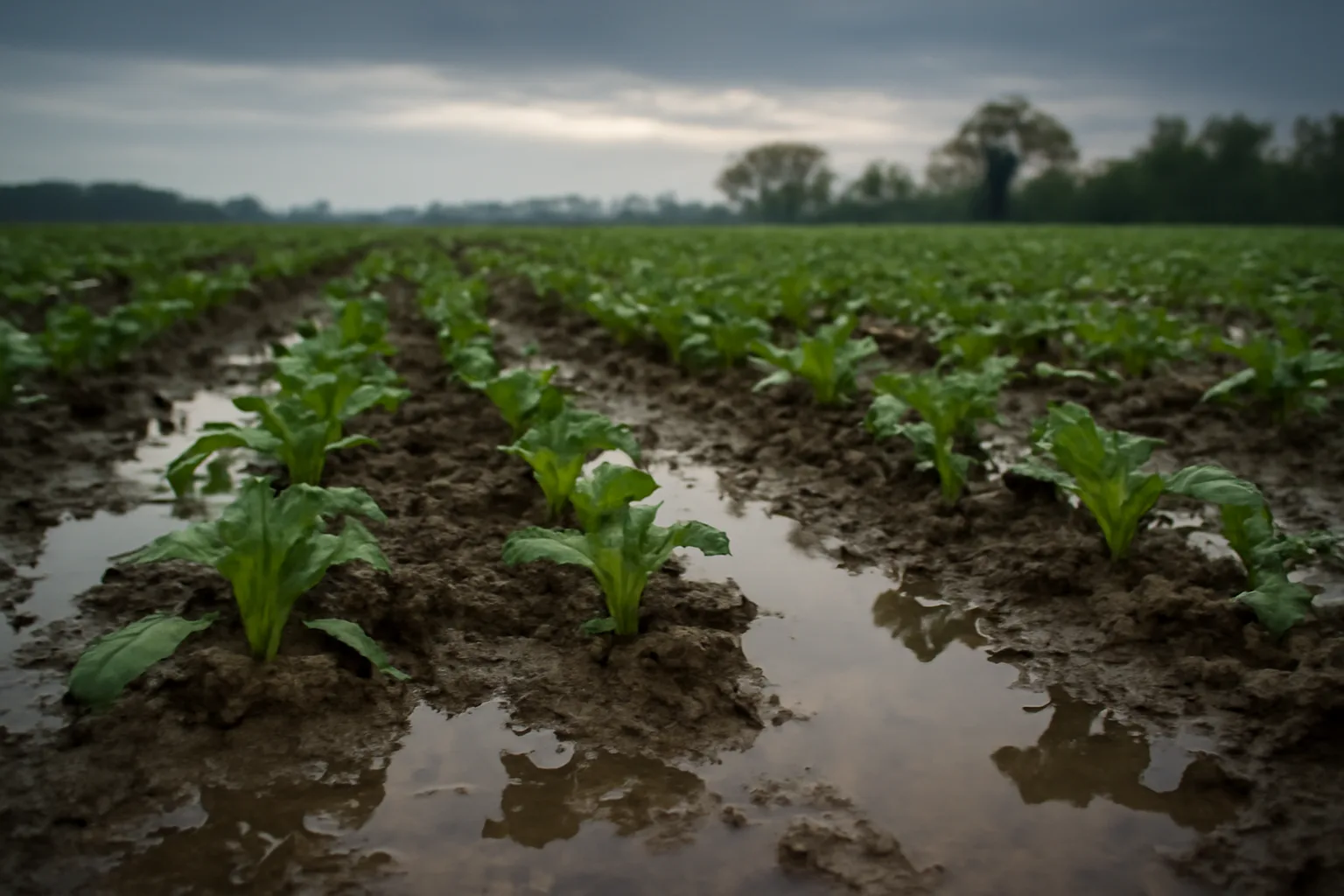
For wet or poorly-drained soil, brassicas (especially forage turnips and radish) and certain clovers like white ladino handle saturation better than most plot seed. True flood-tolerant options are limited: nothing thrives underwater for weeks, but raised beds, drainage tile, or planting slightly higher ground within a wet field beats fighting the water directly.
what actually grows in wet soil food plots
No common food plot species loves standing water. That's the blunt truth. But some handle short-term saturation and heavy clay far better than others, and that difference matters if you're stuck with a low field, a creek bottom, or ground that stays soggy into May. Brassicas, particularly forage turnips and daikon radish, tolerate wet feet better than most row crops because their root systems adapt to oxygen-poor soil for short stretches. Cooperative extension trial data from Penn State notes that brassicas generally prefer well-drained soil but show more tolerance to temporary wetness than corn or soybeans. White clover, especially ladino types, also handles seasonal wet spells reasonably well once established, though it will thin out if water sits for more than a few days. What doesn't work: soybeans, cowpeas, and most warm-season legumes rot fast in saturated soil. Corn struggles too, both in germination and in root rot risk. If your plot has a low spot that holds water every spring, don't fight it with the same seed you'd use on the ridge above it. The real fix, when it's practical, is drainage. Tile, a diversion ditch, or just choosing a slightly higher bench within the same field often does more good than any seed blend. Seed selection is damage control, not a cure.
what is a food plot and why does drainage matter so much
A food plot is a planted area, usually somewhere between a quarter acre and several acres, designed to give deer (and often turkey, rabbits, and other wildlife) a reliable food source on land you own, lease, or manage. It's more than a wildflower patch; it's a managed planting, often soil-tested and fertilized, meant to draw and hold deer through specific seasons. Drainage matters because seed germination requires oxygen in the soil profile. When soil stays saturated, oxygen gets pushed out, and seeds either fail to sprout or rot before they can. USDA's Natural Resources Conservation Service classifies soils by drainage class specifically because this affects what will establish and survive, from "excessively drained" to "very poorly drained". If you've pulled a soil test and it doesn't note drainage class, check your county's NRCS Web Soil Survey; it's free and it'll tell you exactly what class your plot sits in. A plot on poorly drained soil isn't a lost cause. It just needs species matched to that reality, and probably raised or crowned rows if you're using a disc or cultipacker.
do deer eat sorghum
Yes, deer eat sorghum, both the grain heads and the young shoots, and it's a decent option for wetter ground because grain sorghum tolerates heavier, less-drained soils better than corn. It's commonly planted as a summer annual, often mixed with soybeans or cowpeas for a food plot blend that also provides late-season cover. Sorghum isn't a top-tier attractant compared to brassicas or clover in most deer preference studies, but it holds up agronomically where corn would struggle, and the stalks stand through winter, giving you cover along with food. If your wet field also floods briefly in early summer, sorghum's deeper, more fibrous root system handles that better than corn's. One caution: some grain sorghum varieties can accumulate prussic acid (cyanogenic compounds) under drought stress or frost damage, which is a livestock concern more than a deer one, but it's worth knowing if you're grazing anything else on the same ground [1].
do deer eat clover, and do deer like clover
Yes, deer eat clover heavily, and most land managers rank it among the top few food plot plantings for consistent, season-long browse. White clover (Trifolium repens), especially ladino varieties, is a perennial staple because it regrows after grazing and stays palatable through the growing season. Do deer like clover? Preference studies and decades of practical plot data say yes, consistently. It's high in protein (often 25-30% crude protein in vegetative growth) which matters for antler growth and lactation in does. The catch for wet ground: clover tolerates some seasonal wetness once established but doesn't like sitting in standing water during germination. Plant it on the drier margin of a wet field, or wait until the wettest part of spring has passed. Red clover is a bit more flood-tolerant than white clover in university variety trials and often gets used as a nurse crop or rotational option on heavier soils [2]. If you're picking one clover for a marginal, sometimes-wet field, ladino white clover with a red clover component in the blend is a reasonable hedge.
what are deer's favorite foods, ranked for wet ground
| Forage turnip/radish (brassica) | High | Moderate-good | |
|---|---|---|---|
| White clover (ladino) | Very high | Moderate | |
| Chicory | High | Moderate | |
| Grain sorghum | Moderate | Good | |
| Winter wheat | Moderate | Moderate | |
| Oats | Moderate-high | Moderate | |
| Soybeans | Very high | Poor | |
| Corn | High | Poor | This isn't lab data, it's a synthesis of extension guidance and field-tested plot management, so treat the tolerance rankings as directional, not exact. If your field floods for a week every spring and drains by June, brassicas and sorghum give you the best odds. If it's just heavy, slow-draining clay but doesn't truly flood, clover and chicory both work fine. |
Deer preference isn't uniform across regions, but extension research and browse surveys consistently put a handful of plants near the top: white clover, soybeans, brassicas (turnip, radish, rape), chicory, and natural browse like honeysuckle and greenbrier. On wet ground, the list narrows because soybeans mostly drop out. Here's a rough tolerance-versus-preference comparison for common plot species on wet or poorly drained soil: | Species | Deer preference | Wet soil tolerance |
when to plant food plots for deer
Timing splits into two windows almost everywhere in whitetail country: spring/summer plantings for warm-season annuals and perennials, and late summer/early fall plantings for brassicas, cereal grains, and clover establishment. Spring plantings (soybeans, corn, sorghum, warm-season clovers) generally go in after your last frost date, which ranges from early April in the Deep South to late May or even early June in the northern tier and Canada-adjacent states. Check your state extension's frost date tables; Michigan State University Extension, for example, lists average last frost dates by region that vary by three to four weeks across a single state [3]. Fall plantings (brassicas, cereal grains, clover frost-seeding) typically go in 60 to 90 days before your first fall frost, which for brassicas specifically means late July through early September depending on zone. Wisconsin and Minnesota growers often plant brassicas by early August; Southern growers can wait until September. For wet fields specifically, timing gets even more important. Planting into saturated spring soil is often worse than planting a couple weeks late into soil that's finally dried enough to work. If you can get a soil probe or even a shovel down 6 inches without it coming out muddy and compacted, you're probably good to go.
when to plant turnips for deer
Plant turnips for deer 60 to 90 days before your area's average first fall frost, which lands most growers in a late July to early September window depending on latitude. Turnips need that runway to bulb out and reach peak palatability, which usually happens after the first hard frost converts starches to sugars and makes the greens and bulbs sweeter. On wet ground, turnips actually have an edge over most other fall options because their taproot system pushes down through heavier soil better than fibrous-rooted grasses, and short-term saturation right after planting won't necessarily kill a stand the way it would with soybeans. That said, don't plant into standing water or deep mud. Wait for the field to firm up even if it costs you a week or two off the ideal calendar. A common mistake: planting turnips too early in warm climates, which lets them bolt or get overgrown and woody before deer season even opens. Purdue Extension and other land-grant programs generally recommend late July to mid-August for the transition zone, and into September for the Deep South [4].
when to plant oats for deer
Oats for deer plots go in either as a spring planting (early spring, as soon as soil can be worked) or, more commonly for hunting plots, as a late summer/early fall planting 6 to 8 weeks before first frost. Fall-planted oats give you fast, green, highly attractive growth right as bow season opens, which is why they're a staple in fall blends alongside brassicas and winter wheat. Oats aren't cold-hardy the way winter wheat or rye is. A hard freeze will usually kill oat forage, so in northern zones you're planting for a fall/early-winter window, not a season-long stand. In the South, oats can sometimes overwinter and provide additional spring grazing. On wet soil, oats are moderately tolerant, better than corn or soybeans, not as tolerant as brassicas or sorghum. If your plot has a wet corner, oats will probably establish fine on the drier two-thirds and struggle in the lowest spot. That's normal; it's not a blend failure, it's just field variability.
do deer like honey, and does it matter for plots
There's no real evidence deer seek out honey in the wild or that it's a meaningful food plot ingredient; this isn't something wildlife biologists study because honey isn't a plant, isn't planted, and isn't part of any recognized deer diet research. Deer are herbivores relying on forbs, browse, mast, and agricultural crops, not on honey or other animal-derived sugars. If you're seeing this question because of a product marketed as a "honey-based" deer attractant or mineral additive, that's a scent/attractant product category, not a food plot question, and it operates under different rules than seed. Some states restrict baiting and supplemental feeding, including scent-based attractants in certain contexts, so check your state wildlife agency's regulations before using any commercial attractant on a hunted property. This has nothing to do with wet-soil plot planning specifically, but it's a common enough question that it's worth a straight answer: no, honey isn't a food plot ingredient, and there's no research suggesting deer are drawn to it in a way that matters for plot design.
how do you fix a food plot that floods every spring
First, figure out if it's truly flooding (standing water from runoff or a high water table) or just slow-draining heavy soil that stays wet longer than you'd like. Those are different problems with different fixes. For a true flood zone fed by runoff, a shallow diversion ditch or berm on the uphill side can redirect water before it ever reaches the plot. This is basic earthwork, sometimes a few hours with a tractor and box blade, and it can turn a swamp into a plantable field. USDA NRCS offices in many counties offer free technical assistance on drainage and water management practices, and in some cases cost-share through EQIP for larger conservation-linked work [5]. For slow-draining clay, raised or crowned planting beds help a lot. Even a few inches of crown, formed with a disc or a box blade angled to build a center ridge, gets seed roots up out of the saturated zone during the worst weeks. If neither is practical, just change what you plant. Brassicas, sorghum, and clover on the drier margins, and accept that the lowest few yards of a truly wet bottom might never be a great plot, but could work fine as a browse/bedding transition instead. Not every acre needs to be planted; sometimes the best move is leaving the wettest quarter-acre as cover and focusing your seed budget on the ground that'll actually produce.
does soil pH change on wet or poorly drained ground
Yes, and it's worth checking specifically, because wet, poorly drained soils often trend more acidic due to slower organic matter breakdown and different mineral leaching patterns compared to well-drained upland soil. A soil test is the only way to know for sure; don't guess based on the field next door. Most food plot species do best in a pH range of 6.0 to 7.0, and clover in particular is sensitive to low pH, often struggling below 6.0. If your wet-ground soil test comes back at 5.5 or lower, which isn't unusual in poorly drained bottomland, you'll need lime, and your soil test lab's recommendation is the number to follow, not a generic bag rate off the lime pallet. Lime takes months to fully react in soil, so if you're testing in spring for a fall planting, get lime down early. Your soil test lab, whether it's a university extension lab or a private agronomy lab, is the actual authority on your lime and fertilizer rates. Anything general written here, or anywhere else without your specific results in hand, is a starting point for thinking, not a replacement for that report.
putting together a wet-soil plot plan
If you're working with one wet field or a wet corner of a larger property, the practical approach looks like this: pull a soil test specific to that spot (more than one composite sample for the whole farm), identify whether it's true flooding or just slow drainage, and pick species accordingly. Brassicas and clover on the margins, sorghum or oats where you need cover along with food, and drainage work if it's cost-effective for the acreage involved. This is exactly the kind of site-specific tradeoff that's hard to generalize from an article, because your field's exact drainage class, your region's frost dates, and your soil test numbers all interact. If you want a plan built around your actual test results, acreage, and region rather than a generic blend recommendation, PlotSeason's $99 one-time Custom Food Plot Plan walks through those specifics. It's general guidance built for your inputs, not a substitute for your soil lab's specific lime and fertilizer recommendations, but it'll get your species and timing choices lined up with the ground you're actually working. For more on matching plot types to your land, see food plot whitetail and deer food plots for broader planning frameworks, or deer food plot seed and food plot seed if you're comparing specific blends for your region.
Frequently asked questions
Do deer eat sorghum?
Yes. Deer eat both the grain heads and young shoots of sorghum. It's more flood- and heat-tolerant than corn, making it a reasonable choice for heavier or wetter soils, though it's generally a lower preference item than brassicas or clover in most plot comparisons.
Do deer eat clover, and do deer like clover?
Yes, deer eat and strongly prefer clover, especially white ladino varieties. It's high in protein (often 25-30% crude protein) and regrows after grazing, making it one of the most reliable season-long food plot plantings, though it needs decent drainage to establish well.
When should you plant food plots for deer?
Spring annuals (soybeans, corn, sorghum) go in after your last frost date, typically April in the South to late May/June in the North. Fall plantings (brassicas, cereal grains, clover) go in 60-90 days before first fall frost, usually late July through September depending on your zone.
When do you plant oats for deer?
Fall-planted oats, the more common choice for hunting plots, go in 6 to 8 weeks before your area's first frost. Spring oats can also be planted as soon as soil is workable, but they're less cold-hardy than winter wheat or rye and won't hold through a hard freeze.
When do you plant turnips for deer?
Plant turnips 60 to 90 days before your average first fall frost, generally late July to early September depending on latitude. This gives bulbs time to mature before frost sweetens the greens and roots, which is when deer preference for turnips typically peaks.
What is a food plot?
A food plot is a planted area, usually a quarter acre to several acres, established specifically to provide deer and other wildlife a reliable food source on managed hunting land. It typically involves soil testing, fertilizing, and planting species chosen for the region and season.
What are deer's favorite foods?
Extension research and field data consistently rank white clover, soybeans, brassicas (turnip, radish, rape), chicory, and natural browse like greenbrier and honeysuckle among deer's most preferred foods. Preference shifts seasonally and regionally, and availability of natural mast (acorns) often outweighs plot preference in a given year.
Do deer like honey?
There's no research showing deer seek out honey; it's not a natural part of their diet and isn't a food plot planting. This question usually comes from confusion with commercial honey-based scent or mineral attractant products, which fall under different, often state-restricted, baiting rules.
What's the best food plot seed for wet or poorly drained soil?
Forage brassicas (turnip, radish, rape) and grain sorghum generally handle wet, heavy soil better than corn or soybeans. White clover works on moderately wet ground once established but dislikes standing water during germination. Match species to your field's specific drainage class from a soil test or NRCS survey.
Can you fix a food plot that floods every year?
Sometimes. A diversion ditch or berm can redirect runoff before it reaches the plot, and USDA NRCS county offices offer free technical assistance and sometimes cost-share for drainage practices. If full drainage isn't practical, raised planting beds and flood-tolerant species like brassicas or sorghum are the fallback.
Does wet soil change your fertilizer or lime needs?
Often, yes. Poorly drained soils tend to run more acidic, so a soil test is essential rather than assumed. Most food plot species want pH 6.0 to 7.0, and your soil test lab's specific lime recommendation should be followed over any generic rate, since lime needs vary by soil type and current pH.
Is it worth planting a food plot in a spot that floods sometimes?
It depends on how often and how long it floods. Occasional short-term saturation is manageable with brassicas or sorghum. If a spot floods for weeks every spring, it may be better used as bedding or cover rather than planted ground, saving your seed budget for drier acreage.
Sources
- University of Nebraska-Lincoln Extension, Prussic Acid Poisoning: Sorghum can accumulate prussic acid under drought or frost stress
- University of Kentucky Extension, Red Clover Variety Trials: Red clover shows different soil moisture tolerance than white clover in variety trials
- Michigan State University Extension, Frost Dates in Michigan: Average last frost dates vary by three to four weeks across a single state
- Purdue University Extension, Brassica Establishment for Deer: Brassicas should be planted 60 to 90 days before first fall frost
- USDA NRCS, Environmental Quality Incentives Program (EQIP): NRCS offers technical assistance and cost-share for conservation practices including drainage management