Last updated 2026-07-26
TL;DR
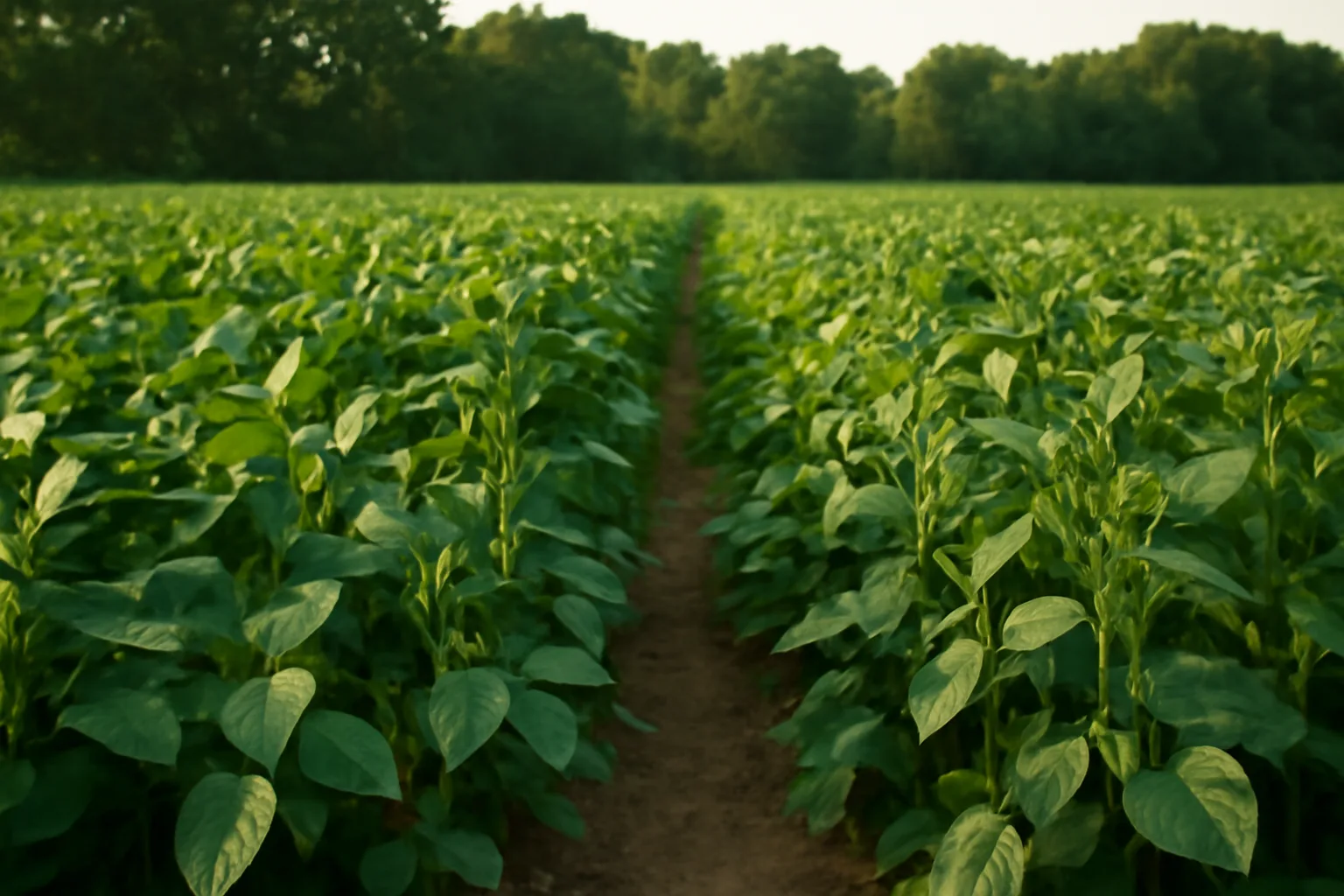
The best summer deer food plots use warm-season legumes like cowpeas, soybeans, and lablab, plus forage sorghum for structure. Plant after the last frost when soil hits about 65°F. Clover holds through summer too if it survived winter. Test soil first; pH and fertility decide whether any of this actually grows.
What is a food plot, exactly?
A food plot is a planted patch of forage on hunting land meant to feed and hold deer, usually somewhere between a quarter acre and a few acres. It's more than a green field. A good plot is planned around soil chemistry, deer nutritional needs during a specific season, and how the plot fits into stand access and wind direction. Most plots fall into two buckets: annual plots (replanted each year, like brassicas or cereal grains) and perennial plots (clover or alfalfa that come back for 3 to 5 years with maintenance). Summer plots lean heavily on annuals because most perennial clover stands were actually planted the previous fall or spring and just get mowed and managed through summer, not reseeded. The land-grant extension consensus is pretty consistent on one point: a plot only performs as well as the soil under it. Guessing at lime and fertilizer rates wastes money and can stunt or kill seedlings outright. If you take one thing from this article, take that: pull a soil sample before you buy seed. For a broader look at plot categories and how they're built, see food plot whitetail and deer food plots.
What's the best deer food plot for summer?
| Iron clay cowpeas | 20-25% | Very good, built to be grazed hard | 65°F+ | 60-90 lb/acre drilled, more broadcast | |
|---|---|---|---|---|---|
| Soybeans (forage type) | 25-30% | Poor to fair, can be wiped out by overbrowsing | 60-65°F+ | 50-60 lb/acre drilled | |
| Lablab | 20-28% | Very good | 65-70°F+ | 15-25 lb/acre | |
| Forage sorghum / grain sorghum | 8-11% | Good, adds structure | 60-65°F+ | 8-12 lb/acre | |
| Clover (established) | 20-30% | Excellent, regrows fast | N/A, perennial | N/A after establishment | Cowpeas and soybeans work well as summer forage plot options specifically because deer can hammer them repeatedly through the growing season without killing the stand, something that's not true of most other summer annuals. If your plot gets hit hard by a big deer herd early, cowpeas and lablab are more forgiving than soybeans, which can get grazed to nothing on high-density ground. A lot of hunters also blend two or three of these together (a "buffet blend") to hedge against one crop failing or getting hammered too early. That's a reasonable approach, and it's part of what a custom food plot plan is built to sort out for your specific soil and deer density. |
For pure summer growth and tonnage, warm-season annual legumes win. Cowpeas (iron clay peas), soybeans, and lablab are the three most planted summer options across the whitetail range. All three are high protein, often 20-30% crude protein in the forage. All three tolerate heavy browsing better than most crops. And all three fix their own nitrogen, which cuts your fertilizer bill. Here's a rough comparison for planning purposes. | Crop | Protein (approx.) | Deer tolerance to heavy browsing | Soil temp to plant | Typical seeding rate |
When to plant food plots for deer, generally?
Timing splits into two windows almost everywhere in the whitetail range: a cool-season window (late summer into early fall) and a warm-season window (spring into early summer). Which window you use depends entirely on what you're planting and what you want deer eating in which season. Warm-season plots (soybeans, cowpeas, lablab, sorghum) go in after your last frost date, once soil has warmed enough for germination, typically mid-spring through early summer depending on latitude. Cool-season plots (clover, brassicas, cereal grains) go in from late July through September in most of the whitetail's range, timed so they establish before the first hard frost slows growth. Your state's frost dates and growing degree days matter more than a calendar date. Iowa State University Extension notes that planting date decisions should weigh soil temperature and forecast conditions rather than a fixed calendar day, since "the optimum planting date balances the risk of yield loss from a late-spring frost against the yield potential lost by delaying planting" [1]. Your local land-grant extension office publishes county-level planting guidance built around local frost windows. If you're not sure of your zone's dates, your county extension office is the fastest, most reliable answer, faster than guessing off a national chart. For a season-by-season breakdown across the whole year, see deer food plot seed.
When to plant oats for deer?
Oats are a cool-season cereal grain, not a summer plant. Plant oats in late summer to early fall, generally August through September depending on latitude, so they establish before frost and provide green forage into late fall and sometimes through a mild winter. Oats germinate fast, often in 7 to 10 days with good moisture, and put on a lot of tonnage quickly. That's part of why they're a staple in fall food plot blends across the whitetail's range, valued for rapid establishment and strong palatability in fall and early winter. Don't plant oats in June expecting a summer plot. They'll germinate in hot soil, but they tend to bolt, go to seed fast, and produce far less forage tonnage than they would in cooler fall conditions. If you want a grain-type plot for summer, forage sorghum or grain sorghum fills that structural role instead.
When to plant turnips for deer?
Turnips are also a cool-season brassica, planted in late summer, typically late July through August in northern areas and into September farther south, so the plants have 80 to 90 days to bulb up before a hard freeze sweetens the tubers and tops. Turnips are not a summer food plot crop. They're a fall and early-winter crop. The classic pattern deer hunters rely on is that brassica tops get browsed in fall, then a hard frost converts starches in the bulb to sugars, and deer switch to digging up and eating the bulbs in December and January when other food is scarce. That's a late-season strategy, not a July one. If someone tells you to plant turnips in June, that's a mistake; heat and immature root development mean you'll get spindly plants and little tonnage. Save turnips, along with other brassicas like radishes and rape, for your late-summer planting window.
Do deer eat clover, and do deer like clover?
Yes, deer eat clover readily, and most wildlife biologists rank it among the most consistently preferred food plot forages available. Clover (white clover, red clover, and various ladino varieties) is high in protein, typically 20-30% crude protein depending on growth stage and variety according to USDA plant guide data on white clover [1], and it's palatable across almost the entire growing season. Clover's real advantage for summer specifically is that an established stand is already growing when summer starts. You planted it the previous spring or fall, it survived winter dormancy, and by June it's putting out fresh, tender regrowth that deer hit hard, especially right after a mowing, which knocks back weed competition and stimulates new leaf growth. The catch: clover needs decent soil to perform. Most clover varieties want soil pH in the 6.0 to 7.0 range, and clover stands on poorly limed acidic soil will thin out and get outcompeted by weeds within a season or two, regardless of how good the seed genetics are. If your soil test comes back at pH 5.2, don't blame the seed bag when the stand fails. Blame the lime that didn't get applied. Clover also isn't a true "summer plot" in the sense of something you plant fresh in June. It's a perennial you maintain through summer. If your existing clover looks rough by July, that's usually drought stress, mowing neglect, or a fertility problem, not a sign you need to rip it up and start over.
Do deer eat sorghum?
Yes, deer eat sorghum, both the seed heads and the young leafy growth, though it's more of a supplemental and structural plot component than a primary attractant crop on its own. Grain sorghum and forage sorghum both tolerate heat and drought far better than corn, which makes them a solid summer option in the southern half of the whitetail range where corn struggles without irrigation. Sorghum's real value in a summer plot mix is usually structural. It grows tall and provides some screening and bedding-adjacent cover, plus a grain source that matures into late summer and fall when other plots are winding down. Deer will browse young sorghum shoots in early summer, then hit the mature seed heads later in the season, similar to how they use standing corn. On its own, sorghum has lower crude protein than legumes, generally in the 8-11% range for the forage, according to the USDA NRCS plant guide for Sorghum bicolor [2]. So it's not doing the nutritional heavy lifting of a summer plot. Most experienced plotters run it as one component in a blend with cowpeas or soybeans rather than as a monoculture.
What are deer's favorite foods overall?
There's no single universal "favorite" food for deer; preference shifts by season, region, and what's available naturally. That said, wildlife research consistently shows deer favor high-protein, easily digestible forages when they're available, and they favor high-carbohydrate, high-fat foods (acorns, corn, soybeans) heavily in fall as they build fat reserves for winter. Acorns are probably the closest thing to a true universal favorite in the fall. White oak acorns in particular tend to be preferred over red oak acorns when both are on the ground. The USDA Forest Service's Fire Effects Information System summary on white oak notes that its acorns are "low in tannin content" relative to red oak group acorns, which makes them more palatable to deer and other wildlife . In a food plot context specifically, soybeans, cowpeas, clover, and brassicas consistently rank as the most reliably preferred planted forages across published deer research and extension trial data. But "favorite" changes with the calendar: a deer that's obsessed with soybeans in August may barely touch them once acorns start dropping in October, because acorns offer more fat for less energy spent foraging.
Do deer like honey?
There's no real evidence deer are drawn to honey specifically, and it's not a practical or legal attractant in most states anyway. Deer are herbivores built around browsing plants, forbs, mast, and agricultural crops; honey isn't a natural part of their diet. Where this question usually comes from is confusion with commercial "deer attractant" products that use sweet, sugary, or molasses-based scents, which do appeal to deer's preference for sugary, high-carbohydrate foods generally (similar to why deer hit fruit trees and sugar beets hard). That's different from deer specifically seeking out honey. More importantly, many states classify sugar-based liquid attractants, mineral licks, and supplemental feeding the same way they classify baiting, and rules vary a lot by state and even by county for disease management reasons, particularly in chronic wasting disease zones. Check your state wildlife agency's current baiting and feeding regulations before using any attractant product, honey-based or otherwise, because a plot planted with legal forage crops doesn't carry the same legal risk that a bait pile or mineral station does.
How do I actually plan a summer plot on my land?
Start with a soil test, not a seed catalog. A basic soil test through your county extension office or a private ag lab typically costs somewhere in the range of $10 to $20 and takes one to three weeks to come back, and it tells you your current pH, phosphorus, potassium, and organic matter, the actual variables that decide whether seed germinates and thrives. Once you have that test back, your lab's recommendations on lime and fertilizer rates are the authority for your specific dirt, not a general rule of thumb from an article like this one. Lime especially takes months to fully react in soil, so if your test comes back needing 2 tons per acre of ag lime, get it applied as early as you can, ideally the season before you plant, not the week of. After fertility, match the crop to your equipment and your deer density. If you're broadcasting with an ATV spreader and don't own a drill, cowpeas and sorghum work fine broadcast and lightly disked in. Soybeans generally do better drilled at a controlled depth, and stands can get spotty if broadcast unevenly. This is genuinely where a lot of plots fail, not from bad seed, but from mismatched timing, unaddressed pH, or a crop chosen without accounting for browsing pressure. That's the exact gap a $99 one-time Custom Food Plot Plan is built to close: you plug in your soil test numbers, your zone, and your equipment, and get a specific planting plan instead of a generic seed bag recommendation. For equipment-specific guidance on drilling versus broadcasting summer seed, see food plot seed and deer for food.
Summer plot mistakes worth avoiding
The most common mistake is planting too early relative to soil temperature. Cowpeas, soybeans, and lablab all want soil consistently above roughly 60-65°F before they'll germinate reliably; planting into cold, wet spring soil just rots the seed or gives you a thin, uneven stand. The second most common mistake is skipping weed control before planting. A summer annual plot dropped into unmanaged sod or heavy weed pressure is competing for water and nutrients from day one, and legumes especially struggle to establish against grass competition. A burndown herbicide application or a clean disking pass 2 to 3 weeks ahead of planting makes a real difference. Third, a lot of hunters plant one variety on too small a plot and wonder why it's gone in two weeks. On high deer density ground, a small quarter-acre soybean plot can get grazed to bare dirt before it ever produces real tonnage. Bigger plots, blended crops, or multiple smaller plots spread across a property all help spread out browsing pressure so at least some of the plot survives to maturity.
Frequently asked questions
Do deer eat sorghum in food plots?
Yes. Deer browse young sorghum shoots and later eat the mature seed heads, similar to how they use standing corn. Sorghum has lower protein than legumes (roughly 8-11%) so it works best as one part of a blend with cowpeas or soybeans rather than planted alone.
Do deer like clover and is it good for summer plots?
Deer eat clover readily and it ranks among the most preferred food plot forages in extension research. It's a perennial, though, so for summer you're maintaining an existing stand (mowed, fertilized per soil test) rather than planting it fresh in June like a warm-season annual.
When should I plant food plots for deer generally?
Warm-season plots (soybeans, cowpeas, lablab, sorghum) go in after your last frost once soil hits about 60-65°F, usually mid-spring through early summer. Cool-season plots (clover, brassicas, oats) go in late July through September so they establish before frost. Check your county extension office for local frost dates.
When do you plant oats for deer?
Oats are a cool-season cereal grain planted in late summer to early fall, generally August through September depending on latitude. They germinate fast and provide green forage into late fall. Planting oats in early summer causes them to bolt and go to seed with little tonnage produced.
When do you plant turnips for deer food plots?
Turnips go in late July through September, giving the plants 80 to 90 days to bulb up before a hard frost. That frost converts bulb starches to sugars, which is what triggers deer to dig up and eat turnips heavily in December and January. Turnips are a fall/winter crop, not a summer one.
What is a food plot exactly?
A food plot is a planted area of forage crops on hunting land designed to feed deer and concentrate them for observation or hunting. Plots are either annuals (replanted yearly, like brassicas or grains) or perennials (clover, alfalfa, lasting 3 to 5 years with maintenance), and success depends heavily on soil testing and fertility.
What is the best food plot to plant in summer specifically?
Cowpeas (iron clay peas), soybeans, and lablab are the top summer choices because they're high protein, fix their own nitrogen, and (cowpeas/lablab especially) tolerate heavy repeated browsing without dying out. Forage sorghum is often added for structure and drought tolerance in a blend.
What are deer's overall favorite foods?
There's no single universal favorite; it shifts by season. White oak acorns are strongly preferred in fall for their fat content and low tannins. Among planted forages, soybeans, cowpeas, clover, and brassicas consistently rank highest in preference research, but deer will switch to acorns or ag crops nearby when those are available.
Do deer like honey or sweet attractants?
There's no solid evidence deer specifically seek honey, and it's not a natural dietary item for them. Deer do respond to sugary, high-carb foods generally (like fruit or sugar beets), which is why some commercial attractants use sweet scents. Check state baiting/feeding rules before using any attractant, since regulations vary widely.
Can I plant clover and soybeans together in a summer plot?
Not typically as a direct mix, since clover is usually already established from a prior planting and soybeans are planted fresh into bare or prepped ground. Many hunters do run separate adjacent plots, though, one perennial clover field and one warm-season annual plot, to diversify forage through summer.
How big should a summer food plot be?
There's no fixed rule; it depends on deer density and browsing pressure. On high-density ground, small quarter-acre annual plots can get grazed to bare dirt before maturity. Many land managers use a half-acre to several acres per plot, or multiple smaller plots, to spread out browsing pressure across a property.
How much does a soil test cost before planting a food plot?
A basic soil test through a county extension office or private ag lab typically costs around $10 to $20 and takes one to three weeks for results. It reports pH, phosphorus, potassium, and organic matter, the numbers that determine whether your lime and fertilizer plan will actually work.
Sources
- USDA NRCS Plant Guide, Sorghum bicolor: Forage sorghum protein content and use as a warm-season forage crop
- Oklahoma State University Extension, Small Grains Forage Quality: Oats germinate quickly and are used as a cool-season forage grain for fall planting
- USDA NRCS Plant Guide, White Clover: Clover crude protein levels typically range 20-30 percent depending on growth stage
- University of Missouri Extension, Soil pH and Plant Nutrient Availability: Legumes including clover thin out and lose ground to weeds on acidic, poorly limed soil
- USDA Forest Service, Quercus alba (white oak) Fire Effects Information System: White oak acorns have lower tannin content and higher palatability than red oak acorns for wildlife