Last updated 2026-07-25
TL;DR
There is no single best food plot seed. Clover works almost everywhere as a perennial base, brassicas and oats shine as fall annuals, and sorghum fills summer screening or grain roles in warmer zones. The right pick depends on your soil test, planting date, and whether you want fall attraction or season-long tonnage.
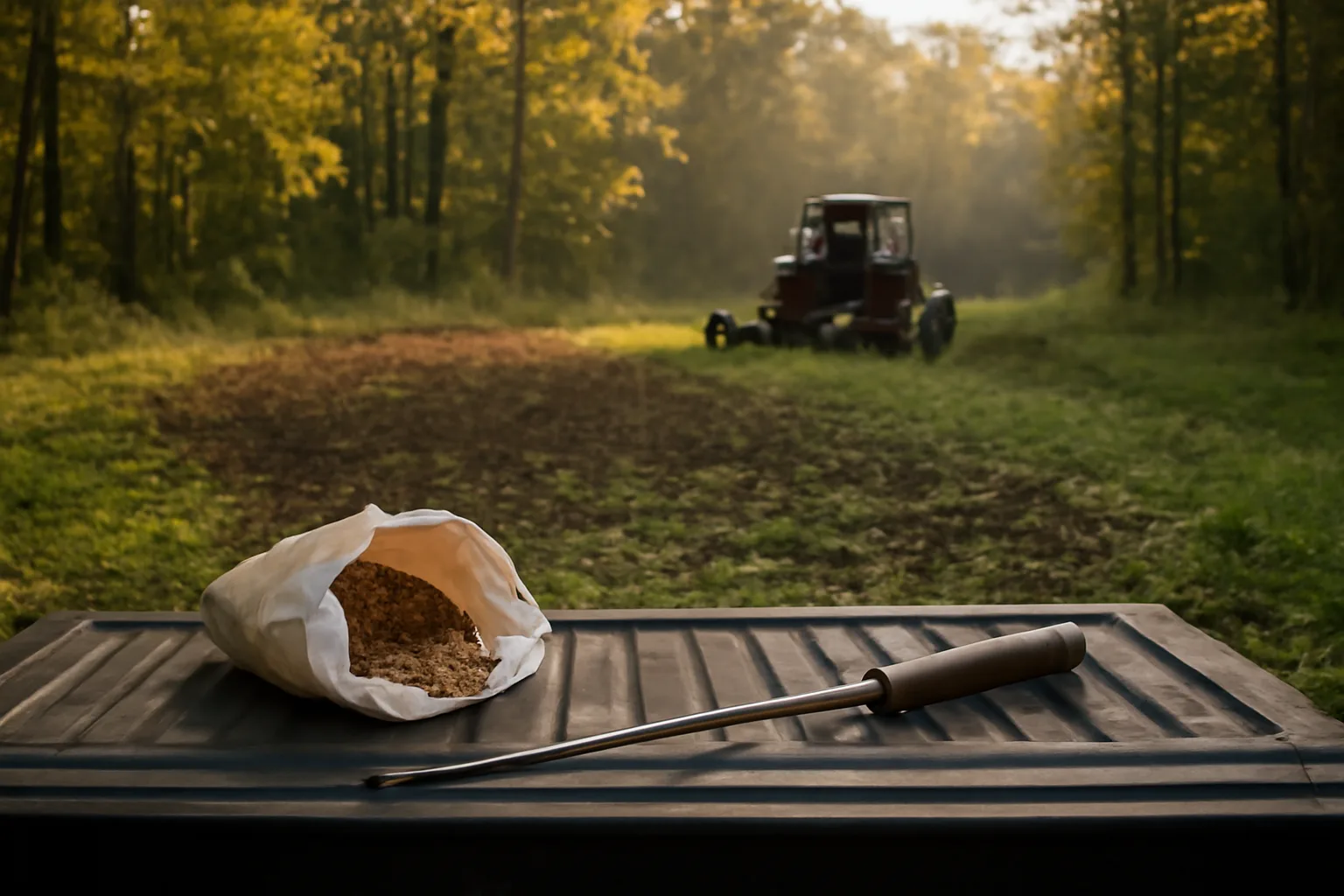
what is a food plot, exactly
A food plot is a planted patch of forage or grain on hunting land, built to feed deer and other wildlife and, in most cases, to draw them within bow or gun range during hunting season. It's not a garden and it's not a lawn. It's a small-scale ag operation, usually a quarter acre to five acres, managed with the same basics as a farm field: soil testing, lime, fertilizer, seed selection, and a planting calendar. State wildlife agencies generally treat food plots as habitat management rather than bait, but the line between "planted crop" and "bait pile" matters legally in a lot of states. Standing crops planted and left in place are typically legal even where baiting is banned, but piled grain, mineral, or seed dumped on the ground is a different story. Michigan's Wildlife Conservation Order spells out its baiting and feeding restrictions for deer separately from normal agricultural planting activity [1]. Always check your state wildlife agency's current baiting and feeding regulations before you plant or hunt over anything you're unsure about, because rules vary by state and sometimes by county (in Michigan, some CWD-affected counties have tighter rules than the rest of the state). Most plotters plant one of two broad types: perennial plots (clover, chicory, alfalfa) that you maintain for two to five years, or annual plots (brassicas, cereal grains, sorghum, soybeans) that you replant every year. A lot of good plot plans mix both, a perennial clover field for spring and summer plus a rotating annual plot for fall. If you want a structured layout for your specific acreage, that's exactly the kind of decision a food plot whitetail plan is built to sort out.
do deer like clover, and is it worth planting
Yes. Clover is one of the most consistently used food plot forages across the whitetail's range, and it's the closest thing to a default answer for "best food plot seed" if you can only plant one thing. White clover (Trifolium repens) varieties like Durana and Ladino, plus red clover, show up in land-grant forage guides across the Midwest and Southeast as high-protein, high-palatability options for deer [2]. Clover crude protein commonly tests in the 25 to 30 percent range during active growth, which is well above native browse in most regions. It's also a perennial, so a well-limed, well-fertilized stand can produce for three to five years before you need to reseed, which makes the cost per year lower than most annuals even though the seed itself isn't cheap. The catch: clover needs a soil pH close to 6.0 to 6.5 to perform, and most raw wooded or CRP ground tests well below that. Low soil pH ties up nutrients and limits the nitrogen-fixing bacteria (rhizobia) that legumes like clover depend on in their root nodules, which is why liming acidic ground is standard practice before establishing any clover stand [3]. If your soil test comes back at 5.2, don't expect a bag of Ladino clover to save you. Lime first, plant second. That's not a brand opinion, it's just how legumes work. Clover also can't take heavy shade or standing water. It wants at least a half day of sun and decent drainage. In a lot of the whitetail's range it's a spring-through-fall staple, but growth slows hard once frost hits, which is why so many plotters pair it with a fall annual next door.
when to plant food plots for deer
Timing depends on what you're planting and where you are, but the two big windows are spring (April through June for warm-season annuals and perennials) and late summer to early fall (July through September for cool-season annuals like brassicas, oats, and cereal grains). There is no single national planting date. Zone matters more than calendar month. As a rough framework: northern states (Zone 3-4, think Minnesota, Wisconsin, upper Michigan) plant fall brassicas and cereal grains from mid-July through mid-August so plants have time to establish before frost. Mid-latitude states (Zone 5-6, Ohio, Missouri, Virginia) usually run late August through mid-September. Southern states (Zone 7-8, Georgia, Alabama, Texas) can push into October and even November for cereal grains because frost comes late or not at all. Spring plots (clover, chicory, soybeans, alfalfa) generally go in after your last frost date and once soil temps are consistently in the 50s. Clover specifically germinates well once soil hits about 50°F, per most land-grant agronomy guides, though a frost-seeding method (broadcasting clover onto frozen or thawed-but-still-cool ground in late winter) is a common no-till alternative that a lot of experienced plotters actually prefer over spring drilling. Check your local cooperative extension's frost date tables and, if you're serious about dialing this in for your specific coordinates, a zone-based calendar takes a lot of the guesswork out. This is also where a lot of plotters realize their acreage needs more than one planting date, which is part of why a custom plan (like the $99 build at /plot-plan-builder) is often cheaper than three failed bags of seed.
when to plant oats for deer
Oats go in as a cool-season annual, typically 60 to 90 days before your first fall frost, so you get a green, leafy plot right as bow season opens. In most of the Midwest and mid-South that lands in the last two weeks of August through mid-September. In the Deep South you can wait until late September or October. Oats are a fast germinator, often up 5 to 7 days after planting given decent moisture, and deer hit young oat shoots hard because the sugar content is high and the leaf is tender. Oklahoma State University Extension lists oats among the most palatable of the small grains for deer and wildlife food plots, generally preferred over wheat or rye in side-by-side plantings, though rye tolerates cold and poor soil better [4]. The tradeoff is winter survival. Oats are the least cold-hardy of the common cereal grains and usually die back hard after a string of nights in the teens, while winter wheat and cereal rye keep growing (rye especially will green up again in late winter). If you want fall attraction but also some late-winter tonnage, a lot of plotters blend oats with wheat or rye in the same bag so the oats pull deer in early and the rye or wheat carries the plot through to spring.
when to plant turnips (and other brassicas) for deer
Turnips and other brassicas (rape, kale, radish) go in the ground 90 to 120 days before your average first hard frost, because they need that long growing season to bulb out and to build the sugar content that makes them attractive in late fall. Planting too late means you get leafy growth but small or no bulbs, and planting too early in hot weather can cause poor germination or bolting. In practical terms that's late July to mid-August for northern states, and mid-August to early September for the central and transition zones. Deep South plotters often push into September since frost arrives so late. Here's the part that trips people up: deer often ignore brassica leaves in September and October, then hammer the plot in November and December. Frost triggers a real physiological shift in brassicas, converting stored starches to sugars in the leaves and bulbs, which cold-tolerance research on brassica crops has documented at the cellular level [5], more than deer hunter folklore. If your turnip plot looks untouched in bow season, don't panic and don't rip it up. It's probably doing exactly what it's supposed to do, and it'll get hit hard once the cold sets in, sometimes so hard that deer eat the bulb right out of the ground, more than the tops. Brassicas also want a fairly neutral soil pH, generally 6.0 to 6.8, and they're heavy nitrogen feeders, so they respond well to a topdress of nitrogen 3 to 4 weeks after planting if your soil test calls for it.
do deer eat sorghum
Yes, deer eat sorghum, both the grain heads and, to a lesser extent, the young leaf growth, but it's not usually the first thing on a whitetail's priority list next to clover or beans. Sorghum (grain sorghum, milo, or the taller forage sorghums) is more commonly planted for its structure and drought tolerance than for its raw attraction. In hotter, drier regions, especially the southern Plains and parts of Texas and Oklahoma, sorghum holds up in summer heat far better than corn or soybeans, and several state wildlife agencies list it as a solid wildlife food plot option for exactly that reason. It's also a useful "screening" crop, planted in strips to block sightlines to a plot or to break up a field edge, since it grows tall and dense. Deer tend to key on sorghum grain heads in fall and winter once other food sources thin out, and turkey, quail, and doves use it heavily too, so it's a common choice on multi-species wildlife plantings rather than a pure deer-attraction bag. If your main goal is pulling deer for bow season, sorghum is rarely the best single choice. If your goal is drought-tolerant tonnage, screening cover, or a multi-species field, it earns a real spot in the rotation.
do deer like honey (honeysuckle, honey locust, and other "honey" confusion)
Deer don't eat honey itself, but they do heavily browse several plants with "honey" in the name, which is almost certainly what people mean when they ask this. Japanese honeysuckle (Lonicera japonica) is browsed hard by whitetails and is actually considered an invasive species in much of the eastern U.S., partly because deer over-browsing native plants gives honeysuckle a competitive edge [6]. Honey locust pods (Gleditsia triacanthos) are also a well-documented deer food, especially the sugary pulp inside the seed pods that drop in fall. Actual honey (the bee product) isn't part of a deer's diet and isn't a food plot input. If you've seen "honey holes" mentioned in hunting content, that's a term for a productive hunting spot, not a food source. Bottom line: if you're trying to plant something deer will browse hard with minimal input, honeysuckle and honey locust are both real answers, but honeysuckle's invasive status means a lot of states discourage or restrict planting it, so check your state's invasive plant list first.
what are deer's favorite foods, ranked by season
| Spring | Forbs, new browse | Clover, chicory | |
|---|---|---|---|
| Summer | Soft mast, browse | Soybeans, cowpeas, clover | |
| Early fall | Acorns (when present) | Standing soybeans, clover | |
| Late fall/winter | Acorns, browse | Brassicas (post-frost), cereal grains, corn | Soybeans deserve a mention here. Whole-plant soybean fields are among the most preferred food plot plantings during the growing season, per multiple state agency and university forage comparisons, largely because of high protein content in the leaf, but they're also one of the hardest plots to establish because deer can browse a young stand down to nothing before it ever gets tall. That's a real planning problem, not a seed problem, and it's part of why plot size and fencing (or plot placement relative to deer density) matters as much as species choice. For a deeper species-by-species breakdown, deer food plot seed covers how these options stack up against each other on cost and effort. |
There's no single favorite, deer preference shifts hard by season, region, and what's locally available, but repeated forage studies and extension palatability trials put a consistent handful of plants at the top. Acorns are consistently ranked among the most preferred natural fall foods where oaks are present, because of high fat and carbohydrate content. Among planted forages, clover, soybeans, and cowpeas rank highest in spring and summer, while brassicas, cereal grains, and standing corn or soybeans rank highest in late fall and winter. A rough seasonal ranking based on common extension forage trials and browse studies looks like this: | Season | Top natural food | Top planted food plot option |
how do you pick the right seed for your specific ground
Start with a soil test, not a seed catalog. Your local cooperative extension office runs soil tests for somewhere between $6 and $20 in most states, and the report tells you your current pH and nutrient levels along with lime and fertilizer recommendations specific to what you intend to plant. That report, not a bag label, is the real authority on how much lime and fertilizer your field needs. Land-grant extension programs consistently frame it the same way: test first, amend based on results, plant second. Once you know your pH and drainage, species selection gets a lot simpler. Low pH, wet clay ground rules out clover and alfalfa until you lime it. Well-drained loam with a pH near 6.5 opens up almost everything. Heavy shade from field edges kills brassica and clover performance regardless of soil chemistry, since both need close to a half day of direct sun. Equipment matters too. Brassica and clover seed is tiny and needs shallow planting, often just a quarter inch deep or simply broadcast and cultipacked, while cereal grains and sorghum want a half inch to an inch of coverage with a drill or disc. Planting brassica seed too deep is one of the most common reasons a "good" seed blend fails to come up. If you're weighing seed drill against broadcast-and-cultipack, that decision belongs with your soil test results and field size, and it's worth reading through equipment and methods guidance before you buy anything.
annuals vs perennials: which is actually the better investment
Perennials cost more per bag but less per year; annuals cost less per bag but need replanting and reworking every season. Neither is universally better, it depends on how much time and equipment access you have. A clover perennial plot, once established with correct lime and fertility, generally produces for three to five years with just annual mowing and a light fertilizer touch-up, which is why a lot of plotters treat it as their "low maintenance" acreage. A brassica or cereal grain annual plot needs full replanting (and usually a fresh disturbance pass) every single year, but it lets you rotate crops, manage weeds more aggressively, and time the plot precisely to opening day of bow season. Most experienced plotters run both: a perennial clover field for spring turkey season and summer deer nutrition, plus one or two annual fields timed for fall hunting. If you've only got one field and one shot at it, lean toward whichever matches your actual hunting calendar. If you hunt mostly early bow season, an annual brassica or oat plot timed to peak right then usually beats a clover field that's already past its spring flush. If you want a full breakdown of how these compare side by side on cost, labor, and season of peak attraction, that's the kind of side-by-side comparisons content is built for, and it's also exactly the trade-off a custom plan at /plot-plan-builder is meant to sort through for your specific acreage and hunting dates.
what does it actually cost to plant a good food plot
Seed alone runs anywhere from about $15 to $60 per acre for cereal grains like oats and wheat, up to $50 to $120 per acre for clover and brassica blends, depending on brand and seeding rate. Lime, if your soil test calls for it, typically costs $30 to $50 per ton delivered and spread, and a lot of raw wooded ground needs 1 to 2 tons per acre to correct pH, which often ends up being the single biggest line item on a first-year plot budget, bigger than the seed itself. Fertilizer costs swing hard with commodity prices, but a basic 19-19-19 or similar blend at 300 to 400 pounds per acre commonly runs $100 to $200 per acre as of recent seasons, though this number moves year to year and region to region, so treat it as a rough range rather than a quote. Equipment (disc, drill, cultipacker, sprayer) is a sunk cost if you already own or can borrow it, but renting or contracting the work adds real money on top of seed and lime. The honest total for a first-year, quarter-acre to half-acre plot on ground that needs lime is usually somewhere between $150 and $400 all-in, and that's before you factor in your own time. Planning that budget around a soil test result and a realistic calendar, rather than buying whatever bag looks best at the farm store, is the single biggest lever most first-time plotters have to pull. That's the exact gap a $99 custom plot plan is built to close: one soil test, one acreage, one hunting calendar, matched to species and dates instead of guesswork.
Frequently asked questions
Do deer eat sorghum?
Yes, deer eat both the grain heads and young leaves of sorghum, though it's usually a secondary choice behind clover, soybeans, or brassicas for pure attraction. It's more valuable for drought tolerance, screening cover, and multi-species wildlife plots (turkey, quail, dove all use it too) than as a primary deer-attraction crop.
Do deer like clover?
Yes, clover is one of the most consistently preferred food plot forages across the whitetail's range, commonly testing at 25 to 30 percent crude protein during active growth. It needs a soil pH near 6.0 to 6.5 to perform well, so a soil test and lime application usually matter more than which clover variety you buy.
When should you plant food plots for deer?
Spring plantings (clover, soybeans, chicory) go in after your last frost date once soil hits the 50s. Fall annuals (brassicas, oats, cereal grains) go in 60 to 120 days before your first hard frost, which lands in mid-July to mid-August in northern states and late August through October in southern states.
When should you plant oats for deer?
Plant oats 60 to 90 days before your average first fall frost, typically mid to late August in the Midwest and mid-South, and into September or later in southern states. Oats germinate fast, often within a week, but they're the least cold-hardy cereal grain and usually die back hard once temperatures drop into the teens.
When should you plant turnips for deer?
Plant turnips and other brassicas 90 to 120 days before your first hard frost so bulbs have time to develop, generally late July to mid-August in northern states and mid-August to September further south. Deer often ignore the leaves early on and then hit the plot hard after frost sweetens the sugars in the bulb and leaves.
What is a food plot?
A food plot is a planted area of forage or grain crops on hunting land meant to feed deer and other wildlife and to concentrate animal activity for hunting. It's managed like a small farm field: soil tested, limed, fertilized, and planted on a calendar matched to the region and target species.
Do deer like honey?
Deer don't eat honey itself, but they browse honeysuckle and honey locust pods heavily, which is likely the source of this question. Japanese honeysuckle is browsed hard by whitetails but is considered invasive in much of the eastern U.S., so check your state's invasive species list before planting it intentionally.
What are deer's favorite foods?
Preference shifts by season: acorns rank among the top natural fall foods where oaks are present, clover and soybeans lead in spring and summer, and brassicas (especially post-frost) and cereal grains lead in late fall and winter. There's no single universal favorite, it depends heavily on region and what's locally available.
Is clover better than brassicas for a food plot?
Neither is universally better. Clover is a perennial that feeds deer spring through fall for three to five years per planting, while brassicas are fall annuals that peak in attraction after a hard frost. Most experienced plotters plant both in separate fields rather than choosing one over the other.
How much does it cost to plant a food plot?
A first-year quarter to half-acre plot typically runs $150 to $400 all-in once you factor seed ($15 to $120 per acre depending on species), lime ($30 to $50 per ton, often 1 to 2 tons per acre needed), and fertilizer (commonly $100 to $200 per acre). Costs vary by region and current fertilizer prices.
Can I plant a food plot without a soil test?
You can, but you're guessing on lime and fertilizer rates, which are usually the biggest cost and biggest failure point in a first-year plot. Most land-grant extension offices run soil tests for $6 to $20 and give you a report specific to your intended crop, which is far cheaper than a failed planting.
Are food plots legal, or does planting count as baiting?
Standing planted crops are generally legal even in states with baiting bans, but piled or spread grain, mineral, or seed is often classified as illegal bait. Rules vary significantly by state and sometimes by county, so check your state wildlife agency's current baiting and feeding regulations before you plant or hunt a plot.
Sources
- Michigan Department of Natural Resources, Wildlife Conservation Order 2.44, Baiting and Feeding of Deer and Elk: Michigan law defines baiting and feeding restrictions for deer separately from normal agricultural planting
- Mississippi State University Extension, Publication 2111, Establishing and Managing Wildlife Food Plots: White and red clover varieties are recommended as high-protein, high-palatability forage for deer food plots
- University of Tennessee Extension, W346, Soil Fertility and Liming for Forage Legumes: Low soil pH limits rhizobia nitrogen fixation in legume root nodules, so legumes like clover need pH near 6.0-6.5
- Oklahoma State University Extension, PSS-2129, Wildlife Food Plots: Oats are generally more palatable to deer than wheat or rye among cereal grain food plot options
- USDA Agricultural Research Service, Freezing Tolerance and Sugar Accumulation in Brassica Species (PMID 16221219): Frost triggers conversion of stored starches to sugars in brassica leaves and roots, increasing palatability
- USDA NRCS, Japanese Honeysuckle Plant Guide: Japanese honeysuckle is browsed heavily by deer and is classified as an invasive species in much of the eastern U.S.
- Texas A&M AgriLife Extension, E-620, Soil Testing for the Home Landscape or Garden: Soil testing provides lime and fertilizer recommendations specific to the intended crop and should be done before planting