Last updated 2026-07-26
TL;DR
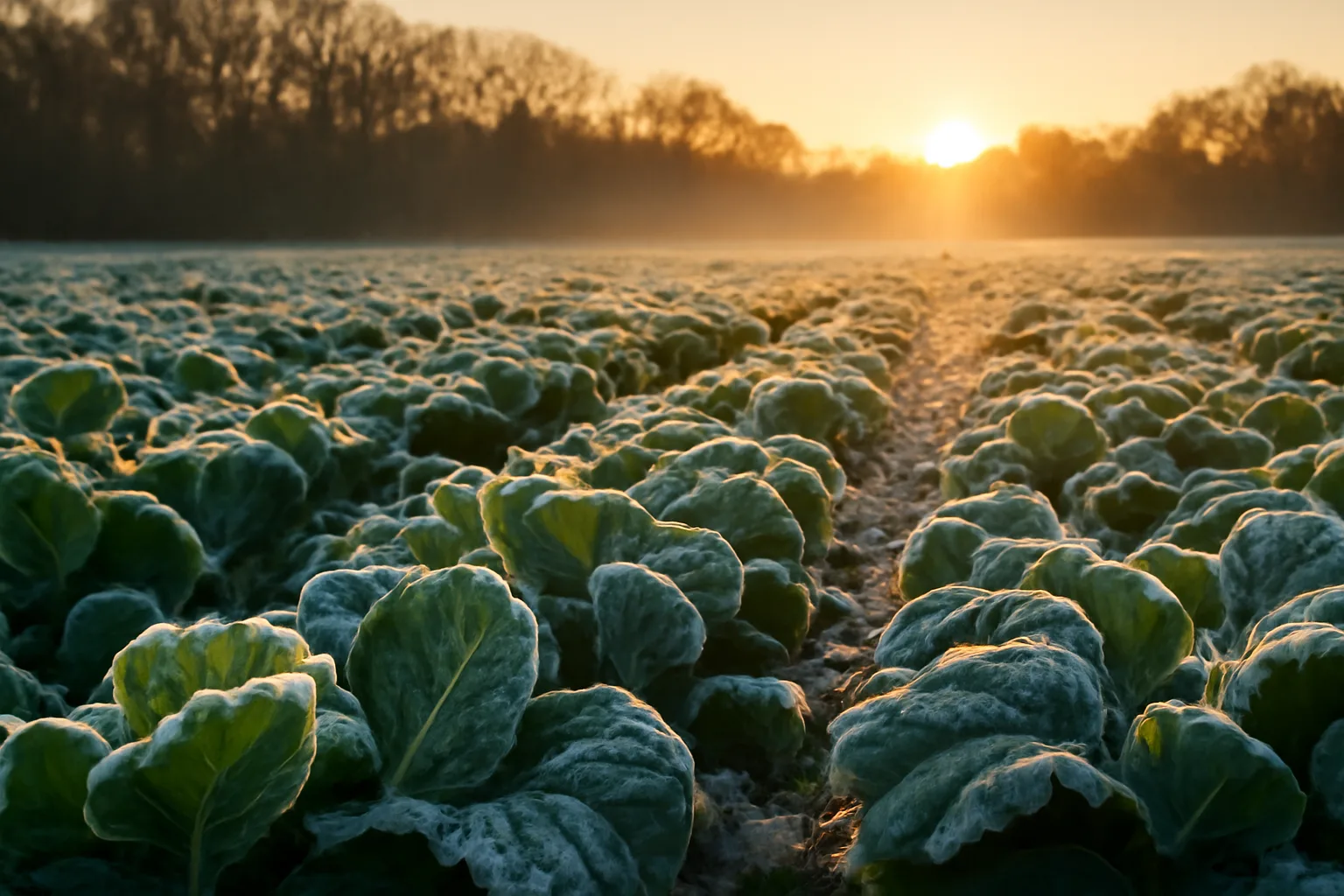
The best cold weather food plots combine brassicas (turnips, radishes), cereal grains (oats, wheat, rye), and clover. Brassicas get sweeter after frost as starches convert to sugar, cereal grains stay green under snow, and clover holds protein into early winter. Plant 60 to 90 days before your first killing frost for the best late-season draw.
what makes a food plot work in cold weather
A cold weather food plot needs to do two things at once: survive freezing temperatures and get more attractive, not less, once the cold sets in. That's a narrower list of plants than most people think. Brassicas (turnips, radishes, kale, rape) are the standouts here because frost actually improves them. Cold triggers the plant to convert starches into simple sugars, which is a survival mechanism against ice crystal damage in the cell walls. Deer taste that shift and hit brassica plots hard once temperatures drop into the 20s and 30s [1]. Cereal grains like oats, winter wheat, and cereal rye handle cold differently. They don't sweeten the same way, but they stay green and accessible under a few inches of snow, which matters a lot in December and January when green forage is scarce. Clover sits in between. It's not a true cold-season specialist, but well-established clover stands hold decent protein levels into early winter and green back up fast in spring, so a lot of hunters treat it as a shoulder-season plot rather than a dead-of-winter draw. Soil temperature and daylight length matter as much as air temperature. A plot that looks perfect on paper but goes in three weeks late will underperform a mediocre mix planted on time. Timing beats species selection more often than people want to admit.
do deer eat sorghum
Yes, deer eat grain sorghum, but it's a secondary cold-weather food, not a primary one. Sorghum (milo) produces a grain head that stands above snow, which is genuinely useful in northern climates where corn and soybeans get buried. Deer browse it readily once softer forages are gone, and it's cheaper to establish per acre than corn in a lot of regions. The catch is palatability. Sorghum grain has tannins that make it less preferred than corn or beans when other options are available. If you're picking one grain crop and have the option, corn or soybeans usually win a head-to-head. Sorghum earns its spot in northern or drought-prone ground where corn struggles, or as a mixed-plot component rather than a monoculture.
do deer eat clover, and do deer like clover
Deer eat clover readily and it's one of the most consistent food plot performers across the whitetail range. Perennial clovers like white clover and red clover deliver crude protein commonly cited in the 20 to 30 percent range during active growth, which rivals or beats soybean forage on paper. Do deer like clover? Preference studies and decades of plot-building experience say yes, especially spring through fall. Clover's weak point is winter. Once hard frosts hit and growth stops, clover forage quality drops and deer shift toward brassicas, grains, and mast. In the Deep South and Southeast, where winters are mild, clover can keep producing through the season and stays relevant well into cold months. In the Midwest and North, clover mostly goes dormant and a standalone clover plot won't carry deer through January the way a brassica or grain plot will. The practical move a lot of experienced plotters make is running clover as a spring and summer plot and pairing it with a brassica or cereal grain plot nearby for the cold months. That combination covers the calendar better than either species alone. For species selection across a full rotation, food plot whitetail breaks down how these pairings work by region.
when to plant food plots for deer (by season and zone)
| Upper Midwest / North (Zone 3-4) | late July to mid-August | mid-August to early September | April to May | |
|---|---|---|---|---|
| Mid-South (Zone 5-6) | mid-August to mid-September | September | March to May, or Sept | |
| Deep South (Zone 7-8) | September to early October | October | October to November | Miss the window on brassicas by even two or three weeks and you'll get spindly plants with small bulbs, because they need that long growing season to bulk up before frost. Cereal grains are more forgiving and can be planted later since their strategy is winter survival, not fall growth. |
Timing depends on whether you're planting a spring/summer plot or a fall/winter plot, and both depend on your local frost dates, which you can pull from your state extension office or the USDA plant hardiness zone map [2]. Spring plots (clover, chicory, soybeans) go in after your last frost date, typically April through May in the North and March through April in the South. Fall and winter plots (brassicas, cereal grains) go in 60 to 90 days before your first expected killing frost, which usually lands them in an August through September window up North and September through October in the mid-South and Southeast. Here's a rough planting window table by region. Treat these as starting points, not gospel. Your local extension office has better numbers for your specific county. | Region | Brassicas / turnips | Cereal grains (oats, wheat, rye) | Clover |
when to plant turnips for deer
Plant turnips 80 to 90 days before your first expected fall frost. That window gives the plant enough time to build a real bulb and enough leaf mass for deer to browse through fall, then the bulb becomes the main draw once frost sweetens the sugars in November and December. In practice, that means late July to mid-August in the northern tier, mid-August into early September through the Midwest and mid-South, and September into early October in the Deep South. Turnip seed is small and cheap, usually 2 to 4 pounds per acre broadcast, and germinates fast in moist soil, often within 3 to 5 days [3]. One common mistake: planting turnips too early in warm soil. They'll bolt, get woody, and the bulbs won't develop right. Another mistake is planting too late, which leaves you with tall leafy tops and no bulb by the time frost hits. If you're not sure which side of the window you're on, err early. A turnip plot that's a few weeks ahead of schedule handles a light early frost fine; one that's behind schedule just runs out of season.
when to plant oats for deer
Oats go in 6 to 8 weeks before your first fall frost, which typically lands in August for northern states and September into early October for the mid-South and South. Oats germinate fast, often within a week in warm, moist soil, and they green up quicker than wheat or rye, making them a strong early fall attractant [4]. The tradeoff is winter hardiness. Oats are the least cold-tolerant of the common cereal grains and will usually die back hard after temperatures drop into the low teens or single digits, depending on variety and snow cover. That's fine if your goal is a September through December draw, but if you need a plot that survives deep into a Northern winter, cereal rye or winter wheat will outlast oats. A lot of successful late-season plot builders blend oats with wheat or rye specifically to get the fast early growth of oats plus the cold survival of the others. A blend also spreads your risk if one species has a bad germination year.
what is a food plot
A food plot is a planted area of forage, usually somewhere between a quarter acre and several acres, established specifically to feed and attract deer or other wildlife on a property. It's not wild habitat left alone. It's an actively managed patch of crop, planted, fertilized, and sometimes limed according to a soil test, timed to produce food when deer need it most. Food plots serve two overlapping purposes: nutrition (helping deer through stress periods like late gestation, antler growth, or winter) and hunting (giving hunters a predictable place deer will show up to feed). Many land managers run multiple plot types on one property, spring/summer plots for nutrition and growth, fall/winter plots for hunting season and cold-weather survival. The basics of a plot don't change much: clear or till the ground, get a soil test, apply lime and fertilizer based on that test, plant the right species for your region and season, and manage weeds and browse pressure. State wildlife agencies and land-grant extension programs both publish plot guides, and it's worth checking your state's baiting and supplemental feeding regulations before you start, since some states regulate food plots differently than bait piles, and rules vary a lot by state. For a broader rundown of plot categories and how they fit a full-season plan, see deer food plots.
what are deer's favorite foods
Deer preference shifts by season, region, and what's available, but a few foods show up near the top of almost every preference study and hunter survey. Acorns, especially white oak acorns, are consistently a top natural food because of their lower tannin content and higher palatability compared to red oak acorns . Soybeans and corn rank high among cultivated crops, and clover and alfalfa are preferred forages during the growing season. In cold weather specifically, deer preference shifts toward whatever still has calories and hasn't gone dormant: standing corn, soybean pods left in the field, brassica bulbs and tops after a frost, and winter wheat or rye holding green under snow. Deer are also opportunistic browsers on woody stems, especially in deep snow years when agricultural food is buried or gone. There's no single universal favorite. A deer herd in Georgia with mild winters and year-round clover access behaves very differently than a herd in Minnesota depending on corn, soybeans, and browse to survive January. Regional food plot strategy matters more than chasing whatever crop ranks highest in a national survey. Deer food plot seed covers species selection by region in more detail.
do deer like honey
There's no real food plot or forage angle here, deer aren't eating honey in the wild in any meaningful way, and there's no wildlife research treating honey as a deer food source. Deer occasionally show interest in sweet substances, which is part of why some scent and attractant products use sugar-based ingredients, but honey itself isn't a forage crop and it's not something you plant or manage in a food plot context. If you're seeing this question because of attractant products marketed as "honey" or molasses-based deer feeds, note that many states restrict or ban supplemental feeding and baiting, including sugar-based attractants, especially during firearm season or in areas managing chronic wasting disease. Check your state wildlife agency's regulations before using any bait or attractant product, since rules vary widely and some states classify these products the same as bait.
how to build a cold weather plot rotation that actually lasts
The strongest cold-weather plot strategy on real ground isn't one species, it's a rotation or a blend that covers early fall through the coldest part of winter. A common, well-tested approach: plant a mix of brassicas and cereal grains together in the same plot, timed to your regional window (see the table above). The cereal grain germinates fast and gives deer something to browse in September and October while the brassica bulbs are still developing underground. By November and December, the brassica tops and bulbs become the main draw as frost sweetens them, and the cereal grain, especially winter wheat or rye, keeps producing green forage that survives snow cover into January and February. Soil fertility drives all of this more than seed selection does. Brassicas in particular are heavy nitrogen feeders, and a plot that's shorted on fertility will produce small, bitter bulbs regardless of planting date. A soil test run 60 to 90 days before planting gives you time to get lime applied, since lime takes months to fully adjust soil pH. Your soil test lab or state extension office is the real authority on exact lime and fertilizer rates for your dirt. A general plan can point you toward species and timing, but it can't replace a test that measures your actual soil. If you want a starting framework before your soil results come back, PlotSeason's $99 one-time Custom Food Plot Plan builds a species and timing recommendation based on your zone, and you can start one at /plot-plan-builder. It's a planning tool, not a replacement for your soil test lab's fertilizer recommendations.
equipment and seeding rates for cold weather plots
| Turnips / brassicas | 2-4 lbs/acre | 1/4 to 1/2 inch | 3-5 days | |
|---|---|---|---|---|
| Oats | 60-100 lbs/acre | 1-1.5 inches | 5-10 days | |
| Winter wheat | 60-120 lbs/acre | 1-1.5 inches | 7-10 days | |
| Cereal rye | 50-100 lbs/acre | 1-1.5 inches | 5-10 days | |
| Clover (white/red) | 6-10 lbs/acre | 1/4 inch or less | 5-10 days | Rates above are general ranges pulled from common extension and seed industry guidance; check your specific seed tag, since blends and cultivars vary [4]. A cultipacker or roller after broadcasting small seed like clover and brassicas makes a real difference in germination, since good seed-to-soil contact matters more for tiny seeds than for grain. A no-till drill is worth the rental cost for cereal grains on ground you can't till, and it gets more consistent depth than broadcasting alone. For equipment-focused planning on tillage, drills, and sprayers by plot size, see food plot seed. |
Cold weather plot species have different seeding rates and planting depths, and getting these wrong is one of the most common reasons a plot underperforms. | Species | Seeding rate (broadcast) | Planting depth | Days to germination |
Frequently asked questions
Do deer eat sorghum?
Yes, deer eat grain sorghum, especially once snow buries softer food sources, but it's less preferred than corn or soybeans due to tannins in the grain. It works well in northern or dry regions where corn struggles, and its standing grain head stays accessible above snow, making it a solid secondary cold-weather crop rather than a first choice.
Do deer eat clover, and do deer like clover?
Deer eat clover readily and generally prefer it during the growing season, when crude protein commonly runs in the 20 to 30 percent range. It's a strong spring through fall plot but loses value in deep cold since growth stops after hard frost. Pairing clover with a brassica or cereal grain plot covers the calendar better than clover alone.
When should I plant food plots for deer?
Spring and summer plots like clover and soybeans go in after your last frost date, typically April to May in northern states and March to April in the South. Fall and winter plots like brassicas and cereal grains go in 60 to 90 days before your first killing frost, usually August through October depending on your zone.
When should I plant turnips for deer?
Plant turnips 80 to 90 days before your first fall frost, which is roughly late July to mid-August in the North, mid-August to early September in the Midwest, and September to early October in the Deep South. That window gives the bulb time to develop before frost sweetens it.
When should I plant oats for deer?
Plant oats 6 to 8 weeks before your first fall frost, usually August in the North and September into early October in the mid-South and South. Oats germinate fast and green up quickly but have the least cold tolerance of common cereal grains, so they're best paired with wheat or rye for late-winter survival.
What is a food plot?
A food plot is a planted area, usually a quarter acre to several acres, established to feed and attract deer through crops like clover, brassicas, or cereal grains. It's actively managed with soil testing, lime, fertilizer, and timed planting, unlike wild habitat left undisturbed.
What are deer's favorite foods?
White oak acorns, soybeans, corn, and clover consistently rank as top preferred foods across studies and regions, though preference shifts by season and availability. In cold weather, deer favor whatever still has calories: standing grain, brassica bulbs after frost, and green winter wheat or rye under snow.
Do deer like honey?
There's no wildlife research or forage use showing deer eat honey in any meaningful way. It's not a food plot crop or a natural deer food. Some scent and attractant products marketed with sugar or honey branding exist, but check your state's baiting and feeding regulations before using any attractant product.
What's the best cold weather food plot for deer?
There's no single best crop; the strongest approach blends brassicas (turnips, radishes) with a cereal grain (oats, wheat, or rye). Brassicas sweeten after frost and cereal grains stay green under snow, so together they cover late fall through deep winter better than either species alone.
Why do deer prefer brassicas after a frost?
Frost triggers brassica plants to convert stored starches into simple sugars, a natural defense against ice damage in plant cells. Deer taste that sugar increase and browsing pressure on brassica plots typically spikes once temperatures drop into the 20s and 30s Fahrenheit.
How much seed do I need per acre for a cold weather plot?
Roughly 2 to 4 pounds per acre for turnips and brassicas, 60 to 100 pounds per acre for oats, 60 to 120 pounds per acre for winter wheat, and 6 to 10 pounds per acre for clover, broadcast. Always check the seed tag for the specific blend, since cultivars vary.
Should I till or no-till my cold weather food plot?
Both work; tilling gives faster, more even germination on ground with heavy competition, while no-till drilling preserves soil structure and works well on slopes or erosion-prone ground. For small seeds like clover and brassicas, a cultipacker or roller after broadcasting matters more than tillage method.
Do I need a soil test before planting a cold weather plot?
Yes. Brassicas especially are heavy nitrogen feeders and underperform badly on poor soil regardless of planting date. Test soil 60 to 90 days before planting so lime has time to adjust pH, and follow your soil test lab's specific fertilizer recommendations rather than a generic rate.
Sources
- USDA NRCS, Plant Fact Sheet: Turnip: Frost triggers starch-to-sugar conversion in brassicas, improving palatability
- USDA NRCS, Plant Guide: White Clover: White clover forage quality and crude protein during the growing season
- Oklahoma State University Extension, Brassicas for Forage and Biofuel: Turnip and brassica seeding rates and germination timelines
- Oklahoma State University Extension, Small Grains Forage: Oat, wheat, and rye seeding rates, planting depth, and relative cold tolerance
- USDA Forest Service, Fire Effects Information System: Quercus alba (white oak): White oak acorns have lower tannin content and higher deer palatability than red oak acorns