Last updated 2026-07-25
TL;DR
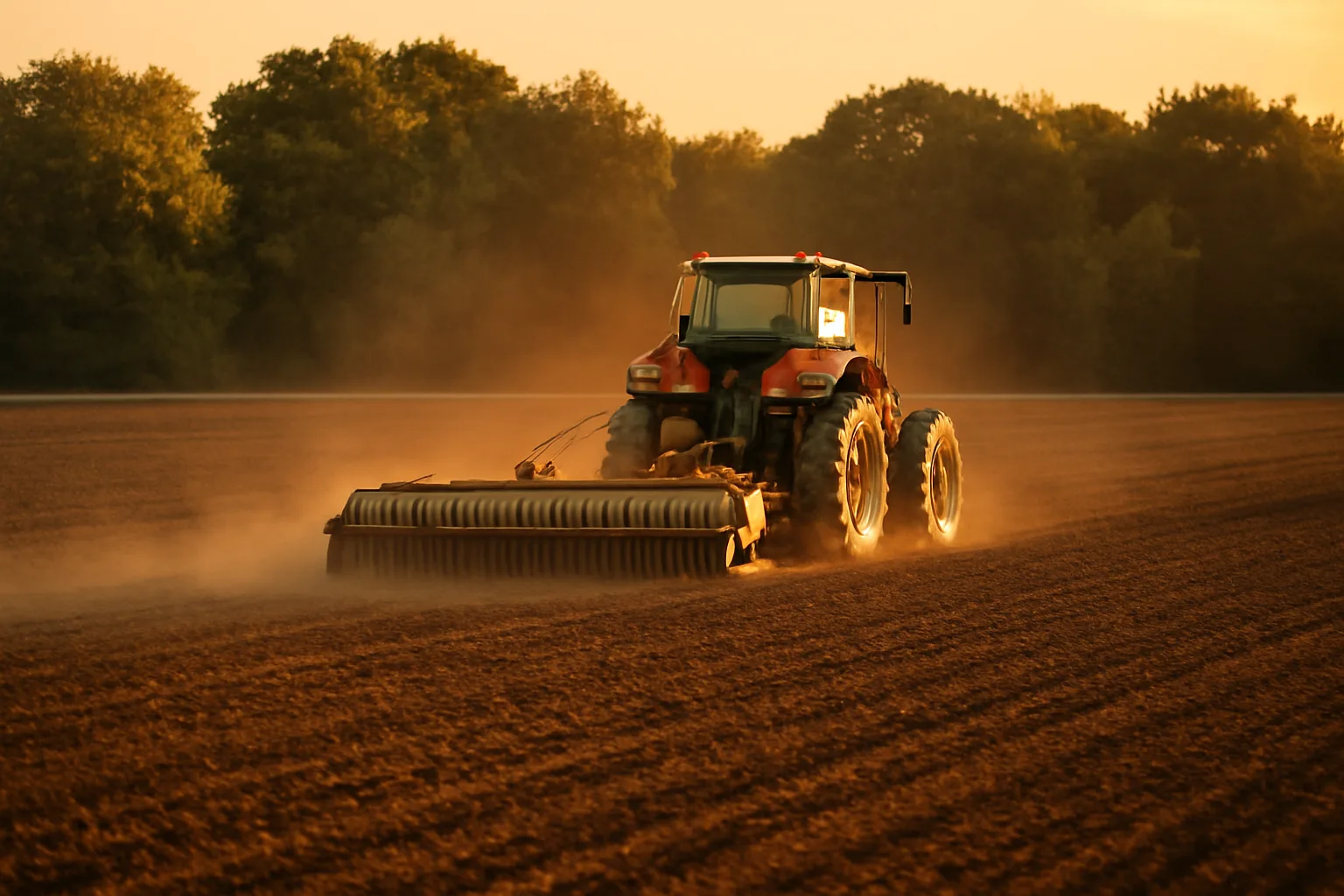
A Brillion seeder is a cultipacker-style drill that meters small seed through a box, drops it in front of a corrugated roller, and firms soil around it in one pass. It shines on clover, brassicas, and small grains where seed-to-soil contact matters. It runs $2,500 to $8,000+ used, and needs a tractor with real pull power, usually 40 hp or more for an 8-foot unit.
What is a Brillion food plot seeder?
A Brillion seeder is a ground-driven seed drill built around two cultipacker rollers with a seed box mounted between them. The front roller breaks and firms a rough seedbed, a metering system drops seed at a set rate, and the rear roller presses the seed into the soil for contact. It's not a true drill with disc openers cutting a furrow. It's closer to a broadcast-and-pack system, which is exactly why it works so well for the small, shallow-planted seeds food plotters use most: clover, chicory, brassicas, and small grains like oats and wheat. The company Brillion Iron Works has made these packer-seeders for farm use since the 1940s, and the name has become generic in the food plot world the way "Kleenex" means tissue. You'll hear "Brillion seeder" applied to the original brand and to lookalike units from Bush Hog, Frontier, Woods, Land Pride, and Firminator that copy the same roller-box-roller layout. For a full rundown of general planting strategy before you get to equipment, see food plot whitetail and deer food plots.
How does a Brillion seeder actually work?
The front cultipacker wheel does two jobs: it breaks up remaining clods on a worked seedbed, and it drives the seed metering cups or agitator through a ground-speed-proportional system. That means seeding rate is tied to how fast you drive, not a separate motor or PTO. Slow down and you seed heavier per acre. Speed up and you seed lighter. Most units have a gearbox or sprocket change to set a baseline rate, then fine-tune with speed. Seed drops from the box onto the soil surface just ahead of the rear roller. The rear roller, with its corrugated ridges, presses seed to a consistent shallow depth, usually 1/4 inch to 1/2 inch for something like clover or brassica seed. That firm contact matters more than people think. Small seed sitting loose on top of dry soil can desiccate before it ever germinates. A cultipacker press closes that gap and holds moisture against the seed coat. Because there's no true furrow opener, a Brillion seeder wants a seedbed that's already been worked, disked, or at least lightly tilled. Running one straight into sod or hard ground gives spotty results because the roller can't press seed into soil it hasn't broken up first.
When should I use a Brillion seeder versus a broadcast spreader?
Use a Brillion seeder when you're planting small, shallow seed on a prepared seedbed and you want even depth control across the whole plot. Clover, chicory, brassicas (turnips, radish, rape), and small grains all do better with the pack-in method than with broadcast-and-hope. A broadcast spreader (ATV-mounted or hand-crank) is cheaper, faster to own, and fine for topdressing seed onto a firmed bed you'll cultipack separately, or for larger seed like soybeans and corn that gets drilled or planted deeper anyway. If your plot is small (under an acre), a broadcast spreader and a drag harrow behind an ATV can get you most of the result for a fraction of the equipment cost. The honest tradeoff: a Brillion seeder costs real money and needs a mid-size tractor to pull it well. A broadcast spreader costs $150 to $600 and mounts on almost anything. If you're planting more than 3 to 5 acres a year across multiple small seed species, the Brillion starts paying for itself in stand quality and reseeded-plot savings. Below that, most guys are fine broadcasting and packing separately, or renting a drill for the year. For picking the actual seed blend once you've settled on equipment, see deer food plot seed and food plot seed.
What does a Brillion seeder cost, new and used?
| Hand-crank broadcast spreader | $30 to $100 | Under 1 acre, small seed |
|---|---|---|
| ATV broadcast spreader | $150 to $600 | 1 to 5 acres, small seed, topdress |
| Used Brillion-style seeder (6-8 ft) | $2,500 to $8,000 | 3+ acres, repeat annual use, small seed |
| New Brillion-style seeder (6-8 ft) | $6,000 to $15,000+ | Same, long-term ownership |
| Grain drill (row crop, larger seed) | $3,000 to $20,000+ used | Soybeans, corn, larger acreage |
New Brillion-brand packer seeders run roughly $6,000 to $15,000+ depending on width (a common food-plot size is 6 to 8 feet) and whether it's a single or double seed box for multi-species blends. Competing brands (Land Pride, Frontier, Woods) land in similar territory new. Used units in the 6 to 8 foot range commonly sell for $2,500 to $8,000 depending on age, rust, and roller condition on farm equipment marketplaces and local classifieds. Rollers wear but rarely fail outright. The metering gearbox and agitator chain are the parts to check on any used unit before buying. Renting or borrowing is common in deer camp circles. Some farm co-ops and equipment rental yards carry small grain drills or packer seeders by the day, which can make sense if you're only seeding once or twice a year. Table: rough equipment cost comparison for food plot seeding | Method | Typical cost | Best for |
What tractor size do I need to pull a Brillion seeder?
For an 8-foot unit, plan on at least 40 to 50 PTO horsepower and enough tractor weight to handle the pull, especially on any slope. Smaller 5 to 6 foot units can work behind a 25 to 35 hp compact tractor. Check the specific model's weight and draft requirement before assuming your tractor can handle it. A heavy double-roller unit loaded with seed pulls harder than it looks. Some smaller Brillion-style units are built to be pulled by a UTV or ATV with a hitch rated for the load, but those are the exception, not the rule, and you should verify the manufacturer's tow rating rather than guess.
How do I prep a seedbed before running a Brillion seeder?
Kill or mow existing vegetation, then till or disk the plot to break up sod and expose bare soil. A rough, cloddy seedbed is fine; the front roller on the seeder will break it down further as you drive. What you don't want is standing thatch or heavy residue, which blocks seed-to-soil contact no matter how good your equipment is. A soil test should come before any of this. Cooperative extension programs recommend testing soil every 1 to 3 years for pH and nutrient levels before planting forage crops. The University of Missouri Extension guide on soil testing notes that a standard test measures pH, phosphorus, potassium, and organic matter, and that results should guide lime and fertilizer decisions rather than a guess based on last year's plot [1]. Lime takes months to fully adjust soil pH, so if your test calls for lime, get it applied well ahead of your seeding window, not the same week. Your soil test lab is the authority on exact lime and fertilizer rates for your specific field; a general article like this one can't replace a site-specific recommendation. If you want a starting point pulled together for your property's location and plot goals, a Custom Food Plot Plan runs a flat $99 one-time and gives general species and timing guidance, though it's still not a substitute for your own soil test results.
When to plant food plots for deer?
Timing splits into two windows depending on what you're planting: spring/early summer for warm-season annuals and perennials, and late summer through fall for cool-season annuals and brassicas. There's no single "food plot season." It's driven by what species you choose and your USDA plant hardiness zone. Spring plots (soybeans, cowpeas, warm-season perennial clover establishment) generally go in after your last frost date, often April through June depending on latitude. Fall plots (brassicas, cereal grains, winter wheat, clover interseeded with grains) are typically planted 6 to 10 weeks before your area's first hard frost, so the crop has time to establish before it either goes dormant or gets browsed hard through hunting season. Check your local frost dates and extension planting calendar rather than a national blanket date. The USDA Plant Hardiness Zone Map is the standard reference land-grant extension programs use to set regional planting windows, since a fall brassica window in Michigan can be a full month earlier than one in Alabama.
When to plant oats for deer?
Oats are a cool-season annual, so most food plotters plant them in late summer to early fall, typically 6 to 8 weeks before the first expected frost in their area. That gives oats time to establish leafy growth before cold weather, which is when deer hit them hardest since oats stay palatable and somewhat cold-tolerant longer than many other cereal grains. In the Upper Midwest and Northeast, that often means mid-August to early September planting. In the Southeast, growers can push into September or even October. Oats can also be spring-planted as a quick cover or nurse crop, but for hunting-season attraction, the fall planting window is what matters.
When to plant turnips for deer?
Turnips and other brassicas are planted in late summer, generally 90 to 100 days before your first hard frost, since they need that runway to bulb out and reach peak palatability. Most extension guidance and seed company agronomy notes point to a planting window of mid-July through mid-August across much of the whitetail's range, adjusted earlier for northern latitudes and later for the Deep South. A detail a lot of first-timers miss: turnip leaves get hit hard right after germination, but deer often ignore the bulbs until after a hard frost sweetens the starches into sugars. That means a turnip plot can look untouched in October and get hammered in December. Don't judge a brassica plot's success too early in the season.
Do deer eat sorghum?
Yes, deer eat grain sorghum, both the standing seed heads and the plant itself, though it's typically used as a fall/winter grain source rather than the main draw of a plot. Sorghum is more drought-tolerant than corn, which makes it a reasonable substitute in dry regions, and standing sorghum also provides cover alongside food. It's not typically anyone's top pick when better options (soybeans, corn, brassicas) are available, but in tough soil or dry years it holds up better than corn does.
Do deer eat clover, and do deer like clover?
Yes, clover is one of the most consistently preferred food plot forages for whitetail deer across nearly the entire range, and it's a staple recommendation from wildlife agencies and extension programs alike. Clover offers high protein content, often 25% to 30% crude protein in vegetative growth stages, and it regrows after grazing, which is why it holds up to repeated browsing better than a lot of annuals. White clover (ladino types) and red clover are the two most common food plot species. Ladino tends to be shorter and more shade-tolerant; red clover grows taller and handles a wider soil pH range with somewhat more drought tolerance. Both are perennials that can produce for 3 to 5 years with proper mowing and fertility maintenance, which makes them a strong return on the seed cost compared to replanting an annual every year. The Missouri Department of Conservation lists clover among its recommended food plot forages for deer, citing its palatability and season-long availability as reasons it's a mainstay planting across the state [2].
What are deer's favorite food, and do deer like honey?
There's no single universal "favorite" because preference shifts by season, region, and what's locally available, but clover, soybeans, and acorns consistently rank at the top of preference studies and agency forage lists. In the growing season, deer key in on high-protein forbs and legumes like clover and soybeans. In fall, they shift hard toward mast (acorns especially) and standing grain. Acorns deserve a specific callout. Multiple state wildlife agencies note that deer will bypass planted food plots during a heavy acorn drop, because acorns are calorie-dense and require less searching. That's not a knock on your plot, it's just biology. As for honey: there's no meaningful evidence deer seek out honey as a natural food source or that it's used as a legitimate attractant in any documented wildlife agency guidance. Deer are herbivores built around browsing plants, forbs, mast, and agricultural crops; honey isn't part of their natural diet or foraging behavior. If you've heard of hunters using honey or sugar-based scents, that's an attractant product claim, not a documented feeding behavior, and it has nothing to do with actual food plot planning.
What is a food plot, exactly?
A food plot is a planted area, usually somewhere between a quarter acre and several acres, seeded with forage crops specifically to attract and feed deer or other wildlife on private or leased land. Food plots serve two overlapping goals: supplemental nutrition for the local herd (especially during stress periods like late winter or antler growth) and hunting attraction, since a well-placed plot concentrates deer activity in a spot you can hunt. Food plots range from simple annual clover or brassica plantings to multi-species rotations planned around soil type, sunlight, and hunting pressure. They're distinct from agricultural crops in scale and purpose; a farmer planting 200 acres of soybeans for market is doing agriculture, while a hunter planting a half-acre of soybeans behind a treestand is running a food plot, even though the seed might be identical. Many state wildlife agencies publish food plot guidance as part of their broader habitat management resources, and it's worth checking whether your state has rules distinguishing a food plot from baiting, since regulations vary significantly and hunting over what your state classifies as bait can be illegal even if the planting itself is legal. Always check your state wildlife agency's current baiting and feeding regulations before you hunt near any planted plot, since the line between a food plot and bait differs state to state and can change year to year.
Brillion seeder maintenance and setup tips
Grease the roller bearings and check the seed metering cups or agitator for wear before every season; a worn agitator throws off your seeding rate even if the gearbox setting hasn't changed. Calibrate by running the seeder over a tarp or measured distance and weighing actual seed dropped, rather than trusting the gearbox chart blindly, since seed size and moisture content shift real output. Match your ground speed to the seed. Small seed like clover wants a slower, steadier pass so the rear roller has time to press it in evenly. Going too fast can leave seed sitting loose on the surface, which defeats the whole purpose of owning a packer seeder. Store it under cover if you can. The rollers are cast iron or steel and will rust if left exposed through wet winters, and a rusted roller surface can leave uneven soil contact the following spring. If you're weighing whether a dedicated seeder or a simpler domain food plot seed blend strategy fits your acreage better, it often comes down to how many plots you're running and how much annual seeding you actually do.
Frequently asked questions
Do deer eat sorghum?
Yes. Deer eat grain sorghum heads and browse the plant, and it works as a drought-tolerant fall/winter grain option, though it's usually a secondary choice behind corn or soybeans where those grow well. It also provides standing cover alongside the food value, which is a bonus in open plot layouts.
Do deer eat clover, and do deer like clover?
Yes, clover is one of the most preferred whitetail forages across most of their range. It runs 25% to 30% crude protein in vegetative stages, regrows after grazing, and can produce for 3 to 5 years as a perennial stand, making it a top pick among state wildlife agency food plot recommendations.
When to plant deer food plots?
It depends on species. Warm-season plots (soybeans, cowpeas) go in after the last spring frost, typically April to June. Cool-season plots (brassicas, oats, wheat, clover) go in 6 to 10 weeks before the first fall frost. Check your region's extension planting calendar rather than a single national date.
When to plant oats for deer?
Plant oats 6 to 8 weeks before your area's first expected fall frost, typically mid-August to early September in the Upper Midwest and Northeast, and into September or October farther south. Fall planting maximizes cold-tolerant leafy growth right as hunting season and deer nutritional needs pick up.
When to plant turnips for deer?
Plant turnips roughly 90 to 100 days before your first hard frost, generally mid-July through mid-August depending on latitude. Bulbs often aren't heavily browsed until after a hard frost converts starches to sugars, so don't judge the plot's success before that first freeze hits.
What is a food plot?
A food plot is a planted patch, usually a quarter acre to several acres, seeded with forage crops to feed and attract deer or other wildlife on private or leased land. It combines supplemental nutrition for the herd with a hunting strategy, since a good plot concentrates animal activity where you can hunt it.
What are deer's favorite foods?
Preference shifts by season and region, but clover, soybeans, and acorns consistently top the list. Deer favor high-protein forbs and legumes during the growing season and shift to mast and standing grain in fall. Acorns often pull deer completely off food plots during a heavy drop year.
Do deer like honey?
There's no real evidence deer seek out honey; it isn't part of their natural browsing diet. Deer are built around plants, forbs, mast, and crops, not sugary substances. Claims about honey or sugar attractants come from scent-product marketing, not documented wildlife feeding behavior or agency guidance.
What is a Brillion food plot seeder used for?
It's a cultipacker-style seeder that breaks the seedbed, meters small seed through a box, and packs it in with a rear roller, all in one pass. It's built for shallow-planted seed like clover, brassicas, and small grains, where firm seed-to-soil contact matters more than planting depth.
How much does a Brillion seeder cost?
New units run roughly $6,000 to $15,000+ for a 6 to 8 foot model. Used units in the same size range typically sell for $2,500 to $8,000 depending on age and roller condition. Renting one for a single seeding day is an option through some farm equipment rental yards.
What size tractor do I need for a Brillion seeder?
Plan on at least 40 to 50 PTO horsepower for an 8-foot unit, with enough tractor weight to handle the pull on any slope. Smaller 5 to 6 foot units can run behind a 25 to 35 hp compact tractor. Always check the specific model's tow and weight requirements first.
Is a Brillion seeder better than broadcasting seed?
For small seed like clover and brassicas on a prepared seedbed, yes, because the packer roller gives consistent depth and seed-to-soil contact that broadcasting alone can't match. For plots under an acre, or for larger seed like soybeans, a broadcast spreader and separate cultipacking pass is cheaper and usually good enough.
Can I pull a Brillion seeder with a UTV or ATV?
Some smaller models are built for UTV or ATV towing, but most 6 to 8 foot units need a tractor with real pull power and hitch capacity. Check the manufacturer's tow rating before assuming your ATV or UTV can handle a loaded unit, especially on uneven ground.
Sources
- University of Missouri Extension, Soil Testing for Lawns, Gardens and Fruit Plantings (G9101): A standard soil test measures pH, phosphorus, potassium, and organic matter and should guide lime and fertilizer decisions
- Missouri Department of Conservation, Food Plots for Deer: Clover ranks among the top preferred forage species for whitetail deer food plots
- Oklahoma State University Extension, PSS-2178: Grain Sorghum Production Guide: Grain sorghum is more drought-tolerant than corn and works as a fall and winter grain source for wildlife
- Pennsylvania Game Commission, Acorns and White-tailed Deer research summary, Pennsylvania Game News: Deer shift heavily toward acorns and mast in fall and use them preferentially over other available forage when mast crops are heavy
- University of Tennessee Institute of Agriculture Extension, Brassicas for Forage: Brassica bulbs and leaves increase in palatability after frost converts starches to sugars