Last updated 2026-07-25
TL;DR
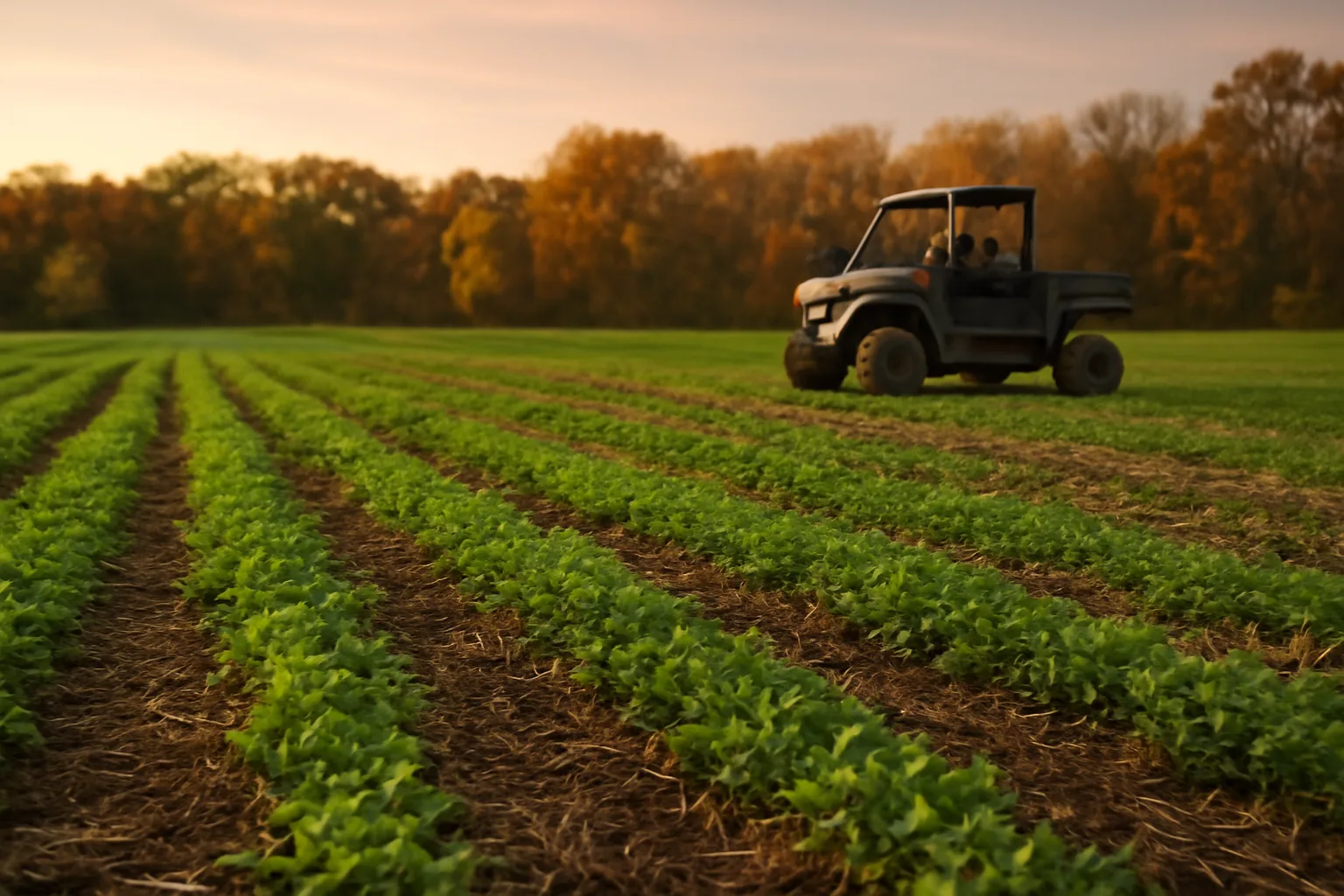
The best no-till food plot uses a glyphosate burndown, broadcast or drilled seed into standing residue, and a cultipacker or drag to firm the soil for seed-to-soil contact. Clover, oats, and brassicas like turnips work well because they germinate fast in mulch. No-till saves fuel, cuts erosion, and often beats tillage on marginal soil once you dial in timing.
What is a food plot, and why go no-till at all?
A food plot is a planted patch of forage or grain, usually somewhere between a quarter-acre and a few acres, put in specifically to feed and hold deer on a property. Some plots are meant to be hunted over directly (small kill plots tucked near stand sites), others are meant to feed deer through a hard season and keep them on your ground rather than the neighbor's. The USDA Natural Resources Conservation Service treats these plantings under the same wildlife habitat planning framework as any wildlife food planting, and its Wildlife Habitat Management practice standards cover seeding for food and cover on private land [1]. Cooperative extension programs in whitetail country also publish specific guidance on species and rates for these plots. No-till means you're not running a disc, plow, or tiller through the soil before planting. Instead you kill existing vegetation with herbicide, broadcast or drill seed directly into the dead residue, then pack it down. The appeal is real. Less fuel, less equipment, less erosion on hillside plots, and often better soil moisture retention because you're not exposing bare dirt to sun and wind. USDA NRCS conservation practice guidance for cover crops and no-till systems notes reduced soil erosion and improved water infiltration as core benefits of leaving residue on the surface rather than turning it under [2]. No-till isn't automatically easier, though. You trade tillage labor for herbicide timing precision and a longer kill window. If you rush the burndown or skip the packing step, you'll get spotty germination and thin stands. The method rewards patience more than tillage does. For a broader look at plot styles and when tillage still makes sense, see food plot whitetail.
How does a no-till food plot actually get planted, step by step?
The sequence matters more than the tools. Skip a step and you'll be staring at a thin, weedy plot in August wondering what went wrong. 1. Soil test first. Pull samples 4 to 6 weeks before you plan to plant if you can swing it, so lime and fertilizer recommendations come back in time. Your soil test lab is the authority here, not a blog post. 2. Kill existing vegetation. Spray glyphosate at label rate, typically when weeds and grass are actively growing, 2 to 3 weeks before your planting date. A second spot-spray 7 to 10 days later catches anything that survived the first pass or germinated after. 3. Mow or crimp the dead residue if it's tall, so seed can reach soil instead of getting hung up in thatch. You don't need bare dirt, just a shorter mat. 4. Broadcast seed at label rate, or drill it if you own a no-till drill. Broadcasting is more forgiving of imperfect residue than drilling; a drill needs cleaner conditions to place seed at consistent depth. 5. Pack the seed in. A cultipacker, ATV drag, or even a chain-link section dragged behind a UTV firms up seed-to-soil contact. This step gets skipped constantly and it's probably the single biggest reason no-till plots fail. Seed sitting on top of dead thatch with no soil contact just dries out and dies. 6. Water if you can, but mostly you're praying for rain. Most hunters don't irrigate. Timing planting ahead of a forecasted rain event beats any other trick you'll read about. For product comparisons on seed blends built for this exact process, check deer food plot seed.
When should you plant food plots for deer?
Timing splits into two windows almost everywhere in whitetail country: a spring/summer planting for warm-season annuals and perennials, and a late-summer/fall planting for cool-season annuals like brassicas, cereal grains, and clover. Spring plots (soybeans, corn, warm-season annual blends, or establishing clover) generally go in after your last frost date, which varies enormously by latitude. In the Upper Midwest and Northeast that's often mid-May to early June. In the Mid-South and Southeast, late March through April works. Fall plots (brassicas, cereal grains, clover) need to go in early enough that plants establish before serious cold, but the exact window depends on your zone. A common rule extension agronomists use: plant brassicas and cereal grains 60 to 90 days before your area's average first hard frost, so plants have time to build root mass and leaf tissue before growth slows. That often lands in late July through early September in northern states, and September into early October in the Deep South. Clover is more flexible. You can frost-seed it in late winter (broadcasting onto frozen or frost-heaved ground so freeze-thaw cycles work seed into the soil) or plant it in late summer alongside a cereal grain nurse crop. Check your local cooperative extension's planting calendar for your specific county, since "fall" in Minnesota and "fall" in Alabama are different animals. For a full zone-by-zone breakdown, see deer food plots.
What are deer's favorite foods, and does that change what you plant?
Deer are opportunistic browsers, and their preferences shift by season, region, and what else is available on the landscape. Agricultural crops like soybeans and corn rank high in preference studies because of energy density, but acorns, when they're dropping, often pull deer away from planted plots entirely. A long-running Mississippi State University food habits study on white-tailed deer found seasonal shifts between browse, mast, and agricultural forages depending on availability, with soft mast and acorns dominating fall diets when present in quantity [3]. Brassicas (turnips, radishes, rape) become highly attractive after the first hard frost converts starches to sugars, making the greens taste sweeter. Cereal grains like oats and winter wheat are readily eaten too, especially in fall and early winter before they mature and toughen up. No single "favorite food" exists across all regions and seasons. A better mental model: deer prioritize protein and easily digestible forage in spring and summer (clover, soybeans, alfalfa), then shift toward carbohydrates and fat reserves heading into winter (acorns, corn, brassicas, cereal grains). Planting a mix that covers both windows beats chasing a single "magic" species. For a species-by-species comparison, deer for food breaks down forage options by season and soil type.
Do deer eat clover, and is it worth planting?
Yes, deer eat clover heavily, and it's one of the most reliable perennial food plot species in whitetail range. Clover is a legume, meaning it fixes nitrogen from the air via root bacteria, so it needs less nitrogen fertilizer than grasses once established. White clover varieties (ladino types especially) and red clover both show up constantly in food plot blends because they tolerate mowing, regrow after grazing pressure, and can persist 3 to 5 years with decent management. The catch: clover needs a pH close to 6.0 to 6.5 to thrive, and it's slow to establish, often taking a full growing season before it's producing real tonnage. It also can't handle heavy shade or standing water. Penn State Extension's agronomy guide for forage legumes notes that soil pH below 6.0 sharply limits nitrogen fixation efficiency in clover, which is why liming ahead of planting matters more for clover than for almost any other food plot species. If your soil test comes back at pH 5.2, don't expect clover to perform until you've limed and let the pH climb, which can take months depending on your lime source and soil buffering capacity. Grazing pressure is the other wildcard. On small plots with high deer density, clover can get grazed down to nothing before it ever gets a chance to seed or spread. Bigger acreage, or a rotation with other plots, spreads that pressure out.
When should you plant turnips for deer food plots?
Plant turnips 60 to 90 days before your area's first expected hard frost, which for most of the whitetail range lands somewhere between late July and early September. Turnips need a full growing season of warm soil to bulb out and build leaf mass before cold slows them down. Turnips are a brassica, and like other brassicas (radishes, rape, kale) they go through a starch-to-sugar conversion after a hard frost that makes them noticeably sweeter and more attractive to deer. Before that first frost, deer often ignore turnip plots almost entirely, which surprises first-time planters who expect deer to hit the plot the week it comes up. Soil needs are moderate. Turnips tolerate a wider pH range than clover, generally performing fine down to pH 5.5, though your soil test will give you the real number for your dirt. They also want reasonably fertile soil with adequate phosphorus and potassium, since brassicas are heavy feeders relative to legumes. One planning note: turnip bulbs and tops both get eaten, but usually in that order. Tops first through fall, bulbs later in winter once deer have stripped the greens and food gets scarce. That makes turnips a genuine late-season food source in a way most cereal grains and clover aren't.
When should you plant oats for deer food plots?
Plant oats in late summer to early fall, generally 6 to 8 weeks before your first expected frost, so they've got time to establish a leafy stand before cold weather. In much of the Midwest and Northeast that's late August into early September; in the Southeast it stretches into October. Oats are a cool-season annual cereal grain and one of the fastest-germinating food plot options available, often showing green within 5 to 7 days of a good rain. That speed makes them a favorite as a nurse crop for slower-establishing clover, since the oats come up fast, shade out some weed competition, and give deer something to eat while the clover gets its roots down. Deer hit oats hard in fall, particularly before a killing frost while the plant is still tender. Oats aren't as frost-hardy as winter wheat or rye though, and a hard freeze can knock them back significantly or kill them outright, depending on variety and how established the stand is. If you want grazing that lasts deeper into winter, blending oats with winter wheat or cereal rye hedges that risk, since the rye and wheat will outlast the oats through the cold. A spring oat planting is also an option in northern climates as a quick cover crop or early-season plot, but it won't persist into summer heat the way it can serve as a fall attractant.
Do deer eat sorghum, and does it belong in a plot?
Yes, deer eat sorghum, particularly the grain heads once they mature, and sorghum shows up in some food plot blends as a drought-tolerant grain option, especially in the Southern Plains and parts of the Southeast where corn struggles without irrigation. Sorghum tolerates heat and dry soil better than corn does, which is the main reason it gets picked over corn on marginal ground. That said, sorghum isn't a top-tier food plot choice for most whitetail hunters. It's more commonly grown as a wildlife food source for upland birds and turkeys, with deer use being secondary and opportunistic rather than a primary draw. If you're set on a grain crop and have decent soil and rainfall, corn or soybeans generally out-attract sorghum for deer specifically. Where sorghum does make sense: extremely dry, low-fertility ground where corn would fail outright, or as part of a multi-species wildlife blend targeting several species at once, more than deer. If your goal is strictly a deer-focused plot on ground that can support better options, sorghum probably isn't where you want to spend your seed budget.
Do deer like honey, and does it matter for food plots?
No, honey isn't part of a deer's natural diet and it has no real place in food plot planning. Deer are herbivores built to digest plant fiber through a four-chambered rumen system; they don't seek out honey in the wild the way bears do. This question usually comes up because of confusion with commercial mineral and attractant products that use sweet scents or molasses-based additives to draw deer to a site, which is a completely different thing from a planted food plot. Those products also fall under state baiting and feeding regulations in many states, so check your state wildlife agency's rules before using any supplemental attractant near a stand. Some states classify mineral licks and scent-based attractants as baiting even when no traditional grain is involved. Michigan's Department of Natural Resources, for example, defines baiting to include placing minerals or scent products for deer in certain disease management zones, and rules vary by state and sometimes by county or public/private land status [4]. If you're trying to add sweetness or palatability to a plot, that's what brassicas do naturally after a frost, no honey required.
No-till vs. conventional tillage: which actually wins?
| Erosion risk on slopes | Low | Higher, especially on grades over 5-8% | |
|---|---|---|---|
| Equipment cost | Sprayer + drag/cultipacker | Disc, tiller, or plow plus tractor | |
| Weed seed exposure | Lower (seeds stay buried) | Higher (tillage brings dormant seed to surface) | |
| Time to plant | Faster once burndown is done | Slower, multiple passes | |
| Best on | Rocky, sloped, or moisture-sensitive soil | Compacted or rough ground needing a reset | |
| Herbicide dependency | High | Low to moderate | USDA NRCS conservation practice standards for residue and tillage management document lower erosion rates and better water infiltration under no-till systems, particularly on sloped or erodible ground where tillage exposes bare soil to rain washout [2]. Tillage still earns its keep on heavily compacted soil, or ground that needs a real reset after years of weed pressure, since a disc can incorporate lime and fertilizer directly into the root zone in one pass, something broadcast-and-pray no-till can't match as efficiently. If you're hunting leased ground you don't want to invest heavy equipment into, no-till is usually the pragmatic choice. A sprayer, a seed spreader, and a drag behind a UTV covers most small plot needs for a fraction of what a tractor and tillage implements cost. |
Neither method is universally better; the right call depends on your soil, slope, and how much time you've got. | Factor | No-till | Conventional tillage |
What seed mixes work best for a no-till plot specifically?
Not every species handles no-till planting equally well. Seed size, germination speed, and tolerance for thatch cover all matter more in a no-till setup than in tilled bare dirt. Small-seeded species like clover and brassicas do fine broadcast into light residue, since they don't need to be planted deep, just pressed into contact with soil. Cereal grains (oats, wheat, rye) also broadcast well and their larger seed size means they tolerate slightly rougher seed-to-soil contact than clover does. Larger seeds like soybeans and corn are trickier no-till broadcasts. They generally do better drilled at a controlled depth (roughly 1 to 1.5 inches for soybeans), which means a no-till drill helps a lot here, or you accept lower germination rates broadcasting and packing. A practical no-till fall blend a lot of hunters run: winter wheat or oats as a fast-germinating nurse crop, mixed with clover for perennial holdover and brassicas for a late-season sugar boost after frost. That combination spreads attraction across early fall, mid-fall, and deep winter without needing multiple separate plantings. For blend-specific breakdowns by region and soil type, food plot seed and domain food plot seed cover species pairing in more depth.
How much does a no-till food plot cost to plant?
Costs vary a lot based on plot size, seed choice, and whether you already own a sprayer and spreader. Roughly, per acre: glyphosate herbicide runs $8 to $15 depending on concentration and brand, seed costs range from $25 to $60 per acre for cereal grains and brassicas up to $80 to $150 per acre for premium clover or soybean blends, and lime, if your soil test calls for it, runs $30 to $50 per ton delivered and spread, with typical applications of 1 to 2 tons per acre on acidic soil. Equipment is the bigger variable. If you're renting or borrowing a sprayer, spreader, and drag, per-acre costs stay in the $60 to $150 range depending on seed choice. If you're buying equipment from scratch, a decent ATV sprayer runs $200 to $600, a broadcast spreader $50 to $200, and a small cultipacker or drag can be built cheap from chain-link fence and cinder blocks for under $50, a trick that shows up constantly in DIY food plot circles. Getting the species mix and rates right for your specific soil and region matters more than any single piece of gear. If you'd rather not guess at rates and blends yourself, PlotSeason's $99 one-time Custom Food Plot Plan builds a planting plan around your soil test results and property, though your soil test lab remains the authority on the actual lime and fertilizer numbers; the plan is general planting guidance, not site-specific agronomy advice.
What mistakes wreck no-till food plots most often?
Skipping the second herbicide pass is probably the top mistake. One spray knocks back what's actively growing, but seeds germinating a week later, or perennial weeds regrowing from root systems, survive a single application. A follow-up spray 7 to 10 days later catches most of what got missed. Not packing the seed in is a close second. Broadcasting seed onto dead thatch and walking away, without a drag or cultipacker pass, leaves seed sitting exposed with poor soil contact. It'll germinate some, just not evenly, and a dry week can kill a huge percentage of what came up. Planting too early or too late relative to frost dates causes trouble too. Brassicas planted too late don't build enough root and leaf mass before cold shuts growth down; oats planted too early in fall can mature and go to seed before deer season even opens, losing palatability. Check your specific zone's frost dates through your state's cooperative extension calendar rather than a generic national guide. Finally, ignoring the soil test. No amount of good seed or good timing fixes a pH of 5.0. Lime takes months to fully react in soil, so if your test says you need it, get it down as early as possible, even before you're ready to plant.
Frequently asked questions
Do deer eat sorghum?
Yes, deer eat sorghum grain heads once mature, and it's drought-tolerant on dry Southern ground where corn struggles. It's a secondary choice though; extension food plot guides list soybeans, corn, and brassicas as stronger deer-specific options, with sorghum more common in multi-species wildlife blends targeting birds too.
Do deer eat clover?
Yes, clover is one of the most reliably preferred food plot forages for deer, especially white and red clover varieties. It's a legume that fixes its own nitrogen, tolerates repeated grazing, and can persist 3 to 5 years, but it needs soil pH near 6.0 to 6.5 to really thrive.
When should I plant food plots for deer?
Spring plantings (soybeans, corn, warm annuals) go in after your last frost date, often April in the South and late May in the North. Fall plantings (brassicas, cereal grains, clover) go in 60 to 90 days before your area's first hard frost. Check your local cooperative extension calendar for exact dates.
Do deer like clover?
Yes, deer show strong preference for clover in spring and summer especially, and it ranks among top planted forages in wildlife food habit research. It regrows after grazing, unlike most annuals, which makes it valuable on plots that get hit hard and repeatedly by deer traffic.
When should I plant oats for deer?
Plant oats 6 to 8 weeks before your first expected fall frost, typically late August to early September in the Midwest and Northeast, later into October in the Southeast. Oats germinate fast, often within 5 to 7 days, making them a common nurse crop paired with slower clover.
When should I plant turnips for deer?
Plant turnips 60 to 90 days before your first hard frost, usually late July through early September depending on latitude. Turnips need a full frost hit to convert starches to sugars, which is when deer really start hitting them hard, often well after the plot first comes up green.
What is a food plot?
A food plot is a planted area, typically a quarter-acre to several acres, established specifically to feed and attract deer or other wildlife. Plots range from small kill plots hunted directly to larger destination plots meant to hold deer on a property through fall and winter.
What is a deer's favorite food?
There's no single favorite; preference shifts by season. Deer favor clover and soybeans in spring and summer for protein, then shift toward acorns, corn, brassicas, and cereal grains for carbohydrates and fat as winter approaches. Acorns, when dropping heavily, often pull deer away from plots entirely.
Do deer like honey?
No, honey isn't a natural deer food and has no place in food plot planning. Deer are herbivores digesting plant fiber through a four-chambered rumen. This question usually stems from confusion with sweet-scented mineral or attractant products, which fall under separate state baiting regulations.
Is no-till better than tilling for a food plot?
It depends on your ground. No-till wins on sloped, rocky, or moisture-sensitive soil because it cuts erosion and keeps weed seed buried. Tillage still wins on compacted soil needing a reset, since it incorporates lime and fertilizer directly into the root zone in one pass.
How do you no-till plant a food plot without a drill?
Spray a burndown herbicide, let it work 2 to 3 weeks with a follow-up spot-spray, mow down tall dead residue, broadcast seed by hand or spreader, then drag a cultipacker, chain-link section, or ATV drag over it to press seed into soil. Small and cereal grain seeds broadcast well this way.
What's the biggest mistake people make with no-till plots?
Skipping the packing step after broadcasting seed. Seed left sitting on dead thatch without soil contact dries out and fails to germinate evenly. A cultipacker or simple drag behind a UTV fixes this and is the single most skipped step in DIY no-till plots.
Do I still need a soil test for a no-till plot?
Yes, absolutely. No-till doesn't change your soil's pH or nutrient levels, and clover, brassicas, and grains all have specific pH and fertility needs. Your soil test lab's lime and fertilizer recommendations are the real authority here, not a general planting guide.
Sources
- USDA Natural Resources Conservation Service, Conservation Practice Standard: Wildlife Habitat Planting (Code 645): Wildlife food plantings fall under NRCS wildlife habitat management conservation practice standards
- USDA Natural Resources Conservation Service, Conservation Practice Standard: Residue and Tillage Management, No-Till (Code 329): No-till systems reduce soil erosion and improve water infiltration compared to tillage
- Mississippi State University, food habits research on white-tailed deer diet composition: Deer diet composition shifts seasonally between browse, mast, and agricultural forages depending on availability
- Michigan Department of Natural Resources, Baiting and Feeding Order: Some states classify mineral licks and scent-based attractants as baiting under wildlife disease management rules
- USDA NRCS, Cover Crop Conservation Practice Standard (Code 340): Leaving crop residue on the surface rather than tilling it under improves soil moisture retention and reduces erosion