Last updated 2026-07-26
TL;DR
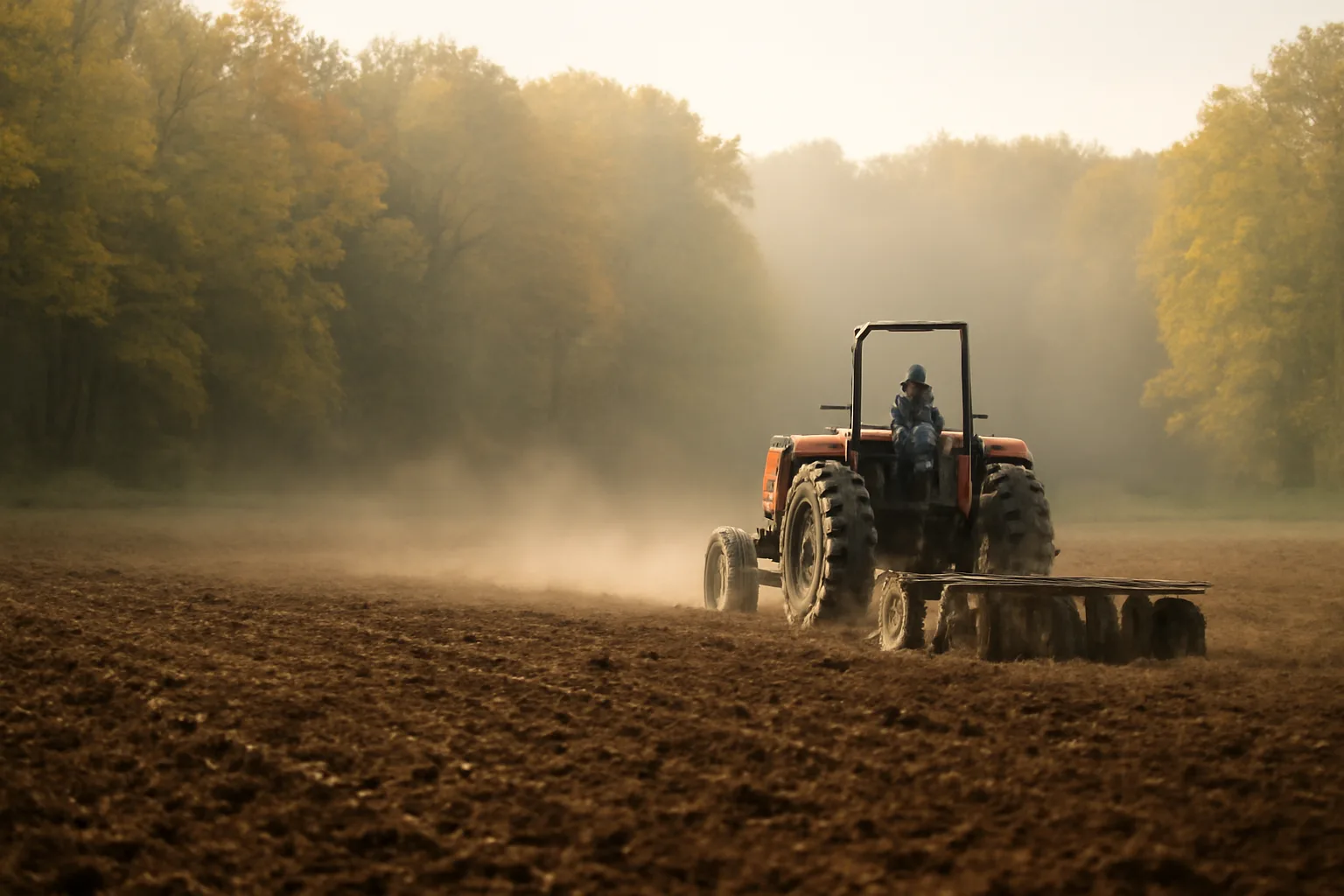
The best food plot implements match your equipment, budget, and soil, not the other way around. A disc and cultipacker handle most plots under 2 acres for $500-2,000 used. Broadcast spreaders, no-till drills, and sprayers fill in specific jobs. Start with soil prep and seed-to-soil contact; everything else is refinement.
What is a food plot, and what equipment does it actually require?
A food plot is a planted opening on hunting land, usually a fraction of an acre to a few acres, seeded with forage or grain that deer and other wildlife will eat. It is not a garden and it is not a lawn. The goal is calories and attraction, planted in a spot you can hunt or observe. At minimum you need something to break up the soil, something to spread seed, and something to firm the seedbed afterward. That is three jobs: tillage, seeding, and packing. You can do all three with a $300 ATV disc, a hand-crank spreader, and a section of chain-link fence dragged behind a four-wheeler. People have grown fine plots with less. What separates a mediocre plot from a good one usually is not the brand of implement. It is seed-to-soil contact, correct planting depth, and getting lime and fertilizer rates right based on an actual soil test. The USDA Natural Resources Conservation Service notes that soil testing is the basis for any fertility recommendation, since nutrient needs vary by soil type and crop [1]. No implement fixes a soil pH of 5.0. If you're just getting into this, our food plot whitetail guide covers the basics of site selection and layout before you buy anything.
What's the minimum implement setup for a small plot (under 1 acre)?
For a plot under an acre, you can get by with an ATV or UTV, a pull-behind disc or harrow, a broadcast spreader, and a cultipacker or drag. Total used cost typically runs $800 to $2,500 depending on how much you already own. A disc harrow breaks sod and buries old vegetation. Small ATV discs (4 to 5 feet wide) run $250 to $600 new. They are slow on hard ground and won't kill sod in one pass, but for a plot you're willing to work over two or three sessions, they're enough. A broadcast spreader, the same kind used for lawn fertilizer, handles seeding for small-seeded species like clover and brassicas. Tow-behind ATV spreaders cost $150 to $400. For larger seed like soybeans or corn, broadcasting works but you'll want to drag a chain or section harrow afterward to bury seed to the right depth, since those seeds need more soil contact than a light dusting. A cultipacker (a roller with cast iron wheels that firms soil) costs $500 to $1,500 used for a small unit, but a drag made of chain-link fence or a piece of cyclone fencing weighted with cinder blocks does 80 percent of the job for under $50. Small-seeded species like clover and brassicas fail more often from being planted too deep than any other single mistake, and packing after seeding fixes that. A sprayer, even a 15-gallon ATV boom or backpack unit ($80 to $300), is worth having for spot-treating weeds before planting, particularly if you're converting an old field or working ground with heavy grass competition.
What implements make sense for 2 to 10 acre plots or multiple plots?
Once you're planting several plots or anything over 2 acres, hand tools and ATV implements start costing you more time than they save you money. This is the range where a compact tractor (25 to 45 horsepower) with 3-point implements starts to pay for itself in labor. A tractor-mounted disc harrow (5 to 7 feet) runs $1,200 to $3,500 new, used units considerably less. It works faster and deeper than ATV discs and handles heavier ground. A cultipacker sized to your tractor ($800 to $2,500) firms larger seedbeds quickly. Many hunters skip a dedicated cultipacker and use a drag harrow or roller-basket combination instead, which is cheaper and does double duty breaking clods and firming soil in one pass. A PTO-driven broadcast seeder ($300 to $900) covers ground faster than ATV spreaders and handles a wider range of seed sizes with adjustable gates. A rotary mower or brush hog ($800 to $2,500) matters more than people expect. Clover and chicory plots need mowing two to four times a season to keep weeds from shading out the stand and to encourage new, tender growth deer prefer, according to guidance from the University of Tennessee Extension on establishing and maintaining forage plots [2]. For this size range, a lot of hunters find it's more efficient to have a shared plan across plots rather than winging each one separately. That's the kind of layout and species-mix work a Custom Food Plot Plan at PlotSeason is built for: a one-time $99 plan based on your acreage, region, and goals, with your soil test lab still the final word on lime and fertilizer rates.
Is a no-till drill worth the cost for food plots?
A no-till drill costs $8,000 to $20,000+ new, or $3,000 to $8,000 used for a small grain drill suited to food plot acreage. For most hunters planting under 10 acres, that is a hard number to justify owning outright. What a no-till drill does well: it plants directly into standing residue or sod without tillage, places seed at a consistent, controlled depth, and dramatically improves seed-to-soil contact compared to broadcasting. On erodible ground, steep slopes, or soil you don't want to disturb, no-till drilling also reduces erosion risk, a point extension soil conservation programs consistently emphasize for sloped or marginal cropland [3]. For a hunter with one or two small plots, renting a drill for a day (many farm co-ops and equipment rental yards offer this, typically $150 to $400 per day) or hiring a local farmer with a drill often makes more financial sense than owning one. If you manage a lease with 5+ acres of plots across multiple fields, or you're planting into tough sod every year, ownership starts to pencil out, especially split among a hunting group.
ATV disc vs tractor disc vs no-till drill: which one for your acreage?
| Implement | Typical cost | Best for | Limitation | |
|---|---|---|---|---|
| ATV/UTV disc | $250-$600 | Plots under 1 acre, soft ground | Slow, shallow, struggles with sod | |
| Tractor disc (3-pt) | $1,200-$3,500 | 1-10 acre plots, repeat use | Needs a tractor with enough horsepower | |
| Cultipacker/roller | $500-$2,500 | Firming seedbed after any tillage | Doesn't till, only packs | |
| PTO broadcast seeder | $300-$900 | Fast seeding on tractor-worked ground | Needs a tractor | |
| No-till drill | $3,000-$20,000+ | Sod, erodible ground, consistent depth | High cost, often better to rent | |
| ATV sprayer | $80-$300 (backpack) to $600 (boom) | Weed control pre-plant | Needs herbicide knowledge and label compliance | Match the implement to your soil and your acreage, not the other way around. A guy with three quarter-acre plots in soft river-bottom loam doesn't need a drill. A guy converting 8 acres of fescue sod on a hillside probably does, or should rent one. |
When should you plant food plots for deer?
Planting timing depends on your region and whether you're planting a spring/summer plot or a fall plot, and it always depends more on your local last-frost and first-frost dates than a calendar date. Most food plot guidance splits the year into a spring planting window (after soil warms, typically April through June depending on latitude) and a fall planting window (roughly 60-90 days before your average first frost, so late July through September across most of the whitetail's range). Spring/summer plots (soybeans, cowpeas, clover, chicory) go in after your last frost date, once soil temperatures are consistently above 50-55°F. Cooperative extension planting guides tie this to regional frost data rather than a fixed date, since a grower in southern Georgia and one in northern Minnesota are working with a 6 to 8 week difference in safe planting windows [4]. Fall plots (brassicas, cereal grains, clover overseed) are planted so they have time to establish before the first hard frost slows growth, but for brassicas specifically, timing so peak growth and sugar conversion happens right as hunting season opens is part of the appeal, since frost sweetens brassica forage and increases deer use in late fall. State wildlife agencies and extension services generally recommend checking your specific frost-date zone before locking in a date [4].
When should you plant clover, and do deer actually like it?
Yes, deer eat clover readily, and it's one of the most reliable perennial food plot species across the whitetail range. Clover (white clover, red clover, or ladino types) is planted in spring (March through May in most of the Midwest and South) or late summer/early fall (August through September), timed so seedlings establish before extreme heat or hard frost. Clover is a legume, meaning it fixes nitrogen from the air rather than requiring heavy nitrogen fertilization, which is part of why it's a staple in food plot mixes. University extension forage guides note that once established, clover stands can persist 3 to 5 years with proper mowing and fertility maintenance based on soil test recommendations [2]. Deer preference research and browse studies consistently rank clover among the most selected forages available in plot settings, largely because of its high protein content (often 20-25 percent crude protein in vegetative growth) and its availability across a long season, spring through fall in most climates. If you're deciding between species for a new plot, our deer food plot seed guide breaks down clover blends against other perennial and annual options.
When should you plant oats for deer, and do deer eat sorghum?
Oats are a fall-planting cereal grain for deer plots in most of the whitetail range, typically seeded 6 to 8 weeks before your first fall frost so plants reach the leafy, palatable stage right as hunting season begins. In much of the Midwest and Northeast that lands in August through early September; in the Deep South it can push into late September or October. Oats are attractive to deer as a tender, high-sugar forage in early fall, though they winterkill in most climates once temperatures drop into the teens for extended periods, which is why they're often mixed with more winter-hardy cereals like wheat or rye if you want plot cover into late winter. As for sorghum: yes, deer eat sorghum, particularly grain sorghum heads and the leaves of forage-type sorghums, but it is not a top-tier deer food plot choice on its own. Sorghum is more commonly grown as a screening or structural component (tall stalks that add cover) or as supplemental wildlife food for a broader range of species including turkey and quail, rather than as a primary deer attractant crop. Deer will browse young sorghum plants and eat mature grain heads, but preference studies and extension forage guides generally place it behind soybeans, clover, and brassicas for deer selectivity.
When should you plant turnips for deer, and what do they need from your soil?
Turnips, along with other brassicas like radishes and rape, are planted in mid to late summer for fall and winter deer plots, timed roughly 90 to 100 days before your first expected hard frost so bulbs and leaves reach full size before hunting season and cold weather. In most of the whitetail range that means planting turnips between late July and mid-August. Extension planting calendars for brassica forage crops consistently point to this 90-100 day window because turnips need that much time to bulb out properly; planted too late, you get leafy growth but small or no bulbs [4]. Brassicas need a fairly neutral soil pH, generally 6.0 to 7.0, and moderate nitrogen. This is a spot where your soil test matters more than any implement decision: brassica plots planted on acidic, unlimed ground routinely underperform regardless of how well the seedbed was prepared. Lime takes months to fully react in the soil, so if your test calls for it, get it down as early in the season as you can, ideally the fall or spring before planting, not the week you seed. Deer often ignore turnip bulbs and tops until after the first hard frost, when cold temperatures convert starches to sugars and make the plant noticeably more palatable. This is well documented in extension forage and food plot literature and is one of the more reliable, if slow-building, deer attraction patterns in food plot management [4].
What are deer's favorite foods, and does that include clover, acorns, or anything unusual like honey?
Deer are generalist browsers, and what counts as a 'favorite' shifts by season, region, and what's locally available. That said, several foods show up again and again in state wildlife agency and university browse studies as consistently high-preference: acorns (especially white oak group acorns, which are lower in tannins and more palatable than red oak acorns), soybeans, clover, and other legumes, along with agricultural crops like corn during certain growth stages. Acorns in particular are a heavily documented preferred fall food. Research summarized by state wildlife agencies notes deer will shift much of their fall diet to acorns when a good mast crop is available, sometimes at the expense of planted food plots nearby, which is a real management consideration if you're trying to hold deer on a plot during a heavy acorn year [5]. As for honey: deer do not eat honey in any meaningful, documented way as part of their natural diet, and there's no wildlife research or extension guidance that identifies honey as a deer food or attractant. Deer are herbivores built around browsing plants, forbs, mast, and agricultural crops; honey isn't part of that. Sugary or scented commercial deer attractants sometimes use molasses or other sweeteners, which is a different thing, and hunters should check their state's baiting and feeding regulations before using any attractant product, since rules vary widely by state and some prohibit supplemental feeding or baiting entirely, particularly in areas managing chronic wasting disease [6].
How do you choose the right implement for your specific soil type?
Heavy clay soils need more aggressive tillage to break up compaction and need packing afterward to close air pockets that dry out small seed. A disc alone often isn't enough on hard clay; a chisel plow or subsoiler pass first, followed by disc and cultipacker, gives a better seedbed. Sandy or loamy soils till easily and hold moisture less consistently, so seed-to-soil contact through cultipacking matters even more, since sandy ground dries out fast and exposed seed simply doesn't germinate. Existing sod (old pasture, CRP ground, fallow fields) is the toughest starting condition for any implement. A single disc pass usually just scratches the surface. Plan on two or three passes, or consider a burndown herbicide application 2-3 weeks before tillage to kill existing grass, which extension weed science guidance identifies as more effective than tillage alone at controlling perennial grass competition in new plot ground [3]. Whatever your soil type, get an actual soil test before you decide on fertilizer and lime. NRCS and land-grant extension offices both offer testing through local cooperative extension offices, typically for $10 to $20 per sample, and the report tells you exactly what your ground needs rather than guessing from a bag label [1].
What's a realistic starter budget if you're buying implements from scratch?
If you're starting with nothing but an ATV or UTV and planting one or two plots under an acre each, a realistic total spend is $800 to $1,500: a used ATV disc ($300-500), a tow-behind broadcast spreader ($150-300), a chain-link drag you build yourself ($30-50), and a backpack or small ATV sprayer ($100-250). If you have a compact tractor and are planting multiple plots or anything approaching 5 acres, budget $3,000 to $8,000 for a used 3-point disc, PTO seeder, cultipacker or drag-roller combo, and a small rotary mower, buying used farm equipment where you can. Auction sites and local farm equipment dealers often have older 3-point implements at a fraction of new prices, and a disc harrow doesn't wear out the way an engine does. Whatever your budget, spend on soil testing and lime before you spend on a second implement. A perfectly worked seedbed on soil with a pH of 5.2 still grows a mediocre plot; the same seed on properly limed ground at pH 6.5 outperforms it every time, and that's a fertility problem, not an equipment problem.
Frequently asked questions
Do deer eat sorghum?
Yes, deer browse young sorghum plants and eat mature grain heads, but sorghum ranks behind soybeans, clover, and brassicas in deer preference studies. It's more often planted for cover, screening, or as food for a broader range of wildlife (turkey, quail) than as a primary deer attractant.
Do deer eat clover?
Yes, clover is one of the most reliably eaten food plot species across the whitetail range. It offers high crude protein (often 20-25 percent in vegetative growth) and stays available spring through fall, which is why it's a staple in perennial food plot mixes.
When should you plant food plots for deer?
Spring/summer plots go in after your last frost date once soil hits 50-55°F. Fall plots are planted 60-90 days before your average first frost, so most of the whitetail range plants fall plots between late July and September. Exact timing depends on your local frost-date zone.
Do deer like clover more than other food plot options?
Deer show strong, consistent preference for clover in browse studies, ranking it among top food plot species alongside soybeans and acorns. Preference shifts seasonally though; during a heavy acorn year, deer often favor mast over planted clover.
When should you plant oats for deer?
Plant oats 6-8 weeks before your first fall frost, typically August through early September in the Midwest and Northeast, later in the Deep South. Oats winterkill in hard freezes, so pair them with wheat or rye if you want plot cover into winter.
When should you plant turnips for deer?
Plant turnips 90-100 days before your first hard frost, usually late July to mid-August across most of the whitetail range. That window gives bulbs time to fully develop before cold weather, since planting too late produces leafy tops but small or no bulbs.
What is a food plot?
A food plot is a planted opening on hunting land, from a fraction of an acre to several acres, seeded with forage or grain crops to attract and feed deer and other wildlife. It requires basic tillage, seeding, and packing equipment, plus a soil test to guide lime and fertilizer.
What are deer's favorite foods?
Preference varies by season and region, but acorns (especially white oak group), soybeans, clover, and other legumes consistently rank as high-preference foods in wildlife agency browse studies. Agricultural crops like corn are also heavily used during certain growth stages.
Do deer like honey?
No. There's no wildlife research or extension guidance identifying honey as part of a deer's natural diet. Deer are herbivorous browsers built around plants, forbs, mast, and crops. Some commercial attractants use molasses or other sweeteners, which is a different product category.
Do you need a tractor to plant a good food plot?
No. Plots under an acre are routinely planted with just an ATV or UTV, a small disc, a broadcast spreader, and a drag for packing, all for under $1,500 used. A tractor becomes worth it once you're managing several plots or acreage over 2-3 acres.
Is it worth buying a no-till drill for food plots?
For most hunters planting under 10 acres, renting a no-till drill ($150-400/day) or hiring someone with one makes more financial sense than buying, since units run $3,000-$20,000+. Ownership pencils out for larger acreage, tough sod, or shared costs across a hunting group.
How often should clover plots be mowed?
Most extension guidance recommends mowing clover plots 2 to 4 times per growing season, keeping growth to 6-8 inches before cutting. This controls weed competition and encourages tender new growth, which deer prefer over older, woodier clover.
What soil pH do food plots need?
It depends on the species, but most food plot crops, including clover and brassicas, do best in a pH range of 6.0 to 7.0. Your soil test report is the authority here; lime recommendations are specific to your soil type and current pH, not a universal number.
Sources
- USDA Natural Resources Conservation Service, Soil Testing: Soil testing is the basis for nutrient management recommendations since needs vary by soil type and crop
- University of Tennessee Extension, Establishing and Managing Forage Legumes: Clover plots benefit from regular mowing and can persist 3-5 years with proper fertility maintenance
- USDA NRCS, Conservation Practice Standard - Residue and Tillage Management, No-Till: No-till and reduced tillage practices reduce soil erosion risk on sloped or marginal cropland
- Pennsylvania Game Commission, Deer Management and Food Habits: Deer shift diet heavily toward acorns during good mast years, sometimes reducing food plot use
- Pennsylvania Game Commission, Feeding and Baiting Regulations: State wildlife agencies regulate baiting and supplemental feeding, with rules varying by state and some restrictions tied to chronic wasting disease management
- Oklahoma State University Extension, Soil Test Interpretations: Soil test costs and pH/nutrient recommendations are provided through land-grant cooperative extension soil testing programs