Last updated 2026-07-25
TL;DR
Northern whitetail seed generally means cold-hardy species planted around short growing windows: brassicas and cereal grains in late July through August, clovers in spring, and soybeans or corn only where frost dates allow a full maturity cycle. Match species to your first frost date, not a bag label's national average.
What is a food plot, exactly?
A food plot is a planted patch of forage on land you own or lease, grown specifically to feed and hold deer (and often other wildlife) through some part of the year. That's it. No mystery to it. Most plots run somewhere between a quarter acre and a few acres, though plenty of guys plant smaller kill plots tucked into timber and bigger destination fields out in the open. State wildlife agencies and USDA conservation programs generally treat food plots as a wildlife habitat practice, not agriculture in the commodity-crop sense, and many state NRCS field offices offer technical guidance for wildlife habitat plantings on private land through cost-share programs like EQIP [1]. In the north, the plot's job usually splits into two seasons. A spring/summer plot grows body and antler (clover, alfalfa, soybeans). A fall plot pulls deer in during hunting season and helps them survive winter (brassicas, cereal grains, standing corn or beans). Up here, the fall plot often matters more, because winter stress is real and a plot loaded with tonnage in December can be the difference between a herd that limps through February and one that doesn't.
When to plant food plots for deer in the north?
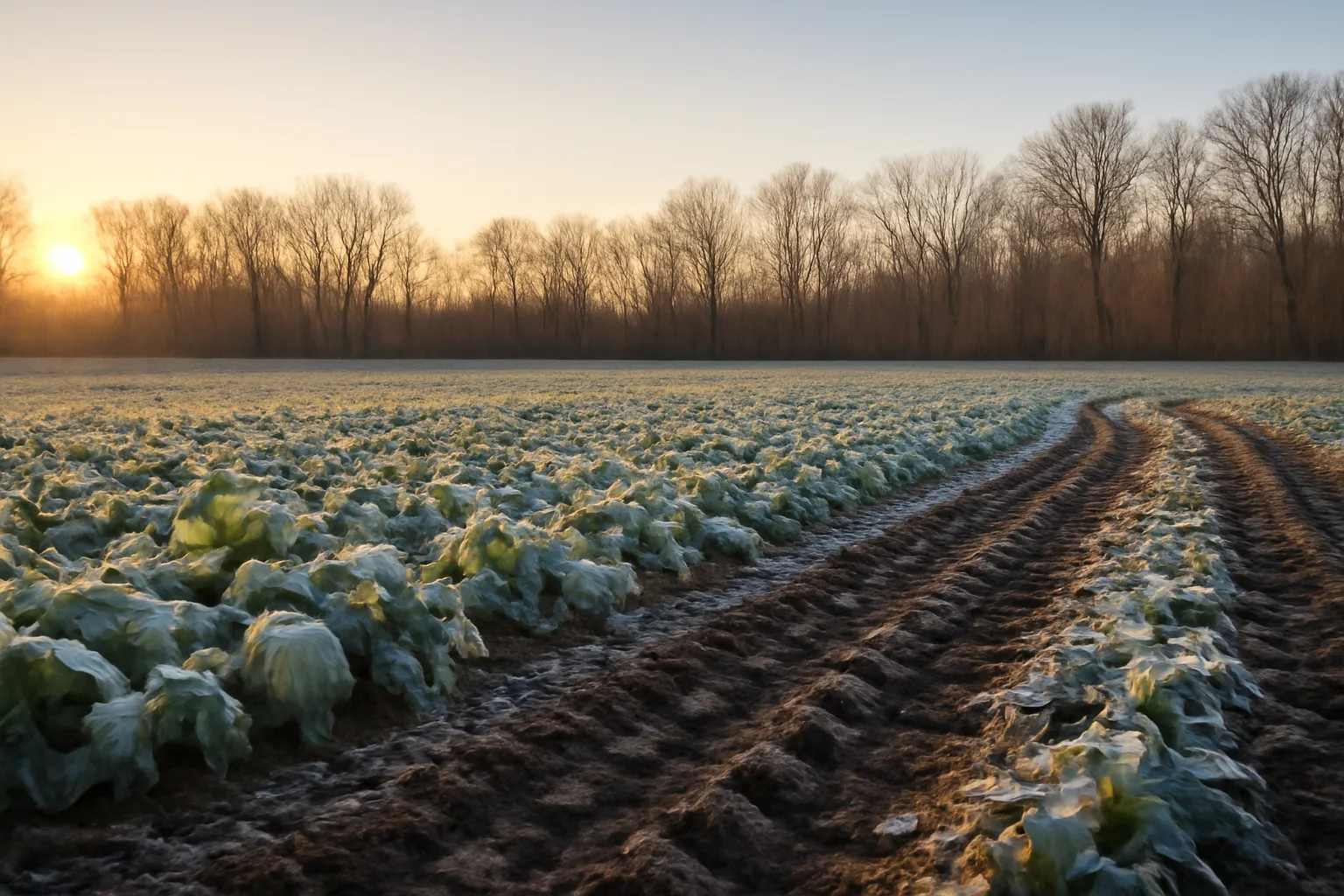
Northern planting runs on two windows: spring plots go in after the last frost, usually mid-May through early June, and fall plots go in from mid-July through late August depending on species and elevation. Everything up here revolves around your first fall frost date, which for much of the Upper Midwest and Northeast falls between mid-September and early October. Work backward from that date. Brassicas like turnips and radishes need roughly 80 to 90 days from seeding to a full bulb, so if your first hard frost hits September 25, you want seed in the ground by late July. Wait until mid-August in a zone like that and you'll get leafy growth but skinny, undersized bulbs. Cereal grains (oats, winter rye, winter wheat) are more forgiving. Oats can go in as late as early September in a lot of northern zones and still put on enough growth to be attractive before frost kills the plant back. Winter rye and winter wheat are the outliers. They're built to germinate in fall, go dormant under snow, and green back up in spring, so a late-August or even mid-September planting is fine and often ideal. Clover, on the other hand, is a spring or late-summer play, not a fall-only crop. Spring seeding after your last frost gives clover a full season to establish a root system before winter. Late-summer clover (early August, with irrigation or reliable rain) can also work if you have enough season left for it to root down before frost. For a full breakdown of species timing by region, the food plot whitetail guide walks through zone-by-zone planting calendars in more detail.
When to plant turnips for deer up north?
Turnips need to go in 80 to 90 days before your first killing frost, which for most northern hunters means late July to early August. Miss that window and you'll grow greens without bulbs, which deer will still eat but you lose the high-carb food source that makes turnips valuable in December and January. Turnip bulbs actually get sweeter after a couple of hard frosts because the cold triggers the plant to convert starches to sugars, a process plant physiologists call cold-induced sweetening. That's why turnip plots often go untouched in October and then get hammered in late December once the tops have been frosted a few times and the bulbs have sweetened up. Soil matters here too. Turnips want a pH close to 6.0 to 6.5 and don't do well in heavy clay that stays wet. If your soil test comes back below 5.8, you're going to want lime worked in months ahead of planting, not the week before, because lime takes time to move pH. Land-grant extension programs generally recommend testing soil at least a few months before planting brassicas so amendments have time to react in the soil profile.
When to plant oats for deer?
Oats go in from mid-August through early September in most northern zones, giving the plant 45 to 60 days to establish before frost knocks it down. Oats are one of the most forgiving cereal grains for a fall plot because they germinate fast, tolerate mediocre soil, and deer hit them hard the moment they emerge. Unlike winter rye or winter wheat, spring oats are not cold-hardy. A hard freeze in the teens will usually kill oat plants outright, which means in the far north (parts of Minnesota, Wisconsin, Michigan's U.P., northern New England) oats function as an early-fall attraction crop, not a winter-long food source. If you want green forage available after the ground freezes, you need winter rye or winter wheat in the mix alongside the oats, not instead of them. A lot of the popular "fall blend" bags mix oats with brassicas and winter rye for exactly this reason: oats green up fast and pull deer in during archery season, brassicas build tonnage for late season, and rye survives the winter to give you green growth again in spring. That layered approach is common in the deer food plot seed blends built for northern climates.
Do deer like clover, and do they actually eat it?
Yes, deer eat clover readily and it's one of the most consistently preferred forages in food plot research. Clover is a legume, meaning it fixes nitrogen and comes back at high protein levels, often 20 to 25 percent crude protein in good stands, which is why it's a staple for spring and summer plots aimed at antler growth and lactating does [2]. White clover (Ladino types especially) and red clover both perform well in northern soils and tolerate close, repeated grazing better than almost anything else you can plant. A well-maintained clover stand can produce for 3 to 5 years before you need to reseed, which makes it one of the better costs-per-acre-per-year options once it's established. The catch up north: clover goes dormant under snow and won't offer much in January when you need tonnage most. That's why smart plotters pair clover fields (spring/summer) with a separate brassica or cereal grain plot (fall/winter) rather than expecting one plot to do both jobs.
Do deer eat sorghum, and where does it fit up north?
Deer will eat sorghum, particularly the seed heads once they mature, but it's a marginal choice for most northern food plots because of its long growing season. Grain sorghum typically needs around 100 to 120 frost-free days to reach maturity and wants warm soil to germinate reliably, conditions that a lot of northern growing zones simply don't offer with enough margin for error [3]. Where sorghum shows up in northern plots, it's usually as a small component in a wildlife blend, mostly valued for cover and as a standing winter food source once the heads dry down, similar to how standing corn is used. Deer will browse the leaves some through summer, but the real draw is the grain head in late fall and winter, and turkeys and other birds hit it hard too. If you're in a shorter-season zone (say, Minnesota's Zone 3 or 4, or northern New England), you're generally better off putting that acreage into brassicas, cereal grains, or short-season soybean varieties bred for northern latitudes rather than gambling on sorghum reaching maturity before frost.
What are deer's favorite foods, and how does that change by season?
There's no single "favorite" food, deer preference shifts hard by season and by what's available. In spring and summer, deer key in on high-protein forage: clover, alfalfa, soybean leaves, and native browse, all aimed at antler growth and milk production. In fall, preference shifts toward carbohydrates and fat-building foods: acorns first if they're on the ground (deer will often ignore a plot entirely during a good acorn drop), then brassicas, standing corn, and soybeans left standing. Ag extension research and deer nutrition studies consistently show whitetails prioritize energy density as temperatures drop and daylight shortens, which lines up with their biological need to build fat reserves for winter. That's part of why brassica bulbs (high in soluble carbohydrates) become a favorite in late fall precisely when they weren't touched a month earlier. Soybeans deserve a specific mention. Deer often prefer soybean leaves over almost anything else available in mid-summer, which is why soybean plots frequently get grazed to the ground before they ever produce a bean, especially on smaller acreages or in areas with high deer density. If you're planting beans on under 3 to 5 acres in a high-density area, expect losses and plan a perimeter fence or a sacrificial clover field to buy the beans time to establish, a strategy covered in the deer food plots guide. For a fast look at preference by category, see the table below.
Species preference and season comparison
| Species | Typical crude protein | Peak deer preference | Northern planting window | |
|---|---|---|---|---|
| White/red clover | 20-25% [2] | Spring through fall | May-June (spring) or early Aug (late summer) | |
| Soybeans | 25-30% (forage stage) | Mid-summer (leaves), late fall (beans) | Late May-early June, after soil hits 60°F | |
| Brassicas (turnip/radish) | 15-20% (bulb/leaf) | Post-frost, Nov-Jan | Late July-early Aug (80-90 days before frost) | |
| Oats | 12-16% | Early fall, pre-freeze | Mid-Aug-early Sept | |
| Winter rye/wheat | 12-15% | Late fall and again in spring | Late Aug-mid Sept | |
| Grain sorghum | Marginal for northern zones | Standing grain, late winter | Not recommended above USDA Zone 5 without a long season [3] | This isn't a ranking of what deer 'like best' in some abstract sense. It's a map of when each species is actually doing its job. A clover field in January in northern Wisconsin is buried and dormant. A brassica field in July is just leaves. Timing the crop to the calendar matters more than picking a single 'best' species. |
Do deer like honey, and is it worth using on a plot?
Deer are attracted to sweet scents and will investigate honey or sugar-based lures, but there's no published wildlife research showing honey improves food plot success, and using it as bait rather than a plot component can run you into state baiting law problems. Honey shows up mostly in commercial attractant products and mineral licks, not as an actual forage crop, so it's not something you plant or manage as part of a plot rotation. More importantly, a lot of states draw a hard legal line between a food plot (a planted crop left to grow naturally) and baiting (placing food, minerals, or scent attractants to draw deer to a specific spot for hunting). Pennsylvania, for example, defines and restricts baiting and feeding of big game under Title 34 of its Consolidated Statutes, treating placed feed, salt, and minerals differently than a standing planted crop [4]. Bottom line: if you're tempted to pour honey or a sugar-based liquid attractant over a plot or a mineral site, check your state wildlife agency's current baiting and feeding regulations first, because rules vary by state and sometimes by county, and they change more often than food plot species recommendations do.
How do I pick species for my specific northern zone?
Start with your average first frost date, not the USDA cold hardiness zone number on the seed bag, because frost date drives fall planting deadlines and hardiness zone mostly just tells you what survives winter dormant (like rye or established clover). Your state's land-grant extension office usually has a regional frost date table, and county extension agents can tell you what local growers actually see on the ground. Once you know your frost date, back-calculate: brassicas need 80-90 days, oats need 45-60, cereal rye needs about 30-45 days to establish before dormancy but survives regardless. Clover doesn't have a frost deadline the same way. It needs a full growing season to establish roots, so spring planting after your last frost is the safer call for first-year clover in short-season zones. Soil test before any of this. A basic soil test through your county extension office or a private ag lab tells you current pH and nutrient levels, and your test results (not a blog post, not this article) are the real authority on how much lime and fertilizer your specific field needs. Extension soil test guidance generally calls for lime applications months ahead of planting since pH correction happens slowly through the soil profile [5]. If you'd rather have someone build the species list and planting schedule around your zip code, frost dates, and soil test numbers instead of guessing off a bag label, that's the exact gap a $99 one-time Custom Food Plot Plan is built to fill (see the plot-plan-builder). It's general regional guidance built from your inputs, not a substitute for your soil lab's specific lime and fertilizer recommendations.
What equipment do I actually need for a northern fall plot?
For a straightforward brassica or cereal grain plot under 2-3 acres, you can get by with a soil test kit, a broadcast spreader, a disc or cultipacker to work the seedbed, and a way to spray or mow existing vegetation ahead of planting. You do not need a $40,000 tractor to grow a good plot, though it sure makes the disc work faster. A lot of northern hunters run a UTV or small ATV with a tow-behind implement, which handles small plots (under an acre) and tight, wooded plot locations that a full-size tractor can't reach. For brassicas specifically, seed-to-soil contact matters more than depth, since turnip and radish seed is tiny and easily planted too deep if you're not careful. A light cultipacker pass after broadcasting solves most of that problem. Winter rye and wheat can be drilled slightly deeper (0.5 to 1 inch) if you have a drill available, which improves germination consistency in dry falls. If you're broadcasting instead, plan on a heavier seeding rate to compensate for lower germination percentage from uneven seed-to-soil contact. More on matching gear to plot size and terrain is in the food plot seed equipment breakdown.
How much does a northern food plot cost to plant?
A basic brassica or cereal grain plot generally runs somewhere between $50 and $150 per acre in seed cost alone, depending on species and blend, with clover running a bit higher upfront ($60-120/acre) but spreading that cost over 3-5 years of stand life. Lime, if your soil test calls for it, adds real cost too, often $30-60 per ton delivered and spread, and a low-pH field can need 1-2 tons per acre to correct. These are rough seed and amendment costs, not including equipment, fuel, or labor, and prices shift year to year with seed and fertilizer markets. Your best local numbers will come from your county extension office or a farm supply store near your land, since regional pricing varies more than most seed catalogs let on. Spreading cost across a rotation (clover for 3-4 years, then rotate to brassica/cereal grain for a season, then back to clover) is generally cheaper per year than replanting annual species every single season, and it's part of why a lot of experienced plotters run a 2-field rotation rather than one big annual plot.
What's the difference between a spring plot and a fall plot up north?
A spring plot is built for growth season nutrition (antlers, fawn-rearing, summer body condition) and typically runs clover, alfalfa, or soybeans planted after the last frost. A fall plot is built for hunting season attraction and winter survival, typically brassicas, oats, and winter rye planted from mid-July through September depending on species. Many northern properties run both: a perennial clover field that stays in the ground for years, plus a separate annual fall plot that gets replanted (and sometimes rotated to a different field) every year. This two-plot system spreads your risk. If a late frost or dry spell hurts your fall brassica planting, you've still got an established clover field doing its job through summer and into early fall before it goes dormant. If you only have room or budget for one plot, the fall plot generally gets prioritized by northern hunters because it lines up with both hunting season and the period of highest nutritional stress on the herd (late winter). A spring-only plot looks great in July but does nothing for you in a stand in November.
Frequently asked questions
Do deer eat sorghum?
Yes, deer eat sorghum, mostly the grain heads once mature, and they'll browse the leaves some in summer. It's a marginal choice for northern plots because it needs 100-120 frost-free days to mature, which many northern zones can't reliably provide. Brassicas or cereal grains are usually a better bet above USDA Zone 5.
Do deer eat clover?
Yes, clover is one of deer's most consistently preferred forages, often running 20-25% crude protein in a healthy stand. White and red clover both work well in northern soils and can produce for 3-5 years once established, making it a staple spring and summer food source.
When should I plant food plots for deer in northern states?
Spring plots (clover, alfalfa, soybeans) go in after your last frost, typically mid-May through early June. Fall plots (brassicas, oats, cereal rye) go in mid-July through late August, timed backward from your area's average first frost date so each species has enough days to establish.
Do deer like clover better than other forages?
Deer show strong, consistent preference for clover, especially in spring and summer, but 'better than everything' isn't accurate since preference shifts by season. In late fall, deer often prefer high-carb brassica bulbs or standing beans over dormant or frost-damaged clover.
When should I plant oats for deer up north?
Plant oats mid-August through early September in most northern zones, giving 45-60 days before a hard freeze. Oats aren't cold-hardy like winter rye, so in far-northern areas they function as an early-fall attraction crop rather than a food source that lasts through winter.
When is the best time to plant food plots for deer overall?
There's no single best date, it depends on species and your local frost dates. Northern hunters generally split planting into a spring window (last frost through early June) for perennials and a summer window (mid-July through September) for fall annuals, working backward from each species' maturity requirement.
When should turnips be planted for deer?
Turnips need 80-90 days before your first hard frost, which puts planting at late July to early August for most northern zones. Planting later gives you leafy growth but small, underdeveloped bulbs, and you lose the high-carbohydrate late-season food source turnips are grown for.
What exactly is a food plot?
A food plot is a planted area of forage grown specifically to feed and attract deer or other wildlife, usually ranging from a quarter acre up to several acres. It's generally treated as a wildlife habitat practice by state agencies and USDA conservation programs, distinct from commercial row-crop agriculture.
What is a deer's favorite food?
There's no single favorite; preference shifts by season. Spring and summer favor clover, soybean leaves, and native browse for protein. Fall favors acorns first (when available), then brassica bulbs, standing corn, and soybeans, as deer shift toward building fat reserves for winter.
Do deer like honey?
Deer are drawn to sweet scents including honey, but there's no wildlife research showing it improves plot performance, and it's not planted as a forage crop. Using honey or sugar-based attractants can also run afoul of state baiting laws, which vary and often treat placed attractants differently than planted crops.
Can I plant clover and brassicas in the same field?
You generally shouldn't mix them in the same seeding since clover is a perennial that needs years to establish and brassicas are annuals harvested by frost and deer browsing. Most northern hunters run them as separate fields or rotate a field between a multi-year clover phase and an annual brassica/cereal phase.
How cold-hardy does northern whitetail seed need to be?
It depends on the role: cereal rye and winter wheat need genuine winter hardiness since they're designed to survive under snow and green up in spring. Oats and brassicas don't need to survive winter at all, they're meant to be consumed or killed by frost before that matters.
Sources
- USDA Natural Resources Conservation Service, Environmental Quality Incentives Program: USDA NRCS offers technical and financial assistance for wildlife habitat practices on private land, including food plot type plantings
- NOAA National Weather Service: Average first fall frost dates vary regionally and drive fall food plot planting deadlines
- University of Georgia Extension, Food Plots for Deer: Clover forages commonly provide 20-25% crude protein for deer
- Kansas State University Research and Extension, Grain Sorghum Growth and Development: Grain sorghum requires roughly 100-120 frost-free days and warm soil to mature
- Pennsylvania General Assembly, Title 34 (Game) Pa.C.S. Section 2308, Unlawful devices and methods: Pennsylvania restricts baiting and feeding of big game under its Game and Wildlife Code
- University of Wisconsin-Madison Division of Extension, Nutrient and Pest Management Program, Sampling Soils for Testing: Lime applications should be made months ahead of planting since soil pH correction happens gradually