Last updated 2026-07-24
TL;DR
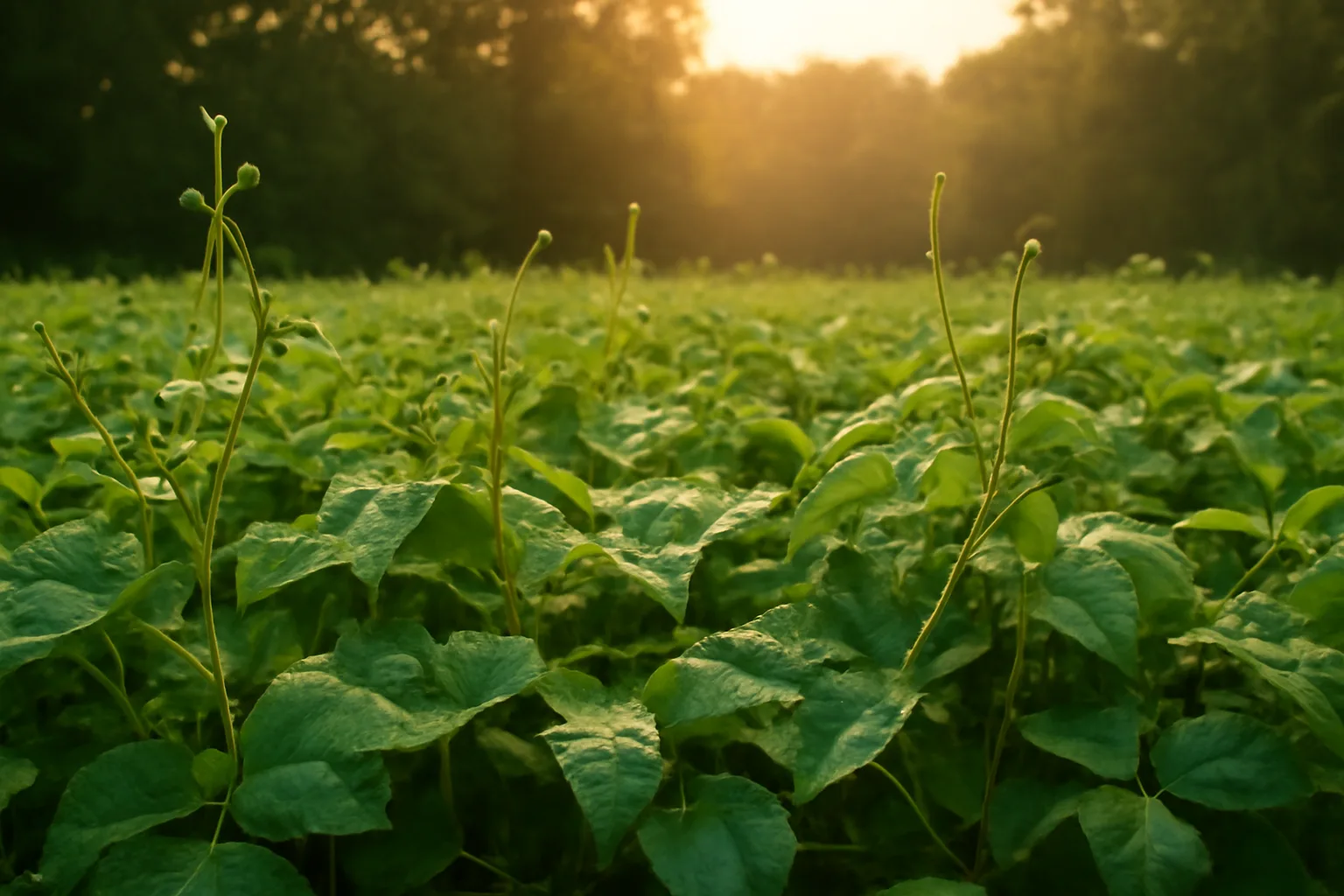
Lablab is a warm-season legume food plot planted after the last frost when soil hits about 65°F. It handles heat and drought better than soybeans, produces high-protein forage (often 20%+ crude protein), and holds up under grazing pressure. Deer readily eat it, though preference varies by region and what else is growing nearby.
what is a food plot, and where does lablab fit in
A food plot is a planted area of forage on hunting land meant to feed and attract deer (and often other wildlife) at specific times of year. Plots range from a quarter-acre kill plot tucked in timber to a 5-acre field planted for tonnage and winter cover. The idea is simple: put nutrition and browse where you want deer to be, when you want them there. Lablab (Lablab purpureus, also called hyacinth bean) is a warm-season annual legume that's become a standard in the summer and early-fall plot rotation, especially south of the Mason-Dixon line. It's a vining, leafy plant that produces a lot of forage per acre, fixes its own nitrogen, and keeps producing green leaf material well into fall in most climates. Where soybeans can get hammered flat by drought or overgrazing, lablab tends to keep growing back. Most planters use lablab as part of a blend rather than alone, often mixed with cowpeas, sunn hemp, or grain sorghum for structure and diversity. If you're new to plot planning generally, the basics of food plot whitetail strategy and deer food plots layout are worth reading before you commit acreage to any single species.
when should you plant lablab for deer
Plant lablab after your last spring frost date, once soil temperature is reliably at or above 65°F. In most of the whitetail range that lands somewhere between late April in the Deep South and early June in the northern edge of lablab's practical range (roughly zone 6 and colder gets risky) [1]. Lablab is frost-intolerant and slow out of the ground compared to something like buckwheat, so don't rush it. A late frost can wipe out a stand that just emerged. Cooperative extension guidance on warm-season forage legumes generally recommends waiting until soil consistently holds 65°F before drilling or broadcasting, the same threshold used for soybeans and cowpeas [2]. Germination takes 7 to 14 days depending on soil moisture and temperature. From there, lablab is a slow starter for the first 3 to 4 weeks, then it takes off once it starts vining. Expect 90 to 120 days from planting to a mature, heavily-grazable stand. That timeline matters: if you're aiming for October bow season attraction, you need lablab in the ground by June in most of the whitetail range, not July. For a broader look at timing across species, see [when to plant food plots for deer](#when-to-plant-food-plots-for-deer-in-general) below, and check our deer food plot seed guide for a full planting calendar by zone.
when to plant food plots for deer in general
Food plot timing splits into two windows: spring/summer plantings for warm-season forage (lablab, soybeans, cowpeas, sorghum) and late-summer/fall plantings for cool-season forage (clover, brassicas, cereal grains). Which window you use depends entirely on the species and what you want deer eating and when. Warm-season plots go in after soil warms past 60 to 65°F, generally April through June depending on latitude. These plots are built for summer nutrition (antler growth, lactation for does) and often stay attractive into early fall as they mature. Cool-season plots go in 60 to 90 days before your average first frost, which is typically August through September across most of the whitetail range. These plots (clover, wheat, oats, brassicas) are timed to be tender and growing right as hunting season opens and to persist through winter. The honest answer to "when to plant" is always: check your local frost dates and soil temperature, not a calendar date. State extension offices publish average frost date maps and soil temperature guidance specific to your county, and that's a better source than any generic national chart [3].
do deer eat sorghum
Yes, deer eat grain sorghum, both the standing grain heads and the foliage, though it's usually planted as a cover and structure crop in a blend rather than a primary deer food. Sorghum is drought-tough and gives lablab or cowpeas something to climb, which keeps the whole plot more upright and grazable later into the season. Deer will browse young sorghum leaves in summer, and turkeys and other wildlife hit the grain heads hard in fall. As a standalone deer attractant, though, sorghum ranks below soybeans, lablab, and cowpeas for palatability during the growing season. Its real value in a lablab plot is structural: sorghum stalks act like a trellis, keeping lablab vines up off the ground so more leaf area stays accessible and green later into fall. If tonnage and grain for a wildlife mix is your goal, sorghum earns its place. If pure deer attraction is the only goal, it's a supporting player, not the headline.
do deer like clover, and how does it compare to lablab
| Plant type | Warm-season annual | Cool-season perennial |
|---|---|---|
| Stand life | 1 season | 3-5 years |
| Drought tolerance | High | Moderate |
| Crude protein | ~20-25% (leaf, vegetative stage) [4] | ~25-30% (vegetative) [4] |
| Grazing tolerance | High once established | High, needs rest periods |
| Establishment cost | Moderate-high (seed cost) | Low-moderate after establishment |
Yes, deer like clover, and it's one of the most consistently preferred food plot forages across the whitetail range. Clover (white clover, red clover, or ladino types) is a cool-season perennial that regrows after grazing and can stay productive for 3 to 5 years on a well-maintained plot, which is a big advantage over annuals like lablab that need replanting every year. Clover and lablab aren't really competitors, they're complements. Clover carries a plot through spring, early summer, and again in fall/winter once temperatures drop below lablab's comfort zone. Lablab picks up the slack in the hottest part of summer when clover growth slows and grazing pressure on a small clover plot can get overwhelming. A lot of experienced plot managers run both: a perennial clover field for spring-through-fall base nutrition, and a rotating warm-season annual (lablab, soybeans, cowpeas) on a separate field or in rotation with brassicas for tonnage during the growing season. If you're deciding between the two for a single plot, clover is the lower-maintenance, longer-lasting choice; lablab produces more raw tonnage per acre in a shorter, hotter window and tolerates heavier grazing pressure before it gives out. | Trait | Lablab | White/Ladino Clover |
when to plant oats for deer
Plant oats 45 to 60 days before your average first fall frost, which usually falls in August or early September across most whitetail country. Oats are a cool-season annual grain and one of the fastest-growing, most reliably attractive fall food plot options, often showing green growth within a week of planting. Oats don't survive hard winters in most northern climates, they'll die back after repeated hard freezes, but that's often fine because they do their best work in October and November when deer want carbohydrate-rich forage ahead of winter. In milder climates (zone 7 and south), oats can persist and regrow through much of the winter. A common combo is oats with a brassica like turnip or a cereal grain like winter wheat, giving you fast early cover from the oats and longer-season tonnage from the slower-growing companion. Oats aren't part of a lablab planting (different season entirely), but a lot of hunters run lablab in summer and rotate the same ground to oats or a fall blend once frost ends the lablab's productive life.
when to plant turnips for deer
Plant turnips 90 to 100 days before your first killing frost, typically late July through August depending on latitude. Turnips need that long runway to bulb out and reach the size and sugar content deer actually seek out, and a frost or two actually improves palatability by converting starches to sugars in the bulb and leaves. Turnips are a brassica, a completely different plant family and season from lablab. Deer often ignore turnip leaves in early fall and then hit the plot hard in late fall and winter once a few frosts sweeten things up, which is a pattern worth knowing if you're planning a hunt around a turnip plot and get frustrated by low visitation in October. Some hunters plant turnips into thinning lablab in early fall as an overseed, using the lablab canopy for shade while turnip seedlings establish, then let the turnips take over as lablab dies back with frost. It works, but timing the overseed before lablab gets too thick and shades out the turnip seedlings takes some judgment.
do deer like honey (honey locust, honeysuckle, and related confusion)
Deer don't eat honey itself, but the question usually comes up because of honey locust trees or honeysuckle, both of which deer do browse. Honey locust pods (the long, twisted seed pods that drop in fall) are a preferred deer food in areas where the tree grows, and deer will travel to stand under producing trees during pod drop [5]. Japanese honeysuckle leaves and stems are also heavily browsed, especially in winter when it stays semi-evergreen in the South. Neither is something you'd plant in a food plot in the traditional row-crop sense. Honey locust is a mast tree you manage or plant on field edges for a multi-year payoff, and honeysuckle is more often a nuisance invasive than a planned planting, since it can take over fence lines and field edges if left unchecked. If the underlying question is really "do deer prefer sweet/high-sugar forage," the answer is yes in general terms; deer do gravitate toward higher-sugar forage when it's available, which is part of why frost-sweetened brassicas and mature soybean pods pull deer hard in late fall.
what are deer's favorite foods overall
There's no single universal answer because deer preference shifts by region, season, and what's locally available, but research and field experience point to a consistent short list: acorns, soybeans, clover, and agricultural crops like corn and alfalfa consistently rank at or near the top of preference studies [6]. Native forbs and browse make up the bulk of a wild deer's diet year-round, food plots are a supplement, not the whole diet. Within planted food plots specifically, soybeans and lablab tend to top summer preference, clover holds strong nearly year-round where it's available, and brassicas and cereal grains take over in late fall once frost sweetens them and other forage options thin out. Acorns, when they're dropping, will often pull deer off a food plot entirely; that's a mast year problem every plot manager runs into eventually and there's not much you can do about it except plant near, not under, mature oaks. If you want a single "best" answer for a summer plot, most experienced managers land on a mix of soybeans, lablab, and cowpeas rather than any single species, because a blend spreads risk (drought, deer pressure, disease) across several plants instead of betting the whole field on one.
how to plant a lablab food plot step by step
Start with a soil test. Lablab tolerates a fairly wide pH range but performs best between 6.0 and 6.5, and your state land-grant extension soil lab will give you exact lime and fertilizer recommendations based on your actual dirt, not a generic chart [7]. Your soil test results are the real authority here; any general planting guide (including this one) is giving you a starting range, not a substitute for your lab report. Prep the seedbed by killing existing vegetation (glyphosate on a clean-till or no-till plot) 2 to 3 weeks ahead, then disk or drill once soil temps hit 65°F. Lablab seed is inoculated with the correct rhizobium strain for best nitrogen fixation; buy pre-inoculated seed or inoculate it yourself right before planting if you're mixing your own blend. Plant at a depth of about 1 to 1.5 inches, broadcast at 20 to 30 lbs/acre or drilled at 15 to 20 lbs/acre if it's the sole species in the mix; cut those rates when blending with cowpeas, sorghum, or sunflowers. Roll or cultipack after broadcasting to get good seed-to-soil contact, which matters more with lablab than with smaller-seeded species. Fertilize according to your soil test, but a general starting point for a legume like lablab is a modest nitrogen starter (legumes fix their own N once nodulated) with phosphorus and potassium built up to your soil test's target levels. Weed control in the first 3 to 4 weeks matters most, since lablab is slow to canopy early on and grass competition can choke a young stand before it gets vining.
getting a plan built around your soil and acreage
Species selection only works if it matches your actual soil, your region's frost dates, and how much acreage and equipment you're working with. A lablab recommendation that's right for a sandy loam field in Alabama can be the wrong call on a heavy clay field in southern Michigan, or on ground where the growing season is 40 days shorter. If you'd rather not piece this together field by field, PlotSeason's $99 one-time Custom Food Plot Plan takes your soil test results, location, and equipment and builds a planting plan around them, species selection, seeding rates, and timing specific to your ground. It's general planning guidance built from your inputs, not a site visit or a substitute for your soil lab's specific lime and fertilizer recommendations, but it saves the guesswork of matching species to your particular dirt and calendar. Whether you use a built plan or work it out yourself, cross-reference species choices against our food plot seed and domain food plot seed guides, and check your state wildlife agency's rules before planting near a stand, some states regulate what counts as a legal food plot versus bait depending on how it's planted and accessed .
check your state's baiting and feeding rules before you plant
Food plots are legal in every state, but the line between a "food plot" and "baiting" varies, and some states have specific rules about proximity to stands, disease management zones (especially in CWD-positive counties), or supplemental feeding that can indirectly affect how you manage a plot. Feeding bans tied to Chronic Wasting Disease management are the biggest recent change; several states have added or expanded feeding restrictions in CWD zones in the past few years . This isn't a minor technicality. Hunting over what your state classifies as bait can turn a legal hunt into a citation, and the definitions differ by state (some define baiting by concentration of feed, others by whether it's broadcast versus a planted, growing crop). A properly planted, growing food plot is treated differently from a pile of corn in nearly every state, but always confirm with your state wildlife agency's current regulations before the season, not after you've already planted.
Frequently asked questions
Do deer eat sorghum in a food plot?
Yes, deer browse young sorghum foliage and eat the grain heads once mature, and turkeys and other wildlife use the grain heavily in fall. Sorghum ranks below soybeans, lablab, and cowpeas as a standalone deer attractant, but it's commonly added to blends for drought tolerance and to give vining plants like lablab something to climb.
Do deer like clover?
Yes, clover is one of the most consistently preferred food plot forages for whitetail deer across the range, and it can persist 3 to 5 years on a well-maintained perennial stand. It's a cool-season plant, so it complements rather than replaces warm-season options like lablab, which peaks in summer heat when clover growth slows.
When should you plant food plots for deer?
Warm-season plots (lablab, soybeans, cowpeas) go in after soil hits 65°F, typically April through June depending on latitude. Cool-season plots (clover, oats, brassicas) go in 60 to 100 days before your first fall frost, usually August or September. Always check your county's frost dates rather than using a fixed calendar date.
When to plant turnips for deer?
Plant turnips 90 to 100 days before your first fall frost, generally late July through August. Turnips need that time to bulb out, and a frost or two actually improves palatability by converting starches to sugar in the leaves and roots, which is why deer often ignore turnip plots in early fall and hit them hard in late fall.
When to plant oats for deer food plots?
Plant oats 45 to 60 days before your average first frost, usually August or early September in most whitetail range. Oats germinate fast, often within a week, and provide quick, attractive fall growth. In colder climates they winterkill after hard freezes; in milder zones (7 and south) they can persist through much of winter.
What is a food plot?
A food plot is a planted area of forage crops on hunting land designed to provide nutrition for deer and other wildlife at specific times of year, and often to concentrate deer activity for hunting purposes. Plots range from small kill plots near a stand to large multi-acre fields planted for tonnage and nutrition.
What are deer's favorite foods?
Preference varies by region and season, but acorns, soybeans, clover, corn, and alfalfa consistently rank highest in deer forage preference research. Native browse and forbs make up most of a wild deer's actual diet; planted food plots supplement that diet rather than replace it, and preference shifts heavily with what's locally abundant.
Do deer like honey?
Deer don't eat honey itself. The question usually refers to honey locust trees, whose fall-dropping seed pods are a strongly preferred deer food where the tree grows, or to honeysuckle, whose leaves and stems deer browse heavily, especially in winter. Neither is a typical planted food plot crop in the row-crop sense.
How long does lablab take to mature after planting?
Expect 90 to 120 days from planting to a mature, heavily grazable stand. Germination takes 7 to 14 days, followed by 3 to 4 slow weeks of early growth before the plant starts vining and producing real tonnage. Plan your planting date backward from your target hunting window using that full window.
Can you plant lablab and soybeans together?
Yes, lablab and soybeans blend well since both are warm-season legumes with similar planting windows and soil needs. Lablab's viney growth habit and drought tolerance complement soybean's higher early-season tonnage, and mixing species spreads risk if one struggles with drought, deer pressure, or disease in a given year.
Does lablab need to be inoculated before planting?
Yes, for best nitrogen fixation lablab seed should carry the correct rhizobium inoculant strain, either pre-applied by the seed supplier or added right before planting. Uninoculated lablab can still grow, but it won't fix nitrogen efficiently and may need more supplemental fertilizer to perform well.
What pH does lablab need?
Lablab performs best in soil with a pH between 6.0 and 6.5, though it tolerates a wider range than many food plot species. A current soil test from your state's land-grant extension lab is the real authority on your field's lime needs; general pH ranges are a starting point, not a substitute for your specific results.
Is lablab better than soybeans for a summer food plot?
Neither is strictly better; they suit different situations. Lablab tolerates drought and heavy grazing pressure better and keeps producing leaf material later into fall. Soybeans often produce more tonnage early and offer bean pods deer favor in late summer and fall. Many plot managers blend both rather than choosing one exclusively.
Sources
- USDA NRCS Plant Guide, Lablab (Lablab purpureus): Lablab is a warm-season annual legume adapted to warm climates and requires warm soil temperatures for planting
- NOAA National Centers for Environmental Information, Frost/Freeze Data: Average frost dates vary by county/region and are the basis for local planting timing recommendations
- University of Georgia Extension, Forage Legumes for Wildlife Food Plots: Legume forages such as lablab and clover provide high crude protein content in vegetative growth stages
- USDA Forest Service, Fire Effects Information System, Gleditsia triacanthos (Honey Locust): Honey locust seed pods are consumed by white-tailed deer where the species occurs
- Auburn University Extension, Soil Testing for Food Plots: A current soil test determines site-specific lime and fertilizer recommendations for food plot species like lablab
- Example state wildlife agency baiting regulation reference (verify with your state agency): States regulate the distinction between planted food plots and baiting, and rules vary by state
- Wisconsin DNR, Baiting and Feeding Regulations: States have expanded feeding and baiting restrictions in areas managing Chronic Wasting Disease