Last updated 2026-07-25
TL;DR
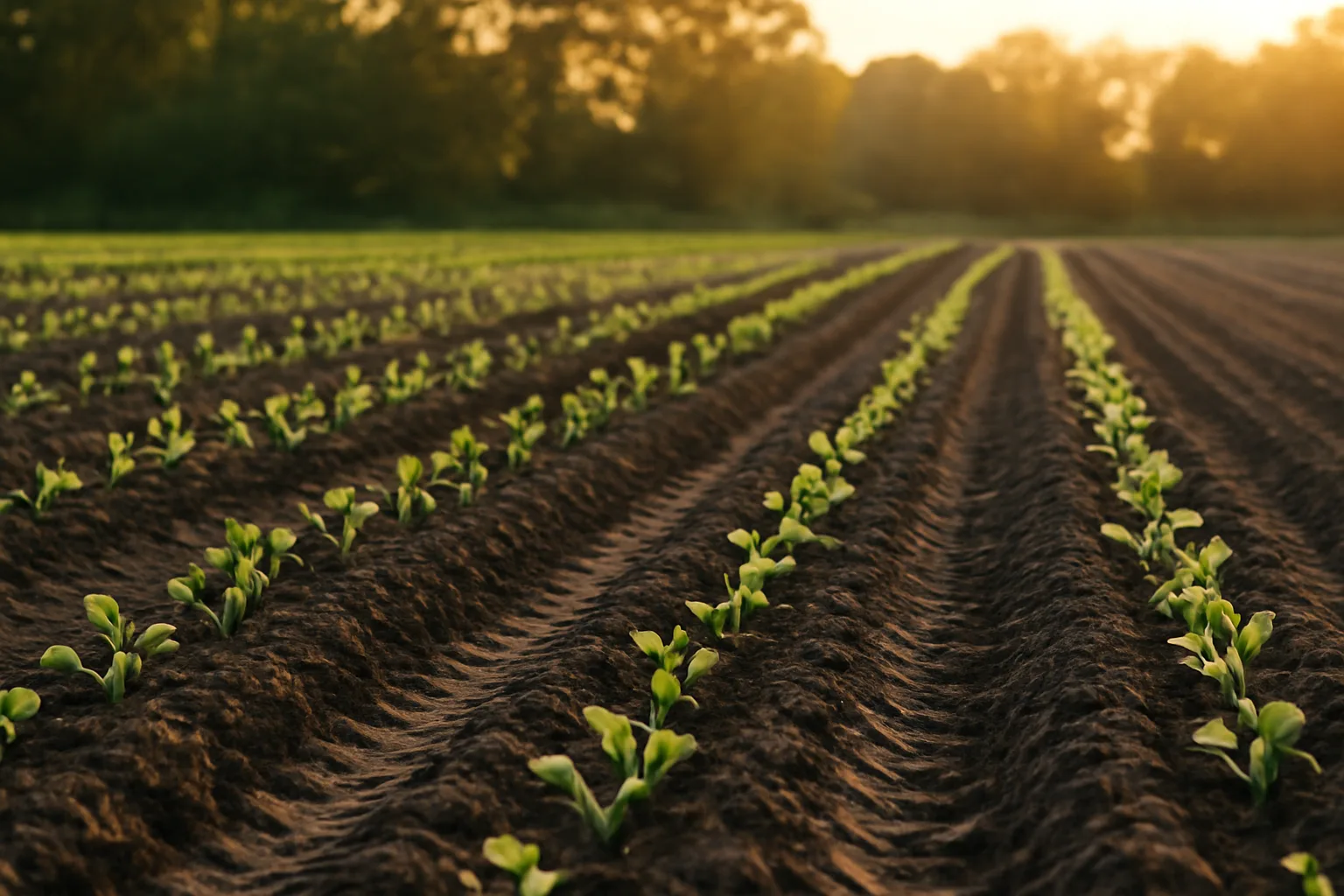
Cereal grains (oats, winter wheat, rye) and brassicas like turnips germinate fastest, often emerging in 5 to 10 days under good moisture. Clover establishes slower but lasts for years. If you need cover and attraction fast, oats or a brassica blend planted in late summer beats anything else for speed.
what actually grows the fastest for a deer food plot
If speed is the whole game, cereal grains win. Oats, winter wheat, and winter rye (cereal rye, not annual ryegrass) can germinate in 5 to 7 days under decent soil moisture and soil temps in the 50s to 60s F, and you'll see visible green in a plot inside two weeks. Brassicas like turnips and radishes are close behind, often emerging in 4 to 7 days and putting on rapid leafy growth for the first 30 to 45 days before they bulb out [1]. Clover is not fast. It's a slow, deliberate establishment crop, sometimes taking 60 to 90 days to really fill in, and it doesn't like being smothered by faster growing companions early on. If your priority is "green in the ground before bow season" clover is the wrong tool. If your priority is a perennial stand that feeds deer for 3 to 5 years, clover is exactly the right tool, just not a fast one. Soybeans and corn grow fast too, in terms of daily growth rate once established, but they need warm soil (planted in late spring, not fall) and a longer runway before they're useful, generally 60 to 90 days to reach a stage deer can really hammer without wiping the plot out. For a fall plot with a tight planting window, they're not your speed play. Here's the honest ranking if you're planting in July or August and want tonnage and attraction on the ground in under a month: oats first, brassica blend second, winter wheat or rye third, clover fourth.
do deer eat sorghum
Yes, deer eat grain sorghum, though it's more commonly used as a standing grain crop for winter cover and late season food than as a primary food plot draw. Sorghum (milo) produces a seed head deer will hit hard once it dries down in fall and winter, and it also throws up thick stalks that hold snow load and provide screening cover [2]. It's not a fast grower in the sense this article is about. Sorghum needs warm soil, typically planted after soil temps hit 60 F, and it takes a full growing season (90 to 120 days) to mature a grain head. Think of it as a summer planted, late season payoff crop, not a quick fall green-up option. Many food plotters use sorghum in a mix with other summer annuals for a diverse standing crop rather than as a monoculture. If your goal is fast growth for early fall hunting, skip sorghum and go with oats or a brassica.
do deer eat clover, and do deer like it
Yes, deer eat clover readily, and it's one of the most consistently preferred food plot forages across whitetail range. White clover and red clover both show up near the top of forage preference studies, and clover's high protein content (often 25 to 30 percent crude protein in vegetative growth) makes it valuable during antler growth and lactation in spring and summer [3]. Deer like clover because it's tender, high in protein, and available for a long window, spring through fall in most climates, rather than a short burst like a brassica or grain. The tradeoff is establishment time and maintenance. Clover needs correct pH (most extension guides recommend 6.0 to 6.5), needs mowing to control weeds and keep it vegetative, and takes a full season before it's really productive [4]. If you want clover in your rotation, plant it as a standalone perennial plot, not mixed in with something you're trying to grow fast this fall. A cereal grain or brassica plot elsewhere in your rotation, planted at the same time, gives you the speed while the clover plot matures on its own timeline.
do deer like honey (honey locust and honey-based attractants)
If the question is about honey locust trees, yes, deer eat the seed pods, especially in late summer and fall when pods drop, and honey locust pods are a known secondary browse in areas where the trees grow [5]. It's not something you plant as a food plot crop, though. It's an incidental woody browse source, not a plot species. If the question is about honey or sugar based commercial deer attractants (sprays, syrups, molasses-based products), there's no solid extension or state wildlife agency data showing these meaningfully change deer visitation to a plot, and several states restrict or ban scented attractants and mineral/feed products under baiting rules. Check your state wildlife agency's baiting and feeding regulations before using any attractant product on your property, because rules vary a lot by state and by season, and definitions of "baiting" often include supplemental feed, minerals, and sometimes food plots planted or maintained in specific ways [6]. A food plot that's part of a normal agricultural planting is typically legal even in states with baiting bans, but always verify with your state agency page, not a forum post.
what is a food plot
A food plot is a planted area, usually a fraction of an acre up to several acres, established specifically to provide supplemental forage for deer and other wildlife, and often to concentrate deer activity for hunting or observation. It's an agricultural planting done for wildlife management rather than commercial harvest. Food plots generally fall into two categories: annual plots (planted new each year or each season, like brassicas, cereal grains, soybeans) and perennial plots (planted once and maintained for multiple years, like clover and alfalfa). Most serious plot programs run both types in rotation, using annuals for fast-growing, high-tonnage fall attraction and perennials for season-long spring and summer nutrition [7]. A good food plot program starts with a soil test. Extension offices and most state land-grant universities offer soil testing services for a modest fee, typically $10 to $20 per sample, and the results tell you your pH and nutrient levels so you know what lime and fertilizer to apply before you waste money and seed on ground that can't support the crop [8]. Your soil test lab's specific lime and fertilizer recommendations are the authority here, not a general guide like this one. If you want a full planting plan built around your specific ground, PlotSeason's Custom Food Plot Plan is a $99 one-time option that maps species and timing to your region and soil results. For a broader look at plot types and how they fit together, see food plot whitetail and deer food plots.
when to plant deer food plots
Timing depends entirely on what you're planting and your region, but there are two broad windows: spring/early summer for warm season annuals and perennials (soybeans, corn, clover, alfalfa), and late summer for cool season annuals (brassicas, cereal grains, winter peas). Spring plantings generally go in after your last frost date, when soil temps are consistently above 50 to 60 F depending on species. Fall plantings for brassicas and cereal grains typically go in 6 to 10 weeks before your average first frost date, which in much of the whitetail's range falls somewhere between late July in the far north and early September in the mid-South . Planting too early in a hot, dry August can mean seed sits in dry dirt waiting for rain. Planting too late means your brassicas don't get enough growing degree days to bulb out before a hard freeze locks growth down. Your state extension office publishes frost date maps and planting windows specific to your county, and that's a better source than a national chart, because a plot in northern Minnesota and one in central Georgia are on completely different clocks. For a state-by-state and zone-by-zone breakdown, cross reference your local extension's planting calendar before locking in a date.
when to plant oats for deer
Plant oats in late summer to early fall, generally 60 to 90 days before your first expected hard frost, so deer can browse the tender growth through fall and into early winter before hard freezes kill the plant back. In most of the whitetail's core range this lands somewhere between mid-August and mid-September, though the Deep South can push into October. Oats germinate fast, often in 5 to 7 days with good soil moisture, and put on rapid green growth within two to three weeks, which is why they're a go-to choice when you want a plot up and attractive before archery season opens. Oats are also relatively cold tolerant compared to some annuals, surviving light frosts and continuing to put out new growth, though a hard freeze in the mid-20s F or below will eventually kill them back for the season. Oats do best on well-drained soil with a pH around 6.0 to 7.0 and moderate nitrogen. A soil test tells you exactly how much nitrogen and any lime you need before planting, and that's money better spent than guessing.
when to plant turnips for deer
Plant turnips 60 to 90 days before your first hard frost, which for most of whitetail country means late July through early September, giving the plant enough time to grow leafy top growth and then bulb out before the ground freezes. Turnips are a classic late season food plot choice because deer often ignore the bulbs until a hard frost converts starches to sugars, making them sweeter and more attractive in December and January [1]. Turnip seed is tiny and needs shallow planting, about a quarter inch deep or less, and good seed-to-soil contact. Broadcasting onto a firm, prepared seedbed and then rolling or dragging works better than trying to drill it too deep. Turnips also respond well to nitrogen, and most extension guides recommend 40 to 60 pounds of actual nitrogen per acre depending on your soil test results. A lot of plotters mix turnips with radishes and cereal grains in a single blend, which spreads out the attraction window: cereal grains and turnip tops draw deer in early fall, and turnip bulbs plus radish roots draw them back in late season once frost sweetens things up.
what are deer's favorite foods
Deer preference varies by region, season, and what's available, but food habit studies consistently show deer favor high protein forbs and legumes (clover, soybeans, alfalfa) during spring and summer, and shift toward high energy foods (acorns, corn, standing grain, brassica bulbs) heading into fall and winter . Acorns are frequently cited as one of the most preferred natural fall foods where oaks are present, because of their high fat content, and deer will often bypass planted food plots for a good acorn drop in a mast year. That's not a food plot failure, it's just deer being efficient about calories. Among planted species, soybeans and clover consistently rank high in preference studies for their protein content, while brassicas and cereal grains rank high for palatability once frost hits and sugar content rises. There's no single "best" food, which is exactly why most serious plot programs plant a mix of species across the season rather than one silver bullet crop. For seed blend options across these categories, see deer food plot seed and food plot seed.
how fast growing plots compare, species by species
| Species | Days to emergence | Days to useful forage | Best planting window | |
|---|---|---|---|---|
| Oats | 5-7 days | 14-21 days | Late summer, 60-90 days before frost | |
| Winter wheat/rye | 5-10 days | 14-21 days | Late summer to early fall | |
| Turnips/brassicas | 4-7 days | 30-45 days to bulb | Late July-early Sept | |
| Soybeans | 5-10 days | 45-60 days to browse-ready | Late spring after last frost | |
| Corn | 7-10 days | 60-90 days to maturity | Late spring | |
| Clover | 7-14 days | 60-90 days to fill in | Spring or late summer | This table pulls from typical land-grant extension planting guidance for cool and warm season forage crops [1] [4]. Actual days vary with soil moisture, soil temperature, and seeding rate, so treat these as planning ranges, not guarantees. No source, including this one, can promise a specific germination date or deer activity level on your ground. |
how soil prep affects how fast your plot actually grows
Seed genetics only get you so far. The biggest lever on real-world speed is seedbed prep and soil chemistry, not which bag of seed you bought. A plot with correct pH, adequate phosphorus and potassium, and good seed-to-soil contact will outgrow a "faster" species planted into compacted, acidic dirt, every time. Most food plot crops want a pH between 6.0 and 7.0. If your soil test comes back at 5.2, lime takes months to fully react and adjust pH, so a fall application this year is really setting up next year's plot, not this one. That's a real constraint extension agronomists point to repeatedly: lime is slow, and skipping it because you're in a hurry to plant just means slower, weaker growth all season [8]. Drilling seed to the correct depth also changes emergence speed dramatically. Broadcasting brassica seed too deep, for example, can delay or prevent germination entirely, while seed left on the surface without any coverage dries out before it can sprout. A cultipacker or light drag after broadcasting solves most of this. If you're weighing no-till drills against disc and cultipacker setups, that equipment choice affects your realistic timeline more than the species selection does.
what actually makes the biggest difference in plot speed
faq wrap and what to plant if you need speed this week
If you're reading this in late summer with a bare patch of dirt and a bow season deadline, plant oats, or an oat and brassica blend, on a well-prepared seedbed with a soil test guiding your lime and fertilizer. That combination gets you visible green in under two weeks and browsable forage inside a month, which is about as fast as this game gets [1]. Clover, soybeans, and corn are all worth planting, just not for speed. Build them into next year's rotation once the soil test comes back and you've got a full season to work with. If you want help sequencing a mix of fast annuals and longer term perennials across your specific acreage and zone, PlotSeason's Custom Food Plot Plan is a one-time $99 tool that maps species and timing to your soil results and region, though your soil test lab remains the final word on lime and fertilizer rates for your ground specifically. For more on matching species to your setup, check deer for food and domain food plot seed.
Frequently asked questions
Do deer eat sorghum in food plots?
Yes, deer eat grain sorghum (milo), especially the seed heads once they dry down in fall and winter. It's typically used as a standing late season grain crop and screening cover rather than a fast-growing early season option, since it needs a full 90 to 120 day growing season to mature.
Do deer eat clover and do they actually like it?
Yes, clover is one of the most consistently preferred food plot forages, with crude protein often in the 25 to 30 percent range during vegetative growth. Deer favor it heavily spring through fall, but it establishes slowly, often taking 60 to 90 days to fill in a stand.
When should I plant food plots for deer?
It depends on species: warm season plants like soybeans, corn, and clover go in after your last spring frost; cool season plants like brassicas and cereal grains go in 6 to 10 weeks before your area's first fall frost. Check your state extension office's local frost date map for exact timing.
When should I plant oats for deer?
Plant oats 60 to 90 days before your first expected hard frost, generally mid-August through mid-September across most whitetail range. Oats germinate in about 5 to 7 days with adequate moisture and are among the fastest food plot crops to show visible growth.
When should I plant turnips for deer?
Plant turnips 60 to 90 days before your first hard frost, typically late July through early September. This gives the plant time to grow leafy tops that deer browse in early fall and bulbs that become more attractive after frost sweetens the starches into sugar.
What is a food plot exactly?
A food plot is a planted area established specifically to feed wildlife and often to concentrate deer activity for hunting or observation, rather than for commercial crop harvest. Plots are either annual (replanted each season) or perennial (maintained for multiple years), and most programs use both.
What is the fastest growing food plot seed?
Oats and other cereal grains (winter wheat, cereal rye) germinate fastest, often in 5 to 7 days, with visible green growth in under two weeks under good soil moisture. Brassicas like turnips are close behind, emerging in 4 to 7 days.
What are deer's favorite foods overall?
Preference shifts by season: deer favor high protein forbs and legumes like clover and soybeans in spring and summer, and high energy foods like acorns, corn, and brassica bulbs heading into fall and winter. Acorns often outcompete planted plots entirely during a strong mast year.
Do deer like honey or honey locust pods?
Deer do browse honey locust seed pods when they drop in late summer and fall, but that's incidental woody browse, not a plantable food plot crop. Honey or sugar-based commercial attractant sprays have no solid extension data behind them, and many states restrict scented attractants under baiting rules.
Can I mix fast growing and slow growing food plot species together?
Generally no, not in the same plot. Fast growers like oats or brassicas will shade out and outcompete slow establishers like clover in year one. Plant them in separate plots on the same property so each gets managed on its own timeline.
How long does it take a food plot to be ready for deer to browse?
Cereal grains and brassicas can be browsable within 2 to 4 weeks of planting under good conditions. Soybeans and corn need 45 to 90 days before they can handle browsing pressure without being wiped out. Clover needs a full season to establish a durable stand.
Do I need a soil test before planting a fast growing food plot?
Yes. Soil test results tell you your pH and nutrient levels, and correcting those with lime and fertilizer affects growth speed more than species choice does. Most land-grant extension offices offer testing for roughly $10 to $20 per sample, and the lab's recommendations should guide your lime and fertilizer rates specifically.
Sources
- University of Tennessee Extension, Brassicas for Deer: Brassicas like turnips emerge quickly and become sweeter and more attractive to deer after frost
- University of Georgia Extension, Clover for Wildlife: Clover provides high crude protein forage valuable during spring and summer growth stages
- Purdue University Extension, Establishing Clover Food Plots: Clover requires correct soil pH, typically 6.0-6.5, and mowing to remain productive as a perennial forage
- USDA Forest Service, Plant Fact Sheet: Honeylocust: Honey locust seed pods are browsed by deer and wildlife where the tree occurs
- Michigan Department of Natural Resources, Baiting and Feeding Regulations: State wildlife agencies regulate baiting and feeding practices, and rules vary significantly by state
- USDA NRCS, Wildlife Habitat Management: Food Plots: Food plot programs typically combine annual and perennial plantings to provide season-long wildlife forage
- University of Missouri Extension, Soil Testing for Food Plots: Soil testing identifies pH and nutrient levels needed before applying lime and fertilizer to food plot ground
- NOAA National Centers for Environmental Information, Frost/Freeze Data: Average first and last frost dates vary regionally and determine planting windows for cool and warm season crops