Last updated 2026-07-25
TL;DR
A solid fall food plot seed mix pairs a cereal grain (oats or wheat) with brassicas (turnips or radishes) and/or clover. Plant 60 to 90 days before your first hard frost, generally mid-August to mid-September in the North and September into October in the South, on a soil-tested, limed seedbed.
What is a food plot, exactly?
A food plot is a planted patch of forage, usually somewhere between a quarter acre and a few acres, put in specifically to feed and hold deer or other wildlife on a property. It is not a lawn and it is not a crop field meant for harvest and sale. The goal is nutrition and attraction, sometimes both at once, sometimes prioritizing one over the other depending on the season. Food plots generally fall into two camps: perennial plots (clover, chicory, alfalfa) that you plant once and maintain for two to five years, and annual plots (brassicas, cereal grains, sorghum, soybeans) that you replant every year. A fall food plot seed mix usually leans on annuals because they are cheap, they grow fast in cool soil, and they are timed to peak in tonnage right when deer need calories most, during the late-season stress period. Most state wildlife agencies and land-grant extension services treat food plots as a habitat management tool, not a magic bullet. The USDA Natural Resources Conservation Service maintains the Field Office Technical Guide, which lists wildlife habitat practices used in conservation planning, typically bundled with other work like edge feathering and prescribed burning [1]. A plot works best as one piece of a bigger habitat picture, not a replacement for cover, water, and undisturbed bedding.
When to plant food plots for deer?
The short answer: fall plots go in 60 to 90 days before your area's average first hard frost, so the plants have time to establish before growth slows. Spring/summer plots (soybeans, cowpeas, most warm-season blends) go in after your last frost date, once soil temps are reliably above 60°F. Frost dates vary enormously by latitude and elevation. NOAA's National Centers for Environmental Information publishes freeze/frost climate normals and station-level data through its data access services, and that's a more reliable source for your specific county than a generic "zone map" [2]. As a rough national guide: far northern states (Minnesota, Wisconsin, Maine, North Dakota) often see first frost in mid to late September, meaning fall plots should go in by early to mid-August. Mid-latitude states (Iowa, Illinois, Kentucky, Virginia) typically see first frost in early to mid-October, so fall planting mid-August through mid-September works. The Deep South (Alabama, Georgia, Mississippi, Florida) often doesn't see a hard frost until November or later, opening a planting window that stretches into October. Cooperative extension services publish planting calendars tuned to their state. Always check your own state or regional extension office rather than relying on a mix bag's generic map, because local frost timing and soil temps can shift the ideal window by two or three weeks in either direction.
What goes into a good fall food plot seed mix?
A strong fall mix usually combines three functional groups: a cereal grain for fast tonnage and cold tolerance, a brassica for late-season sugar content, and sometimes a legume like clover for a perennial base that carries into next year. Cereal grains (oats, winter wheat, winter rye, triticale) germinate fast, tolerate light frost, and green up again after a freeze knocks them back temporarily. Winter rye is the most cold-hardy of the group and will often stay green under snow. Oats are the least cold-hardy of the common cereal grains and usually die back hard once temperatures drop into the teens, but deer often prefer oats early in the fall because the leaf tissue is more tender. Brassicas (turnips, radishes, rape, kale) are famous for the sugar-conversion effect: a hard frost converts starches in the leaves and bulbs into sugars, making the plant sweeter and more palatable right when deer need fat and energy reserves for winter. This is well documented by extension forage programs, though the degree of preference shift varies by region and deer density. Clover (usually a perennial red or white clover) is often seeded into a fall mix as a nurse crop partner, using the cereal grain as quick cover while the clover establishes a root system that will carry it into spring and summer of the following year. A simple, field-tested combination many extension and wildlife programs recommend: 60 percent cereal grain (oats or wheat), 30 percent brassica (turnip or radish blend), 10 percent clover, by seed weight, drilled or broadcast at a combined rate around 50 to 90 pounds per acre depending on species ratio. Always check the specific product's bag rate. Brassica seed is tiny and easy to overseed.
When to plant oats for deer?
Plant oats 60 to 75 days before your first expected hard frost, which for most of the Midwest and mid-South lands in the August 15 to September 15 window. Oats germinate in 5 to 10 days in warm soil and grow fast, often putting on grazeable leaf tissue within three weeks. Oats are not particularly cold-hardy compared to rye or wheat. A hard freeze in the mid-teens or below will usually kill oat foliage outright, so in far northern states oats work best as an early-to-mid fall attraction plot rather than a food source meant to carry deer through January. In the South, where hard freezes come later or not at all, oats can produce grazeable forage well into winter. Many hunters plant oats alongside winter wheat or rye specifically because oats get eaten first (deer seem to prefer the taste), buying time for the more cold-hardy grain to take over feeding duty once the oats die back. This staggered-preference strategy is common enough that most commercial fall blends already combine the two.
When to plant turnips for deer?
Turnips need 80 to 90 days from seed to a mature bulb, and they need that time before your first hard frost hits, because the sugar-conversion effect that makes turnips attractive to deer happens after a frost, not before planting. That means most of the country should plant turnips in late July through mid-August for northern states, and mid-August through early September for mid-latitude states. Turnip seed is tiny (roughly 150,000 to 220,000 seeds per pound depending on variety) and easy to overseed. A general seeding rate of 2 to 5 pounds per acre for turnips planted alone, or 1 to 3 pounds per acre when blended with other species, is common guidance across extension forage programs. Seed should be broadcast on a firm, prepared seedbed and covered no deeper than a quarter inch. Buried too deep, turnip seed often fails to emerge. One real limitation: deer often ignore turnip bulbs and leaves early in the season and hit them hard only after several frosts convert starches to sugars, so a turnip plot can look untouched in October and get hammered in December. That lag confuses a lot of first-time planters who assume the plot failed.
Do deer eat sorghum?
Yes, deer eat sorghum, both the grain heads and, to a lesser degree, the leaf tissue, but it is a warm-season crop, not a fall-planting species. Grain sorghum is typically planted in late spring to early summer once soil temps hit 65°F or warmer, and it matures over 90 to 120 days, putting grain production in late summer to early fall. Sorghum's real value in a deer program is as a standing grain crop left through winter, something turkey and deer hunters in the Midwest and South have used for decades as a late-season food source and screening cover. It is not typically part of a "fall planted" mix in the way oats or brassicas are, because by the time fall planting windows open, sorghum's growing season is already closing. If you want sorghum in the rotation, plan it as a summer plot alongside soybeans or cowpeas, then follow it in fall with a cereal grain or brassica mix on the same ground the following year as part of a rotation.
Do deer like clover, and do deer eat clover?
Yes, and by a wide margin, clover is one of the most consistently preferred forages in whitetail research. Clover is a perennial legume, meaning a single planting can produce forage for two to five years with proper mowing and fertility maintenance, unlike annual grains that need replanting every season. Clover's appeal comes down to protein content and digestibility. Quality clover forage commonly tests in the 25 to 30 percent crude protein range during active growth, which is higher than most other food plot forages and higher than what deer typically find in native browse. That protein matters most in spring and summer for antler growth and lactation, but a well-established clover stand also provides green forage into fall, right up until frost knocks it dormant. The tradeoff: clover is slower to establish (it typically needs a full growing season before it hits peak production) and it is far less tolerant of poor drainage, low pH, or heavy shade than cereal grains or brassicas. A soil pH of 6.0 to 7.0 is the standard target for clover in most land-grant fertility guidance, and yields drop noticeably below pH 5.5 without lime correction. If your soil test comes back below 6.0, get lime down months before seeding. Clover planted into acidic, uncorrected soil often struggles regardless of fertilizer rate. A lot of fall seed mixes include a small percentage of clover seed specifically so it can establish under the cover of a fast-growing cereal grain, then take over as the stand's perennial backbone in year two.
What are deer's favorite foods, really?
There is no single universal answer, because deer preference shifts by season, region, deer density, and what native browse is available nearby, but research and long-term food plot data point to a consistent short list: soybeans and clover top most preference studies during the growing season, and brassicas plus acorns dominate in the fall stress period. Wildlife research on whitetail forage selection generally shows deer favoring soybeans and cowpeas during summer growth, shifting to brassicas and cereal grains once temperatures drop in fall . Acorns, when available in quantity from a good mast year, often out-compete any planted food plot species, which is why plot success can vary wildly year to year on the same property depending on oak mast production. In practice, "favorite food" is really a moving target tied to nutritional need. Spring and summer deer are chasing protein for antler growth and lactation, so soybeans, clover, and cowpeas win out. Fall and winter deer are chasing carbohydrates and sugar for fat reserves, so brassicas, cereal grains, and acorns take over. A property that only offers one type of forage is only meeting one part of that year-round need.
Do deer like honey, or is that a myth?
There's no research or extension data supporting the idea that deer specifically seek out honey, and it's not part of any wildlife agency or land-grant forage recommendation. Deer are herbivores built around a rumen suited to browse, forbs, mast, and grasses. They aren't known to target honey or other sugar sources the way some game feeder additives claim. The confusion likely comes from sweetened mineral or attractant products marketed with names or scents referencing molasses or sweet feed, which do appeal to deer because of the sugar and salt content, not because of any honey component specifically. Also worth flagging: in a lot of states, using bait, minerals, or scent attractants to hunt over is either restricted, seasonally limited, or banned outright, so check your state wildlife agency's regulations before using any attractant product near a stand. Rules vary widely. Some states allow baiting on private land, some ban it statewide, and some only restrict it in specific disease management zones for chronic wasting disease control.
How do fall mixes compare by cost, growth speed, and cold tolerance?
| Species | Typical planting window | Days to grazeable forage | Cold tolerance | Approx. seed cost per acre | |
|---|---|---|---|---|---|
| Oats | Mid-Aug to mid-Sept | 21-30 | Low (dies back below ~15°F) | $15-25 | |
| Winter wheat | Mid-Aug to early Oct | 25-35 | High | $15-25 | |
| Winter rye (cereal) | Late Aug to mid-Oct | 20-30 | Very high, greens under snow | $15-20 | |
| Turnips/radish (brassica) | Late July to mid-Aug | 60-90 to bulb maturity | Moderate to high, sweetens after frost | $10-20 | |
| Clover (perennial) | Late Aug to mid-Sept (fall) or spring | 60-90 to first grazeable cutting | High once established | $25-45 | Seed cost ranges are rough estimates based on typical per-acre bag rates and street pricing for common ag and food-plot-branded seed as of recent seasons. Actual pricing varies by region, dealer, and whether you buy a coated blend or raw commodity seed. Always confirm current pricing with your local supplier. |
How do I actually build the seedbed before planting?
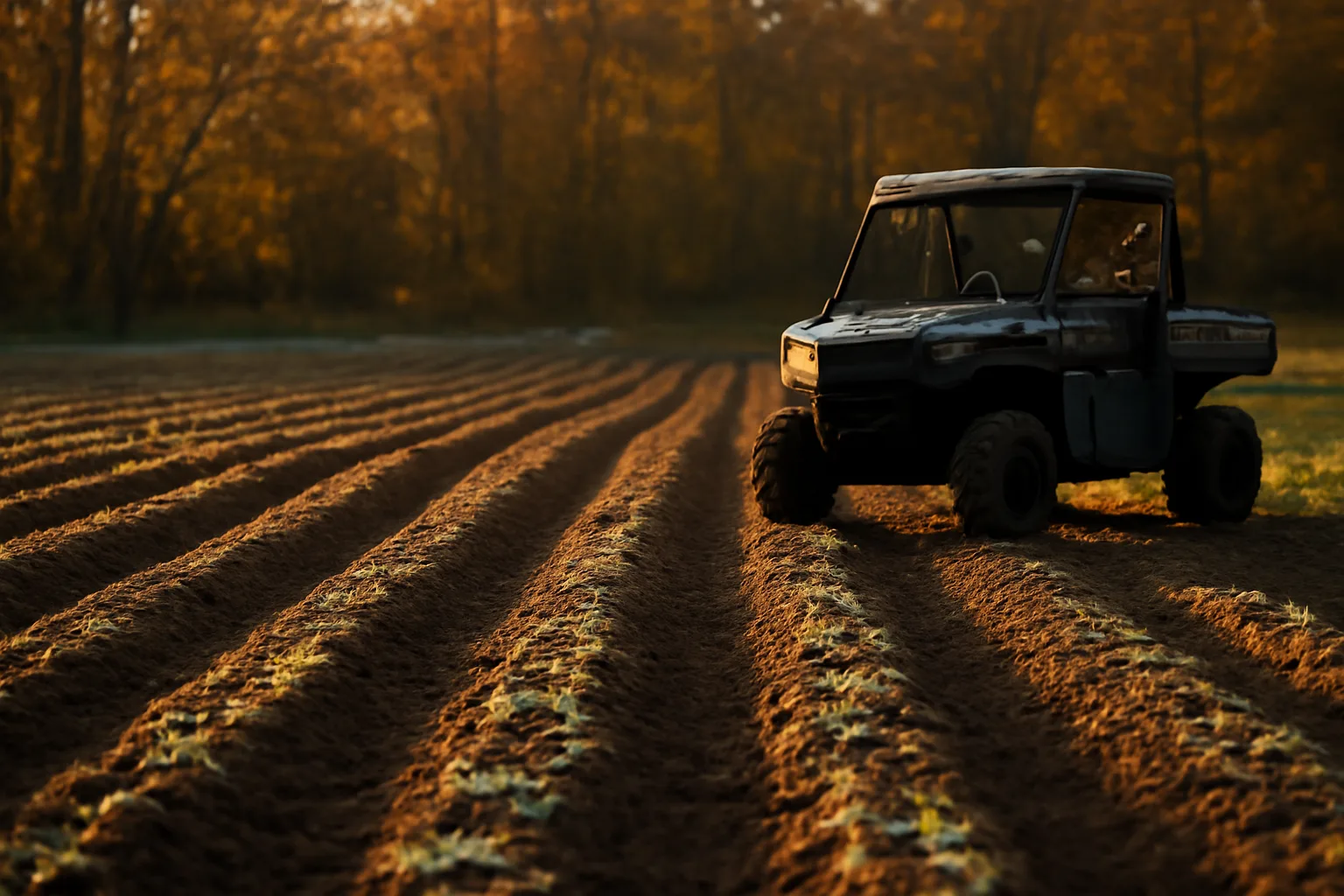
Start with a soil test, ideally 60 to 90 days before your planting date, so lime has time to react in the soil before seed goes in. Most land-grant extension soil labs turn results around in one to two weeks and give you a specific lime and fertilizer recommendation based on your target crop . Your soil test lab is the authority on exact lime and fertilizer rates for your specific field. A general article can only give you the ballpark. Most fall plot seed does best on a firm, weed-suppressed seedbed. That means killing existing vegetation with a systemic herbicide two to three weeks ahead of planting (glyphosate is standard for a clean kill on most weeds and grasses, follow label rates), then either disking and cultipacking, or drilling directly into the dead residue with a no-till drill. Small-seeded species like clover and brassicas need shallow planting, often a quarter inch deep or less, and they need good seed-to-soil contact, which is why a cultipacker pass after broadcasting makes a real difference in germination rates. Cereal grains can go slightly deeper, around three-quarters of an inch to an inch and a half. If you're weighing equipment, a lot of small food plot properties (half acre to five acres) get by fine with an ATV/UTV drag harrow, a broadcast spreader, and a cultipacker, without ever owning a tractor. Larger acreage usually justifies a compact tractor with a disk and drill.
Should I plant a single species or a blend?
Blends generally beat single-species plots for fall, because they hedge against the two biggest failure points: weather timing and deer preference shifts. If a hard freeze kills your oats early, the wheat or rye in the same plot keeps growing. If deer ignore the brassica bulbs until December, the cereal grain is already feeding them in October and November. Single-species plots still make sense in specific situations. A dedicated clover field works well as a perennial, low-maintenance food source you don't want to till up every year. A pure brassica plot can make sense on a property where you specifically want a late-season draw and you're willing to accept that it won't produce much forage until after multiple frosts. For most hunters managing one to ten acres of plot ground across a property, a two-to-four species blend covering a cereal grain, a brassica, and a small percentage of clover gives the most reliable, longest window of attraction and nutrition per dollar spent. This is roughly the same logic behind a Custom Food Plot Plan, which for a flat $99 one-time fee builds out a species and timing recommendation matched to your specific soil test results, region, and acreage instead of a generic bag blend. It's general guidance built from your inputs, not a site visit or substitute for your soil lab's specific lime and fertilizer numbers.
What's a realistic fall planting calendar by region?
Because frost timing varies so much, think in three rough bands rather than a single national date. These are generalized starting points. Always check your state extension office or NOAA frost data for your specific county [2]. Northern tier (Minnesota, Wisconsin, Michigan, upper New England, North Dakota, Montana): plant fall mixes between August 1 and August 25. First frost often arrives mid-September to early October. Mid-latitude (Iowa, Illinois, Indiana, Ohio, Kentucky, Missouri, Virginia, Pennsylvania): plant fall mixes between August 15 and September 15. First frost typically lands early to mid-October. Southern tier (Alabama, Georgia, Mississippi, South Carolina, Texas, Florida panhandle): plant fall mixes between September 1 and October 15. Many southern counties don't see a hard frost until November, which stretches the safe planting window considerably later than northern states. Mountain and high-elevation pockets within any of these states often run two to four weeks behind the surrounding lowland dates because of earlier frost and cooler soil temps, so a county-level frost date check matters more than a state-level guess.
Frequently asked questions
Do deer eat sorghum?
Yes, deer eat both sorghum grain heads and leaf tissue, but sorghum is a warm-season crop planted in late spring to early summer, not part of a fall seed mix. Its main food plot value is as standing grain left through winter for late-season browsing and cover.
Do deer eat clover?
Yes, clover is one of the most consistently preferred whitetail forages, commonly testing 25 to 30 percent crude protein during active growth. It's most attractive in spring and summer but stays green into fall until frost pushes it dormant.
When should I plant food plots for deer?
Fall plots go in 60 to 90 days before your area's average first hard frost, generally mid-August to mid-September in northern and mid-latitude states, and September into October in the Deep South. Spring plots go in after your last frost, once soil is reliably above 60°F.
Do deer like clover more than other food plot species?
Research and long-term food plot data consistently rank clover and soybeans among the most preferred species during the growing season, largely because of high crude protein content. Preference shifts in fall toward brassicas, cereal grains, and acorns as deer prioritize sugar and fat reserves.
When should I plant oats for deer?
Plant oats 60 to 75 days before your first expected hard frost, typically mid-August to mid-September for most of the country. Oats germinate fast but have low cold tolerance and usually die back once temperatures drop into the teens.
When to plant turnips for deer food plots?
Plant turnips late July through mid-August in northern states, and mid-August through early September in mid-latitude states, giving them 80 to 90 days to reach bulb maturity before frost. The sugar-conversion effect that makes turnips attractive happens after frost, not before planting.
What is a food plot, in simple terms?
A food plot is a planted patch of forage, usually a quarter acre to a few acres, established specifically to feed and attract deer or other wildlife. It's one habitat management tool among several, not a standalone solution, according to USDA NRCS wildlife habitat guidance.
What are deer's favorite foods overall?
There's no single universal favorite; preference shifts by season. Soybeans and clover top preference during spring and summer growth, while brassicas, cereal grains, and acorns dominate in fall and winter when deer prioritize carbohydrates and fat reserves over protein.
Do deer like honey?
There's no wildlife research or extension guidance supporting that deer specifically seek out honey. The idea likely comes from confusion with sweetened mineral or molasses-based attractant products, which do appeal to deer through sugar and salt, not any honey component.
What's the best fall food plot seed mix for beginners?
A blend of roughly 60 percent cereal grain (oats or wheat), 30 percent brassica (turnip or radish), and 10 percent clover, drilled or broadcast at 50 to 90 pounds per acre combined, gives beginners a wide window of attraction with built-in weather insurance.
How deep should I plant fall food plot seed?
Small seeds like clover and brassicas need shallow planting, a quarter inch deep or less, with good seed-to-soil contact from a cultipacker pass. Cereal grains like oats, wheat, and rye can go slightly deeper, around three-quarters of an inch to an inch and a half.
Can I plant a fall food plot without a tractor?
Yes, for plots under about five acres, an ATV or UTV with a drag harrow, a broadcast spreader, and a cultipacker handles seedbed prep and planting fine. Larger acreage usually justifies a compact tractor with a disk and no-till drill.
Sources
- NOAA National Centers for Environmental Information, Freeze/Frost Data Access Services: Frost date data is best sourced by local station rather than generalized zone maps
- Virginia Cooperative Extension, Publication 418-012, Food Plots for Wildlife: Recommended fall brassica and small grain planting window of late August to mid-September for most of Virginia
- Oklahoma State University Extension, PSS-2132, Establishing Wildlife Food Plots: Recommended seeding rates of 2 to 5 pounds per acre for turnips planted alone
- University of Georgia Extension, Circular 1160, Establishing and Managing Wildlife Food Plots: Quality clover forage commonly tests 25 to 30 percent crude protein during active growth
- Mississippi State University, Bronson Strickland and Steve Demarais, Deer Nutrition and Food Plot Forage Preference Research: Deer show strong seasonal preference shifts, favoring soybeans and cowpeas in summer and brassicas and cereal grains in fall
- Penn State Agricultural Analytical Services Laboratory, Soil Testing Services: Standard soil test turnaround and lime/fertilizer recommendation process used by land-grant soil labs