Last updated 2026-07-24
TL;DR
There's no magic 'deer grass seed.' Deer favor cereal grains (oats, winter wheat, winter rye) and legumes like clover far more than lawn-type grasses. Plant cereal grains and brassicas 60 to 90 days before your average first frost; plant clover and warm-season plots after your last frost. Soil test first.
what does "deer grass seeds" actually mean?
Most people typing "deer grass seeds" aren't looking for fescue or bluegrass. They're looking for seed that puts tonnage of deer food on the ground, and in food plot language, that almost always means cereal grains, not turf grasses. Cereal grains are technically grasses (they're in the Poaceae family, same as your lawn), but they behave nothing like a mowed lawn plot. Oats, winter wheat, winter rye (cereal rye, not ryegrass), and grain sorghum are the "grass seeds" that actually move deer. They germinate fast, tolerate poor soil better than most legumes, and in the case of winter rye, they'll green up in temperatures that shut down almost everything else. True perennial grasses like orchardgrass or timothy show up in food plot mixes too, mostly as a nurse crop or filler for clover blends, not as a standalone attraction. Deer will nibble them, but they're not a draw crop the way oats or wheat are. If you searched "deer grass seeds" hoping for a single bag that solves everything, the honest answer is: buy a cereal grain for fall tonnage, and pair it with clover for a food source that lasts into summer. That combination is the backbone of most productive plots [1].
what is a food plot?
A food plot is a planted area, usually a half-acre to a few acres, established specifically to grow forage that attracts and feeds deer and other wildlife. It's not a lawn and it's not row-crop farming for market. It's agriculture done at small scale with one customer in mind. State wildlife agencies generally treat food plots as a habitat management tool, distinct from baiting. Baiting laws (piling corn, minerals, or feed to attract deer) vary hugely by state and are banned or restricted in many places, while planted food plots are legal nearly everywhere because the deer are foraging on a growing crop, not eating a pile someone dumped. Still, check your state wildlife agency's regulations before you plant near a stand or blind, because some states regulate hunting "over" a food plot differently depending on how recently it was disturbed or how it was established. Michigan law addresses supplemental feeding and baiting of deer directly in statute, separate from habitat plantings [2]. A good food plot does two things: it feeds deer through a nutritional bottleneck (usually late summer stress or the dead of winter), and it concentrates deer activity somewhere you can hunt them ethically and legally. The best plots are planned around your local frost dates, your soil test, and what stage of the season you're trying to cover, not around whatever bag looks good at the farm store.
what are deer's favorite foods?
Deer are opportunistic browsers, and their favorites shift with the season and what's available. In spring and summer, they lean on native forbs, soft mast, and agricultural soybeans. In fall, acorns often beat anything you plant, when they're dropping heavy. In food plot terms though, a few crops consistently outperform others in preference trials and field observation. Clover is the most consistently preferred food plot forage across seasons. It's high in protein (often 25 to 30 percent crude protein in good stands), it regrows after grazing, and deer will hit it hard from spring green-up through fall. Soybeans and cowpeas are close behind during the growing season. In late fall and winter, brassicas (turnips, radishes, kale) and cereal grains take over as the preferred forage, especially after a frost sweetens them up by converting starches to sugars. Acorns aren't something you plant, but they matter enough to mention: in a heavy mast year, deer will often ignore a food plot entirely for a few weeks while acorns are dropping. That's normal, not a sign your plot failed.
do deer like clover?
Yes, and it's not close. Clover is one of the most reliable food plot draws there is, and it's a staple recommendation from nearly every state extension office and wildlife agency in whitetail country. White clover (Trifolium repens), especially ladino types, and red clover (Trifolium pratense) both work well in food plots. White clover tends to be lower-growing and more grazing-tolerant, which matters because deer pressure on a small plot can hammer a stand fast. Red clover grows taller and produces more tonnage per acre but can get grazed out faster under heavy pressure if the plot is small. Clover's real advantage is duration. A well-limed, well-fertilized clover stand can produce forage for several years before you need to reseed. Oregon State University Extension guidance on white clover for pasture and hay notes it is a long-lived perennial legume that persists well under proper grazing management and adequate fertility [3]. That's a real advantage over annual grains you replant every year. The tradeoff is establishment: clover needs decent soil pH (extension guidance generally targets 6.0 to 6.5 for clover) and it's slower to get going than oats or wheat, so it's not the crop for a plot you're planting three weeks before season. For more on matching clover and other legumes to your acreage, see food plot seed.
do deer eat sorghum?
Yes, deer eat grain sorghum, but it's usually a secondary player in a plot, not the headline crop. Sorghum (milo) produces a seed head deer and turkey will feed on standing, and it holds up well into winter, which is its main selling point. Where sorghum earns its place is in mixed plantings, especially as a standing grain component alongside soybeans or as part of a screening/cover strip. It's drought tolerant and grows on soils too poor or dry for corn, which is why some Midwest and Southern plot plans lean on it as a low-input grain option. It's less palatable early than oats or wheat, and deer often don't hit sorghum hard until other food sources thin out in late winter, when the seed heads become one of the few standing food sources left. If you're deciding between sorghum and a cereal grain for a fall plot meant to pull deer during archery and gun season, cereal grains like oats and wheat generally win on early palatability. Sorghum's better use is as a late-winter reserve or a screening/cover crop that also happens to feed deer.
when to plant food plots for deer?
| Region (USDA cold hardiness zone) | Typical fall planting window | Typical spring planting window | |
|---|---|---|---|
| Zone 3-4 (Upper Midwest, northern New England) | Late July to mid-August | Mid-May to early June | |
| Zone 5-6 (Mid-Atlantic, Ohio Valley, lower Midwest) | Mid-August to mid-September | Late April to mid-May | |
| Zone 7-8 (Southeast, mid-South) | Early September to early October | Late March to April | These are general starting points based on USDA plant hardiness zone patterns, not a substitute for your local extension office's frost date data, which will be more specific to your county. The National Centers for Environmental Information (NOAA) publishes 1991-2020 climate normals, including freeze and frost data by station, that extension offices draw from, and it's the most reliable free source for this kind of local detail [5]. If you want a planting calendar built around your specific zip code and the acreage you're working with, that's exactly the kind of detail our $99 Custom Food Plot Plan builds out at /plot-plan-builder, but local frost date tools work fine if you'd rather do it yourself. |
Timing depends entirely on what you're planting and your local frost dates, but there are two broad windows almost everyone works from: a spring/summer planting window for warm-season annuals and perennials, and a late-summer window for fall annuals. Spring plots (clover, soybeans, chicory, warm-season annual mixes) generally go in after your last expected frost, when soil temps are reliably above 50°F. Fall plots (cereal grains, brassicas) go in 60 to 90 days before your area's average first fall frost, which gives brassicas time to bulb up and cereal grains time to establish before cold shuts down growth [4]. table:
when to plant oats for deer?
Oats are a fall-plot crop for most of whitetail country. Plant them 60 to 90 days before your first expected fall frost, which lands roughly in August for the northern half of the country and September into early October for the South. Oats germinate fast (often visible in 5 to 7 days with decent soil moisture) and put on serious tonnage quickly, which is why they're a go-to for hunters who plant in August and want green forage up by bow season. The catch: oats aren't very cold hardy. A hard freeze in the teens will usually kill oats outright, so in the North they act as a fall annual that dies back by early winter. Farther south, oats can persist much longer into winter and even survive mild frosts to regrow. If you want a cereal grain that survives real winter cold and comes back green in spring, cereal rye is the better call; it'll tolerate temperatures well below zero once established. Oats are the better choice if your goal is maximum fall attraction and tonnage in a shorter window, with less concern about late-winter persistence.
when to plant turnips for deer?
Turnips go in the ground in late summer, typically 80 to 90 days before your first fall frost, because they need that runway to bulb up before cold weather locks in. Brassicas like turnips (and their cousins, radishes and kale) are frost-tolerant and actually get more attractive to deer after a hard freeze, because cold converts starches in the bulb and leaves into sugars. That's why brassica plots often get ignored in October and then get hammered in December and January, once deer have learned they're there and once a few good frosts have sweetened them up. This delayed-attraction pattern trips up a lot of first-time planters who assume the plot failed. For the North (Zone 3-5), that planting window usually lands in late July to mid-August. For the mid-South (Zone 6-7), early to mid-September works. General brassica planting guidance from land-grant university extension programs consistently recommends against planting turnips too late in warm climates, since they need enough of a growing season before the ground gets hot and dry to establish a strong taproot . Turnips also do best on soil pH above 5.8, and like most food plot crops, a current soil test is the only real way to know if you need lime before you plant. See deer food plot seed for more on brassica blends and how they pair with cereal grains.
do deer like honey?
Not in the sense most people mean when they ask this. Deer don't forage for honey in the wild the way bears do, and there's no legitimate research or extension guidance recommending honey as a deer attractant. What's likely happening with this search is confusion with "honey hole" (hunter slang for a great spot) or with sweet feed and molasses-based attractants, which are a different product category entirely and are subject to the same baiting restrictions as corn or mineral piles in states that regulate bait. If your state prohibits baiting, a molasses lick or sweet feed pile generally counts, so check your state wildlife agency's regulations before using one. Clover, brassicas, and cereal grains remain the legitimate, research-backed way to draw deer with food, not sweeteners.
soil testing and fertility: the step before you buy any seed
Every question above (what to plant, when to plant it, how it'll perform) depends on soil chemistry you can't guess at. A $10 to $20 soil test through your local cooperative extension office is the cheapest insurance in the whole food plot process. Extension soil labs typically report pH and recommend lime and fertilizer rates in pounds per acre for the specific crop you tell them you're planting. Clover generally wants pH 6.0 to 6.5, brassicas do fine down to about 5.8, and cereal grains are the most forgiving, tolerating pH as low as 5.5 in a pinch, though yields drop the further you get from the ideal range . Lime takes months to fully react with soil, so if your test comes back needing 2 tons per acre of lime (a common recommendation on acidic ground), get it down as early in the season as you can, ideally the fall or spring before you plant, not the week before. Your soil test results are specific to your dirt and your extension lab's calibration. Treat any generic fertility number in this article, or anywhere else online, as a starting point, and defer to your own lab's recommendation for actual lime and fertilizer rates.
picking the right mix for your goals
| Goal | Best crop type | Planting window | Notes | |
|---|---|---|---|---|
| Early season attraction (Sept-Oct) | Oats, soybeans, cowpeas | Aug (60-90 days pre-frost) | Fast growth, high early palatability | |
| Rut and late season | Winter wheat, cereal rye, brassicas | Aug-Sept | Cold-hardy, brassicas sweeten after frost | |
| Spring/summer nutrition | White or red clover, chicory | After last frost | Multi-year stand, high protein | |
| Poor/dry soil, low input | Grain sorghum | Late spring | Drought tolerant, secondary draw | Most experienced plotters run at least two plot types: a perennial clover plot for spring-through-fall protein, and a fall annual (cereal grain plus brassica blend) for hunting season tonnage. If you're planning your first serious plot rotation and want it mapped to your actual coordinates and acreage rather than a national average, that's the specific gap our $99 Custom Food Plot Plan fills at /plot-plan-builder. Nothing about deer movement is certain and no plan can promise deer will show up on command, but a plan built on your zone and soil test takes the guesswork out of what to plant when. |
There's no single best seed. The right pick depends on what window in the season you're trying to feed and hunt. table:
equipment and site prep basics
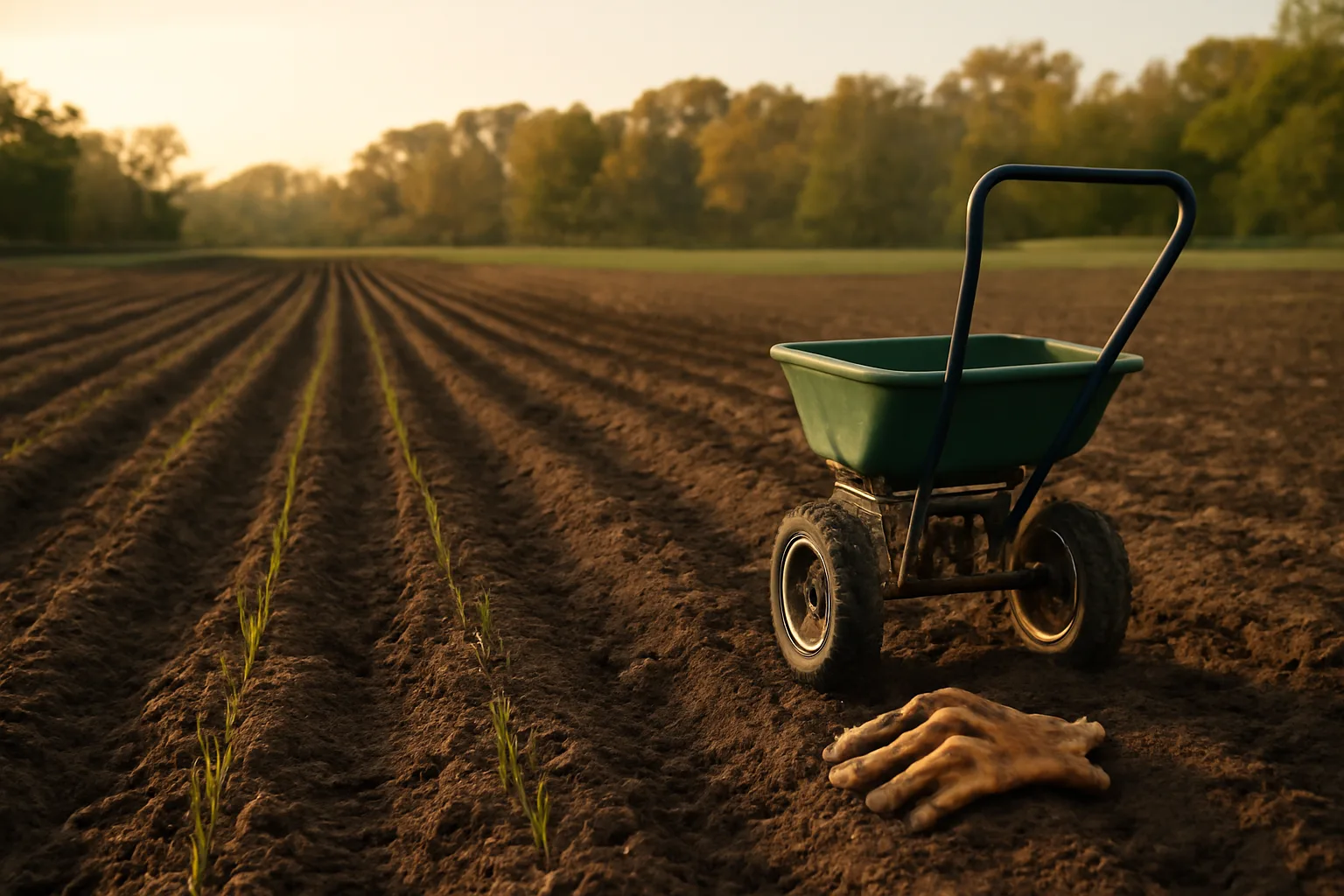
You don't need a tractor to plant a good food plot, but you do need to get seed-to-soil contact right, and that's where most small plots fail, not the seed choice. A basic setup: a way to kill or knock down existing vegetation (herbicide, disking, or a heavy mower plus tillage), a way to work the seedbed (disk, tiller, or hand tools for small plots under a quarter acre), a broadcast spreader, and a way to firm the seed in (cultipacker, ATV tire drag, or even foot traffic on tiny plots). Cereal grains and brassicas want to be planted about a quarter to half inch deep; clover seed is tiny and should barely be covered, often just pressed into the surface. Planting clover too deep is one of the most common reasons a plot fails to establish. For a full rundown on matching equipment scale to plot size, food plot whitetail and deer food plots cover the tools side in more depth than fits here.
Frequently asked questions
Do deer eat sorghum?
Yes. Deer eat grain sorghum (milo), especially the seed heads in late fall and winter when other food is scarce. It's more drought and heat tolerant than corn, but it's usually a secondary plot crop, not the main draw, since deer generally prefer cereal grains and legumes earlier in the season.
Do deer eat clover?
Yes, heavily. Clover is one of the most preferred food plot forages available, running 25 to 30 percent crude protein in a well-maintained stand. Deer will hit white and red clover from spring green-up through fall, and a good stand can last several years before it needs reseeding.
When should I plant food plots for deer?
Fall annuals (cereal grains, brassicas) go in 60 to 90 days before your area's first frost, roughly August in the North and September in the South. Spring plots (clover, soybeans, warm-season annuals) go in after your last frost, once soil temps hold above about 50°F.
Do deer like clover more than other food plot crops?
In most preference studies and field observation, clover ranks at or near the top of food plot forages, competing closely with soybeans during the growing season. It's the standard perennial choice because of its protein content and multi-year persistence.
When should I plant oats for deer?
Plant oats 60 to 90 days before your first fall frost. Oats germinate fast, often within 5 to 7 days, and produce quick tonnage for early bow season, but they're not very cold hardy and typically die back after a hard freeze.
When is the best time to plant food plots overall?
There's no single best time; it depends on the crop. Cereal grains and brassicas are late-summer plantings timed to your first frost date. Clover and warm-season legumes are spring plantings timed to your last frost date. Check your local extension office or NOAA frost date data for your county.
When should I plant turnips for deer?
Plant turnips 80 to 90 days before your first fall frost, generally late July to mid-August in the North and early to mid-September in the mid-South. Turnips need that runway to bulb up, and they get sweeter and more attractive to deer after a hard freeze.
What is a food plot exactly?
A food plot is a planted patch, from a fraction of an acre to several acres, established specifically to feed and attract deer or other wildlife. It's treated as habitat management by most state wildlife agencies, distinct from baiting, which involves piling loose feed rather than growing a crop.
What are deer's favorite foods overall?
Clover, soybeans, and cowpeas top the list during the growing season. In fall and winter, acorns (when available), brassicas, and cereal grains take over. Preference shifts with season, weather, and what's locally abundant, so 'favorite' depends on the time of year.
Do deer like honey?
No, not in any documented or research-backed way. Deer aren't natural honey foragers like bears. This search usually stems from confusion with sweet feed, molasses attractants, or the phrase 'honey hole.' Sweet feed and molasses products can count as bait under some state regulations, so check local rules first.
Is grass seed the same thing as food plot seed?
Not really. Lawn-type grasses (fescue, bluegrass) aren't strong deer attractants. What people usually mean by 'deer grass seed' is cereal grains like oats, wheat, and rye, which are technically grasses but are planted specifically for fall forage tonnage, not turf.
How much does a soil test cost before planting a food plot?
Most land-grant university extension soil labs charge $10 to $20 per sample for a standard test with pH and fertility recommendations. It's the cheapest step in the whole process and determines your lime and fertilizer needs before you spend money on seed.
Can I plant a food plot without a tractor?
Yes, for small plots (under a quarter to half acre), hand tools, a broadcast spreader, and an ATV or UTV with a small disk or tiller attachment work fine. Bigger plots benefit from a tractor, but equipment scale should match plot size, not the other way around.
Sources
- Oklahoma State University Extension, Establishing and Managing Wildlife Food Plots: Cereal grains and clover form the backbone of productive food plot rotations
- University of Wisconsin-Madison Extension, Forages for Wildlife (A3877): Clover crude protein content and deer preference
- Noble Research Institute, Grain Sorghum for Wildlife: Sorghum's drought tolerance and role as a secondary wildlife food source
- NOAA National Centers for Environmental Information, U.S. Climate Normals 1991-2020: Local frost date records are the reliable source for planting timing
- University of Kentucky Cooperative Extension, AGR-1: Lime and Nutrient Recommendations: Soil pH targets differ by crop and lime reaction time is slow