Last updated 2026-07-25
TL;DR
Deer seed for food plots means the specific forage species (clover, brassicas, cereal grains, beans, sorghum) you plant to feed and hold deer on your ground. Choice depends on soil, region, and season. Clover and cereal grains are the most consistently reliable; timing runs spring (April to June) for warm-season plots and late summer (July to September) for cool-season plots.
what is a food plot, exactly
A food plot is a planted patch of forage, usually somewhere between a quarter acre and several acres, established specifically to feed deer and other wildlife and to give hunters a predictable place to see them. That's the whole concept. It's not complicated, but a lot of guys overthink it or underthink it in opposite directions. Food plots do two different jobs and it helps to know which one you're aiming for before you buy seed. A "destination" or hunting plot is usually small, tucked near bedding cover, and planted with something deer will hit at dusk in shooting light, think brassicas or a clover/cereal grain blend. A "nutrition" or "production" plot is bigger, often in a more open field, and its job is to put pounds on deer and does raising fawns through spring and summer. Perennial clover and alfalfa fit that role well because they keep producing for years. The USDA Natural Resources Conservation Service and most state wildlife agencies treat food plots as a wildlife habitat management practice, not agriculture in the commodity sense, though the agronomy underneath is identical to a farm field. Soil test, fertilize to the test, control weeds, plant at the right depth and the right week. Skip any of those steps and the fanciest bag of seed on the shelf won't save you. One more thing worth saying plainly: a food plot is not the same as baiting. Standing forage that deer walk up to and browse is legal almost everywhere; piles of corn, mineral, or shelled feed dumped on the ground are regulated or banned outright in a lot of states. Check your state wildlife agency's baiting and feeding rules before you assume a practice that works in one state is legal in the next one.
what do deer actually prefer to eat
Deer are selective browsers, not indiscriminate grazers, and their preferences shift by season, region, and what's already growing wild nearby. That said, decades of extension research and browse studies point to a short list of consistent favorites: soft mast (acorns, apples, persimmons), forbs and legumes (clover, alfalfa, cowpeas, soybeans), and, in fall and winter, brassicas and cereal grains once a frost sweetens them up. White clover and alfalfa rank at or near the top of nearly every forage preference trial because they're high in crude protein (often 20 to 30 percent) and stay palatable most of the growing season [1]. Soybeans and cowpeas run close behind during summer, though deer can hammer soybean seedlings hard enough to wipe out a small plot before it ever reaches maturity, which is why bean plots need to be big (several acres, ideally 3 to 5) or fenced while young. Acorns deserve a mention because in a lot of whitetail range they beat anything you can plant. When there's a good acorn drop, deer will often ignore a plot 50 yards away and work the timber instead. That's not a reason to skip plots, it's a reason to have more than one type of food source available across the property. There's no universal "deer's favorite food" because preference tracks region, soil fertility, and what else is on the landscape, but if you had to rank a shortlist across most of whitetail range it would run something like: acorns and other mast when available, then clover and alfalfa, then brassicas and cereal grains post-frost, then soybeans and cowpeas in summer.
do deer eat sorghum
Yes, deer eat grain sorghum (milo), mostly for the seed heads once they mature and dry down in fall, and to a lesser extent the green forage earlier in the season. It's more commonly planted as a screening and cover crop or a component of dove/turkey plots than as a primary deer forage, because deer preference for sorghum grain runs behind corn, soybeans, and brassicas in most feeding trials. Where sorghum earns its keep is structure. Grain sorghum grows 4 to 7 feet tall and, planted in strips, makes excellent screening cover along field edges or travel corridors, letting you approach or exit a stand without spooking deer bedded nearby. Some food plot mixes include sorghum as a nurse crop or filler alongside soybeans or cowpeas for exactly this reason, not because it's the primary attractant. If your goal is pure attraction, sorghum is a mediocre pick. If your goal is cover, screening, or a fall grain source once other options thin out, it's a reasonable one, especially in drought-prone soils where sorghum tolerates dry conditions better than corn does.
do deer like clover, and is it worth planting
Yes, and by a wide margin clover is the most planted perennial food plot forage in the country for good reason. White clover (Trifolium repens) varieties like Durana, Ladino, and various regionally bred blends tolerate close grazing, come back after a hard browse, and can produce for 3 to 5 years or more before needing to be replanted, depending on stand health, weed pressure, and soil fertility [2]. Clover's crude protein content, commonly cited in the 20 to 30 percent range depending on growth stage and soil fertility, makes it valuable during spring green-up and antler growth and again during lactation in early summer [1]. It's also one of the more forgiving plantings for a first-time plotter because it establishes on a fairly wide range of soil types as long as pH is corrected first. The catch with clover is patience and pH. Clover wants soil pH in the 6.0 to 7.0 range to fix nitrogen efficiently through its root nodules; plant it on unlimed acidic soil and you'll get a thin, yellow stand no matter how good the seed is. Get a soil test before you plant clover, not after it fails. Most land-grant extension soil labs turn results around in 1 to 2 weeks and the test itself usually costs somewhere in the $10 to $20 range through a university lab, cheap insurance against wasting a bag of seed. For readers weighing clover against annual options for a specific plot, the food plot whitetail guide and deer food plot seed breakdown both cover species selection in more depth.
when to plant food plots for deer (the short answer)
| Deep South (8-9) | March-May | September-October | |
|---|---|---|---|
| Mid-South/Transition (7) | April-June | August-September | |
| Midwest/Mid-Atlantic (5-6) | May-June | Late July-August | |
| Upper Midwest/Northeast (3-4) | Late May-June | Mid-July-Mid-August | These are general starting points, not guarantees; always check your local extension office's specific frost date data before you commit seed to the ground. |
Timing splits into two windows almost everywhere in whitetail range: a spring/summer window for warm-season annuals and perennials (roughly April through June depending on latitude and last frost date), and a late summer window for cool-season annuals like brassicas and cereal grains (roughly late July through September, again shifting with latitude). The simplest rule of thumb extension agronomists give is to plant warm-season forages after your last expected frost and cool-season forages 60 to 90 days before your first expected fall frost, so the plants have time to establish before cold shuts down growth. Pull your local frost dates from your state's extension service or the NOAA climate normals for your county; a plot planted three weeks too early or too late can fail entirely even with perfect soil prep. Region matters more than any generic calendar. The Deep South (zone 8 to 9) can plant cool-season brassicas and cereals into October and still get a full stand before frost; the Upper Midwest and Northeast (zone 3 to 5) often need those seeds in the ground by mid-August or early September to beat the first hard freeze. If you want a zone-by-zone breakdown rather than a national average, that's really its own topic and worth checking a dedicated planting calendar for your area. As a general framework: | Region (USDA zone) | Warm-season plant window | Cool-season plant window |
when to plant oats for deer
Plant oats for deer in late summer to early fall, generally 6 to 8 weeks before your first killing frost, so they can establish, tiller, and put on leafy growth before winter dormancy or frost knocks them back. In much of the Midwest and mid-South that lands somewhere between mid-August and mid-September; in the Deep South it can push into October [3]. Oats are a cool-season annual cereal grain and one of the most attractive fall food plot options going, especially right after the first hard frost sweetens the leaves by converting starches to sugars. Deer will often walk past standing beans to hit a fresh oat plot in October and November. The downside is oats are less cold-hardy than wheat, cereal rye, or triticale; a hard winter in the northern half of the whitetail range can kill oats outright, where rye will often survive and green back up in spring. A lot of successful fall blends combine oats with a small amount of wheat or cereal rye plus a brassica like forage rape or radish, so you get the fast early attraction from oats and season-long durability from the cereal grain and brassica components. Plant oats at roughly 2 to 3 bushels (96 to 144 lbs) per acre if drilled, more if broadcast, into a firm, weed-free seedbed no deeper than an inch [3].
when to plant turnips for deer
Plant turnips for deer in late summer, typically 80 to 100 days before your first expected fall frost, because turnips need that runway to bulb up and reach peak tonnage and palatability right as cold weather arrives. For most of the whitetail range that means a planting window somewhere between late July and early September, shifting later as you move south [4]. Turnips (and other brassicas like forage rape, radish, and kale) actually get more attractive after a hard frost. Frost converts starches in the leaves and bulbs to sugars, which is why a turnip plot that deer mostly ignore in October can turn into the hottest food source on the property by late November or December. This delayed attraction catches new plotters off guard every year; they think the seed failed when really it just hasn't hit its palatability window yet. Brassicas need a fine, firm seedbed and shallow planting depth, generally no more than a quarter to half inch, because the seed is tiny. They also need decent fertility; brassicas are heavy nitrogen feeders and a soil test showing adequate phosphorus and potassium plus a nitrogen sidedress (often 40 to 60 lbs of actual N per acre depending on the test) makes a real difference in bulb size and tonnage [4]. Skimp on fertility and you get a thin stand of stunted plants deer walk past.
how do I pick the right species for my soil and setup
Start with the soil test, not the seed bag. Every credible extension publication on food plots says some version of the same thing: species selection should follow soil pH and fertility results, not the other way around. A soil test tells you pH, phosphorus, potassium, and organic matter, and from there your county extension office or the lab itself will hand back lime and fertilizer recommendations specific to whatever crop you tell them you're planting. A few practical rules of thumb: Clover and alfalfa want pH 6.0 to 7.0 and will disappoint you below that without lime correction. Brassicas and cereal grains tolerate a slightly wider range, roughly 5.5 to 7.0, and are more forgiving on marginal ground. Soybeans and cowpeas want full sun, decent drainage, and enough acreage (multiple acres, not a quarter-acre patch) to survive deer browsing pressure while they establish, because deer will eat bean seedlings down to nothing on a small plot before the plants have a chance to get above browse height. Sun exposure matters as much as soil. A shaded plot on the edge of hardwoods will struggle no matter what you plant; clover tolerates partial shade better than brassicas or beans, which both want close to full sun to produce well. Equipment and budget realistically narrow the list too. If you're broadcasting by hand or ATV spreader without a drill or cultipacker, you'll get better results from small-seeded broadcast species (clover, brassicas) than from something like soybeans that wants to be drilled at a consistent depth. If you've got a soil test in hand and want a plan that turns those numbers into an actual seed and fertilizer recommendation for your specific field, that's the exact gap a $99 Custom Food Plot Plan through the plot-plan-builder is built to close, though your soil test lab's lime and fertilizer numbers are always the final word on your specific dirt.
do deer like honey (and other odd attractant questions)
No, honey is not a meaningful deer food or attractant in any agronomic sense, and it has nothing to do with food plot seed selection. This question shows up online mostly connected to commercial deer attractant sprays and mineral licks that use molasses, sugar, or honey-scented additives to draw deer to a specific spot, not because deer forage on honey in the wild. Deer are herbivores built to digest cellulose and plant sugars through a four-chambered rumen; they have no biological reason to seek out honey the way, say, a bear would. If you've seen products marketed with honey or sugar-based scent, they're playing on a deer's strong sense of smell and general attraction to sugar, similar to how a molasses-based mineral lick works, not replicating anything in a deer's natural diet. Worth flagging here: scent-based attractants, mineral piles, and supplemental feed are regulated very differently from state to state, and some states classify concentrated feed or scent piles as illegal baiting during hunting season even if the product itself is legal to sell. If you're considering any product beyond straight planted forage, check your state wildlife agency's specific baiting and feeding regulations before you use it near a stand.
how big should a food plot be
There's no single right answer, but extension guidance and practical plotting experience both point toward matching plot size to its job. Small hunting/destination plots (a quarter acre to half acre) work well tucked into thick cover because they're easy to hunt without blowing deer out, and deer feel comfortable stepping into a tight opening at dusk. Bigger nutrition plots (1 to 5-plus acres) are meant to produce volume, feeding more deer over a longer season and surviving heavier browse pressure, especially with beans or cowpeas. A rough starting guideline a lot of state agency and extension wildlife publications use is to aim for 1 to 5 percent of a property's total acreage in food plots, spread across a few smaller plots rather than one big field, so you get both nutrition and hunting value without concentrating all your eggs in one basket [5]. On a 100-acre property that's roughly 1 to 5 acres total, split up. Browse pressure is the wildcard nobody accounts for enough. A half-acre bean plot on a property with a heavy deer herd can get grazed to bare dirt before it ever produces a bean. If you've got high deer density and limited acreage, lean toward brassicas, clover, and cereal grains, which tolerate repeated browsing better than beans or peas do at low planting volumes.
soil test basics: what the numbers actually mean
A standard agricultural soil test reports pH, buffer pH (used to calculate lime rate), and levels of phosphorus, potassium, calcium, and magnesium, sometimes with organic matter percentage and micronutrients depending on the lab. Land-grant university extension soil labs (Cooperative Extension System, present in every state through USDA-NIFA funding) run these tests for the general public, usually for $10 to $20 per sample, and turn results around within a couple of weeks. pH drives almost everything else. Below pH 5.5, phosphorus and other nutrients become less available to plants regardless of how much fertilizer you add, which is why a soil test showing low pH almost always comes back with a lime recommendation before any fertilizer recommendation. Lime takes months to fully react in the soil, which is a big reason experienced plotters test and lime a full season ahead of planting a picky perennial like clover. Your results will typically hand you a lime rate in tons per acre and a fertilizer recommendation in lbs per acre of N-P-K, tailored to whatever crop you tell the lab you're planting; brassicas and cereal grains want more nitrogen than clover, which fixes a lot of its own nitrogen once established. Follow the lab's specific numbers for your field and crop; they know your dirt, this article doesn't.
planting method and equipment basics
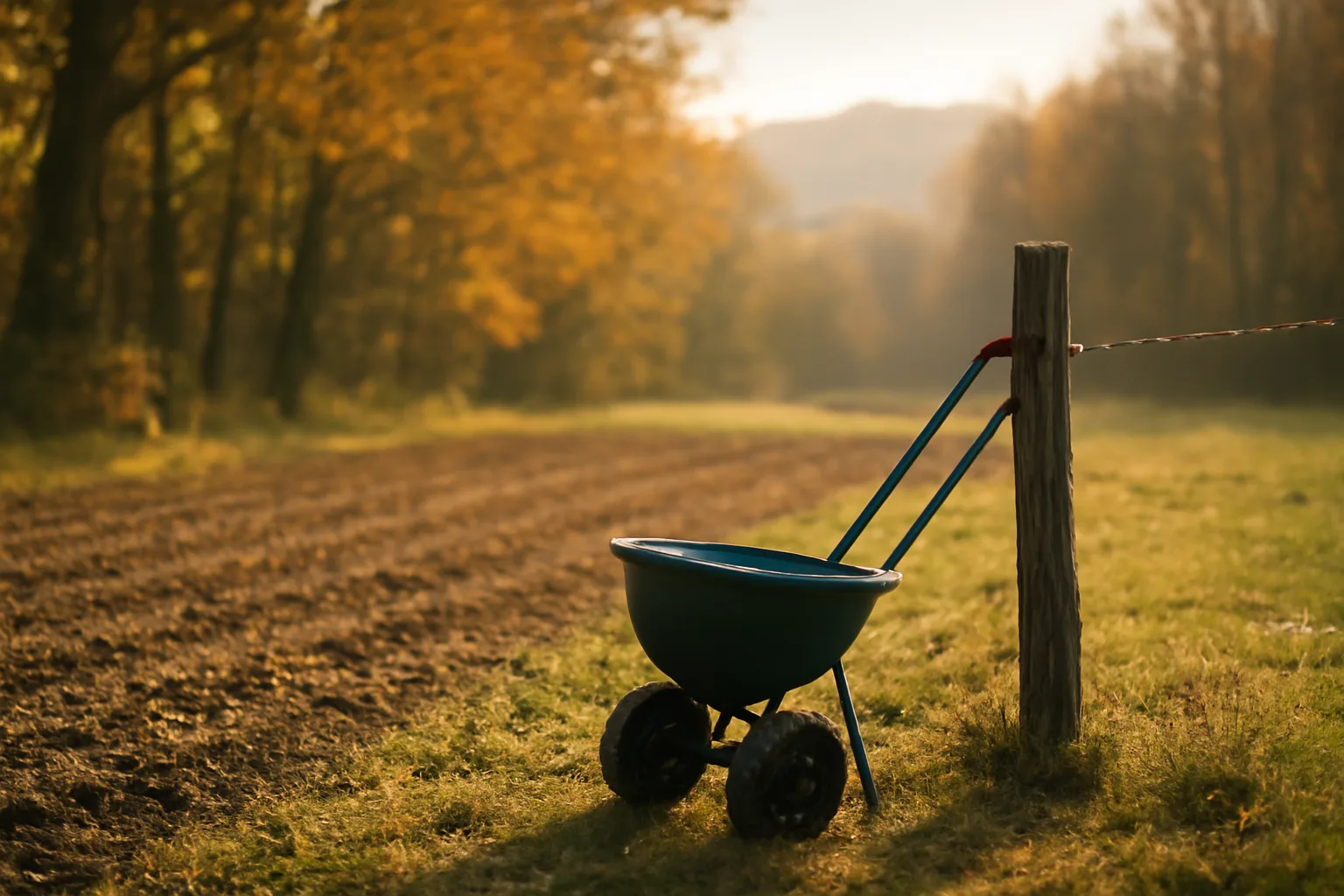
Seed-to-soil contact and planting depth matter more than almost anything else in whether a food plot succeeds, and it's the step first-time plotters skip most often. Small-seeded species like clover and brassicas need to be planted shallow, a quarter inch or less, essentially pressed into the surface rather than buried; bury them an inch deep and germination rates crater. A basic setup that covers most food plot jobs: a disc or tiller to work up the seedbed, a broadcast spreader (handheld, ATV-mounted, or tractor-mounted) for small seed, a cultipacker or drag to firm the seedbed after broadcasting, and a no-till drill if you're planting into standing residue without full tillage. None of this needs to be expensive; plenty of successful small plots get made with a hand spreader and an ATV drag made from chain-link fence or a section of cattle panel. Larger seed like soybeans, cowpeas, corn, and sorghum benefit from drilling or planting at a controlled depth (roughly 1 to 1.5 inches for beans), because broadcasting big seed onto the surface leaves it exposed to birds, rodents, and drying out before it germinates. For readers comparing specific seed products and blends rather than just species categories, deer food plot seed and food plot seed both go deeper on picking a bagged product for a given goal, and deer food plots covers plot layout and placement.
common mistakes that wreck a food plot before it starts
Skipping the soil test is the single most common mistake, and it's the cheapest one to avoid. A $15 to $20 soil test that tells you to add lime six months before planting will save you a full growing season of a stunted, yellow stand that never should have gone in the ground on unlimed acidic soil in the first place. Planting too deep is the second most common mistake, especially with small-seeded clover and brassica mixes. If you can't feel individual seeds when you run your hand across the seedbed after broadcasting, you've probably buried a chunk of them too deep to emerge. Undersizing a bean or pea plot for the deer density on the property is the third. A quarter-acre soybean plot on land with 25-plus deer per square mile (a rough density figure state agencies track through spotlight and camera surveys, varying widely by region) will often get grazed flat before it ever reaches maturity; go bigger or skip beans for a species that tolerates constant browsing better. Last, ignoring drainage and sun exposure. No seed blend, however well marketed, out-produces a plot sitting in standing water after rain or shaded most of the day by a treeline. Walk the field in a hard rain once before you commit to planting there.
Frequently asked questions
Do deer eat sorghum?
Yes, deer eat grain sorghum, mostly the seed heads in fall once they mature and dry, and some green forage earlier in the season. It's generally lower on deer preference lists than corn, soybeans, or brassicas, so it's more often planted as a screening/cover crop or a supporting component in a mix than as the main attractant in a plot.
Do deer like clover?
Yes, clover is one of the most preferred and most planted food plot species nationwide. White clover varieties commonly run 20 to 30 percent crude protein and stay palatable through most of the growing season, making them valuable for spring antler growth and summer lactation, provided soil pH is corrected to the 6.0 to 7.0 range first.
When should I plant food plots for deer?
Warm-season plots go in after your last spring frost, generally April through June depending on latitude. Cool-season plots (brassicas, cereal grains) go in 60 to 90 days before your first fall frost, typically late July through September. Exact dates shift by region, so check your local extension office's frost date data for your specific county.
When should I plant oats for deer?
Plant oats 6 to 8 weeks before your first expected fall frost, usually mid-August to mid-September across most of the Midwest and mid-South, later into October in the Deep South. Oats are less cold-hardy than wheat or cereal rye, so a hard northern winter can kill them outright where a cereal rye component would survive.
When should I plant turnips for deer?
Plant turnips roughly 80 to 100 days before your first fall frost, generally late July through early September depending on region. Turnips actually get more attractive to deer after a hard frost converts starches to sugars, so don't judge the planting a failure if deer ignore it in October; it may peak in November or December instead.
What is a food plot?
A food plot is a planted area, from a quarter acre to several acres, established to feed deer or other wildlife and give hunters a predictable spot to observe or hunt them. It uses standard farming agronomy (soil testing, liming, fertilizing, proper planting depth) applied at wildlife-management scale rather than commodity-crop scale.
What are deer's favorite foods overall?
There's no single universal answer since preference shifts by region and season, but across most whitetail range the rough hierarchy runs acorns and other soft mast first when available, then clover and alfalfa, then brassicas and cereal grains after a frost sweetens them, then soybeans and cowpeas during the growing season.
Do deer like honey?
No, honey isn't a natural or meaningful deer food. It shows up in some commercial attractant sprays and mineral licks as a sugar-based scent additive, similar to molasses, but it has no connection to deer forage biology and no place in an actual food plot seed decision.
Do I need a soil test before planting a food plot?
Yes, and skipping it is the most common reason food plots fail. A university extension soil test, typically $10 to $20 and returned in 1 to 2 weeks, reports pH and nutrient levels and gives you a lime and fertilizer recommendation specific to the crop you plan to plant. Correcting pH takes months, so test well ahead of your planting window.
How big should a deer food plot be?
It depends on the plot's job. Small hunting/destination plots run a quarter to half acre, tucked in cover for bowhunting. Larger nutrition plots run 1 to 5-plus acres and are meant to survive heavy browsing and produce volume. A common extension guideline targets 1 to 5 percent of total property acreage in food plots overall.
What's the difference between a hunting plot and a nutrition plot?
A hunting (destination) plot is small, near bedding cover, and planted with something attractive at dusk, like brassicas or a clover-and-grain mix, mainly to give hunters a shot opportunity. A nutrition plot is bigger and more open, aimed at building herd health over spring and summer with perennials like clover or alfalfa.
Can I just broadcast seed without tilling the soil first?
Sometimes, for small-seeded species like clover or brassicas into a well-prepped, weed-free seedbed, but you still need good seed-to-soil contact, usually from a cultipacker or drag after broadcasting. Larger seed like soybeans and corn generally need to be drilled or planted at a controlled depth rather than surface-broadcast for reliable germination.
Sources
- Mississippi State University Extension, Deer Nutrition and Food Plots: Clover and legume forages commonly provide 20 to 30 percent crude protein, valuable for antler growth and lactation
- University of Tennessee Extension, Establishing and Managing Wildlife Food Plots: White clover stands can persist multiple years under good management before requiring replanting
- University of Kentucky Cooperative Extension, Small Grains for Wildlife Food Plots: Oats should be planted several weeks before the first killing frost and are less winter-hardy than wheat or cereal rye
- Clemson University Cooperative Extension, Brassicas for Deer Food Plots: Brassicas like turnips are planted roughly 80 to 100 days before first frost and become more palatable after frost converts starches to sugars
- Mississippi State University Extension Service, Deer Food Plots: A general guideline is to devote roughly 1 to 5 percent of property acreage to food plots
- USDA National Institute of Food and Agriculture, Cooperative Extension System: Land-grant Cooperative Extension offices in every state provide soil testing and agronomic guidance to the public