Last updated 2026-07-25
TL;DR
For wet soil, cereal grains (wheat, oats, rye) and certain clovers like berseem or alsike handle saturation far better than brassicas or beans, which rot in standing water. Improve drainage where you can, pick species rated for wet tolerance, and test your soil before you plant anything.
What is a food plot, and why does wet soil change the plan?
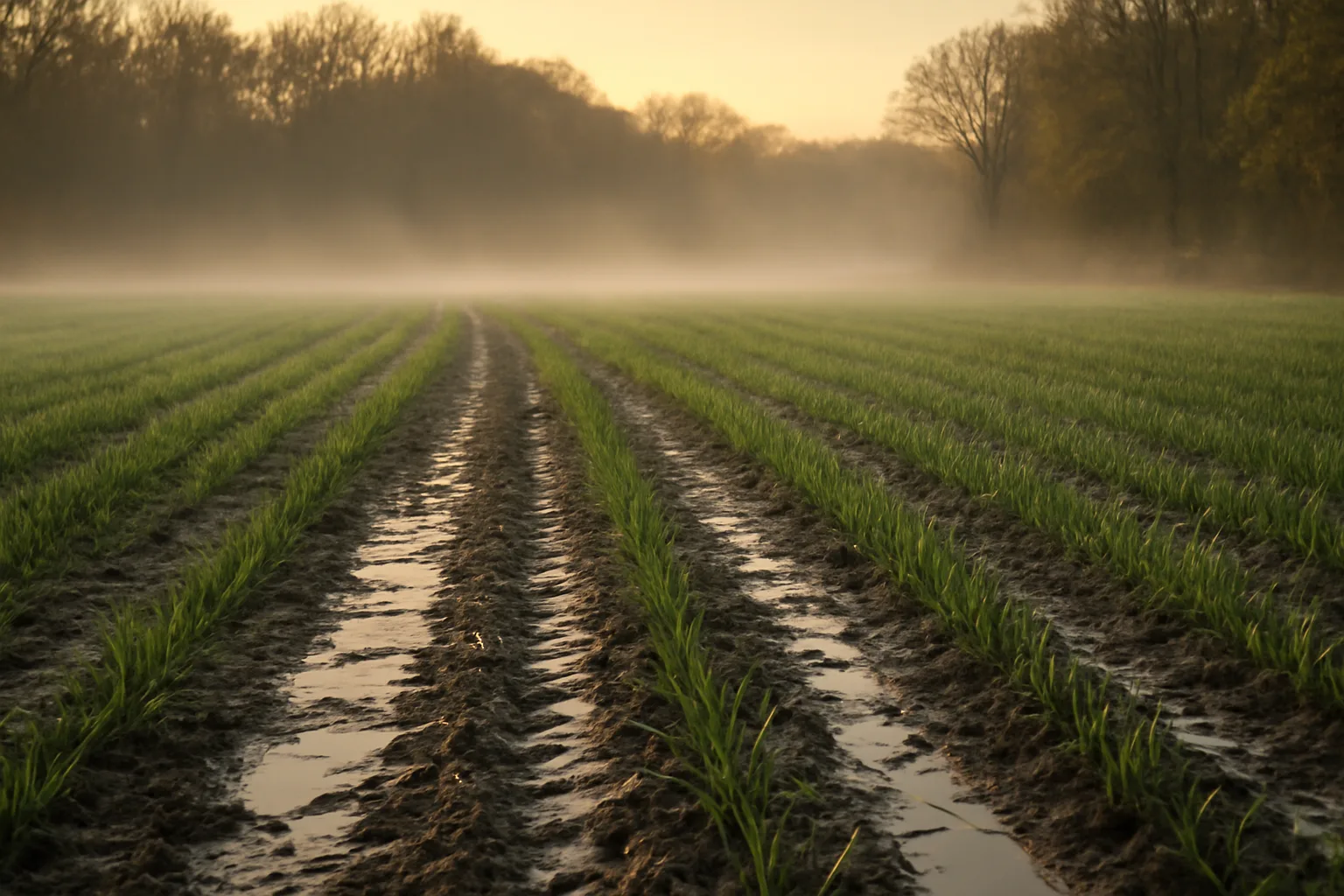
A food plot is a planted area, usually somewhere between a quarter acre and several acres, put in specifically to feed and attract deer or other wildlife. Most guides treat soil like it's uniform: till it, lime it, plant it. Wet soil breaks that assumption. Saturated or poorly drained ground behaves differently below the surface. Roots sit in water instead of air pockets, which suffocates them. Nitrogen converts to forms plants can't use as easily, and some fertilizer just leaches or runs off before the crop gets to it. The USDA Natural Resources Conservation Service classifies soils by drainage class, from excessively drained to very poorly drained, using criteria tied to depth to the water table and soil color patterns (redoximorphic features), and that classification drives what will actually grow there, more than what's on the seed bag label [1]. If you've got a low spot that holds water after rain, or bottomland near a creek, you're not stuck. You just need species picked for that reality, not species picked because they worked great on your buddy's ridge-top plot.
What's the best food plot seed for wet, poorly drained soil?
| Cereal rye | High | Most flood-tolerant cereal grain, also very cold hardy | |
|---|---|---|---|
| Oats | Moderate-high | Good tolerance, but winterkills in most zones | |
| Wheat | Moderate-high | Reliable in heavier, wetter soils | |
| Alsike clover | High | Best clover option for wet, poorly drained ground | |
| Berseem clover | Moderate-high | Annual, fast growth, needs decent drainage long-term | |
| Red clover | Moderate | Better than white clover in heavier soils, not a wet-soil specialist | |
| White clover | Low-moderate | Prefers well-drained loam | |
| Soybeans | Low | Rot risk in standing water | |
| Brassicas (turnips, radish) | Low | Taproot rot is common in saturated soil | |
| Sorghum | Moderate | Handles some moisture stress but not prolonged flooding | If you want a build-out tailored to your specific plot conditions rather than a generic blend, that's exactly the kind of question a food plot whitetail plan should answer before you buy seed. |
Cereal grains are your most reliable bet. Wheat, oats, and cereal rye all tolerate short periods of saturated soil far better than legumes or brassicas, and they establish fast enough to get roots down before the next rain event floods things again. Among clovers, berseem clover and alsike clover are the standouts for wet ground. Alsike clover in particular is known in agronomy circles for tolerating wet, poorly drained, even slightly acidic soils better than red or white clover, a trait documented by university forage programs, including Oregon State University's forage information system, which notes alsike clover's use on wet meadows and poorly drained sites where red clover struggles [2]. Berseem clover, an annual, also handles wet feet reasonably well and grows fast in cool, moist conditions. What to avoid: soybeans, cowpeas, and most brassicas (turnips, radishes, rape) do poorly in standing water. Brassica taproots rot in saturated soil, and beans are notoriously intolerant of flooded conditions during germination and early growth. If your plot has a wet corner and a dry corner, it's worth splitting species by zone rather than planting one blend across the whole thing. Here's a rough comparison of how common food plot species handle wet soil: | Species | Wet soil tolerance | Notes |
Do deer eat sorghum?
Yes, deer eat grain sorghum, both the standing seed heads and the foliage, though it's not usually their first choice compared to soybeans or corn. Sorghum is planted more often as a summer annual for its drought tolerance and its use as cover or a fall/winter grain source than as a top-tier attractant crop. On wetter ground, sorghum sits in a middle zone. It tolerates some moisture stress better than corn, but it's not a wet-soil specialist like cereal rye or alsike clover. If your plot has decent drainage most of the year with occasional wet spells, sorghum can work. If it's chronically saturated, skip it.
Do deer like clover, and does it work in wet soil?
Deer readily eat clover, and it's one of the most consistently used food plot forages across whitetail range, largely because it's high in protein and stays palatable through much of the growing season. Extension research from land-grant university programs consistently ranks clover among the top perennial forage choices for deer, both for nutrition and for the fact that a well-maintained stand can produce for multiple years [3]. But not all clover handles wet feet equally. White clover, the most commonly planted variety in food plots, prefers well-drained loam and struggles in soil that stays soggy for extended stretches. Alsike clover is the better call for genuinely wet or poorly drained sites. Red clover falls in between, tolerating heavier soils better than white clover but still not built for standing water. So yes, deer like clover. The question for wet ground isn't whether to plant clover, it's which clover.
When should you plant food plots for deer?
Timing splits into two windows: spring/summer plantings for warm-season annuals and perennials, and late summer/early fall plantings for cool-season annuals like brassicas and cereal grains. The right window depends on your USDA Plant Hardiness Zone and your first/last frost dates, which vary widely across whitetail range. As a rough framework across most of the eastern and midwestern whitetail belt: Spring plantings (soil temps consistently above 50-60°F): clover, chicory, soybeans, and other warm-season legumes go in roughly April through June depending on latitude. Late summer/fall plantings: brassicas, cereal grains, and fall blends typically go in 60 to 90 days before your average first frost, which for a lot of the whitetail belt lands somewhere between late July and early September. On wet ground specifically, timing matters more, not less. Planting cereal grains or clover into saturated spring soil often means poor seed-to-soil contact and rot before germination. If your plot floods in spring, you may need to wait for a drier planting window even if it means you're a few weeks behind the standard calendar for your zone. Your local extension office's frost date tables are the best free resource for nailing this down for your specific county.
When to plant oats for deer
Oats are most commonly planted as a fall annual, going in about 60 to 90 days before your first expected frost, which lines up with late August through mid-September across most of the whitetail range, adjusted for your zone. Oats germinate fast, often within a week under good moisture, and provide highly palatable forage through fall. Oats can also be planted in early spring in northern climates as a cool-season option, but they're primarily a fall food plot crop for hunting purposes since deer hit them hard in September and October before winterkill sets in. Oats generally winterkill at temperatures below the low 20s°F, so in colder zones they won't carry a plot through winter the way cereal rye will. On wet soil, oats do reasonably well, better than brassicas, not as well as cereal rye. If your fall plot has some wet spots but isn't chronically flooded, oats are a solid, cheap option.
When to plant turnips for deer
Turnips are a fall brassica, planted roughly 60 to 90 days before the first hard frost so the plants have time to bulb up and sweeten with cold weather before deer start hitting them hard in late fall and winter. That planting window typically falls between late July and early September depending on your zone. Here's the catch for this article's topic: turnips are one of the worst choices for wet soil. Their taproot rots quickly in saturated ground, and standing water during the critical germination window will wipe out a stand before it ever gets established. If you've got a plot with a wet low end and a drier high end, plant the turnips up top and save the low ground for cereal rye or alsike clover.
How do you improve drainage in a wet food plot before you even pick seed?
Sometimes the smartest wet-soil plan is fixing the drainage, more than picking flood-tolerant species. A few practical options landowners actually use: shallow surface ditches to move standing water off the lowest part of the plot, raised or crowned planting rows so seed sits above the saturated zone, and in more serious cases, tile drainage, which is common in agricultural fields but a bigger investment for a food plot. Organic matter also matters here. Heavier clay soils that hold water benefit from added organic matter over time, which improves structure and lets water move through more evenly instead of pooling. That's a multi-year project, not a fix for this season, but it's worth planning for if the same plot floods every spring. A basic soil test will tell you your soil's texture class (sand, loam, clay, and combinations), which is a decent proxy for drainage even before you dig a shovel test. Your soil test lab is the authority on what your specific ground needs for lime and fertilizer, since regional soil chemistry varies enough that generic advice can lead you wrong on amounts.
What are deer's favorite foods, and does that change on wet ground?
Deer preferences shift by season and region, but across published forage studies, acorns, soybeans, clover, and corn rank consistently high in preference and use, with acorns often topping the list in fall when they're available due to high fat content [4]. Agricultural crops like soybeans and corn are heavily used where available, which is part of why food plots planted near ag fields sometimes get less traffic than expected, the deer already have a full buffet nearby. On wet ground, the calculus changes because your favorite-food list has to get filtered through what will actually survive. Soybeans, one of the most preferred forages, are also one of the worst choices for chronically wet soil. That's the central tension of food plotting on bottomland or heavy clay: you're not choosing the best food, you're choosing the best food that will live long enough to be eaten. If you're picking species for a wet plot, clover (specifically alsike or red) and cereal grains give you the best combination of deer preference and wet-soil survival. For more on species selection generally, see deer food plot seed and deer food plots.
Do deer like honey, or is that a myth from mineral licks and attractants?
There's no solid research showing deer specifically seek out honey as a food source in the wild. The confusion mostly comes from commercial deer attractant products that use sweet scents, sometimes including honey-based or molasses-based ingredients, to draw deer to a bait pile or mineral site, not from deer naturally foraging on honey or honeycomb. Deer are drawn to sugar and salt generally, which is part of why molasses is a common carrier in mineral blocks and some liquid attractants. But that's a different thing than deer actively seeking out honey in the woods. If you're using any attractant, check your state's baiting and feeding regulations first. Many states restrict or fully prohibit baiting for deer hunting, and rules vary by season, method of take, and even county in some states, so what's legal in one state can be a citable violation in the next. Your state wildlife agency's hunting regulations digest is the correct source to check before you put anything out.
How does the planting calendar shift for wet-soil plots specifically?
The general food plot calendar for your zone still applies. Wet soil just narrows your usable windows within that calendar. Spring plots on wet ground often need to wait 1 to 3 weeks past the standard date for your zone, giving soil time to drain enough for equipment and germination. Fall plots face the same issue if late summer rains keep the ground saturated heading into your planting window. A rough seasonal framework, adjusted for wet ground: Early spring (normally March-April in mid-latitude zones): delay clover and warm-season legume planting until the plot has dried out enough to till or drill without leaving ruts. Standing water or squishy ground under boot pressure means it's not ready. Late summer/early fall (normally late July-September depending on zone): cereal grains and alsike clover are your safest bets if the plot has a history of holding water into September. Skip brassicas on the wettest sections. Check your USDA Plant Hardiness Zone map and your local NRCS soil survey for your specific county before finalizing dates, since both frost timing and drainage classification are site-specific enough that a national calendar can be off by several weeks in either direction [1].
When you're not sure what will actually grow on your ground
Wet soil is one of the trickier food plot problems because the fix depends so much on how wet, how often, and for how long. A plot that's soggy for two weeks each spring is a totally different project than one that holds water most of the growing season. A soil test is step one every time, wet ground or not. It tells you pH, texture, and nutrient levels, and your test lab's recommendations are the real authority on lime and fertilizer rates for your specific dirt, not a generic blog number. If you want a starting point built around your property's actual conditions rather than a one-size list, PlotSeason's $99 one-time Custom Food Plot Plan (built at /plot-plan-builder) walks through soil, zone, and site details to put together a general planting plan. It's guidance to work from, not site-specific agronomy advice in place of your soil test, but it's a solid way to skip the guesswork on species selection for tricky ground like a wet bottom or a low corner that floods every spring.
Frequently asked questions
Do deer eat sorghum?
Yes, deer eat both the grain heads and foliage of sorghum, though it's typically a secondary choice behind corn and soybeans. Sorghum has moderate drought tolerance and some moisture-stress tolerance, but it's not a top pick for chronically wet soil. It works better as a summer annual on ground with average to good drainage.
Do deer eat clover, and is it worth planting?
Deer eat clover readily and it's one of the most reliable food plot forages across whitetail range, valued for high protein and season-long palatability. University extension programs rank clover among the top perennial choices for deer nutrition. For wet soil, choose alsike or red clover over white clover, which prefers drier, well-drained ground.
When should you plant food plots for deer?
Timing depends on your USDA Plant Hardiness Zone. Spring/summer annuals like clover and soybeans go in once soil temps stay above roughly 50-60°F, often April through June. Fall annuals like brassicas and cereal grains go in 60 to 90 days before your average first frost, commonly late July through early September.
When to plant oats for deer?
Oats are typically planted as a fall annual, 60 to 90 days before first frost, which lands around late August to mid-September across most of the whitetail belt. They germinate fast and are highly palatable through fall, though they generally winterkill below the low 20s°F in colder zones.
When to plant turnips for deer?
Turnips go in 60 to 90 days before your first hard frost, usually late July through early September, so bulbs mature and sweeten with cold weather before deer feed heavily in late fall and winter. Turnips do poorly in wet soil since standing water rots the taproot during germination and early growth.
What is a food plot?
A food plot is a planted area, typically a quarter acre to several acres, established specifically to provide forage for deer or other wildlife and often to improve hunting opportunity on the property. Plots use annual or perennial forages like clover, brassicas, cereal grains, or soybeans, chosen based on soil, climate zone, and hunting goals.
What is the best food plot seed for wet or poorly drained soil?
Cereal rye, oats, and wheat handle wet soil better than most food plot options, and alsike clover is the standout among clovers for poorly drained ground. Avoid soybeans and brassicas like turnips on chronically wet sites, since both are prone to rot in saturated soil.
What are deer's favorite foods overall?
Across forage studies, acorns, soybeans, corn, and clover consistently rank as highly preferred deer foods, with acorns often topping fall preference due to high fat content. On wet ground, though, preference has to be weighed against survivability, since some top choices like soybeans do poorly in saturated soil.
Do deer like honey?
There's no research showing deer naturally seek out honey in the wild. The idea likely comes from commercial attractant products using sweet, sometimes honey-based scents to draw deer to bait sites. Deer are drawn to sugar and salt generally, which is different from actively foraging on honey. Check state baiting rules before using any attractant.
Can you plant a food plot on ground that floods every spring?
Yes, but you have to pick species built for it and often accept a delayed planting window until the ground dries enough to work. Cereal rye and alsike clover are the most reliable choices. Improving drainage with shallow ditches or crowned rows can also help if flooding is a recurring problem.
How do I know if my food plot soil is actually too wet?
A basic sign is standing water lasting more than a day or two after rain, or ground that stays squishy underfoot for a week or more. A soil test and the USDA NRCS soil survey for your county will show your soil's drainage classification, which is a more precise way to confirm the issue.
Should I mix wet-tolerant and standard seed in the same plot?
If your plot has both wet and dry zones, it often makes sense to split species rather than plant one blend across everything. Put cereal rye or alsike clover in the low, wet sections and reserve brassicas, soybeans, or white clover for the better-drained ground.
Sources
- USDA NRCS, Field Indicators of Hydric Soils in the United States, Version 8.2: Soil drainage class, from excessively drained to very poorly drained, determines what crops can establish and survive on a given site, based on indicators like depth to water table and soil color patterns.
- Oregon State University, Forage Information System, Alsike Clover species summary: Alsike clover tolerates wet, poorly drained, and slightly acidic soils better than red or white clover.
- University of Tennessee Extension, Clover: King of Food Plot Forages (SP731-B): Clover ranks among the top perennial forage choices for deer nutrition and can produce for multiple years in a well-maintained stand.
- USDA Forest Service, Southern Research Station, White-tailed Deer Food Habits (General Technical Report SE-57): Acorns, soybeans, clover, and corn rank consistently high in white-tailed deer food preference studies, with acorns often preferred in fall for fat content.
- USDA PLANTS Database: USDA PLANTS Database profile for brassica/turnip species used in wildlife food plots, including soil and moisture tolerance information.
- USDA Forest Service: Forest Service publication on wildlife habitat management practices relevant to food plot planning on varied soil types.
- University of Georgia Extension: Extension bulletin on establishing and managing wildlife food plots, including seed selection for different soil and moisture conditions.