Last updated 2026-07-26
TL;DR
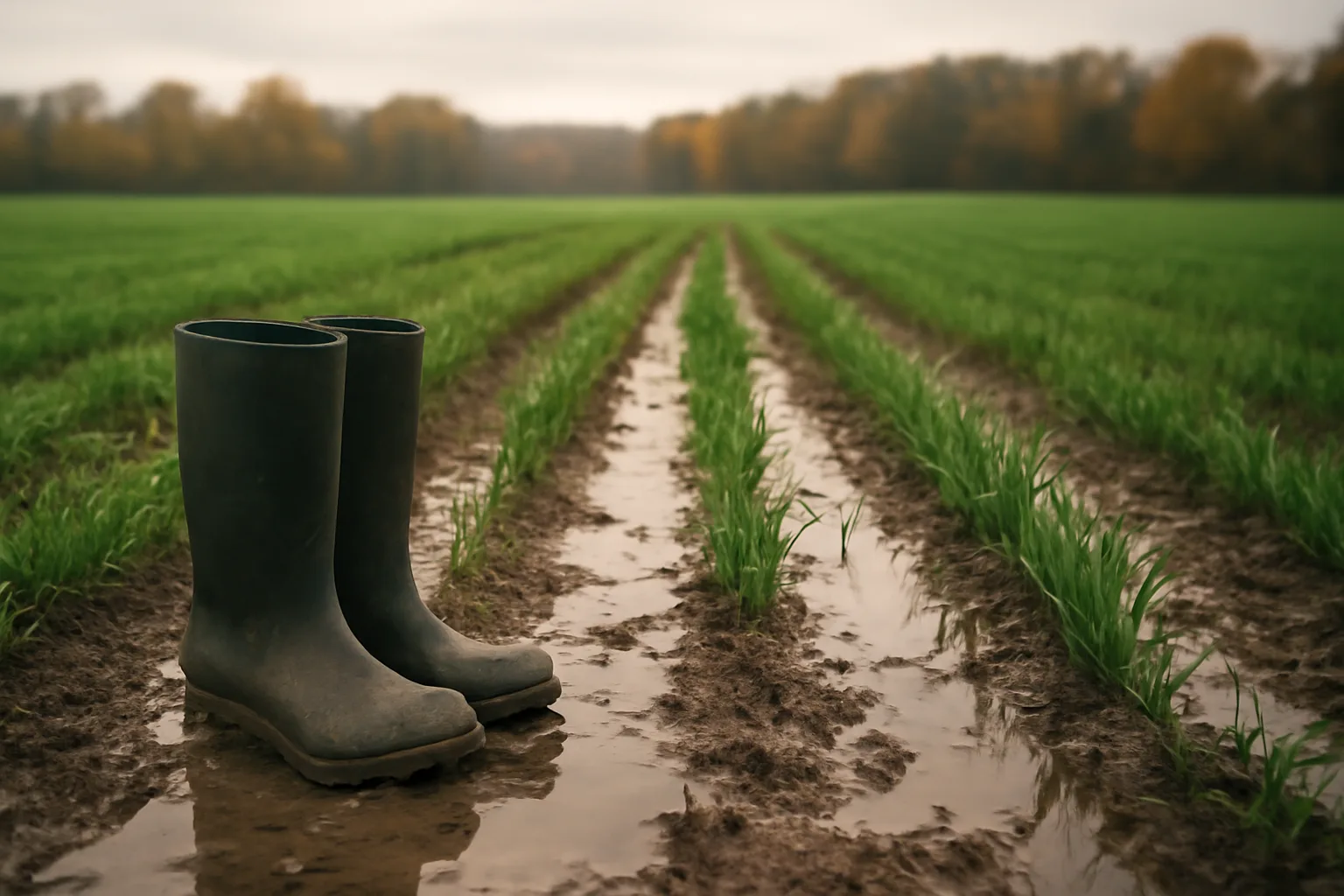
For wet or poorly drained ground, wheat, oats, and brassicas like turnips tolerate saturated soil far better than clover or beans. Winter wheat is the most flood-tolerant common food plot crop. Raised or crowned rows, drainage ditches, and planting on the shoulder above standing water beat fighting the low spot directly.
what makes a food plot 'wet' and why it matters for species choice
A wet food plot site is ground that stays saturated after normal rain, has standing water for more than a day or two, or sits on heavy clay with poor internal drainage. This is different from a site that just floods once a year during spring runoff. The distinction matters because plant roots need oxygen, and waterlogged soil pushes oxygen out of the pore space. Roots suffocate. Most legumes (clover, beans, peas) show yellowing and root rot within days of saturation. Soil scientists call this a drainage class problem. USDA's Natural Resources Conservation Service maps soil drainage classes (well drained, moderately well drained, somewhat poorly drained, poorly drained, very poorly drained) on the Web Soil Survey for essentially every farm and hunting property in the country. Before you buy a single bag of seed, pull up your plot on the Web Soil Survey and read the drainage class. It will tell you more about what will actually grow than any seed bag ever will. Grasses and small grains (wheat, oats, rye) tolerate short-term saturation much better than legumes because their root architecture is more fibrous and they can push new roots up into oxygenated soil after water recedes. Brassicas fall in between: turnips and radishes handle wet soil reasonably well once established, but they hate wet soil at germination.
do deer eat sorghum
Yes. Deer eat grain sorghum (milo), both the standing seed heads in fall and the leaves earlier in the season, though it's more of a fall/winter grain and cover crop than a preferred summer forage. Sorghum is drought tolerant and also handles wetter, heavier soils better than corn does, which makes it a reasonable option for transition ground that's wet in spring but dries out by summer. The catch: sorghum isn't a top-tier deer food plot choice on its own. Deer will eat it, especially in late fall and winter when the grain heads mature, but most whitetail research and extension guidance rank it below corn, soybeans, and brassicas for pure attraction and nutrition [1]. It works best mixed into a diverse fall blend or used as a nurse crop for wildlife plots on marginal ground where corn would drown out.
do deer eat clover and do deer like clover
Yes, whitetail deer readily eat clover, and it's one of the most consistently preferred forages in food plot research across the whitetail's range. Clover regrows after grazing, stays in vegetative growth much of the season, and its crude protein content commonly runs 25 to 30 percent in vegetative growth stages, well above what deer need for antler growth and lactation [2]. The problem for wet ground is root rot. White clover and red clover both need well drained to moderately well drained soil. Standing water for more than 24 to 48 hours during the growing season will kill established clover stands, and saturated soil at planting will rot the seed before it germinates. If your plot has a wet toe (the low, mucky edge where water collects), plant clover on the drier shoulder of that plot and save the low spot for wheat or a brassica instead. For plots that are seasonally wet but drain well by early summer, clover can still work if you delay planting until the ground firms up. Just don't fight standing water with clover seed. You'll lose that fight almost every time.
what is a food plot
A food plot is a planted patch of forage, usually somewhere between a quarter acre and several acres, established specifically to feed and attract deer or other wildlife on hunting property. Unlike a farm field grown for commercial harvest, a food plot's whole purpose is nutrition and hunting opportunity: it might be planted in annual clover, brassicas, cereal grains, corn, or soybeans depending on the season and soil. Most states allow food plots without a permit on private land, but a growing number regulate them under baiting and feeding rules once the plot crosses certain size or density thresholds, or if it's harvested and piled rather than left standing. Always check your state wildlife agency's baiting and feeding regulations before planting, since rules vary a lot state to state. Some states, including Michigan, have tightened feeding restrictions in areas with confirmed chronic wasting disease. Michigan's Wildlife Conservation Order restricts baiting and feeding of deer statewide, with narrower exceptions, and the agency updates the specific restricted zones as CWD surveillance results come in.
what are deer's favorite foods, and does that change on wet ground
Deer preference studies consistently rank a short list at the top: acorns (especially white oak family acorns), soybeans, clover, and other legumes, followed by brassicas and cereal grains later in fall [3]. Corn ranks lower in raw nutrition and preference than most hunters assume. It's mostly a fall/winter energy source once the grain matures. On wet ground, this preference list doesn't change. Deer still want the same high-protein legumes and mast they'd want anywhere else. What changes is what you can actually grow. You're not picking a different diet for deer on wet soil, you're picking the best available substitute crop that survives your site conditions. Wheat and oats aren't a deer's first choice on a preference test, but they'll get eaten hard in fall and winter, and they're a lot better than a drowned-out clover stand that never establishes. A hunter with a genuinely wet plot is usually better off maximizing tonnage and reliability with wheat, oats, or a brassica blend than chasing a marginal preference edge with a legume that has a real chance of failing outright.
best food plot species ranked for wet, poorly drained soil
| Winter wheat | Best | Handles short-term flooding well, standard cover crop on wet farm ground | |
|---|---|---|---|
| Oats | Very good | Fast growing, tolerates wet fall soil, winterkills in most zones | |
| Cereal rye | Very good | Most cold and wet tolerant cereal grain, grows on nearly any soil | |
| Turnips/brassicas | Moderate | Fine once established, seed rots in saturated soil at planting | |
| Winter peas | Moderate | Better than most legumes but still dislikes standing water | |
| Soybeans | Poor | Root rot (Phytophthora) is a major problem in wet, poorly drained fields [5] | |
| Clover (white/red) | Poor to moderate | Needs well drained to moderately well drained soil | |
| Corn | Poor | Shallow root system, very intolerant of saturated soil early season | Wheat and cereal rye are the two crops I'd plant first on a genuinely wet plot. They're cheap and forgiving. |
Here's how the common food plot species stack up for wet ground tolerance, based on USDA cover crop guidance and land-grant extension forage research [4] [1]. | Species | Wet soil tolerance | Notes |
when to plant oats for deer
Plant oats in late summer to early fall for a fall/winter deer food plot, typically 60 to 90 days before your average first hard frost. In most whitetail range that lands somewhere between mid-August in northern states and mid-September to early October in the South. Oats germinate fast, often within 5 to 10 days in warm soil, and put on a lot of green forage quickly, which is exactly what you want on wet ground where you may have missed an earlier planting window because the field was too muddy to work. Oats generally winterkill once temperatures drop into the low 20s Fahrenheit for extended periods, so in northern states they act as an annual fall attractant rather than a plant that carries into spring. In the South and mid-South they can survive milder winters and keep producing into late winter. A practical wet-ground tip: don't drill oats into standing water or mud. Wait for the surface to firm up enough to support equipment, even if that pushes you a week or two past your ideal date. A late-planted stand that actually germinates beats an on-time planting that rots.
when to plant turnips for deer
Plant turnips 60 to 90 days before your first killing frost, which usually means late July through August in northern states and late August into September in the transition zone and South. Turnips need that lead time to bulb out and build sugar content, which is what makes them attractive to deer after a few frosts convert starches to sugars. On wet ground, timing gets trickier. Turnip seed is tiny and shallow planted, and it rots fast in saturated soil. If your low ground is still wet in late July from spring rain, wait for a dry window, even a short one, rather than planting into mud. Once turnips are established with a few true leaves, they handle occasional wet spells fine. It's really just the germination window that's fragile. A lot of hunters blend turnips with wheat or oats in the same plot. The cereal grain germinates fast and holds soil structure, and the brassica fills in behind it. That blend approach also hedges your bet: if the brassica seed rots in a wet spell, you still have a wheat stand carrying the plot.
when to plant food plots for deer, and how wet ground changes the calendar
Food plot timing splits into two windows almost everywhere in whitetail country: spring/summer plantings (clover, soybeans, warm season annuals) go in after your last frost date, and fall plantings (brassicas, cereal grains, clover overseed) go in 60 to 90 days before your first fall frost [6]. Your local land-grant extension office publishes exact frost date ranges and planting windows for your county, and that's the single best resource for nailing your dates. Wet ground shifts this calendar in a specific way: low spots and clay bottoms dry out later in spring than the rest of the field, sometimes by two to four weeks. If you plant your wet plot on the same calendar date as your upland plot every year, you're probably planting into mud some years and wondering why the stand failed. Watch the actual field condition, not the calendar. Wait until you can walk across the plot without your boot sinking past the sole before you run equipment or broadcast seed. In fall, wet ground can actually work in your favor: cooler, damp soil holds moisture better through a dry September, which helps brassica and cereal grain germination in years when upland plots are struggling for rain.
does honey attract deer, and do deer like sweet foods
Deer are drawn to sugar and readily eat sweet foods like apples, persimmons, and frosted brassica bulbs, but there's no real evidence that raw honey specifically attracts deer or that hunters use it as a food plot additive. This one comes up a lot in forums, and it's mostly a myth with no research behind it. Deer aren't seeking out honey in the wild, and there's no meaningful bee-produced honey source available to browsing deer in most habitats anyway. What is real: deer preference for sugar shows up clearly in the frost-sweetened brassica effect. Turnips and radishes convert stored starches to sugars after a hard frost, which is why deer often ignore a brassica plot in October and hammer it in December [6]. That's a documented physiological response, not folklore, and it's one more reason brassicas are a smart fall pick on wet ground: they get more attractive later in the season, right when gun seasons are running in most states.
how to physically improve a wet food plot site
Species selection only gets you so far. If a plot floods for a week every spring, no seed choice fixes that. You need to change the ground. Crown the rows. On a drill or disc, running slightly raised beds or crowned rows lets water shed to the furrows instead of sitting on the seed row. This is standard practice on wet farm ground in the Midwest and Delta and it works just as well on a half-acre hunting plot. Cut a shallow drainage ditch along the low edge of the plot, angled to daylight or a natural drain. Even a foot-deep ditch dug with a small tractor or by hand can pull standing water off a plot fast enough to save a stand. Plant the shoulder, not the bowl. If part of your plot is a true bowl that holds water, don't fight it. Just plant your seed on the higher ground around it and let the bowl stay in native grass or go unplanted. You'll get more usable, productive acres than trying to force a stand in the wettest six inches of the field. Add organic matter and avoid heavy equipment traffic when the ground is wet. Compaction from a tractor or ATV on saturated clay makes drainage worse for years, more than that season. If you can, work the plot only when it's dry enough to avoid leaving ruts. Your soil test will also flag pH and compaction issues that make wet ground even less forgiving. Heavy, poorly drained clay soils often run more acidic and benefit from lime, but the amount depends entirely on your test results. Treat your soil test lab's recommendation as the final word on lime and fertilizer rates, not a generic chart.
a simple wet-ground planting plan that actually works
If you want one low-risk plan for a genuinely wet plot: plant a blend of winter wheat or cereal rye with a brassica (turnip or radish) 60 to 90 days before your first fall frost, drilled or broadcast only after the ground has firmed up enough to walk without sinking. Skip clover and soybeans on the wettest ground entirely, and save those for the drier shoulders of the property. This isn't a guarantee of deer activity or a specific harvest. Soil, rainfall, and local deer density all affect outcomes, and no article or seed blend can promise results on your specific ground. But wheat/rye plus brassica is about as forgiving a combination as exists for wet soil, and it's cheap enough that a failed attempt doesn't sting much. If you want a plan built around your actual soil test numbers, acreage, and region rather than a generic species list, PlotSeason's $99 one-time Custom Food Plot Plan walks through your specific site conditions, including wet or poorly drained ground, and builds a planting plan around it. It's general planning guidance built from your inputs, not a site visit or a substitute for your soil test lab's fertility recommendations. For more on matching species to site conditions generally, see our guides on food plot whitetail strategy, choosing deer food plot seed, and building out full deer food plots plans across a property with mixed soil types.
Frequently asked questions
Do deer eat sorghum in food plots?
Yes, deer eat grain sorghum (milo), especially the mature seed heads in fall and winter. It's not a top preference food compared to soybeans or clover, but it tolerates wet, heavy soil better than corn and works well in fall blends on transition ground.
Do deer like clover, and will it grow on wet ground?
Deer strongly prefer clover, with crude protein often 25 to 30 percent in vegetative growth. But clover needs well drained to moderately well drained soil and will rot in standing water, so it's a poor choice for the wettest part of a plot.
When should I plant food plots for deer?
Spring/summer forages go in after your last frost date; fall forages like brassicas and cereal grains go in 60 to 90 days before your first fall frost. Check your land-grant extension office for exact county frost dates, and on wet ground, wait for the soil to firm up rather than planting by calendar date alone.
When is the best time to plant oats for deer?
Plant oats 60 to 90 days before your first hard frost, roughly mid-August in northern states and mid-September into October farther south. Oats germinate fast and typically winterkill in the low 20s Fahrenheit, making them a strong annual fall attractant.
When should I plant turnips for deer?
Turnips go in 60 to 90 days before your first killing frost, generally late July through September depending on latitude. They need that time to bulb and sweeten after frost. On wet ground, wait for a dry window since turnip seed rots fast in saturated soil.
What is a food plot?
A food plot is a planted area, usually a quarter acre to several acres, established on hunting or wildlife land specifically to feed and attract deer or other wildlife. It differs from farm cropland in purpose: nutrition and hunting opportunity rather than commercial harvest.
What are deer's favorite foods?
Preference research consistently ranks acorns (especially white oak types), soybeans, and clover at the top, with brassicas and cereal grains following closely in fall and winter. Corn ranks lower in nutrition and preference than most hunters assume.
Do deer like honey?
There's no research or field evidence that honey attracts deer specifically. Deer do respond to sugar, most notably in frost-sweetened brassica bulbs after starches convert to sugars, but honey itself isn't a documented deer attractant or food plot additive.
What's the single best food plot crop for wet or poorly drained soil?
Winter wheat and cereal rye top the list. Both tolerate short-term saturation far better than clover, soybeans, or corn, germinate reliably in cool damp soil, and are commonly used on wet farm ground for exactly that reason.
Can I plant soybeans in a wet food plot?
It's risky. Soybeans are prone to Phytophthora root rot in poorly drained, saturated soil, and a wet spring can wipe out a stand before it establishes. Save soybeans for the better-drained sections of your property and use wheat or brassicas on the wet ground.
How do I know if my food plot soil is actually poorly drained?
Pull up your property on USDA's Web Soil Survey tool, which maps official soil drainage classes for nearly every parcel in the country. Look for 'poorly drained' or 'very poorly drained' ratings, or simply watch how long water stands after a heavy rain.
Are there baiting or feeding law issues with food plots on wet ground?
Food plots themselves are generally legal and treated as habitat management, not baiting, in most states. But rules on feeding, mineral sites, and standing versus harvested crops vary by state, especially where chronic wasting disease concerns have tightened regulations. Check your state wildlife agency's current rules before planting or hunting over one.
Sources
- USDA NRCS Plant Fact Sheet, White Clover (Trifolium repens): Crude protein content of clover in vegetative growth stages
- Purdue University Extension, Food Plots for Wildlife (FNR-228-W): Definition and purpose of food plots as a wildlife habitat management tool
- Michigan Department of Natural Resources, Wildlife Conservation Order Amendments on Deer Baiting and Feeding: State-level baiting and feeding restrictions tied to chronic wasting disease
- Michigan State University Extension, What Do White-Tailed Deer Eat?: Ranking of acorns, soybeans, and clover among preferred whitetail deer foods
- USDA NRCS, National Plant Materials Program, Cover Crop Species Guide: Wet soil and flood tolerance characteristics of winter wheat and cereal rye
- Crop Protection Network, Phytophthora Root and Stem Rot of Soybean: Soybean susceptibility to Phytophthora root rot in poorly drained, saturated soils
- University of Tennessee Extension, PB1769: Establishing and Managing Wildlife Food Plots: Recommended planting windows (60-90 days before frost) for oats, turnips, and fall brassica blends