Last updated 2026-07-26
TL;DR
The best food plot minerals supply sodium, phosphorus, and calcium, since those are what a deer's body actually runs short on, especially in spring and lactation. A soil test guides your plot fertility (lime, P, K); a mineral site is separate and legal only where your state allows supplemental feeding or minerals, so check your state wildlife agency rules first.
What is a food plot, and how is it different from a mineral site?
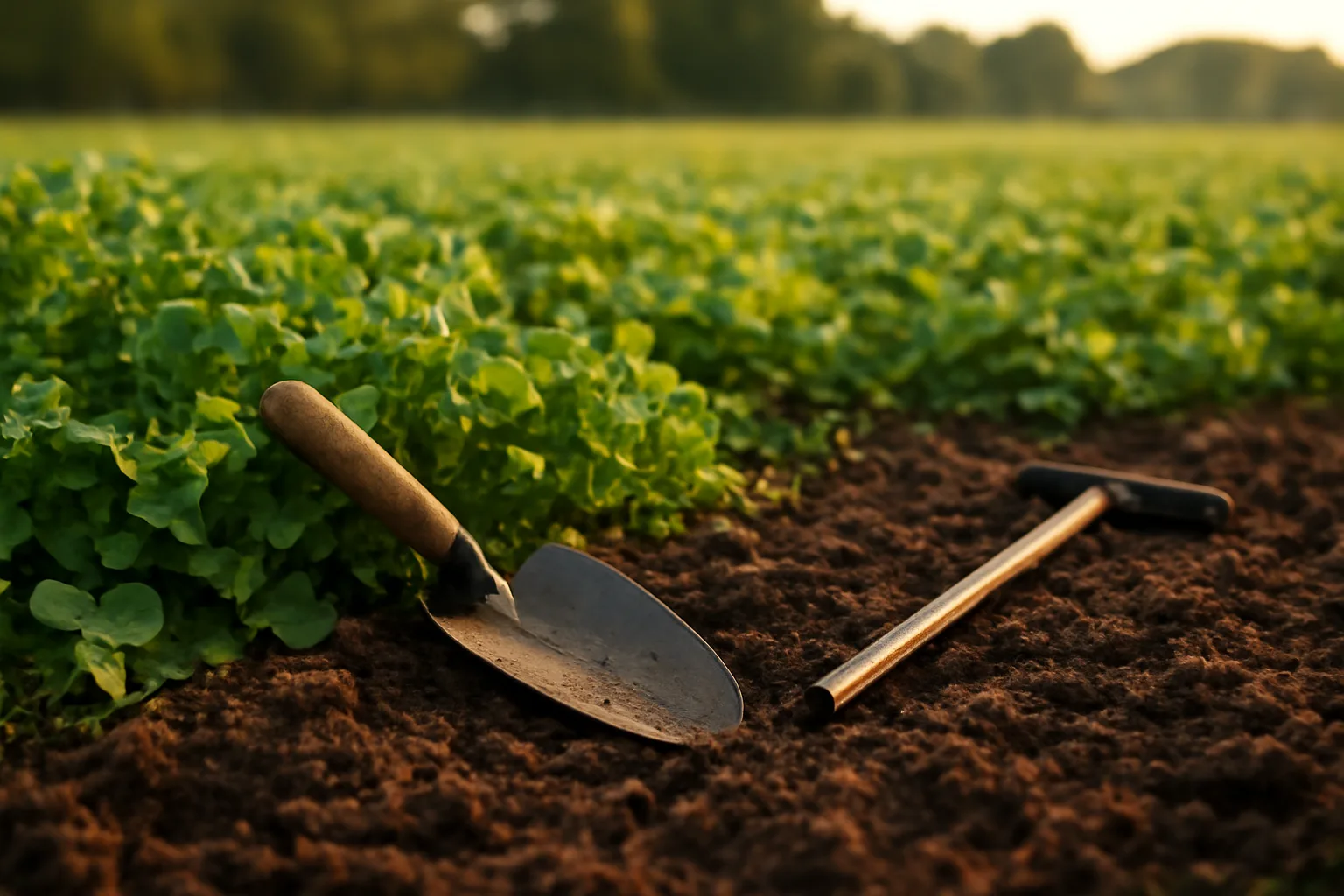
A food plot is a planted area, usually a quarter acre to a few acres, seeded with forage like clover, brassicas, cereal grains, or a blend, meant to feed deer through part or all of the year. A mineral site is a small, static spot where you put out a salt or mineral mix, usually granular or block form, that deer lick directly from the ground or a feeder. They solve different problems. A food plot grows tonnage. A well-fertilized clover plot can produce over 2 tons of dry matter forage per acre per year under good management, consistent with forage clover yield data published by university agronomy extension programs [1]. A mineral site does not feed deer volume-wise at all. It supplies trace elements and salt that deer crave but can't get enough of from browse alone, especially sodium. So when people ask about "food plot minerals," they're really asking two different things, often without realizing it: what do I put in the soil to grow a better plot (fertility), and what do I put out to supplement wild deer's diet directly (mineral licks). Both matter. They just don't overlap the way marketing sometimes implies. If you're building your first plot, start with the plot itself. Species selection and soil work will move the needle more than any bag of mineral you scatter nearby. For a broader look at species and setup, see food plot whitetail and deer food plots.
What minerals do deer actually need, and which ones matter most?
Sodium is the one deer chase hardest, especially in late spring and summer when does are lactating and bucks are growing antlers. Deer in most of the whitetail's range live in sodium-poor soils inland from the coast, and research on mineral lick use consistently points to sodium as the primary driver of visitation, not calcium or phosphorus as many hunters assume. A study of white-tailed deer mineral lick use published in the Journal of Wildlife Management found sodium concentration was the strongest predictor of lick visitation among the minerals tested, well ahead of calcium, phosphorus, or magnesium (Weeks and Kirkpatrick, 1976, J. Wildl. Manage. 40(4):610-625) [2]. That finding has held up in field observations ever since: deer travel out of their way for salt in a way they don't for other minerals. Phosphorus and calcium matter too, particularly for antler growth and lactation, but deer get a meaningful amount of both from forage and bone. Bucks resorb calcium and phosphorus from their own skeleton during rapid antler growth when dietary intake falls short, a mechanism documented in deer physiology research on antler mineralization [3]. Magnesium, potassium, copper, zinc, and selenium show up in commercial mineral mixes too. There's not strong field data showing these micronutrients change antler size or fawn survival in a measurable way for wild, free-ranging deer, as opposed to controlled pen studies. Treat mixes heavy on trace minerals as a nice-to-have, not something with proven return. Bottom line on ingredients: sodium chloride (salt) is the workhorse. Look for mineral mixes where salt is the first or second ingredient, not buried at position seven behind a long list of trace additives you're paying extra for.
Do mineral sites even matter if my soil and plot fertility are already good?
Yes, but they're doing a different job. Good soil fertility grows more forage tonnage and better plant nutrition per acre. It does not deliver the concentrated sodium a mineral lick does, because most forage species, including clover and brassicas, are naturally low in sodium regardless of how well-limed and fertilized the ground is. This is why a soil test is still your first move, not your mineral order. A soil test from your local land-grant extension lab (most run $10 to $20 per sample) tells you your pH, phosphorus, and potassium levels, and from there the lab's recommendation is the actual authority on how much lime and fertilizer to add, not a mineral bag label [4]. Get that test done before you spend money on anything else. Once your plot fertility is dialed in from the soil test, a mineral site is a separate, complementary tool, not a replacement. Where it's legal, it draws deer into a pattern and gives you camera intel on what's using your property, plus it may genuinely help does and growing bucks get sodium they can't source from browse or plot forage.
Is putting out mineral legal on my land? Baiting and feeding rules vary hard by state
This is the part hunters skip and shouldn't. Whether a mineral site counts as "baiting" or illegal supplemental feeding depends entirely on your state, and the rules are genuinely inconsistent from one side of a state line to the other. Some states, like Texas, allow supplemental feeding and mineral use broadly outside of specific disease-management zones. Other states ban mineral and feeding outright, or ban it only during hunting season, or ban it only in certain counties due to chronic wasting disease (CWD) concerns. Wisconsin prohibits baiting and feeding of deer statewide in any county where CWD has been found within the last 10 years, under Wis. Stat. section 29.038 and its implementing rules, which give the department authority to ban feeding in affected counties [5]. Michigan has similarly tightened feeding and mineral rules in response to CWD; the state's Natural Resources Commission order on deer feeding and baiting restricts the practice in the Lower Peninsula and in defined CWD management zones [6]. CWD is the real reason for the patchwork. Concentrating deer at a mineral lick, the same way they concentrate at a bait pile, increases nose-to-nose and saliva contact, which is a plausible transmission pathway for CWD prions, and state agencies cite that risk directly when they restrict mineral use. If your state or county has CWD detections, do not assume last year's rule still applies. Check your state wildlife agency's current regulations before you buy or place anything, every single season, because these rules change year to year as new CWD cases turn up.
When should I put out mineral, and does timing matter?
Late winter into early summer is when mineral use by deer is highest, because that's when does are pulling calcium and phosphorus reserves for late pregnancy and lactation, and bucks are starting antler growth, which is heavily bone-mineral dependent. Many hunters set mineral sites in March or April and refresh through July, then let them go quiet by late summer as natural forage and mast come on. This timing lines up with food plot planning too. If you're already out prepping ground for spring planting, a mineral site refresh is a logical add-on to the same trip, not a separate project. Don't expect mineral to do much in October and November. By then deer are keyed on calories (acorns, standing crops, brassica tubers) not trace minerals, and most state feeding restrictions that do exist tend to target the fall and winter hunting season specifically anyway.
When should I plant food plots for deer?
Timing depends entirely on what you're planting and your climate zone, but the two big windows are early spring (April to May in the North, March in the South) for warm-season plots, and late summer to early fall (mid-August to mid-September in the North, September into October further south) for cool-season plots like clover, brassicas, and cereal grains. Cool-season perennials and brassicas need enough soil moisture and cooling temperatures to establish before frost slows growth, and most extension guidance recommends getting brassicas in the ground 60 to 90 days before your first hard frost so they have time to bulb and reach peak palatability . Miss that window and you get small plants that never really produce tonnage before winter. Warm-season plots (soybeans, cowpeas, sorghum, corn) go in after your last frost date, generally May in most of the whitetail belt, same as row-crop agriculture timing in your area. Check your local extension office's frost date charts, since "May" in Georgia and "May" in Wisconsin are not the same calendar. If you want a plan built around your specific zone, latitude, and soil test results instead of a generic calendar, that's exactly what a Custom Food Plot Plan does. It's a $99 one-time plan at /plot-plan-builder that turns your soil test and location into an actual planting schedule instead of a guess.
Do deer eat clover, and do they actually like it?
Yes, clover is one of the most consistently preferred food plot forages across whitetail range, and it's also one of the most forgiving to grow. White clover and red clover both show up at the top of deer preference studies and extension planting guides for a reason: they're high in protein, often 20 to 25% crude protein in vegetative growth stage, and they regrow after grazing pressure instead of dying out like an annual would . Clover's real advantage is duration. A well-maintained clover stand can produce forage for three to five years before you need to reseed, as long as you're mowing to control weeds and maintaining pH near 6.0 to 6.5 based on your soil test [1][4]. That's a big deal compared to annual plots you replant every single year. The tradeoff is establishment. Clover needs decent soil contact, correct pH, and it's slow the first year. It also goes semi-dormant in the hottest part of summer in the South and stops growing under snow cover up North, so most hunters pair it with a fall annual (brassicas or cereal grain) to cover the gaps. For seed selection specifics, deer food plot seed and food plot seed break down blend options.
When should I plant oats for deer, and are they worth it?
Oats go in late summer to early fall for most of the country, typically August to September in the North and September into October in the South, timed so they establish before the first hard frost but still deliver fresh, tender growth right as bow season opens. Oats are a cool-season annual grain that deer hit hard the moment it germinates, often before anything else in a mixed plot, because young oat shoots are tender and high in sugar. The catch with oats is winterkill. Standard oat varieties die at temperatures below about 20 degrees F, so in the northern half of the whitetail's range oats function as an early-fall attractant plot, not a winter food source. Southern hunters get more mileage out of them since hard freezes come later and less often. Most hunters plant oats blended with something else, brassicas, winter peas, or a cereal rye/wheat mix, rather than pure oats alone, because a straight oat plot burns out fast once deer key on it in October and there's nothing left standing by December.
When should I plant turnips for deer, and when do they actually get eaten?
Turnips go in the ground roughly 80 to 90 days before your area's first expected hard frost, which puts most planting windows in the July to August range further north and August into September further south. That timing is deliberate: turnips need those weeks to bulb out and build sugar before deer start hitting them hard. Here's the part that surprises new plotters: deer often ignore turnip bulbs and foliage completely in September and October, then hammer them in December and January. Cold snaps convert starches in the bulb to sugars, making them sweeter and more palatable, so turnip plots often look untouched in bow season and get eaten to dirt by late winter . If you're planting turnips expecting an October magnet, you'll be disappointed; plant them expecting a January food source instead. Brassica blends (turnips plus rape or radish) are common for exactly this reason, they stagger palatability across the season instead of everything peaking at once.
Do deer eat sorghum, and is it worth planting?
Yes, deer eat sorghum, both the grain heads and the young foliage, and it's planted as a warm-season option mostly for its drought tolerance and use as cover or a grain source into fall and winter. Grain sorghum handles dry, marginal soils better than corn does, which is why it shows up in food plot mixes for the drier parts of the whitetail's range, the Southern Plains and parts of the Midwest especially. Deer preference for sorghum is real but it's not top-tier compared to soybeans, corn, or a good brassica blend when all are available at the same time. Sorghum tends to get used more as a fallback and screening crop (it grows tall and thick, which doubles as bedding or approach cover) than as the primary draw in a plot. If your main goal is tonnage deer will prioritize, sorghum is a reasonable secondary planting, not your headline species. Whitetail research and deer-specific plot guidance generally rank soybeans and standing corn higher for fall/winter energy content than sorghum, though sorghum's drought tolerance earns it a spot in mixes for dry-summer regions where corn struggles without irrigation.
What are deer's favorite foods, ranked by what the data actually shows?
| Acorns (white oak group especially) | Fall | High fat and carb content, low tannin in white oaks | |
|---|---|---|---|
| Soybeans (forage stage) | Summer | High protein, roughly 28-30% crude protein in vegetative stage | |
| Clover | Spring through fall | Consistent protein, regrows after grazing [1] | |
| Brassica bulbs (turnips, radish) | Late fall/winter | Sugars concentrate after frost | |
| Standing corn | Fall/winter | High energy density for cold-weather calories | |
| Native browse (forbs, woody stems) | Year-round baseline | Always available, lower quality than crops | Acorns, when available, generally out-compete anything you plant. Research on white-tailed deer food habits, including classic work compiled through USDA Forest Service oak regeneration and wildlife studies, notes deer will bypass planted forage for acorns in good mast years, which is worth remembering before you assume your plot failed just because deer traffic dropped in October. It's not your plot. It's a good acorn crop doing what it does. Beyond acorns, soybeans and clover are the two most consistently preferred planted forages across the whitetail's range, backed by both preference trials and crude protein testing . For a full species-by-species breakdown, species and strategy resources cover regional variation in more depth. |
There's no single universal ranking, because preference shifts by season, region, and what's locally available, but a few patterns hold up across studies and extension forage trials. | Food source | Season of peak use | Why deer prioritize it |
Do deer like honey, and does it belong in a food plot or attractant setup?
Deer don't seek out honey the way they seek out salt or fresh browse, and there's no wildlife research supporting honey as a meaningful deer attractant or food source. Deer are herbivores adapted to browse, forbs, mast, and forage crops; honey isn't part of their natural diet or foraging behavior in any documented way. What you're probably thinking of is commercial deer attractant products flavored or scented with sweeteners, molasses being one of the more common ones, added to mineral or feed mixes to increase palatability and visitation at a site. Molasses-based additives do show up in commercial mineral products, and anecdotally hunters report increased visitation, though there's limited independent research quantifying how much of that increase is the sweetener versus the sodium already doing the real work. If you're deciding where to spend money, put it in soil fertility and seed, not novelty attractant flavors. A good clover or brassica plot, grown on properly limed and fertilized ground, will out-draw a honey or molasses gimmick every time, and it feeds deer for months instead of one visit.
How do I actually decide what to buy, mineral or plot inputs, with a limited budget?
Spend your first dollars on a soil test, then lime and fertilizer per that test's recommendation, then seed. That order matters because a $15 soil test can tell you your plot needs 2 tons of lime per acre before fertilizer even matters, and skipping that step wastes money on fertilizer that won't be available to plants in acidic soil [4]. Mineral sites come after your plot is planned, not before, because they solve a different problem (trace sodium supplementation for wild deer) than plot fertility solves (growing tonnage of forage). Budget a mineral site as a small add-on, not a substitute for a real plot. If you want the whole thing mapped out at once instead of guessing at each step, that's the exact gap a Custom Food Plot Plan fills. For $99, one time, you get a plan built around your soil test results, your zone, and your acreage at /plot-plan-builder, instead of piecing together generic advice from five different sources. Your soil test lab is still the final word on lime and fertilizer rates; the plan works from those numbers, it doesn't override them. For seed and species specifics once your plan is set, domain food plot seed and deer for food round out the planning picture.
Frequently asked questions
Do deer eat sorghum?
Yes. Deer eat both grain sorghum heads and young foliage, and it's a reasonable warm-season option in dry regions where corn struggles without irrigation. It ranks below soybeans, corn, and brassicas in most preference comparisons, but its drought tolerance and cover value make it a useful secondary planting rather than a top attractant crop.
Do deer eat clover?
Yes, clover is one of the most consistently preferred food plot forages across whitetail range. White and red clover run 20-25% crude protein in vegetative growth and regrow after grazing, unlike annuals that get grazed out. A well-managed stand can produce forage for three to five years before needing reseeding.
When to plant deer food plots?
Cool-season plots (clover, brassicas, cereal grains) go in mid-August to mid-September in the North, September into October further south. Warm-season plots (soybeans, corn, sorghum) go in after your last spring frost, generally May in most of the whitetail belt. Exact timing depends on your local frost dates and your extension office's zone guidance.
Do deer like clover?
Yes, clover ranks near the top of preferred food plot forages across most of the whitetail's range, thanks to its high protein content and long growing season compared to annuals. It's also low-maintenance relative to annual replanting, though it needs correct soil pH (roughly 6.0-6.5) and periodic mowing to stay productive.
When to plant oats for deer?
Plant oats in late summer to early fall, roughly August to September in the North and September into October in the South, so they establish before the first hard frost. Oats winterkill below about 20 degrees F, so in cold climates they work as an early-fall attractant rather than a winter food source.
When to plant food plots for deer?
Plant cool-season forages 60 to 90 days before your area's first hard frost, and warm-season crops after your last spring frost. Exact dates shift by latitude, so check your local land-grant extension office's frost date charts rather than relying on a single national calendar.
When to plant turnips for deer?
Plant turnips 80 to 90 days before your first expected hard frost, usually July to August in northern zones and August into September further south. Deer often ignore turnip bulbs in early fall and don't hit them hard until after a few frosts convert starches to sugars, typically December and January.
What is a food plot?
A food plot is a planted area, from a quarter acre to several acres, seeded with forage like clover, brassicas, cereal grains, or beans, meant to feed deer through part or all of the year. It's different from a mineral site, which supplies salt and trace minerals rather than bulk forage.
What are deer's favorite foods?
Acorns, especially white oak acorns, generally top the list when available, followed by soybeans, clover, and brassica bulbs after frost. Preference shifts by season and region: deer prioritize protein-rich forage in summer and high-energy, high-fat food sources like acorns and standing corn as winter approaches.
Do deer like honey?
No, there's no evidence deer seek out honey as a food source or attractant. What people usually mean is molasses or sweetener additives in commercial mineral and attractant products. Those may increase visitation somewhat, but sodium is the ingredient actually driving deer to a mineral site, not the sweetener.
What minerals should I put in a food plot mineral site?
Look for sodium chloride (salt) as the first or second ingredient on the label, since sodium is the primary driver of mineral site visitation in wild deer. Calcium and phosphorus matter for antler growth and lactation, but deer source much of that from forage and their own skeleton, so heavy trace-mineral mixes are a lower priority.
Is it legal to put out deer mineral on my property?
It depends entirely on your state, and often your specific county, especially where chronic wasting disease has been detected. Some states allow mineral and feeding broadly; others ban it outright or restrict it seasonally or near CWD-positive zones. Check your state wildlife agency's current regulations before placing any mineral or feed.
Does a soil test replace the need for food plot minerals?
No, they solve different problems. A soil test tells you the lime and fertilizer your plot soil needs to grow forage well. A mineral site supplies sodium and trace minerals directly to deer, which forage grown on even perfect soil generally can't provide in the same concentrated form.
Sources
- Weeks, H.P. and Kirkpatrick, C.M., 'Salt Preference and Sodium Drive in Phenology of Wild White-tailed Deer,' Journal of Wildlife Management 40(4):610-625, 1976: Sodium, not calcium or phosphorus, is the primary driver of deer visitation to mineral licks.
- Miller, K.V. and Marchinton, R.L. (eds.), 'Quality Whitetails: The Why and How of Quality Deer Management,' Stackpole Books, 1995, summarizing antler mineralization physiology cited in university deer management extension materials: Bucks resorb calcium and phosphorus from their own skeleton to support antler growth.
- University of Missouri Extension, Soil and Plant Testing Laboratory fee schedule: Soil tests typically cost $10 to $20 per sample and determine lime and fertilizer recommendations.
- University of Tennessee Extension, 'Brassicas for Deer Food Plots,' Publication W 346: Brassicas should be planted 60 to 90 days before the first hard frost, and cold temperatures increase bulb sugar content and palatability.
- University of Georgia Extension, Forage Soybeans for Wildlife, Publication B 1348: Forage soybeans and clover provide roughly 20-30% crude protein during vegetative growth stages.
- McShea, W.J. and Schwede, G., 'Variable Acorn Crops: Responses of White-tailed Deer and Other Mast Consumers,' Journal of Mammalogy 74(4):999-1006, 1993: Deer preferentially use acorns, especially from the white oak group, over planted forage in years of good mast production.