Last updated 2026-07-26
TL;DR
Oats, cereal rye, and brassicas like turnips tolerate acidic soil down to roughly pH 5.5 better than clover or alfalfa, which need 6.0-6.5 to fix nitrogen well. If your soil test comes back low, plant a cereal grain or brassica blend this season and apply lime now, since it takes months to move soil pH.
What is a food plot, and why does soil pH matter so much for it?
A food plot is a planted patch of forage on hunting ground, usually somewhere between a quarter acre and a few acres, meant to feed deer and other wildlife while giving hunters a predictable place to watch or hunt. People plant everything from clover and brassicas to corn and soybeans, depending on the season and the goal. Soil pH controls how much of the fertilizer you buy actually becomes available to the plant. Below pH 5.5, phosphorus starts locking up with iron and aluminum in the soil instead of feeding roots, and nitrogen-fixing bacteria that legumes depend on slow way down [1]. You can dump bags of 0-20-20 on a plot at pH 5.0 and still get a runty, yellow stand. The plant simply can't pull those nutrients out of tied-up soil. Most extension guidance points to pH 6.0 to 7.0 as the sweet spot for the legumes and brassicas food plotters plant most, including clover, chicory, and turnips, with clover in particular wanting something closer to 6.5 to nodulate well [2]. If your soil test comes back at 5.0 or 5.5, you're not stuck, but you need to pick seed that tolerates acid soil and get lime moving at the same time.
What is the best food plot seed for low pH soil?
| Cereal rye | ~5.0 | 5.5-7.0 | Most acid-tolerant common food plot seed [3] | |
|---|---|---|---|---|
| Oats | ~5.3 | 5.5-7.0 | Fast growth, winterkills in cold zones | |
| Turnips/brassicas | ~5.5 | 5.8-6.8 | Tolerant of low pH, still wants fertility | |
| Soybeans | ~5.8 | 6.0-6.8 | Needs decent pH to nodulate | |
| Clover (white/red) | ~6.0 | 6.5-7.0 | Poor nitrogen fixation below 6.0 [2] | |
| Alfalfa | ~6.2 | 6.5-7.5 | Least tolerant of acid soil | If you want a legume-heavy plot eventually, plant cereal grains or brassicas this year, lime hard, and retest in 6 to 12 months before you invest in clover seed. |
Cereal grains (oats, wheat, cereal rye) and brassicas (turnips, radishes, some kale blends) handle acidic soil noticeably better than clover, alfalfa, or most other legumes. That's the short answer. It's also the one worth acting on this season if your test came back below 6.0 and you don't want to wait a full year for lime to work. Cereal rye is probably the most acid-tolerant food plot seed people plant on purpose. It'll grow in soils down around pH 5.0, sometimes lower, and it's cheap, fast, and reliably germinates even on ground nobody has limed in years [3]. Oats are close behind and deer often prefer them to rye early in their growth, though oats winterkill in colder zones while rye stays green. Brassicas are a step down from cereal grains in acid tolerance but still handle pH in the 5.5 to 6.0 range better than clover does, and turnips in particular are forgiving of mediocre soil as long as fertility (not pH) is reasonable. Clover, alfalfa, and most true legumes are the pickiest of the bunch. They can survive at lower pH but won't fix nitrogen well, which means stunted growth and a plot that looks thin no matter how much you fertilize it. Here's a rough comparison based on general land-grant extension guidance for common food plot species: | Species | Minimum workable pH | Ideal pH range | Notes |
Do deer eat sorghum?
Yes, deer eat sorghum, both the grain heads and the young leaves, and it's a common component in fall food plot blends and wildlife seed mixes. Sorghum is also drought tolerant and grows reasonably well on marginal soil, including soil with lower pH than clover or alfalfa would tolerate, which is part of why it shows up in Southern food plot mixes. That said, sorghum isn't usually a stand-alone deer plot choice. It's more often planted as a component of a summer or fall blend alongside soybeans, cowpeas, or sunflowers, both for the grain and for the cover it provides once it matures and stands tall through winter. If your main goal is a low pH option, cereal rye and turnips will usually outperform sorghum in cold-weather regions, but sorghum earns a spot in warm-season Southern plots on acidic, sandy ground.
Do deer eat clover, and do deer actually like it?
Deer eat clover readily and most whitetail research and extension forage guides rank it among the most consistently used food plot legumes across the growing season [2]. Clover is high in protein, often tested in the 20-25% crude protein range depending on variety and cutting, and it regrows after grazing, which is why it holds up to repeated browsing better than a lot of annuals. The catch, again, comes back to soil pH. Clover wants pH 6.0 to 7.0 to nodulate properly and fix its own nitrogen, and in acidic soil it just sits there thin and yellow no matter how appealing deer would find it if it were thriving [2]. If your soil test came back low, don't plant clover yet. Lime first, plant a cover crop this season, and put clover in once your pH is corrected. It's a wait worth taking, since a well-established clover stand can produce for 3 to 5 years before you need to replant.
When should you plant food plots for deer?
Timing depends on your zone and the species, but the two big windows are spring (April through June, for warm-season plots like soybeans, clover, and sunflowers) and late summer to early fall (July through September, for cool-season plots like brassicas, cereal grains, and clover overseeding). Most state wildlife agencies and extension services publish planting calendars broken out by frost dates rather than fixed dates, because a single calendar date doesn't work across zones. As a rough guide, cool-season annuals like brassicas and cereal grains go in 6 to 10 weeks before your area's average first frost, so the seed has time to establish before growth slows. Spring/summer plots go in after your last frost date, once soil temperatures warm enough for germination. Your state wildlife agency or local extension office publishes frost date maps that are far more useful than a generic calendar, since first frost can vary by 4-6 weeks across a single state.
When should you plant oats for deer, and turnips for deer?
Oats are typically planted in late summer to early fall, 60 to 90 days before your first hard frost, so they have time to grow into an attractive, leafy stand before cold weather. In most of the Midwest and Upper South, that lands somewhere between mid-August and mid-September; further south, growers can push into October. Oats can also go in as a spring cover crop, but fall plantings are far more common for deer attraction because deer favor the tender fall growth. Turnips follow a similar fall-planting logic but need a slightly longer runway, generally 80 to 100 days before your first hard frost, since you're growing both a root bulb and leafy top growth. Plant too late and you'll get thin greens with no bulb development; plant too early in warm soil and you risk disease pressure and bolting. A lot of food plotters plant a brassica blend (turnips, radishes, rape) in early to mid-August in northern zones and into early September further south. Both oats and turnips tolerate lower soil pH better than clover, which is part of why they're a smart fallback plot while you wait on lime to raise your pH.
What are deer's favorite foods, and does that change anything for low pH ground?
Deer preference studies and extension forage rankings consistently put acorns, soybeans, clover, and native browse near the top of whitetail diet preference, with agricultural crops like corn and soybeans dominating intake where available [2]. Preference shifts by season: acorns and browse matter more in fall, while lush legumes and forbs matter more in spring and summer. Here's the honest tension for low pH ground: deer's favorite foods (clover, soybeans, alfalfa) are exactly the species that struggle most in acidic soil. You can't out-plant chemistry. A thriving oat or brassica plot that deer readily eat will out-produce a struggling clover plot that deer would prefer in theory but that's barely growing. Match the seed to the soil you actually have, not the seed deer would pick in a perfect world, and correct the pH over time so you can eventually plant what they like best.
Do deer like honey, and does it belong in a food plot at all?
Deer aren't drawn to honey itself in any meaningful food plot sense, and it's not a wildlife feed or attractant recommended by any extension or wildlife agency source. Some commercial deer attractant sprays and mineral products include sweeteners or molasses-based ingredients, which is likely where the honey association comes from, but that's a scent/bait product question, not a food plot seed question. More importantly, using bait, feed, or attractant products (including sweetened minerals) to draw deer is illegal in a meaningful number of states, and legal in others only outside of hunting season or with restrictions on distance from a stand. Rules vary a lot: some states ban baiting outright for disease concerns (particularly CWD), others allow it with limits. Check your state wildlife agency's regulations before using any attractant, mineral, or bait product, since a food plot itself is generally legal but supplemental feed or bait piles often are not treated the same way under state law.
How do you fix low pH soil before or while planting a food plot?
Get a soil test first. It's the only way to know how much lime you actually need, and guessing wastes money either way, either by under-liming and staying acidic or over-buying lime you didn't need [1]. Most state extension soil labs run a basic test for $10 to $20 and will hand back a lime and fertilizer recommendation in pounds per acre, more than a pH number. Agricultural lime (calcium carbonate) is the standard fix, and extension guidance typically recommends applying it months before planting because lime works slowly, often taking 6 to 12 months to fully react through the soil profile, especially if it's not tilled in [1]. If your test calls for a heavy lime rate, over 2 tons per acre, most agronomists recommend splitting it into two applications a year apart rather than dumping it all at once, since extremely high single doses don't react proportionally faster and can be hard to work into the soil evenly. While lime is working, plant something acid-tolerant this season instead of waiting a year with bare dirt. Cereal rye, oats, or a brassica blend will give you a usable plot now and won't waste your fertilizer dollars the way a struggling clover stand would. For help sorting out species and timing for your specific plot, PlotSeason's $99 Custom Food Plot Plan builds a planting and liming schedule around your soil test results and zone, though your soil test lab remains the real authority on exact lime and fertilizer rates for your ground.
What equipment do you need to plant a low pH food plot correctly?
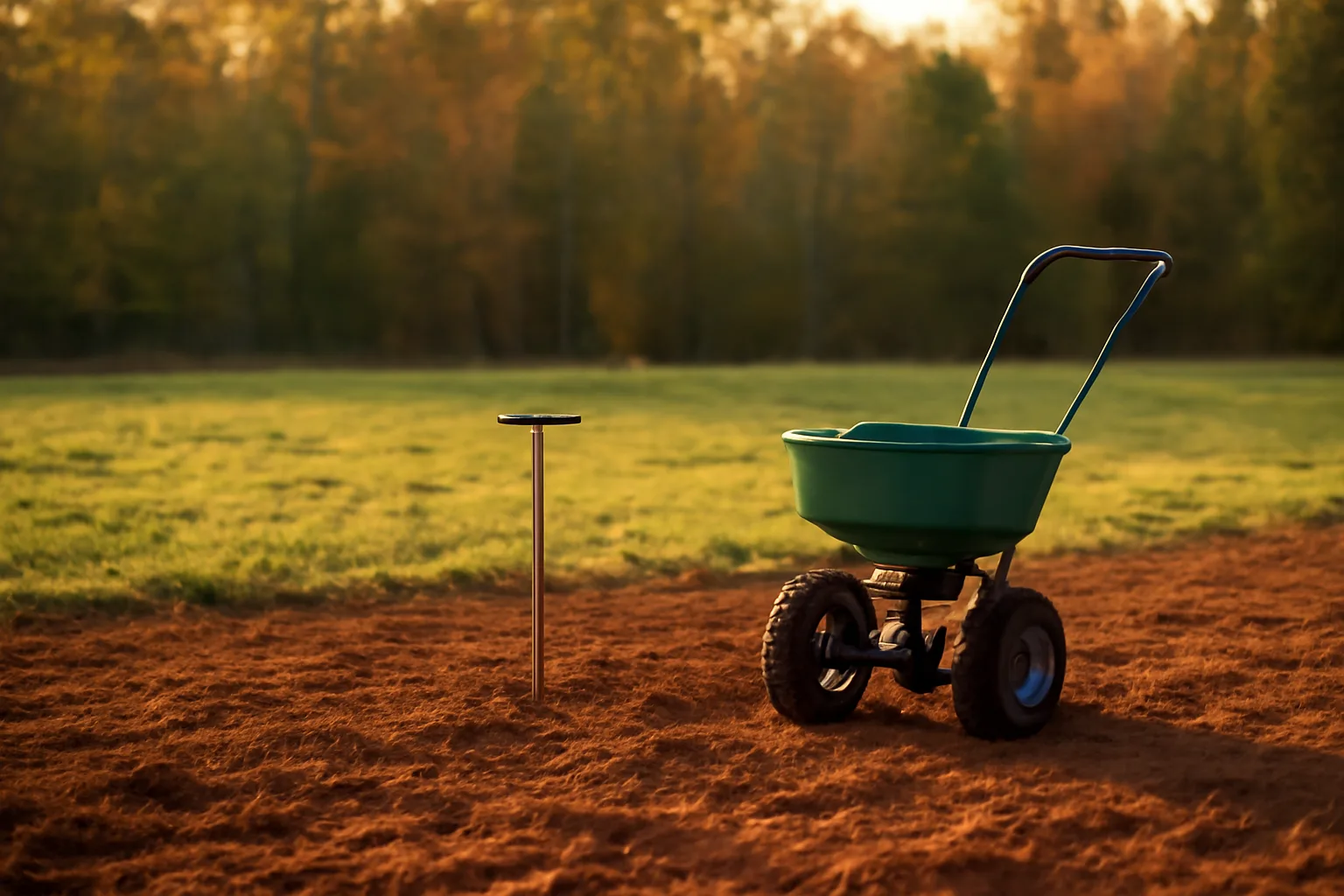
You don't need much to get lime and seed into acidic ground, but a few tools make the difference between a good stand and a thin one. A soil probe or a simple shovel to pull test samples, a broadcast spreader (handheld for small plots, tow-behind or ATV-mounted for anything over half an acre) to apply lime and fertilizer evenly, and a way to work lime into the top few inches of soil, whether that's a disc, a light tiller, or aggressive dragging. Lime that sits on top of the soil without being incorporated reacts much more slowly, since it needs soil contact and moisture to dissolve and move pH [1]. If you can't till, at least drag or disc the surface after spreading. For seed, a drill gives the most consistent depth and germination, but broadcasting seed and then dragging or rolling it in works fine for small grains, brassicas, and clover once pH is corrected. Cereal rye and oats are forgiving of rough seedbeds and broadcast planting, which is another reason they're a good low pH fallback: they don't demand the perfect seedbed clover or alfalfa reward you for.
Frequently asked questions
Do deer eat sorghum in food plots?
Yes. Deer eat both the grain heads and young leaves of sorghum, and it's often included in Southern food plot blends alongside soybeans or cowpeas. It's also more drought and low-pH tolerant than clover, but it's usually planted as one part of a mix rather than a stand-alone plot.
Do deer like clover more than other food plot options?
Deer readily eat clover and it ranks high in most whitetail forage preference studies, largely because of its protein content (often 20-25% crude protein) and regrowth after grazing. But clover needs soil pH 6.0-7.0 to nodulate and grow well; in acidic soil it underperforms no matter how much deer would prefer it.
When should I plant food plots for deer?
Cool-season plots (brassicas, cereal grains, clover) generally go in 6-10 weeks before your area's first fall frost. Warm-season plots (soybeans, sunflowers) go in after your last spring frost. Exact dates vary widely by zone, so check your state extension office's frost date maps rather than a fixed calendar date.
When should I plant oats for deer?
Plant oats 60-90 days before your area's first hard frost, typically mid-August through mid-September in the Midwest and Upper South, later further south. Fall plantings are more common than spring ones for deer attraction, since deer favor the tender leafy growth oats produce in cooler fall weather.
When should I plant turnips for deer?
Plant turnips 80-100 days before your first hard frost so both the leafy tops and root bulb have time to develop. That's usually early to mid-August in northern zones and into early September further south. Planting too late leaves you with thin greens and underdeveloped bulbs.
What is a food plot, exactly?
A food plot is a planted area, often a quarter acre to several acres, seeded specifically to feed deer or other wildlife and to give hunters a predictable spot to hunt or observe animals. Plots range from simple clover fields to multi-species blends of brassicas, cereal grains, and legumes planted on a seasonal rotation.
What are deer's favorite foods overall?
Extension forage research and deer diet studies consistently rank acorns, soybeans, clover, and native browse as top preferences, with preference shifting by season. Acorns and woody browse matter more in fall and winter; lush legumes and forbs matter more in spring and summer when protein needs are highest.
Do deer like honey or sweetened attractants?
Deer aren't specifically drawn to honey in any food-plot sense; that idea likely comes from molasses or sugar-based scent and mineral attractant products. More importantly, baiting and feeding rules vary heavily by state, and many states restrict or ban attractant and bait use, so check your state wildlife agency's regulations first.
What's the best food plot seed for low pH soil that hasn't been limed yet?
Cereal rye and oats are the most acid-tolerant common food plot seeds, growing acceptably down to around pH 5.0-5.3. Brassicas like turnips handle pH 5.5-6.0 reasonably well too. Clover, alfalfa, and soybeans need higher pH (generally 6.0+) to grow and fix nitrogen properly.
How long does it take lime to raise soil pH for a food plot?
Agricultural lime typically takes 6 to 12 months to fully react through the soil profile, faster if it's tilled in rather than left on the surface. That's why extension agronomists recommend liming well ahead of planting a pH-sensitive species like clover, and planting an acid-tolerant cover crop in the meantime.
Can I just add more fertilizer instead of lime to fix low pH?
No. Fertilizer and pH solve different problems. In acidic soil, phosphorus and other nutrients lock up chemically and become unavailable to plants regardless of how much fertilizer you apply. Lime corrects the pH so nutrients already in the soil, and any fertilizer you add, actually become available to the plant.
Is cereal rye or oats better for a low pH food plot?
Cereal rye tolerates lower pH (down to roughly 5.0) and cold better, staying green through winter in most zones, while oats germinate and grow faster but typically winterkill in colder regions. Many food plotters mix the two so they get oats' fast early growth and rye's winter persistence.
Sources
- USDA NRCS, Soil Quality Indicators: pH (Soil Quality Kit): Below roughly pH 5.5, phosphorus becomes less available and nutrient uptake declines; lime application effects take months to fully react through soil
- University of Georgia Extension, Establishing and Managing Wildlife Food Plots (Circular 758): Clover and legume food plot species need soil pH around 6.0-7.0 to grow well and fix nitrogen; deer forage preference and clover's role in food plots
- USDA NRCS Plant Fact Sheet, Cereal Rye (Secale cereale L.): Cereal rye is among the most acid-tolerant common cover/forage crop species, growing in soils with lower pH than most legumes tolerate
- University of Tennessee Extension, Wildlife Food Plots (PB1769): Cool-season food plot species are generally planted 6-10 weeks ahead of the first fall frost based on regional frost date timing
- Mississippi State University Extension, Establishing Fall Food Plots for Deer (Publication 2111): Oats are typically planted 60-90 days before the first hard frost for fall deer food plots