Last updated 2026-07-26
TL;DR
In Georgia, plant warm-season plots (sorghum, soybeans, cowpeas) April 15 through July 15, and cool-season plots (clover, oats, turnips, brassicas) September 15 through November 1. North Georgia runs about two weeks behind the coastal plain in fall, and about a week later in spring.
When should you plant deer food plots in Georgia?
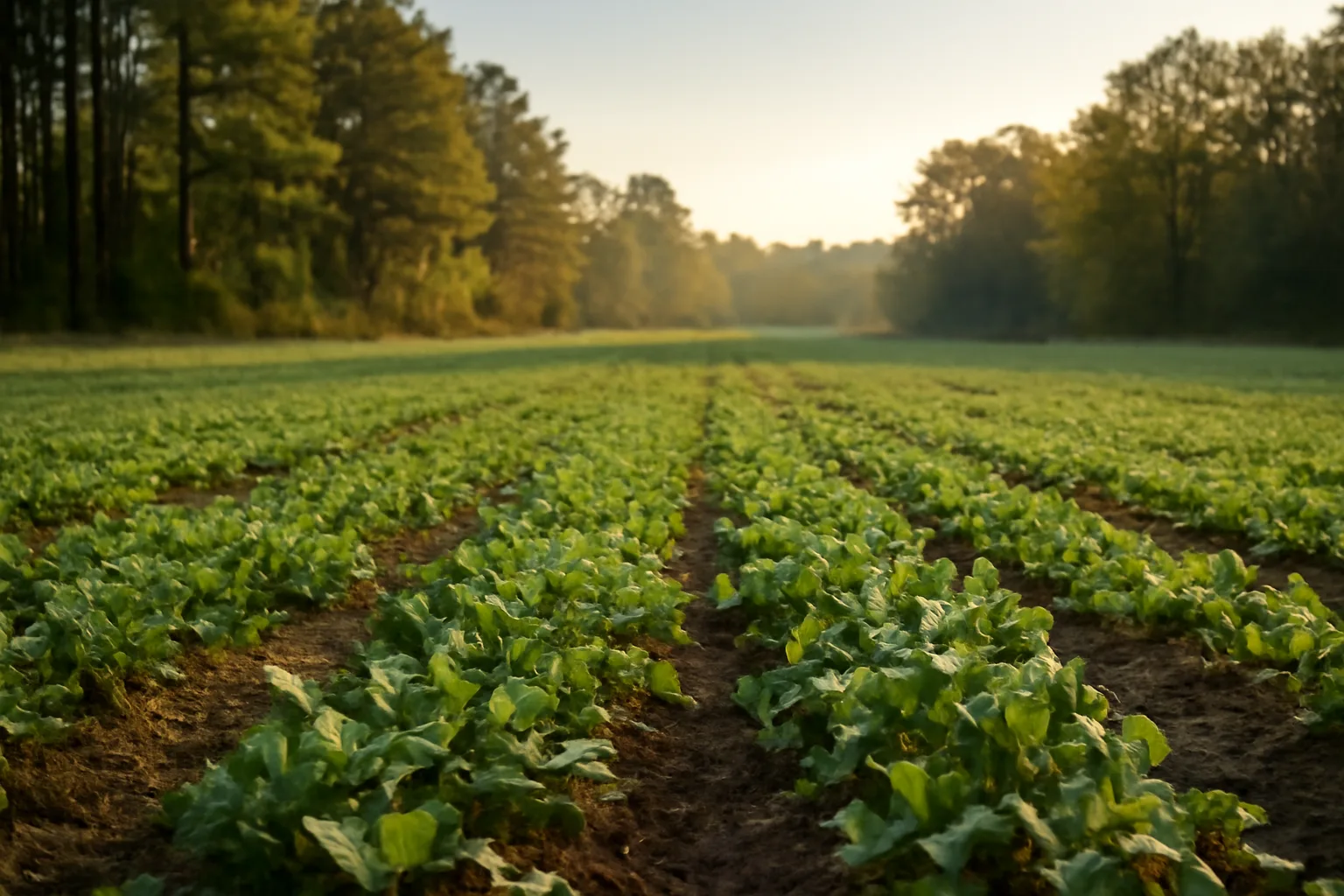
Georgia has two real planting windows, and almost every mistake new plotters make comes from ignoring one of them. Warm-season plots go in the ground from mid-April through mid-July, once soil temps hold above 65 degrees and frost risk has passed. Cool-season plots go in from mid-September through early November, timed to catch fall rain and cooling soil, but ahead of the first hard freeze. The exact dates shift by region. Georgia stretches from the mountains near Blairsville down to the coastal plain around Valdosta, and that's roughly a 400-mile north-south span with real climate differences. The University of Georgia Cooperative Extension's statewide guidance splits the state into three practical bands for planting purposes: north Georgia (mountains and upper Piedmont), central Georgia (lower Piedmont), and south Georgia (coastal plain) [1]. If you only remember one rule, make it this: cool-season plots are the backbone of Georgia deer hunting because they're green and growing exactly when rifle season opens in mid-to-late October. Warm-season plots matter more for antler growth, fawn nutrition, and keeping deer on your property through summer stress. Plant both if you can. If you can only do one, do the fall planting. A lot of guys treat this as a one-shot decision. It isn't. Georgia's climate lets you run a spring planting and a fall planting on the same acreage in the same year, which is the whole reason perennial clover and annual rotations both have a place here.
When to plant food plots for deer in north vs. south Georgia
| North GA (mountains/upper Piedmont) | Sept 15 - Oct 15 | Late April - mid-July | |
|---|---|---|---|
| Central GA (lower Piedmont) | Sept 20 - Nov 1 | Mid-April - mid-July | |
| South GA (coastal plain) | Oct 1 - Nov 15 | Late March - mid-July | These ranges aren't arbitrary. They're built around Georgia's average first and last frost dates, which the National Weather Service and UGA both track by county [2]. If you're right on a regional line, use your own frost records or call your county extension office rather than splitting the difference. |
North Georgia (Blue Ridge and upper Piedmont, think Blairsville, Dahlonega, Clayton) sits in a cooler pocket with a shorter growing season and earlier fall frost. Cool-season plots there go in September 15 through October 15. Push much later than that and you risk a hard freeze killing young brassica and clover seedlings before they establish a root system. Central Georgia (Macon, Athens, the mid-Piedmont) has more cushion. Cool-season planting runs September 20 through November 1. This is the biggest chunk of Georgia's deer ground and the window most guides default to. South Georgia (coastal plain, Albany, Valdosta, Tifton) runs latest because frost comes later and heat lingers into fall. Cool-season plots can go in through mid-November there, and in mild years even later, though earlier is still safer for good germination before deer pressure hits. Spring planting mirrors this in reverse. North Georgia's last frost date averages mid-to-late April in the mountains, so warm-season plots wait until late April or early May. South Georgia can plant warm-season crops as early as late March in some years, though mid-April is the safer call most extension agronomists give for food-plot-scale plantings rather than row-crop timing [1]. | Region | Cool-season window | Warm-season window |
When to plant oats for deer in Georgia
Oats go in the ground in Georgia between September 15 and November 1, with the sweet spot in most of the state landing right around the first week of October. Oats germinate fast, sometimes in 5 to 7 days with decent soil moisture, and they're one of the most reliable cool-season cereal grains for food plots because they tolerate a wider pH range than clover and don't need inoculant. Oats do have a weakness: they're less cold-hardy than wheat or rye. A north Georgia planting that goes in too late risks getting knocked back hard by a January freeze. If you're above the Fall Line and want a cereal grain that survives deep winter, plant wheat or cereal rye instead of straight oats, or blend them. UGA Extension's forage variety testing shows winter survival differences between oat varieties and true winter cereals like rye, which matters more the farther north you plant [3]. Oats also make a good nurse crop for clover. Drilling oats with clover in September gives you fast fall growth (the oats) while the clover establishes underneath more slowly. By the time the oats die back or get grazed down in winter, the clover is rooted and ready to carry the plot into spring.
When to plant turnips for deer in Georgia
Turnips and other brassicas (radish, rape, kale) go in the ground in Georgia between August 15 and September 30, earlier than clover or oats. This is the one cool-season crop where timing actually skews earlier, not later, because turnips need 80 to 90 days of growth to bulb up properly before deer start hitting them hard in December and January. Plant turnips too late (say, mid-October) and you'll get leafy green growth but small or nonexistent bulbs. The bulb is what carries a turnip plot through the coldest part of winter, since deer often ignore turnip tops until a hard frost sweetens them but will dig up and eat bulbs well into February. A common Georgia mistake is planting turnips at the same time as clover in late September. It works, but you lose a month of bulb development. If turnips are your priority crop, get them in by early September even if that means a separate planting trip from your clover and oats.
Do deer like clover, and when should you plant it?
Yes. Clover is consistently one of the highest-preference forages in whitetail diet studies, and it's the closest thing food-plot clover to has to a sure thing in Georgia. Perennial white clovers (ladino types especially) provide 20 to 30 percent crude protein in vegetative growth, which lines up well with doe lactation demands in spring and antler growth in summer [4]. Plant clover in Georgia during the cool-season window, September 15 through November 1 depending on region, same as oats. Spring planting (February to March) also works for clover specifically, since it's a perennial and doesn't need fall establishment the way annuals do. Most experienced Georgia plotters still prefer fall planting because it avoids competition from summer weeds that explode in a spring-seeded plot. Clover needs decent soil pH, generally 6.0 to 6.5, and won't perform without it no matter when you plant. This is where a soil test earns its keep. Broadcasting clover seed onto ground that's sitting at pH 5.2 is one of the most common reasons Georgia food plots fail in year one, and lime takes months to fully react in the soil, so testing and liming ahead of your planting date matters more than the seed you buy [5]. Your soil test lab's lime and fertilizer recommendation is the authority here, not a bag label or a forum post. A well-managed perennial clover plot in Georgia can produce for 3 to 5 years before needing to be reseeded, especially with a light annual maintenance mow and a fall nitrogen or potash touch-up based on soil test results.
Do deer eat sorghum, and when do you plant it?
Yes, deer eat grain sorghum, but it's more of a fall-and-winter standing grain crop than a preferred summer browse. Sorghum works well in Georgia as a warm-season planting, going in the ground April 15 through July 1, and it's valued mainly for the grain heads it produces later in the season, plus the cover it provides. Whitetail deer will eat sorghum leaves and stems some in summer, but the real draw comes when grain heads mature and dry down in fall, right when hunting season and food stress line up. Sorghum also tolerates poor, sandy soil and drought better than corn, which makes it a more forgiving warm-season grain for a lot of south Georgia sand ridges. Sorghum isn't a top-choice deer food the way soybeans or clover are. Deer generally prefer soft, high-protein browse when it's available. Sorghum earns its spot in a plot rotation because it's cheap, drought-tolerant, and it stands up through winter for a late-season grain source, not because whitetails pick it first when given other options.
What is a food plot, exactly?
A food plot is a planted area, usually somewhere between a quarter acre and several acres, established specifically to grow forage that attracts and feeds deer. It's a farming operation on a small scale: soil test, lime and fertilize, plant a chosen crop or blend, and manage weeds and mowing through the growing season. Food plots serve two separate goals that often get lumped together. Nutrition plots (clover, soybeans, brassicas) are large-acreage plantings meant to improve herd health, antler growth, and fawn survival across a property. Hunting plots (small, often under half an acre, tucked near stand sites) are meant to draw deer into range during shooting hours, and they don't need to carry the whole herd's nutrition. Most Georgia landowners run some mix of both. A one-acre clover field back off the road feeds does through spring and summer, while a quarter-acre brassica plot fifty yards from a stand pulls deer past a shooting lane in November. If you're building a plot plan from scratch, matching plot size and crop choice to your actual goal (nutrition vs. hunting access) matters more than which specific seed bag you buy. This is the kind of site-specific tradeoff a Custom Food Plot Plan is built to walk through, since it factors in your acreage, region, and equipment rather than a one-size answer. Georgia's Wildlife Resources Division regulates supplemental feeding and baiting separately from food plots. Planted food plots are legal to hunt over in Georgia; piled feed, corn, and bait are subject to separate rules that vary by wildlife management unit and season, so check current Georgia DNR hunting regulations before setting up any feeder alongside a plot .
What are deer's favorite foods?
Whitetail deer preference studies consistently rank a short list of foods at the top: acorns (especially white oak family acorns), soybeans, clover, and other legumes like cowpeas and lablab. These show up again and again in browse studies because they combine high protein or fat content with palatability deer respond to immediately. Acorns are arguably the single most preferred natural food in the Southeast, and white oak acorns in particular are lower in tannins and sweeter than red oak acorns, which is why deer clean out white oak drops first in a mixed hardwood stand . You can't plant a food plot that beats a good acorn year, but you can plant crops that fill the gap when the acorn crop is thin or between drop and green-up. Among planted crops, soybeans consistently test as one of the highest-preference summer forages in food plot research, followed closely by cowpeas, lablab, and quality clover. In fall and winter, brassicas (turnips, radish) and cereal grains (oats, wheat) round out the list, especially after a frost sweetens the greens. Deer preference isn't fixed. It shifts with what's available, what's scarce, and even regional habits within a state. A herd that's never seen soybeans might ignore a new plot the first year before keying in on it. This is normal and doesn't mean the plot failed.
Do deer like honey, and does it matter for food plots?
There's no real evidence deer seek out honey, and it has essentially no role in food plot planning. Deer are occasionally documented eating or investigating honeycomb or damaged beehives opportunistically, mostly for the wax and any trapped insects or sugar content, but this isn't a documented dietary preference and it isn't something you can plant or replicate in a plot. Some mineral and attractant products marketed for deer hunting include molasses or sugar-based additives, which is likely where the honey association comes from in hunter forums. Sugar and salt-based mineral licks do draw deer, but that's a mineral and scent-attraction mechanism, not evidence deer specifically prefer honey as a food. If you're planning nutrition for a property, spend the budget on soil amendments and quality seed, not sweetener products with no extension or wildlife agency data behind them.
What crops should go in a Georgia fall plot, and how do you time a blend?
| Turnips/brassica | Sept 15 | 45-60 days for tops, 80-90 for bulbs | |
|---|---|---|---|
| Oats/wheat | Oct 1 | 7-14 days | |
| Clover | Oct 1 | 30-45 days, full stand by spring | Seed depth and soil contact matter as much as calendar timing. Clover and brassica seed is tiny and needs shallow planting, a quarter inch or less, often just broadcast and cultipacked. Oats and wheat go deeper, around 1 to 1.5 inches, and do better drilled than broadcast if you have the equipment. Getting the timing right but the depth wrong is still a failed plot, so match your planting method to your equipment realistically rather than fighting it. |
Most successful Georgia fall plots aren't single-species. They're blends of a fast cereal grain (oats or wheat), a legume (clover or crimson clover), and sometimes a brassica, planted together or in a tight sequence during the September 15 to November 1 window. The logic is straightforward. Oats or wheat germinate in under two weeks and give deer green forage fast, often before your clover or brassica has even broken ground. Clover takes longer to establish but persists as a perennial. Brassicas need to go in slightly earlier (by mid-September) if bulb development is the goal, or can be blended in with the rest if you just want the leafy tops. A typical central Georgia blend planting timeline looks like this: | Crop | Plant by | Time to first grazing |
What's the fastest way to build a planting calendar for your specific property?
Start with your county's average first and last frost dates, work backward 2 to 3 weeks for cool-season planting (you want seedlings established, more than germinated, before frost risk climbs), and forward from last frost for warm-season crops. UGA Extension and the National Weather Service both publish frost date data by Georgia county, and that's a better source than a general statewide rule of thumb [2]. From there, layer in your soil test results, since lime takes time to raise pH and that clock starts the day you apply it, not the day you plant. If you're testing this summer for a fall clover planting, get lime down as early as possible, ideally 2 to 3 months before seeding, per most extension lime-timing guidance [5]. If you want a plan built around your actual coordinates, acreage, and equipment rather than a statewide average, that's exactly what the Custom Food Plot Plan is for. It's a $99 one-time build that maps species and dates to your specific ground, though your soil test lab's lime and fertilizer numbers remain the final word on amendments since they're testing your actual dirt. For readers comparing crop options before locking in a calendar, it helps to look at broader guidance on food plot whitetail strategy and specific deer food plot seed choices before settling on a blend.
Frequently asked questions
When to plant deer food plots in Georgia overall?
Two windows: warm-season crops (soybeans, sorghum, cowpeas) go in mid-April through mid-July, and cool-season crops (clover, oats, turnips) go in mid-September through early November. Exact dates shift by region, with north Georgia running about two weeks earlier in fall and later in spring than the coastal plain.
When to plant oats for deer in Georgia?
Plant oats between September 15 and November 1, with early October being the sweet spot for most of the state. Oats germinate in 5 to 7 days with good moisture but aren't as cold-hardy as wheat or rye, so north Georgia planters should consider blending with a true winter cereal.
When to plant turnips for deer in Georgia?
Plant turnips earlier than most fall crops, between August 15 and September 30. Turnips need 80 to 90 days to develop bulbs before winter, so planting in October will give you leafy growth but weak or absent bulbs, missing the late-winter food source that makes turnips valuable.
Do deer like clover, and is it worth planting in Georgia?
Yes, clover ranks among the most preferred whitetail forages, offering 20 to 30 percent crude protein in vegetative growth. Plant it September 15 through November 1 in Georgia, and maintain soil pH around 6.0 to 6.5 based on a current soil test, since low pH is the top reason Georgia clover plots underperform.
Do deer eat sorghum?
Yes, though it's not a top-preference food. Deer browse sorghum leaves some in summer, but the main value comes from grain heads maturing in fall and winter, giving a standing food source during hunting season. Plant it April 15 through July 1 as a drought-tolerant warm-season option.
What is a food plot?
A food plot is a planted area, from a quarter acre up to several acres, established to grow forage that feeds and attracts deer. Plots split into nutrition plots (large, for herd health) and hunting plots (small, near stands, for shot opportunity), and most properties run a mix of both.
What are deer's favorite foods?
Acorns, especially white oak acorns, top most preference studies, followed by soybeans, clover, and legumes like cowpeas and lablab in the growing season. In fall and winter, brassicas and cereal grains round out the list, particularly after a frost sweetens turnip and radish tops.
Do deer like honey?
There's no solid evidence deer seek out honey as a food. Occasional reports of deer at damaged beehives likely reflect opportunistic interest in wax or trapped insects, not a real dietary preference. It has no practical role in food plot species selection or planting decisions.
When should I plant food plots for deer if I only have one weekend?
If you can only plant once a year in Georgia, plant in fall, mid-September through early November depending on your region. Fall plots line up with hunting season and cooler, wetter weather that favors germination, and clover or oats planted then will carry into spring as a bonus.
Can you plant food plots in Georgia in the spring?
Yes. Spring planting (mid-April through mid-July) works for warm-season crops like soybeans, cowpeas, sorghum, and lablab. Spring is also an option for establishing perennial clover, though most Georgia plotters prefer fall clover planting to avoid heavy summer weed competition in a new stand.
Does soil pH matter more than planting date in Georgia food plots?
Both matter, but wrong pH often does more damage. Clover and most legumes stall out below pH 6.0 regardless of planting timing. Get a soil test, apply lime months ahead if needed, then plant within your region's window; skipping the soil test is the more common failure point.
Is it legal to hunt over a food plot in Georgia?
Yes, planted food plots are legal to hunt over in Georgia. Piled bait, corn, or feed is treated differently and subject to separate rules that can vary by wildlife management unit, so check current Georgia Department of Natural Resources hunting regulations before combining a plot with any feeder setup.
Sources
- UGA Cooperative Extension, Forage and Wildlife planting guidance: Georgia planting recommendations are regionally split by climate zone (mountains/upper Piedmont, lower Piedmont, coastal plain)
- UGA Cooperative Extension, Small Grain Variety Testing: Oat varieties differ from wheat and rye in winter survival and cold tolerance
- USDA NRCS, Plant Fact Sheet: White Clover: White clover forage provides high crude protein content valuable for lactation and antler growth
- UGA Cooperative Extension, Soil Testing and Liming: Lime needs time to react in soil and should be applied months ahead of planting to raise pH
- USDA Forest Service, Southern Research Station, white oak and wildlife: White oak acorns are preferred by deer over red oak acorns due to lower tannin content