Last updated 2026-07-26
TL;DR
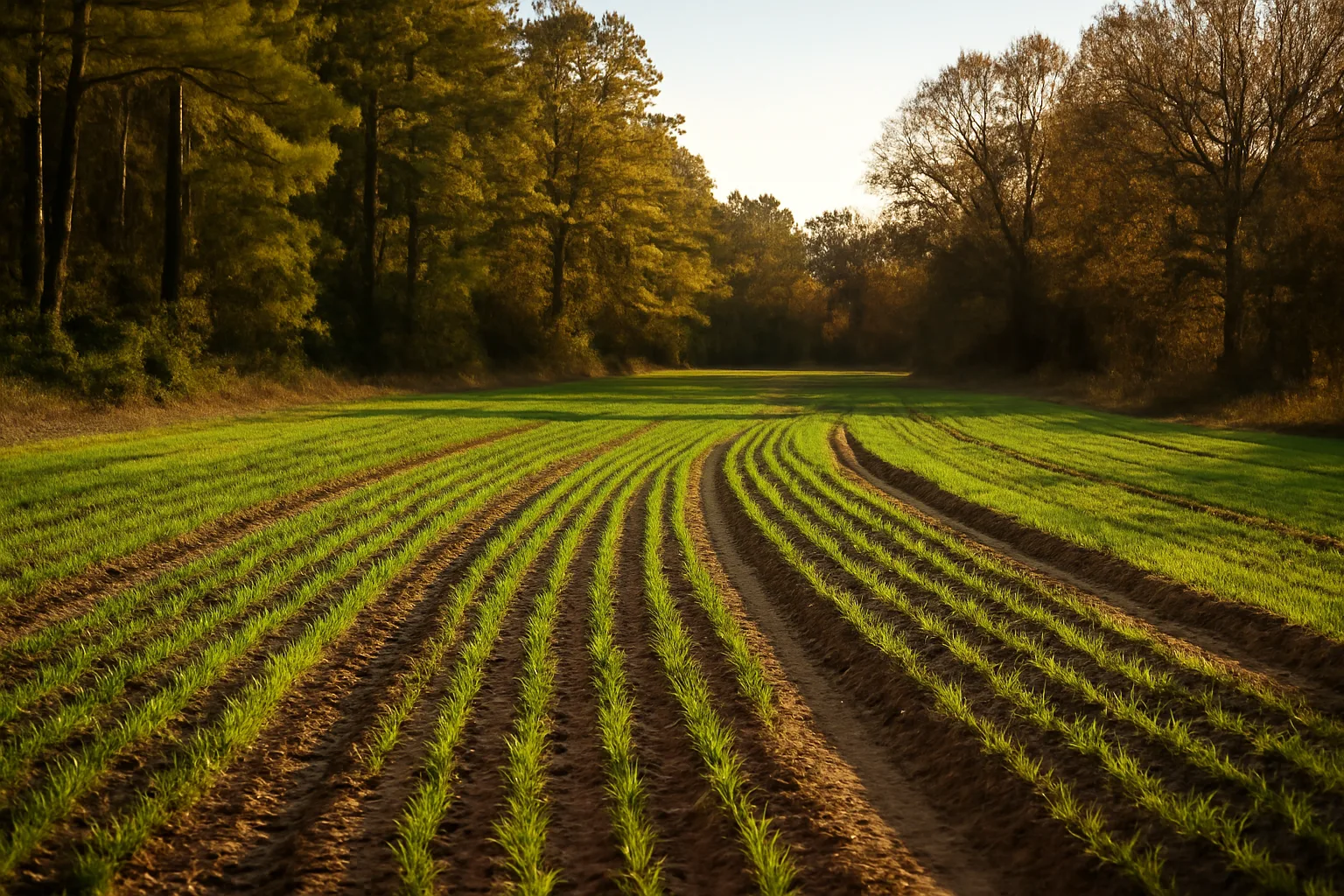
In Louisiana, plant warm-season plots (clover, sorghum, cowpeas) April through early June, and cool-season plots (oats, clover, turnips, brassicas) mid-September through early November. Timing shifts by a few weeks between north Louisiana and the coastal parishes, so watch your local first-frost date and soil temperature, more than the calendar.
When should you plant deer food plots in Louisiana?
Louisiana runs on two planting windows, not one. Cool-season plots (oats, wheat, clover, brassicas, turnips) go in the ground between mid-September and early November, timed so plants establish before the first hard frost but late enough that summer heat and weeds don't smother the seedlings. Warm-season plots (soybeans, cowpeas, grain sorghum, corn) go in from early April through the first week of June, after soil temps hold above 65°F and the risk of a late frost has passed. The LSU AgCenter's forage variety trials and planting guides put most of north Louisiana's fall planting window at mid-September to late October, while the southern parishes near the coast can push into early November because frost arrives later there [1]. If you only plant one plot type a year, most Louisiana land managers lean cool-season, because it lines up with the archery and gun seasons that run roughly October through mid-January depending on zone, and deer key hard into fall greens and grain stubble in the pre-rut and rut. A rough statewide cheat sheet: warm-season plots April 1 to June 1, cool-season plots September 15 to November 1. Adjust a week or two earlier in the north, a week or two later on the coast.
When do you plant food plots for deer season in Louisiana specifically?
If your goal is a plot that's producing when Louisiana's deer seasons open, back-plant from opening day. Louisiana Department of Wildlife and Fisheries sets archery season opening dates that vary by deer management area, typically starting in late September to early October, with firearms seasons running into January depending on the area [2]. For a plot you want green and attractive by opening weekend, plant cool-season forages by mid-September in north Louisiana and by late September to early October in the southern parishes. Oats and wheat germinate fast (5 to 10 days in warm fall soil) and can be knee-high grazing within three to four weeks. Clover and brassicas take longer to reach full production. A lot of hunters blend a fast-growing cereal grain with a slower clover or turnip mix in the same plot to get both quick cover and season-long tonnage. That combination is forgiving of a late start too, since the grain covers you if the clover lags. Check LDWF's current area-specific season dates before you finalize a plant date, because Louisiana splits the state into multiple deer areas with different opening days, and a plot timed for a late-September opener in one area might need three extra weeks of growth for an area that doesn't open until mid-October [2].
When should you plant oats for deer in Louisiana?
Plant oats in Louisiana between September 15 and October 15 for most of the state, and you can push slightly later, into early November, along the coast where frost holds off longer. Oats are one of the most forgiving fall plot species here because they germinate quickly, tolerate Louisiana's heavy clay soils better than a lot of other cereal grains, and put on grazable growth fast. The catch: oats are less cold-hardy than wheat or rye. A hard freeze below the mid-teens can kill oats outright, which matters more in north Louisiana than along the coast. If you're planting in DeSoto, Ouachita, or other north parishes, consider blending oats with wheat or cereal rye so you've got a backup if a hard freeze rolls through in January. In the southern parishes, straight oats usually make it through the winter fine. Seed 2 to 3 bushels per acre (roughly 64 to 96 lbs) if drilling, or up to 110 lbs per acre broadcast, per general LSU AgCenter forage planting recommendations for small grains in Louisiana [1]. Plant into a clean, limed seedbed at 1 to 1.5 inches deep.
When should you plant turnips for deer in Louisiana?
Plant turnips in Louisiana between late August and mid-September for the earliest plots, or through early October if you're further south. Turnips need roughly 60 to 90 days to bulb up, so counting backward from your hunting season is the move: if you want mature bulbs by late November, seed needs to go in by early September at the latest. Turnips are a strange case with deer. Whitetails often ignore the bulbs and leaves early in the fall and then hit them hard after a couple of frosts convert starches to sugars, which makes the plant sweeter. That means a turnip plot planted in early September might look untouched in October and then get hammered in December and January. Don't panic if deer aren't on turnips right away. Brassicas including turnips do best on well-drained soil with a pH close to 6.0 to 6.5, and they're heavy nitrogen feeders, so your soil test result matters a lot here. Broadcast rate is typically 4 to 6 lbs per acre for turnip alone, less if blended with other brassicas or a cereal grain.
Do deer like clover, and when should you plant it?
Yes. Deer readily eat clover, and it's one of the most reliable food plot species in Louisiana because it's a perennial (with proper maintenance) that provides forage across multiple seasons rather than a single planting cycle. White clover varieties like Durana and Ladino, and annual varieties like crimson clover, are common choices for Louisiana food plots. Plant clover in Louisiana in one of two windows: fall (mid-September through October) for the more common approach, or very early spring (February to early March) in the southern parishes where mild winters allow it. Fall planting is generally preferred here because it avoids the brutal summer heat that stresses young clover seedlings, and it lets the plant establish a root system over the cooler months before summer arrives. Clover needs a pH of 6.0 to 7.0 to really perform, and Louisiana's naturally acidic soils in a lot of parishes mean lime is often non-negotiable, not optional. Your soil test lab's specific lime recommendation is the one to follow here, since application rates depend on your exact soil buffer pH, not a generic number pulled off the internet. Clover also needs full to partial sun and decent drainage. It struggles in Louisiana's heavier, poorly-drained bottomland soils without some ground prep.
Do deer eat sorghum?
Yes, deer eat grain sorghum, both the standing grain heads and the plant itself as browse when young. Sorghum (milo) is a warm-season crop planted in Louisiana from April through June, and it's valued as much for its standing cover and winter grain source as for early browse. Sorghum is often used as a fall and winter standing crop. Deer, along with turkey and other wildlife, work the grain heads once they mature and dry down, which typically happens 90 to 120 days after planting depending on the variety. That timing lines up well for a plot planted in April maturing into a food source by August through October, right as hunting season approaches in Louisiana. Sorghum tolerates heat and drought better than corn, which makes it a more forgiving choice for Louisiana's summer conditions, especially in years with spotty rainfall. It's not usually anyone's top pick as a stand-alone plot, but mixed with cowpeas or soybeans in a warm-season blend, it adds structure, cover, and a grain component that carries into fall.
What is a food plot?
A food plot is a planted area, usually somewhere between a quarter acre and several acres, established specifically to provide supplemental forage for deer and other wildlife. It's not a garden and it's not a lawn. It's a managed planting, usually of clover, cereal grains, brassicas, legumes, or grain crops, meant to attract and nourish deer on a property, often timed to be most productive during hunting season or during nutritional stress periods like late winter or antler growth in summer. Food plots serve two loosely related purposes: attraction (giving hunters a predictable place to see deer) and nutrition (supplementing a deer herd's diet, particularly protein for antler growth and lactation, or energy going into winter). A well-designed plot program usually runs both a warm-season plot for summer nutrition and a cool-season plot for fall attraction and winter forage, since no single planting covers both windows well. State wildlife agencies including LDWF regulate what you can and can't do around food plots for hunting over them; Louisiana's baiting rules restrict hunting over piled feed like corn or manufactured attractants but generally do not classify a properly planted, seeded food plot as bait, since it's not concentrated feed placed on the ground [3]. Always check LDWF's current baiting regulation language before you plant near a stand, since definitions and enforcement specifics can change.
What are deer's favorite foods?
There's no single universal answer here because it depends on season, region, and what's available, but research and field observation point to a consistent short list: acorns, soybeans, clover, and various browse species top most deer diet studies. Acorns in particular are a preferred fall food almost everywhere deer range, prized for their fat content that helps deer build reserves going into winter. In a planted food plot context, soybeans and cowpeas are consistently among the highest-preference warm-season forages, both for their palatability and their protein content (soybean forage commonly runs 20 to 30% crude protein). Clover is the most consistently preferred cool-season planted forage across most of the whitetail's range. Brassicas and turnips rank lower in early-season preference but climb once cold weather sweetens them. In Louisiana specifically, deer diet studies and LSU AgCenter extension work point to a strong seasonal shift: browse and soft mast in summer, acorns and planted forages in fall, and greenbrier, honeysuckle, and other woody browse filling gaps in late winter when plots and mast are picked over [1]. A food plot is a supplement to that natural diet, not a replacement for it.
Do deer like honey, or does honey belong in a food plot at all?
No, honey has no real place in a legitimate food plot program, and there's no meaningful body of research or extension guidance suggesting deer specifically seek out honey. This question shows up because of confusion between honeysuckle (a browse plant deer genuinely favor) and honey the substance, or because of scent-based deer attractant products marketed with honey or sweetener as an ingredient. Deer do eat honeysuckle vine and leaves readily, and it's one of the more common native browse species across the southeastern U.S. including Louisiana. If you're trying to identify why deer are working a fence line or wood edge, honeysuckle is a far more likely culprit than honey. As for liquid honey or sugar-based attractants poured on the ground: check Louisiana's baiting regulations before using anything like this near a stand. LDWF's baiting rules apply to substances placed to attract game for the purpose of hunting, and pouring sweeteners or scent products in a hunting area can cross into bait territory depending on how it's used and the current regulation text [3].
How does timing change across north, central, and south Louisiana?
| North LA (Shreveport, Monroe area) | Sept 15 - Oct 15 | April 1 - May 15 | Mid-November | |
|---|---|---|---|---|
| Central LA (Alexandria, Natchitoches) | Sept 20 - Oct 25 | April 5 - May 25 | Late November | |
| South LA / Coastal (Lafayette, Houma, New Orleans) | Oct 1 - Nov 5 | April 10 - June 1 | Early-Mid December | These are general planting windows, not guarantees your seedlings won't hit a random early cold snap or an unusually hot late spring. Always cross-check against your parish's average frost dates and current-year forecast before committing seed to the ground. |
Louisiana's first frost date runs from around mid-November in the far north parishes to early-to-mid December along the immediate coast, a roughly three to four week spread across the state [4]. That spread should shift your planting dates, more than your expectations. Here's a rough regional breakdown: | Region | Cool-season plant window | Warm-season plant window | First frost (avg) |
What soil and fertility steps matter before you plant?
A soil test is the starting point, not an afterthought. Louisiana's soils vary a lot by parish, from the acidic sandy soils of the Florida parishes to heavier clay and loam in the alluvial areas along the Mississippi and Red River valleys, and a generic fertilizer recommendation pulled from a bag or a forum post can waste real money if your soil doesn't need what you're buying. LSU AgCenter publishes forage and crop fertility guidance tied to soil test results, and that's the authority to follow for exact lime and fertilizer rates, not a blanket number from an article like this one [5]. Most food plot species do best in a pH range of 6.0 to 6.8, and a lot of untreated Louisiana soil comes in well below that, sometimes in the 5.0 to 5.5 range depending on the parish, which means lime often needs to go down months before planting since it takes time to react with the soil. If you're building a planting plan and want it matched to your specific soil test numbers, acreage, and equipment, that's exactly the kind of site-specific work a Custom Food Plot Plan is built for. It's a one-time $99 plan built around your test results and your goals, not a generic seed bag recommendation. Your soil lab's fertility numbers are still the final word on lime and fertilizer amounts; the plan works from those results.
What equipment do you actually need to plant on time?
Timing only matters if you can get seed in the ground when the calendar tells you to, and equipment gaps are the number one reason Louisiana hunters miss their window. At minimum you need a way to kill or suppress existing vegetation (mower, herbicide and sprayer, or disk), a way to work the seedbed (disk, harrow, or no-till drill), a way to spread seed (broadcast spreader, drop spreader, or drill), and a way to cover seed to the right depth. Small grains like oats and wheat want roughly 1 to 1.5 inches of coverage. Clover and brassica seed is tiny and wants to be barely covered, often less than a quarter inch, or simply pressed into the soil with a cultipacker or ATV tire. Planting clover too deep is one of the most common mistakes on Louisiana plots and it's an easy one to make when broadcasting by hand or with a spreader set for bigger seed. If equipment access is your bottleneck (a lot of leased ground in Louisiana doesn't come with a tractor), a no-till drill rental or a hand-crank broadcast spreader with a cultipacker pass is enough to hit most planting windows on a plot under 3 to 5 acres.
Frequently asked questions
When is the best time to plant food plots in Louisiana?
Cool-season plots (clover, oats, wheat, brassicas) go in mid-September through early November. Warm-season plots (soybeans, cowpeas, sorghum) go in April through early June. Exact timing shifts by two to four weeks between north Louisiana and the coastal parishes based on first-frost dates.
Do deer eat sorghum?
Yes. Deer browse young sorghum plants and eat the mature grain heads once they dry down, usually 90 to 120 days after an April to June planting. It's more often used as a standing fall/winter grain crop or mixed into a warm-season blend than planted alone.
Do deer like clover?
Yes, clover is one of the most consistently preferred cool-season food plot forages for whitetails. White clover varieties like Ladino and Durana, and annual crimson clover, both work well in Louisiana when soil pH is corrected to the 6.0 to 7.0 range with lime.
When should you plant oats for deer in Louisiana?
Plant oats between September 15 and October 15 in most of Louisiana, or up to early November near the coast. Oats germinate fast, within 5 to 10 days in warm fall soil, but are less cold-hardy than wheat, so blend with wheat or rye in north Louisiana as insurance against hard freezes.
When should you plant turnips for deer in Louisiana?
Plant turnips late August through mid-September in north Louisiana, or into early October further south, since bulbs need 60 to 90 days to mature. Deer often ignore turnips at first and hit them hard after a few frosts sweeten the leaves and bulbs, usually in December and January.
What is a food plot?
A food plot is a planted area, usually a quarter acre to several acres, seeded with forage like clover, oats, brassicas, or soybeans specifically to feed and attract deer. Plots serve both nutrition (protein for antlers and body condition) and hunting attraction, and are typically split into warm-season and cool-season plantings.
What are deer's favorite foods?
Acorns, soybeans, cowpeas, and clover consistently rank as top preferences across most whitetail range, with browse and soft mast filling in seasonally. In Louisiana, deer lean on natural browse and soft mast in summer, acorns and planted forages in fall, and woody browse like honeysuckle and greenbrier in late winter.
Do deer like honey?
No good evidence supports deer specifically seeking honey. Confusion often comes from honeysuckle, a browse plant deer readily eat, being mixed up with honey the substance. Sugar or honey-based attractants poured on the ground may also cross into baiting regulations, so check LDWF rules before using them near a stand.
When should you plant food plots for deer hunting season in Louisiana?
Back-plant from your area's archery opener, which typically falls late September to early October under LDWF's area-specific season dates. Plant cool-season forages by mid-September in north Louisiana or by late September to early October in the south to have growth established by opening weekend.
Can you plant a food plot in Louisiana in the summer?
Yes, that's the warm-season window, roughly April through early June, for soybeans, cowpeas, grain sorghum, and corn. These plots feed deer through the nutritional stress of summer (antler growth, lactation) rather than targeting hunting season directly, though sorghum can carry into a fall standing grain source.
How much lime does a Louisiana food plot need?
It depends entirely on your soil test results; there's no safe generic number. A lot of untreated Louisiana soil sits around pH 5.0 to 5.5, well below the 6.0 to 6.8 most food plot species want, so lime is common but the exact rate per acre should come from your specific soil test lab report.
Is it too late to plant a food plot if I miss the fall window in Louisiana?
You still have options. Oats and wheat can go in as late as early November in southern parishes and still establish before serious cold hits. If you miss the window entirely, focus on late-winter cleanup and soil prep so you're ready for the next planting cycle instead of rushing a low-odds late seeding.
Sources
- LSU AgCenter, Forage Variety Trials and Planting Guides: Fall planting windows, seeding rates for oats/small grains, and Louisiana deer seasonal diet patterns
- Louisiana Department of Wildlife and Fisheries, Deer Hunting Season Dates and Areas: Archery and firearms deer season opening dates vary by deer management area in Louisiana
- Louisiana Department of Wildlife and Fisheries, Hunting Regulations (Baiting Rules): Louisiana's baiting regulations govern hunting over piled feed and attractants
- NOAA National Centers for Environmental Information, Louisiana Climate Normals: First frost dates range from mid-November in north Louisiana to early-mid December along the coast
- LSU AgCenter, Louisiana Suggested Chemical Weed Control Guide and Forage Fertility Recommendations: LSU AgCenter provides forage and soil fertility recommendations for Louisiana, including lime and fertilizer guidance tied to soil test results