Last updated 2026-07-26
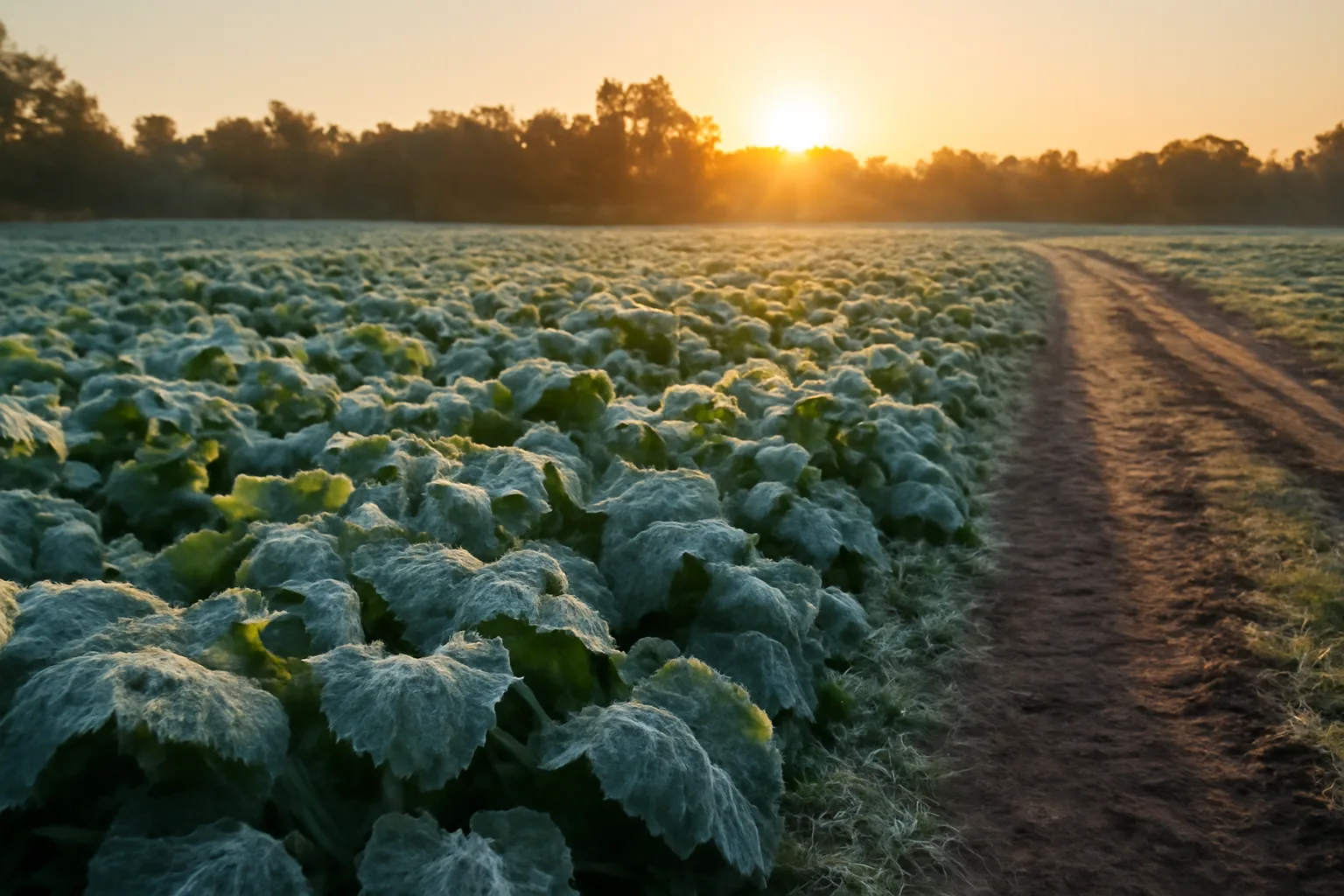
TL;DR
Plant brassica food plots 60 to 90 days before your area's average first fall frost, which lands most brassicas in a mid-July to early-September window depending on latitude and elevation. Turnips need the shorter end (60 days), while forage rape and kale benefit from the full 90. Soil temp matters less than frost timing here.
When should you plant a brassica food plot?
| 3-4 (northern MN, ND, WI, upper MI) | early-mid September | mid-July to early August | |
|---|---|---|---|
| 5 (southern WI, IA, PA, NY) | late September-early October | late July to mid-August | |
| 6 (KY, VA, southern OH, MO) | mid-late October | mid-August to early September | |
| 7 (NC, TN, AR, OK) | late October-early November | late August to mid-September | |
| 8 (deep South, coastal) | mid-late November | mid-September to early October | These are starting points, not gospel. Your specific county's frost dates can vary by two or three weeks from a zone average depending on elevation and whether you're in a valley or on a ridge. The NOAA Climate.gov frost date tool is far more precise than a hardiness zone chart if you want to nail your county down. |
Count backward from your average first fall frost date and plant 60 to 90 days ahead of it. That's the whole rule. Almost everything else in this article is regional detail hung on that frame. Brassicas (turnips, forage rape, kale, radish, canola/rapeseed) are cool-season plants that actually get better tasting after a hard frost converts starches to sugars. That means you don't want to plant too early and have the plot mature and go to seed before deer season, and you don't want to plant too late and get caught by frost before the plants have bulked up. NDSU Extension notes that brassica forage crops are typically seeded 60 to 90 days before the anticipated grazing or first killing frost, depending on species [1]. Here's the rough breakdown by zone, using USDA Plant Hardiness Zones as the reference frame (not perfect for frost timing, but a workable proxy most hunters already know): | Zone | Typical first frost | Plant brassicas |
When do you plant turnips for deer?
Turnips go in earlier than most other brassicas because their window is tighter: 60 days before frost, not 90. Plant too early and turnips bolt (flower and get woody) before frost even shows up. In practice, that means late July in the northern tier, early-to-mid August through the Midwest and mid-South, and late August into early September in the Deep South. University of Tennessee Extension recommends brassicas like turnips be seeded from mid-July through late August across most of the state, timed so growth peaks after the first frost. Turnips are a two-for-one crop. Deer eat the tops (which are actually more palatable early) and the bulbs (which get sweeter and more attractive after a freeze or two). If you plant a turnip-heavy blend, don't expect heavy bulb use until temperatures have dropped hard, usually a month or more into hunting season.
When do you plant oats for deer?
Oats go in on basically the same calendar as brassicas, 60 to 90 days before frost, and they're often planted right alongside turnips, radish, or clover in a fall blend. Oats are one of the fastest-growing cool-season annuals, showing green growth in 7 to 10 days under good conditions, which makes them a great nurse crop or quick-attraction option while brassicas bulk up underground. Most hunters in the Midwest and mid-South plant oats from mid-August through mid-September. Further north, move that up two to three weeks. Oats won't survive a hard winter the way winter wheat or rye will, so in zones 4 and colder they're strictly a fall-only forage, not a food source into late winter. If you're mixing oats into a brassica plot, seed them at the same time. Oats germinate faster and give deer something to eat while the turnips and rape are still small, which also happens to reduce the odds deer mow down your brassica seedlings before they get established.
When to plant food plots for deer, generally?
There are really only two planting windows that matter for whitetail food plots: spring (for warm-season annuals and perennials like clover, chicory, and soybeans) and late summer (for cool-season annuals like brassicas, oats, wheat, and cereal rye). Brassicas fall firmly in the second window. Spring plots go in after your last frost date, typically April through May depending on zone, and are meant to provide summer forage plus antler/fawn-rearing nutrition. Fall plots, brassicas included, go in during that 60-to-90-day-before-frost window and are built to be standing and attractive during hunting season and into winter. Soil temperature is a secondary check, not the primary trigger, for fall brassica plantings. Unlike corn or soybeans, which need soil at 50°F or warmer to germinate reliably, brassicas germinate fine in cooler soil and actually prefer the cooling temperatures of late summer into fall. Your frost date, not a thermometer, should drive the calendar here. One planning note worth building in: get a soil test before you plant anything, brassica or otherwise. Brassicas are heavy nitrogen users and do best in the 6.0 to 7.5 pH range according to most state extension brassica forage guides [2]. Your soil test lab's recommendation on lime and fertilizer rate is the actual authority for your dirt, this article can only give you general ranges. If you want a written plan built around your zone, acreage, and soil results, that's the whole point of a Custom Food Plot Plan, a one-time $99 build that turns your soil test and location into a specific seed and timing plan instead of a general rule of thumb.
What is a food plot, exactly?
A food plot is a planted area, usually somewhere between a quarter acre and several acres, seeded with forage crops specifically to attract, hold, and feed deer or other wildlife on a property. Most state wildlife agencies distinguish food plots (planted, growing crops) from baiting or supplemental feeding (piled grain, minerals, or feed), and the two are regulated very differently in a lot of states. Food plots generally fall into two functional categories. Destination plots are small, out-of-the-way, and hunted directly; they're often a half acre or less, tucked near thick cover, meant to draw deer in during shooting light. Nutrition or production plots are larger, planted with perennials like clover or alfalfa, and exist to support herd health and antler growth more than to be hunted over directly. Brassica plots are usually destination plots. They shine in the late season when other food sources (acorns, ag crops, browse) have thinned out, and a few acres of frosted turnips or rape can pull deer from a long way off when little else green is standing. It matters here because baiting and feeding rules vary hard state to state, and some states treat certain plot practices (like leaving harvested grain in place, or supplemental piles near a plot) as baiting. Check your state wildlife agency's regulations before combining a food plot with any supplemental feed or mineral station; what's legal in Texas may be a game violation in Michigan.
Do deer eat sorghum?
Yes, deer eat sorghum, both the grain heads and, to a lesser extent, the green forage, though it's not usually planted as a primary attractant crop the way corn or soybeans are. Grain sorghum (milo) is more common as a screening or standing-grain plot in warmer regions where corn struggles with drought, and deer will hit the seed heads especially once other food sources decline in winter. Sorghum's bigger practical value on a lot of hunting properties is as a visual screen and as a late-season standing grain source, not as the thing that pulls deer in the fastest. If you're choosing between a corn plot, a sorghum plot, and a brassica plot for late season, brassicas generally win on straight attraction once frost hits, because the sugar conversion in turnip and rape leaves is a stronger draw than dry grain for a lot of herds. That said, regional deer habits vary, and where ag corn and soybeans are already everywhere, a standing grain plot of any kind reads differently to local deer than it would in a hardwoods-only property.
Do deer eat clover, and do they like it?
Yes, deer eat clover heavily, and it's one of the most consistently preferred forages across whitetail range. Clover (white clover, red clover, and various perennial blends) is a warm-season staple that deer will hit from spring green-up through fall, and it regrows after grazing, which is exactly why it's the backbone of most perennial food plot programs. Deer preference studies and decades of extension forage work put clover near the top of preferred forages nationally, alongside soybeans and alfalfa, for both palatability and protein content (often 20-30% crude protein in good stands). The tradeoff against brassicas is timing and role: clover is a spring-through-fall perennial nutrition plot, brassicas are a fall-to-winter annual attraction plot. A lot of serious plot managers run both, clover for the growing season, brassicas for the cold months, on different fields. If you're deciding between the two for a single plot, ask what you're solving for. Clover needs 2 to 4 years of stand life to pay off the establishment cost and mowing/maintenance time; brassicas are a one-season annual investment that peaks exactly at hunting season. For more on species selection generally, see food plot seed and deer food plot seed.
What are deer's favorite foods overall?
Deer preference shifts by season and region, but across most whitetail research and extension forage trials, the consistent top performers are soybeans, clover, and acorns (particularly white oak acorns, which are lower in tannins and more palatable than red oak acorns). Alfalfa, chicory, and cowpeas also rank high in warm-season preference trials. In the cool season, brassicas, particularly forage rape and certain turnip varieties, and cereal grains like wheat and oats climb the list, especially after frost sweetens the brassica leaves and bulbs. No single "favorite food" ranking holds everywhere, because deer diet is driven heavily by what's regionally available and what they've been conditioned to eat. A herd in Iowa surrounded by soybean fields responds to a food plot differently than a herd in the Appalachians living mostly on browse and mast. If you're building a whole-property plan rather than a single plot, food plot whitetail and deer food plots cover species selection in more depth.
Do deer like honey, or anything sweet like it?
Deer don't naturally seek out honey in the wild the way people imagine; they're not raiding beehives. What's likely behind this question is deer's strong attraction to sugar-rich foods generally, and that instinct is real and well documented. It's the same biological drive that makes frosted brassicas, ripe acorns, and fermenting fruit (apples, persimmons) so attractive in the fall: deer are drawn to higher-sugar, higher-energy foods, especially heading into the metabolic demands of the rut and winter. Some hunters use sweet liquid attractants (molasses-based sprays, sugar beet extracts) as scent draws near plots or stands, separate from the plot itself. These aren't food plot inputs, they're attractant products, and depending on your state's baiting definitions, using them can cross into regulated territory. Check your state wildlife agency's baiting and attractant rules before using any liquid or granular sweetener near a hunting site; several states classify scent-based sugar attractants differently than they classify actual bait piles, and the lines move state to state. The practical takeaway for plot planning: you don't need honey or sugar sprays if you're growing brassicas correctly. A hard frost does the sugar conversion for you, for free, right in the leaf and bulb tissue.
How do brassica planting dates change by zone?
The core adjustment is latitude and elevation, both of which push your first frost date earlier or later, which then shifts your 60-to-90-day planting window. Northern, high-elevation, and inland properties need to plant earlier; southern, coastal, and low-elevation ground can wait longer. A practical way to dial this in without guessing: pull your county's average first fall frost date from NOAA's climate normals or your state climatology office, then count back. If your county's average first frost is October 10, a 75-day brassica planting target lands you around July 27. Build in a buffer of a week or two either direction for a bad-weather year, since a drought week in August or a surprise early frost can shift your real-world results by more than the calendar suggests. Michigan State University Extension's brassica forage guidance specifically flags that later plantings shrink yield and tonnage fast, since brassica biomass accumulation is heavily tied to accumulated growing degree days before frost shuts growth down. Translation: two weeks late in July can cost you a lot more forage tonnage in October than two weeks late in a spring planting would.
What soil and seedbed prep does a brassica plot need?
Brassicas want a firm, fine seedbed, a pH in the 6.0 to 7.5 range, and moderate-to-high nitrogen since they're leafy, fast-growing plants. A soil test is the only real way to know your starting point, and your soil test lab's specific lime and fertilizer recommendation should override any general number in this article. Most land-grant extension brassica forage guides recommend broadcasting seed shallow (1/4 to 1/2 inch deep) into a well-worked seedbed, since brassica seed is tiny and won't emerge from anything deeper. Cultipacking or rolling after broadcast seeding improves seed-to-soil contact meaningfully in most conditions. Nitrogen response is real and significant in brassica stands; underfed brassica plots often bulb small and produce thin leaf tonnage even when moisture and timing are right. If your soil test comes back low on nitrogen or phosphorus, don't skip the fertilizer just to save money on a small plot; brassica yield response to fertility is one of the more consistent findings across state extension forage trial data.
What equipment do you actually need to plant brassicas?
At minimum: a way to kill existing vegetation (herbicide and a sprayer, or heavy disking), a way to work a seedbed (disk, harrow, or tiller), a way to broadcast tiny seed evenly (a hand-crank broadcaster works fine on small plots, an ATV or UTV-mounted spreader on bigger ones), and something to firm the seedbed after seeding (a cultipacker, a drag, or even driving over it with a four-wheeler and turf tires in a pinch). You don't need a no-till drill for brassicas the way you might want one for beans or corn. Broadcast-and-cultipack is the standard, proven method most extension guides describe, because brassica seed is so small that precision planting doesn't add much. That makes brassica plots one of the more equipment-forgiving fall plantings, which is part of why they're a popular first food plot for hunters without a full tractor setup.
Frequently asked questions
Do deer eat sorghum?
Yes. Deer eat both the grain heads and, to a lesser degree, the green forage of sorghum, especially once other food sources thin out in winter. It's more commonly used as a screening crop or drought-tolerant standing grain in the South than as a primary attractant, and it generally draws less strongly than frosted brassicas or standing soybeans.
Do deer eat clover?
Yes, heavily. Clover is one of the most consistently preferred whitetail forages, eaten from spring green-up through fall, and it's the backbone of most perennial food plot programs because it regrows after grazing and typically runs 20-30% crude protein in a healthy stand.
When should I plant deer food plots overall?
Spring for warm-season annuals and perennials (clover, soybeans, chicory), after your last frost date, usually April-May. Late summer for cool-season annuals like brassicas, oats, and cereal rye, timed 60 to 90 days before your area's first fall frost so growth peaks around hunting season.
Do deer like clover more than other plot options?
Clover ranks near the top of preferred whitetail forages in most extension and research data, alongside soybeans and alfalfa. Preference varies regionally based on what else is available, but clover's combination of high protein and season-long regrowth makes it one of the most reliably eaten plot crops nationwide.
When should I plant oats for deer?
Plant oats on the same 60-to-90-day-before-frost window as brassicas, typically mid-August through mid-September in the Midwest and mid-South, two to three weeks earlier in northern zones. Oats germinate fast (7-10 days) and are often mixed with brassicas as a quick nurse crop.
When should I plant turnips for deer specifically?
Turnips need roughly 60 days before your first fall frost, on the shorter end of the brassica window. That's typically late July in northern zones, early-to-mid August through the Midwest, and late August to early September in the South. Plant earlier and turnips can bolt before frost sweetens them.
When should I plant food plots for deer if I only get one shot at it?
If you're only planting one plot type, a fall brassica or brassica-cereal blend planted 60-90 days before frost gives you the most bang for late-season hunting, since it's standing and improving in palatability right through your prime hunting weeks. Clover perennials are the better single choice if year-round nutrition matters more than a specific hunting window.
What is a food plot, and how is it different from baiting?
A food plot is a planted, growing crop area meant to attract and feed deer. Baiting is placing piled feed, grain, or minerals rather than growing it in place. Most states regulate the two very differently, so check your state wildlife agency's rules before combining a plot with any supplemental feed station.
What are deer's overall favorite foods?
Across most regions, soybeans, clover, and white oak acorns rank as top preferred foods in season, with brassicas and cereal grains (oats, wheat) topping cool-season preference after frost sweetens them. Preference shifts heavily by region and what's already locally available, so no single ranking applies everywhere.
Do deer like honey?
Not in the way people picture; deer don't seek out beehives. What's real is deer's strong attraction to sugar-rich foods generally, which is why frosted brassicas, ripe mast, and fallen fruit pull deer hard in fall. Sugar-based liquid attractants exist but may fall under state baiting rules, so check before using them near a stand.
Can I plant brassicas too early?
Yes. Planted too far ahead of frost, brassicas (especially turnips) can bolt to seed, get woody, and lose palatability before hunting season even starts. Stick to the 60-90 day window before your average first frost rather than planting at the same time as your spring plots.
Do I need to test my soil before planting brassicas?
Yes, strongly recommended. Brassicas want pH 6.0-7.5 and respond heavily to nitrogen fertility; a soil test tells you exactly how much lime and fertilizer your specific ground needs. Your soil test lab's recommendation should be treated as the final word over any general range in an article like this one.
Sources
- NDSU Extension, Brassica Forages: Brassica forage crops are typically seeded 60-90 days before anticipated grazing or first killing frost
- Mississippi State University Deer Ecology and Management Lab, Food Plots for White-tailed Deer: Soybeans and cowpeas rank among most preferred warm-season whitetail plantings, brassicas and cereal grains top cool-season choices
- Michigan State University Extension, Forage Brassicas: Later brassica plantings reduce yield due to fewer accumulated growing degree days before frost
- NOAA Climate.gov, Frost and Freeze Dates: County-level average first fall frost dates are available through NOAA climate normals
- University of Georgia Extension: Turnips and other brassicas should be planted in late summer for optimal fall and winter deer forage.
- University of Missouri Extension: Food plots serve as supplemental forage to improve deer nutrition and hunting opportunities.