Last updated 2026-07-26
TL;DR
Spring food plot planting means getting soil tested in late winter, then drilling or broadcasting warm-season species (clover, soybeans, sorghum) after your last frost date, once soil hits 55-65°F. Most of the South plants April through May; the North waits until mid-May or June. Clover and brassicas like turnips are cool-season, so they go in earlier or in fall, not spring.
What is a food plot, exactly?
A food plot is a planted patch of forage, usually somewhere between a quarter acre and several acres, put in specifically to feed and hold deer or other wildlife on a property. It's not a garden and it's not a crop field meant for harvest and sale, though the agronomy overlaps quite a bit with row-crop farming. Most hunters run two kinds: annual plots (replanted every year, things like brassicas, cereal grains, or soybeans) and perennial plots (clover, chicory, alfalfa) that you maintain for 3 to 5 years before renovating. Spring is prime time for warm-season annuals and for establishing new perennial clover stands, because clover seeded in spring gets a full growing season to root in before winter. State wildlife agencies regulate this activity more than people expect. Some states draw a hard legal line between a food plot (a planted, growing crop) and baiting (piled feed, minerals, or supplements), and hunting over the wrong one can cost you a citation. Always check your state agency's current rule before you plant or hunt near one, because these rules change and vary a lot state to state. If you want a plan built around your actual soil test and property instead of general advice like this article, that's exactly what our $99 Custom Food Plot Plan does. But the rest of this piece works fine on its own, no purchase needed.
When to plant food plots for deer (by region)
| Deep South (zones 8-9) | Mid-April to late May | February to April | |
|---|---|---|---|
| Mid-South / Transition (zones 6-7) | Late April to early June | March to May | |
| Upper Midwest / North (zones 3-5) | Late May to mid-June | April to early June | These are starting points, not guarantees. Your county extension office and your soil test are the real authority on exact timing for your dirt. If you want species-level detail, food plot seed selection and deer food plot seed options both tie directly into this timing question. |
There's no single national planting date. Soil temperature, not the calendar, is what actually triggers germination, and that varies by 6 to 8 weeks between the Deep South and the upper Midwest. As a rough framework: warm-season plots (soybeans, sorghum, cowpeas, sunn hemp) want soil temps consistently above 60-65°F and go in after your last frost date. Cool-season plots (clover, oats, brassicas) tolerate cooler soil and light frost, so they're often planted in very early spring or, more commonly, in late summer to early fall for a fall/winter food source. USDA's Plant Hardiness Zone Map is the standard reference for frost timing and is a good starting point for figuring out your local last-frost window. Cooperative extension offices publish more precise local planting calendars for species-specific timing in their regions. Here's a general spring planting window by region: | Region | Warm-season annuals (soybeans, sorghum, cowpeas) | Spring clover/perennial seeding |
When should you soil test before spring planting?
Test 4 to 6 weeks before you plan to plant, and definitely before you buy lime or fertilizer. Soil tests take a couple weeks to process at most university labs, and lime needs time to react with the soil before seed goes in. Lime is slow. Penn State Extension notes that agricultural lime can take several months to fully change soil pH, so if your test comes back needing a full pH correction, don't expect results by next week's planting date [1]. Fall liming ahead of a spring plot is ideal, but a spring test is still far better than skipping it entirely. Most land-grant university extension soil labs charge somewhere in the range of $7 to $25 per sample for a standard test, and turnaround is typically 1 to 2 weeks depending on season load. Your specific lab's report is the final word on how much lime and fertilizer your plot needs. This article gives you the framework; your soil test gives you the numbers. Don't guess on pH and skip liming, it's the single most common reason food plots underperform, more common than seed choice or rain.
Do deer eat clover, and do they actually like it?
Yes, and by most measures it's one of the most consistently preferred forages you can plant. Clover (both white clover varieties like Ladino and red clover) is a cool-season perennial legume, high in protein, often tested in the 20-30% crude protein range depending on maturity and variety, which is why it shows up in nearly every food plot mix on the market. Deer will hit clover hard in spring and early summer when it's actively growing and tender, then again in fall as a lower-preference option once acorns and ag crops draw them off. It also fixes nitrogen in the soil, which is a nice side benefit if you rotate it with a nitrogen-hungry crop later. Clover is technically a cool-season plant, so the ideal seeding windows are early spring (as soon as soil is workable, often March-April in the transition zone) or late summer to early fall. A spring frost-seeding into existing sod, broadcasting clover seed onto frozen or thawing ground in late winter so freeze-thaw cycles work it into the soil, is a well-documented, low-cost establishment method that university extension forage programs recommend for pasture and food plot renovation [2]. Once established, a good clover stand can produce for 3 to 5 years before you need to till and reseed. Mow it 2 to 4 times a season to knock back weed competition and keep new growth tender; deer strongly prefer fresh regrowth over rank, stemmy clover.
Do deer eat sorghum?
Yes, deer eat sorghum, both the grain heads and, to a lesser extent, the leaves, but it's rarely a first-choice forage on its own. Grain sorghum (milo) is more often planted as a warm-season screening and food source combo: it grows tall (4-6 feet), gives cover through summer and fall, and the seed heads mature into a fall/winter food source once other options thin out. Sorghum is drought-tolerant, which makes it a solid pick for sandy or dry sites where corn or soybeans struggle. It's a true warm-season annual, planted after last frost once soil hits around 60-65°F, similar timing to corn. Where it earns its keep is in mixes. Sorghum plus soybeans or sorghum plus cowpeas gives you both structure and a fall grain source in one planting. Don't expect sorghum to outcompete soybeans or a good brassica blend for deer preference in a side-by-side comparison. It's more of a utility player, cover plus late-season groceries, than a top-tier attractant on its own.
When to plant oats for deer
Oats are a cool-season cereal grain and the timing depends entirely on which season you're targeting. For a fall/winter food plot (the far more common use), plant oats in late summer to early fall, roughly August through September depending on your zone, so they're tender and growing when deer need cover crop through fall into early winter. For a spring planting, oats can go in as a quick, cheap cool-season cover as soon as soil is workable in late winter or very early spring, but they'll head out and get fibrous fast once temperatures warm, so their attraction window is short in spring compared to fall. Most experienced plotters treat oats as a fall specialty crop, not a spring staple. Oats do have a real agronomic use in spring: as a fast-germinating nurse crop planted alongside slower-establishing clover or alfalfa, they shade out weeds and give the perennial seedlings some cover while they root in. If that's your goal, a light oat seeding rate (around 1 bushel per acre or less as a nurse crop, versus 2-3 bushels per acre as a standalone forage crop) works well [3].
When to plant turnips for deer
Turnips are a fall plot crop, not a spring one, and this trips up a lot of first-time plotters. They're a brassica, a cool-season plant that needs to mature into cooler fall weather to develop the sugars that make the bulbs and leaves attractive to deer; a hard frost actually improves palatability by converting starches to sugars. Planting window is typically July through early September depending on your zone, timed so turnips have 80-90 days to maturity before your first hard frost. Land-grant extension programs list brassica planting windows in that same summer timeframe for a reason: plant turnips in spring and you'll get a crop that bolts, flowers, and turns unpalatable before deer season even opens. If brassicas are part of your plan, spring is the time to soil test and prep the seedbed, then circle back and actually plant in mid to late summer. Don't waste spring seed money on turnips; put that budget into clover or a warm-season annual instead and save the brassica seed for July.
What are deer's favorite foods, really?
There's no single universal answer, deer preference shifts by season, region, and what's available naturally, but research and decades of plotting experience point to a consistent shortlist: soybeans and clover rank at or near the top almost everywhere they're studied, along with acorns (especially white oak family) when they're on the ground. Corn and other whole grains become more attractive in late fall and winter as an energy source once deer shift from protein needs to fat reserves. Natural browse matters more than food plots in most deer diets, by volume. Native vegetation, forbs, woody browse, and mast make up the large majority of a whitetail's actual diet across the year, with food plots functioning as a supplement and hunting tool rather than the primary food source. That's worth keeping in mind before you assume a half-acre plot will single-handedly change deer behavior on a few hundred acres of habitat.
Do deer like honey (or sweetened attractants)?
This question usually comes from confusion with commercial mineral or attractant products that use molasses or sugar-based flavoring, not literal honey plots, because honey isn't a plantable crop or a natural forage component of a deer's diet. Deer don't seek out honey in the wild; they're herbivores browsing plants, not opportunistic omnivores raiding beehives. What does show up in commercial attractant products is sugar, molasses, and salt/mineral blends, which deer are drawn to for the sodium and carbohydrate content, especially in areas naturally low in minerals. These aren't food plots though, and many states regulate them under baiting rules separately from planted forage, sometimes with distance requirements from hunting stands or outright bans during season. Check your state wildlife agency's current baiting and feeding regulation before using any mineral or attractant product near a hunting area, because enforcement and definitions vary widely and change year to year. If you're trying to add mineral to a spring plot program, a dedicated mineral site away from your plot (and compliant with your state's rules) is a more honest approach than relying on sweetened attractant to do a food plot's job.
How do you prep spring soil before planting?
Start with the soil test, always. Once results are back, apply lime first if your pH needs correcting; most forage species and clover in particular want pH in the 6.0-7.0 range, and nutrient uptake drops off hard below 5.5 even if you've applied plenty of fertilizer . Fertilizer applied to acidic soil is money poured out, the plants can't access the nutrients efficiently. For seedbed prep, you've got two real paths: conventional tillage (disc, till, cultipack) or no-till drilling into an existing sod or cover crop residue. No-till saves erosion and moisture, especially valuable on sloped ground, but it needs either a no-till drill or a burndown herbicide application to kill existing vegetation first. If you're working small plots (under 2 acres) with an ATV or compact tractor, a simple disc-and-drag setup is often more practical than trying to run a no-till drill built for full-size equipment. Seed-to-soil contact is the single most underrated factor in plot failure. Broadcasting seed onto rough, untilled ground and hoping for rain gives inconsistent, patchy germination; cultipacking after broadcasting, or drilling at the correct depth, dramatically improves stand establishment. Small seeds like clover want to be barely covered, an eighth to a quarter inch, while larger seeds like soybeans or sorghum want closer to an inch to an inch and a half deep.
Warm-season vs cool-season: which spring plot species should you actually plant?
| Clover (white/red) | Cool-season perennial | Early spring or frost-seed late winter | Season-long protein, 3-5 year stand | |
|---|---|---|---|---|
| Soybeans | Warm-season annual | After last frost, soil 60°F+ | Peak summer growing-season attraction | |
| Sorghum/milo | Warm-season annual | After last frost, soil 60-65°F | Cover plus fall grain | |
| Cowpeas/lablab | Warm-season annual | After last frost | High protein, heavy browsing tolerance | |
| Oats | Cool-season annual | Early spring (short window) or fall | Nurse crop or quick fall forage | |
| Turnips/brassicas | Cool-season annual | NOT spring, plant July-September | Fall/winter energy source | If you only have time and budget for one spring planting, most experienced plotters would put it into either a soybean plot (if you have enough acreage and can fence or manage browse pressure, since deer can hammer young soybeans hard enough to kill the stand) or a clover establishment (lower risk, multi-year payoff, less browse-pressure vulnerability once established). For smaller plots under an acre in high deer density areas, clover, cowpeas, or a forage soybean blend bred for grazing tolerance tend to hold up better than a straight grain soybean variety, which can get browsed to the ground before it ever produces a bean. |
This is the real decision point every spring, and it depends on what you're trying to accomplish by fall. Here's a straight comparison: | Species | Season type | Spring planting window | Best use |
What equipment do you actually need for a spring plot?
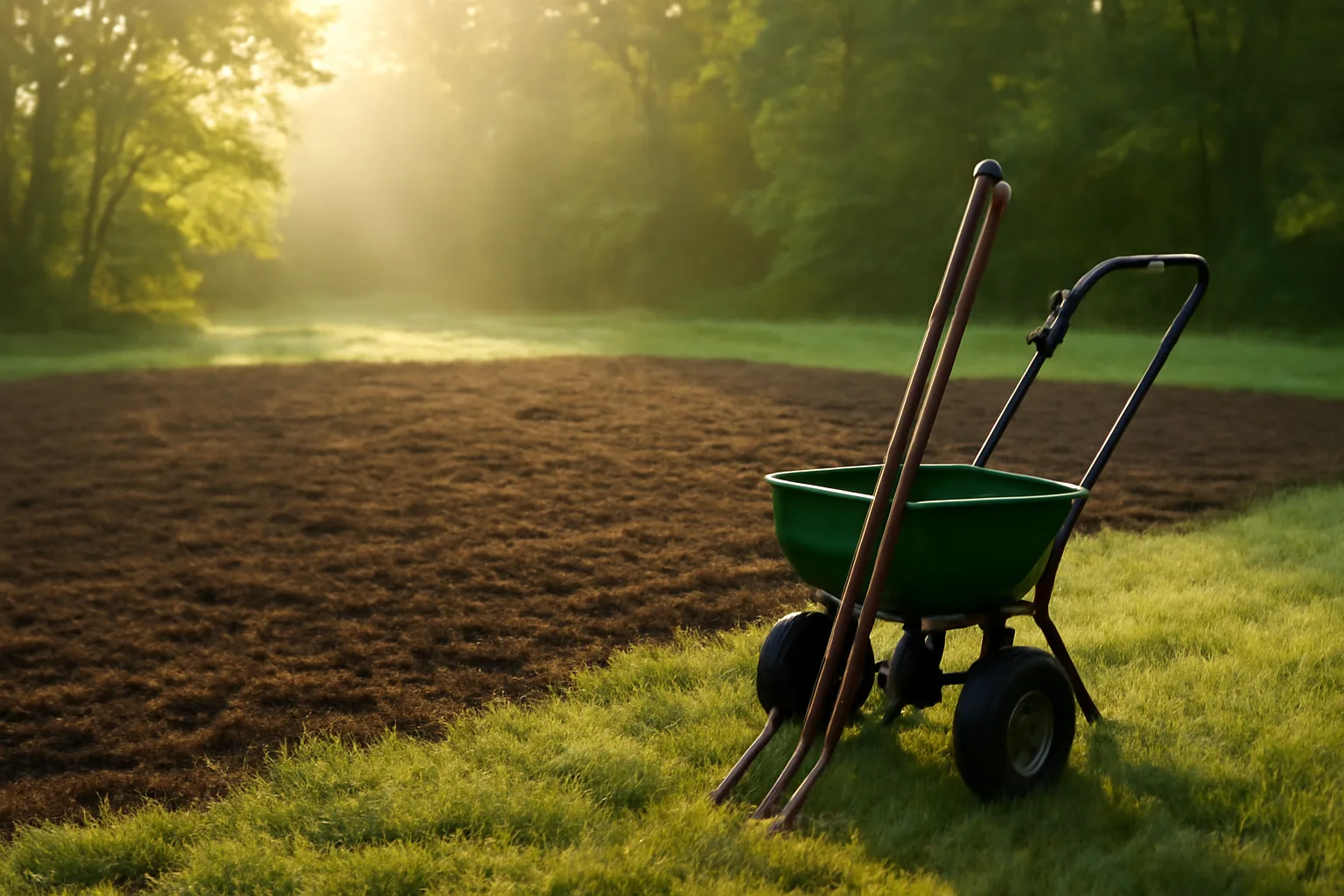
You don't need a full farm operation. A soil test kit or mail-in sample bag, a broadcast spreader (hand-crank for small plots, ATV-mounted for anything over an acre), some way to disturb the seedbed (disc, harrow, or tiller), and a way to firm the seed in (cultipacker, roller, or even driving over it with an ATV) covers 90% of spring plots. A no-till drill is a real upgrade if you're planting more than a few acres regularly or working ground you don't want to till every year, but they're expensive to buy outright; renting one from a local co-op or conservation district for a weekend is the more common route for hunters plotting under 10 acres. Sprayers matter more than people think. A 2 to 4 gallon backpack sprayer or a small tow-behind sprayer for herbicide burndown before no-till planting will save you more frustration than almost any other tool, especially on ground with heavy existing grass or weed pressure. If you're building out a full plot system across several fields, it's worth reading through deer food plots and food plot whitetail for equipment and layout ideas specific to different property sizes.
How much does spring seed and fertilizer typically cost?
Costs swing a lot by region, seed blend, and whether you're buying bulk or bagged. As a rough planning figure: basic clover seed runs somewhere around $4 to $8 per pound and you're typically seeding at 6-8 lbs/acre for a straight white clover stand, so seed alone lands in the $30-$60/acre range. Soybean seed for food plots (bagged, not treated commercial ag seed) often runs higher, sometimes $50-$100+ per acre depending on the blend and seeding rate. Fertilizer cost depends entirely on your soil test results, which is exactly why skipping the test doesn't save money, it just means you're guessing at rates instead of buying only what you need. Lime, if required, is usually priced by the ton delivered and spread, and costs vary heavily by region and hauling distance. If your goal is a specific plan matched to your acreage, seed budget, and actual soil test numbers rather than these regional averages, that's the gap our $99 Custom Food Plot Plan is built to close, one-time cost, built around your property instead of a national average.
Frequently asked questions
Do deer eat sorghum?
Yes, deer eat both the leaves and grain heads of sorghum, though it's usually planted as a fall/winter grain source and cover crop rather than a top preference forage. It works well mixed with soybeans or cowpeas and tolerates drought and sandy soil better than corn.
Do deer eat clover?
Yes, clover is one of the most consistently preferred food plot forages, high in crude protein (often 20-30%) and eaten heavily in spring, summer, and again in fall. It's a cool-season perennial that can produce for 3-5 years once established.
When to plant deer food plots?
Timing depends on species and region. Warm-season annuals (soybeans, sorghum) go in after your last frost when soil hits 60-65°F, typically April-June depending on zone. Cool-season crops like clover and oats are planted in early spring or late summer/fall, and brassicas like turnips go in July-September, not spring.
Do deer like clover?
Yes, clover is a top-tier preferred forage for whitetail deer across most of the country. It's high in protein, regrows after grazing and mowing, and provides season-long food from spring through fall, making it one of the most common perennial plot choices.
When to plant oats for deer?
For fall food plots, plant oats in late summer to early fall (roughly August-September). For spring use, oats can be planted early as a quick cool-season cover or nurse crop for clover, but they head out and lose palatability fast once it warms up.
When to plant food plots for deer overall?
There's no single date; it depends on species and your USDA hardiness zone. Deep South growers plant warm-season crops mid-April through May, transition zone states plant late April through June, and the upper Midwest often waits until late May or June for warm-season plantings.
When to plant turnips for deer?
Turnips are a fall crop, planted July through early September so they mature into cool fall weather, which improves their sugar content and palatability after a frost. Spring-planted turnips bolt and become unpalatable before hunting season, so don't plant them in spring.
What is a food plot?
A food plot is a planted area of forage crops, ranging from a quarter acre to several acres, established specifically to feed and attract deer or other wildlife on a property. It differs legally and practically from baiting, which involves piled feed rather than a growing crop.
What are deer's favorite foods?
Field research and decades of plotting experience consistently show soybeans and clover as top preference forages during the growing season, with acorns and other mast being highly preferred when available. Corn and grains become more attractive in late fall and winter.
Do deer like honey?
No, deer don't seek out honey in the wild since they're herbivores, not omnivores. Commercial attractants sometimes use molasses or sugar for flavor, which deer are drawn to for carbohydrates and salt content, but these are separate from planted food plots and often fall under state baiting regulations.
Should I till or no-till my spring food plot?
Both work. Tillage gives more reliable seed-to-soil contact for beginners with basic equipment, while no-till preserves soil moisture and reduces erosion but requires a no-till drill or a burndown herbicide application first. Choose based on your equipment access and how much erosion risk your site has.
How soon before planting should I get a soil test?
Test 4-6 weeks before your planned planting date. This gives lab turnaround time (typically 1-2 weeks) plus time to apply lime, which can take several months to fully adjust soil pH according to Penn State Extension guidance, so earlier is always better than later.
Can I plant clover and soybeans in the same spring plot?
Not usually in the same seeding, since soybeans are a warm-season annual planted after frost and clover is a cool-season perennial best seeded earlier in spring or in fall. Many hunters run them as separate plots or rotate clover into a field after a soybean year.
Sources
- University of Wisconsin-Madison, Team Forage, Frost Seeding Legumes into Established Grass Stands: Frost-seeding clover into existing sod in late winter is a recognized low-cost establishment method
- Oklahoma State University Extension, PSS-2142, Oat Production Guide: Standard oat seeding rate guidance for forage vs nurse crop use
- Warren, R.J., "Deer Overabundance" in Wildlife Society Bulletin, Vol. 25, No. 2 (1997), pp. 213-214, JSTOR: Soybeans and clover ranked among top preferred food plot forages in field trials
- University of Missouri Extension, Publication G9101, Soil Sampling for Nutrient Management: Nutrient uptake drops significantly in soils below pH 5.5 regardless of fertilizer applied
- University of Georgia Extension: Recommendations on clover varieties and their palatability and nutritional value for deer