Last updated 2026-07-25
TL;DR
Most food plots go in during two windows: late July to mid-August for brassicas and early fall cereals, and late August through September for clover, oats, and clover mixes, timed 45-90 days before your first fall frost. Exact dates shift by USDA hardiness zone and soil moisture, not the calendar alone.
what is a food plot, exactly
A food plot is a planted patch of forage on hunting land, usually somewhere between a quarter acre and a few acres, grown specifically to feed and hold deer or other wildlife. It's not a lawn and it's not a farm field, though it borrows techniques from both. Most hunters plant plots in one of two broad categories: annuals like brassicas, cereal grains, and clover blends that get replanted every year or two, and perennials like clover and chicory that can produce forage for three to five years with the right maintenance. The USDA's National Agroforestry Center and state extension services both treat food plots as a wildlife habitat management tool, not agriculture in the commodity sense. Purdue Extension describes them plainly as "small plantings of forage crops managed specifically to attract and nourish wildlife" [1]. The goal isn't yield per acre in the way a corn farmer thinks about it. The goal is nutrition timed to when deer need it and attraction timed to when you want them on camera or in range. Size and shape matter less than most people think. A half-acre kill plot tucked into timber does a different job than a 3-acre destination field planted for winter nutrition. Neither is more legitimate than the other. What matters for this article is timing, because a plot planted on the wrong date can fail completely regardless of species choice, soil test, or seed cost. If you haven't picked species yet, our guide to food plot whitetail strategy and the deeper dive on deer food plot seed options are worth reading before you lock in a planting date, since the calendar depends heavily on what you're putting in the ground.
when to plant food plots for deer, in general terms
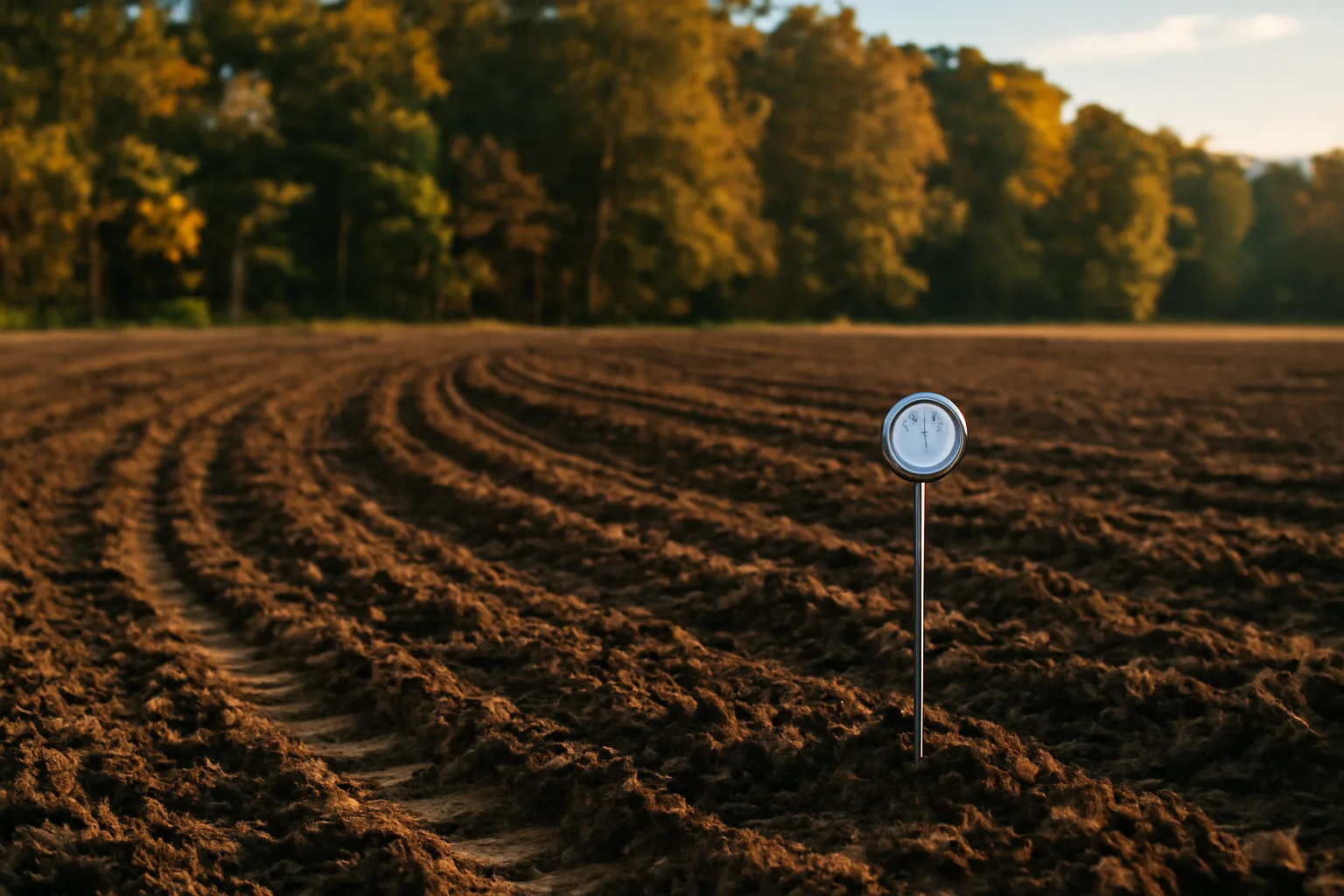
Two planting windows cover almost every food plot in the country: a summer window (roughly mid-July through mid-August) for brassicas and some cereal grain blends, and a late-summer to early-fall window (mid-August through September, sometimes into early October in the South) for clover, oats, and most fall annual mixes. The exact date depends on your first expected fall frost, not a fixed calendar day. The reason frost date matters so much: brassicas like turnips and radishes need 80 to 90 days of growing time to bulb out and reach peak palatability, and their sugar content increases after a light frost converts starches to sugar, which is why deer often ignore a turnip plot in September and hammer it in December. Cereal grains like oats and winter wheat germinate fast (5 to 10 days in warm soil) and are more forgiving on timing, but they still need 4 to 6 weeks of growth before you can expect deer to find them attractive. A simple rule extension agents repeat often: count backward from your average first frost date. Plant brassicas 80 to 100 days before frost. Plant clover and cereal grains 45 to 60 days before frost. You can find your local first-frost date through NOAA's Climate Data Online tool or your state climate office; frost dates vary by 3 to 4 weeks even within the same state depending on elevation and latitude. Soil temperature is the other trigger, and it matters more than soil test results for timing purposes. Your soil test still governs lime and fertilizer rates, and that's a job for your lab's recommendation, not a blanket rule. Clover and brassica seed germinate well once soil temps hit 55°F to 60°F at planting depth. A soil thermometer costs under $10 and is one of the better investments a food plot budget can make, because guessing at soil warmth by air temperature alone gets people into trouble every spring.
when should I plant food plots for deer by usda zone
| 3-4 | Northern Minnesota, North Dakota | July 15 - Aug 1 | Aug 1 - Aug 20 | |
|---|---|---|---|---|
| 5-6 | Iowa, Ohio, Pennsylvania, Kansas | July 20 - Aug 10 | Aug 15 - Sept 10 | |
| 7 | Virginia, Tennessee, Oklahoma | Aug 1 - Aug 20 | Sept 1 - Sept 25 | |
| 8-9 | Georgia, Alabama, Louisiana, Texas coast | Aug 15 - Sept 10 | Sept 15 - Oct 15 | These ranges are starting points, not guarantees. A wet August in zone 6 might push planting a week later; a drought will push it later still, since seed sitting in dry soil doesn't germinate and just waits (sometimes rots) until moisture arrives. Watch your local weather forecast for a 7 to 10 day rain window rather than planting on a fixed date regardless of conditions. Spring plantings (soybeans, corn, spring clover, some warm-season annual blends) run on the opposite logic: plant after your last spring frost date once soil temps hit 50°F to 60°F, which in most of the whitetail's range falls between mid-April and late May. Spring plots are less common for hunting purposes since they mature before hunting season, but they matter for spring/summer nutrition during antler growth and lactation. |
USDA Plant Hardiness Zones don't perfectly predict food plot timing (they're built around average annual minimum winter temperature, not first/last frost), but they correlate closely enough to give a workable framework, and the USDA's zone map is the standard reference tool for this kind of regional planning. | USDA Zone | Region example | Brassica planting window | Clover/cereal grain window |
when to plant clover for deer
Plant perennial clover in late summer (mid-August to mid-September in most of the whitetail range) or early spring (March through April) once soil temps reach the mid-50s. Late summer plantings generally establish better because there's less weed competition and the young clover has all fall, winter, and spring to build root reserves before summer heat and drought stress. Clover seed is tiny, tiny enough that planting depth is the single most common mistake. Extension guidance from land-grant programs recommends planting clover no deeper than a quarter inch, often just pressed into the soil surface with a cultipacker or roller rather than covered with a drill [2]. Too deep and it never emerges. A firm, weed-free seedbed matters more for clover than for almost any other food plot species, because clover seedlings are slow and weak early on and get outcompeted fast by ragweed, foxtail, or crabgrass if the ground isn't clean. Many experienced plotters spray glyphosate 2 to 3 weeks before planting, let the vegetation die and start to break down, then plant into that residue with minimal soil disturbance. Once established, a good clover stand (ladino or red clover, or a blend) can produce forage for 3 to 5 years with annual mowing and a maintenance lime/fertilizer application based on soil test results. That's the appeal: one solid planting window pays off across multiple hunting seasons, versus replanting brassicas or cereal grains every single year.
do deer like clover, and is it worth the ground
Yes. Clover is one of the most consistently preferred forage species in whitetail research and in practical food plot use, and it's arguably the single best all-around perennial choice for most hunters. It's high in protein (typically 20-25% crude protein in good stands), and deer will use it from spring green-up through fall, which spreads attraction and nutrition across more of the year than any single annual species can. Deer preference for clover has been documented across multiple food plot forage trials, generally ranking alongside soybeans and certain brassica varieties depending on season [3]. That said, no single study should be read as a universal ranking; deer preference shifts by region, by what's already growing wild nearby, and by season, so a clover plot that gets hammered in your neighbor's woods might get lighter use on your ground if there's an oak flat dropping acorns nearby. The practical case for clover isn't just palatability, it's duration. A brassica plot gives you roughly a 6 to 10 week attraction window each fall. A good clover stand gives you spring through fall use, year after year, off one planting and maintenance cycle. If you're only planting one food plot on a property, clover (or a clover/chicory blend) is usually the safest single choice.
when to plant oats for deer
Plant oats in late summer, generally 6 to 8 weeks before your first fall frost, which lines up with mid-August in the northern half of the whitetail range and September into early October across the South. Oats germinate fast, often within 5 to 7 days in warm, moist soil, and deer will hit young oat shoots almost as soon as they're a few inches tall. Oats are a cool-season annual grain and one of the most forgiving food plot species for a first-time planter. They tolerate a wider soil pH range than clover, they establish fast enough to outcompete a lot of weed pressure just through sheer growth speed, and seed cost is low compared to many blended products. The tradeoff is winterkill: straight oats generally die back once temperatures drop into the low 20s and stay there, meaning in far northern zones an oat plot might only carry through early winter before it browns out completely, while in the South (zone 7 and warmer) oats can stay green and grazable most of the winter. Many hunters blend oats with winter wheat or winter rye specifically to hedge against that winterkill risk, since wheat and rye tolerate much colder temperatures and will often green back up in late winter or early spring when oats are long done. A straight oat plot planted alone works fine for an early-season or mid-season attraction plot; blend in a cold-hardy grain if you want the plot to carry into the late season.
when to plant turnips for deer, and other brassicas
Plant turnips 80 to 90 days before your first expected fall frost, which puts most of the country somewhere between mid-July and mid-August. This is the single most common timing mistake in food plotting: turnips planted too late (say, early September in a zone 6 area) never get the growing season length to bulb out and just sit as small, tough greens deer largely ignore. Brassicas as a category (turnips, radishes, rape, kale, and canola-type varieties) are cool-season biennials grown as annuals, and their appeal to deer changes dramatically through the season. Early on, deer eat the leafy tops, sometimes lightly, sometimes not much at all if there's other food around. It's after the first hard frosts convert starches in the bulb and root to sugars that brassica plots often see the heaviest use, frequently in late November through January depending on region. University extension research programs across the whitetail's range have documented this frost-triggered palatability shift in brassica-focused food plot trials. That delayed-use pattern is exactly why brassicas make a good late-season plot and a poor October kill-plot choice in a lot of areas; the plants might be alive and green in October but not yet sweet enough to pull heavy traffic. If your goal is a late-season food source, brassicas planted on the July/early-August window are one of the better tools available. If your goal is early bow season attraction, lean toward clover, soybeans, or an early-maturing cereal grain instead.
do deer eat sorghum, and does it belong in a food plot
Yes, deer eat grain sorghum, but it's used far more often as a screening and standing-cover crop or as a component in a wildlife blend than as a primary attractant, since deer generally rank it below corn, soybeans, and most brassicas in direct forage preference. Sorghum's real value in a food plot program is height and structure: it grows 5 to 8 feet tall, creates dense screening cover along field edges or plot perimeters, and its seed heads provide a late-season food source for deer and several species of upland birds and small game once other food sources thin out. Grain sorghum is planted in late spring after soil temperatures reach roughly 60°F to 65°F, generally mid-May through June depending on region, since it's a warm-season crop with a frost sensitivity similar to corn. It's drought-tolerant compared to corn, which makes it a practical choice in the drier parts of the whitetail's range (west Texas, Kansas, Nebraska) where corn struggles without irrigation. If your goal is pure deer attraction, sorghum isn't the first choice on the list. If your goal is a screening strip that also feeds deer, turkey, and quail into the late winter, it's a legitimate and often underused tool.
what are deer's favorite foods, food plot species and otherwise
There's no single "favorite," because whitetail food preference shifts by season, region, and what's naturally available, but research and practical experience consistently put acorns, soybeans, and clover near the top of the list, with brassicas rising sharply in preference after frost. A whitetail's diet is opportunistic and seasonal by nature, not fixed. Acorns are frequently cited as the single most preferred natural fall food across the whitetail's range when available, and white oak acorns in particular are lower in tannins and more palatable than red oak acorns, which is documented in USDA Forest Service research on oak regeneration and wildlife use [4]. No food plot competes with a good acorn drop in a mast year, which is one reason experienced hunters watch acorn production before deciding how hard to lean on plots that same season. Among planted food plot options, soybeans (both forage and grain varieties) are heavily preferred through summer, clover holds preference from spring through fall, and brassicas take over as a preferred food once frost sweetens them. Corn is preferred as a late-season energy source, especially in the northern part of the range where deer need calories to survive cold winters, but standing corn is also one of the more expensive and equipment-intensive plots to grow well. One honest caveat worth repeating: state agencies regulate baiting and supplemental feeding very differently from food plots, and the line between the two matters legally. A standing, unharvested food plot is legal in most states even where baiting (piles of corn, mineral, or feed) is banned, but a few states regulate plot practices too, so check your state wildlife agency's current baiting and feeding regulations before you plant, especially if you're near a state line or in a state with CWD-related feeding restrictions.
do deer like honey (and does it matter for food plots)
There's no research or practical food plot use behind deer and honey, and it's not a relevant question for planting decisions. Deer are herbivores built around a rumen digestive system suited to browse, forbs, and mast, not concentrated sugars like honey, and there's no established deer attractant product or extension guidance built around it. Some commercial deer attractant sprays include sugar-based or molasses-based scent components, which is a different thing entirely from planting honey or using it in a plot. If you've seen this question floating around, it's likely conflated with mineral licks, sugar beet plots, or molasses-based mineral supplement products, all of which are real food plot and supplement tools with actual research behind them. None of them involve honey specifically. Skip it and put the budget toward soil amendments instead; a $20 soil test tells you more about what your deer will actually eat than any attractant on a shelf.
how do I build a planting calendar for my specific property
Start with your average first fall frost date (NOAA climate data or your state extension office both publish this by county), then count backward using the species windows above: 80-100 days for brassicas, 45-60 days for clover and cereal grains. Layer in a soil test result before you plant anything, since lime takes months to fully adjust soil pH and planting into unamended acidic soil is one of the most common reasons a food plot underperforms regardless of timing. A practical approach a lot of experienced plotters use: split larger properties into an early plot (soybeans or clover, planted late spring/early summer for summer and early-fall attraction) and a late plot (brassicas or a brassica/cereal blend, planted in the July/August window for late-season nutrition). That combination covers more of the calendar than any single planting date can. If you'd rather not build that calendar from scratch, a soil test in hand and a general sense of your property's layout is really all you need to get a workable, property-specific plan; that's the exact gap the $99 one-time Custom Food Plot Plan is built to fill, matching species and planting windows to your zone, soil, and goals rather than a generic calendar. It won't replace what your soil lab tells you about lime and fertilizer rates specific to your dirt, but it will tell you what to plant and when. For species selection before you commit to a calendar, deer food plots and food plot seed both cover blend options in more depth, and deer for food and domain food plot seed round out the species-specific detail worth reading before seed hits the ground.
Frequently asked questions
When is the best time to plant food plots for deer?
Most of the country splits into two windows: mid-July through mid-August for brassicas (which need 80-100 days before frost to bulb out), and mid-August through September for clover and cereal grains like oats (which need 45-60 days). Exact dates shift by USDA zone and local frost date, so count backward from your area's average first frost rather than using a fixed calendar day.
When should I plant turnips for deer?
Plant turnips 80 to 90 days before your first fall frost, generally mid-July to mid-August across most of the whitetail range. Turnips planted later than that often fail to bulb out fully before frost, and their sugar-boosting palatability shift happens after a hard frost, so late-planted turnips end up small, tough, and largely ignored by deer.
When is the right time to plant oats for deer?
Plant oats 6 to 8 weeks before your first fall frost, usually mid-August in northern zones and into September or early October across the South. Oats germinate in 5 to 7 days in warm soil and deer often browse the young shoots almost immediately, but straight oats winterkill in hard freezes, so blend with wheat or rye if you want late-winter forage.
Do deer eat sorghum?
Yes, but sorghum ranks below corn, soybeans, and brassicas in direct deer preference. It's more valuable as tall screening cover and a late-season seed head food source for deer and upland birds than as a primary attractant crop. It's planted in late spring, mid-May through June, once soil temps hit 60-65°F.
Do deer like clover?
Yes, clover is one of the most consistently preferred whitetail forages in research and field use, running 20-25% crude protein in good stands and providing usable forage from spring through fall. It's a strong first-choice perennial for hunters who only want to maintain one type of plot, since a good stand lasts 3 to 5 years with proper maintenance.
What is a food plot, exactly?
A food plot is a planted patch of forage, typically a quarter acre to several acres, established specifically to feed and attract deer or other wildlife rather than for commodity crop yield. It can be an annual planting like brassicas or cereal grains, replanted yearly, or a perennial stand like clover that produces forage for multiple seasons.
What are deer's favorite foods overall?
There's no single fixed favorite since preference shifts by season and region, but acorns (especially white oak) rank among the most preferred natural fall foods, and among planted options, soybeans, clover, and frost-sweetened brassicas consistently rank high. No food plot reliably outcompetes a good acorn drop during a mast year.
Do deer like honey?
There's no meaningful research or practical food plot use connecting deer and honey; it's not a relevant consideration for plot planning. Deer are herbivores adapted to browse and mast, not concentrated sugars, and no established attractant product or extension guidance is built around honey specifically.
When should I plant a fall food plot versus a spring one?
Fall plots (clover, brassicas, oats, wheat) go in mid-July through September depending on species and frost timing, aimed at fall and winter deer nutrition and hunting-season attraction. Spring plots (soybeans, spring clover, warm-season blends) go in after your last frost, generally mid-April through May, and support spring green-up and antler-growth nutrition rather than fall hunting.
How do I know my exact planting date instead of a general window?
Find your county's average first and last frost dates through NOAA Climate Data Online or your state extension office, then count backward using species-specific day counts (80-100 days for brassicas, 45-60 for clover and cereal grains). Watch for a 7-10 day forecast window with adequate soil moisture rather than planting on a fixed calendar date regardless of conditions.
Does soil temperature matter more than the calendar date for planting?
Yes, in practical terms. Clover and brassica seed germinate reliably once soil temperature at planting depth hits 55-60°F, and a cheap soil thermometer is a better planting guide than air temperature or a fixed date, since a warm spell or a cold snap can shift real soil conditions by weeks compared to average calendar timing.
Can I plant food plots without a soil test?
You can, but you're guessing at lime and fertilizer needs, and acidic soil is one of the most common reasons plots underperform regardless of planting date. A soil test (often free or low-cost through your county extension office) tells you your lab's specific lime and fertilizer recommendation, which should govern amendments rather than a generic rule.
Sources
- Purdue Extension, Food Plots for Wildlife: Definition of food plots as small forage plantings managed to attract and nourish wildlife
- University of Kentucky College of Agriculture, Establishing Forage Legumes: Clover should be planted no deeper than a quarter inch due to small seed size
- Journal of Wildlife Management, whitetail deer forage selection studies: Clover, soybeans, and certain forage species rank among top deer forage preferences in field trials
- USDA Forest Service, Southern Research Station: oak regeneration and wildlife: White oak acorns are lower in tannins and more palatable to deer than red oak acorns
- Iowa State University Extension and Outreach: Oats are a cool-season annual forage that establishes quickly and is commonly planted in late summer for fall grazing or food plots