Last updated 2026-07-25
TL;DR
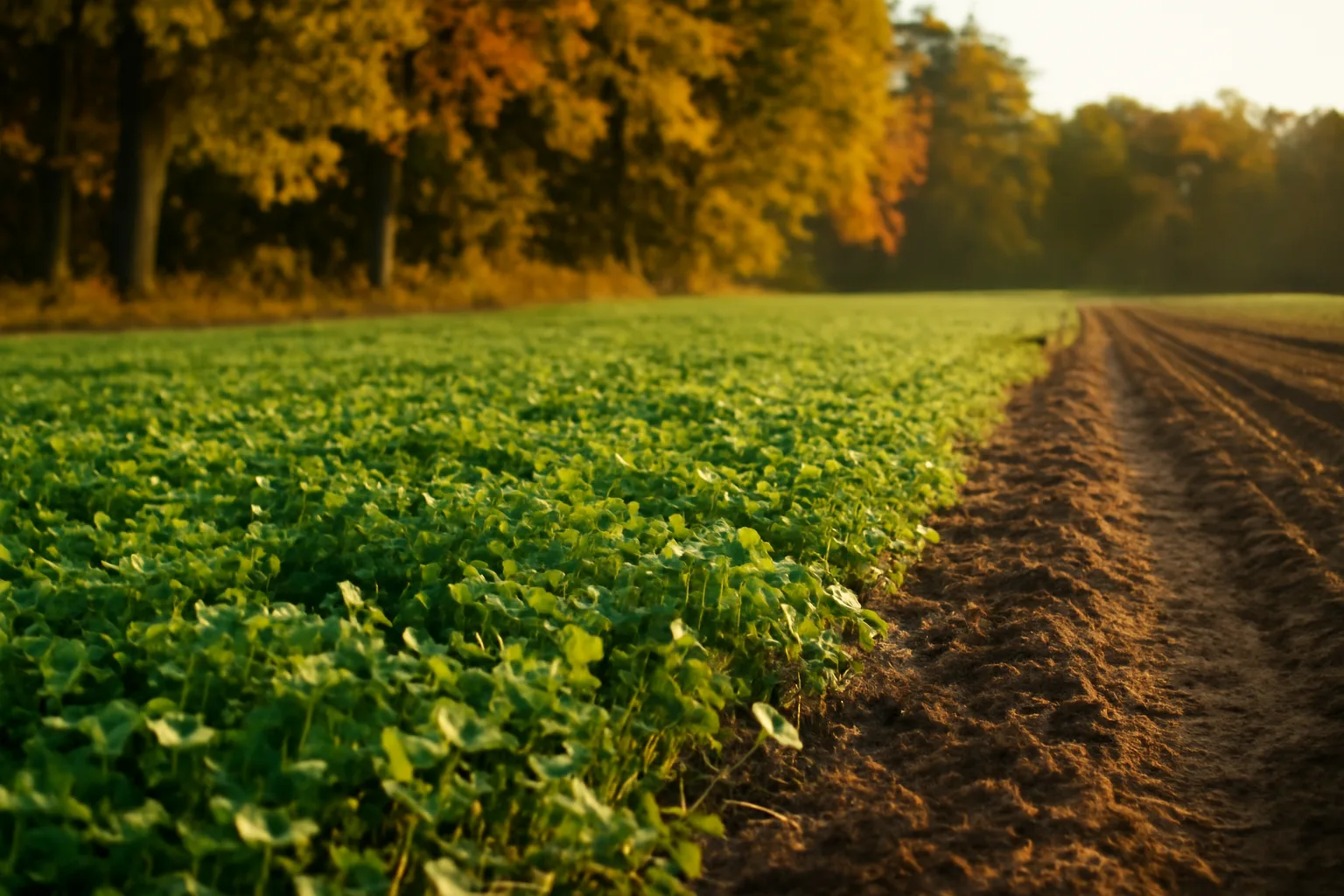
White clover is a perennial legume that deer graze spring through fall, lasting 3-5 years per seeding when maintained. Plant it in late summer to early fall (or early spring in the north) at 6-8 lbs/acre broadcast, into soil with pH 6.0-7.0. It's one of the highest-protein, lowest-cost plots you can plant per year of coverage.
What is a food plot, and where does white clover fit in?
A food plot is a planted area, usually somewhere between a quarter acre and several acres, that's managed to grow forage deer and other wildlife will eat. Landowners plant them to add nutrition to a property, concentrate deer activity in huntable spots, or both. State wildlife agencies generally treat food plots as normal agriculture, not baiting, as long as the crop is planted and left in the ground rather than piled or scattered loose. That distinction matters because baiting rules vary a lot by state and some states ban baiting outright while allowing food plots without restriction. Check your state wildlife agency's regulations before you plant if you're unsure where the line is drawn where you hunt. White clover (Trifolium repens) is a perennial legume and one of the most planted food plot species in North America, alongside soybeans, brassicas like turnips, and cereal grains like oats. It's a foundation species for a reason: it comes back year after year with minimal replanting, fixes its own nitrogen, and produces forage that's roughly 25-30% crude protein in good stands, according to university extension forage testing [1]. Compare that to a lot of grass hay running 8-12% protein, and you can see why deer key in on clover paddocks especially in spring when does are lactating and bucks are growing antlers. If you're building out a full plot plan and trying to decide where clover fits alongside brassicas, grains, and legumes, that's a bigger planning question than a single seed choice. It's worth mapping out a mix across your property rather than betting on one species. For a broader look at whitetail plot strategy, see food plot whitetail.
Do deer like clover?
Yes, and it's not close. Clover consistently ranks as one of the most preferred food plot forages in grazing studies and is a staple recommendation from nearly every state extension wildlife program. Deer will hit a healthy clover plot almost as soon as it's established, and they'll keep coming back through spring, summer, and fall as long as you keep it mowed and weed-free. Part of the appeal is timing. Clover greens up early in spring, before most native browse, and it holds nutritional value through a long stretch of the growing season. The Mississippi State University Deer Lab, one of the most cited whitetail research programs in the country, has long recommended clover as a base planting for exactly this reason: it delivers protein when does need it most for lactation and when bucks are rebuilding antler mass. The catch is that clover's popularity with deer is also why it gets hammered in small plots. A half-acre clover patch surrounded by heavy deer density can get grazed down to nothing by early summer if you don't have enough acreage to spread the pressure out. General extension guidance is that clover tolerates grazing pressure better than most legumes, but overgrazing without any rest still stunts stands. If your property carries a lot of deer relative to plot acreage, plan on more total clover acreage or pair it with other plots so pressure gets spread out. See deer food plots for acreage planning ideas.
When should you plant white clover food plots?
Clover has two planting windows, and which one you use depends mostly on your climate zone. In the northern half of the whitetail range, spring planting (April through May) is standard, timed after the last hard frost and while soil is still cool and moist. In the transition zone and south, late summer to early fall planting (August through October) tends to establish better because it avoids summer heat stress on new seedlings and lets the clover root in before winter dormancy. Penn State Extension recommends planting clover in the spring in northern climates or late summer in the south, matching the seedling establishment window to when soil moisture and temperature are most favorable. Trying to plant clover into the peak of a hot, dry July almost anywhere in the country is a good way to burn a bag of seed for nothing. Soil temperature matters more than the calendar date. You want soil in the 50-85°F range for clover germination, which is why the shoulder seasons work better than deep summer or the coldest parts of winter. If you're not sure which window fits your specific location, a soil test and a planting date matched to your frost dates will get you further than following a generic calendar. This is one of the places where a written Custom Food Plot Plan earns its $99, because it maps species and dates to your actual zone instead of a national average.
When should you plant food plots for deer in general?
Most food plot species fall into one of two seasonal windows: spring plantings for summer-long forage (soybeans, clover, some grain mixes) and late-summer/early-fall plantings for fall and winter forage (brassicas, cereal grains, clover again). Your specific dates depend on your USDA plant hardiness zone and your average first frost date, which the USDA maintains by zone and county. A rough national framework looks like this: perennial clover and chicory go in spring (April-May north, or fall in the deep south) so they have a full season to establish roots before their first winter. Annual brassicas and cereal grains go in late summer, generally 60-90 days before your average first frost, so they mature right as hunting season opens. Soybeans and other warm-season annuals go in after your last frost date in late spring. The honest answer is that there's no single national planting calendar that works everywhere. A plot planted in early September in Alabama and one planted in early September in Minnesota are on completely different clocks relative to frost. Cooperative extension offices publish state-specific planting calendars for exactly this reason, and checking yours before you buy seed saves a wasted trip to the feed store.
When should you plant oats for deer?
Oats are a fall annual for most of the whitetail range, planted 6-8 weeks before your first expected frost so they can establish and start tillering before cold weather slows growth. That generally lands somewhere between mid-August in northern states and late September or even October in the deep south. Oats are attractive to deer because they green up fast, often within a week or two of a good rain, and they stay palatable well into fall since deer prefer the tender young growth over mature, fibrous plants. University extension forage guides note oats can also serve as a nurse crop, protecting slower-establishing clover seedlings planted in the same pass. That's a common combo: oats for quick fall tonnage, clover underneath for the following spring. Oats generally winterkill in colder zones, meaning they die back after a hard freeze and won't return next spring the way clover does. That's fine if you're using them as an annual fall attractant, but it means you're rebuying oat seed every year, unlike clover's multi-year stands.
When should you plant turnips for deer?
Turnips, like other brassicas, go in the ground 60-90 days before your first fall frost, which puts most planting windows somewhere between late July and early September depending on latitude. Get them in too late and the bulbs won't size up before cold weather stops growth. Turnips are a two-stage food source. Deer often ignore the leafy tops early in fall when there's still plenty of other browse around, then switch hard to both the tops and the bulbs after the first few frosts convert starches to sugars and make the plant sweeter. That's why turnip plots often look untouched in October and get hammered in late November and December, a pattern extension wildlife programs and hunters both report consistently. Because turnips are an annual, they don't come back next year on their own. If you like how a turnip plot performs, you're replanting it every late summer, same as oats.
Do deer eat sorghum?
Yes, deer eat grain sorghum, both the seed heads and the young plant tissue, though it's more commonly planted as a wildlife food source for a wider guest list than deer alone, including turkey, quail, and dove. Grain sorghum is a warm-season annual that's drought-tolerant, which makes it a reasonable pick in drier regions or on sandy soils where corn struggles. Sorghum isn't usually a first-choice deer plot species the way clover, soybeans, or brassicas are, but it's a solid secondary planting, especially where you want standing grain that holds up through winter for multiple species. If deer are your only target, your seed dollars generally go further in clover or beans. If you're managing habitat for a broader wildlife mix, sorghum earns a spot in the rotation.
Do deer like honey?
There's not real research on whitetail deer specifically seeking out honey in the wild, and it isn't a food plot crop or forage species in any sense, so this doesn't come up in wildlife management literature. What people usually mean when they ask this is either "do deer like sweet things" (yes, deer are drawn to high-sugar forage like frosted brassicas and ripe fruit, which is part of why post-frost turnips get hit hard) or they're asking about mineral and attractant products that include molasses or sugar-based additives, which some hunters use to increase palatability of mineral sites. Check your state's baiting and feeding regulations before using any sugar-based attractant or mineral supplement, since rules on scent lures, minerals, and supplemental feed vary widely by state and some states classify sugar-based products as bait. Your state wildlife agency's baiting regulation page is the authoritative source, not a product label.
What are deer's favorite food, and where does clover rank?
| White clover | Perennial legume | 25-30% | 3-5 years | Spring-fall, high traffic | |
|---|---|---|---|---|---|
| Soybeans | Annual legume | 30-40% (forage stage) | 1 year | Summer, needs acreage vs. deer density | |
| Brassicas (turnips) | Annual | 15-25% leaves | 1 year | Late fall, post-frost | |
| Oats | Annual cereal grain | 12-16% | 1 year (winterkills) | Early fall attraction | |
| Grain sorghum | Annual | Lower, grain-based | 1 year | Multi-species, drought areas | In the wild, outside plots entirely, deer diets shift heavily toward acorns and other mast in fall where available, since acorns pack a lot of fat and carbohydrate for winter prep. A food plot doesn't replace that natural mast crop, it supplements it, especially in years when acorn production is spotty. |
Deer are selective browsers, and what ranks as a favorite shifts by season, region, and what's available naturally. That said, across food plot species specifically, clover, soybeans, and brassicas consistently come up as top performers in state extension guidance and university deer research, largely because of protein content and palatability relative to native browse [1]. Here's a rough comparison across common food plot species: | Species | Type | Protein (approx.) | Stand life | Typical use |
How much does white clover seed cost, and how do you plant it right?
White clover seed generally runs $3-6 per pound retail depending on variety (Ladino types tend to cost a bit more than common white clover) and whether it's sold raw or pre-inoculated. Seeding rate is typically 6-8 lbs per acre broadcast, or as low as 2-3 lbs/acre if drilled, since drilling gets better seed-to-soil contact with less seed wasted. That puts total seed cost for a one-acre broadcast planting somewhere around $20-50, which is cheap compared to annual replanting costs for brassicas or grains over the same multi-year window. Clover seed is tiny, so planting depth matters. You want it at or barely below the surface, no deeper than a quarter inch, which is why a lot of guys just broadcast it onto a firm, worked seedbed and cultipack it in rather than drilling it deep. Planting too deep is one of the most common reasons a clover plot fails to establish. Soil pH is the other big lever. Clover wants pH in the 6.0-7.0 range, and it's genuinely sensitive to acidic soil, more so than a lot of grains. A soil test is the only honest way to know where you stand; guessing at lime rates wastes money in both directions, either underliming and getting a weak stand or overliming and wasting a truck delivery you didn't need. Land-grant extension offices in nearly every state offer soil testing for a small fee, usually under $20, and will send back a report with pH and lime/fertilizer recommendations specific to your sample. Your soil test lab is the real authority on lime and fertilizer rates for your dirt, more so than any general seeding chart, including this one. For deeper detail on species selection or seed sourcing more broadly, see deer food plot seed and food plot seed.
What equipment do you need to plant white clover?
You don't need much. A firm, weed-free seedbed, a way to broadcast seed evenly (a hand-crank spreader works fine on small plots, a broadcast spreader on an ATV or tractor for anything over an acre), and a cultipacker or roller to press seed into contact with soil. Because clover seed is so small and light, it's easy to overseed by hand and end up with a stand that's too thick, so calibrate your spreader or at least do a test pass on a tarp before you commit the whole bag. A lot of clover failures aren't a seed problem at all, they're a weed control problem. Clover competes poorly with grass and broadleaf weeds in its first year, so a clean seedbed (via tillage, herbicide burndown, or both) before planting makes a bigger difference than which clover variety you buy. Once established, clover-safe grass herbicides like clethodim let you clean up grass competition in following years without killing the clover itself, though always check label rates and timing. Fertility maintenance matters too. Clover fixes its own nitrogen through rhizobium bacteria in root nodules, so it generally doesn't need nitrogen fertilizer once established (and adding N can actually encourage weed grasses over clover). Phosphorus and potassium, plus lime if pH drifts, are the nutrients your soil test will usually flag for annual maintenance.
Should you plant white clover alone or in a mix?
Straight clover plots work fine and are the simplest option, but a lot of experienced plotters blend clover with chicory or a small percentage of a cereal grain like oats or wheat at planting. Chicory adds drought tolerance and a deep taproot that clover doesn't have, and a light cereal grain nurse crop protects tender clover seedlings from erosion and weed pressure in the first few weeks. The tradeoff with mixes is complexity. A straight clover plot is easier to manage with clover-safe herbicides since you're not worried about killing a companion species. If your goal is the simplest, lowest-maintenance perennial plot on the property, straight white or Ladino clover is a defensible choice. If you want more resilience to drought and grazing pressure, a clover-chicory blend is worth the extra few dollars a pound. If you're trying to figure out how clover should fit against everything else you're planting this year, including which plots get grain, which get brassicas, and which get clover, that's a whole-property question, not a single-species one. That's exactly the gap a written Custom Food Plot Plan is built to close: a $99 one-time plan that maps species, acreage, and timing to your specific ground instead of a generic national calendar.
Frequently asked questions
Do deer eat sorghum?
Yes. Deer eat grain sorghum seed heads and young plant tissue, though it's more often planted as a general wildlife food source for turkey, quail, and dove alongside deer. It's drought-tolerant and works on sandy or dry soils where corn struggles, but it's usually a secondary choice behind clover, soybeans, or brassicas if deer are your only target.
Do deer eat clover?
Yes, and clover is one of the most consistently preferred food plot forages across university extension and wildlife research, with crude protein commonly measured at 25-30% in healthy stands. Deer graze it from spring green-up through fall, making it one of the highest-value plantings per acre for season-long nutrition.
When to plant deer food plots?
Depends on the species. Perennial clover goes in spring in the north or late summer/fall in the south. Annual brassicas and cereal grains like oats generally go in 60-90 days before your first fall frost. Soybeans go in after your last spring frost. Check your USDA hardiness zone and local frost dates before picking a date.
Do deer like clover more than other food plot options?
Clover ranks at or near the top in most preference studies and extension recommendations, competitive with soybeans in palatability and ahead of brassicas and cereal grains for season-long attraction. It's also one of the cheapest per-year costs since one seeding lasts 3-5 years versus annual replanting for brassicas or grains.
When to plant oats for deer?
Plant oats 6-8 weeks before your area's average first fall frost, generally mid-August in northern states through late September or October farther south. Oats green up quickly and are often planted as a nurse crop over clover or as a standalone fall attractant. They winterkill in cold climates and need replanting every year.
When to plant food plots for deer, spring or fall?
Both windows matter for different species. Spring plantings (soybeans, spring clover seedings) build summer forage; late-summer to fall plantings (brassicas, oats, wheat, fall clover seedings) build fall and winter forage timed to hunting season. Most serious plot plans use both windows across different fields.
When to plant turnips for deer?
Plant turnips 60-90 days before your first fall frost, usually late July through early September depending on latitude. Deer often ignore turnip tops early in fall and switch hard to both leaves and bulbs after the first few hard frosts sweeten the plant through starch-to-sugar conversion.
What is a food plot?
A food plot is a planted area, from a fraction of an acre to several acres, seeded with forage crops to feed deer and other wildlife and often to concentrate animal activity for hunting. Most states treat planted, standing food plots as legal agriculture separate from baiting rules, but always check your state wildlife agency's specific regulations.
What are deer's favorite foods overall?
It varies by season and region, but acorns and other mast rank extremely high in fall due to fat and carbohydrate content, while clover, soybeans, and brassicas top the list among planted food plot species. Preference also shifts with what's locally scarce; deer favor whatever's most nutrient-dense and available at the time.
Do deer like honey?
There's no real wildlife research on deer seeking out honey specifically, and it isn't a food plot crop. Deer are drawn to sweet, high-sugar forage generally, which is part of why frost-sweetened brassicas get hit hard in late fall. Check state baiting rules before using any sugar-based attractant or mineral product.
How long does a white clover food plot last before you need to replant?
A well-maintained white clover stand typically lasts 3-5 years before it thins out enough to need reseeding, longer than any common annual food plot species. Mowing to control weeds, occasional herbicide cleanup, and periodic soil testing for pH and fertility all extend stand life.
What soil pH does white clover need?
White clover performs best in soil with a pH between 6.0 and 7.0. It's more sensitive to acidic soil than many cereal grains, and a soil test is the only reliable way to know your actual pH and lime needs before planting, since guessing in either direction wastes money.
How much clover seed do you need per acre?
Broadcast seeding rates for white clover generally run 6-8 lbs per acre; drilled rates can drop to 2-3 lbs per acre because drilling gets better seed-to-soil contact with less waste. At $3-6 per pound, a one-acre broadcast planting typically costs $20-50 in seed.
Sources
- University of Georgia Extension, Forage Testing and Nutritive Value: Clover forage crude protein commonly falls in the 25-30% range in well-managed stands
- Purdue University Extension, Forage Field Guide: Clover fixes atmospheric nitrogen via rhizobium bacteria and generally does not need nitrogen fertilizer once established
- University of Tennessee Extension, Wildlife Food Plots: Brassica planting windows are generally set 60-90 days before first expected fall frost
- Noble Research Institute: White clover is a highly palatable, high-protein forage favored by deer
- University of Georgia Extension: Recommended seeding rates and equipment for planting food plot crops