Last updated 2026-07-25
TL;DR
Throw and grow food plot mixes (broadcasting seed with no or minimal soil prep) can work for annuals like oats, brassicas, and cereal grains if seed hits bare dirt and gets rain within a week or two. Clover and most perennials need better seed-to-soil contact. Timing follows your first-frost date, not a calendar month.
What does throw and grow food plot mix actually mean?
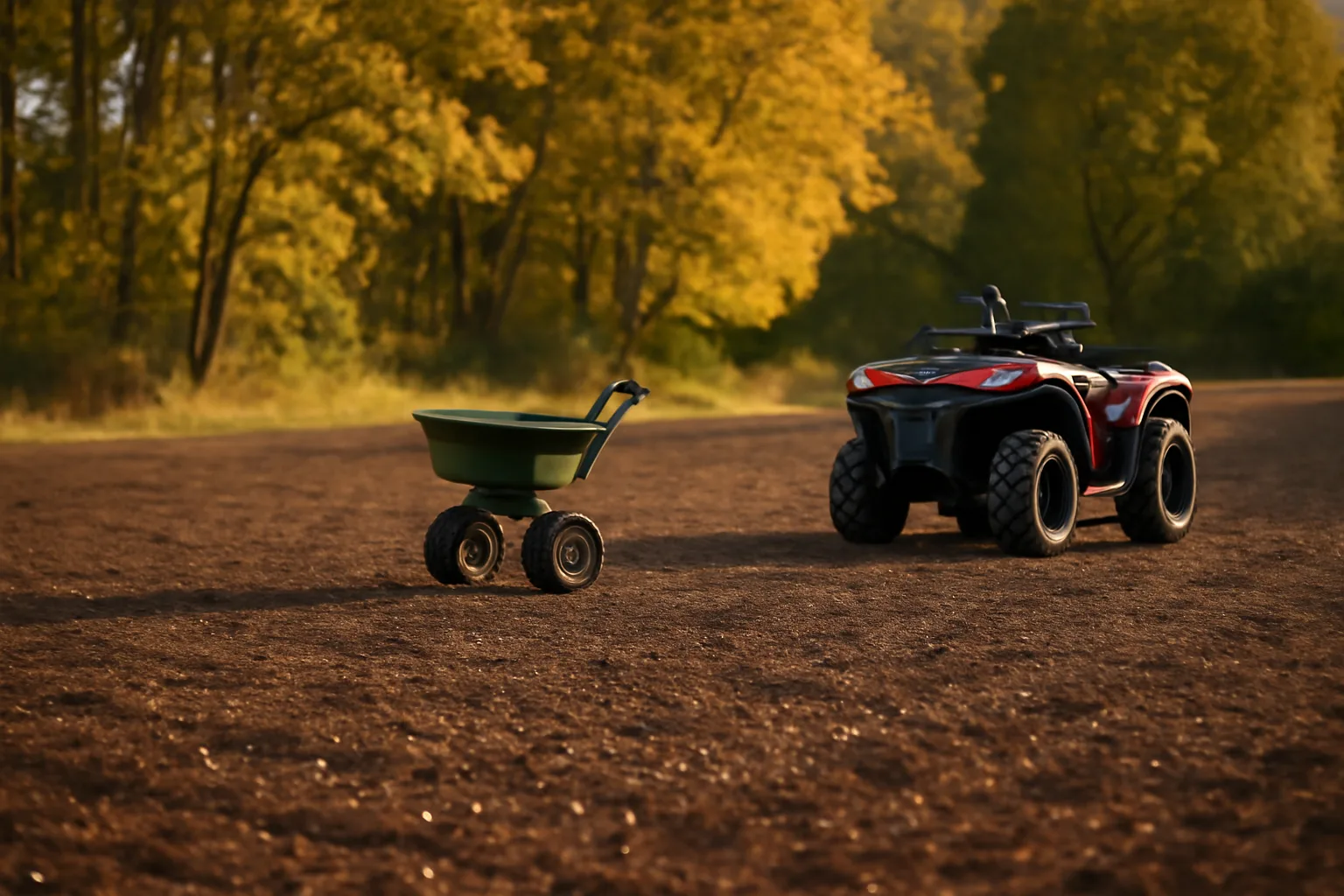
Throw and grow means you broadcast seed over the ground and walk away. No tiller, no drill, sometimes no disking at all. The name promises simplicity, and for some species it delivers. For others it's a fast way to burn a bag of seed. The method works because certain seeds germinate fine sitting on top of loose or disturbed soil, especially small-seeded annuals like brassicas (turnips, radish, rape) and some cereal grains. It fails when the seed lands on sod, hardpan, or leaf litter and never touches mineral soil. Seed-to-soil contact is the whole game. A University of Tennessee Extension guide on food plot establishment notes that seedbed preparation and proper planting depth are among the top factors determining stand success, right alongside soil pH and moisture [1]. So throw and grow isn't a product category, it's a shortcut method. It works best on disked or tilled dirt, on a fresh clearcut with exposed soil, or on a spot you've mowed and lightly disked. Throwing seed onto tall grass or thick sod almost never produces a stand worth hunting over.
Does throw and grow actually work, or is it a waste of seed?
It works, but only under the right conditions. Three things have to line up: bare or loosened soil, seed that doesn't need deep planting, and rain soon after you spread it. Brassicas and cereal grains (oats, wheat, rye) are the realistic candidates. Their seeds are small enough to work into the top quarter inch of soil with a light rain, a drag harrow, or even truck tires driven over the plot. Clover, soybeans, and corn generally need actual planting depth and firm seed-to-soil contact; broadcasting clover onto rough ground and hoping usually gives you a spotty stand at best. The biggest failure mode isn't the mix, it's the site. Throwing seed on a shaded, root-choked spot under oaks, or on thick fescue sod, wastes money regardless of species. If you can't run a disk or ATV harrow over the ground first, pick a site that's already bare: a old ag field, a logging deck, a burned patch, or ground you sprayed out weeks earlier.
When to plant food plots for deer, generally?
Timing splits into two windows: spring/summer for warm-season annuals and perennials, and late summer/early fall for cool-season annuals. Which window you use depends on the species, not a fixed date on the calendar. Cool-season plots (clover, brassicas, cereal grains) go in from late July through September in northern states, and August through October in the South, generally 45 to 90 days before your first fall frost depending on species. Warm-season plots (soybeans, cowpeas, corn) go in after your last spring frost, typically May into June across most whitetail range. Your state or regional cooperative extension frost date maps are the actual reference point, not a national planting calendar. The Midwest Cover Crop Council and university extensions each publish state-specific cover crop and plot timing guides that hunters can use as a proxy for planting windows [2]. If you want species-specific dates by zone laid out clearly, food plot whitetail breaks the calendar down further.
When to plant oats for deer?
Plant oats 60 to 90 days before your area's average first fall frost date. That puts most of the Midwest and Upper South planting oats from mid-August through mid-September, and the Deep South into early October. Oats germinate fast, often within 5 to 10 days given moisture, and they tolerate a rough seedbed better than clover does. That makes them one of the better throw and grow candidates, especially mixed with a brassica like turnip or radish. Oats will winterkill in the coldest zones (generally below 0 to 10 degrees F for sustained periods) which is fine if you're using them as an annual fall attractant rather than trying to carry them into spring. Spring oat plantings are less common for hunting plots since oats mature and decline in palatability by early fall, right when you want them lush. Stick with a late-summer planting timed to your local frost date.
When to plant turnips for deer?
Turnips go in 80 to 90 days before your first expected fall frost, which lands most of the country in a window from late July to early September. Turnips need that long runway to bulb up and reach peak tonnage and sugar content, which happens after a few frosts convert starches to sugars and make the tops and bulbs more palatable. A common mistake is planting turnips too late, chasing a shorter maturity window than the plant actually needs. If you plant in mid-September in a zone with an early October frost, you'll get some leaf growth but the bulbs won't size up, and deer often ignore small, woody bulbs. Turnip seed is tiny and works reasonably well broadcast onto disked ground, since it doesn't need deep planting, generally a quarter inch of soil coverage or less. That makes turnip-brassica blends one of the most forgiving throw and grow options as long as the timing lines up.
Do deer eat clover, and do they actually like it?
Yes. Clover is one of the most consistently used food plot forages across whitetail range, and multiple state wildlife agency and university studies rank it among the highest-preference plot forages available. Clover offers 20 to 25 percent crude protein in vegetative growth stages according to forage testing summarized by university extension programs, which is well above most native browse [3]. Clover isn't a great throw and grow candidate though. It's a small, hard seed that benefits from actual seed-to-soil contact, ideally drilled a quarter inch deep or broadcast onto a firmed, prepared seedbed and then cultipacked. Tossing clover seed onto standing sod or rough dirt with no follow-up usually gives you a thin, weedy stand. If your real goal is a low-effort perennial plot, clover is worth the extra prep step. It's a multi-year investment (2 to 4 years of production from one planting with proper mowing and fertility) versus an annual reseed. For species selection across a whole property, deer food plot seed covers how clover fits alongside annuals in a rotation.
Do deer eat sorghum, and does it fit a throw and grow mix?
Deer will eat sorghum, particularly the grain heads in fall and winter, and sorghum also functions well as cover and a screen crop in food plot design. It's more commonly used as a component in wildlife blends or as a standalone grain/cover crop than as a primary deer attractant, since deer preference for sorghum generally runs behind soybeans, corn, and brassicas. Sorghum seed is small enough to broadcast reasonably well onto disked ground, and it's drought-tolerant, which makes it a common filler in Southern throw and grow blends where summer moisture is unreliable. It's a warm-season planting, going in after your last spring frost like corn or soybeans. If you're building a blend specifically to pull deer for bow season, sorghum probably isn't your headline species. It works better as a structural or cover component mixed with something deer prefer more, like cowpeas or soybeans.
What are deer's favorite foods, based on actual research?
Deer preference studies consistently rank a handful of foods at the top: soybeans and cowpeas in the warm season, and clover, brassicas, and cereal grains in the cool season. Research from Mississippi State University's deer preference trials and similar university studies have found soybeans among the most preferred warm-season forages when available and unbrowsed to death by high deer density. Acorns deserve mention too. In years with a strong mast crop, deer will often bypass food plots entirely for white oak acorns, which are lower in tannins and more palatable than red oak acorns. This is well documented in wildlife management literature and is one reason plot performance varies so much year to year regardless of what you planted. There's no single universal favorite. Preference shifts by season, region, deer density, and what else is available on the landscape. A plot that gets hammered in October might sit untouched in November once acorns drop, and that's normal, not a sign your mix failed.
Do deer like honey, and does it belong in a plot mix?
There's no real evidence deer seek out honey specifically, and it has no place in a legitimate food plot seed mix. This question likely comes from confusion with mineral or attractant products marketed with names like honey holes or sweet attractants, or from deer occasionally investigating damaged beehives for the wax and larvae, not the honey itself. More importantly, pouring liquid attractants or bait onto or near a plot crosses into baiting law territory in many states. Baiting and feeding regulations vary widely: some states allow it outright, some ban it entirely, and some allow feeding but not hunting over bait. The definitions of bait often explicitly include foods placed to attract deer that aren't naturally growing, which can sweep in sugary attractants. Check your state wildlife agency's current baiting and feeding regulations before adding anything to a plot beyond seed and fertilizer [4]. Stick to actual forage species. Save the flavored attractant sprays for legal states and understand they're a scent tool, not a food source deer are nutritionally drawn to.
What is a food plot, exactly?
A food plot is a planted area of forage crops established specifically to attract, hold, or provide nutrition for deer and other wildlife, usually on private or leased hunting ground. It's distinct from agricultural fields grown for commercial harvest, though the same crops (soybeans, corn, clover) often show up in both. Plots generally fall into two functional categories: annual plots (replanted each year, higher maintenance, often higher deer preference) and perennial plots (clover, alfalfa, chicory blends that persist 2 to 5 years with mowing and fertility upkeep). Most serious plot programs run both, using perennials for spring/summer nutrition and annuals for fall hunting draw. Size matters less than most people think. USDA NRCS wildlife habitat guidance and state agency plot recommendations generally suggest quarter-acre to few-acre plots scattered across a property work better for deer movement and hunting setup than one large field, though total acreage needed depends heavily on deer density and surrounding habitat quality [5]. For a broader look at how plots fit into an overall property plan, deer food plots covers layout and sizing in more depth.
How do you build a throw and grow mix that actually establishes?
| Oats | Good | 0.5-1.5 in | 60-90 days before first frost |
|---|---|---|---|
| Winter wheat | Good | 0.5-1.5 in | 45-75 days before first frost |
| Turnip/radish | Good | 0.25 in or less | 80-90 days before first frost |
| Clover | Poor to fair | 0.25 in, needs firm contact | Late summer or early spring |
| Soybeans | Poor | 1-1.5 in, needs planter/drill | After last spring frost |
| Corn | Poor | 1.5-2 in, needs planter | After last spring frost |
Start with the seedbed, not the seed bag. Mow the site short, spray it out with glyphosate if it's holding grass or weeds, then run a disk or ATV drag harrow over it at least once. That single pass of disturbance is the difference between a plot and a wasted bag of seed. A workable throw and grow annual mix for most of whitetail range: oats or winter wheat as the base (60 to 70 percent of the mix by weight), a brassica blend of turnip and radish (20 to 30 percent), and a small amount of clover or crimson clover if you're willing to accept a thinner clover stand mixed in (10 percent). Broadcast at label rate, drag a section harrow or chain-link fence over it to work seed in lightly, then cultipack or drive over it with a 4-wheeler if you don't have a packer. Rain within a week of broadcasting matters more than almost anything else. If the forecast shows a dry stretch, hold off broadcasting if you can, or accept the germination will be spotty. A Purdue University Extension food plot publication notes that seedbed firmness and timely moisture are consistently cited as limiting factors in stand establishment, more so than exact seeding rate [6]. | Species | Throw and grow suitability | Typical planting depth | Planting window |
Where does throw and grow fail, and when should you actually till or drill?
Throw and grow fails on sod, on compacted logging roads, in heavy shade, and anywhere you can't get seed under at least a light layer of loose soil. It also fails when you skip a soil test and plant into ground with a pH of 5.0, since most food plot species want pH in the 6.0 to 7.0 range and won't establish well no matter how you plant them [1]. If you have access to a disk, tiller, or no-till drill, use it. A drilled or properly disked-and-cultipacked plot consistently outperforms a broadcast plot for stand density and weed competition, especially for clover, soybeans, and corn. Save true throw and grow for annual brassica/grain blends on ground you've already disturbed, or for remote spots you can't easily get equipment into. Getting your soil test back and actually following the lime and fertilizer recommendations matters more than which method you use to plant. Your soil test lab knows your specific ground; general planting guides, including this one, can only give you ranges. If you want a full plan built around your soil test results, equipment, and region rather than piecing together generic advice, PlotSeason's $99 Custom Food Plot Plan turns your test numbers into a straight species and rate recommendation.
Frequently asked questions
Is throw and grow food plot mix worth buying instead of a regular seed blend?
There's no real difference in the seed itself. Throw and grow just means the label suggests you can skip tilling. The seed still needs to reach bare soil and get rain to germinate well, so the marketing name doesn't change the agronomy.
Can you throw and grow clover successfully?
You can, but expect a thinner, weedier stand than a properly prepared clover plot. Clover establishes best with firm seed-to-soil contact, ideally on a cultipacked seedbed. If clover is your main perennial plot, it's worth disking and packing rather than just broadcasting on rough ground.
What's the best time of year to plant food plots for deer?
Cool-season plots (clover, brassicas, oats) go in late summer to early fall, generally 45 to 90 days before your first frost. Warm-season plots (soybeans, corn) go in after your last spring frost. The right window depends on species and your local frost dates, not a single national date.
Do deer prefer soybeans or clover?
Both rank high in preference studies, but they serve different seasons. Soybeans are a warm-season high-protein forage deer hit hard through summer. Clover provides season-long forage from spring through fall and regrows after grazing. Most plot programs plant both rather than choosing one.
How long does it take turnips to be ready for deer to eat?
Turnip tops become palatable within a few weeks of germination, but bulbs need the full 80 to 90 day growing season plus a few fall frosts to convert starches to sugars. Deer often ignore turnip bulbs until after the first hard frost of the season.
Is it legal to use attractant sprays or bait on a food plot?
It depends entirely on your state. Some states allow baiting and hunting over it, some allow feeding but not hunting over bait, and some ban both. Check your state wildlife agency's current regulations before adding anything beyond seed and fertilizer to a plot.
What size should a food plot be for deer?
Quarter-acre to a few acres per plot generally works well for hunting setups, according to typical state agency and USDA NRCS wildlife habitat guidance. Multiple smaller plots spread across a property usually beat one large field for deer movement and stand placement, though total acreage needs scale with deer density.
Do deer eat sorghum in food plots?
Yes, deer eat sorghum grain heads, especially in fall and winter, but it typically ranks below soybeans, corn, and brassicas in preference studies. Sorghum works well as a drought-tolerant filler crop or screen/cover component in a warm-season blend rather than a standalone attractant.
Why did my throw and grow plot fail to come up?
The most common causes are seed sitting on sod or hardpan with no soil contact, no rain within a week or two of broadcasting, and skipping soil pH correction. Throw and grow only works reliably on loosened, bare soil with timely moisture.
When should oats be planted for a fall deer plot?
Plant oats 60 to 90 days before your area's average first fall frost, which lands most of the Midwest and Upper South in mid-August through mid-September. Oats germinate quickly and tolerate rougher seedbeds better than clover, making them a solid throw and grow choice.
Do deer actually like honey or sugary attractants?
There's no solid evidence deer are drawn to honey specifically. This likely comes from confusion with commercial attractant products or occasional interest in damaged beehives for wax and larvae. Legitimate food plots rely on forage crops, not sugar-based attractants, and some states restrict bait-like products anyway.
What's the difference between a food plot and just planting a field of crops?
A food plot is planted specifically to attract or nourish wildlife, usually on hunting land, and is designed around deer preference, hunting access, and stand placement rather than commercial yield. Agricultural fields grown for sale use similar crops but are managed for harvest economics, not hunting strategy.
Sources
- University of Tennessee Extension, Establishing Wildlife Food Plots: Seedbed preparation, soil pH, and moisture are top factors in food plot stand success
- Midwest Cover Crop Council, Cover Crop Decision Tool: Regional planting window guidance used as a proxy for food plot timing
- University of Georgia Extension, Clover and Forage Crude Protein: Clover crude protein content in vegetative growth stages
- Michigan DNR, Baiting and Feeding Regulations: State baiting and feeding rules vary and define what counts as bait
- USDA NRCS, Wildlife Habitat Management Fact Sheet: Plot size and placement guidance relative to deer movement and habitat
- Purdue University Extension, Food Plots for Wildlife: Seedbed firmness and timely moisture are limiting factors in plot establishment