Last updated 2026-07-26
TL;DR
"Power plant" is a marketing term for multi-species food plot blends, usually mixing brassicas (turnips, radish, rape), cereal grains (oats, wheat), clover and sometimes peas or sorghum. There's no single official product by that name; it's a category. Match the blend to your soil test, planting window (late summer for brassicas/cereals, spring for clover), and region.
What is a food plot, and where does "power plant" seed fit in?
A food plot is a planted area on hunting land, usually somewhere between a quarter acre and a few acres, meant to grow forage or grain that attracts and holds deer or other wildlife. State wildlife agencies and land-grant extensions treat food plots as a habitat management tool, not a hunting shortcut, since a healthy plot also feeds turkey, rabbits and pollinators [1]. "Power plant food plot seed" isn't a single crop or a registered trademark you'll find at the USDA. It's a catch-all name several seed companies use for multi-species blends, usually 3 to 6 plant types in one bag, designed to hit different growth stages and nutrition windows in one planting. Think brassicas for late-season carbs and tonnage, a cereal grain for quick green-up and structure, and a legume like clover or peas for protein through summer. The logic behind blending is sound agronomy, even if the branding is marketing. Extension research on multi-species cover crop mixes shows that diverse plantings can improve soil structure, reduce erosion and extend the grazing or browsing window compared to a monoculture. The tradeoff is that a blend is only as good as its match to your soil, your rainfall, and your planting date. A bag of six seeds thrown down at the wrong time of year still fails. If you want a planting plan built around your specific soil test and region instead of guessing at a blend, that's exactly the kind of question the Custom Food Plot Plan is built to answer for $99, one time, no subscription.
What do most "power plant" or all-in-one blends actually contain?
| Brassicas (turnip, radish, rape) | Late-season tonnage, frost-sweetened forage | 30-45% | |
|---|---|---|---|
| Cereal grain (oats, wheat, rye) | Fast germination, early cover, nurse crop | 25-40% | |
| Clover (white/red) | Perennial protein source, summer forage | 15-25% | |
| Legume extras (peas, soybean) | Added protein, soil nitrogen | 5-15% | Read the tag on the bag, more than the marketing copy on the front. Federal seed labeling rules under the Federal Seed Act require the label to list the actual species and percentage by weight, germination rate, and noxious weed content [4]. That tag tells you more than the branding does. |
Most blends marketed with names like power plant, full season, or all-in-one lean on a handful of workhorse species. Expect some combination of these in the bag. Brassicas (turnips, forage rape, radish) are cold-tolerant, high-yield, and get sweeter after frost converts starches to sugars, which is why deer often hit them harder in November and December than in September [2]. Cereal grains (oats, winter wheat, winter rye) germinate fast, tolerate poor soil, and give you green forage within 3 to 4 weeks of a good rain. Clover (usually white or red) is a perennial or biennial that adds protein (commonly tested in the 20 to 30 percent crude protein range for quality stands) and comes back for multiple seasons if you mow and manage it [3]. Some blends throw in forage peas, soybeans, or grain sorghum for extra tonnage or drought tolerance. Here's a rough breakdown of what a typical multi-species fall blend looks like by seed count in the bag, though exact ratios vary by brand and region: | Component | Typical role | Approx. share of blend |
Do deer eat sorghum?
Yes, deer eat grain sorghum, both the standing grain heads and the leaves, though it's usually a secondary choice compared to soybeans, corn or clover when those are available nearby. Sorghum is more common as a wildlife food plot crop in the South and parts of the Midwest because it tolerates heat and drought better than corn [5]. Whitetail research and extension guidance generally rank sorghum lower on deer preference lists than legumes and brassicas, but it earns a place in blends because it holds up in poor soil and dry summers where other grains fail. If your plot sits on sandy or drought-prone ground, sorghum in a summer blend gives you a fallback crop that will produce something even in a rough year. It's not typically the anchor crop; it's insurance.
Do deer eat clover, and do they actually like it?
Yes. Clover is consistently one of the most preferred food plot forages for whitetail deer, and it's often the first thing recommended by state wildlife agencies and extension programs for both attraction and nutrition [3]. White clover (including Ladino types) and red clover are the two most common choices in food plot blends because they establish easily, tolerate mowing, and come back year after year if managed. Crude protein in well-maintained clover commonly runs 25 to 30 percent, which rivals or beats alfalfa and far exceeds most native browse, making it valuable during spring green-up and antler growth season, more than as a fall attractant [3]. Deer will hit a clover plot hard in April and May when almost nothing else is green, then again in early fall before acorns drop. The catch: clover is not a great cold-climate late-season food. It goes dormant with hard frost, and deer shift to brassicas, cereal grains or standing corn when clover growth stalls. That's exactly why blended "power plant" bags pair clover with a cold-tolerant brassica or cereal grain, so you're covered from March through December instead of just three months of the year.
When should you plant food plots for deer?
| Northern (Zone 3-4) | Mid-July to mid-August | April-May or Aug | |
|---|---|---|---|
| Transition (Zone 5-6) | Late July to early Sept | March-May or Aug-Sept | |
| Southern (Zone 7-8) | Late Aug to early Oct | Sept-Nov or Feb-March | If you're planning multiple plot types across a property, it helps to build out a full food plot whitetail strategy rather than planting everything on the same date. |
Timing depends on species and region, but the two big windows are late summer for fall/winter forage and spring for clover and warm-season plots. Get the calendar wrong and even good seed and good soil won't save you. Brassicas and cereal grains for fall hunting season are typically planted 60 to 90 days before your area's first hard frost, which for most of the whitetail range falls somewhere between mid-July (far North) and early September (Deep South). Clover and other perennial legumes are usually seeded in spring (March to May) or late summer (August to September), avoiding the heat of midsummer when seedlings struggle to establish. A rough national planting window looks like this, though you should confirm dates against your local extension office and first-frost data for your county: | Zone (general) | Brassica/cereal planting window | Clover planting window |
When should you plant oats for deer?
Oats are a fall planting in most of the whitetail range, going in the ground roughly 60 to 90 days before your first expected frost so they have time to establish before growth slows. In practice that's late July through early September across most of the Midwest and Northeast, and into September or even early October in the Deep South. Oats germinate fast (often within 5 to 10 days with decent soil moisture) and give you visible green growth quicker than almost anything else in a blend, which is part of why they show up so often as the cereal grain component in multi-species bags. They're not frost-hardy the way winter wheat or rye is, though, so in colder zones oats will die back with a hard freeze while the brassicas in the same plot keep producing. Some hunters plant oats specifically for that early archery season window, knowing they'll fade by late November. A spring oat planting is possible too, mostly as a quick cover crop or nurse crop for a new clover stand, but it's less common for hunting-specific plots since spring oats don't line up with hunting season.
When should you plant turnips for deer?
Turnips, like other brassicas, go in the ground in mid to late summer, generally 80 to 100 days before your area's first hard frost, since they need that long growing season to bulb out and the tops need time to build sugar reserves before deer really start hammering them [2]. For most of the country that's a window from mid-July to early September. The timing matters more with turnips than with almost any other food plot crop because of how they mature. Deer often ignore turnip tops and bulbs early in the season, then switch hard once a frost or two converts starches to sugars, usually starting in October or November depending on your zone. Plant too late and you get small bulbs and thin tops right when you need tonnage; plant too early in hot, dry conditions and you risk poor germination or bolting. Good turnip establishment also depends on a firm, fine seedbed, since turnip seed is tiny (roughly 150,000 or more seeds per pound depending on variety) and can't be planted deep. A quarter inch of soil coverage is plenty; bury it deeper and germination drops fast.
Do deer like clover more than other forages?
Clover ranks at or near the top of most deer forage preference studies, largely because of its high protein content, softness (easy to digest), and long growing season compared to most competitors [3]. But "like" is relative to what else is available. In a year with a heavy acorn drop, deer will often walk past a clover plot for white oak acorns, which can run 6 to 10 percent crude protein but carry much higher fat content that deer crave heading into winter [6]. What clover does reliably better than almost anything else is provide consistent, high-quality forage across a long window, spring through fall in most zones, rather than one seasonal pulse. That's the real argument for it: it's not always the single most attractive thing in the woods on a given day, but it's dependable, cheap to maintain per acre after establishment, and it keeps working for 3 to 5 years or longer if you mow and manage weeds.
What are deer's favorite foods overall?
There's no single universal answer, because deer preference shifts by season, region, and what's locally available, but research and field data point to a consistent short list: acorns (especially white oak group), soybeans, clover, and other legumes rank at or near the top almost everywhere whitetail are studied [6]. Corn and other cereal grains matter more for late-season energy than for attraction. Browse like honeysuckle, greenbrier, and various forbs fills the gap where agricultural crops aren't available. Acorns deserve special mention because they show up in nearly every regional deer diet study as a fall staple, and white oak acorns in particular are preferred over red oak acorns due to lower tannin content, which makes them less bitter and easier to digest [6]. In years with a strong white oak crop, food plots of any kind often see reduced deer activity simply because deer don't need to travel for calories. Soybeans, when left standing into fall and winter, are one of the highest-preference agricultural food plot options for both protein (during summer pod and leaf stage) and energy (fall bean stage). If you're weighing beans against a blended plot, it's worth comparing deer food plot seed options side by side for your acreage and budget before committing seed money to one crop.
Do deer like honey (or foods with sugar/molasses coatings)?
Deer aren't drawn to honey itself in any meaningful documented way, but the sugar-coated or molasses-treated seed products sold under names like "honey hole" or similar branding rely on the same principle brassicas use naturally: sugar and carbohydrate content drive palatability, especially in cold weather when deer need quick energy [2]. Some commercial attractant products (mineral licks, sprays, scent-based lures) use sugar or molasses as a base, and there's reasonable field evidence that deer, like most mammals, respond to sweetness and simple sugars. But there's no peer-reviewed wildlife research specifically testing raw honey as a deer attractant that we could find, and no state wildlife agency guidance recommends it as a food plot input. If you're seeing "honey" in a product name, it's almost always a brand name or flavor descriptor for a mineral or attractant product, not an actual food plot seed ingredient. One real caution here: many states restrict or ban baiting and supplemental feeding for deer hunting, and rules vary widely by state and even by county in some cases (chronic wasting disease zones especially). Before you spread any attractant, mineral, or feed product, check your state wildlife agency's current baiting and feeding regulations, since a legitimate food plot (a planted crop in the ground) is treated very differently under most state laws than a pile of feed, minerals, or bait.
How do you pick the right blend or seed mix for your land?
Start with a soil test, not a seed catalog. Every credible extension program says the same thing: soil pH and nutrient levels determine what will actually grow, and no seed blend fixes acidic or nutrient-poor soil on its own [1]. Most food plot species, brassicas and clover especially, want soil pH in the 6.0 to 7.0 range, and a lot of hunting ground tests well below that without lime. Your soil test lab is the authority here, not a seed bag's back label. Follow the lime and fertilizer recommendations your specific test gives you, since regional soils vary enormously even within the same county. Once you know your soil, match blend to plot size, sun exposure, and equipment. A half-acre shaded plot with a hand seeder needs a different approach than three open acres worked with a tractor and disc. If you're deciding between a pre-made blend and building your own mix from straight food plot seed, consider your equipment first: broadcasting small brassica seed into a rough seedbed with no cultipacker often gives spotty germination, while drilling grain and clover separately gives more control but takes more passes and more gear.
What equipment and steps does a power plant blend actually need to succeed?
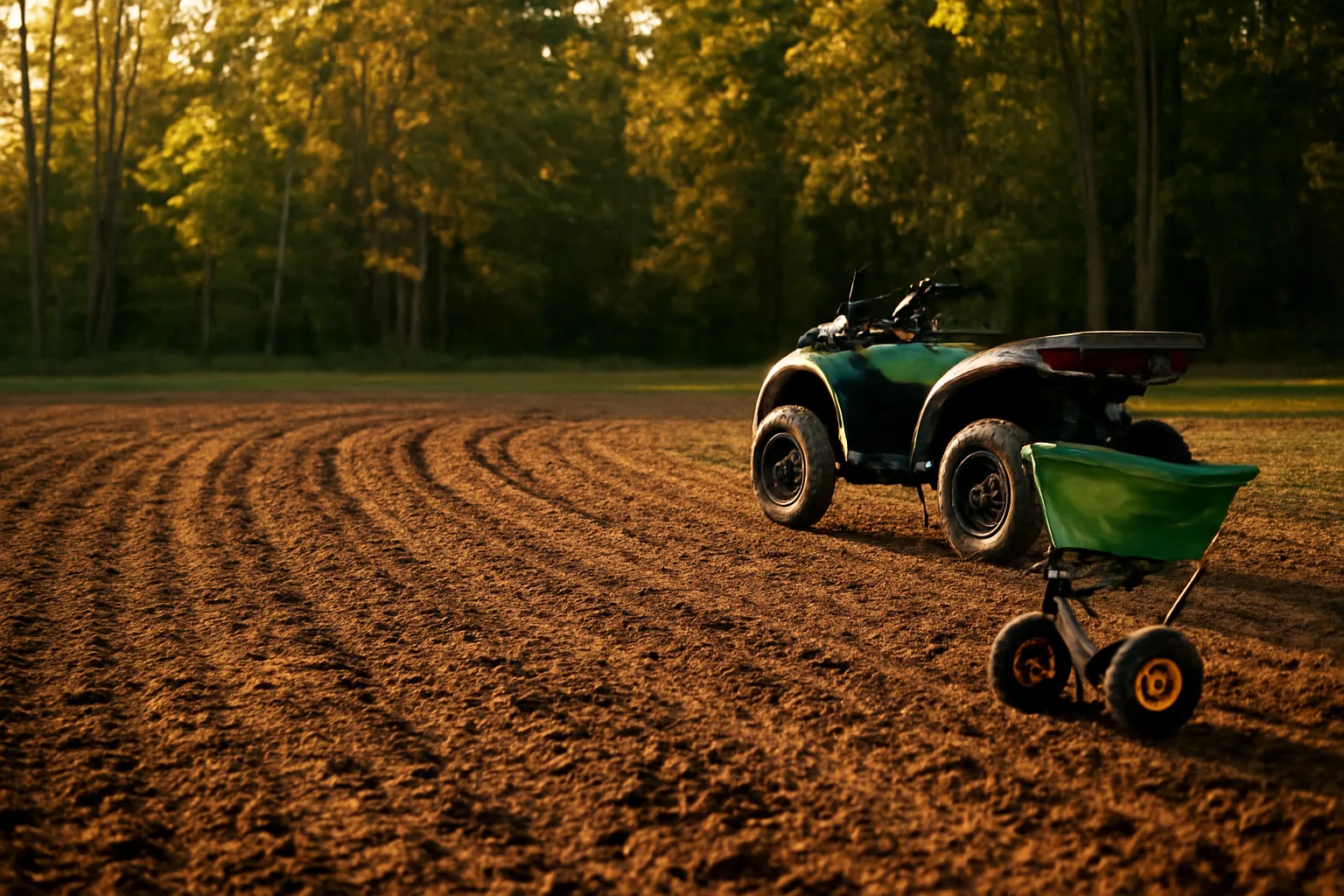
Even the best blend fails without basic seedbed prep. The general sequence extension programs recommend is: soil test, lime and fertilize per that test, kill or till existing vegetation, create a fine firm seedbed, broadcast or drill at the right depth, then cultipack or drag to ensure seed-to-soil contact. Most brassica and clover seed in these blends is small and should go no deeper than a quarter to half inch. Cereal grains like oats and wheat want a bit more depth, often three-quarters of an inch to an inch and a half. That depth mismatch is exactly why blended bags work best broadcast onto a prepared seedbed and then lightly dragged or cultipacked, rather than drilled at a single uniform depth, since a drill set for wheat depth will bury the tiny brassica seed too deep to emerge. A basic setup of an ATV or UTV, a pull-behind disc or tiller, a broadcast spreader, and a drag or cultipacker covers most food plot needs under 5 acres. You don't need a full-size tractor and grain drill unless you're planting a lot of acreage or working heavy clay soil that needs real horsepower to break up.
Is a multi-species blend worth it compared to planting single crops separately?
It depends on your goals and your patience for managing multiple crops. A blend saves time (one planting pass instead of three or four) and hedges against one species failing due to weather, but it also means you can't tailor fertilizer, mowing, or herbicide treatment to each species individually, since they're all growing in the same dirt. If you want season-long coverage with minimal fuss and you're working smaller acreage (under 2 acres per plot), a blend usually makes sense. If you're managing multiple larger plots and want to optimize each one, planting clover in one plot, a brassica/cereal mix in another, and maybe standing beans or corn in a third gives you more control and often better yield per species, at the cost of more planting trips and more seed types to manage. Either way, the real driver of success isn't the bag you buy, it's whether the blend fits your soil test results, your region's frost dates, and your realistic maintenance schedule. A deer food plots approach built around 2 or 3 plot types spread across a property, rather than one big all-purpose blend, tends to hold deer longer through the season because it staggers what's available and when.
Frequently asked questions
Do deer eat sorghum?
Yes, deer eat both sorghum leaves and grain heads, though it usually ranks below soybeans, corn and clover in preference studies. Sorghum earns a spot in food plot blends mainly because it tolerates heat and drought far better than corn, making it a reliable fallback crop on sandy or dry ground where other grains struggle.
Do deer eat clover?
Yes, clover is one of the most preferred food plot forages for whitetail deer, commonly testing at 25 to 30 percent crude protein in well-managed stands. It's especially valuable in spring and early fall, though deer often shift to brassicas or cereal grains once clover growth slows with hard frost in late fall.
When should you plant food plots for deer?
Fall-focused brassica and cereal plots go in 60 to 90 days before your area's first hard frost, roughly mid-July to early September across most of the whitetail range. Clover and other perennials are best planted in spring (March-May) or late summer (August-September), avoiding peak summer heat.
Do deer like clover more than acorns or other browse?
Not always. Clover ranks high in most preference studies because of its protein and long growing season, but deer often prefer acorns, especially white oak acorns, when they're available due to higher fat content going into winter. Preference shifts by season and local food availability, not a fixed ranking.
When should you plant oats for deer?
Plant oats 60 to 90 days before your first expected fall frost, typically late July through early September in most regions and into September or October in the Deep South. Oats germinate in 5 to 10 days with good soil moisture but aren't frost-hardy, so they fade earlier than brassicas or winter wheat.
When should you plant turnips for deer?
Turnips need 80 to 100 days before first frost to bulb out properly, so plant mid-July through early September in most of the whitetail range. Deer often ignore turnips early on and switch hard once frost sweetens the tops and bulbs, usually starting in October or November.
What is a food plot?
A food plot is a planted area of forage or grain on hunting or wildlife land, usually a quarter acre to several acres, established to feed and attract deer or other wildlife as part of habitat management. State wildlife agencies generally treat food plots as distinct from baiting or supplemental feeding under hunting regulations.
What are deer's favorite foods?
Preference varies by season and region, but acorns (especially white oak), soybeans, and clover consistently rank at or near the top in deer diet studies. Corn and cereal grains matter more for late-season energy than attraction, and browse like greenbrier and forbs fills gaps where crops aren't available.
Do deer like honey?
There's no solid research showing deer are specifically drawn to honey. Product names using "honey" are almost always branding for sugar or molasses-based mineral and attractant products, not literal honey. Deer do respond to sugar and carbohydrates generally, which is part of why frost-sweetened brassicas become so attractive in late fall.
What's actually in a "power plant" food plot seed blend?
There's no official crop by that name; it's a marketing term for multi-species blends, usually combining brassicas (turnip, radish, rape), a cereal grain (oats, wheat or rye), clover, and sometimes peas or soybean. Always check the seed tag for exact species and percentages rather than relying on the front-of-bag name.
Can you plant clover and brassicas together in the same plot?
Yes, many blended bags do exactly this, pairing a perennial clover base with an annual brassica or cereal grain for season-long coverage. The tradeoff is you can't tailor herbicide or fertilizer treatment to each species individually since they share the same ground, so weed control options are more limited than with a single-species plot.
Do I need a soil test before planting a food plot blend?
Yes. Most food plot species, including clover and brassicas, need soil pH in the 6.0 to 7.0 range, and a lot of hunting ground tests more acidic than that without lime. Your soil test lab's recommendations for lime and fertilizer should guide your planting decisions, not the seed bag's general instructions.
Is it legal to plant food plots everywhere for deer hunting?
Food plots (planted crops in the ground) are legal in all states, but rules around hunting over bait, mineral sites, or supplemental feed vary significantly by state and sometimes by county, especially in chronic wasting disease management zones. Always check your state wildlife agency's current regulations before combining plots with any additional feed or attractant.
Sources
- USDA NRCS, Wildlife Habitat Management Practices: State wildlife agencies and extensions treat food plots as a habitat management tool, benefiting multiple species, more than a hunting shortcut
- Mississippi State University Extension, Brassicas for Deer: Brassicas convert starches to sugars after frost, increasing palatability and deer use in late fall/winter
- University of Tennessee Extension, Clover for Wildlife Food Plots: Clover crude protein commonly ranges 25-30 percent in well-managed stands
- USDA Agricultural Marketing Service, Federal Seed Act: Federal Seed Act requires seed labels to list species composition by weight, germination rate, and noxious weed content
- Mississippi State University Extension, Warm Season Food Plots: Grain sorghum is a heat and drought-tolerant food plot option common in southern and Midwest deer plots
- USDA Forest Service, Southern Research Station, White-tailed Deer Food Habits: Acorns, particularly white oak group, and soft mast rank among top preferred whitetail deer foods, with white oak acorns preferred over red oak due to lower tannin content