Last updated 2026-07-25
TL;DR
A deer food plot is a planted area of forage or grain meant to draw and hold deer on your ground. Timing depends on your zone and species: brassicas and cereal grains go in late summer, clover and perennials go in spring or early fall. A $10-15 soil test beats guessing on lime and fertilizer every time.
what is a food plot, exactly
A food plot is a planted patch of forage, usually somewhere between a quarter acre and several acres, put in specifically to feed and attract deer (and often turkey, elk, or other wildlife depending on where you hunt). It's not the same as agricultural farming, though the line blurs on bigger properties. The goal isn't yield per acre for profit. The goal is nutrition, attraction, and sometimes a clean shooting lane at the right time of year. Most plots fall into two broad categories: annuals and perennials. Annuals like brassicas (turnips, radishes, rape), cereal grains (oats, wheat, rye), and soybeans get planted fresh each year and often timed to peak during hunting season. Perennials like clover and alfalfa get planted once and, with maintenance (mowing, spraying, occasional reseeding), can produce forage for three to five years or more. The USDA Natural Resources Conservation Service treats food plots as a wildlife habitat practice, not a row-crop enterprise, and several state wildlife agencies publish their own food plot guides because plot success ties directly into deer body condition and antler development on a property [1]. If you want a rundown on the actual plant options before you commit acreage, our food plot seed guide breaks down the common species side by side. A lot of first-time planters treat a food plot like a garden bed and expect quick color. It's closer to a small ag field. Soil, drainage, sunlight, and deer pressure all matter more than the seed bag you buy.
when to plant food plots for deer
| Deep South (zones 8-9) | March-April | Late Aug-Sept | |
|---|---|---|---|
| Mid-South (zones 7) | April | Aug-Sept | |
| Midwest/Mid-Atlantic (zones 5-6) | April-May | Late July-Aug | |
| North/Upper Midwest (zones 3-4) | May-early June | Late July-early Aug | If you're planting a fall annual, working backward from your first frost date is the most reliable method. Brassicas need roughly 80 to 100 days to bulb out and sweeten up (a post-frost sugar conversion that makes them palatable), so count back from that first freeze and add a couple weeks of buffer for weather delays [3]. |
Timing is the single biggest variable people get wrong, and it depends entirely on species and your USDA Plant Hardiness Zone, not a single national date. As a rule, spring plots (clover, soybeans, corn) go in after your last frost date, and fall plots (brassicas, cereal grains, more clover) go in 60 to 90 days before your first hard frost so they mature around hunting season. Check your zone-specific frost dates through your state's land-grant extension office before locking in a date. Purdue Extension, for instance, publishes Indiana's average frost-free dates by county, and that same kind of county-level data exists through nearly every state's cooperative extension service [2]. Georgia's window for fall brassica planting runs late July into early September depending on region, while a northern state like Minnesota needs those same brassicas in the ground by early August to get enough growing days before frost [3]. Here's a rough national framework, but treat it as a starting point, not gospel: | Region | Spring plot window | Fall plot window |
when to plant oats for deer
Oats are one of the most forgiving fall food plot options and they go in the ground 60 to 90 days before your average first frost, which in most whitetail country lands somewhere between mid-August and mid-September. Oats germinate fast, tolerate a wide pH range better than clover does, and deer hit them hard as soon as they emerge, especially in early fall when other browse is drying out. Unlike wheat or rye, oats aren't very winter-hardy. In zones with harsh winters they'll often winterkill after a few hard freezes, which some hunters actually prefer because it means less spring maintenance if they're rotating that ground to something else. If you want a plot that holds into late winter, blend oats with a hardier cereal grain like winter wheat or cereal rye so you get fast fall attraction from the oats and standing forage later from the wheat. Seeding rate for oats alone typically runs 100 to 130 lbs per acre broadcast, per standard agronomic rates cited by university extension row-crop programs, though food plot rates are often on the lower end of that range since you're not managing for grain harvest [4]. Drill it a half inch to an inch deep, or broadcast and lightly drag/cultipack for seed-to-soil contact.
when to plant turnips for deer
Turnips, like other brassicas, need to go in 80 to 100 days before your first expected hard frost so the tubers have time to bulb up and the leaves have time to sweeten after a couple frosts. For most of the whitetail range that means a planting window from mid-July in the north down to early September in the Deep South. The frost part matters more with turnips than almost any other food plot species. Turnip leaves and bulbs contain glucosinolates that make them bitter early on, and deer often ignore a turnip plot in September only to hammer it in November and December once a few frosts convert those compounds to sugars. If you plant too late and don't get enough frost exposure before season's end, you can end up with a plot deer walk right past. Seeding rate for turnips alone is light, usually 2 to 5 lbs per acre, because the seed is tiny and overseeding just wastes money and crowds the stand. Turnips also do best in a firm seedbed with decent fertility; they're heavier feeders than people expect. A soil test that comes back showing low phosphorus or potassium will show up as a stunted, small-bulbed turnip plot no matter how good your rain was. Many blends pair turnips with radishes and rape for a mixed brassica plot, which spreads out palatability across the fall and reduces the risk of deer ignoring one component entirely.
do deer eat sorghum
Yes, deer eat grain sorghum (milo), and it works reasonably well as a fall and winter food source, but it's rarely anyone's first choice for a whitetail plot. Deer will browse young sorghum shoots and eat the grain heads once they mature, and turkey and other wildlife use it too. The bigger draw with sorghum in food plot circles isn't the grain itself, it's structure. Sorghum grows tall and dense, which makes it a popular screening or bedding-cover component mixed into a plot border, especially paired with something like Egyptian wheat. As a straight attraction food source, though, corn and soybeans generally outperform sorghum in preference studies and practical field observation, and sorghum needs a longer, warmer growing season than a lot of northern properties can offer. If your goal is pure nutrition and tonnage per acre, soybeans or corn are the better use of your seed budget. If you want cover that doubles as a late food source, sorghum earns a spot on the plot edge.
do deer eat clover, and do deer like clover
Yes, and clover is arguably the single most planted perennial food plot species in North America because deer readily eat it and it delivers protein levels most other forages can't match. White clover (including Ladino types) and red clover both show up constantly in food plot mixes, and deer graze clover from spring green-up through fall, with new growth after each mowing pulling deer back in. Clover forage typically runs 25 to 30 percent crude protein in good growing conditions, according to forage quality data compiled by university agronomy programs, which puts it well ahead of most grasses and even many brassicas on a pure protein basis. That protein matters most in late spring and summer, when does are lactating and bucks are growing antlers, which is exactly when clover is at its peak growth. The tradeoff is that clover takes real management. It needs a soil pH close to neutral (6.0 to 7.0 is the commonly cited target range), it competes hard against weeds in year one, and it needs mowing two to four times a season to keep it from getting shaded out or going to seed. Skip the mowing and a clover plot turns into a weed patch within two seasons. For a longer look at how clover stacks up against other perennial and annual options for your specific property, check deer food plots and deer food plot seed.
what are deer's favorite food, and do deer like honey
There's no single universal favorite because deer diet shifts hard by season, region, and what's available, but soybeans, acorns, clover, and standing corn consistently rank as top preferences across food plot research and state wildlife agency observation. In late summer, soybeans (both the leaves and later the pods) are one of the most preferred foods available, which is why deer can wipe out a young bean field before it ever reaches maturity. Acorns deserve a mention because in years with a strong mast crop, deer will often walk past a planted food plot to feed under a productive oak, according to observations from multiple state deer management programs, since acorns deliver high fat content that helps deer put on weight before winter. Brassicas, cereal grains, and clover round out the list depending on the month. As for honey: no, deer don't seek out honey in any meaningful way in the wild, and there's no legitimate food plot or attractant research suggesting deer forage on it. It sometimes comes up because of scent-based deer lures and mineral/molasses attractant products that use a sweet smell, but that's a manufactured attractant, not a natural food source, and in many states scent-based attractants and mineral supplementation fall under baiting or feeding regulations that vary widely by state. Check your state wildlife agency's baiting and feeding rules before using any attractant product, because what's legal in one state (or even one county) can be a citation in the next.
how do i pick the right food plot species for my property
Start with what your soil, sunlight, and season allow, not with what looked good on a seed bag at the farm store. A shaded quarter-acre clearing in the woods will never grow soybeans well no matter how good the seed is; it might grow a shade-tolerant clover or chicory blend just fine. A few practical filters: Soil pH and fertility. Clover and alfalfa want a pH near neutral. Brassicas and cereal grains tolerate more acidic soil, generally down to a pH around 5.5-6.0, though yields drop as pH falls further from optimal [5]. This is exactly what a soil test tells you, and it's the one step most first-time planters skip. Sunlight. Most food plot species need 4 to 6 hours of direct sun minimum; full sun performs better across almost every species. If your only opening is a shaded logging trail, plant a shade-tolerant mix or accept a lower-yield plot. Season of use. If you want the plot active during archery season, brassicas and cereal grains timed to peak in October/November make sense. If you want a spring and summer draw for antler growth and fawning season, clover or soybeans do more work. Equipment and time. A no-till drill lets you plant into standing residue with less prep; a disc and cultipacker setup needs more passes but costs less to get into. See our equipment and methods coverage for the tradeoffs. A lot of properties do best with two or three plot types working together rather than one big monoculture. A perennial clover plot for spring/summer, a brassica or cereal grain plot for fall, and maybe a screening strip of sorghum or Egyptian wheat covers most of the calendar.
how do i test and prep my soil before planting
Pull a soil test 60 to 90 days before planting so you have time to apply lime, since lime takes months to fully adjust soil pH. Most state land-grant universities run soil testing labs for a modest fee, often in the $7 to $20 range depending on the state and the panel requested, and results come back with specific lime and fertilizer recommendations for the crop you tell them you're planting [5]. The soil test is the authority here, not a blanket recommendation from any article or seed bag. Your results will differ from your neighbor's field a quarter mile away depending on past land use, drainage, and years since last lime application. If your test comes back needing 2 tons of lime per acre, that's a real number specific to your dirt, and it's worth following even though lime is one of the more annoying inputs to haul and spread. Basic prep sequence most planters follow: 1. Pull soil samples (multiple cores per plot, mixed into one sample) and send to your state extension lab. 2. Apply lime per the test recommendation, ideally months before planting. 3. Kill existing vegetation with a burndown herbicide or tillage, 2-3 weeks before planting. 4. Broadcast or drill seed at the recommended rate and depth for that species. 5. Apply starter fertilizer per the soil test, and cultipack or drag for seed-to-soil contact if broadcasting. The University of Tennessee and other extension programs that publish food plot guides consistently list soil testing as the first and most cost-effective step in the entire process, ahead of seed selection or equipment [5].
what equipment do i actually need to plant a food plot
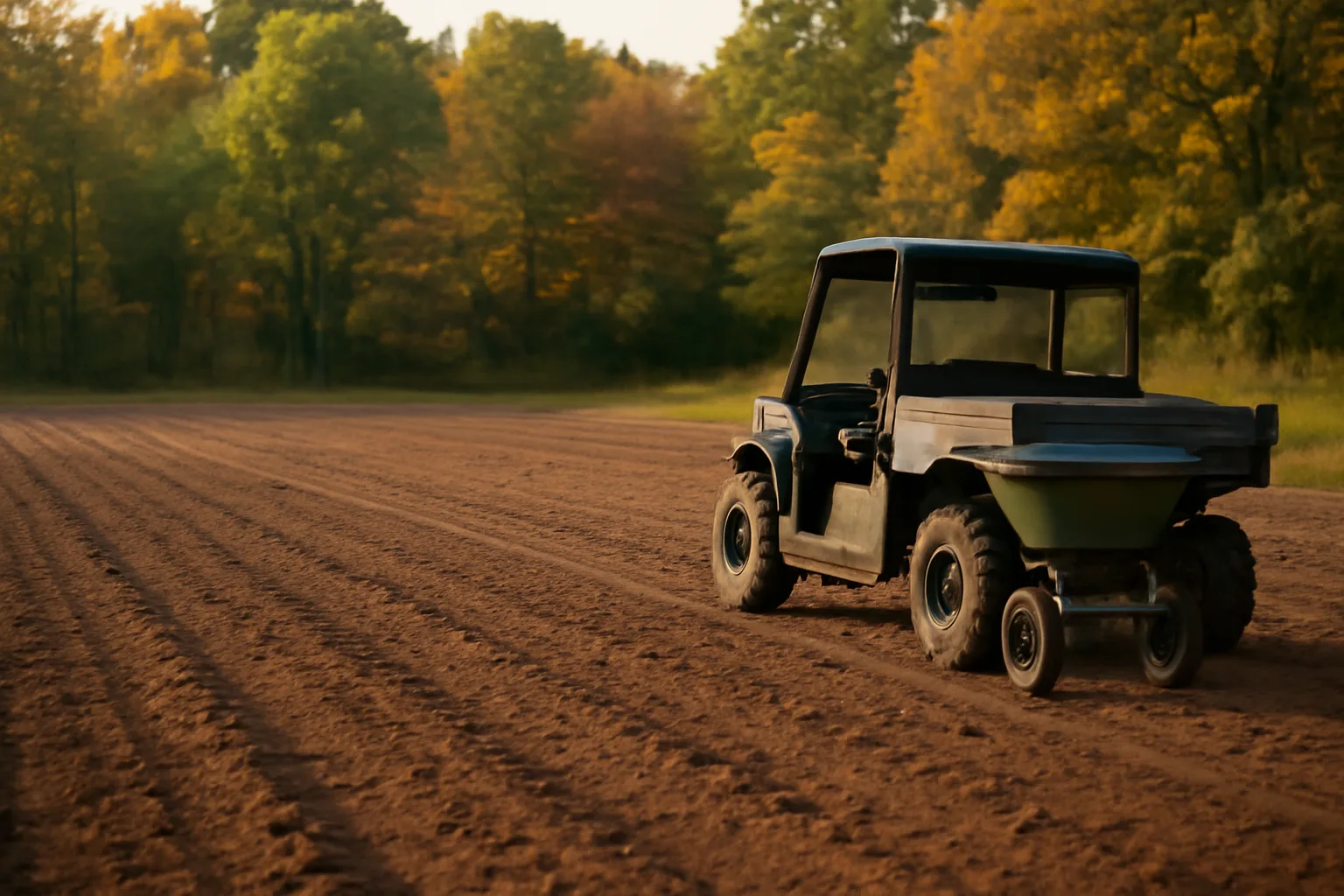
You don't need a full row-crop tractor and planter to grow a decent plot, but you do need some way to kill existing vegetation, work the seedbed, and get seed-to-soil contact. The minimum viable setup for a small plot (under 2 acres) is often an ATV or UTV, a small disc or tiller, a broadcast spreader, and a cultipacker or drag. A no-till drill costs more upfront (used units often run several thousand dollars, and small ATV-pull models are available in that range from ag equipment dealers) but it lets you plant into standing cover crops or crop residue without a full tillage pass, which saves time and reduces erosion on sloped ground. For larger acreage or annual rotations, that cost pays back in labor saved over several seasons. Sprayer capacity matters too if you're using herbicide for burndown or in-season weed control; a 15 to 25 gallon ATV-mounted sprayer covers most small plot needs. Whatever you use, calibrate it. Spraying the wrong rate wastes money and, with some herbicides, can carry over and hurt next year's planting. Most of what determines success is timing and soil prep, not horsepower. A well-timed, well-tested half-acre plot with basic equipment will usually outperform a rushed, untested three-acre plot planted with top-tier gear.
getting a plan built for your specific property
Every property is different: different soil, different shade, different deer pressure, different goals. A general planting calendar gets you close, but it can't replace knowing your actual acreage, your actual soil test numbers, and what you're trying to accomplish (attraction during season, nutrition over summer, or both). If you'd rather not piece together species, timing, and rates from scratch, PlotSeason's $99 Custom Food Plot Plan takes your property details and soil test info and builds a planting plan around them. It's general guidance built for your situation, not a substitute for your soil test lab's specific lime and fertilizer recommendations, and nobody can promise deer activity or a harvest from any plan. What it does do is save you from guessing on species mix, timing windows, and seeding rates. Whether you build the plan yourself using extension resources or get one built for you, the fundamentals don't change: test your soil, match species to your site conditions and goals, and plant on a realistic calendar for your zone.
Frequently asked questions
When is the best time to plant food plots for deer?
It depends on species and your zone. Spring plots like clover and soybeans go in after last frost, typically April-May in most whitetail range. Fall plots like brassicas and cereal grains go in 60-100 days before first frost, generally late July through early September depending on latitude. Check your state extension office for county-level frost dates.
Do deer eat sorghum?
Yes, deer browse young sorghum shoots and eat mature grain heads, but it's a secondary food plot choice. It's more commonly used as tall screening cover or bedding structure mixed into a plot border than as a primary attraction crop; soybeans and corn generally draw deer more consistently.
Do deer eat clover, and do deer like it?
Yes, clover is one of the most preferred food plot forages available, with crude protein often in the 25-30 percent range in good growing conditions. Deer graze it from spring through fall, especially after mowing stimulates new growth. It needs a near-neutral soil pH and regular mowing to stay productive.
When should I plant oats for deer?
Plant oats 60-90 days before your area's first hard frost, usually mid-August to mid-September in most whitetail country. Oats germinate quickly and draw deer fast but aren't very winter-hardy, so many hunters blend them with wheat or rye for forage that lasts later into winter.
When should I plant turnips for deer?
Plant turnips 80-100 days before first hard frost, generally mid-July in northern zones down to early September in the Deep South. Turnips need frost exposure to convert bitter compounds into sugars, which is why deer often ignore a turnip plot in early fall but hit it hard after a few freezes.
What is a food plot?
A food plot is a planted area, usually a quarter acre to several acres, seeded with forage or grain crops specifically to attract and feed deer or other wildlife. Common types include annual brassicas and cereal grains for fall, and perennial clover or alfalfa for spring through fall nutrition and repeated grazing.
What are deer's favorite foods overall?
It varies by season and region, but soybeans, acorns, clover, and standing corn consistently rank near the top. In fall, when acorns are abundant, deer often prefer natural mast over planted plots. Brassicas and cereal grains become more attractive after cold weather sweetens them up.
Do deer like honey?
No, deer don't seek out honey as a natural food source. It sometimes gets associated with deer attractants because of sweet-smelling scent products, but there's no research showing deer forage on honey itself. Check your state's baiting and feeding rules before using any manufactured attractant.
How big should a food plot be for deer?
There's no fixed rule, but many state wildlife agency and university extension guides suggest a range from a quarter acre for tucked-away kill plots to several acres for larger nutrition-focused fields. Shape and screening matter as much as raw size for hunting-specific plots.
Do I need a soil test before planting a food plot?
Yes, it's the single most cost-effective step you can take. A soil test, usually $7 to $20 through a state land-grant extension lab, tells you exactly how much lime and fertilizer your specific ground needs rather than relying on a generic recommendation.
What's the difference between annual and perennial food plots?
Annuals like brassicas, cereal grains, and soybeans get replanted each year and are often timed to peak during hunting season. Perennials like clover and alfalfa are planted once and, with mowing and maintenance, can produce forage for three to five seasons before needing to be reseeded.
Can I plant a food plot without a tractor?
Yes. A small plot under 2 acres can be planted with an ATV or UTV, a small disc or tiller, a broadcast spreader, and a cultipacker or drag for seed-to-soil contact. A no-till drill helps but isn't required for smaller acreage.
Sources
- USDA Natural Resources Conservation Service, Wildlife Habitat Practices: Food plots are treated as a wildlife habitat conservation practice tied to deer nutrition and body condition
- Purdue University Extension, Indiana average frost dates: County-level average frost-free date data used to time spring and fall plantings
- University of Georgia Extension, Brassica food plot guidance: Brassica planting windows and the frost-driven sugar conversion in turnip bulbs and leaves
- Iowa State University Extension, Oat production guide: Standard oat seeding rates for agronomic plantings
- University of Tennessee Extension, Food plot soil pH recommendations: Recommended pH ranges for clover versus brassicas and cereal grains