Last updated 2026-07-25
TL;DR
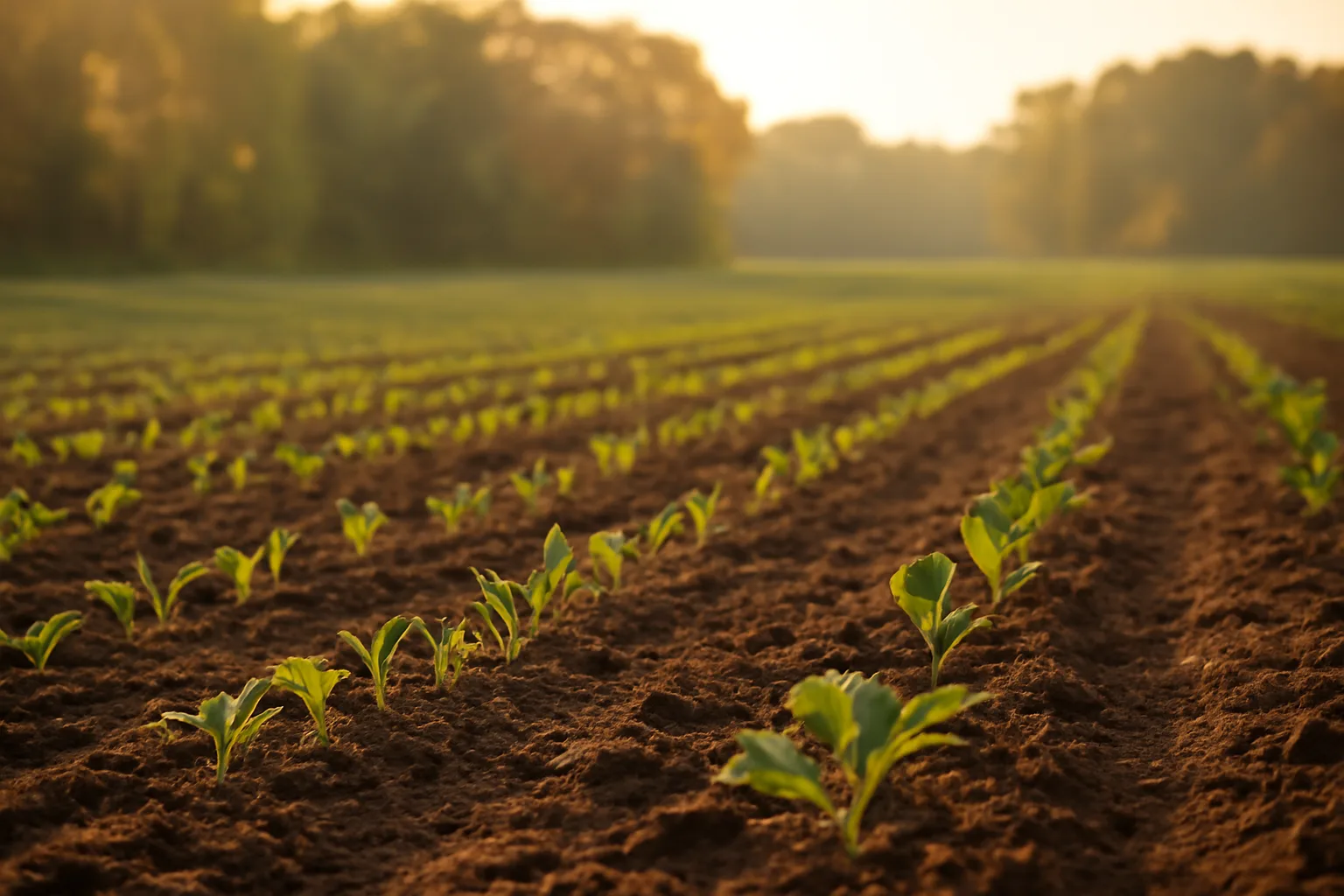
"Green machine" style deer food plot mixes typically combine brassicas (turnips, radish, rape) with cereal grains (oats, wheat) and sometimes clover, aiming for fast fall growth and a second wave of tuber/root feeding after frost. Plant these blends 60 to 90 days before your first hard frost, usually late July through September depending on latitude.
what is a food plot, exactly?
A food plot is a planted patch of forage, grain, or browse crop on hunting land, put there specifically to feed and hold deer (or other wildlife) rather than to sell as a commercial crop. Most run anywhere from a quarter acre to a few acres, tucked into a field corner, a logging clear-cut, or a strip cut through timber. The idea isn't new. Wildlife agencies and land-grant universities have published food plot guidance for decades because plots do double duty: they supplement natural browse during lean months and they concentrate deer activity in spots a hunter can watch. The Mississippi State University Extension describes food plots as a way to "provide supplemental nutrition" that natural habitat alone often can't deliver during late summer and winter stress periods [1]. A plot is not a substitute for good habitat. Bedding cover, water, and mast trees still do most of the work of holding deer on a property. What a plot adds is a predictable, huntable food source, plus a nutrition boost during antler growth (spring/summer plots) or fat storage before winter (fall plots). That's the whole job. Nothing about a bag of seed guarantees deer show up on your schedule, and no mix, however cleverly named, changes that.
what's actually in a "green machine" style deer food plot mix?
Blends marketed under names like "Green Machine" generally follow a familiar formula: a brassica (turnip, forage rape, or radish), a cereal grain (oats or winter wheat), and sometimes a clover or chicory component thrown in for perennial carryover. The brassica component grows fast and gets sweeter after frost because the plant converts starches to sugars, which is why deer often hit these plots harder in November and December than in September. The cereal grain half of the mix (usually oats) germinates quickly, covers bare soil to fight weeds, and gives deer green, leafy forage within 3 to 4 weeks of planting. Oats also winterkill in most northern zones, which some hunters like because it leaves a clean seedbed for spring, and others don't, because it means no grain left standing by late winter. If clover is in the mix, it's the long-game component. Clover, unlike the annuals around it, can persist for 2 to 5 years with proper mowing and fertility, according to Penn State Extension guidance on establishing clover food plots. So a bag like this is really three strategies stacked into one seed mix: fast cover (grain), a frost-sweetened attractant (brassica), and a perennial backup (clover), if included. Read the tag on any bag before you buy. "Mix" names are marketing, not a regulated term, so two bags with similar names from different companies can have very different seed ratios. Check the percentage by weight of each species listed on the label; that tells you what you're actually planting, not the brand story on the front.
do deer eat sorghum?
Yes, deer eat sorghum, and grain sorghum (milo) is planted in some Southern and Midwestern food plot programs specifically for fall and winter cover plus a starchy grain source. It's more common as a summer/fall standing grain crop than as the base of a fast-growing green blend, though. Sorghum tolerates heat and drought better than corn, which is part of why it shows up in food plot programs across the southern Plains and Southeast. Deer will browse the leaves some through the season, but the real draw is the grain head once it matures and drops, often into late fall. It's not typically bundled into "green machine" style blends because those mixes are built around fast, tender fall greenery, not a slow-maturing summer grain crop. If you want standing grain for winter cover and a late food source, sorghum is worth a separate planting, not a substitute for your fall greens plot.
do deer eat clover, and do deer actually like it?
Deer eat clover readily, and most whitetail research and extension literature rank it among the most consistently used food plot forages available. Clover is high in protein (often 25 to 30% crude protein in good stands) and stays palatable through spring and summer when brassicas and grains have already finished or been grazed out. Do deer like clover? Based on decades of camera and browse-use observation cited by university extension programs, yes, clover ranks as one of the top-preferred plantable forages, especially in spring green-up and early summer when deer need protein for antler growth and lactation. The University of Tennessee Extension notes clover's value largely comes from its combination of high digestibility and season-long availability, more than raw attraction [2]. The catch: clover needs decent soil pH (most clovers want 6.0 to 6.5) and it competes poorly with weeds if you skip mowing. A first-year clover stand that isn't maintained gets swallowed by broadleaf weeds and grass by year two. That's the tradeoff for the perennial convenience: less annual seed cost, more annual maintenance (mowing 2 to 4 times a season, spot herbicide as needed).
when to plant food plots for deer, generally?
| Northern tier (zones 3-4) | Late July to mid-August | Mid-September to early October | |
|---|---|---|---|
| Mid-latitude (zones 5-6) | Mid-August to early September | Early to mid-October | |
| Southern tier (zones 7-8) | Early September to early October | Late October to mid-November | Check your local extension office's frost date tables before locking in a date; "zone" is a decent proxy but county-level frost data is better. |
Timing depends entirely on what you're planting and where you are, but the two big windows are spring/summer for warm-season plots (clover, soybeans, cowpeas) and late summer into fall for cool-season plots (brassicas, cereal grains, most clover establishment). There's no single national planting date; it's a function of your first frost date and soil temperature, not the calendar month. As a rule of thumb used across most extension planting guides, cool-season brassica and grain blends go in 60 to 90 days before your area's average first hard frost. That gives the brassica bulbs and tubers time to size up before cold weather triggers the sugar conversion that makes them attractive. Plant too late and you get small, tough plants that never really turn on for deer. Plant too early in hot, dry August soil and you risk germination failure or bolting before frost even arrives. Here's a rough national planting window by zone, cross-referenced against USDA plant hardiness zone data and typical extension fall-plot guidance [1]: | Region (approx. USDA zone) | Cool-season plot window | Typical first frost |
when to plant oats for deer?
Oats for a fall deer plot go in the ground 6 to 10 weeks before your first hard frost, the same general window as brassicas, because oats and brassicas are usually planted together or in close succession. Oats germinate fast, often within a week in warm soil, and give you visible green cover before the slower brassica bulbs bulk up. If you want oats specifically as a spring forage plot (some hunters do a spring oat planting for turkey and early-season deer use), that goes in as soon as soil is workable, generally when soil temps hit about 40°F and climbing, per general small-grain planting guidance from land-grant agronomy programs. But for the classic fall food plot use case most hunters are after, plant oats in that same late-summer window as your brassica mix, not in spring.
when to plant turnips for deer?
Turnips for deer plots go in 70 to 90 days before your first expected frost, which for most of the whitetail's range lands somewhere between late July and early September. Turnips need that lead time to build the below-ground bulb that becomes the frost-sweetened attraction deer key in on come November and December. Plant turnips too late (say, mid-September in a zone with an early October frost) and you'll get leafy tops but small, underdeveloped bulbs, because the plant simply runs out of season. The leaves will still get browsed some, but you lose the big draw, which is deer pawing up and crunching the actual bulb once cold weather sweetens it. Seeding rate for turnips alone typically runs 4 to 6 lbs per acre; in a blend they're usually a smaller percentage by weight, mixed with grain and other brassica species.
what are deer's favorite foods, if you had to rank them?
There's no single scientifically ranked "favorite food" list for whitetails, because preference shifts by season, region, and what's locally available, but soft mast, acorns, and high-protein legumes consistently top browse studies. Native food preference work (much of it going back to classic studies referenced by state wildlife agencies) puts acorns, especially white oak acorns, near the top of the fall preference list because of their high fat and low tannin content compared to red oak acorns. Among plantable food plot species, soybeans and cowpeas rank very high in summer (high protein, high palatability), clover ranks high nearly year-round where it's established, and brassicas rank high specifically in late fall and winter after frost. Corn is a preferred energy source in winter but low in protein. None of this is a fixed hierarchy; a deer herd on a property with abundant natural mast may barely touch a plot in a good acorn year, and hit it hard the next year when the oaks fail. That year-to-year mast variability is one of the biggest, and most ignored, variables in food plot success.
do deer like honey, or are 'honey' named products even food related?
No, deer don't eat honey in any meaningful food plot context, and "do deer like honey" as a search is almost always about scent or attractant products (some deer lures and mineral products use honey or honey-scented additives as an attractant carrier, not as a food source). Deer aren't drawn to honey the way, say, bears are; there's no established browse behavior around honey in wildlife literature. If you're seeing "honey" paired with deer products, it's typically a mineral lick, scent drip, or attractant spray using honey or a honey-like scent compound to draw deer to a mineral site or trail camera location, separate from an actual food plot planting. Worth knowing before you spend money assuming it's a food plot ingredient; it isn't.
should you build your own mix or buy a bagged blend like green machine?
Buying a bagged blend saves time and gets you a tested seed ratio; building your own from straight species (bulk oats, bulk turnip seed, bulk clover) usually costs less per acre and lets you tune the ratio to your soil test and your goals. Neither is wrong. It depends on how much you want to manage the math yourself. Bagged mixes run anywhere from about $3 to $6 per pound retail depending on brand and blend complexity, and most cover a quarter to half acre per 5 lb bag at recommended rates (check the specific bag's coverage rate; brassica-heavy blends need less seed by weight than grain-heavy blends because brassica seed is tiny). Buying straight species in bulk from a farm co-op is almost always cheaper per acre, sometimes by half, but you're doing your own blending and rate math. If you already have a soil test in hand and know your acreage, straight species blending is worth the extra ten minutes of math. If you're planting a small plot (under an acre) and want something simple that's pre-balanced, a bagged mix removes guesswork. For a plan tailored to your specific soil test results, acreage, and region rather than a generic bag rate, PlotSeason's $99 one-time Custom Food Plot Plan builds species selection and seeding rates around your actual test numbers instead of a one-size-fits-all bag label.
soil test and fertility basics before you plant any blend
Your soil test lab is the final word on lime and fertilizer rates for your specific field; nothing in this article, or on any seed bag, replaces that report. Most brassica and clover blends want a soil pH between 6.0 and 6.8, and a lot of hunting land, especially reclaimed timber ground or acidic Southeastern soils, sits well below that without lime. Oklahoma State University Extension's food plot fertility guidance notes that pH below 6.0 significantly reduces the availability of applied phosphorus and can cut deep into forage yield even when fertilizer rates are otherwise correct [3]. That's the trap a lot of first-time plotters fall into: they buy good seed, spread fertilizer, and still get a thin stand because the soil was too acidic for the plants to actually use the nutrients sitting right there in the dirt. Lime takes months to fully react with soil, so if your test comes back needing lime, get it down as early in the season as you can, ideally the fall or spring before you plant, not the week you seed. If that timeline isn't realistic, still apply it at planting; partial correction beats none.
check your state's baiting and feeding rules before you plant
Food plots are generally legal everywhere and treated differently from bait piles under state law, but the line between "plot" and "bait" varies by state, and some states regulate standing crops differently from piled feed. Always check your state wildlife agency's current regulations before hunting over any planted plot, because definitions of baiting can hinge on things like whether the crop is standing versus harvested and piled, and rules change. For example, Michigan's DNR distinguishes food plots from baiting explicitly in its regulations, generally allowing standing crops as a legitimate agricultural and habitat practice while restricting placed bait [4]. Other states have different distance-from-stand rules, size limits, or seasonal restrictions. This is a state-by-state legal question, not a food plot agronomy question, so check your state wildlife agency's hunting digest for the current year before you assume your plot is compliant.
how green machine style blends compare to planting straight species
| Approach | Typical cost per acre | Establishment speed | Season of peak draw | Maintenance needed | |
|---|---|---|---|---|---|
| Bagged multi-species blend (brassica+grain+clover) | Moderate to high | Fast (grain up in 1-2 weeks) | Fall through early winter | Low first year, moderate if clover persists | |
| Straight brassica (turnip/radish only) | Low | Fast | Late fall/winter (post-frost) | Low, annual reseed | |
| Straight clover | Low to moderate | Slower to establish | Spring through fall, multi-year | Higher (mowing, spot spray) | |
| Straight cereal grain (oats/wheat) | Low | Very fast | Early fall, often gone by late fall | Low, annual reseed | The blend approach basically buys you a hedge: if the brassica bulbs get hit hard early, the grain and clover components carry the plot longer. The tradeoff is you're paying blend pricing and you don't control the ratio. Straight species plantings cost less and let you match seeding rate exactly to your soil test and goals, but take more planning if you want that same season-long coverage. |
common mistakes hunters make with fall blends like this
The most common mistake is planting too late. A brassica-heavy blend put in the ground 30 days before frost instead of 70 to 90 will never bulk up the way it's supposed to, and you'll wonder why the "deer's favorite" bag didn't perform. The second most common mistake is skipping the soil test and fertilizer entirely. Seed is the cheap part of a food plot budget; lime and fertilizer, done right, usually cost more than the seed itself, and skipping them is the single biggest yield killer according to most extension fertility guidance [3]. Third: overseeding or underseeding because the bag rate assumed a broadcast-and-cultipack method, and you drilled it, or vice versa. Read the application method on the label; rates differ by equipment. Last one: expecting deer to show up on command. No blend, however well marketed, guarantees deer activity or a harvest. Weather, mast crops, hunting pressure, and neighboring food sources all move deer around in ways no seed bag controls.
Frequently asked questions
Do deer eat sorghum?
Yes. Deer browse sorghum leaves some through the growing season and eat the grain heads once they mature, usually in late fall. It's more common as a standing winter grain crop in Southern food plot programs than as an ingredient in fast-growing green blends.
Do deer eat clover?
Yes, clover is one of the most consistently used food plot forages, high in protein (often 25-30% crude protein) and eaten heavily from spring through fall. University extension programs rank it among the top plantable perennial forages for whitetails, though it needs soil pH near 6.0-6.5 to thrive.
When should you plant food plots for deer?
Warm-season plots (soybeans, cowpeas, summer clover) go in spring after your last frost. Cool-season plots (brassicas, cereal grains, fall clover establishment) go in 60-90 days before your area's first hard frost, roughly late July in the north to early October in the deep south.
Do deer like clover more than other plot options?
Clover ranks among deer's top preferred plantable forages in most extension observations, largely because it's high in protein and available almost the whole growing season. Preference still shifts seasonally; deer often favor soybeans or brassicas at other times of year depending on what's available.
When should you plant oats for a deer food plot?
Plant oats for fall food plots 6 to 10 weeks before your first hard frost, generally alongside brassica seed in the same planting window. A separate spring oat planting is possible once soil temperatures climb past about 40°F, mainly for early-season and turkey use.
When should you plant turnips for deer?
Turnips need 70-90 days before your first frost to develop a good-sized bulb, so most of the whitetail range plants them between late July and early September. Planting later gives you leafy tops but small, underdeveloped bulbs, which cuts down the frost-sweetened draw deer key in on.
What exactly is a food plot?
A food plot is a planted patch of forage, grain, or browse crop on land managed for wildlife, meant to add supplemental nutrition and create a predictable, huntable spot for deer activity. It supplements natural habitat; it doesn't replace bedding cover, water, or mast trees as core habitat elements.
What is deer's favorite food overall?
There's no single ranked list, but acorns (especially white oak) top most fall preference observations due to high fat and low tannin content. Among plantable crops, soybeans and clover rank high in summer, and frost-sweetened brassicas rank high in late fall and winter.
Do deer like honey?
Not in any real food-plot sense. Honey shows up in some scent or mineral attractant products as a carrier, not as an actual forage deer seek out the way they seek acorns or clover. There's no established browse behavior around honey in wildlife research.
What's actually in a green machine style deer food plot mix?
Blends with names like this typically combine a fast-germinating cereal grain (oats or wheat) with one or more brassicas (turnip, radish, rape) and sometimes clover for perennial carryover. Always check the seed ratio by weight on the bag label since blend names aren't a regulated standard.
How much does a bagged food plot blend cost versus buying straight species?
Bagged multi-species blends often run $3-6 per pound retail. Buying bulk straight species (plain oats, plain turnip seed, plain clover) from a farm supply co-op is usually cheaper per acre, sometimes by half, but requires doing your own blending math and rate calculations.
Are food plots legal to hunt over, or do they count as baiting?
Food plots are generally legal and treated differently from bait piles, but rules vary significantly by state and can hinge on details like standing crop versus harvested feed. Check your state wildlife agency's current hunting regulations before hunting over any plot; definitions and restrictions change by state and year.
Should I lime my plot before or after planting a fall blend?
Before, if at all possible. Lime takes months to fully react with soil and raise pH, so applying it in spring or early summer ahead of a fall planting works best. If your soil test comes back late, apply lime at planting anyway; partial correction still beats skipping it.
Sources
- Mississippi State University Extension, Food Plots for Wildlife: food plots supplement wildlife nutrition during stress periods
- University of Tennessee Extension, Wildlife Food Plots: clover's value comes from digestibility and season-long availability
- Oklahoma State University Extension, Soil Fertility for Food Plots: soil pH below 6.0 reduces phosphorus availability and cuts forage yield
- Michigan DNR, Baiting and Feeding Regulations: Michigan distinguishes standing food plots from placed bait under state regulation
- University of Georgia Extension: Clover is a highly palatable and preferred forage species commonly used in deer food plot mixes.
- University of Georgia Extension: Oats and other cool-season annuals are typically planted in late summer to early fall for deer food plots.
- University of Missouri Extension: Brassicas such as turnips are typically planted in late summer for fall and winter deer forage.