Last updated 2026-07-25
TL;DR
Plant 60-90 lbs of wheat per acre if drilling, 100-120 lbs per acre if broadcasting, since broadcast seed has poorer soil contact and needs a heavier rate to compensate. Most land-grant extension guidance for winter wheat forage lands in the 90-120 lbs/acre range depending on planting method and soil conditions.
how many pounds of wheat per acre do you actually need
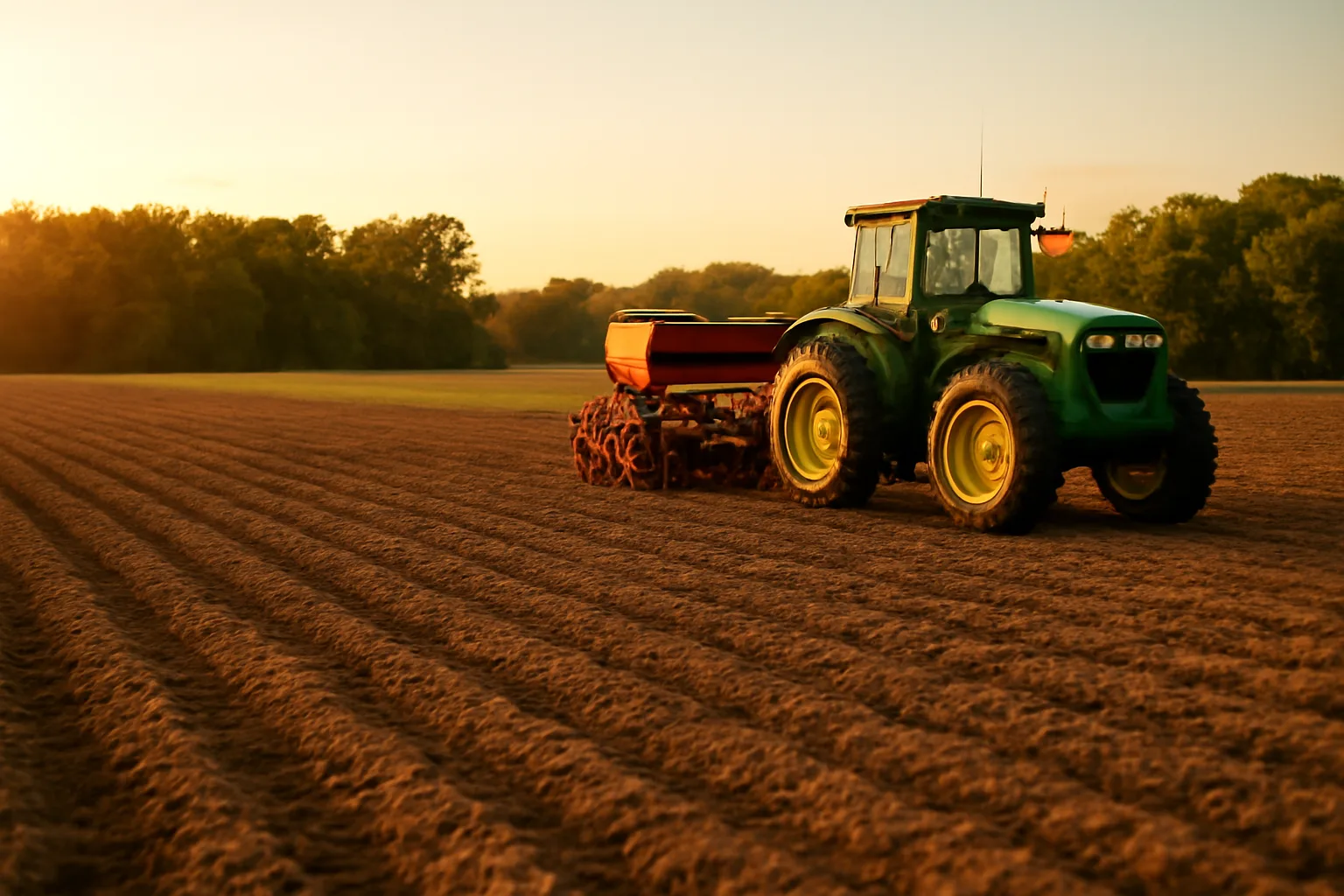
For a straight wheat food plot, plan on 60-90 lbs per acre with a drill, or 100-120 lbs per acre if you're broadcasting seed and dragging or cultipacking it in. That's a wide range on purpose, because seeding rate depends heavily on how good your seed-to-soil contact is. Drilling puts seed at a consistent depth (about 1 to 1.5 inches for wheat) and gets far better germination per pound of seed used. Broadcasting is more forgiving on equipment but wastes more seed to birds, uneven depth, and poor contact, so you compensate by throwing down more. Kansas State University's wheat production guidance lists standard grain wheat seeding rates around 60-90 lbs/acre (roughly 1 to 1.5 million seeds per acre) for drilled conditions in the central Plains [1]. Food plot rates for whitetail run a bit heavier than commercial grain rates because plot managers want thick, fast cover and forage volume, more than grain yield, so 90-120 lbs/acre broadcast is common advice from extension and wildlife programs. If you're mixing wheat with clover, oats, or brassicas in a blend, cut the wheat rate down to 30-50 lbs/acre since it's now a nurse crop or minority component, not the whole show.
how does planting method change the wheat seeding rate
| Drilled, 1-1.5 inch depth | 60-90 | Best seed efficiency, needs a drill | |
|---|---|---|---|
| Broadcast + light disk/drag | 90-110 | Good middle ground for most plotters | |
| Broadcast, no incorporation | 110-120+ | Weather-dependent, higher waste | |
| Wheat as minority in a blend | 30-50 | Paired with clover, oats, or brassicas | If you're broadcasting into a prepared seedbed and then cultipacking or dragging a chain harrow over it, you can lean toward the lower end of that 90-120 range. Skip the packing step and you should bump toward 110-120 lbs/acre to offset the seed you'll lose to poor contact. One more practical note: seed size varies by variety and by year's growing conditions, so bags are sold and rates are recommended by weight, not by seed count, unless you're working from a university seeding guide that gives seeds per pound. When in doubt, follow the rate on your seed tag; reputable food plot seed companies calibrate their bag recommendations to their own seed's test weight. |
Drilling is the more seed-efficient method, hands down. A grain drill places seed at a uniform, shallow depth and firms the soil around it, so germination rates are higher and you need less seed to get full ground coverage. Broadcasting (with a hand spreader, ATV spreader, or airplane) scatters seed on the surface. Some of it lands in perfect little soil cracks and germinates fine. A lot of it sits exposed, gets eaten by birds or rodents, or dries out before it can root. That's why broadcast rates run 20 to 40 percent higher than drilled rates for the same stand density. Here's a rough side by side for a 1-acre wheat plot: | Method | Seeding rate (lbs/acre) | Notes |
what is a food plot
A food plot is a planted patch of forage, usually somewhere between a quarter acre and several acres, established specifically to feed and attract deer or other wildlife on hunting land. It's not a garden and it's not a farm field grown for market. It exists to put nutrition and cover on the landscape where you want deer to be. Food plots generally fall into two categories: annual plots (planted fresh each year, like wheat, oats, brassicas, or soybeans) and perennial plots (established once and managed for multiple years, like clover or alfalfa). Wheat is almost always an annual, cool-season plot. A well-placed plot does two jobs at once. It supplements natural browse, which matters most in late winter and early spring when native forage quality drops, and it concentrates deer activity in a location you can hunt or observe. Neither of those outcomes is guaranteed; soil, rainfall, deer density, and surrounding ag all affect how a plot performs. If you're building your first plot or reworking an underperforming one, our food plot whitetail guide covers the basics of layout, size, and access.
when to plant food plots for deer
Timing splits into two windows: spring/summer plots (soybeans, cowpeas, sunflowers, clover) and fall plots (wheat, oats, brassicas, cereal rye). Wheat is a fall planting, timed so it germinates and establishes before winter but doesn't get too far along before frost. As a rule of thumb, plant wheat 4 to 8 weeks before your area's first killing frost. That gives seedlings enough time to establish a root system and 3-6 inches of top growth before cold really shuts things down. In much of the whitetail's range, that means early September in the upper Midwest and New England, mid-to-late September through the Ohio Valley and mid-Atlantic, and into October across the Deep South. The USDA's plant hardiness zone map is a decent starting reference for frost timing by region, though your county extension office will have more precise average first-frost dates for your specific area. Cooperative extension offices publish local planting calendars for cover crops and forage that are more useful than a national chart, because frost dates can shift by two to three weeks across a single state. Wheat is also more frost-tolerant than a lot of other food plot options, which is part of why it's a fall staple. It'll keep growing (slowly) after light frosts and often stays green and grazeable into December or later in southern and mid-latitude zones.
when to plant oats for deer
Oats follow almost the same calendar as wheat: 4 to 8 weeks before your first fall frost, so seedlings have time to establish before cold weather stalls growth. The catch is that oats are less cold-hardy than wheat or cereal rye. A hard freeze will usually kill oats outright, while wheat and rye keep growing back from the crown. That makes oats a great early-fall attraction plot, since deer often hit them hard right after they green up, but a weaker choice if you need something to hold forage value into February. Many food plot mixes pair oats with wheat or rye specifically so you get fast early growth from the oats and durability from the wheat once the oats die back. Seeding rate for oats runs 80-110 lbs/acre broadcast, similar in weight to wheat, since oat seed is lighter per bushel (a bushel of oats weighs 32 lbs versus 60 lbs for a bushel of wheat) but is typically sown at a lighter bushel rate [2].
when to plant turnips for deer
Turnips and other brassicas go in earlier than wheat, typically 10 to 12 weeks before your first expected frost. That's usually late July through August in northern states, and August into early September in the transition zone and South. Brassicas need a longer runway because the payoff is the bulb and root, more than leaf tonnage, and that takes more calendar time to bulk up. Plant them too late and you'll get leafy top growth but small, undersized bulbs by the time cold weather hits. A classic fall combination is turnips or radishes seeded alongside (or a few weeks before) wheat or oats. The brassica goes in first for its long growing window, then the cereal grain gets drilled or broadcast in as a companion a few weeks later, or the whole mix goes in together at the brassica's earlier date since wheat tolerates an earlier planting just fine, it just won't need the full head start that turnips do. University extension brassica guides commonly recommend 3-5 lbs/acre for turnip seed alone, since the seed is tiny and a little goes a long way; that's a fraction of the pounds-per-acre you'd use for wheat.
do deer eat sorghum
Yes, deer eat sorghum, particularly the grain heads once they mature and dry down in late fall. Sorghum (grain sorghum, sometimes called milo) is more commonly grown as a standalone or blended warm-season food plot crop in the South and parts of the Midwest, both for deer and for turkey and quail. It's not typically the first-choice forage during the growing season, since deer tend to browse the leaves lightly through summer, but the grain heads become a strong late-season food source once they mature, especially after a frost softens them up. Sorghum also doubles as standing cover, which matters in open country. Compared to wheat, sorghum is a summer planting (after soil temps hit 65-70°F) and it's more drought-tolerant, which is part of why it shows up more in southern and Plains food plot programs than up north.
do deer eat clover, and do deer like clover
Yes, deer eat clover readily, and most whitetail managers rank it among the most reliably preferred forages available for food plots. Clover is a perennial legume, so unlike wheat, one planting can produce forage for 3-5 years with proper mowing, weed control, and fertility maintenance. Clover's appeal comes down to protein and digestibility. Extension forage data shows clover regularly tests in the 20-30% crude protein range during active growth, which is well above what wheat or corn offer, and deer key in on that difference [3]. It's also one of the few plot options that provides forage spring through fall in one planting, rather than requiring a separate spring and fall seeding. The tradeoff is establishment. Clover needs decent soil pH (extension guides generally recommend 6.0-6.5 for red and white clover) and good weed control in year one, or a new stand can get choked out fast. That's exactly the kind of detail a soil test settles quickly, since lime and starter fertilizer needs vary a lot by field. If clover is part of your plan, a deer food plot seed mix that pairs clover with a cereal grain nurse crop like wheat or oats is a common, effective combo, since the grain comes up fast and protects young clover seedlings while they establish.
what are deer's favorite foods
There's no single universal answer, since preference shifts by season, region, and what's available, but repeated observational studies and extension forage-preference work point to a consistent short list: clover and other legumes, soybeans, acorns (especially white oak acorns), and agricultural crops like corn and soybeans when available. Acorns deserve a specific mention because they're often deer's single most preferred natural food where they're available in quantity, particularly white oak acorns, which are lower in tannins and more palatable than red oak acorns. That's a big reason hunters scout oak flats hard in years with a good acorn drop; a heavy mast year can pull deer away from planted plots entirely. Among planted options, soybeans and clover consistently show up at the top of preference studies and grazing-pressure observations, with brassicas (turnips, radishes) becoming a strong preference after the first hard frosts convert starches to sugars and make the greens taste sweeter. Wheat and oats are solid, reliable, moderately preferred forages, especially in fall and early winter, but they're rarely deer's single favorite when better options are on the landscape at the same time. This is exactly why smart plot plans stagger multiple species and planting windows rather than betting on one crop. Our species and strategy resources go deeper on matching specific crops to your region and hunting goals.
do deer like honey (honey locust, honeysuckle, and other 'honey' confusion)
If you mean honey the food, no, that's not a meaningful deer food plot question since deer don't forage on honey in any field-relevant way. But there's a real question hiding under this one, because hunters often mean one of two actual plants: honey locust or honeysuckle, or occasionally a branded seed product with 'honey' in the name. Deer do browse honey locust pods (the long, twisted seed pods that drop in fall) readily, and they're a solid natural late-season food source in areas where honey locust trees grow, particularly in the Midwest and mid-South. Deer also browse honeysuckle leaves and vines, especially Japanese honeysuckle, which stays semi-evergreen and offers browse later into fall and winter than a lot of native plants. Neither is something you'd plant as a food plot crop in the traditional sense; they're natural or invasive woody/vine species you manage or leave standing rather than seed. If a seed catalog or plot mix uses 'honey' in a product name, that's marketing language for a specific proprietary blend, not a distinct crop species, so check the actual seed tag for what's in the bag.
how much does a wheat food plot cost per acre
Wheat is one of the cheapest food plot options going, which is part of its appeal for hunters plotting multiple acres on a budget. Bulk winter wheat seed commonly runs somewhere in the $10-20 per 50-lb bag range depending on region and year, though grain prices swing with the commodity market, so check current pricing locally rather than trusting an old number. At a 90 lb/acre broadcast rate, that puts raw seed cost in the neighborhood of $20-40 per acre, before fertilizer, lime, or fuel. That's meaningfully cheaper than a specialty perennial clover blend or a branded brassica mix, which is why a lot of plot plans use wheat as the economical fall base and reserve pricier seed for smaller, high-traffic kill plots. Your actual cost depends on whether you're buying bagged bin-run wheat from a local co-op (cheapest) or a bagged food-plot-branded wheat blend (more expensive, sometimes with added nitrogen-boosting coatings or companion seed mixed in). Either works; the agronomy is the same crop either way.
how do i get a soil test and why does it matter more than the seeding rate
Seeding rate gets a lot of attention, but soil pH and fertility usually decide whether a wheat plot thrives or struggles more than a 10 lb/acre difference in seed rate ever will. Wheat generally performs best in soil with a pH between 6.0 and 7.0, and it responds strongly to nitrogen, with many state extension guides recommending 40-90 lbs of actual nitrogen per acre for forage wheat depending on soil test results and whether you'll also graze or hay it [1]. Most state land-grant universities run soil tests for landowners for a small fee, often $10-20 per sample, through their local cooperative extension office. That test tells you your actual pH, phosphorus, and potassium levels, and gives lime and fertilizer recommendations specific to your dirt, not a national average. Your soil test lab is the real authority here. A seeding rate chart can get you in the right range, but it can't tell you if your field needs 2 tons of lime per acre or none at all; only a test can. If you want a plan that pulls your soil test, region, and plot goals into one page instead of guessing across a dozen extension PDFs, that's exactly what our $99 one-time Custom Food Plot Plan is built to do.
do i need to check state rules before planting or hunting over a food plot
Yes, and this trips up more hunters than you'd expect. Food plots themselves are legal essentially everywhere; planting a crop on your own land is farming, not baiting. But the line between a food plot and illegal baiting or supplemental feeding gets state-specific, especially around things like mineral sites, standing versus harvested crops, and hunting over recently disturbed grain. Some states draw a clear line: a growing, rooted crop counts as a food plot no matter how you hunt it, while piling loose grain or minerals on the ground counts as bait. Other states have distance or disclosure rules for baiting near plots. Rules also change year to year in some states, particularly where CWD (chronic wasting disease) management has tightened feeding and baiting restrictions. Check your state wildlife agency's current hunting regulations before the season, not after you've already planted, since some states publish baiting definitions in their annual digest that specifically address food plots and standing crops [4]. This is a five-minute check that avoids a genuinely expensive mistake.
Frequently asked questions
How many pounds of wheat per acre should I plant for a deer food plot?
Use 60-90 lbs/acre if drilling and 90-120 lbs/acre if broadcasting. Broadcast seed has worse soil contact and more loss to birds and drying out, so the rate goes up to compensate. If wheat is a minority part of a blend with clover or brassicas, drop to 30-50 lbs/acre.
Do deer eat sorghum in food plots?
Yes. Deer browse sorghum leaves lightly during the growing season and eat the mature grain heads heavily in late fall, especially after frost softens them. It's more common in southern and Plains food plot programs as a warm-season crop, and it doubles as standing cover for deer and upland birds.
Do deer eat clover, and is it their preferred forage?
Yes, deer eat clover readily and it consistently ranks among their most preferred food plot forages. Clover commonly tests at 20-30% crude protein during active growth, higher than wheat or corn, which is likely why deer favor it. It's a perennial, so one good planting can last 3-5 years with maintenance.
When should I plant food plots for deer?
Fall plots (wheat, oats, brassicas) go in 4 to 12 weeks before your area's first frost, depending on the crop. Spring/summer plots (soybeans, sunflowers, cowpeas) go in after your last frost, once soil temps warm. Check your local cooperative extension office for exact frost-date windows in your county.
When should I plant oats for deer?
Plant oats 4 to 8 weeks before your first expected fall frost, the same window as wheat. Oats grow fast and attract deer early, but they're less cold-hardy than wheat and usually die at the first hard freeze, so pair them with wheat or rye if you need forage that lasts into winter.
When should I plant turnips for deer food plots?
Plant turnips 10 to 12 weeks before your first fall frost, earlier than wheat or oats. Turnips need that extra time to bulk up their roots, more than grow leaves. A common approach is planting turnips with wheat or oats together, since wheat tolerates the earlier date fine.
What is a food plot exactly?
A food plot is a planted patch, usually a quarter acre to several acres, established on hunting land specifically to feed and attract deer or other wildlife. It supplements natural forage and concentrates animal activity in a spot you can hunt, observe, or manage, using annual crops like wheat or oats and perennials like clover.
What is deer's favorite food overall?
There's no single universal favorite; it shifts by season and region. White oak acorns often top the list where available, since they're low in tannins and highly palatable. Among planted crops, soybeans and clover consistently rank as top preferences, with brassicas gaining preference after frost sweetens them.
Do deer like honey?
Not in any practical food plot sense; deer don't forage on honey. This question usually means honey locust or honeysuckle. Deer readily browse honey locust seed pods in fall and honeysuckle leaves and vines, especially Japanese honeysuckle, which stays green later into the season than most native browse.
Should I drill or broadcast wheat for a food plot?
Drilling is more seed-efficient and gives more consistent stands, using 60-90 lbs/acre. Broadcasting is easier with basic ATV or hand spreaders but needs 90-120 lbs/acre to offset poor seed-to-soil contact. If you broadcast, drag or cultipack afterward to improve germination and lean toward the lower end of that range.
How much nitrogen does a wheat food plot need?
Extension guidance for forage wheat commonly recommends 40-90 lbs of actual nitrogen per acre, depending on your soil test results and whether the plot will also be grazed or cut for hay. A soil test from your local extension office gives the exact number for your field rather than a generic range.
Can I mix wheat with clover in the same food plot?
Yes, this is a very common combination. Wheat acts as a fast-growing nurse crop that protects young clover seedlings and gives early-season attraction, while the clover establishes underneath and takes over as a perennial stand in following years. Drop the wheat rate to 30-50 lbs/acre when using it this way.
Sources
- Kansas State University Research and Extension, Wheat Production Handbook: Standard drilled wheat seeding rates and nitrogen recommendations for forage/grain wheat
- USDA National Agricultural Statistics Service, Standard weights per bushel: Standard bushel weights of 60 lbs for wheat and 32 lbs for oats
- University of Georgia Extension, Forage Legumes for Wildlife: Crude protein levels of clover during active growth compared to grain crops
- National Deer Association, Baiting and Feeding Regulations Overview: Baiting and feeding rules vary by state and are tightening in some areas due to CWD management
- University of Georgia Extension: Soil testing procedures and their importance for crop and food plot success