Last updated 2026-07-25
TL;DR
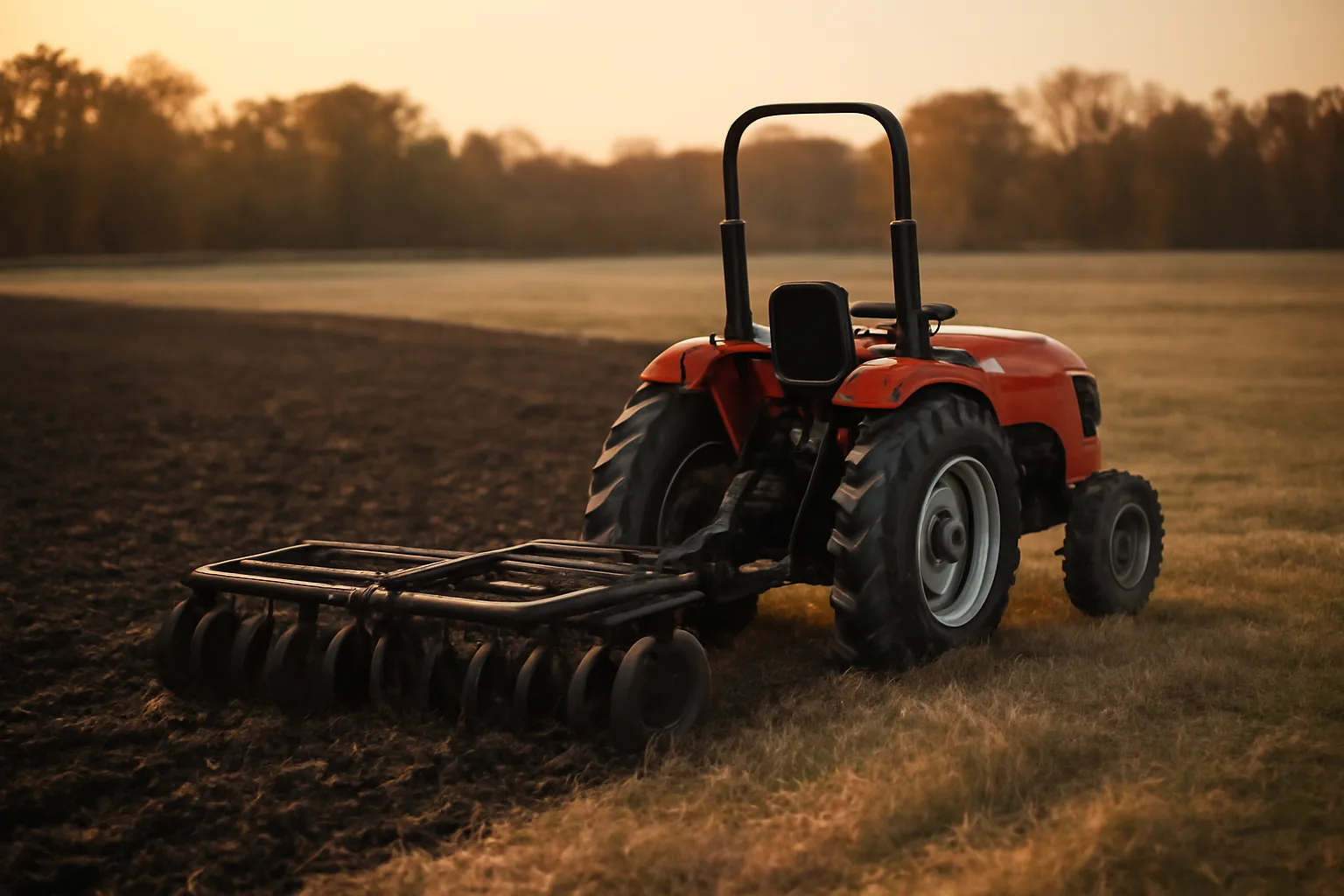
A food plot tractor for most hunters means a 25-45 hp compact tractor with a disc harrow, cultipacker or drag, and a broadcast seeder. You don't need a farm-scale rig for a 1-5 acre plot. Renting or hiring a local farmer to disc your ground once a year is often cheaper than owning equipment, especially if you're only planting one or two plots.
What is a food plot, exactly?
A food plot is a planted patch of forage, usually somewhere between a quarter acre and several acres, put in specifically to feed and hold deer or other wildlife on a piece of ground. It's not a farm field in the commercial sense. Nobody's trying to maximize bushels per acre for sale. The goal is tonnage and timing: enough green stuff, at the right time of year, to draw deer in and keep them healthy. Most state wildlife agencies and universities treat food plots as a wildlife habitat practice, not agriculture, which matters for tax and regulatory reasons in some states. USDA's NRCS Conservation Practice Standard for Wildlife Habitat Management (Code 645) lists food plots and forage plantings as a habitat management tool, separate from row-crop production guidance [1]. A plot can be as small as a quarter-acre kill plot tucked into timber, or a 5-10 acre field planted in soybeans or a brassica blend. The equipment question changes a lot depending on which end of that range you're on. If you haven't nailed down species or plot size yet, our food plot whitetail guide covers the planning side before you worry about the tractor.
Do you actually need a tractor for a food plot?
No, not always. A half-acre plot in soft soil can be worked with a UTV, a pull-behind disc, and a hand or ATV-mounted spreader. Plenty of hunters run successful plots with zero tractor at all. But once you get past an acre or two, especially in clay or compacted ground, a tractor saves real time and does a better job breaking sod and working in lime or fertilizer. Ground that's been sitting fallow for years, or was never cropped, usually needs more horsepower to break than an old ag field. The honest math: if you're only planting one plot a year, hiring a local farmer with a tractor and disc to work your ground for an hour or two often costs less than buying, maintaining, and storing your own equipment. If you've got multiple plots, awkward access, or you want to control timing exactly, owning starts to make sense.
What size tractor do you need for a food plot?
| Under 1 acre | ATV/UTV or 20-25 hp | Pull-behind disc, drag, ATV spreader | |
|---|---|---|---|
| 1-3 acres | 25-40 hp compact | 4-5 ft disc, cultipacker, 3-point spreader | |
| 3-10 acres | 40-60 hp | 6-7 ft disc, box blade, drill or no-till drill | |
| 10+ acres | 60 hp and up | Larger disc, planter, sprayer boom | Going bigger than you need just adds cost and makes tight, wooded plot access harder. A 35 hp compact tractor with a front-end loader and a 3-point hitch will do 90% of what a food plot hunter needs, including moving fill dirt for a pond or road, if that's ever on your list. |
For most food plots under 5 acres, a compact tractor in the 25-45 horsepower range handles everything: disc, cultipacker, drag harrow, and a rear-mounted broadcast spreader. Extension agronomy programs generally recommend compact tractors, categorized by PTO horsepower and often falling in the 20-60 hp class, for small-acreage implement work like disking and light tillage [2]. Here's a rough breakdown by plot size. | Plot size | Tractor size | Typical implements |
What implements do you actually need for a food plot?
The tractor itself is the least important decision. The implements are what turn dirt into a plot. At minimum, you want something to break ground (a disc harrow works for most soils), something to smooth and firm the seedbed (a cultipacker or drag harrow), and something to spread seed and fertilizer (a broadcast spreader, either 3-point mounted or pull-behind). A disc harrow is the workhorse. It cuts through sod and old plant residue and mixes in lime or fertilizer. For small brassica or clover seed that needs to sit near the surface, you want a cultipacker afterward to press seed into firm soil contact, since planting too deep is one of the most common food plot mistakes. A no-till drill is a step up in cost but lets you plant directly into standing residue or a sprayed-down cover crop without full tillage. USDA NRCS's soil health guidance states that reducing tillage "can increase water infiltration, improve soil structure, and reduce erosion" compared to conventional disking, especially on sloped ground [3]. If you're planting the same plot every year and have the budget, a no-till drill pays for itself in soil health and time saved.
When to plant food plots for deer
Timing depends on what you're planting and your USDA plant hardiness zone. Broadly, food plots split into spring/summer plantings (warm-season annuals and perennials) and late-summer/fall plantings (cool-season annuals and brassicas). Spring plots, things like soybeans, corn, or clover establishment, typically go in after your last frost date. NOAA's climate normals show average last spring frost dates ranging from early April across much of the Deep South to late May or early June in the northern tier and higher elevations [4]. Fall plots, brassicas, cereal grains, and clover overseeds, generally go in 60-90 days before your first hard frost so plants have time to mature before cold shuts down growth. A rough national guide: Southeast and Gulf Coast, fall plots from late August through September; Midwest and mid-Atlantic, mid-August through mid-September; northern states and Canada border areas, late July through August. Always check your local extension office's frost date tables rather than a national calendar, because a two-week miss on brassicas can mean the difference between a lush plot and a stunted one.
When to plant oats for deer
Oats are a fall annual in most whitetail country. Plant them 6-8 weeks before your average first frost date so they establish enough leaf growth before cold slows them down. In much of the Midwest and mid-South, that lands in late August to mid-September. Oats germinate fast, often within 5-7 days in warm, moist soil, and deer hit them hard as soon as they're a few inches tall. They're also one of the more forgiving fall plantings if your seedbed prep is rough, since oats tolerate looser soil contact better than tiny brassica seed. One caveat: oats aren't very frost-hardy compared to wheat or rye. In northern zones, a hard freeze can end oat growth by mid-fall, so they work best as an early-fall attraction plot rather than a food source you're counting on into late winter.
Do deer eat sorghum?
Yes, deer eat grain sorghum, both the standing seed heads and the leaves, though it's more commonly planted as a grain and cover crop than a primary attraction plot. Sorghum tolerates drought and heat better than corn, which is why it shows up in food plot mixes for the Southern Plains and parts of the Midwest. Deer will browse sorghum leaves in summer and hit the grain heads once they mature and dry down in fall, similar to how they use standing corn. It's often planted as a companion to other species in a mixed plot rather than alone, both for soil coverage and because a monoculture of any grain draws heavier browsing pressure early and can get wiped out before it heads up. Sorghum is also useful cover. Standing stalks left through winter give deer a travel corridor and thermal break in open country, which matters as much as the food value itself in some plot designs.
Do deer eat clover, and do they actually like it?
Yes. Clover is one of the most consistently preferred food plot forages across whitetail range, and it's backed by real research, more than marketing. University deer studies and extension forage trials repeatedly rank white clover and red clover among the most palatable, highest-protein plot forages available. Mississippi State University Extension's clover publication notes that white clover forage commonly tests in the range of 25-30% crude protein during active vegetative growth, which rivals or beats soybeans [5]. Clover's advantage is that it's a perennial. Once established, a good clover stand can produce forage for 3-5 years with proper mowing and fertility maintenance, which means far less annual tillage and reseeding compared to brassicas or cereal grains. That's a real cost and time savings if your ground and drainage suit it. The tradeoff is establishment. Clover needs a firm, well-prepped seedbed, correct soil pH (most extension guides recommend 6.0-6.5 for clover), and it's slower to get going than annual grains. This is where a cultipacker earns its keep, pressing tiny clover seed into firm contact with soil rather than burying it too deep.
When to plant turnips for deer
Turnips are a fall brassica, planted 80-90 days before your first hard frost so the roots and tops have time to bulb up and reach peak palatability by early winter. In most of the whitetail belt, that means a planting window from late July through August, depending on latitude. Turnips actually get more attractive to deer after the first hard frost. Cold converts starches in the plant to sugars, which is why turnip plots often sit untouched in October and then get hammered in December and January. If you're planting turnips expecting early-season action, you may be disappointed; they're built for late-season food when other browse is gone. Seeding rate matters more than people think. Turnips are typically drilled or broadcast at 4-6 lbs per acre, and going heavier doesn't help; overcrowded turnips produce small roots and thin, spindly tops. If you're building a brassica blend, our deer food plot seed breakdown covers rate and blend ratios by species.
What are deer's favorite foods?
There's no single universal favorite; it changes by season, region, and what's available naturally. But research on whitetail diet composition consistently shows a few patterns. Deer strongly prefer high-protein, high-digestibility forage when it's available, which is why legumes (clover, soybeans, cowpeas) and young browse rank high in preference studies. In food plot specific terms, soybeans and clover are usually the top picks in summer, brassicas and cereal grains dominate in the fall and winter once frost sweetens them, and acorns, when they're on the ground, often out-compete any planted plot entirely during a good mast year. That's not a food plot failure; it's just deer being efficient. Mast crops, acorns especially, are calorically dense and require zero energy to dig for, so deer will bypass a plot for a good white oak drop most years. Regionally, agricultural areas surrounded by corn and soybean fields see less plot pressure than timber-dominated ground with little row-crop nearby, simply because deer already have abundant high-quality forage. Extension wildlife programs generally advise planting what fills a seasonal gap in your specific area's natural food supply rather than copying a blend that worked somewhere else.
Do deer like honey (and does it matter for food plots)?
Deer aren't drawn to honey the way people assume from mineral-lick marketing. There's no established research showing honey as a meaningful attractant or food source for whitetail deer. It's not part of their natural diet, and their digestive system, a ruminant built for browse, forbs, and mast, isn't oriented toward concentrated sugar sources the way, say, a bear's is. What you'll see marketed are mineral and attractant products with added sugar or molasses, which deer will lick out of curiosity or taste preference, similar to livestock salt blocks. That's a supplement/attractant question, separate from food plot planning. States regulate or ban baiting and supplemental feeding differently from planted forage, and some classify mineral products as bait outright. Regulations vary by state and change often, so check your state wildlife agency's current rules before using any mineral or attractant product. Michigan's DNR, for example, defines and restricts baiting and feeding of deer under specific state rules that differ from how it treats planted forage [6].
How much does food plot tractor equipment cost?
A used compact tractor (25-45 hp) typically runs $8,000-$20,000 depending on age, hours, and attachments, based on current used equipment market listings and dealer pricing for that horsepower class. New compact tractors from major brands start higher, often $18,000-$30,000+ before implements. Implements add up fast: a used 5-6 ft disc harrow runs roughly $800-$2,500, a cultipacker $600-$1,800, and a 3-point broadcast spreader $200-$600. A no-till drill, if you go that route, is a much bigger jump, often $3,000-$8,000+ used. For a lot of hunters planting 1-3 plots a year, renting a tractor and implements from a local equipment rental yard, or paying a neighbor with a tractor $50-$150 to disc a plot, is the more rational financial choice than owning $15,000-$25,000 in equipment that sits idle 50 weeks a year. Ownership starts to pencil out once you're managing multiple plots, doing your own lime and fertilizer application on a schedule, or maintaining perennial clover stands that need regular mowing.
Do you need a soil test before you till anything?
Yes, and it costs almost nothing compared to what a wrong lime or fertilizer call costs you in a failed plot. Many land-grant university soil testing labs, including the University of Missouri's Soil and Plant Testing Laboratory, charge roughly $10-$20 per standard sample and return your pH and nutrient levels (phosphorus, potassium, and often organic matter) along with lime and fertilizer recommendations for your target crop [7]. Your soil test report, not a blog post or a bag label, is the actual authority on how much lime and fertilizer your specific ground needs. Recommendations vary hugely by state and soil type, so treat any general guidance, including this article, as a starting point, not a substitute for your lab results. If you've got a soil test back and want help translating it into a planting plan for your zone and acreage, that's exactly what our $99 Custom Food Plot Plan is built for: a species and calendar plan matched to your soil numbers, zone, and plot size, without guessing off a bag label.
Renting, borrowing, or hiring versus buying: what actually makes sense?
If you're planting one plot under 2 acres, once a year, hire it out or rent. A local farmer or landscaping outfit with a tractor and disc can usually work an acre in under an hour, and paying $75-$200 for that beats financing a tractor you'll use a handful of days a year. If you're running 3+ plots, doing annual lime and fertilizer applications, maintaining perennial clover, or your ground is remote enough that scheduling a rental or a neighbor's time is a hassle, owning starts to make sense. A used 30-40 hp compact tractor with a disc, cultipacker, and spreader is a realistic $12,000-$18,000 setup that'll last decades with basic maintenance. A middle path a lot of hunters miss: some ag equipment dealers and extension programs run rental or cost-share equipment pools for small landowners doing conservation plantings, which can be cheaper than commercial rental yards. Check with your state's NRCS office or local conservation district before assuming you have to buy or pay retail rental rates.
Frequently asked questions
Do deer eat sorghum?
Yes. Deer browse sorghum leaves in summer and eat the grain heads once they mature in fall, similar to standing corn. It's more drought-tolerant than corn, which makes it a common choice in hot, dry regions, often planted alongside other species in a mixed plot rather than alone.
Do deer eat clover?
Yes, and clover ranks among the most preferred food plot forages in extension research, often 25-30% crude protein in vegetative growth. It's a perennial, so a well-established stand can produce forage for 3-5 years with mowing and fertility upkeep, cutting down on annual replanting work.
When should I plant food plots for deer?
It depends on species and your frost dates. Spring plantings (soybeans, corn, clover establishment) go in after your last spring frost. Fall plantings (brassicas, oats, cereal grains) go in 60-90 days before your first fall frost. Check your local extension office's frost date tables for your specific zone.
Do deer like clover more than other food plot forages?
Clover consistently ranks high in palatability and protein studies, often competing with soybeans as a top choice, but preference shifts seasonally. Deer favor high-protein forage like clover in spring and summer, then often switch to brassicas and mast (acorns) once cold weather hits and sugars/fat become more valuable.
When should I plant oats for deer?
Plant oats 6-8 weeks before your area's average first fall frost, generally late August to mid-September across most of the whitetail belt. Oats germinate in 5-7 days under good conditions but aren't very frost-hardy, so they work best as an early-to-mid fall attraction plot.
When should I plant turnips for deer?
Plant turnips 80-90 days before your first hard frost, typically late July through August depending on latitude. Turnips get sweeter and more attractive after a hard frost converts starches to sugar, so they're built for late-season food rather than early fall action.
What is a food plot exactly?
A food plot is a planted area, from a quarter-acre to several acres, put in to provide forage and draw deer or other wildlife to a property. It's treated as a wildlife habitat practice rather than commercial agriculture by USDA NRCS guidance, focused on tonnage and timing over yield per acre.
What size tractor do I need for a food plot?
For most plots under 5 acres, a 25-45 hp compact tractor handles disc, cultipacker, and spreader work fine. Smaller plots under an acre can often be worked with a UTV and pull-behind implements. Larger acreage (10+ acres) benefits from 60 hp or more.
What are deer's favorite foods?
It varies by season and region. Legumes like clover and soybeans rank high in summer preference studies for their protein content. Brassicas and cereal grains take over in fall and winter. Acorns, when available in a good mast year, often out-compete any planted food source entirely.
Do deer like honey?
There's no real evidence deer are drawn to honey specifically; it's not part of their natural ruminant diet. Sugar or molasses-based mineral products get attention from deer out of taste curiosity, but that's an attractant question, not a food plot one, and some states regulate minerals as bait.
Can I plant a food plot without a tractor?
Yes, for small plots. A UTV or ATV with a pull-behind disc, drag harrow, and hand or ATV-mounted spreader can handle plots under an acre in softer soil. Once you're working compacted ground or plots over 1-2 acres, a tractor saves significant time and does a better tillage job.
Is it cheaper to rent equipment or buy a tractor for food plots?
For one or two small plots a year, renting or hiring a local farmer usually costs $75-$200 per plot, far less than owning. Buying makes more sense once you're managing multiple plots or perennial stands needing regular equipment access, where a used compact tractor setup runs $12,000-$18,000.
Sources
- USDA NRCS, Conservation Practice Standard: Wildlife Habitat Management (Code 645): Food plots are categorized as a wildlife habitat management practice, distinct from row-crop production standards
- Penn State Extension, "Selecting a Tractor for the Small Farm or Alternative Enterprise": Compact tractors in roughly the 20-60 hp range are recommended for small-acreage tillage and implement work
- USDA NRCS, "Soil Health: Reduced Tillage" (Soil Health Technical Note): No-till and reduced tillage planting reduces erosion and preserves soil structure compared to conventional tillage
- NOAA National Centers for Environmental Information, U.S. Climate Normals (1991-2020): Last spring frost dates vary by region from early April in the South to late May or June in northern states
- Mississippi State University Extension, "Clover for Wildlife" (Publication 2846): White and red clover commonly test at 25-30% crude protein and rank among preferred food plot forages for deer
- Michigan Department of Natural Resources, Baiting and Feeding of Deer Regulations: States regulate baiting and supplemental feeding of deer differently from planted food plot forage
- University of Missouri Extension, Soil and Plant Testing Laboratory fee schedule: Standard soil tests cost roughly $10-$20 per sample and provide pH, nutrient levels, and lime/fertilizer recommendations