Last updated 2026-07-24
TL;DR
Sale prices on food plot seed are real, but a bag of cheap seed only pays off if the species fits your soil, your zone, and your planting window. Clover, oats, and brassicas are the most forgiving buys. Check the tag for coated seed weight, purity, and germination before you compare price per bag.
what is a food plot, and why does the seed you buy matter so much
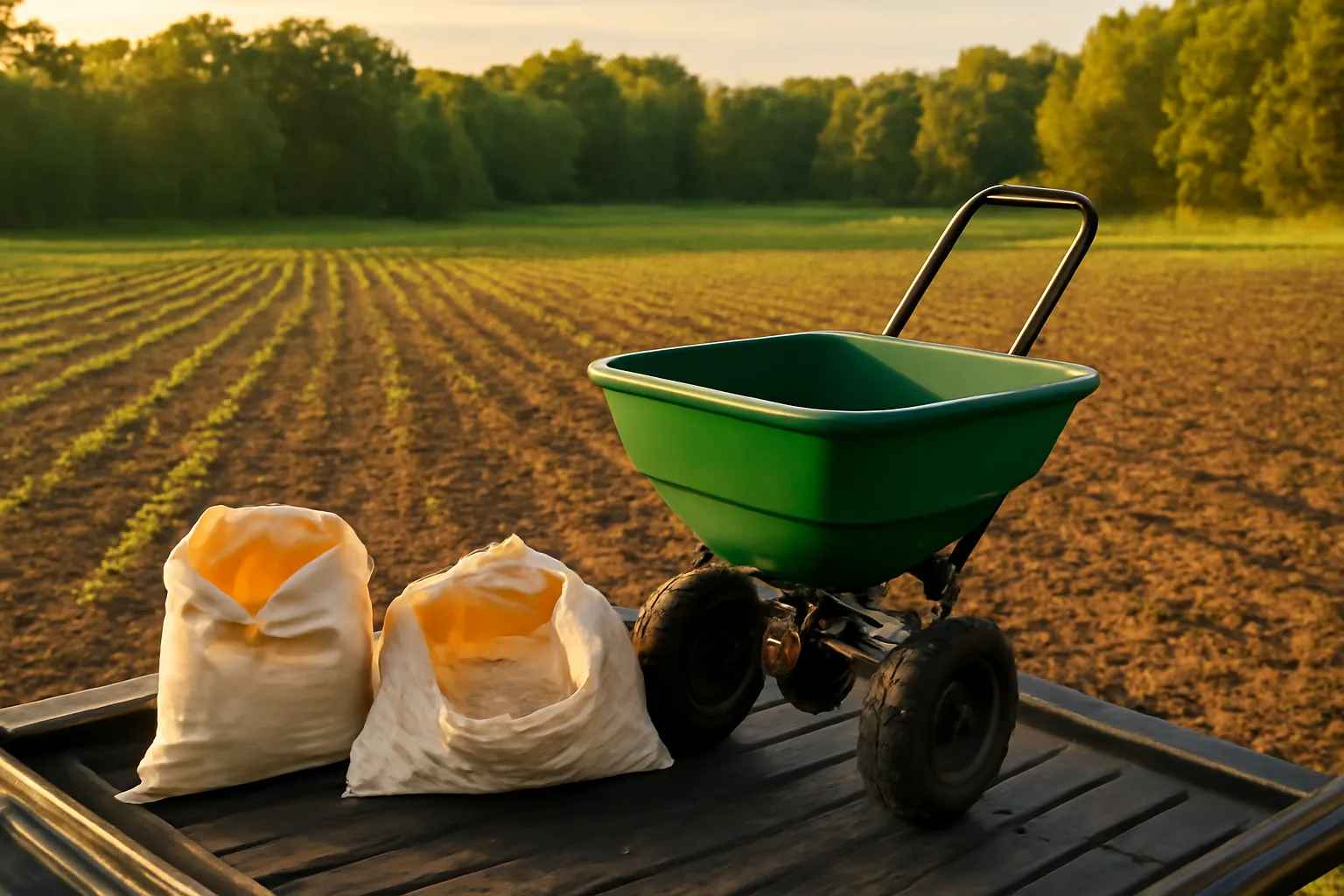
A food plot is a planted patch of ground, usually somewhere from a quarter acre to several acres, seeded with forage that deer and other wildlife will eat. It's not a garden and it's not a lawn. Most plots run somewhere between a fall annual (like brassicas or cereal grains) or a perennial (like clover or alfalfa) that you manage for two to five years before renovating. The seed is maybe 10 to 20 percent of your total cost once you count lime, fertilizer, herbicide, and fuel for the tractor or ATV. But it's the one input hunters obsess over, because it's the part with a brand name and a bag on a shelf. Here's the problem with chasing sale seed: a $19 clearance bag of a forage blend that's wrong for your soil pH or your first frost date is worthless, no matter how cheap it was. A $45 bag of the right species planted at the right depth, on schedule, beats it every time. Price per bag means nothing until you've matched species to your dirt and your calendar. For a broader look at species options and how they stack up, see food plot whitetail and deer food plot seed.
do deer eat clover, and is it worth stocking up on when it's on sale
Yes, deer eat clover readily, and it's one of the most reliable perennial forages in food plot programs across the whitetail's range. White clover and red clover both show up constantly in university plot trials because they handle grazing pressure well and keep producing new growth through the season. The USDA's plant guide on white clover (Trifolium repens) notes it is "widely used for pasture, hay, and wildlife food plots" and tolerates a wide pH range once lime is applied [1]. Clover is also nitrogen-fixing, so it needs less added nitrogen fertilizer than grasses or brassicas, which helps offset the seed cost over its multi-year life. If clover seed goes on sale, it's usually a smart stockpile buy, with one catch: check the germination date on the tag. Clover seed loses viability over time in storage, and a bag that's been sitting two seasons past its test date may germinate at 60 percent instead of 90 percent. At that point the discount isn't a discount anymore. Also check whether the clover is inoculated. Clover seed needs the right rhizobia bacteria on the seed coat to fix nitrogen effectively. A lot of clearance-bin seed has been sitting long enough that the inoculant is dead, and you'll need to re-inoculate or accept weaker nitrogen fixation the first year.
do deer like clover more than other forages
Deer show a strong preference for clover during spring and summer green-up, but preference shifts hard by season. Clover is high in protein and highly digestible, which matters most when does are lactating and bucks are growing antlers, generally April through August in most of the whitetail's range. Come fall, deer often shift preference toward high-carbohydrate foods like acorns, corn, soybeans, and brassicas as they build fat reserves for winter. This is normal and it's not a sign your clover plot failed. It's a sign deer are doing what deer do. The practical takeaway: clover is your spring and summer plot, not your only plot. If you're hunting over food in fall, pair clover with a fall annual like brassicas or cereal grain so you've got something drawing deer when the clover naturally slows down.
do deer eat sorghum
Yes, deer eat grain sorghum, both the standing seed heads and the plant itself while it's green, though it's not usually anyone's first-choice food plot species on its own. Sorghum (milo) shows up more often as a component in wildlife blends or as a screening/cover crop planted alongside a food source, because it grows tall and thick and gives deer security cover leading into a plot. Extension trial work on forage sorghum and sorghum-sudangrass hybrids shows it handles drought and poor soil better than corn, which is part of why it turns up in cheaper regional blends sold in drier parts of the whitetail's range [2]. If you see a discounted "wildlife blend" bag heavy on sorghum, treat it as a cover or screening component, not your main fall food draw. Deer will eat it, but corn, soybeans, and brassicas typically pull harder in side-by-side plot comparisons.
when to plant food plots for deer
| Zones 8-9 (Deep South) | March-May | Late Aug-early Oct | |
|---|---|---|---|
| Zones 6-7 (Mid-South/Transition) | April-June | Mid-Aug-mid-Sept | |
| Zones 4-5 (Upper Midwest/North) | May-June | Late July-mid-Aug | For a full breakdown by species, see deer food plots. |
Planting dates split into two windows: spring/summer plots (usually perennial clover, alfalfa, or warm-season annuals like soybeans and corn) and late-summer/fall plots (brassicas, cereal grains, annual clover blends). The right date depends entirely on your USDA Plant Hardiness Zone and your average first frost date, not a national calendar. As a rough national spread: spring plantings typically run April through June depending on latitude, and fall plantings typically run mid-July through early September, with brassicas needing the earliest start of the fall group because they need 90 to 120 days to bulb out before a hard frost sweetens them. Your state land-grant extension office publishes region-specific planting windows and they're worth checking directly, because a date that works in southern Georgia can be six to eight weeks off from what works in northern Minnesota. Many state wildlife agencies also publish food plot guides tailored to their deer season timing. Here's a rough national spread by zone, meant as a starting point, not a guarantee: | Region (USDA Zone) | Spring/summer plot window | Fall plot window |
when to plant oats for deer
Oats are a fall annual, planted in late summer so they establish before cooler weather slows growth, generally 6 to 8 weeks before your first expected frost. That puts most of the country somewhere between mid-August and mid-September, with the Deep South stretching into early October. Oats germinate fast, often in 5 to 7 days with good soil moisture, and deer will hit young oat shoots almost immediately, which is part of why they're a popular fall annual for hunters who want quick green-up. Oats are also less cold-hardy than winter wheat or cereal rye. A hard freeze in the teens will usually kill oats back, while wheat and rye keep growing into winter and green up again in spring. If you're in a colder zone and want forage that survives into late season, cereal rye or winter wheat is the safer bet over oats. If you're in the South and want a fast-growing, high-preference fall draw that doesn't need to survive January, oats are hard to beat, and they're often cheaper per acre than wheat or rye in sale bins because seed suppliers overstock them.
when to plant turnips for deer
Turnips go in the ground in late summer, same general window as other brassicas, roughly 80 to 90 days before your first hard frost. For most of the whitetail range that's late July through mid-August in the north, and mid-August through early September in the transition zone and South. Turnips need that frost to convert starches to sugars in the bulb and leaves, which is why deer often ignore a turnip plot in October and then hammer it in December. This is one of the most common frustrations hunters report, and it's not a planting failure. It's the plant doing exactly what it's supposed to do. The seed itself is tiny, roughly 150,000 to 220,000 seeds per pound depending on variety, so a little goes a long way and overseeding is a common (and wasteful) mistake. Most extension guidance recommends 4 to 6 pounds per acre for turnips planted alone, less if blended with other brassicas [3]. If you're buying a discounted brassica blend, check the seeding rate on the tag against your acreage. A lot of hunters over-buy because they assume more seed means a thicker plot, but brassicas that are seeded too heavy compete with each other for light and produce smaller bulbs.
what are deer's favorite foods, and does that change what you should plant
There's no single ranked list that holds true everywhere, because deer preference shifts with season, region, and what's already available naturally. That said, wildlife research generally groups deer's most sought foods into a few categories: acorns (especially white oak family acorns, which are lower in tannins and more palatable than red oak acorns), soybeans and other legumes, clover, and agricultural grain crops like corn. Regional deer food habits research consistently shows acorns as a top preferred fall food where available, with deer often bypassing planted plots entirely during a heavy acorn drop. That's a real planning consideration: if your property has mature white oaks, expect plot use to dip in years with a strong mast crop, through no fault of your seed or your plot. Beyond acorns, soybeans (as both a summer forage and a fall grain source) and clover consistently rank near the top of preference studies. Brassicas rank high in late season once sweetened by frost. Corn is more valued as an energy source in the coldest months than as a year-round draw.
do deer like honey, and does it belong in a food plot strategy
Deer don't seek out honey the way they seek out browse, and there's no research base showing honey as a meaningful food plot or attractant input. What you're probably thinking of is deer's documented sweet tooth for sugar-rich foods generally, which is well established: this is exactly why frost-sweetened brassicas and turnips get hit hard in late season, and why corn and other high-sugar, high-carb foods pull deer in cold weather. Some commercial mineral and attractant products include molasses or sugar-based additives, which is a different thing entirely from planting honey or sugar in a plot. There's also a practical issue: many states regulate or outright ban baiting and supplemental feeding for deer, and rules on what counts as "bait" versus a planted food plot vary a lot by state. Michigan's baiting and feeding rule for deer and elk, administered under the Wildlife Conservation Order, restricts baiting statewide with specific regulated exceptions in the Upper Peninsula [4]. Other states allow baiting in some regions but not others. Check your state wildlife agency's current regulations before using any attractant product, and understand that a planted, rooted food plot is treated differently under most state laws than scattered feed or bait piles.
how to actually evaluate a sale-priced bag of food plot seed
Read the tag before you read the price. Every seed bag sold legally in the U.S. carries a label with pure seed percentage, germination percentage, test date, and weed seed content, required under state seed laws that mirror the federal model. A bag with 85 percent germination tested eight months ago is a real deal at a discount. A bag with no visible test date, or one tested two years ago, probably isn't, even marked down 50 percent. Second, check for coated seed weight versus pure seed weight. A lot of clover and brassica products are sold with a clay or polymer coating that adds bulk and weight to the bag without adding actual seed. That's not necessarily a scam, coatings can help with seed-to-soil contact and moisture retention, but it does mean your true seeding rate per pound is lower than an uncoated product. Compare the "pure live seed" or PLS pounds per acre, more than bag weight, when you're pricing sale seed against full-price seed. Third, match the species to your actual soil test, not the picture on the bag. This is the single biggest reason sale seed underperforms. Clover wants a soil pH around 6.0 to 6.5 and won't hold up long term below that without lime. Brassicas tolerate a wider pH range but still perform best with adequate phosphorus and potassium. Your soil test results, from your county extension office or a private ag lab, are the real authority here on what your ground needs, not the seed tag and not a blog post. If you don't have a recent soil test, that's the first thing to get before buying anything, sale price or not. If you want help turning a soil test into an actual seed and fertilizer plan for your specific ground, that's exactly what our $99 one-time Custom Food Plot Plan is built for. It's general planning guidance based on your inputs, not a substitute for your soil lab's site-specific lime and fertilizer recommendations.
blends versus straight species: which is the better buy on sale
Multi-species blends (think clover plus chicory, or a brassica mix of turnips, radish, and rape) are popular in sale bins because they're marketed as more forgiving and more attractive. There's some truth to that. A blend spreads your risk if one species struggles in your specific soil or weather that year. The tradeoff is you lose control. If a blend is 40 percent filler species (annual ryegrass is a common cheap filler) and 60 percent the forage you actually want, you're paying blend pricing for a lower percentage of your target species than a straight bag would give you. Check the ingredient breakdown by weight percentage on the tag, which is required labeling information, and do the math on cost per pound of your actual target species, not cost per bag. Straight species seed (pure clover, pure oats, pure winter wheat) gives you control over seeding rate and is usually the better buy for larger acreage where you're already comfortable managing your soil. Blends make more sense for smaller plots, first-time planters, or spots with variable soil where you want insurance against one species failing outright. For more on choosing between species and blend approaches, see deer for food and food plot seed.
when is food plot seed actually on sale, and is buying early ever the better move
Seed suppliers and farm stores typically discount food plot seed in two windows: late fall clearance (October through December) as they clear inventory ahead of the next season, and occasionally early spring as leftover fall-annual seed gets marked down before it ages out of peak viability. Late fall clearance is usually the better buy if you're stocking perennial seed (clover, chicory, alfalfa) for next spring, because germination hasn't had time to degrade much and you're basically getting a discount for buying six months ahead of planting. Spring clearance on leftover fall-annual seed (brassicas, oats) is riskier, because that seed is already a year old relative to its test date and you're now storing it another five months before it goes back in the ground. Storage matters more than people think. Seed loses viability faster in heat and humidity. A garage that hits 90+ degrees in summer is a worse place to store clover seed than a cool, dry basement. If you're buying ahead on a sale, plan your storage, more than your purchase.
Frequently asked questions
Do deer eat sorghum in food plots?
Yes. Deer eat grain sorghum's seed heads and green growth, but it's usually planted as a screening or cover component alongside a main food source rather than the primary draw. Extension trials show it tolerates drought and poor soil better than corn, which is why it turns up in cheaper regional wildlife blends [2].
Do deer eat clover, and is it a good sale-seed buy?
Yes, deer readily eat white and red clover, and it's a strong perennial choice per USDA plant guidance [1]. Clover seed is a good sale-bin purchase if the germination test date is recent, since old clover seed loses viability and dead inoculant weakens its nitrogen-fixing benefit.
When should I plant deer food plots?
It depends on species and your zone. Perennials and warm-season annuals generally go in April through June; fall annuals like brassicas and cereal grains generally go in mid-July through early September. Check your state land-grant extension's planting calendar for exact local windows rather than a national date.
Do deer like clover more than other forages?
Deer strongly prefer clover in spring and summer for its protein and digestibility, but preference shifts toward high-carb foods like acorns, corn, and brassicas in fall. Clover isn't a lesser food, it's a seasonal one, so pairing it with a fall annual covers more of the year.
When do you plant oats for deer plots?
Plant oats 6 to 8 weeks before your area's first expected frost, generally mid-August through mid-September in most regions, later into September or early October in the Deep South. Oats germinate fast but aren't cold-hardy; a hard freeze kills them back faster than wheat or rye.
When should turnips be planted for deer?
Plant turnips 80 to 90 days before your first hard frost, typically late July through mid-August in the north and mid-August through early September further south. Deer often ignore turnips until after a hard frost sweetens the bulbs and leaves, which is normal, not a planting failure.
What exactly is a food plot?
A food plot is a planted area of forage, typically a quarter acre to several acres, seeded specifically to feed deer and other wildlife. It can be an annual planting like brassicas or a perennial stand like clover, managed with lime, fertilizer, and mowing over its productive life.
What are deer's favorite foods overall?
Acorns, especially white oak family acorns, consistently rank as a top preferred fall food in regional wildlife studies, often outcompeting planted plots in heavy mast years. Soybeans, clover, and frost-sweetened brassicas also rank high, with preference shifting by season and region.
Do deer like honey?
There's no research support for honey as a deer attractant or food plot input. Deer do show a documented preference for sugar-rich foods generally, which explains why frost-sweetened brassicas and corn pull hard in cold weather. Check your state's baiting rules before using any sugar-based attractant product.
Is sale-priced food plot seed actually worth buying?
Sometimes, but only if the germination date is recent and the species fits your soil test and planting zone. A discounted bag with old test dates or the wrong species for your pH is a waste of money regardless of price. Read the seed tag before comparing prices.
What's the best time of year to buy food plot seed on sale?
Late fall (October through December) is usually the better clearance window, especially for perennial seed like clover, since it hasn't aged much before next spring's planting. Spring clearance on leftover fall-annual seed like oats or brassicas is riskier because that seed is already older relative to its germination test.
How much turnip seed should I plant per acre?
Most extension guidance recommends 4 to 6 pounds of turnip seed per acre when planted alone, less when blended with other brassicas like radish or rape [3]. Turnip seed is tiny, roughly 150,000 to 220,000 seeds per pound, so overseeding is a common and costly mistake.
Sources
- USDA NRCS Plant Guide, White Clover (Trifolium repens): White clover is widely used for pasture, hay, and wildlife food plots and tolerates a range of soil pH
- University of Georgia Extension, Forage Sorghum and Sorghum-Sudangrass (Bulletin 1216): Sorghum and sorghum-sudangrass hybrids tolerate drought and poorer soils better than corn
- USDA NRCS Plant Fact Sheet, Turnip (Brassica rapa): Recommended turnip seeding rates for food plots, roughly 4 to 6 pounds per acre planted alone
- USDA Forest Service, Southern Research Station: Acorns and White-tailed Deer: Acorns, particularly white oak group acorns, rank as a top preferred fall food for whitetail deer and affect food plot use in heavy mast years
- Michigan Department of Natural Resources, Wildlife Conservation Order, Baiting and Feeding Order Amendment No. 2 of 2024: Michigan restricts deer baiting and feeding statewide with specific regulated exceptions
- USDA Natural Resources Conservation Service, Plant Guide: Grain Sorghum (Sorghum bicolor): Grain sorghum is used in wildlife plantings and tolerates drier, less fertile soils