Last updated 2026-07-25
TL;DR
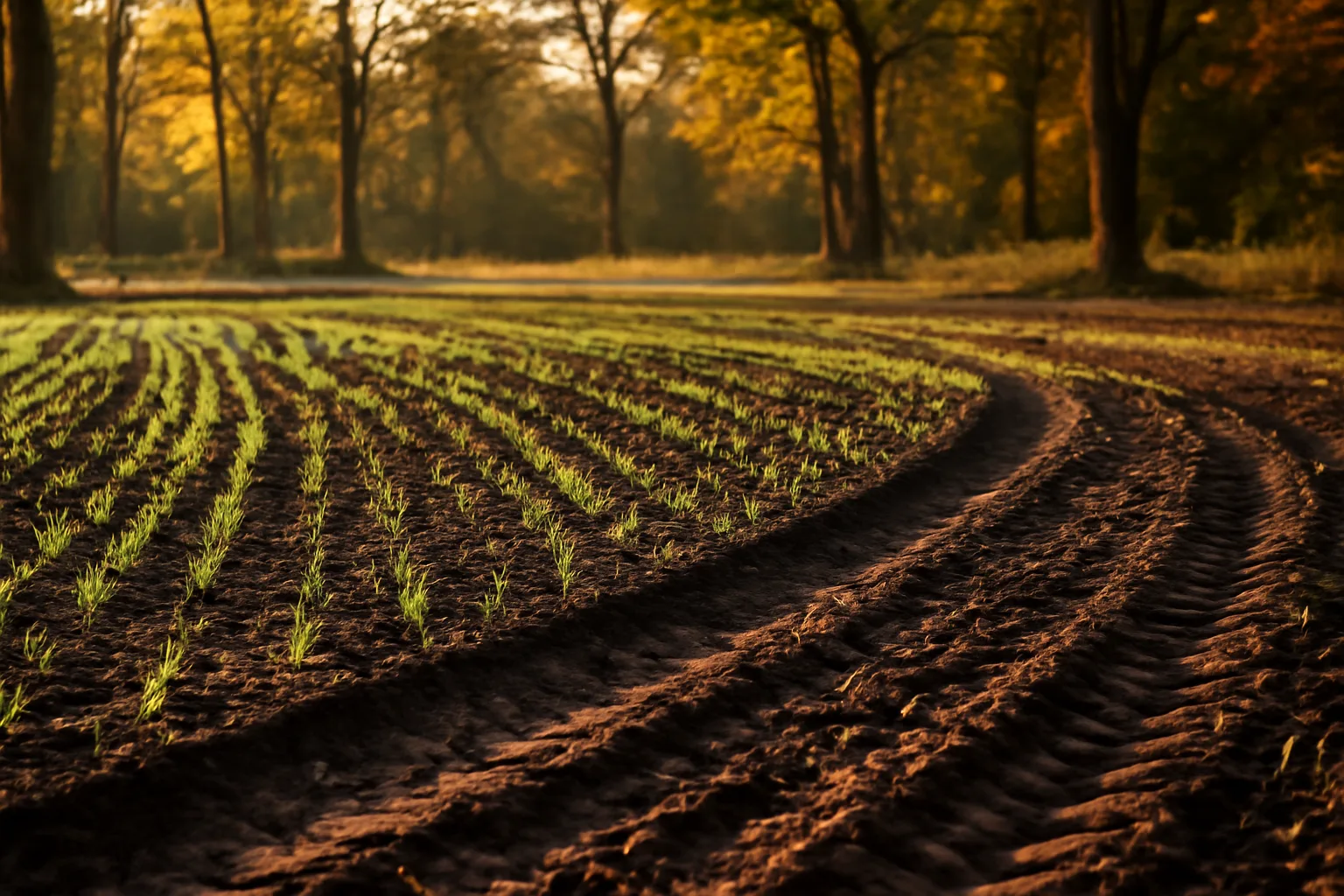
A farm plot is a planted area on ag or wooded ground grown specifically to feed and hold deer. Clover, oats, and brassicas like turnips are the workhorses. Timing depends on your frost dates: brassicas and cereal grains go in late summer, clover goes in spring or late summer, and soil tests should drive every fertilizer decision.
what is a food plot, exactly
A food plot is a small planted field, usually somewhere between a quarter acre and five acres, put in specifically to feed deer and other wildlife rather than to sell a cash crop. Farmers have known for generations that deer hit the edges of soybean and corn fields hard. A food plot takes that idea and does it on purpose, in a spot you pick, with seed mixes bred for palatability and tonnage rather than harvest yield. Most plots fall into two categories. Annual plots get replanted every year, things like oats, brassicas, and soybeans. Perennial plots, mainly clover and chicory blends, can run three to five years before you need to till and restart. Neither type is objectively better. Annuals let you rotate species and chase specific hunting windows. Perennials save labor once established and green up earlier in spring when deer need protein most. State wildlife agencies generally treat food plots differently from bait piles, but the line matters and it's state specific. In most states, a planted, standing crop is legal to hunt over even during archery or firearms season, while piled corn or mineral licks are not. Check your state agency's regulations page before you hunt near a plot, because rules on baiting, feeding, and even food plot placement near property lines vary by state. For a broader look at how plots fit into an overall deer management plan, see food plot whitetail and deer food plots.
what are deer's favorite foods
Deer are opportunistic browsers, and what they prefer shifts by season, region, and what's already available. That said, a few foods show up again and again as favorites in food plot circles: clover, soybeans, chicory, and acorns. In spring and summer, deer chase protein to support antler growth and lactation. Clover, soybeans, and cowpeas fit that bill. In fall, they shift toward carbohydrates and fat to build reserves for winter, which is why brassicas, corn, and acorns become the draw once temperatures drop. Forage quality, meaning crude protein percentage and digestibility, tends to drive preference more than any single species being a magic bullet. That's the consistent theme across decades of deer nutrition research going back to classic work on white-tailed deer digestive physiology [1]. Regional variation matters a lot here. Deer in the Midwest with unlimited soybean and corn access often ignore small food plots planted with the same crops, because there's no scarcity advantage. Deer in the Southeast or in heavily wooded northern regions with less row-crop agriculture nearby respond more strongly to plots, because you're offering something genuinely scarce on the landscape.
do deer eat clover
Yes, and it's one of the most reliable food plot species there is. Clover, especially white clover varieties like Durana and Ladino, and red clover, gets hit hard by deer from spring green-up through fall, and it keeps producing tonnage for three to five years without replanting if you maintain it. White clover generally tests out around 25 to 30 percent crude protein during its growing season, which is why it's a go-to for antler development and fawn-rearing months [2]. It also tolerates mowing and light grazing pressure better than most annuals, which matters if you've got a lot of deer on a small property. The tradeoff is establishment patience. Clover needs a firm seedbed, correct soil pH (most extension guides recommend 6.0 to 7.0), and it can take a full growing season to really thicken up. It also does not compete well with weeds in its first year, so a lot of first-time planters get discouraged by a thin, weedy stand that looks like a failure but is actually just still establishing. For species selection beyond clover, check out deer food plot seed and food plot seed.
do deer eat sorghum
Yes, deer eat grain sorghum, but it's more of a fall and winter standing-grain option than a preferred summer forage. Sorghum (also called milo) produces a seed head deer will feed on once it matures and dries down, and it also gives excellent bedding and screening cover because of its height, often 4 to 7 feet [3]. Sorghum's real value in a lot of plot plans isn't as the primary attractant food. It's as a standing cover crop that holds deer on your property and screens hunting access routes. Some plot mixes blend sorghum with soybeans or cowpeas for exactly this reason: the legumes provide the protein draw, the sorghum provides the visual cover and a late-season grain source once other food gets scarce. Drought tolerance is another reason sorghum shows up in southern and Great Plains plot plans. It handles dry summers better than corn does, which matters if you're planting in a region without irrigation. It won't outcompete a good soybean or clover stand for pure deer preference, but as a dual-purpose cover-and-food crop, it earns its spot in a rotation.
do deer like honey
This one comes up more as an internet curiosity than a real food plot question. The honest answer: there's no solid research showing deer specifically seek out honey, and it's not a legal or practical thing to plant or spread as deer feed anyway. Deer are herbivores built around fermenting plant fiber in a four-chambered stomach, not nectar or animal-derived sugars. What probably drives this question is confusion with mineral licks or with deer occasionally nosing around beehives or sap. If you're trying to add sugar-based attraction, most states regulate or ban that kind of supplemental feeding and baiting outright, especially in chronic wasting disease management zones, so check your state wildlife agency's feeding and baiting regulations before adding anything unconventional to a property. Stick with what has actual research behind it: clover, brassicas, cereal grains, soybeans, and chicory. Those are the species with real agronomic and preference data, not internet folklore.
when to plant food plots for deer
| Deep South (zone 8-9) | March-April | September-October | |
|---|---|---|---|
| Mid-South / Transition (zone 7) | April-May | August-September | |
| Midwest / Mid-Atlantic (zone 6) | May | Late July-August | |
| North / Upper Midwest (zone 4-5) | Late May-June | Late July-early August | These are general windows, not guarantees. Local frost dates vary year to year, and a soil test should confirm your ground is actually ready (moisture, temperature, pH) before you commit seed to dirt. |
Timing splits into two windows almost everywhere in whitetail country: a spring/early summer window for warm-season annuals and perennials, and a late summer window for fall brassicas, cereal grains, and clover overseeding. The exact dates depend entirely on your first and last frost dates, which is why extension services publish planting calendars by region rather than one national date. As a rough national framework: spring plantings (soybeans, cowpeas, clover establishment) generally go in after your last frost date, often April in the South, May in the Midwest, and late May to early June in the North. Fall plantings (brassicas, oats, wheat, cereal rye) go in 60 to 90 days before your first fall frost, so that translates to roughly late July through early September depending on latitude. Here's a simplified planting window table pulled from typical land-grant extension recommendations: | Region | Spring plot window | Fall plot window |
when to plant oats for deer
Oats are a fall food plot staple, and the planting window is 6 to 8 weeks before your first expected fall frost, which lets the plant establish enough leaf growth before cold really sets in. In most of the whitetail range, that lands somewhere between mid-August and mid-September. Oats germinate fast, often within 5 to 10 days in warm, moist soil, and they green up quickly, which makes them a favorite for hunters who want a plot producing visible attraction within a month of planting. Deer tend to hit young oat shoots hard in September and October, then again in late winter once other forage is gone, if the plant survives cold enough to go dormant and regrow. Oats are less cold-hardy than winter wheat or cereal rye. In the Upper Midwest and colder pockets of the North, oats often winterkill completely, which is fine if you only wanted fall attraction, but a problem if you wanted late-winter forage too. In that case, many plot planners blend oats with wheat or rye so something survives the winter regardless of how cold it gets.
when to plant turnips for deer
Turnips, along with other brassicas like radishes and rape, go in the ground roughly 90 to 100 days before your first fall frost, which is earlier than most people assume. That window is usually late July through mid-August across most of the whitetail range, pushing into early September in the Deep South. Brassicas need that long runway because the whole point is bulb and root development, more than leaf growth. A turnip planted too late (say, in September in a zone-6 climate) will produce leaves deer might nibble, but it won't have time to bulb up, and the bulb is often the real draw once frost sweetens the starches into sugars. That frost-triggered sweetening is well documented: cold temperatures convert starches in brassica bulbs and leaves into simple sugars, which is why deer often ignore a brassica plot in September and then hammer it in November and December once several hard frosts have hit. If you're planting turnips, plant early and be patient. The payoff comes late season, not right out of the gate. Brassicas also need reasonably fertile soil with a pH close to neutral (6.0 or higher) to bulb properly, which brings us to soil testing.
when to plant food plots for deer: soil testing first
Before any planting date matters, your soil test matters more. A $10 to $20 soil test through your county extension office or a private ag lab will tell you your pH, phosphorus, potassium, and organic matter, and that data should drive your lime and fertilizer decisions, not a bag label or a forum post . Most food plot species, clover and brassicas especially, want a pH between 6.0 and 7.0. Below that range, plants can't access phosphorus and potassium even if it's sitting right there in the soil, which is one of the most common reasons a food plot fails to thrive despite decent rainfall and full sun. Lime takes months to fully react in the soil, so testing and liming in fall for a following spring planting, or liming immediately after your fall soil test, gives it time to work. Your soil test report is the actual authority here, not a general article like this one. Every property's baseline fertility is different, and recommendations from your specific lab (university extension labs and most private ag labs included) account for your exact numbers in a way a generic guide never can. If you want a plan built around your test results and property specifics rather than guessing at rates, that is exactly what a $99 one-time Custom Food Plot Plan is built to do (see /plot-plan-builder). It's a paid planning tool, not a substitute for your soil lab's specific lime and fertilizer recommendations.
how much does it cost to plant a food plot
Costs vary widely based on whether you already own equipment, but a rough range for a half-acre to one-acre plot runs from about $150 to $600 per acre when you include seed, lime, fertilizer, and fuel, according to typical extension budget worksheets used for small-plot wildlife plantings . Seed alone can run $20 to $60 per acre for cereal grains like oats, up to $30 to $50 per acre for clover, and higher for proprietary blend bags sold in small quantities at farm stores. Lime is often the biggest surprise line item. If your soil test comes back needing 2 tons of lime per acre, and bulk ag lime runs roughly $30 to $50 per ton delivered and spread in a lot of regions, that single input can cost more than your seed. This is exactly why testing before you buy seed matters: you don't want to find out you needed lime after a $200 seed order already failed to establish. Equipment is the other major cost variable. A disc, cultipacker, and small tractor or ATV implement setup can run into thousands of dollars if bought new, though renting or borrowing from a neighbor, or using no-till drill rental programs some conservation districts and NRCS offices offer, keeps startup costs much lower for a first-time plot.
how big should a food plot be
Most whitetail-focused food plots run between a quarter acre and two acres, though plot size should match your goals more than a fixed rule. Small, hidden kill plots (a quarter acre tucked into timber) work well for bowhunting close encounters. Larger destination or feeding plots (one to five acres) work better for holding deer and building herd health over a season. Deer density matters here too. A quarter-acre clover plot can get browsed into the dirt fast on a property carrying more than 20 to 30 deer per square mile, while the same plot might barely get touched at very low densities. State wildlife agency deer density estimates for your county or management unit give you a reasonable starting point for scaling plot size to pressure. A lot of experienced plot managers run multiple small plots scattered through a property rather than one big field, on the logic that it spreads pressure, offers more edge habitat, and gives deer more low-risk feeding options throughout the day. For more on matching plot type and size to your property layout, see deer for food and domain food plot seed.
annual vs perennial plots: which should you plant
| Replanting | Every year | Every 3-5 years | |
|---|---|---|---|
| Establishment cost | Lower seed cost, repeated yearly | Higher upfront, spreads over years | |
| Labor after year 1 | Full tillage/replant each season | Mowing, spot-spraying, light fertilizer | |
| Best hunting window | Fall/early winter (brassicas), late summer (soybeans) | Spring through fall, especially early season | |
| Drought/traffic tolerance | Lower, especially brassicas | Higher once established | Annuals give you flexibility. You can rotate a field from soybeans to brassicas to cereal grain year over year, chasing whatever your hunting calendar or soil needs that season. Perennials give you low-maintenance consistency once established, plus the earliest green-up in spring when deer are most protein-starved after winter. Many plot plans run perennial clover in the most protected, least-trafficked field and annual brassicas or cereal grains in a field meant to peak right before gun season. That split covers both the long growing season and the specific late-season punch brassicas are known for. |
This is one of the most common planning questions, and the honest answer is: plant both if you can, because they solve different problems. | Factor | Annual plots (oats, brassicas, soybeans) | Perennial plots (clover, chicory) |
Frequently asked questions
do deer eat sorghum
Yes. Deer eat sorghum grain once the seed head matures and dries, typically in fall. Sorghum is also valued for its height, often 4 to 7 feet, which provides bedding and screening cover, making it a common dual-purpose addition to soybean or cowpea food plot blends rather than a standalone attractant crop.
do deer eat clover
Yes, clover is one of the most reliable and heavily browsed food plot species available. White clover varieties like Durana and Ladino test around 25 to 30 percent crude protein during the growing season, and a well-maintained stand can produce forage for three to five years before needing to be replanted.
do deer like clover
Deer generally prefer clover strongly, especially in spring and summer when they need protein for antler growth and lactation. Preference can drop somewhat if deer have easy access to soybeans or other high-protein row crops nearby, but on most properties clover remains one of the most consistently used food plot species.
when to plant deer food plots
Spring plantings (soybeans, cowpeas, clover establishment) go in after your last frost date, roughly April in the South through late May or June in the North. Fall plantings (brassicas, oats, cereal grains) go in 60 to 100 days before your first fall frost, generally late July through early September depending on latitude.
when to plant oats for deer
Plant oats 6 to 8 weeks before your first expected fall frost, usually mid-August through mid-September across most of the whitetail range. Oats germinate fast, often in 5 to 10 days, and provide quick fall attraction, though they typically winterkill in colder northern climates unless blended with a hardier grain like wheat or rye.
when to plant turnips for deer
Plant turnips roughly 90 to 100 days before your first fall frost, usually late July through mid-August in most regions. Turnips need that long runway to develop bulbs, and cold weather converts the bulb's starches into sugar, which is why deer often ignore turnip plots early on and then hit them hard after several hard frosts.
when to plant food plots for deer in the north vs south
Northern zones (roughly USDA zone 4-5) plant fall brassicas and cereal grains by late July to early August because of an earlier first frost, while Deep South zones (8-9) can wait until September or even October. Spring plantings follow the same logic in reverse: southern growers can plant clover or soybeans as early as March, northern growers usually wait until May.
what is a food plot
A food plot is a planted area, usually a quarter acre to a few acres, grown specifically to feed and attract deer or other wildlife rather than to harvest as a cash crop. Common species include clover, brassicas, oats, and soybeans, planted in openings on hunting land to supplement natural browse and hold deer on the property.
what are deer's favorite foods
Deer preferences shift seasonally: clover, soybeans, and cowpeas draw them in spring and summer for protein, while brassicas, acorns, and corn draw them in fall and winter for carbohydrates and fat. Regional food availability matters a lot too; deer with unlimited row-crop access often ignore food plots planted with the same crops.
do deer like honey
There's no real evidence deer seek out honey, and it isn't a practical or legal thing to use as deer bait in most states anyway. Deer are herbivores adapted to fermenting plant fiber, not sugar or nectar. Stick to researched food plot species like clover, brassicas, and cereal grains, and check your state's baiting rules before adding anything unconventional.
how long does it take a food plot to grow in
Cereal grains like oats can show visible green-up in 2 to 3 weeks. Brassicas take 90 to 100 days to fully bulb and mature. Clover can take a full growing season, sometimes 3 to 4 months, to establish a thick, weed-resistant stand, which is why many first-year clover plots look thin and disappoint impatient planters.
do I need to till before planting a food plot
Not always. No-till drilling into an existing field or a killed cover crop reduces erosion and soil disturbance and works well for clover and cereal grains. Brassicas and a fresh conversion from sod generally establish better with some tillage or at least a well-worked, firm seedbed, since their small seed needs good soil contact.
is it legal to hunt over a food plot
In most states, yes, a standing planted crop is treated differently from a bait pile and is legal to hunt over, but rules vary significantly by state, especially in chronic wasting disease management zones where feeding and even some plot practices face added restriction. Always check your state wildlife agency's current baiting and feeding regulations before hunting a plot.
Sources
- USDA Forest Service Fire Effects Information System, Quercus alba: White oak acorns have lower tannin content and are more palatable to wildlife than red oak acorns
- Journal of Wildlife Management, deer nutrition and forage quality research: Deer forage preference research on crude protein and digestibility driving food selection
- University of Missouri Extension, Food Plots for Deer and Turkey: Clover stands can persist three to five years with proper maintenance
- USDA NRCS Plant Guide, Grain Sorghum: Grain sorghum growth height and use as cover and late-season grain source
- University of Missouri Extension, Soil Testing for Lawns, Gardens, and Wildlife Plantings (Publication G9112): Soil test cost range and pH targets for food plot species, plus lime cost and reaction time
- Oklahoma State University Extension, Establishing Wildlife Food Plots: Estimated per-acre cost range for planting a small wildlife food plot