Last updated 2026-07-25
TL;DR
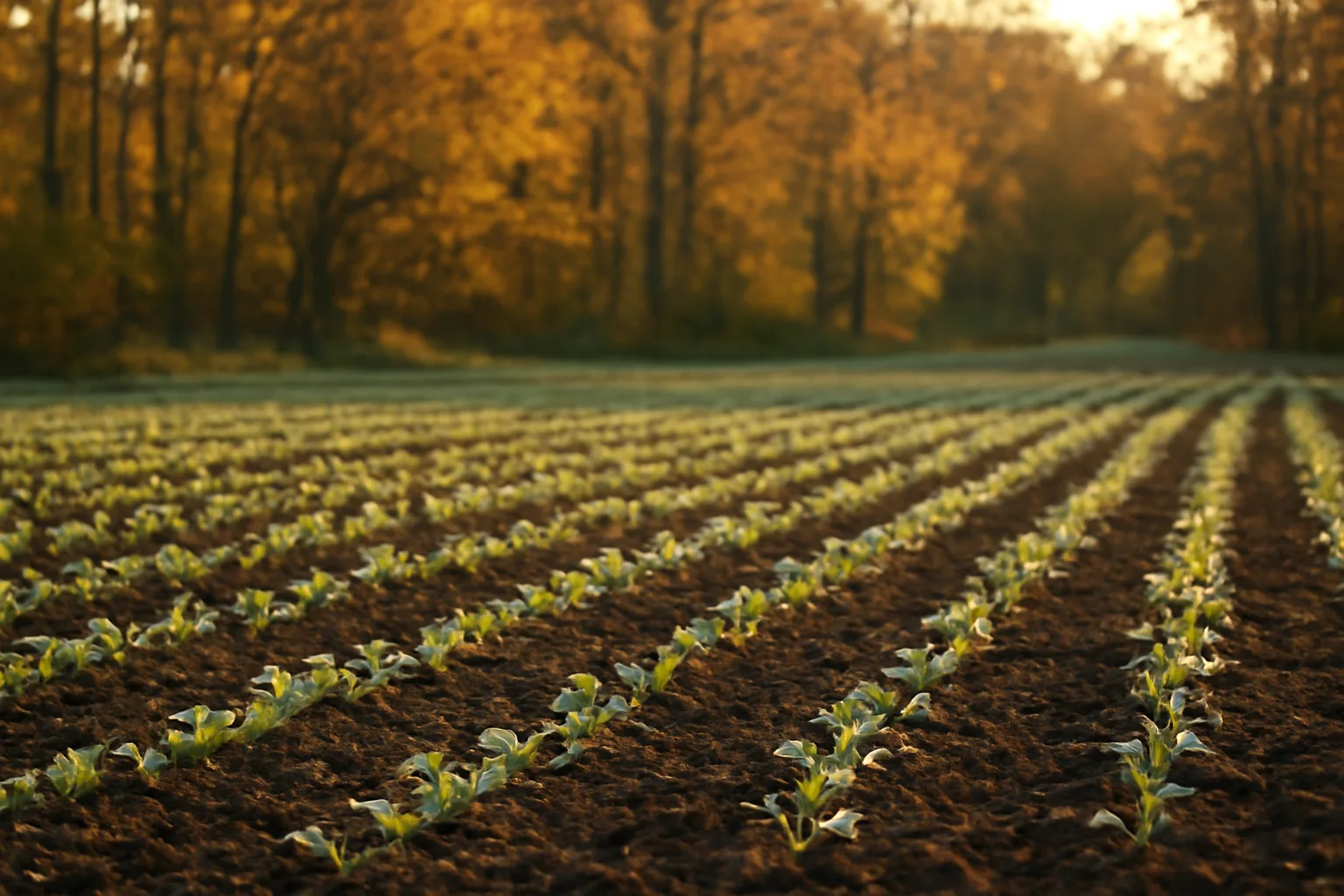
Fall blend food plot seed is a mix, usually cereal grains (oats, wheat, rye), brassicas (turnips, radish, rape), and sometimes clover or sorghum, built to give deer tender growth in September and standing forage into winter. Plant 60 to 90 days before your first hard frost, matched to your zone and soil test.
What is a food plot, exactly?
A food plot is a planted patch of forage on hunting ground, usually somewhere between a quarter acre and a few acres, meant to feed deer and pull them into range during hunting season. It's not a garden and it's not a pasture, though it borrows from both. Most plots sit inside timber or along field edges, chosen for cover access and wind more than raw acreage. The idea isn't new. State wildlife agencies and universities have studied supplemental forage plantings for decades as part of deer habitat management, and USDA Forest Service research on deer food habits backs up why plots work in the first place [1]. What's changed is the seed industry around it. Twenty years ago you bought oats from the feed store. Now you can buy a bag blended specifically for whitetail, with a mix ratio somebody actually tested. A fall blend is just one category of food plot seed, built for the September-through-winter window rather than spring green-up. If you want the broader picture of plot types and how they fit a whole-property plan, that's covered in food plot whitetail.
What's actually in a fall blend food plot seed mix?
Most fall blends combine three plant families: cereal grains, brassicas, and sometimes a legume like clover. Each does a different job, and the ratios on the bag tell you what the blend is optimized for. Cereal grains, oats, winter wheat, and winter rye, germinate fast (often 5 to 7 days in warm soil) and give deer green leaf material within two to three weeks of planting. They're cheap, forgiving of mediocre soil, and cold-tolerant. Winter rye in particular will green up again after a hard frost, which is why it's a staple in late-season blends. Brassicas take longer to pay off. Turnips, radish (often labeled as forage or tillage radish), and rape need time. Deer often ignore young brassica leaves in September and October, then hit them hard in November and December once a few frosts convert starches to sugars. This is the single most misunderstood part of brassica planting: if deer aren't touching your turnips in early fall, that's normal, not failure. Some fall blends also carry a small percentage of clover or forage chicory to persist into next spring, and a few include sorghum or sudangrass as a summer-carryover component in warm-region mixes. A typical bag ratio might run 40% cereal grain, 30% brassica, 20% clover, 10% filler like rape or radish, though exact numbers vary a lot by brand and region. There's no universal formula, so read the tag on the bag, more than the marketing copy on the front.
When to plant food plots for deer?
Timing is the single biggest variable that separates a plot that produces and one that doesn't. For fall blends, the general rule from land-grant extension guidance is to plant 60 to 90 days before your area's average first hard frost, which gives brassicas and cereal grains enough growing season to establish a root system and canopy before cold shuts growth down [2]. In practice that means: - Zone 3 to 4 (northern Midwest, Northeast, upper Great Lakes): early August to early September
- Zone 5 to 6 (mid-Midwest, mid-Atlantic, Ohio Valley): mid-August to mid-September
- Zone 7 to 8 (South, lower Southeast, southern Plains): September through mid-October These are broad bands. Your actual date should key off your local frost date, which you can pull from your state climatologist office or NOAA's climate normals, not a national chart. A plot planted three weeks late in cereal grain and brassica country routinely comes up short, thin stands, stunted turnips, nothing worth hunting over by November. Soil moisture matters as much as the calendar. Extension guidance consistently recommends planting fall blends ahead of a forecasted rain if you can time it, since brassica and clover seed is small and needs consistent surface moisture to germinate. If you're broadcasting rather than drilling, a light cultipack after seeding improves seed-to-soil contact more than almost anything else you can do that day.
When to plant oats for deer?
Oats are one of the fastest, cheapest ways to get green forage up before archery season opens. Plant oats 6 to 8 weeks before your first expected hard frost, which for most of the whitetail range lands somewhere between mid-August and mid-September [2]. Oats germinate quickly in warm late-summer soil and provide highly palatable forage almost immediately, often within 10 to 14 days of a good rain. They're less cold-hardy than winter wheat or winter rye though. A hard freeze in the low 20s will usually kill oats outright, while rye keeps growing. That's why oats are common in blends but rarely planted as the only fall grain if you're hunting into December. If you're in a warmer zone (roughly zone 7 and south), you can push oat planting into late September or even October and still get a usable stand, since your frost date is later and the grazing pressure window is longer.
When to plant turnips for deer?
Turnips need roughly 80 to 90 days from planting to full maturity, and extension trial data consistently shows deer preference for turnip bulbs and foliage increases sharply after the first hard frost converts starches to sugar. That means for a plot you want peaking in November and December, you're planting turnips in July or August in northern zones, and August through September in the mid-South. Plant too late and you get small bulbs and thin leaf mass with no sugar conversion window left before deer season ends. Plant turnips alone (not in a blend) and you also risk a plot that looks like nothing for two months, because turnip tops don't get attractive until they've had a frost or two. This is the exact reason blends exist: cereal grain gives you September attraction while the brassica half is quietly building toward a December payoff. Seeding rate for turnips alone typically runs 4 to 6 pounds per acre broadcast; in a blend bag it's a much smaller percentage since the seed is tiny and a little goes a long way.
Do deer eat sorghum?
Yes, deer eat grain sorghum, both the standing seed heads and the plant itself as forage, and it's used in some warm-season and transitional food plot blends, particularly in the South and lower Midwest. Sorghum is more drought-tolerant than corn and can be planted as a standalone summer plot or as a component that carries into early fall before a killing frost. That said, sorghum isn't a fall-blend staple the way brassicas and cereal grains are. It's a warm-season grain, planted after your last spring frost, not ahead of your first fall frost. If you see sorghum in a bag labeled fall blend, it's usually a small percentage meant to provide some standing cover and grain carryover rather than the primary attractant. Deer will use it, but it's not doing the heavy lifting brassicas and cereal grains do in a true fall mix.
Do deer eat clover, and do deer like clover?
Yes, and it's one of the most consistently preferred forages in food plot research. Clover (red and white varieties both) offers 20 to 25% crude protein in good growing conditions, which is well above most cereal grains, and deer will graze it hard from spring green-up through fall as long as it's not smothered by weeds or overgrazed into the ground [3]. The catch with clover in a fall blend context is that it's a perennial, meant to persist for two to four years, not a single-season fall attractant. Most fall blends include clover as the long-game component: it germinates alongside the cereal grain and brassica in September, gets grazed lightly through fall and winter, then becomes the dominant plant in the plot by the following spring and summer once the annuals are gone. If clover is your main goal rather than a bonus, a dedicated perennial clover planting (not a fall blend) planted in late summer or early spring is usually the better call. For species-specific guidance on clover varieties and where they fit a broader plot rotation, see deer food plot seed.
Do deer like honey (honeysuckle, honey locust, and confusion around the term)?
This question usually comes from confusion between actual honey (the bee product, which deer have no meaningful dietary interest in) and honey locust or Japanese honeysuckle, both of which deer absolutely browse. Honey locust pods are a well-documented fall and winter deer food in the Southeast and Midwest, high in sugar content, and deer will hammer a productive honey locust tree hard once pods drop [4]. Japanese honeysuckle is browsed year-round where it's present and is actually considered a decent winter forage source in the South because it stays semi-evergreen. Neither of these is planted as a food plot seed blend component though. They're woody or vining perennials managed through habitat work (release cuts, edge feathering), not something you'd broadcast with a cereal grain and brassica mix. So: deer don't eat honey the substance, but if someone asked because they saw deer under a honey locust tree in November, that's a real and well-documented food source, just not a food-plot-seed one.
What are deer's favorite foods, more broadly than food plots?
Diet studies consistently show deer are opportunistic browsers whose preferences shift by season, region, and what's available, but a few things show up again and again in food habit research: acorns, soybeans, clover, and agricultural grain crops rank at or near the top almost everywhere they've been studied [1]. In the fall specifically, acorns (white oak especially, since they're lower in tannin than red oak) are often the single most preferred food source when they're dropping in volume, which is part of why a heavy acorn year can make food plots look empty even when they're planted right. Within planted forages, brassicas and clover generally test out as more preferred and higher in crude protein than straight cereal grains, but cereal grains win on early-season attraction because they're up and growing faster. That's the whole logic behind a blend: no single plant checks every box, so blends stack a fast starter, a mid-season protein source, and a late-season sugar-converting brassica in one planting.
How do you choose the right fall blend for your property?
Start with your soil test, not the seed bag. Brassicas and clover both want soil pH in the 6.0 to 6.5 range and respond hard to phosphorus and potassium; a soil test through your state's Cooperative Extension soil testing lab tells you exactly what lime and fertilizer your specific dirt needs [5]. Guessing on lime is one of the most common and expensive mistakes in food plotting, since lime takes months to adjust soil pH and a blend planted into soil at pH 5.2 will underperform no matter how good the seed is. Once you know your soil situation, match the blend to your equipment and your goals. If you're broadcasting by hand or ATV spreader with no disc or drill, look for a blend with a higher percentage of small-seeded brassica and clover, since those establish fine on a broadcast-and-cultipack method. If you have a drill or can disc the ground, cereal grain-heavy blends do better with actual seed-to-soil depth control. If your goal is pure early-season bow hunting attraction, weight toward oats and winter wheat. If your goal is holding deer through late gun season and into the post-rut lull, weight toward brassica-heavy blends that peak after frost. Very few properties need just one blend type; most serious plotters run two or three plot styles across a property. That kind of property-level planning, matching blend type to plot location, soil, and season, is exactly what a $99 Custom Food Plot Plan is built to work through, using your own soil test and property layout rather than a one-size chart.
How much fall blend seed do you need per acre?
Seeding rates vary a lot by blend composition, but as a rough guide: straight cereal grain rates run 100 to 150 pounds per acre for oats or wheat drilled, and up to 200 pounds broadcast to compensate for lower emergence. Brassica-only blends run much lighter, 4 to 8 pounds per acre, because the seed is tiny. A packaged fall blend bag will list its own rate, usually in the 10 to 25 pound per acre range since it's a mix of small and large seed types, and the bag rate should always override generic per-species math since blend ratios differ by brand. Oversowing wastes money and can actually reduce yield through crowding; undersowing gives weeds room to take over before your plot canopies. If you're not sure how many acres you're actually covering, walk it off or use a GPS acreage app before you buy seed, since eyeballing plot size is one of the most common ways people over- or under-order.
What should you check before planting a fall blend?
A few things worth confirming before you ever put seed in the ground. First, check your state's baiting and supplemental feeding regulations. Food plots planted and left to grow are legal nearly everywhere as normal agricultural practice, but some states draw a hard line between a growing plot and piled or broadcast grain used as bait, and rules differ significantly by state and even by county in a few cases. Michigan, for example, restricts supplemental feeding and baiting of deer statewide under its wildlife conservation orders, with tighter rules in counties where chronic wasting disease has been detected . Your state wildlife agency's hunting regulations page is the authority here, not a forum post. Second, get a current soil test if you haven't pulled one in the last two to three years. pH drifts, nutrient levels deplete, and a three-year-old test on a plot you've been cropping since is guessing, not planning. Third, check your local frost dates against the blend's stated maturity window, not a generic "fall planting" chart. A blend built for a 90-day window to first frost planted with only 50 days left won't reach its potential. For a broader look at seed selection across plot types beyond fall blends, food plot seed and deer food plots cover species selection in more depth.
Frequently asked questions
Do deer eat sorghum in food plots?
Yes. Deer eat both the grain and the plant material of grain sorghum, and it shows up in some warm-season and transitional plot blends, mostly in the South and lower Midwest. It's a summer-planted grain though, not a true fall-blend staple like brassicas or cereal grains, so it's usually a minor component if you see it in a fall mix.
Do deer eat clover, and do they actually like it?
Deer eat clover heavily and it consistently ranks as a preferred forage in wildlife studies, offering 20 to 25% crude protein under good growing conditions. It's a perennial though, so in a fall blend it's the long-term component that establishes in fall and dominates the plot the following spring and summer, not the immediate fall attractant.
When should you plant food plots for deer?
For fall blends, plant 60 to 90 days before your area's average first hard frost so brassicas and cereal grains have time to establish before cold weather stops growth. That's roughly early August to early September in northern zones, mid-August to mid-September in the mid-Midwest, and September into mid-October in the Deep South.
When is the best time to plant oats for deer?
Plant oats 6 to 8 weeks before your first expected hard frost, generally mid-August to mid-September across most of the whitetail range. Oats germinate fast, often within 10 to 14 days, but a hard freeze in the low 20s Fahrenheit typically kills them, so they're better paired with winter wheat or rye if you're hunting into December.
When should turnips be planted for deer?
Turnips need about 80 to 90 days to mature and become most attractive after a hard frost converts starches to sugar. Plant in July or August in northern zones, or August through September in the mid-South, so the frost-driven sugar conversion lines up with November and December hunting.
What is a food plot, in simple terms?
A food plot is a planted patch of forage, usually somewhere between a quarter acre and a few acres, put in specifically to feed deer and draw them into bow or gun range during hunting season. It's a habitat management tool used alongside natural food sources like acorns, not a replacement for them.
What are deer's favorite foods, more than in food plots?
Diet research consistently puts acorns (especially white oak), soybeans, clover, and other agricultural grain crops near the top of deer preference across most regions. Within planted forages, brassicas and clover generally test higher in preference and protein than straight cereal grains, though cereal grains attract deer faster after planting.
Do deer eat honey?
Deer have no real dietary interest in honey the bee product. The confusion usually comes from honey locust, whose sugary pods are a well-documented fall and winter deer food, and Japanese honeysuckle, which deer browse year-round in the South. Neither is planted as food plot seed; both are managed through habitat work instead.
What's actually inside a bag of fall blend food plot seed?
Most fall blends mix cereal grains (oats, winter wheat, winter rye) for fast early growth, brassicas (turnips, radish, rape) for late-season sugar-rich forage after frost, and sometimes clover for persistence into next spring. Ratios vary by brand, so check the tag on the bag rather than assuming a standard formula.
How much fall blend seed do you need per acre?
Packaged fall blends typically list a rate between 10 and 25 pounds per acre because they mix tiny brassica and clover seed with heavier grain seed. Always follow the bag's stated rate rather than generic single-species math, since blend composition changes the correct rate significantly between brands.
Is baiting deer with food plots legal?
A growing food plot is generally treated as normal agricultural practice and legal nearly everywhere, but piled or broadcast grain used as bait is a separate category and rules differ by state, with some states restricting supplemental feeding due to chronic wasting disease concerns. Always check your state wildlife agency's current regulations before planting or supplementing.
Should you plant a fall blend or single-species plots?
Fall blends solve a real problem: no single plant provides early attraction, mid-season protein, and late-season sugar conversion all at once. Single-species plots (straight clover, straight brassica) can outperform a blend for a specific goal, but most properties benefit from blends unless you're running a dedicated multi-plot rotation across several fields.
Sources
- USDA Forest Service, Fire Effects Information System: Odocoileus virginianus food habits summary: Research on deer food habits documents the role of supplemental forage in habitat management for whitetail deer.
- Oklahoma State University Extension, PSS-2601: Food Plots for Wildlife: Fall food plots should be planted roughly 60 to 90 days before the average first hard frost, and quick-growing cereal grains like oats closer to 6 to 8 weeks prior.
- University of Kentucky Cooperative Extension, AGR-26: Clover and Other Legumes for Forage: Clover can provide crude protein levels around 20 to 25 percent under good growing conditions.
- USDA Forest Service, Fire Effects Information System: Gleditsia triacanthos (Honey Locust): Honey locust pods are a documented fall and winter deer food source high in sugar content.
- North Carolina Department of Agriculture and Consumer Services, Agronomic Division: Understanding the Soil Test Report: State agronomic soil testing labs analyze pH and nutrient levels to guide lime and fertilizer application recommendations for growers.