Last updated 2026-07-25
TL;DR
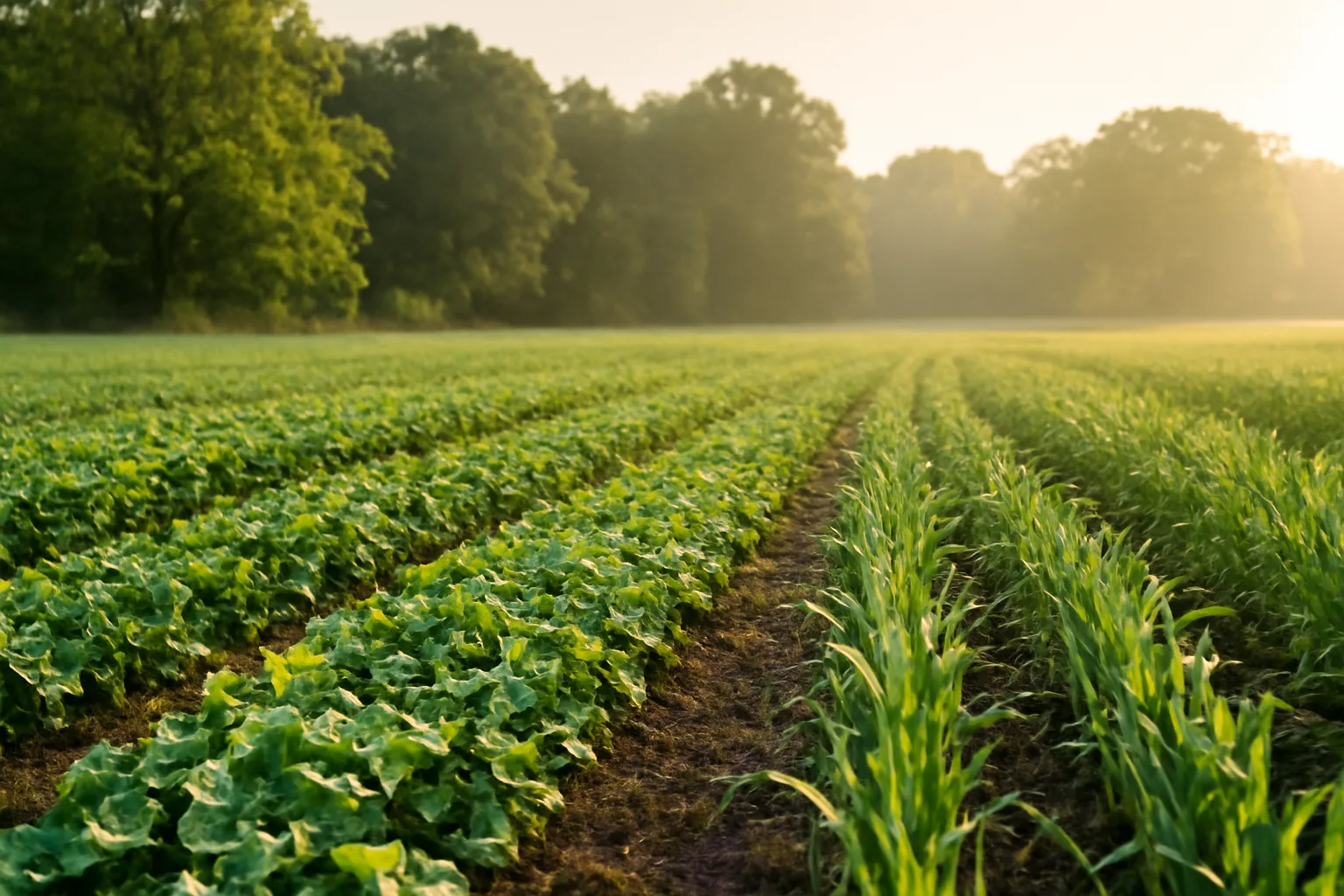
A good summer food plot mix combines a heat-tolerant legume (like cowpeas or soybeans) with a grain such as grain sorghum, plus clover as a perennial base. Plant after soil hits 60-65°F, usually late April through June depending on zone. Clover holds up through summer heat if managed right; oats and turnips wait for fall.
What is a food plot, exactly?
A food plot is a planted patch of forage on land managed for deer, usually somewhere between a quarter acre and a few acres, put in specifically to feed and hold deer rather than to harvest a cash crop. That's the whole concept. It's farming, just with a different customer. Most plots fall into two buckets: annuals you replant every year (clover blends, soybeans, sorghum, brassicas) and perennials that come back for two to five years with maintenance (clover, chicory, alfalfa in some regions). Summer plots specifically need to handle heat, drought stress, and heavy browsing pressure while deer are growing antlers and nursing fawns, which is a nutritionally demanding stretch of the year. The USDA's National Agroforestry Center treats food plots and other planted wildlife forage as one tool within a broader habitat plan, not a stand-alone fix. Cooperative extension programs generally recommend plots make up a small percentage of total acreage, with natural habitat and native browse doing the heavy lifting the rest of the year. Keep that in mind before you sink your whole budget into seed. A great plot on bad habitat is still bad habitat.
When to plant food plots for deer?
Timing depends on what you're planting and where you live, but the short answer is: warm-season plots (soybeans, cowpeas, sorghum, sunn hemp) go in after your last frost date and soil temps hit 60-65°F, while cool-season plots (clover, brassicas, cereal grains) go in 6-8 weeks before your first fall frost. For summer plots specifically, that usually means: - Deep South (zones 8-9): late March through April
- Transition zone (zones 6-7): late April through May
- Upper Midwest/Northeast (zones 3-5): late May through June Soybeans and cowpeas are frost-sensitive. Their seedlings germinate poorly in cold soil and a late frost can wipe out a young stand overnight. Wait until the soil itself, more than the air, has warmed. Planting too early just means you replant in three weeks after a cold snap kills the stand. Check your local NOAA climate normals or your extension office's frost date charts before committing to a planting date [1]. A week either direction can matter in marginal zones.
What's actually in a good summer food plot mix?
| Legume | Soybeans, cowpeas, lablab | High protein (up to 30-38% crude protein in forage soybeans), fixes nitrogen | |
|---|---|---|---|
| Grain/grass | Grain sorghum, pearl millet | Drought tolerant, adds structure so legumes don't get grazed to nothing | |
| Perennial | Clover (white or red) | Comes back year after year, holds up under repeated grazing | |
| Filler/cover | Sunn hemp, buckwheat | Fast cover, smothers weeds, some soil benefit | Cowpeas (also called southern peas) are a favorite in the Southeast because they handle heat and drought better than soybeans and deer hit them hard early. Soybeans need more consistent moisture but pack more tonnage per acre once established. Grain sorghum is the workhorse for pure drought tolerance and doubles as a screen and late-season grain source if you let some mature. If you want a done-for-you starting point instead of building a mix from scratch, a deer food plot seed blend built for your region saves the guesswork on ratios. |
A solid summer mix does three jobs: feeds deer through the nutritional stress of antler growth and lactation, tolerates heat and drought, and survives being hammered by browsing pressure without dying out. The most common combination extension agronomists and wildlife biologists recommend is a legume plus a grain plus, in a lot of cases, a perennial clover base planted separately or interseeded. | Component | Common species | Why it's in the mix |
Do deer eat sorghum?
Yes. Deer readily eat grain sorghum both as green forage early in the season and as mature grain heads later, and it's one of the more drought-tolerant summer plot options available. Sorghum's real value in a mix is less about deer preference and more about survivability: it germinates in poor soil, tolerates dry spells that would wipe out soybeans, and provides structure and screening cover other plants can't. Grain sorghum generally needs less water to produce a comparable yield than corn does, which is a big part of why it shows up in drought-prone regions as the fallback grain option [2]. It's not usually the plant deer beeline to first in a mixed plot. Cowpeas and soybeans tend to get hit harder early. But sorghum holds the plot together when a hot, dry July would otherwise leave you with bare dirt.
Do deer eat clover, and do deer like clover?
Deer eat clover readily, and most wildlife biologists rank it among the top perennial plot forages available because of its combination of palatability, protein content, and regrowth after grazing. Yes, deer like clover. It's consistently one of the first things eaten in a mixed plot and one of the last things left standing. White clover (including Ladino types) and red clover are the two most planted species. Clover forage commonly tests in the 25-30% crude protein range under good management and moderate grazing pressure, well above what most native summer browse offers [3]. Clover also fixes its own nitrogen, which cuts your fertilizer bill compared to grass-only plots. That's a real cost saving, not a marketing line, since nitrogen is usually the priciest input on a per-acre basis. The tradeoff: clover needs decent soil pH (extension guidance generally targets 6.0-6.5) and it can thin out under drought or heavy grazing pressure without occasional mowing and weed control. A soil test is the only way to know if your clover plot needs lime, and your soil-test lab's recommendation is the one to follow, not a generic chart, since regional soil chemistry varies a lot.
When to plant turnips for deer?
Turnips are a fall/cool-season crop, not a summer one. Plant them roughly 90-100 days before your first hard frost, which in most of the whitetail's range lands somewhere between late July and mid-August. This catches some readers off guard because turnips get lumped in with "food plot planting" conversations generally, but they don't belong in a summer mix. Turnips need the plant to bulb up and then get hit by a few frosts, which converts starches to sugars and makes the tubers and greens more attractive to deer. Plant them too early in summer heat and they'll bolt or rot before frost does its job. If you're planning a full-season plot program, think of it as two separate plantings: your summer mix goes in as covered above, then you come back in late July or August with brassicas (turnips, radishes, rape) for a fall/winter plot.
When to plant oats for deer?
Oats are also a cool-season crop, planted in late summer to early fall, generally 6-8 weeks before your first frost, so they establish before cold weather but still provide green forage into fall and, in milder climates, over winter. In the Deep South, that often means oats can go in as late as October. In the Upper Midwest, you're looking at August or early September. Oats germinate fast, tolerate cooler soil better than warm-season grains, and are a common component in fall food plot blends alongside brassicas and cereal rye. Don't confuse oats with a summer plot component. If your goal is a summer mix, oats aren't part of that conversation. They're a fall play, full stop. A lot of confusion here comes from oats being sold in "deer blend" bags that also contain summer species, so read the bag or the mix sheet before you plant, more than the label on the front.
What are deer's favorite foods, really?
There's no single universal answer. Deer preference shifts by season, region, and what's available naturally, but a short list keeps showing up at the top: acorns, soybeans, clover, and other high-protein legumes, with agricultural crops like corn and alfalfa also ranking high where deer have access to them. Acorns are frequently cited as the most preferred natural food where oaks are present, because of their fat content, and deer will often abandon a food plot entirely during a heavy acorn drop. That's not a plot failure. It's deer doing exactly what they should. Mast crops can pull deer off planted forage fast during a good drop year, and that's a normal, expected part of managing land with both oaks and plots on it, not a sign your seed choice was wrong [4]. Among planted forages, soybeans and cowpeas rank high in summer preference because of their protein content (often 25-38% crude protein in vegetative growth stages), and clover holds up as a near-universal favorite across regions because of its combination of taste, digestibility, and constant regrowth [3].
Do deer like honey?
There's no research or wildlife agency guidance suggesting deer seek out honey as a food source, and it isn't part of any legitimate food plot or attractant recommendation from extension or state wildlife programs. Deer are herbivores built around a rumen suited to plant fiber, not the concentrated sugars in honey. What people are likely thinking of is honeysuckle, which deer absolutely do browse heavily, or commercial "honey-scented" or molasses-based mineral and attractant products sold at hunting retailers, which are a different thing entirely from raw honey. Some of those liquid attractant products use sugar or molasses as a base to draw deer to a mineral site, separate from any planted food plot. One more thing worth flagging here: many states regulate or outright ban baiting and supplemental feeding, including sugar-based attractants, during hunting season. Rules vary a lot by state and sometimes by county or land type. Check your state wildlife agency's current baiting and feeding regulations before using any attractant product, honey-based or otherwise [5].
How do you actually build a summer plot from soil test to seed in the ground?
Start with a soil test. Every extension office in the country will tell you the same thing: lime and fertilizer decisions should come from a lab report, not a general chart, because pH and nutrient levels vary field to field. University extension soil labs generally price a basic agricultural test in the range of $10 to $20 per sample, with results back in one to two weeks . Once you have results, the sequence is: correct pH with lime if needed (lime takes months to fully react in the soil, so apply it as early as possible), work in fertilizer per the lab's recommendation, then plant. Broadcast seeding with a cultipacker or drag afterward works fine for small plots; a no-till drill is worth the rental cost on larger acreage or heavier soils. If you'd rather skip the trial-and-error and get a mix and planting schedule matched to your specific ground, a $99 Custom Food Plot Plan takes your soil test and location and gives you general guidance on species selection and timing. It's not a replacement for your soil lab's specific lime and fertilizer numbers, think of it as the planning layer that sits on top of that data.
How do you choose between species-heavy blends and simple mixes?
Simple two- or three-species mixes are easier to manage and easier to diagnose when something goes wrong. A five- or six-species bag mix looks impressive but if one component fails (wrong soil pH, wrong moisture, wrong timing) you can't always tell what happened or fix it mid-season. My honest take: for most hunters managing one or two plots under five acres, a simple mix (one legume, one grain, maybe clover as a separate perennial plot) is easier to manage and just as effective as a complicated blend. Save the six-species buffet blends for bigger operations with the time to babysit multiple plantings. If you're building from individual bags rather than a pre-mixed bag, check out food plot seed options broken down by species so you can control ratios yourself instead of guessing what's actually in a generic "deer blend" bag.
What mistakes wreck summer plots most often?
Planting too early into cold soil is the number one mistake. Seed sits and rots, or germinates weak and gets outcompeted by weeds before it has a chance. Other common ones: skipping the soil test and guessing on lime (a plot at pH 5.0 will struggle no matter what you plant, extension guidance generally targets 6.0-6.5 for most plot species) , planting into a seedbed that's too rough or too loose, and under-estimating deer pressure on a small plot. A half-acre plot next to a high deer density area can get grazed down to nothing before it establishes, especially with a highly palatable single-species planting like straight soybeans or cowpeas with no grain component to spread out the browsing pressure. Mixing in sorghum or millet spreads that pressure across more plants and buys the legumes time to establish. If you want a broader look at how summer plots fit into a full-year rotation with fall brassicas and perennial clover, the deer food plots overview walks through the full annual cycle.
Frequently asked questions
Do deer eat sorghum?
Yes. Deer eat grain sorghum both as green forage and mature grain, and it's valued in food plots mainly for its drought tolerance. It's not usually the first thing deer hit in a mixed plot (cowpeas and soybeans often get eaten first), but it holds up in dry conditions better than most other summer options.
Do deer eat clover, and do deer like clover?
Yes to both. Clover is one of the most preferred food plot forages available, with crude protein often running 25-30% under good management. It regrows after grazing, which makes it more durable under pressure than a lot of annual options.
When to plant food plots for deer?
Warm-season plots (soybeans, cowpeas, sorghum) go in after your last frost, once soil hits 60-65°F, usually late March to June depending on your zone. Cool-season plots (clover, oats, brassicas) go in 6-8 weeks before your first fall frost, typically late July through September.
When to plant turnips for deer?
Turnips are a fall planting, not summer. Put them in the ground roughly 90-100 days before your first hard frost, generally late July to mid-August in most whitetail range. They need a few frosts after bulbing to convert starches to sugars, which is what makes them attractive to deer.
When to plant oats for deer?
Oats are a cool-season crop planted in late summer to early fall, generally 6-8 weeks before your first frost. In the Deep South that can mean planting into October; in the Upper Midwest, August or early September. They're a fall/winter plot component, not part of a summer mix.
What is a food plot?
A food plot is a planted patch of forage, typically a quarter acre to a few acres, established on hunting land to supplement natural browse and hold deer nearby. Plots include annual plantings like soybeans and brassicas and perennials like clover, and extension guidance treats them as a supplement to habitat, not a replacement for it.
What are deer's favorite foods?
Preferences shift by season and region, but acorns rank at the top where oak trees are present because of their fat content. Among planted forages, soybeans, cowpeas, and clover consistently rank highest due to protein content, often 25-38% crude protein in vegetative growth.
Do deer like honey?
No real evidence supports deer seeking out honey specifically. They're herbivores built for plant fiber. People are usually thinking of honeysuckle, which deer do browse heavily, or commercial honey-scented attractant products, which are different from raw honey and may be restricted under state baiting laws.
What's the best summer food plot mix for deer?
A combination of a heat-tolerant legume (cowpeas or soybeans) and a drought-tolerant grain (grain sorghum or pearl millet), with clover planted separately as a perennial base. This spreads grazing pressure across species and covers you if one component struggles with heat or drought.
How big should a summer food plot be?
There's no fixed rule; a lot depends on deer density and how many plots you're running. Extension and wildlife agency guidance generally treats plots as a small percentage of total managed acreage, with a mix of plot sizes (some small and hidden, some larger) working better than one big plot alone.
Do I need to test my soil before planting a summer plot?
Yes, strongly recommended. A basic soil test through your local extension office typically costs around $10 to $20 and takes one to two weeks. It tells you actual pH and nutrient levels for your specific field, which is the only reliable basis for lime and fertilizer decisions; your soil lab's report is the authority here, not a generic chart.
Can I plant a summer mix and a fall brassica mix in the same plot?
Yes, this is a common rotation. Plant your summer legume/grain mix in spring, then after it's grazed down or mowed in late July or August, till it under and plant your fall brassica and cereal grain mix. This gives you forage coverage across most of the growing season from one plot.
Sources
- NOAA National Centers for Environmental Information, U.S. Climate Normals: Local frost date and temperature normals data used to time warm-season plantings by region.
- USDA Natural Resources Conservation Service, Grain Sorghum Plant Guide: Grain sorghum is more drought tolerant and requires less water than corn to produce a comparable yield.
- USDA Natural Resources Conservation Service, White Clover Plant Guide: Clover forage crude protein commonly runs in the mid-20s to 30% range under good management.
- Pennsylvania Game Commission, White-tailed Deer species page: Natural mast crops like acorns can pull deer attention away from planted food plots during heavy drop years.
- University of Missouri Extension, Soil pH guide (G9101): Most food plot species perform best in a soil pH range of roughly 6.0 to 6.5.