Last updated 2026-07-24
TL;DR
A food plot is a planted area of forage or grain that supplements a deer herd's natural diet and concentrates deer for hunting or herd health. Clover, oats, and brassicas like turnips are the most reliable seed choices. Planting windows depend on your zone: spring for clover and warm-season annuals, late summer (roughly mid-August to mid-September) for fall brassicas and cereal grains.
what is a food plot, exactly
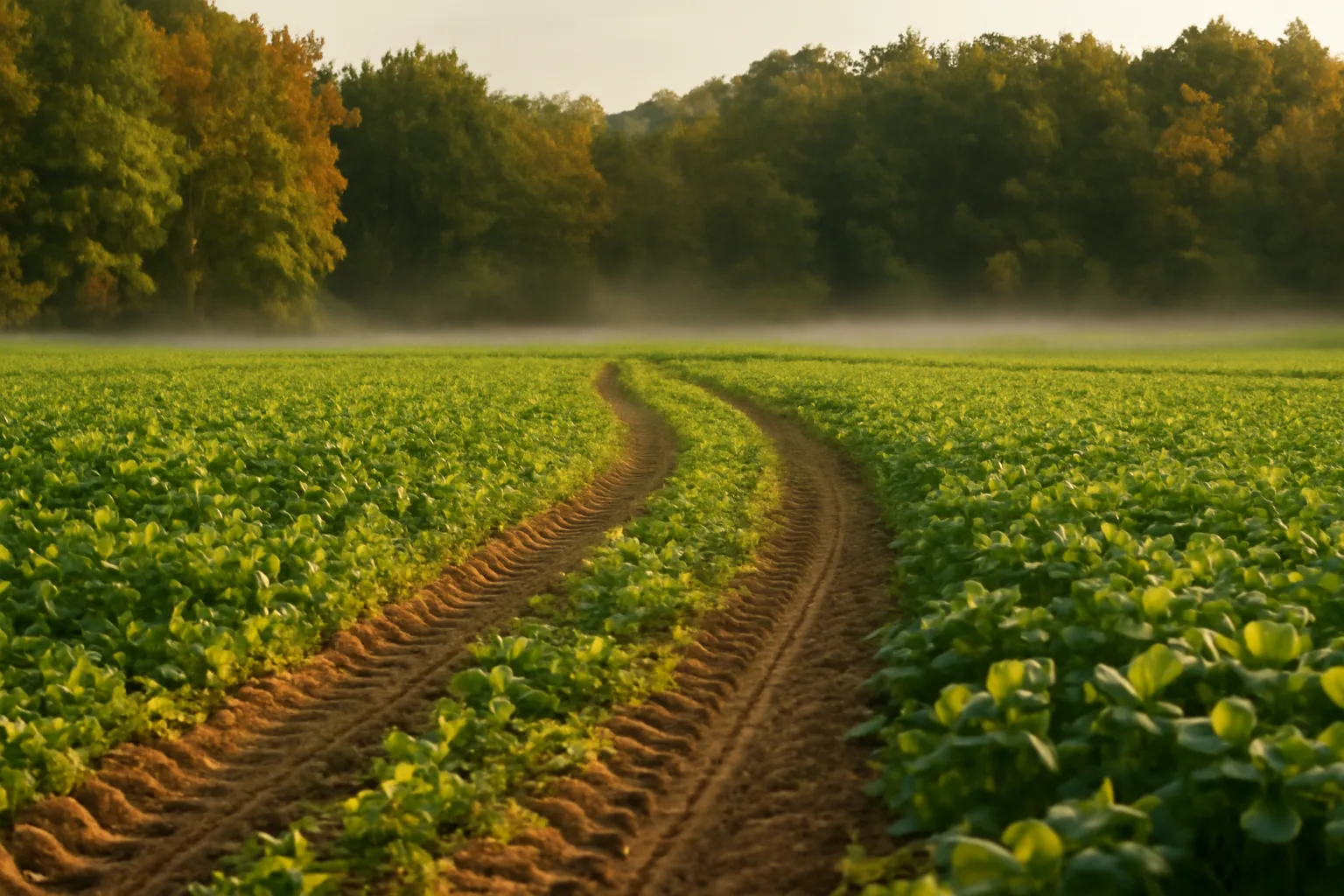
A food plot is a planted patch of forage, usually somewhere between a quarter acre and a few acres, put in to supplement what deer already find in the woods. It's not a replacement for natural browse. Think of it as a high-quality buffet stop layered on top of the acorns, browse, and ag fields deer already use. Most state wildlife agencies and university extension programs treat food plots as a habitat management tool, not a shortcut to bigger antlers or guaranteed encounters. The USDA Natural Resources Conservation Service (NRCS) runs the Environmental Quality Incentives Program (EQIP), which offers cost-share funding for wildlife habitat practices, including plantings that overlap with food plot work. That tells you agencies view this as legitimate habitat management, more than a hunting gimmick [1]. Plots generally fall into two working categories. Annuals like oats, clover (technically a biennial or perennial depending on variety), brassicas, and sorghum get replanted on a schedule. Perennials like alfalfa or certain clover blends can produce for three to five years with the right maintenance. Neither is inherently better. It depends on your soil, your budget, and how much equipment time you want to spend. If you're brand new to this, start by reading up on the food plot whitetail basics before you buy a single bag of seed. Seed selection matters, but soil prep and timing matter more.
when to plant food plots for deer (by region and season)
| Clover | April to May | March to April or Sept to Oct | |
|---|---|---|---|
| Oats | Aug 15 to Sept 15 | Sept 1 to Oct 15 | |
| Turnips/brassicas | Late July to mid-August | Mid-August to early Sept | |
| Sorghum (grain) | Late May to June | May to June | |
| Winter wheat | Sept 1 to Oct 1 | Sept 15 to Oct 31 | If you want a planting plan built around your actual zip code and soil report instead of a generic table, that's the kind of thing a Custom Food Plot Plan is built for. A $99 one-time plan won't replace your soil test lab's fertility recommendations, but it can help translate them into a species and timing plan for your specific property. |
Timing is soil temperature and rainfall dependent, more than a calendar date. That said, there are two big windows most of the country works within: spring planting for warm-season annuals and perennials, and late summer planting for fall annuals. Spring plots (clover, chicory, soybeans, warm-season annuals) typically go in after last frost, when soil temps hit the mid-50s to 60s F. In the Midwest and Northeast that's often late April through May. In the Southeast, growers can push into March. Cooperative extension offices publish frost date maps and soil temp guidance specific to county, and that's a better source than a generic national calendar. Fall plots (brassicas, cereal grains, clover overseed) are the bigger draw for most deer hunters because they line up with hunting season. The general rule extension agronomists give: brassicas need 80 to 90 days before a killing frost, so most of the Midwest and Upper South plant brassicas from late July through mid-August. Cereal grains like oats and wheat germinate fast and can go in later, often late August into September, sometimes as late as early October in the Deep South. Here's a rough planting window table. Treat it as a starting point, not gospel, because your county extension office and your soil test results should have the final word. | Species | Planting window (northern zone) | Planting window (southern zone) |
when to plant oats for deer
Oats are one of the most forgiving fall plot options because they germinate fast, tolerate cooler soil, and deer hit them hard as soon as they emerge. Most extension guidance puts oat planting at 6 to 8 weeks before your average first frost date, which lands most of the Midwest and mid-Atlantic in the mid-August to mid-September window. Oats don't survive hard winters in northern zones the way winter wheat or rye does. In zones with regular sub-20F nights, oats often winterkill by December or January, which is fine if your goal is late-season attraction into early winter rather than a plot that holds through February. If you want green forage deep into winter, blend oats with winter wheat or cereal rye, which are more cold-hardy. Soil temperature at planting matters more than the calendar date. Oats germinate reliably once soil hits about 50F. A soil thermometer costs under $15 and takes the guesswork out of a decision that otherwise depends on a rough regional average.
when to plant turnips for deer
Turnips and other brassicas (radishes, rape, kale) need roughly 80 to 90 days of growing time before a hard frost to reach full size, according to guidance from university extension forage programs [2]. That means most of the Midwest and Upper South plant turnips between late July and mid-August. Wait too long and you get small bulbs and thin leaf mass; deer will still eat the tops, but you lose the bulb tonnage that makes brassicas valuable as a late-season food source. One quirk with turnips specifically: deer often ignore the leaves and bulbs early in the season, then switch hard once a few frosts convert starches to sugars, usually in November or December depending on latitude. This is normal. Don't panic if your turnip plot looks untouched in October. That's often the point. Brassicas also need decent fertility, more nitrogen than clover, less than corn. A soil test is the only way to know what your specific field needs; guessing on fertilizer for a brassica plot is one of the most common ways hunters waste money on a plot that ends up stunted.
do deer like clover, and do they eat it as much as people say
Yes, clover is consistently one of the highest-preference forages for whitetail deer, and it's backed by more actual forage-quality research than almost any other food plot species. Clover is high in crude protein (often 25 to 30% on a dry matter basis depending on variety, cutting stage, and soil fertility) and stays palatable through spring, summer, and into fall. Wildlife biologists and extension agronomists point to clover's season-long availability as its biggest advantage over annuals. A brassica plot feeds deer for maybe two to four months. A well-maintained clover stand, mowed and limed on schedule, can produce from April through the first hard freeze, and then bounce back the following spring without replanting. That's a real cost advantage over a 3 to 5 year stand life if you maintain the pH and fertility. The catch: clover needs a pH close to neutral (most extension guidance recommends 6.0 to 6.5) to perform well [3]. Clover planted into acidic soil without lime will struggle regardless of how good the seed is. This is the single most common reason a clover plot underperforms, and it's also the easiest thing to fix with a soil test result in hand. For a deeper look at clover varieties, blends, and companion species, see deer food plot seed.
do deer eat sorghum, and is it worth planting
Yes, deer eat grain sorghum, both the standing heads and the foliage, but it's more of a late-season and winter food source than a season-long attractant. Grain sorghum matures over summer and holds its seed head into fall and winter, which makes it valuable in regions where other annuals have already been grazed out or gone dormant. Sorghum is drought-tolerant and handles poor soil better than corn, which is part of why it shows up in food plot mixes for sandier or drier ground, especially in the Southeast and parts of the Plains. It's not typically anyone's first choice for a primary plot species though. Most hunters use it as a component in a mix (with soybeans, cowpeas, or sunn hemp) rather than as a monoculture, mainly because straight sorghum doesn't offer much variety in nutrition or growth stage timing. One practical note: sorghum can produce dhurrin, a compound that converts to prussic acid (cyanide) under certain stress conditions like frost damage or drought stress on young regrowth. This is a known livestock forage risk documented by extension livestock programs, and while it's less commonly discussed for deer, it's worth knowing if you're grazing sorghum regrowth after a frost [4]. It's not a reason to avoid sorghum in a deer plot, just a reason to not treat frosted regrowth as risk-free.
what are deer's favorite foods, ranked by what the data actually shows
| Clover | Spring, summer, fall | 25-30% | Season-long staple | |
|---|---|---|---|---|
| Soybeans (forage type) | Summer | 25-30% | Summer protein, browse tolerant issues | |
| Brassicas/turnips | Late fall, winter | 15-20% (bulb varies) | Late-season energy and greens | |
| Oats/wheat | Fall, early winter | 12-18% | Fast cover, fall attraction | |
| Corn/sorghum grain | Winter | 8-10% | Winter energy, standing cover | For species-specific strategy and blending advice, species and strategy content on this site goes deeper into pairing species for season-long coverage. |
There's no single scientific ranking of deer's "favorite" food because preference shifts by season, region, and what's locally available. But combining forage quality research and food plot agronomy guidance, a rough hierarchy holds up across most of the whitetail's range. Natural browse and mast (acorns especially) usually outrank planted forage when both are available. Acorns are calorie-dense and deer will often abandon a food plot entirely during a heavy acorn drop. This is well documented in wildlife management literature and is one of the most common reasons a plot goes quiet in October, and it has nothing to do with plot quality. Among planted options, clover and soybeans consistently test as the highest-preference forages in browse studies, largely due to protein content. Brassicas (turnips, radishes) rank very high in late fall and winter once sugars convert. Cereal grains like oats and wheat rank high in fall but are lower in crude protein than legumes. Corn and sorghum are attractive as energy sources, especially in winter, but lower in protein. Here's a rough side-by-side. | Forage | Peak season | Crude protein (approx.) | Best role in a plot |
do deer like honey, and does it actually attract them
There's no research support for honey as a deer attractant, and it's not a forage or food plot input at all. Deer are herbivores that browse plants, forbs, mast, and agricultural crops. Honey isn't part of a wild deer's diet and there's no extension or wildlife agency guidance recommending it. What people are probably thinking of is the sweet, sugary scent some mock scrapes or mineral products use, or possibly confusing it with molasses-based mineral licks, which are a separate product category regulated differently than food plots. Molasses tubs and mineral blocks fall under supplemental feeding rules in many states, which are often stricter or entirely separate from food plot planting rules. This matters because baiting and supplemental feeding regulations vary heavily by state and can carry real legal consequences. Michigan, for example, has specific baiting restrictions tied to chronic wasting disease management zones, enforced by the Michigan DNR [5]. Wisconsin has its own baiting and feeding ban structure tied to CWD-affected counties, managed by the Wisconsin DNR [6]. A planted food plot is treated differently from bait or supplemental feed in nearly every state, but you need to check your specific state wildlife agency's current regulations before assuming a plot, mineral site, or feeder falls on the legal side of the line.
how much does it cost to plant a food plot
Costs vary a lot based on whether you already own equipment and how much lime and fertilizer your soil test calls for. Seed alone for a half-acre clover plot might run $30 to $80 depending on the blend. Brassica seed is often cheaper per acre than clover or soybean seed because seeding rates are lower (often just a few pounds per acre). The bigger cost swing is lime. If your soil test comes back at a pH of 5.0 and you need to get to 6.5 for clover, you might need 2 to 3 tons of lime per acre depending on your soil's buffer capacity, and lime often costs $30 to $50 a ton delivered and spread in agricultural regions, more in remote areas. This is why the soil test has to come before the seed order, not after. Equipment is the other major line item. If you're renting a tractor, disc, and drill for a weekend, that can run several hundred dollars depending on your area. If you already have an ATV and a simple drag harrow or cultipacker, your marginal cost for an additional acre is mostly just seed and fertilizer. For readers weighing seed options against price and coverage, food plot seed breaks down blends by cost per acre.
how do I know what to actually plant on my property
Start with a soil test, not a seed catalog. Your county extension office or a private ag lab can run a standard test for somewhere between $10 and $20 in most states, and it will tell you your current pH, phosphorus, potassium, and organic matter. That test result is the single most useful piece of information for choosing a species, because it tells you what will actually grow before you spend money on seed. Your soil test lab is the authority on lime and fertilizer recommendations for your specific field. A generic article (including this one) can tell you what clover generally needs; it can't tell you what your particular acre needs, because that depends on your soil's existing chemistry and buffer capacity, both of which only a lab test captures accurately. Once you have those numbers, species selection gets a lot simpler. Low pH, low budget for lime: lean toward brassicas or cereal grains, which tolerate a wider pH range than clover. Decent pH already, want a multi-year plot: clover or a clover-chicory blend. Sandy or droughty soil: sorghum or cowpeas hold up better than clover in low-moisture conditions. This is also where a lot of hunters get stuck translating lab numbers into a planting decision, which is the gap a $99 one-time Custom Food Plot Plan is meant to close. It takes your soil test and property details and turns them into a species list and timing plan. It's general planning guidance built from your inputs, not a site visit or a guarantee of deer activity.
what mistakes cost hunters the most money on food plots
The single biggest wasted-money mistake is skipping lime. Extension soil scientists consistently point out that fertilizer applied to acidic soil is only partially available to plants; you can dump 300 pounds of fertilizer on a pH 5.0 field and get a fraction of the benefit you'd get after correcting pH to 6.0 or higher [3]. Lime is cheap relative to fertilizer and seed. Skipping it to save money up front is the classic false economy of food plotting. The second biggest mistake is planting too early or too late relative to your zone's frost dates, especially with brassicas. A turnip plot planted three weeks late might never bulb out before frost kills the top growth, wasting the whole planting. Third is overbuying seed for the acreage. Seeding rate charts exist for a reason; overseeding clover or brassicas doesn't get you a denser stand, it gets you a thinner one because seedlings compete for the same light and nutrients. Read the bag rate, don't eyeball it. Fourth, and this trips up a lot of new plotters: assuming a food plot alone will make deer show up. Deer respond to cover, water, bedding security, and hunting pressure just as much as food. A plot planted in the open with heavy pressure around it often gets used mostly at night. Pairing your plot with the right access and stand setup matters as much as the seed choice; see deer for food for more on that side of the equation.
Frequently asked questions
Do deer eat sorghum?
Yes. Deer eat both the grain heads and foliage of sorghum, and it's a useful late-season and winter food source because it holds seed heads through fall. It's usually planted as part of a mix with soybeans or cowpeas rather than alone, since straight sorghum offers less nutritional variety than a blended plot.
Do deer eat clover?
Yes, and clover is one of the most preferred forages for whitetail deer, largely because of its high crude protein content (often 25 to 30% on a dry matter basis). Clover needs a soil pH near 6.0 to 6.5 to perform well, so a soil test and lime application are usually necessary before planting for a productive stand.
When should I plant food plots for deer?
Spring annuals and perennials (clover, chicory, soybeans) generally go in after last frost, often April through May depending on zone. Fall annuals (brassicas, cereal grains) typically go in 6 to 12 weeks before your first fall frost, roughly late July through September across most of the whitetail's range. Local extension frost date data is more accurate than any national calendar.
Do deer like clover more than other food plot options?
Clover consistently ranks among the top preferred forages in browse studies, mainly due to its high protein content and season-long availability from spring through fall. Soybeans rank similarly high in summer. Brassicas surpass clover in preference during late fall and winter after frost converts starches to sugars in the bulbs and leaves.
When should I plant oats for deer?
Plant oats 6 to 8 weeks before your area's average first frost date, which lands most of the Midwest and mid-Atlantic between mid-August and mid-September. Oats germinate once soil hits about 50F and grow fast, but they typically winterkill in northern zones by December or January, so blend with wheat or rye if you want plot life deeper into winter.
When is the best time to plant food plots for deer overall?
There isn't one best date nationally; it depends on species and zone. As a rule of thumb, spring plantings happen after last frost (April-May in most of the country), and fall plantings happen 6 to 12 weeks before first frost (late July through September). Check your county cooperative extension office for frost date tables specific to your area.
When should I plant turnips for deer?
Plant turnips 80 to 90 days before your first expected hard frost so bulbs have time to size up, typically late July through mid-August in most of the Midwest and Upper South. Deer often ignore turnip tops and bulbs early in the season and switch to them heavily after a few frosts convert starches to sugars, usually in November or December.
What is a food plot?
A food plot is a planted area, usually a quarter acre to a few acres, seeded with forage or grain crops to supplement a deer herd's natural diet and concentrate deer activity for hunting or herd management. It's a habitat management tool, not a replacement for natural browse, and USDA programs even offer cost-share funding for food plot habitat work.
What are deer's favorite foods?
Acorns and other hard mast usually outrank any planted forage when available. Among planted options, clover and soybeans rank highest for season-long preference due to high protein content, brassicas rank highest in late fall and winter, and cereal grains and corn rank lower in protein but provide fall attraction and winter energy.
Do deer like honey?
No, there's no research or wildlife agency guidance supporting honey as a deer attractant. Deer are browsers that eat plants, forbs, mast, and crops; honey isn't part of their natural diet. People may be thinking of molasses-based mineral products, which fall under separate supplemental feeding rules in many states.
How big should a deer food plot be?
Most hunting food plots run a quarter acre to 2 acres for hidden or kill plots tucked in cover, and 3 to 5+ acres for larger destination or field-edge plots. Size should match your equipment, budget for lime and fertilizer, and how much sunlight the site actually gets, since a plot boxed in by tall timber may not support a good stand regardless of acreage.
Do I need a soil test before planting a food plot?
Yes. A soil test, often $10 to $20 through a county extension office or ag lab, tells you your pH, phosphorus, potassium, and organic matter before you spend money on seed. Your soil test lab's lime and fertilizer recommendations are specific to your field's chemistry and should be treated as the final word over any generic planting guide.
Is it legal to plant a food plot on my hunting land?
Planting a food plot is legal in all 50 states, but rules around baiting, supplemental feeding, and hunting over a plot vary and are sometimes tied to chronic wasting disease management zones. Check your state wildlife agency's current regulations (like the Michigan DNR or Wisconsin DNR) before combining a plot with mineral sites or feeders.
Sources
- USDA NRCS, Environmental Quality Incentives Program (EQIP) overview: USDA cost-share programs fund wildlife habitat plantings including food plots
- University of Tennessee Extension, publication SP731-D, forage brassicas for deer: Brassicas need roughly 80 to 90 days of growth before a killing frost to fully bulb
- University of Kentucky Cooperative Extension, publication AGR-1, Lime and Fertilizer Recommendations: Clover and most food plot forages perform best at soil pH 6.0 to 6.5, and fertilizer effectiveness drops on acidic soil
- Iowa State University Extension and Outreach, publication PM 1252, Prussic Acid Poisoning: Sorghum can produce prussic acid risk in frost-stressed or drought-stressed regrowth
- Michigan Department of Natural Resources, Baiting and Feeding Order: Michigan has specific baiting restrictions tied to CWD management zones
- Wisconsin Department of Natural Resources, Baiting and Feeding Regulations: Wisconsin has baiting and feeding bans tied to CWD-affected counties