Last updated 2026-07-24
TL;DR
A deer feed plot is a planted area of forage crops (clover, brassicas, cereal grains, sometimes soybeans or sorghum) grown to feed and hold deer on your ground. Timing splits into spring/summer plots (May-June) and fall plots (August-September), shifted by region. Clover and oats rank among the most reliably eaten species; sorghum and honey are minor players at best.
what is a food plot, exactly?
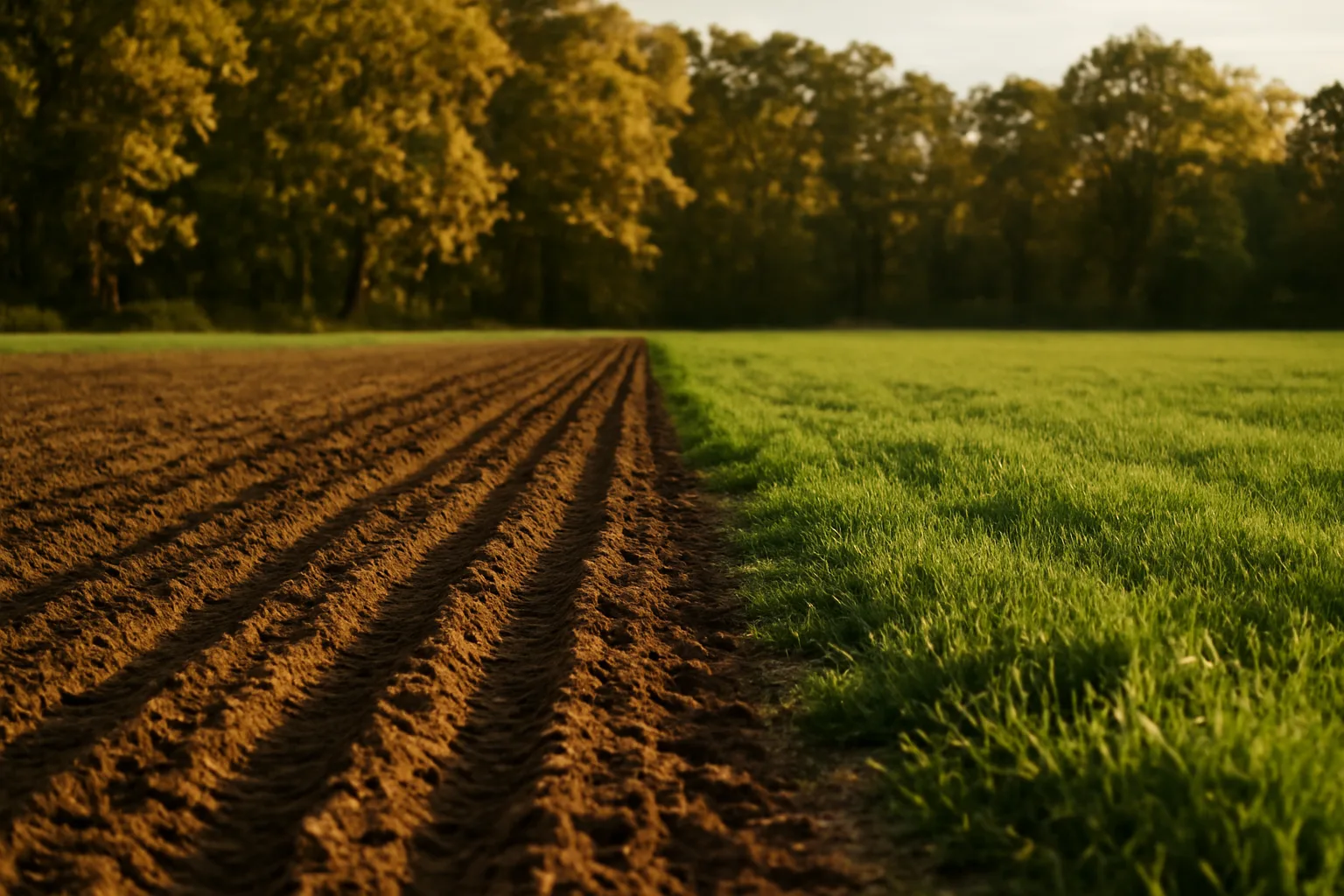
A food plot is a planted patch of forage, usually somewhere between a quarter acre and a few acres, established specifically to feed deer and other wildlife. It's not a garden and it's not a crop field in the farming sense, though it borrows techniques from both. Most plots fall into two broad categories: perennials you maintain for several years (clover isn't quite annual, more on that below) and true annuals like brassicas, cereal grains, and soybeans that you seed fresh each season. The purpose varies by property. Some hunters plant small "kill plots" tucked into timber, a quarter acre or less, mainly to create a shooting lane and a reason for a deer to stand still at first or last light. Others plant large field-sized plots, an acre or more, meant to supply real nutrition through late summer stress and winter scarcity. Cooperative extension programs generally describe food plots as a wildlife management tool that supplements natural browse rather than replacing it. A food plot is not a substitute for habitat. Bedding cover, escape terrain, and mast-producing trees do more to hold deer on a property long-term than any plot will. But a well-placed, well-timed plot gives you a huntable food source and, in the growing season, real supplemental nutrition during the two periods deer need it most: antler and body growth in summer, and fat reserve building before winter. One planning note before you pick species: check your state wildlife agency's baiting and feeding regulations before you plant anything meant to attract deer for hunting. Rules vary widely. Some states draw a hard legal line between a planted, rooted food plot (generally legal to hunt over) and piled or spread bait like corn or minerals (often restricted or banned, especially in areas with chronic wasting disease concerns). Michigan, for example, prohibits baiting and feeding deer in the Lower Peninsula and in CWD management zones, while still allowing food plots as a distinct category [1]. Don't assume; check your own state agency's page before opening day.
when to plant food plots for deer (by season and region)
| Deep South (zone 8-9) | Aug 15-Sept 15 | Sept 1-Oct 1 | Sept-Oct or Feb-Mar | |
|---|---|---|---|---|
| Mid-South / transition (zone 7) | Aug 1-Sept 1 | Aug 15-Sept 15 | Mar-Apr or Sept-Oct | |
| Midwest / Upper South (zone 6) | Jul 15-Aug 15 | Aug 1-Sept 1 | Apr-May or Aug-Sept | |
| Northern tier / Canada (zone 3-5) | Jul 1-Aug 1 | Jul 15-Aug 15 | Apr-Jun | These windows come from typical first-frost dates by USDA plant hardiness zone and standard extension recommendations for days-to-maturity on brassica and cereal grain crops [3]. Your actual planting date should work backward from your area's average first fall frost date, which you can look up through USDA/NOAA climate normals for your county. For a deeper breakdown of species-specific planting calendars, see food plot whitetail and deer food plots. |
Timing is the single biggest factor in food plot success, more than seed choice, more than fertilizer. Plant too early and heat or drought takes the seedlings. Plant too late and frost kills a warm-season plot before it produces anything, or a fall plot never germinates before the ground goes hard. There are really two planting windows most hunters work with. Spring/summer plots (perennial clover, chicory, soybeans, warm-season annuals): generally late April through June across the Midwest and Upper South, shifting to March-April in the Deep South and May-June or even into July in the northern tier and Canada. Soil temperature matters more than the calendar date. Clover germinates well once soil hits roughly 50°F, and most extension guides recommend waiting until frost risk has passed for soybeans and other warm-season legumes [2]. Fall plots (brassicas, cereal grains, annual clovers) make up the bigger window for most whitetail hunters because fall plots line up with hunting season. Brassicas like turnips need a longer runway, generally 80-90 days before a hard killing frost, since much of their tonnage comes from bulb and root development late in the season. Cereal grains like oats and wheat need less lead time, often 45-60 days, and can be planted later than brassicas in the same region. As a rough regional guide (always confirm against your local extension office, since microclimates and elevation shift these dates): | Region | Brassica/turnip window | Oat/cereal grain window | Clover window |
when to plant oats for deer
Plant oats for deer roughly 45-60 days before your area's first killing frost, which puts most of the country in an August to mid-September window. Oats are a fast, cheap, reliable fall food plot grain and one of the most consistently grazed species in cereal grain trials. Oats germinate fast, often in 5-10 days under good moisture, and produce grazeable forage within three to four weeks. That speed makes them a good choice for hunters who get a late start or want a quick green-up plot for early season bow hunting. The tradeoff is cold tolerance. Oats are less winter-hardy than winter wheat or cereal rye, and a hard freeze in the teens or lower will usually kill the foliage back, though deer will often keep hitting the frost-killed forage until it's gone. Most land-grant extension guides recommend seeding oats at 2-3 bushels per acre (roughly 64-96 lbs/acre) broadcast, or a bit less if drilled, at a quarter to half inch depth [4]. Oats do best on well-drained soil with a pH close to 6.0-6.5, and they respond strongly to nitrogen. A soil test is the only real way to know what your specific field needs. Your lab's fertilizer recommendation is the authority here, not a generic bag rate. Oats mixed with a brassica like turnips or a legume like crimson clover is a very common fall blend, since the oats give you fast early cover and grazing while the brassica or clover takes longer to mature and carries the plot into winter.
when to plant turnips for deer
Turnips need to go in the ground 80-90 days before your first hard killing frost, because most of their forage value (the bulb) develops in the final 30-45 days before frost as sugar content spikes. Plant too late and you get leafy tops deer may ignore and small, underdeveloped bulbs. This is the most common timing mistake with brassica plots. Turnips planted in early September in a zone that frosts in mid-October simply don't have time to bulb up. Extension trial data on brassica forage crops generally confirms that yield and tuber development are strongly tied to accumulated growing degree days after planting, more than calendar time [5]. A quirk worth knowing: deer often ignore turnip bulbs and even tops early in the season, then hammer the plot hard after the first hard frost. Cold temperatures convert starches in the plant to sugars, and that shift in palatability is well documented in brassica forage research and widely observed by hunters. If your turnip plot looks untouched in October and gets destroyed in December, that's normal, not a failure. Seeding rate for turnips alone is typically 4-6 lbs per acre, since the seed is tiny and easy to overseed. Broadcasting on a firm, prepared seedbed and rolling or cultipacking after planting improves germination significantly, because turnip seed needs good soil contact and shouldn't be buried deep, generally no more than a quarter to half inch.
do deer eat clover, and do they actually like it?
Yes. Clover is consistently one of the most preferred and most planted food plot forages in North America, and it's a staple in university deer nutrition research for good reason. White clover and red clover both show up repeatedly in forage preference studies as high-use species, often ranking above many native browse plants when available [6]. The appeal is nutritional. Clover regularly tests at 20-30% crude protein in vegetative growth stages, which lines up well with the protein demands of antler growth in bucks and lactation in does through spring and summer. It's also highly digestible compared to woody browse, meaning deer get more usable energy per bite. Clover is a perennial (technically a short-lived perennial, usually productive for 3-5 years before you need to reseed), so a well-maintained clover plot gives you the best return on planting labor of almost any food plot species. Plant it once, mow it two or three times a season to control weeds and keep growth vegetative, and it can produce forage from spring through fall for several years running. The tradeoffs: clover is slower to establish than annual grains, needs decent soil moisture to get going, and it's not a great option on droughty, sandy sites without irrigation. It also gets hammered hard in high-deer-density areas. Heavy browse pressure on new clover seedlings can wipe out a plot before it roots in, which is why many guides recommend a nurse crop of oats planted alongside spring clover to buffer early grazing pressure. For species comparisons and blend ideas, see deer food plot seed and food plot seed.
what are deer's favorite foods, really?
There's no single universal answer, because deer diet shifts hard by season, region, and whatever's locally available, but research consistently points to a short list of high-value categories: acorns and other mast, forbs and legumes (clover, soybeans, alfalfa), agricultural crops (corn, soybeans in the pod stage), and select browse species. Acorns are arguably the single most preferred natural food where they're available. White oak acorns in particular are lower in tannins than red oak acorns and are strongly preferred when both are on the ground, a pattern documented in wildlife management literature going back decades [7]. In a good mast year, deer will often walk past a food plot to hit an oak flat, which is worth remembering before you assume a plot failure means deer left the property. Among planted crops, soybeans in the pod-filling stage (August-September) are extremely high in protein and fat and get hit hard where legal and available. Clover, as covered above, is a near-universal favorite through the growing season. Standing corn is a huge preferred late-season energy source, mainly for the carbohydrate load going into winter. Brassicas (turnips, radishes, rape) are more of a late-season specialty item: lower preference early, very high preference after a hard frost sweetens the plant. Cereal grains like oats and wheat are moderate-to-high preference, especially in fall and early winter before brassicas peak. If you're picking one species to maximize the odds deer actually use your plot, clover and soybeans have the deepest track record in both research and practical hunting use. Brassicas and cereal grains are excellent complements for the late season specifically.
do deer eat sorghum?
Yes, but sorghum is a minor player in most food plot programs, not a headline species. Deer will browse young sorghum foliage and will eat the grain heads once they mature, and sorghum shows up in some wildlife food plot mixes as a cover and screening component as much as a forage item. Grain sorghum (milo) is more commonly grown as a wildlife food source for upland birds and turkey than as a primary whitetail forage, largely because deer preference studies rank it below soybeans, clover, and corn for pure forage value. Where sorghum earns its keep in a deer program is as a tall screening crop, planted in strips to block sightlines into a plot or bedding area, with the secondary benefit of some grain and green forage. If your goal is maximum deer nutrition or maximum draw, sorghum isn't the first, second, or even fifth species most experienced plotters reach for. If your goal includes screening cover along with some incidental feed value, it has a real niche use.
do deer like honey?
There's no meaningful evidence that deer seek out or particularly like honey, and it's not part of any established food plot or supplemental feeding program. Deer are herbivores built around a rumen digestive system suited to plant fiber, forbs, and browse, not concentrated sugars from an animal product. This question shows up online mostly out of curiosity rather than any real management practice. Deer will occasionally investigate strong sweet smells out of curiosity, and there are scattered anecdotal reports of deer licking or nibbling at spilled sugary substances, but there's no extension research, wildlife agency guidance, or peer-reviewed feeding study recommending honey as a deer attractant or forage supplement. If you're trying to draw deer to a spot, a planted food plot, a mineral site where legal, or a standing crop will do far more than anything based on honey.
how do I pick a food plot location on my property?
Location decisions come down to three things: soil quality, sunlight, and access that doesn't blow out the deer using it. Get any of these wrong and even the right seed at the right time won't produce. Sunlight is often the limiting factor people underestimate. Most food plot species, clover and brassicas included, want at least 4-6 hours of direct sun to produce well; deep timber openings under a closed canopy often can't support a real forage crop no matter how much lime and fertilizer you add. A small kill plot in partial shade can still work as a hunting tool since you're not relying on it for tonnage, just enough green-up to hold a deer's attention for a few minutes at dusk. Soil matters just as much and it's the one variable a soil test actually tells you something concrete about. Most food plot species want a pH in the 6.0-7.0 range; below that, lime is often needed to release nutrients already in the soil, since acidic soil ties up phosphorus and other nutrients regardless of how much fertilizer you spread. Your soil test lab's specific lime and fertilizer recommendation for your field is the real authority here, not a generic bag rate off the seed label. Access ties it together. A great plot in the wrong spot, one you can't get in and out of without walking through a bedding area or crossing the wind, will train deer to avoid it during daylight. Field edges near natural travel corridors, with a low-impact entry and exit route and a prevailing wind that carries your scent away from likely bedding cover, consistently outperform bigger, better-fertilized plots in bad locations. If you want a starting point tailored to your zip code, soil test numbers, and equipment, that's exactly the gap a $99 one-time Custom Food Plot Plan is built to fill: species picks, seeding rates, and a planting calendar specific to your situation, built from your inputs rather than a one-size-fits-all bag rate.
what equipment do I actually need to plant a food plot?
At minimum: a way to kill existing vegetation or turn soil, a way to spread seed, and a way to get seed-to-soil contact. Beyond that, it's a spectrum from hand tools to a full tractor setup, and the right answer depends on plot size and budget. For small plots (under half an acre), a lot of hunters get by with a UTV or ATV, a tow-behind disc or harrow, a hand-crank or ATV-mounted broadcast spreader, and a cultipacker or drag section made from chain-link fence or a pallet. This setup runs a few hundred dollars if you're buying used implements and can plant a legitimate small food plot from start to finish. For larger plots (half acre to several acres), a compact tractor (25-45 HP is a common range) opens up real disc harrows, a cultipacker, a rotary mower for clover maintenance, and possibly a no-till drill, which is the single biggest upgrade for consistency since it puts seed at controlled depth regardless of soil texture. No-till drills are expensive to buy outright but common to rent or borrow through conservation districts and farm co-ops in ag-heavy counties. Herbicide application (a sprayer, even a simple UTV-mounted or backpack unit) matters more than people expect, especially for perennial clover plots where weed competition in year one can smother a new stand. A basic broadcast spreader, a way to break up sod or old growth, and a way to firm the seedbed will get most annual grain and brassica plots planted successfully without a large capital investment.
how big should a deer food plot be?
There's no fixed right answer, but a rough rule many wildlife biologists and extension programs use is that food plots should make up somewhere around 1-5% of total property acreage to meaningfully supplement (not replace) natural forage, with individual plot size shaped by purpose. A quarter-acre to half-acre "kill plot" tucked in timber works for hunting access; a one to five acre field plot works for actual seasonal nutrition contribution across a herd using the property. Bigger isn't automatically better. A huge plot in an exposed field can get less nocturnal deer activity than a small, well-hidden plot tight to bedding cover, because mature deer often won't cross wide open ground in daylight regardless of how good the forage is. Property layout, hunting pressure, and predator (human) access patterns matter as much as raw acreage. For comparisons of small hunting plots versus larger field-style plots and how the tradeoffs shake out, see deer for food and domain food plot seed.
Frequently asked questions
Do deer eat sorghum?
Yes, deer will browse sorghum foliage and eat mature grain heads, but it ranks well below clover, soybeans, and corn in forage preference studies. Sorghum is used more often as a tall screening or cover crop in food plot mixes, with grain and forage value as a secondary benefit rather than the main draw.
Do deer eat clover?
Yes, clover is one of the most consistently preferred food plot forages, regularly testing at 20-30% crude protein in vegetative growth. Both white and red clover show up repeatedly as high-use species in wildlife forage research, making clover a top pick for spring and summer plots.
When should I plant food plots for deer?
It splits into two windows: spring/summer plots (clover, soybeans) generally go in April through June depending on region, and fall plots (brassicas, cereal grains) go in July through September, timed backward from your area's average first frost date. Check your local extension office for exact dates by zone.
Do deer like clover more than other forages?
In most preference studies, clover ranks at or near the top among planted forages, often above native browse where both are available. It's highly digestible and high in protein during the growing season, which is why it's a staple in nearly every food plot program across whitetail range.
When should I plant oats for deer?
Plant oats 45-60 days before your area's first killing frost, typically August to mid-September across most of whitetail range. Oats germinate fast (5-10 days) and produce grazeable forage within three to four weeks, making them a reliable, low-cost fall plot option.
When should I plant food plots, spring or fall?
Most hunters plant both. Spring/early summer plots (clover, soybeans, chicory) support antler and body growth through summer stress; fall plots (brassicas, oats, wheat) target the hunting season and late-season nutrition. Which one matters more depends on whether your goal is summer nutrition, fall hunting, or both.
When should I plant turnips for deer?
Turnips need 80-90 days before your first hard killing frost, since bulb development and sugar conversion happen in the final weeks before frost. Planting too late is the most common mistake; deer often ignore turnips until after the first hard freeze sweetens the plant.
What is a food plot?
A food plot is a planted area, usually a quarter acre to several acres, established specifically to feed deer and other wildlife with forages like clover, brassicas, cereal grains, or soybeans. It supplements natural browse and mast, it doesn't replace the need for good habitat and cover.
What are deer's favorite foods?
Acorns (especially white oak) rank among the most preferred natural foods where available. Among planted options, clover and soybeans consistently top preference research, with standing corn a major late-season energy source and brassicas becoming highly preferred specifically after a hard frost.
Do deer like honey?
There's no real evidence deer seek out honey as food. Deer are herbivores adapted to plant fiber and forbs, not concentrated animal sugars, and no extension or wildlife agency guidance recommends honey as an attractant or supplement. Stick to planted forage or legal mineral sites for drawing deer.
How much land do I need for a food plot?
There's no minimum, plots range from a quarter-acre kill plot in timber to multi-acre field plots. A common guideline is keeping total food plot acreage around 1-5% of property size to meaningfully supplement natural forage without over-investing in seed, lime, and fertilizer costs.
Is it legal to hunt over a food plot?
Generally yes, since planted, rooted forage is treated differently from piled bait in most states, but rules vary and some states restrict both in CWD management zones. Always check your state wildlife agency's current baiting and feeding regulations before planting with hunting intent.
Do I need a soil test before planting a food plot?
Yes, strongly recommended. Most food plot species want soil pH between 6.0 and 7.0, and acidic soil ties up nutrients regardless of fertilizer applied. A soil test from a real lab tells you exact lime and fertilizer needs for your field; that lab result is the authority, not a generic seed bag rate.
What's the difference between a kill plot and a field plot?
A kill plot is small (often under half an acre), tucked into timber near bedding cover, and built mainly to create a huntable shooting opportunity. A field plot is larger (one to several acres), placed for sunlight and soil quality, and built to supply real seasonal nutrition across a herd.
Sources
- Michigan DNR, Baiting and Feeding Wildlife in Michigan: Michigan prohibits baiting and feeding deer in the Lower Peninsula and CWD management zones while treating food plots differently
- University of Missouri Extension, Food Plots for Deer and Other Wildlife (G9421): Clover and warm-season legume plots should be planted after frost risk passes, with soil temperature guidance around 50°F for germination
- Mississippi State University Extension, Establishing Fall Food Plots for White-Tailed Deer (Publication 2111): Brassica crops need roughly 80-90 days before a killing frost while cereal grains need less lead time
- Oklahoma State University Extension, Food Plots for Deer and Other Wildlife (NREM-9010): Oats are typically seeded at 2-3 bushels per acre for deer food plots
- Clemson University Cooperative Extension, Brassicas for Deer and Other Wildlife (LGP 1027): Brassica tuber development and sugar content are tied to growing degree days after planting and frost timing
- Mississippi State University Extension, Nutrient Requirements of White-Tailed Deer (Publication 2429): White and red clover consistently rank among the most preferred food plot forages in deer preference research
- USDA Forest Service, Silvics of North America: Quercus alba (White Oak): White oak acorns have lower tannin content than red oak acorns and are more strongly preferred by deer