Last updated 2026-07-26
TL;DR
For East Texas, a fall blend of winter wheat or oats with a clover like arrowleaf or crimson, planted late September to mid-October after 0.5 to 1 inch of rain, handles the acid sandy soils and canopy shade better than a single-species plot. Test soil first; most East Texas ground needs lime before anything else works.
What is a food plot, and why does East Texas need a different approach?
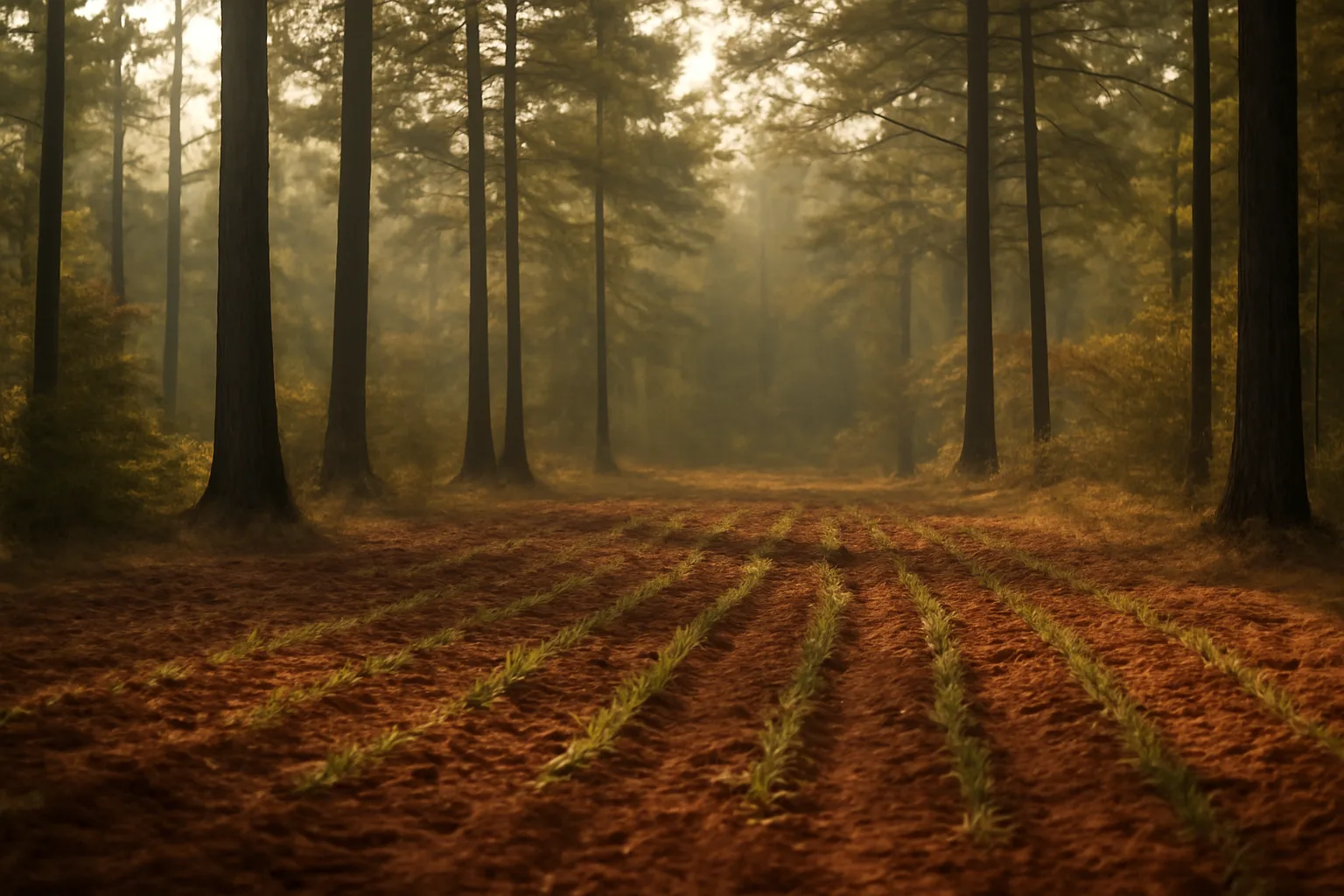
A food plot is a planted patch of forage on your land meant to feed deer and hold them close enough to hunt or observe. It's not bait, it's agriculture on a small scale, and the difference matters legally in some states (more on that below). East Texas isn't the Midwest, and it isn't the Hill Country either. The Pineywoods and Post Oak Savannah regions run acid, sandy to sandy loam soils, often under heavy pine or hardwood canopy, with annual rainfall that can swing from a wet spring to a bone dry August. Soil pH in much of East Texas naturally sits in the 4.5 to 5.5 range without lime, according to Texas A&M AgriLife Extension soil testing guidance. That's low enough to lock up phosphorus and choke clover and brassica growth before it starts. So the 'best' food plot here isn't whatever wins in a national seed catalog. It's whatever survives acid soil, partial shade, deer pressure, and the boom-bust rain pattern typical of the region. That usually means a fall-planted mix over a single species, full sun clearings over shaded plots, and lime before fertilizer, always.
When should you plant food plots for deer in East Texas?
Plant your main fall plot between late September and mid-October, right after a real rain event, not before it. Texas Parks and Wildlife Department's food plot guidance for East Texas landowners points to fall planting timed to the first cool season rains as the standard window for cool-season annuals [1]. Spring plots (for warm-season forages like iron and clay peas or lablab) go in April through May, once soil temps are reliably above 65 degrees F and the last frost risk has passed. Spring plots in East Texas fight two things: fast weed pressure from the humid climate and heavy browse pressure the moment they emerge, since there's often little else green. Here's the honest tradeoff. Fall plots in East Texas do double duty: they feed deer through the rut and into winter, and they coincide with the region's better rainfall pattern. Spring plots need irrigation or a lot of luck to establish before the summer heat shuts growth down. If you can only plant once a year, plant in fall. It's simpler, it's more forgiving, and it lines up with hunting season.
Do deer eat sorghum, and does it belong in an East Texas plot?
Yes, deer eat sorghum, particularly the grain heads once they mature, but it's a secondary food, not a plot centerpiece. Grain sorghum (milo) is more commonly planted as a dove field or a wildlife food source for turkey and quail, and deer will browse the young shoots and later hit the grain heads, but it doesn't carry the protein or the attraction pull of a legume or brassica blend. Where sorghum earns a spot in East Texas is as a nurse crop or a screen. Planted along a plot edge, it grows tall fast in the sandy soils and gives you visual cover for a stand or blind. Some hunters also use grain sorghum in a diverse fall blend alongside cowpeas and sunflowers, mostly for the seed production and the cover value rather than as the primary deer draw. If your goal is maximum deer use of the acreage, put your fertility and lime budget into clover, wheat, or oats first. Sorghum is a supporting player, not the headliner.
Do deer eat clover, and do they actually like it?
Yes, deer eat clover heavily, and it's one of the most consistently preferred forages across whitetail range, including East Texas. Clover is a legume, meaning it fixes its own nitrogen through root nodules once established, which matters in East Texas because it reduces your dependence on nitrogen fertilizer in soil that's already fighting you on phosphorus and pH. Arrowleaf clover and crimson clover are the two most commonly recommended annual clovers for East Texas food plots because they tolerate acid soil better than white clovers and they reseed reasonably well if you let them go to seed one summer. Perennial white clovers (Durana, Patriot) can work too, but they demand a higher pH, generally 6.0 or better, and more consistent moisture than the sandier East Texas soils reliably hold through a dry summer. The catch with clover in East Texas: it needs sun. Under a closed pine or hardwood canopy, clover thins out fast and gets outcompeted by shade-tolerant weeds. If your plot gets less than 5 to 6 hours of direct sun, skip clover as your primary species and lean on brassicas or a cereal grain instead.
When should you plant oats for deer in East Texas?
Plant oats in East Texas between late September and late October, same window as your main fall plot, ideally 30 to 45 days before your area's first hard frost. Oats are a cool-season annual grass that germinates fast, often within 5 to 7 days in warm, moist soil, and they give deer immediate green forage while slower species like clover establish underneath. Oats have a real weakness here: they're less cold-hardy than winter wheat or cereal rye. East Texas doesn't get brutal winters most years, so oats usually perform fine, but a hard freeze event can burn them back harder than wheat would. If you've had winters where temps drop into the teens for extended stretches, wheat or a wheat-oat blend hedges that risk better than oats alone. Oats also make an excellent nurse crop for clover. Plant them together in the fall; the oats come up fast and give the clover some competition-free space to root in before winter.
When should you plant turnips for deer in East Texas?
Plant turnips in East Texas between mid-August and mid-September, earlier than most of your cool-season mix, because turnips need 80 to 90 days to bulb out before the first real cold snap makes them sweet and palatable. Brassicas like turnips convert starches to sugars after a frost, which is exactly when deer switch from ignoring the tops to hammering the bulbs. Here's the timing tension specific to East Texas: mid-August is still brutally hot and often dry across the Pineywoods and Post Oak regions, so turnip seed can sit ungerminated for weeks waiting on rain. Texas A&M AgriLife's forage variety guidance notes that brassica establishment depends heavily on adequate soil moisture at planting, more so than exact calendar date. If you're not set up to irrigate a small plot, watch the forecast and plant into a rain event even if it pushes you a week or two past your ideal window. Turnips also want a higher pH than most East Texas soil offers naturally, generally 6.0 to 6.5. Skipping the lime step on a turnip plot is one of the most common and most expensive mistakes East Texas plotters make, because the plants will grow leafy tops in acid soil but never bulb properly.
What's the actual best food plot mix for East Texas conditions?
| Winter wheat | Late Sept to mid-Oct | 5.5 to 7.0 | Good | Fast cover, fall/winter forage | |
|---|---|---|---|---|---|
| Oats | Late Sept to late Oct | 5.5 to 7.0 | Moderate | Fast germination, less cold-hardy | |
| Arrowleaf/crimson clover | Late Sept to mid-Oct | 5.8 to 6.5 | Poor to moderate | Nitrogen fixing, spring forage | |
| Turnips/brassicas | Mid-Aug to mid-Sept | 6.0 to 6.5 | Poor | Late-season high-sugar forage | |
| Grain sorghum | April to June | 5.5 to 7.0 | Poor | Cover/screen, secondary food | One honest note: nobody can promise deer will hammer any specific plot on your specific acreage. Deer density, surrounding ag or mast availability, and hunting pressure all move the needle more than seed selection does in a lot of cases. |
For most East Texas properties, a fall blend of winter wheat (or oats) plus arrowleaf or crimson clover, planted at roughly 50 to 60 pounds per acre of the grain component and 15 to 20 pounds per acre of clover, is the most forgiving, most productive combination available. It handles partial shade better than clover alone, it establishes fast enough to beat weed pressure, and the clover carries the plot into spring and early summer after the grain matures out. If your plot sits in full sun with decent drainage and you've limed to 6.0 or above, add a brassica strip (turnips or a turnip-radish blend) along one edge, planted 2 to 3 weeks earlier than the grain-clover mix. That gives you three forage stages across the season: green grain forage in October and November, bulbing brassicas by December, and clover regrowth from late winter through spring. Here's a quick comparison of the core options for East Texas ground: | Species | Best planting window | Soil pH needed | Shade tolerance | Role in the plot |
Do deer like honey, and is that even a real food plot question?
Deer don't eat honey in any meaningful dietary sense, but they do like honeysuckle, and that's very likely the mix-up behind this question. Japanese honeysuckle (Lonicera japonica) is one of the most heavily browsed native plants across East Texas, and it grows wild in the same pine and hardwood edges where a lot of East Texas hunters have their plots. Honeysuckle isn't something you plant as a food plot crop; it's invasive in much of the Southeast and it can take over a clearing if left unmanaged. What it does tell you is something useful: if honeysuckle is thriving on your property, you already have decent browse conditions and probably a healthy deer herd nearby. That's a good sign for plot success, not a substitute for one. If you've got sugar or syrup on the brain instead, note that most states, Texas included, treat placing feed (including things like syrup, corn, or minerals) differently from planting a food plot for legal purposes. Baiting and supplemental feeding rules vary by state and by season (some states restrict baiting during archery or firearms season specifically), so check the Texas Parks and Wildlife Department's current baiting and feeding regulations before you put out anything besides a planted crop [2].
What are deer's favorite foods in East Texas specifically?
Deer in East Texas rely heavily on acorns (both red and white oak groups) as their preferred natural fall food, and no planted food plot competes with a heavy mast year when it happens. After mast, the ranked preference in most East Texas habitat studies and extension guidance runs roughly: clover and other legumes, then brassica tops and bulbs, then cereal grains like wheat and oats, then browse (honeysuckle, greenbrier, blackberry) when planted forage isn't available. The practical takeaway: don't fight a heavy acorn year. If your property has mature oaks producing well, your food plot will get less traffic in October and November no matter what you planted, and that's normal, not a plot failure. Plots earn their keep most in poor mast years and in late winter, after the acorns are gone and clover or brassica bulbs are still available.
How do you fix East Texas soil before planting anything?
Pull a soil sample and send it to a real lab before you buy a single bag of seed. Texas A&M AgriLife Extension's Soil, Water and Forage Testing Laboratory runs a standard soil test for a modest fee and will return your exact pH, phosphorus, potassium, and lime recommendation for the crop you tell them you're planting. Most East Texas food plot ground needs somewhere between 1 and 3 tons of lime per acre to move from native pH (often 4.5 to 5.5) up to the 6.0 to 6.5 range that clover and brassicas want. Lime takes time to work, often 3 to 6 months to fully react in the soil, so fall planting really should follow a spring lime application if you can plan that far ahead. If you're starting from scratch this fall, apply lime now anyway; a partial correction is still better than none, and next year's plot will thank you. Your soil test report, not this article, is the authority on exactly how much lime and fertilizer your specific field needs. Follow the lab's recommendation over any generic rate you read online, because pH, existing nutrient levels, and crop choice all shift the numbers. For a starting framework on picking species and building a planting calendar around your own test results, the Custom Food Plot Plan runs a one-time $99 and builds a mix and schedule around your soil test, region, and equipment, though it's general guidance layered on your lab's numbers, not a replacement for them.
What equipment do you actually need for an East Texas plot?
For a small plot (under 2 acres) in East Texas, you can get by with a disk harrow or tiller, a broadcast spreader, a drag or cultipacker, and a way to spray if you've got heavy weed pressure. A lot of East Texas ground has enough clay content mixed into the sandy loam that a single disking pass won't break it up well; plan on two or three passes, especially on ground that hasn't been worked before. No-till drills work well on East Texas plots that already have some organic structure, and they cut down on erosion risk on sloped ground, which matters more here than on flat Midwest fields. If you're renting or borrowing equipment, a rear-tine tiller and a hand-crank or ATV broadcast spreader will handle most plots under an acre without much trouble. Don't skip the cultipacker step (or at least a drag) after broadcasting small seed like clover or brassicas. Seed-to-soil contact matters more in sandy East Texas soil, which dries out fast on the surface, than it does in heavier clay ground further north.
Frequently asked questions
Do deer eat sorghum in East Texas food plots?
Yes, deer browse young sorghum shoots and eat the mature grain heads, but sorghum works better as a dove field crop, a screen, or a supporting plant in a diverse blend than as your main deer-attracting species. Put your fertility budget into clover or cereal grains first.
Do deer like clover more than other food plot options?
Clover ranks among the most consistently preferred whitetail forages in extension research, and East Texas deer readily use arrowleaf and crimson clover where soil pH is corrected and sun exposure is adequate. It struggles under heavy canopy shade and in uncorrected acid soil below pH 5.8.
When should you plant food plots for deer in East Texas?
Plant fall plots (wheat, oats, clover) between late September and mid-October, timed to a real rain event. Plant brassicas like turnips two to three weeks earlier, mid-August through mid-September. Spring/summer plots go in April through May once soil temps hold above 65 degrees F.
When should you plant oats for deer in East Texas?
Plant oats late September through late October, 30 to 45 days before your area's average first frost. Oats germinate fast, often in 5 to 7 days, but they're less cold-hardy than wheat, so a wheat-oat blend hedges against a hard freeze better than oats alone.
When should you plant turnips for deer food plots in East Texas?
Plant turnips mid-August through mid-September, since bulbs need 80 to 90 days to develop sweetness before the first frost. East Texas heat and dryness in August can delay germination, so plant into a rain event even if it pushes past your target date.
What is a food plot, exactly?
A food plot is a planted area of forage crops, like clover, wheat, oats, or brassicas, established specifically to feed deer or other wildlife and to draw and hold them near a hunting or observation location. It's an agricultural practice, distinct from baiting or supplemental feeding in most state regulations.
What are deer's favorite foods in a Texas woodland setting?
Acorns top the list in oak-heavy East Texas habitat during good mast years. Behind mast, deer generally prefer clover and legumes, then brassica bulbs, then cereal grains, then native browse.
Do deer like honey or honeysuckle?
Deer don't eat honey, but they heavily browse Japanese honeysuckle, a common East Texas plant that's likely the source of this mix-up. Honeysuckle isn't a plantable food plot crop and is considered invasive in much of the Southeast, though its presence signals decent browse habitat nearby.
What soil pH does East Texas food plot ground usually need correcting to?
Most East Texas soils sit naturally around pH 4.5 to 5.5. Clover and brassicas generally need 6.0 to 6.5, so plots typically need 1 to 3 tons of lime per acre based on a soil test, applied months ahead of planting since lime takes 3 to 6 months to fully react.
Can you plant a food plot in shaded East Texas pine or hardwood cover?
You can, but clover performs poorly under closed canopy. For shaded plots, lean on cereal grains like wheat or oats, which tolerate moderate shade better, or clear the canopy back to get at least 5 to 6 hours of direct sun before investing in clover or brassicas.
Is baiting legal in Texas the same as planting a food plot?
No. Texas treats placed feed and planted food plots differently under state hunting regulations, and rules on baiting can vary by season and hunting method. Check the Texas Parks and Wildlife Department's current regulations before placing any feed, mineral, or bait product on your hunting property.
How big should a food plot be for East Texas deer ground?
There's no single required size; quarter-acre to two-acre plots both work depending on your goals and equipment. Smaller plots hidden in timber suit bow hunting setups, while larger plots (one acre or more) hold forage better under heavier deer density and repeated browsing pressure.
Sources
- Texas Parks and Wildlife Department, Food Plots for White-tailed Deer: Fall planting timed to cool-season rains is the standard recommended window for East Texas food plots
- NOAA National Centers for Environmental Information, Climate at a Glance: County Mapping: East Texas averages roughly 45 to 55 inches of annual precipitation with seasonal rainfall variation
- Texas Administrative Code, Title 31, Part 2, Chapter 65, Subchapter A, Rule 65.3: Texas regulates means and methods of taking game animals, including provisions relevant to baiting and feeding practices
- Texas A&M AgriLife Extension, "Oak Wilt and Whitetail Deer" forestry and wildlife publications: Acorns are a major component of whitetail fall diet in oak-dominated East Texas habitat during good mast years
- Texas A&M AgriLife Extension: Soil testing is the recommended first step before amending East Texas food plot soil
- USDA NRCS PLANTS Database: Clover species characteristics and adaptation to regional soil and climate conditions