Last updated 2026-07-25
TL;DR
Planting a food plot is legal everywhere in the US. What varies is whether you can hunt over one that's been cut, mowed, or otherwise manipulated, and whether it counts as "baiting" in your state. Always check your state wildlife agency's current baiting and standing-crop regulations before season, since rules change and penalties can include license revocation.
Are food plots legal to plant on my own land?
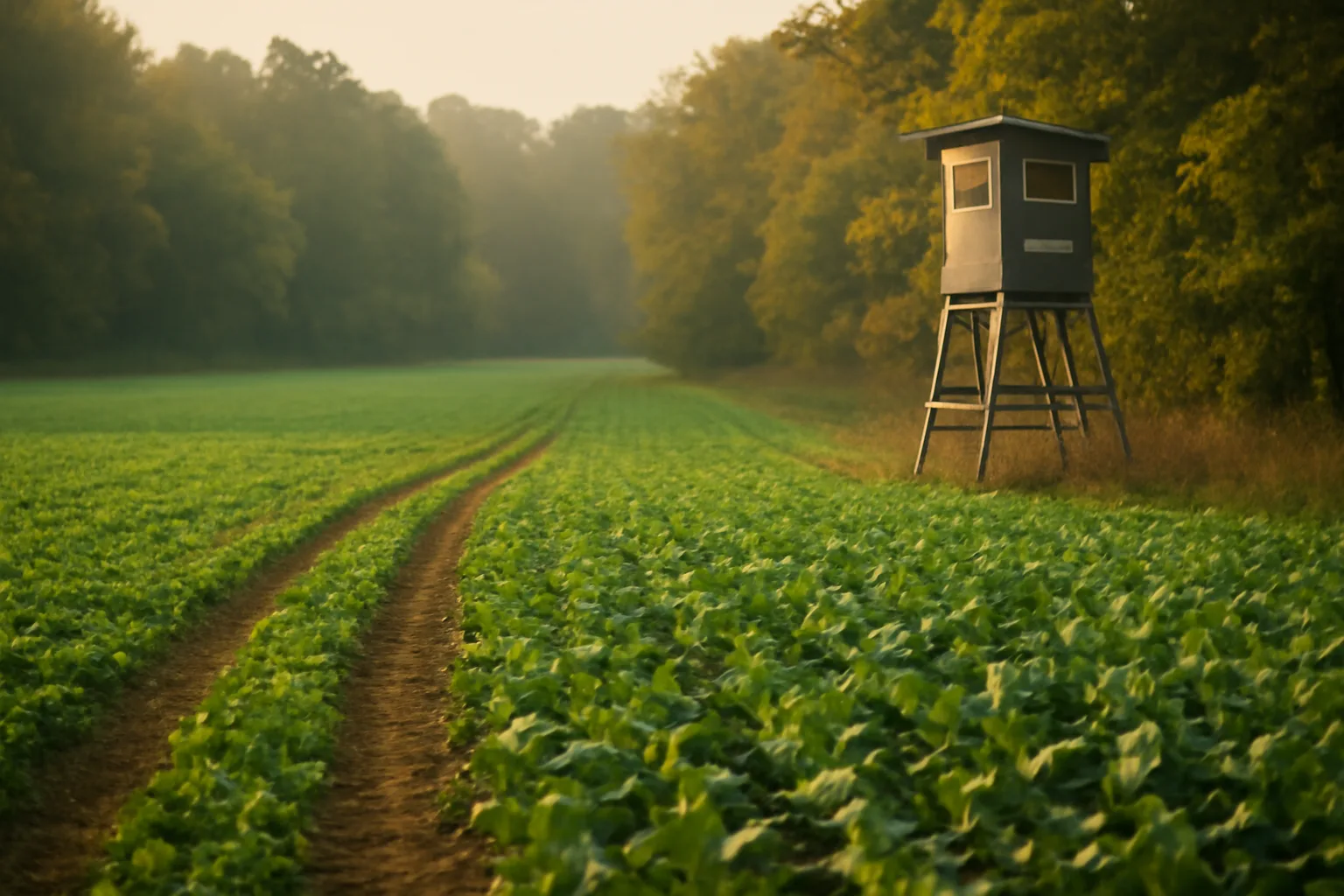
Yes. Planting a food plot, meaning tilling ground and growing forage like clover, brassicas, or grain for deer, is legal in all 50 states. There's no federal law against it and no state bans the practice of planting wildlife forage on private or leased land. Food plots are agriculture in the eyes of the law, not baiting, as long as the crop is standing and growing naturally. Where things get complicated is hunting over that plot once it's been altered. A standing food plot is almost universally legal to hunt over. Mow it, cut it, or pile the forage up, and in some states you've just created a bait pile, which is a different legal category entirely. The distinction matters because baiting laws exist mostly to slow the spread of chronic wasting disease (CWD) and to reduce unfair concentration of deer at a single point. Wisconsin administrative code defines baiting as placing food in a manner where a wild animal could be attracted to and consume it, while specifically carving out standing agricultural crops from that definition under NR 10.13 [1]. So the plot itself is never illegal. The question is always what you do to it and whether your state treats manipulated forage as bait.
What counts as baiting versus a legal standing food plot?
Most states draw the line at whether the crop is still rooted and growing. A standing plot of clover, beans, or brassicas is farming. Cut it and leave it in a pile, and in a lot of states that pile is now bait. Michigan's wildlife baiting and feeding order, issued under authority of the Wildlife Conservation Order, restricts baiting and feeding in the Lower Peninsula and parts of the Upper Peninsula because of CWD and bovine tuberculosis concerns, but the order's definitions section excludes standing crops and normal agricultural practices from the definition of bait [2]. Mow that same plot into windrows before season, though, and you can cross into bait territory depending on how the state defines "altered." Pennsylvania takes a stricter stance in CWD Disease Management Areas, where the Game Commission's regulations at 58 Pa. Code Chapter 147 ban feeding deer and elk outright within DMAs, with limited exceptions that do not cover creating piles from cut food plots [3]. A few states, including Texas over most of its counties, allow baiting for deer entirely, which makes the food plot vs. bait distinction moot there. But that's the exception, not the rule. Most states in the whitetail's core range (the Midwest, Northeast, and Southeast) restrict or ban baiting to some degree, especially in counties with confirmed CWD. The safest practice: leave plots standing, don't mow, roll, or crimp them right before you hunt, and don't supplement with piled corn, mineral blocks, or protein pellets on top of the plot unless your state specifically allows it.
Do I need a permit to plant a food plot?
No permit is required to plant a food plot on private land you own or lease. You don't need to register it with your state wildlife agency, and there's no food-plot-specific license. That said, a few situations do require paperwork. If you're clearing timber or converting forested acreage to plant a plot, some states and counties require a forestry or land-use permit, especially near wetlands or waterways. Your state's Department of Environmental Quality (or equivalent) and your local USDA Service Center are the right contacts if you're doing more than converting an existing field or opening. If your plot sits near a stream, wetland, or drainage, you may also trigger Clean Water Act Section 404 permitting requirements administered by the US Army Corps of Engineers, particularly if you're doing dirt work like building water control structures or filling low areas. Section 404 covers the discharge of dredged or fill material into waters of the United States, including many wetlands, under 33 U.S.C. 1344 [4]. This is rare for a typical food plot but worth a phone call if your ground has standing water or a creek running through it. On leased land, check your lease. Some leases restrict food plot acreage, require landowner sign-off before you disc anything, or specify what equipment can cross certain fields.
What is a food plot?
A food plot is a planted area, usually somewhere between a quarter acre and several acres, of forage crops grown specifically to attract and feed deer or other wildlife. Think clover, brassicas, cereal grains, chicory, or soybeans planted in a clearing, field edge, or old ag field on hunting land. Food plots do two things: they give deer a consistent, high-quality food source (which can help body condition and antler growth over a season or two), and they concentrate deer activity in a spot you control, which is why hunters plant them near stand sites. They're not the same as agricultural fields grown for harvest and sale. A food plot is grown to be eaten in place by wildlife, not combined and hauled to a grain elevator. That distinction is part of why they're legal everywhere; they're just a specialized form of wildlife habitat management, similar to planting a pollinator strip or a CRP field, both of which fall under conservation programs that USDA's Farm Service Agency administers under the Conservation Reserve Program authorized in the Food Security Act of 1985, 16 U.S.C. 3831 [5].
When should I plant food plots for deer?
| Clover (perennial) | Late April to May, or August | March to April, or September to October | |
|---|---|---|---|
| Brassicas (turnips, radish) | Mid-July to early August | Mid-August to mid-September | |
| Oats | Late July to August | September to October | |
| Soybeans | Mid-May to early June | Late April to May | |
| Sorghum (grain) | Late May to June | May to June | These windows are general guidance, not gospel. Your local extension office and your soil test lab know your specific frost dates, soil temps, and rainfall patterns better than any national chart, so treat regional numbers as a starting point and confirm with them. If you want a full planting calendar mapped to your zone and species mix, the food plot whitetail guide breaks down zone-specific windows in more depth. |
Timing depends on your USDA plant hardiness zone and what you're planting. Broadly, food plots fall into two windows: spring/summer plots (clover, chicory, soybeans) and late-summer/fall plots (brassicas, cereal grains, annual clover overseeds). For perennial clover, most land-grant extension guides recommend planting in early spring (April into May in the northern half of the country) or late summer (August) once soil temperatures cool but before the first frost, so seedlings have time to establish root systems [6]. Spring plantings need consistent moisture; late-summer plantings avoid competing with spring weed pressure but risk drought stress if rain doesn't cooperate. For brassicas and cereal grains meant to peak in the late fall, the target planting window is roughly 60 to 90 days before your area's average first frost date, which for most of the whitetail's range falls between mid-July and early September. Planting too early means the crop matures and gets hammered before hunting season; too late and it never bulks up. Here's a rough breakdown by species: | Species | Typical planting window (northern US) | Typical planting window (southern US) |
When should I plant turnips for deer?
Plant turnips 80 to 90 days before your area's first hard frost, which for most of the Midwest and Northeast lands them in a mid-July to mid-August planting window. In the Deep South, that window shifts to mid-August through mid-September. Turnips need that runway because deer typically don't hit the bulbs hard until after a few frosts convert starches to sugars, making the plant sweeter and more palatable. Plant too late and you get leafy growth but no bulb development before winter shuts things down. Seeding rate for turnips alone runs about 4 to 6 pounds per acre, and they do best drilled shallow (a quarter inch or less) into a firm, well-limed seedbed. A soil test is worth doing before you plant brassicas specifically, since they're heavy nitrogen users and respond noticeably to proper pH, generally in the 6.0 to 6.5 range recommended by most extension brassica guides [7].
When should I plant oats for deer?
Plant oats in late summer, generally late July through August in northern regions and September into early October in the South, so they're established and putting on leaf growth by the time archery season opens. Oats are a fast-growing cereal grain and one of the most attractive early-season food plot options going. They germinate in 5 to 10 days under decent moisture and soil temperature, and deer will often hit young oat shoots hard within a few weeks of emergence. That quick attraction is exactly why oats work well as a standalone early-season plot or mixed with brassicas and clover for a multi-stage food source that peaks at different times. One caution: oats aren't very cold-hardy compared to wheat or rye. A hard freeze can kill them off by midwinter in northern zones, so if you want a food source that lasts into late season, pair oats with a more frost-tolerant grain like winter wheat or cereal rye.
Do deer eat clover, and do deer like clover?
Yes, deer eat clover readily, and it's one of the most consistently preferred food plot forages across the whitetail's range. Clover is high in protein (often 25 to 30 percent crude protein in vegetative growth stages) and stays palatable through most of the growing season, which is why it shows up in nearly every extension-recommended food plot mix . Clover's biggest advantage is duration. A well-maintained stand of white clover (like Ladino) or red clover can produce for 3 to 5 years before it needs replanting, unlike annual plots that need reseeding every year. That makes it one of the better returns on labor and seed cost if you're planting a food plot on a budget. The tradeoff is establishment time and maintenance. Clover needs decent soil pH (most varieties want 6.0 to 7.0), regular mowing to keep weeds down, and it doesn't tolerate heavy shade or standing water well. It's also one of the first things deer hit hard in spring when other green forage is scarce, so in high deer density areas, new clover plantings can get grazed down before they establish if you don't fence or rest them the first season. If you're building a seed mix and want clover in the rotation, the deer food plot seed guide covers blend ratios and variety selection in more detail.
Do deer eat sorghum?
Yes, deer eat grain sorghum, both the standing seed heads and the surrounding foliage, though it's generally considered a secondary or late-season food source rather than a first-choice forage. Sorghum's biggest value in a food plot is structure and cover as much as feed: the tall stalks provide bedding and screening cover through fall and winter while the seed heads mature. Sorghum is also more drought-tolerant than corn, which makes it a reasonable substitute in areas with sandy soil or inconsistent rainfall, something several land-grant extension forage guides note when comparing summer annual grain options . Deer will browse sorghum foliage in summer and hit the grain heads in fall and winter once other food sources thin out, particularly after a frost when the grain's tannin content drops and palatability improves. It's rarely planted as a monoculture in food plot programs. Most hunters mix it with soybeans, cowpeas, or sunflowers for a summer blend that gives cover, tonnage, and a fall grain source in one planting.
What are deer's favorite foods?
Deer preference shifts by season, region, and what's available, but across most whitetail research and extension forage studies, a few categories consistently rank at the top: soft mast (acorns, apples, persimmons), legumes (clover, soybeans, cowpeas), and brassicas after a frost. Acorns are frequently cited as the single most preferred natural fall food when available, because of their high fat content, and deer will often bypass a food plot entirely during a heavy acorn drop. That's backed by decades of deer diet studies going back to classic work from state wildlife agencies and university deer research programs tracking rumen contents by season. Within food plots specifically, soybeans and clover tend to top preference in summer, while brassicas (turnips, radish, rape) and cereal grains take over once the weather cools and sugar content in those crops rises. There's no single "best" food plot species; the honest answer is that a mix of 2 to 3 forage types that peak at different times of year outperforms any single-species plot, because it accounts for the fact that deer preference itself changes month to month. If you're not sure what mix fits your soil and region, a custom food plot plan (we build these for $99, a one-time flat fee) maps species selection to your zone, soil test results, and acreage instead of guessing off a bag label.
Do deer like honey, and does it belong in a food plot?
There's no real food plot application for honey itself, but the question usually comes from confusion with honey locust trees or the practice of using sugar-based attractants near a stand. Deer don't seek out honey as a food source in the wild, and pouring it or sugar syrup on the ground crosses into bait territory in most states, subject to the same baiting restrictions covered above. What deer do favor from the "honey" family is honey locust pods (Gleditsia triacanthos), a native tree whose sweet, sugary seed pods drop in fall and get hit hard by deer, similar to how they hit soft mast like persimmons. If you've got honey locust trees on your property, they're worth leaving standing and can supplement a food plot program, but planting them as a standalone attractant crop isn't practical or common in food plot planning. Bottom line: skip the honey, focus on real forage species suited to your soil and season.
How do baiting and CWD rules affect food plot hunting?
Chronic wasting disease has reshaped baiting law in a lot of states over the last decade, and it's the single biggest reason food plot rules vary so much state to state now. States with confirmed CWD in free-ranging deer have increasingly restricted or banned baiting and feeding, sometimes in specific counties or Disease Management Areas rather than statewide. The CDC's CWD occurrence page reports that as of early 2024, "CWD in free-ranging deer, elk, moose and/or reindeer has been reported in at least 32 states in the continental United States" . Wildlife agencies in affected states generally argue that baiting concentrates animals nose-to-nose, which speeds transmission of a prion disease that spreads through saliva, urine, and environmental contamination. Because of this, a food plot's legal status as "agriculture, not bait" isn't just an administrative technicality. It's tied directly to disease management policy, and states with active CWD zones are watching the standing-crop exemption closely. Some hunters have gotten cited for mowing plots right before season in states where that action reclassifies the plot as bait, so check current-year regulations, more than what your buddy did last season. This is a real compliance risk, not a minor technicality. Baiting violations in most states carry real penalties, sometimes including fines, loss of hunting privileges, and confiscation of equipment, so a five-minute check of your state's current regulation guide before season is cheap insurance.
What should I check before planting or hunting over a food plot?
Three things, in order: your state wildlife agency's current baiting and feeding regulations, any CWD Disease Management Area rules specific to your county, and your lease agreement if you're hunting leased ground. Most state agencies publish an annual hunting digest, and baiting definitions are usually a page or two you can skim in five minutes. Search your state's fish and wildlife or game commission site for terms like "baiting regulations" or "food plot bait definition," since the exact wording (and the penalty for violating it) changes yearly in CWD-affected states. If you're planting for the first time, a soil test is the other non-negotiable step, separate from the legal question but just as important to actually growing something deer will use. Your soil test lab is the authority on lime and fertilizer rates for your specific dirt; a general plan can point you toward species and timing, but the lab report tells you what your soil actually needs. For species selection and blend planning once you've got a soil test back, the deer food plots and domain food plot seed guides walk through matching seed mixes to soil type and regional rainfall.
Frequently asked questions
Are food plots legal on public land?
Generally no, unless the land management agency has an active habitat program. Most state and federal public hunting land (WMAs, national forests) prohibits planting or clearing without agency authorization, since it's considered habitat manipulation. Some states run supplemental plantings through their own wildlife programs, but individual hunters planting plots on public ground without permission is illegal almost everywhere.
Can I get in trouble for mowing a food plot before hunting season?
Possibly, depending on your state. Some states classify a mowed, cut, or piled food plot as bait, while a standing crop is exempt. Michigan and Wisconsin, for example, both draw this exact line in their regulations. Check your state wildlife agency's current baiting definition before mowing near a hunt, especially in a CWD Disease Management Area.
Do I need to tell my state wildlife agency I planted a food plot?
No. There's no registration or notification requirement for planting a food plot on private or leased land in any state. It only becomes a compliance issue if you're altering the crop in a way your state defines as baiting, or if you're doing land-disturbing work that requires a separate environmental or forestry permit.
What is a food plot in simple terms?
A food plot is a planted patch, from a quarter acre to several acres, of forage like clover, brassicas, or grain, grown specifically to feed and attract deer or other wildlife on land you hunt. It's grown to be eaten in place, not harvested and sold, which is part of why it's legal everywhere as a wildlife management practice.
Do deer eat sorghum in food plots?
Yes, deer eat both the foliage and grain heads of sorghum, though it's usually a secondary food source used more for cover and fall/winter grain than as a primary summer forage. It's more drought-tolerant than corn, making it useful on sandy or dry soils, and it's commonly mixed with soybeans or cowpeas rather than planted alone.
Do deer like clover more than other food plot crops?
Clover ranks among the most preferred food plot forages, thanks to high protein content (often 25 to 30 percent crude protein) and season-long palatability. It's not universally deer's single favorite food (acorns and other soft mast often outrank it when available), but among planted forages, clover consistently performs at the top of extension preference studies.
When is the best time to plant food plots for deer overall?
It depends on species and region. Perennial clover goes in during spring (April to May) or late summer (August). Brassicas and cereal grains like oats target 60 to 90 days before your area's first frost, usually mid-July through September. Always check your local extension office for exact frost dates in your specific county.
When should I plant turnips for deer specifically?
Plant turnips 80 to 90 days before your area's average first frost date. That's roughly mid-July to mid-August in the northern US and mid-August to mid-September in the South. Turnips need multiple frosts after planting to sweeten the bulbs, so planting too late means deer get leafy growth without the bulb development they prefer.
When should I plant oats for a fall food plot?
Plant oats in late summer, generally late July through August in the North and September into early October farther south, so they're established by archery season. Oats germinate fast (5 to 10 days) and attract deer early, but they're not very cold-hardy, so pair them with wheat or rye if you want food surviving deep into winter.
Do deer like honey or sugar-based attractants?
Not really. Deer don't seek out honey in the wild, and pouring sugar or honey near a stand functions as bait in most states, subject to the same restrictions as corn piles or mineral blocks. What deer do favor is honey locust tree pods, a naturally sweet, sugary seed pod that drops in fall and gets browsed heavily, similar to soft mast.
What are deer's overall favorite foods, planted or wild?
Acorns and other soft mast (apples, persimmons) generally top the list when available, due to high fat content. Among planted forages, legumes like clover and soybeans and frost-sweetened brassicas rank highest. Preference shifts seasonally, which is why extension guides and most experienced food plot growers recommend mixing 2 to 3 species that peak at different times.
Is baiting for deer legal in my state?
It varies widely. Some states, including Texas over most counties, allow baiting outright. Many Midwest and Northeast states restrict or ban it, especially in counties with confirmed chronic wasting disease. Check your state wildlife agency's current hunting digest for baiting and feeding definitions before season, since rules change yearly in CWD-affected areas.
Sources
- Wisconsin Administrative Code, NR 10.13 (Wildlife Baiting and Feeding): Wisconsin defines bait piles and exempts standing crops from that definition
- Pennsylvania Code, Title 58, Chapter 147 (Control of Wildlife Disease): Pennsylvania restricts feeding and baiting within Disease Management Areas
- 33 U.S.C. 1344, Clean Water Act Section 404 Permits: Land-disturbing work near wetlands or waterways can require Clean Water Act Section 404 permitting
- 16 U.S.C. 3831, Conservation Reserve Program: Wildlife habitat plantings similar in concept to food plots fall under the federal Conservation Reserve Program
- University of Georgia Extension Bulletin 1350, Establishing and Managing Wildlife Food Plots: Clover crude protein levels commonly cited in the 25 to 30 percent range for vegetative growth
- Oklahoma State University Extension PSS-2242, Forage Sorghum Production: Grain sorghum is more drought-tolerant than corn and used as a summer/fall forage and cover crop
- CDC, Chronic Wasting Disease Occurrence by State: CWD has been detected in free-ranging deer, elk, or moose in at least 32 states