Last updated 2026-07-26
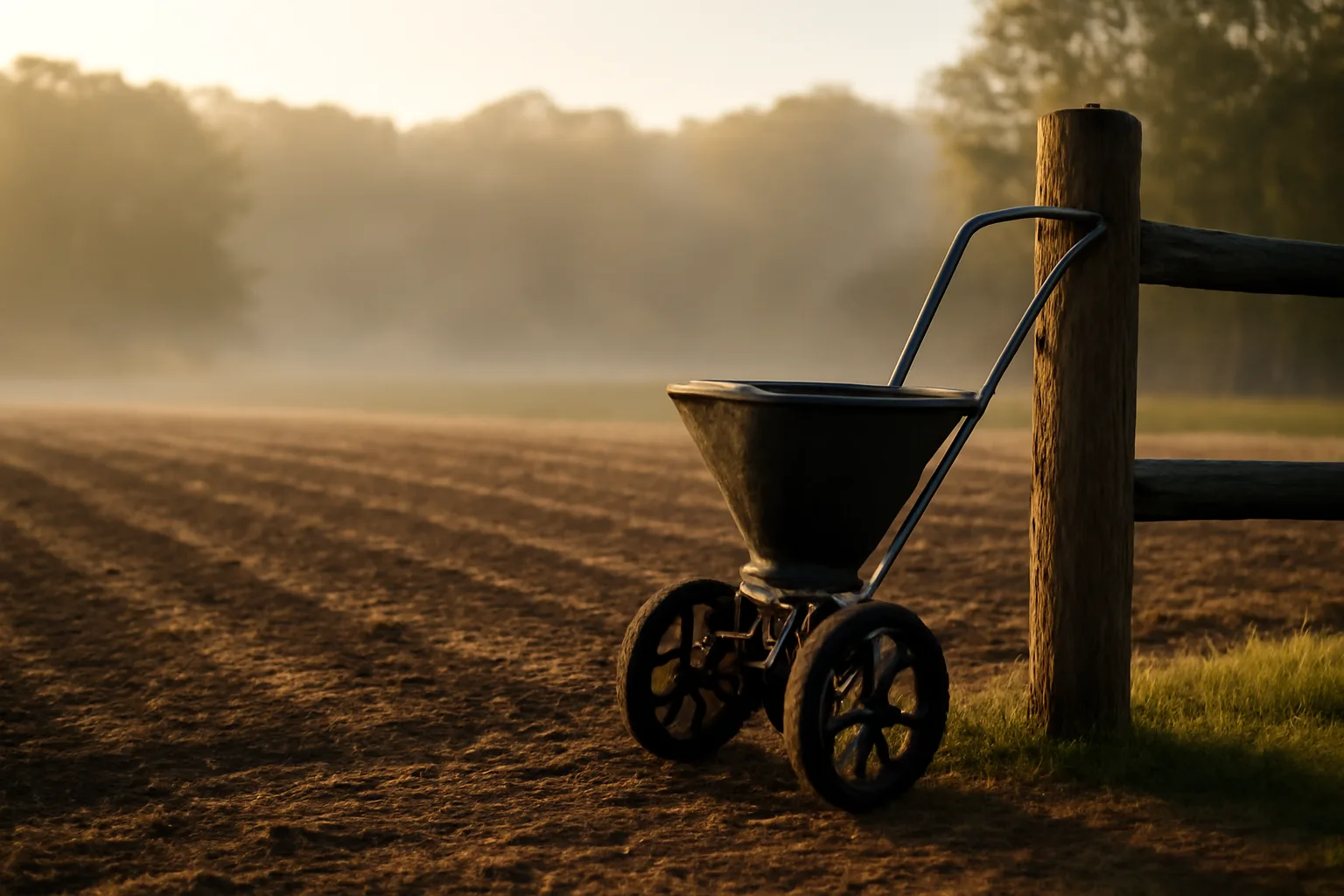
TL;DR
Crush Fixin' is a branded clover-based food plot blend sold under the Anilogics line, typically combining perennial or annual clover with a companion species like a brassica or cereal grain for quick cover and fall attraction. Plant clover-based blends in early spring (March to May) or late summer (August to September) depending on your zone, following a soil test for lime and fertility.
What is Anilogics Crush Fixin' clover food plot seed?
Crush Fixin' is a packaged food plot seed blend sold under the Anilogics brand, built around clover as the primary component. Like most branded "blend" products in this category, it pairs clover (usually a mix of white clover types, sometimes red clover) with one or more companion species meant to speed up germination, add tonnage, or extend attraction into fall. Exact seed tags vary by bag and by year, so the only way to know precisely what's in your bag is to read the tag on the bag you bought, which is required by law in most states under seed labeling statutes enforced by state departments of agriculture. That matters more than marketing copy. Seed blends get reformulated season to season based on availability and cost, and the ratio of clover to companion crop changes what the plot does. A blend that's 70% clover and 30% brassica behaves very differently in October than one that's mostly annual clover with a cereal grain nurse crop. If you can't find a current ingredient breakdown on the bag or the retailer's product page, call before you buy a pallet of it. For general reference on what's actually in a food plot seed bag and how to read a seed tag, see food plot seed.
Do deer like clover, and is it worth planting?
Yes. Clover is one of the most consistently preferred forages in whitetail diet studies, and it's also one of the easiest plantings for a new plot owner to get right. Multiple state extension and wildlife agency publications list clover among the top perennial food plot choices because of its palatability, protein content, and regrowth after grazing. White clover (Trifolium repens) and red clover (Trifolium pratense) are the two most common types in food plot mixes. White clover, especially improved varieties like ladino, tends to hold up better under heavy deer pressure because it grows low and spreads by stolons, regenerating quickly. Red clover grows taller and can produce more tonnage per acre, but it doesn't recover from grazing pressure quite as fast and tends to be shorter-lived (2 to 3 years versus 3 to 5+ years for a well-maintained white clover stand). Clover forage typically runs 20-25% crude protein when actively growing, which is well above what most native browse offers during spring and summer. That's a big part of why it gets hammered on small plots. If you're planting less than an acre of clover surrounded by heavy deer density, don't be surprised if it gets grazed down hard and never gets the chance to bloom or reseed. That's a plot size problem, not a seed problem. For a broader look at clover and other species options, see deer food plot seed.
When to plant clover food plots (by region)
Clover is planted in one of two windows: early spring, once soil temps warm and frost risk drops, or late summer into early fall, timed to give roots 6 to 8 weeks before a hard freeze. Which window you use depends on your zone and your rainfall pattern. Southern and mid-South zones (roughly USDA zones 7-9): late August through October works well because summer heat breaks and fall rains are usually reliable. Spring planting (March-April) is the other option if you'd rather establish before summer heat. Transition and upper Midwest zones (zones 5-6): late March through May for spring seeding, or mid-August through early September for late-summer seeding. You need those 6-8 weeks of root establishment before ground freeze, so don't push a late-summer clover planting much past early September in colder zones. Northern zones (zone 4 and colder): spring planting (April-May) is generally the safer bet since a compressed fall window leaves little margin for error. If you go late summer, aim for early-to-mid August at the latest. Clover seed is small and needs to be planted shallow, generally 1/4 inch deep or less, often just broadcast onto a firm, well-prepared seedbed and lightly cultipacked. Too deep and it won't emerge at all. Most clover plantings also benefit from an inoculant if the bag doesn't already come pre-inoculated, since clover is a legume and fixes nitrogen through a rhizobium bacteria relationship in the soil.
When to plant food plots for deer overall (more than clover)
Food plot timing splits into two broad categories: spring plots (usually warm-season annuals and perennials like clover, chicory, soybeans) and fall plots (brassicas, cereal grains, annual clover blends meant for hunting season attraction). The right calendar depends entirely on your zone and what you're trying to accomplish. Spring plantings generally go in after your last frost date, which varies enormously by latitude and elevation. Fall plantings are timed backward from your first expected hard frost, since brassicas need a frost or two to sweeten up and cereal grains need enough fall growth to be attractive before hunting season opens. A soil test is the real starting point, not the calendar. The USDA and land-grant extension services consistently recommend testing soil pH and nutrient levels before planting, since lime takes months to fully react in the soil and correct fertility up front prevents wasted seed. Purdue University Extension notes that "lime should be applied several months before planting when possible to allow time to react with the soil," which is a big reason fall soil sampling for a spring plot (or vice versa) beats waiting until planting week [1]. For a state-specific and zone-specific breakdown of what to plant when, a soil test in hand and a general plan built for your region beats a one-size calendar. That's the exact gap a $99 Custom Food Plot Plan from PlotSeason is built to fill: you enter your zone, your soil test results, and your goals, and get back a specific planting plan rather than a generic calendar. Check it out at /plot-plan-builder.
When to plant oats for deer
Oats are a fall annual grain, planted 6 to 10 weeks before your first expected hard frost so they get enough growth to be attractive during hunting season. In most of the whitetail range that lands somewhere between late August and mid-September, though far southern zones can push into October. Oats germinate fast and put on green forage quickly, which is why they're a common component in fall blends alongside brassicas and cereal rye. Deer generally prefer oats over wheat and rye early in the season while the oats are still tender, though oats are less cold-hardy and tend to die back sooner once hard freezes set in, whereas winter wheat and cereal rye keep growing later into winter. Oats can also be planted in spring as a quick cover crop or nurse crop for clover establishment, but as a straight deer attractant most hunters plant them for fall. Seeding rate for oats alone typically runs 2-3 bushels per acre (roughly 64-96 lbs), broadcast or drilled at about 1-2 inches deep, per standard land-grant agronomy guidance for small grain forages [2].
When to plant turnips for deer
Turnips, like other brassicas, go in the ground roughly 80-100 days before your first hard frost, since they need a full growing season plus a frost event or two to convert starches to sugars and become genuinely attractive to deer. In most of the whitetail range that means planting in late July through August. Deer often ignore brassica tops and bulbs early in fall and hit them hard after the first frost, sometimes not until November or December depending on your latitude. That delayed-attraction pattern trips up a lot of first-time brassica planters who see an untouched plot in October and assume they wasted their money. Give it time; the sugar conversion after frost is well documented in extension brassica forage guidance and is the main reason brassica plots often peak in attraction during late season rather than opening week. Turnip seed is tiny, similar to clover, and should be planted no deeper than 1/2 inch, ideally broadcast onto a firm bed and lightly rolled or cultipacked. Straight turnip seeding rates run about 4-6 lbs per acre; most hunters plant turnips as part of a brassica blend rather than a monoculture. For more on brassica and other cool-season plot options paired against clover, see deer food plots.
Do deer eat sorghum?
Yes, deer will eat sorghum, particularly the grain heads once they mature, but it's not a top-tier deer forage and it's more commonly planted as a cover/screening crop or as part of a dove and upland game bird planting than as a dedicated deer attractant. Grain sorghum and forage sorghum both get browsed, especially by deer and turkey once seed heads form, but deer preference studies consistently rank clover, soybeans, and brassicas well above sorghum for pure attraction. Where sorghum earns its place on deer ground is as a screening or edge planting. It grows tall (often 4-7 feet for grain types, taller for forage types) and can be used to block sightlines into a plot or create a travel corridor edge, which has real value on leased ground with road access or neighboring pressure. Some hunters also leave standing sorghum specifically as a late-season food source when other plots are picked clean, since the grain persists on the stalk into winter. If your main goal is deer nutrition and attraction, sorghum shouldn't be your primary species. If you want cover plus a secondary food source, it has a role.
What is a food plot, exactly?
A food plot is a planted area, usually a fraction of an acre up to several acres, established specifically to provide forage for deer or other wildlife, either to supplement natural nutrition, concentrate deer activity for hunting, or both. Food plots are distinct from agricultural crop fields in intent (even though the plants themselves, like soybeans or corn, are often the same), and they're distinct from bait piles or feeders, which are regulated very differently. A planted, standing food plot is legal to hunt over in nearly every U.S. state, while baiting (piling loose grain, minerals, or feed) is restricted or banned in many states. Rules vary significantly, so check your state wildlife agency's current regulations before assuming a practice is legal; for example, Pennsylvania's Game Commission prohibits feeding big game year-round in most circumstances outside of certain planted crop exceptions, and other states like Michigan have had baiting bans tied to chronic wasting disease management zones [3] [4]. Standing food plots are generally treated differently from bait under most state definitions because the food is grown in place rather than placed there, but the legal line varies by state, so don't assume. Functionally, food plots serve two overlapping goals: nutrition (helping does through lactation, helping bucks build antler mass and body condition, helping the herd through winter stress) and hunting strategy (drawing deer into range, creating predictable movement patterns near a stand). Most serious plot programs run a mix of both, often with larger "destination" plots for nutrition and smaller "kill plots" tucked near stand locations. For a broader overview, see food plot whitetail and deer for food.
What are deer's favorite foods?
There's no single universal answer because deer preference shifts by season, region, and what's locally available, but across food plot research and deer diet studies, a handful of species consistently rank at the top: soybeans and clover during the growing season, acorns (especially white oak acorns) in fall wherever they're available, and brassicas plus cereal grains in late fall and winter once other food sources are gone. Acorns deserve special mention. Multiple state wildlife agency and university studies show deer will prioritize acorns, particularly white oak acorns, over almost any planted food plot species when a good mast crop is on the ground, because acorns are calorie-dense and require little energy expenditure to eat. That's why plot activity can go dead in years with a strong acorn drop, and it's a normal pattern, not a sign your plot failed. Within planted food plot species specifically, soybeans and clover are usually the top two choices ranked by consumption studies and grower reports, with brassicas, cereal grains (oats, wheat, rye), and chicory rounding out a typical top tier. For a full comparison across common plot species, see domain food plot seed.
Do deer like honey?
There's no credible wildlife research showing deer specifically seek out honey, and it's not part of any standard food plot or attractant recommendation from state agencies or university extension programs. Deer are herbivores with a rumen adapted to plant fiber, forbs, browse, and mast; nothing in their natural diet resembles honey, and there's no established biological reason they'd be drawn to it the way they are to salt, sugar-converted brassicas, or high-protein legumes. Some commercial deer attractant products use sugar-based or molasses-based scent formulas, and it's plausible deer investigate strong sweet smells out of curiosity the same way they investigate any novel scent. But that's a different claim than "deer like honey" as a dietary preference, and no state wildlife agency or extension publication lists honey as a forage or attractant recommendation. If you're looking for something with actual research behind it, clover, soybeans, and mineral/salt supplementation (where legal) have real data. Honey doesn't.
Soil prep basics for clover-based blends like Crush Fixin'
Clover is unforgiving about soil pH in a way a lot of other plot species aren't. Most extension guidance puts optimal clover pH at 6.0 to 7.0, and below about 6.0 the rhizobium bacteria that fix nitrogen for the clover plant start losing efficiency, which tanks both growth and protein content even if the clover germinates fine [5]. If your soil test comes back at 5.5 or below, get lime down before you plant, not after, since agricultural lime typically needs several months of soil contact to fully neutralize acidity. Beyond pH, clover generally wants decent phosphorus and potassium levels but doesn't need heavy nitrogen fertilization once established, since it's fixing its own nitrogen from the atmosphere through that rhizobium relationship (assuming the seed was inoculated or the soil already has the right bacteria present from prior legume plantings). A soil test through your state land-grant university's extension soil lab is the only reliable way to know your actual numbers; guessing on lime and fertilizer is one of the most common ways plot budgets get wasted. Seedbed prep matters as much as fertility. Clover and turnip seed are both small and need a firm, fine seedbed with good seed-to-soil contact, not a loose, cloddy field. Many growers disc, let the ground settle for a week or two, then broadcast and cultipack (or drag) to firm the seed in. Planting too deep is the single most common clover establishment failure.
How Crush Fixin' compares to a straight clover planting
| Establishment speed | Slower alone, no nurse crop | Often faster if companion species germinates quick | |
|---|---|---|---|
| Longevity | 3-5+ years with maintenance (white clover) | Depends on companion; annual components die back seasonally | |
| Fall attraction | Good but not frost-triggered | Better if blend includes brassica or grain for late-season pull | |
| Cost per acre | Lower, single seed type | Usually higher, multiple seed types in one bag | |
| Maintenance | Mowing, occasional herbicide, reseed as needed | Depends heavily on blend ratio; some components need annual reseeding | |
| Flexibility | You control species mix exactly | You're locked into whatever ratio the bag ships with | The blend approach makes sense if you want one bag, one pass, and reasonable results without designing your own mix. The straight clover approach makes sense if you're managing a perennial plot for multiple years and want full control over species ratio, reseeding, and herbicide compatibility (since some brassica-safe herbicides aren't clover-safe, and vice versa). |
Because Crush Fixin' is a branded blend rather than a single species, the honest comparison isn't clover versus Crush Fixin', it's blend versus monoculture. Here's roughly how that tradeoff shakes out for most plot owners. | Factor | Straight clover planting | Clover-based blend (like Crush Fixin') |
Frequently asked questions
Do deer eat sorghum?
Yes, but it's a secondary food source, not a top attractant. Deer browse sorghum grain heads once mature, and it's more often planted for cover, screening, or as a bonus late-season food when standing grain remains. Clover, soybeans, and brassicas all outrank sorghum in deer preference studies and grower reports.
Do deer eat clover?
Yes, and heavily. Clover is one of the most preferred food plot species in the whitetail's diet, running 20-25% crude protein when actively growing. White clover tolerates grazing pressure better than red clover because it spreads by stolons and regrows quickly after being browsed down.
When should I plant deer food plots?
It depends on species and zone. Spring plantings (clover, soybeans, chicory) go in after your last frost, roughly March-May depending on latitude. Fall plantings (brassicas, oats, cereal grains) are timed backward from your first hard frost, generally late July through September. A soil test should come first regardless of season.
Do deer like clover more than other plot species?
Clover consistently ranks among the top preferred food plot species alongside soybeans, and it beats most brassicas and cereal grains during the growing season. That said, deer preference shifts seasonally; brassicas can outpull clover after a hard frost converts their starches to sugar, and acorns often outpull everything during a strong mast year.
When should I plant oats for deer?
Plant oats 6 to 10 weeks before your first expected hard frost, generally late August through mid-September in most of the whitetail range, later in far southern zones. Oats germinate fast and are usually planted alongside brassicas or cereal rye in a fall blend rather than alone.
When should I plant turnips for deer?
Turnips need roughly 80-100 days before your first hard frost, so most of the whitetail range plants them in late July through August. Deer often don't hit turnip tops and bulbs hard until after a frost or two converts the plant's starches to sugar, which can mean late November or December attraction.
What exactly is in the Anilogics Crush Fixin' clover blend?
The exact ratio varies by production run, since seed blends get reformulated based on availability and cost. It's a clover-based blend, typically clover paired with a companion species like a brassica or cereal grain. Always read the current seed tag on your specific bag for the accurate species and percentage breakdown, as required by state seed labeling law.
What is a food plot?
A food plot is a planted area established specifically to feed deer or other wildlife, either for herd nutrition, hunting strategy, or both. Unlike bait piles, which many states restrict or ban, standing planted food plots are legal to hunt over in nearly all U.S. states, though rules vary by state, so always check your wildlife agency's current regulations.
What are deer's favorite foods?
It varies by season and region, but soybeans, clover, and white oak acorns consistently rank at the top across diet studies. Acorns often get prioritized over any planted food plot species during a strong mast fall since they're calorie-dense and require little foraging effort. Brassicas and cereal grains take over as top preference once winter sets in.
Do deer like honey?
There's no credible research showing deer seek out honey specifically. Deer are herbivores adapted to browse, forbs, and mast, and no state wildlife agency or university extension program lists honey as a forage or attractant recommendation. Some sugar-based commercial scent attractants exist, but that's a different claim from a genuine dietary preference for honey.
Can I plant clover and brassicas in the same plot?
Yes, many blends do exactly this, and it can work well since clover provides spring and summer forage while brassicas kick in after frost. The tradeoff is herbicide flexibility; some brassica-safe herbicides will kill clover and vice versa, so plan your weed control before you plant a mixed stand.
How do I know the right pH for a clover food plot?
Most extension guidance targets a soil pH of 6.0 to 7.0 for clover. Below roughly 6.0, the nitrogen-fixing rhizobium bacteria on clover roots lose efficiency, which hurts growth and protein content even if the clover germinates. A soil test through your state land-grant extension lab will give you an exact lime recommendation.
Sources
- Purdue University Extension, Managing Soil pH for Crop Production: Lime should be applied several months before planting to allow time to react with the soil
- University of Kentucky Cooperative Extension, Small Grain Variety Performance Test: Standard oat/small grain seeding rates and depth guidance for forage plantings
- Pennsylvania Game Commission, Feeding of Big Game regulations: Pennsylvania restricts feeding of big game year-round outside specific exceptions
- Michigan Department of Natural Resources, Baiting and Feeding Regulations: Michigan has baiting restrictions tied to chronic wasting disease management
- University of Missouri Extension, Growing Clover in Missouri: Optimal soil pH range for clover establishment and nitrogen fixation efficiency
- Mississippi State University Extension, Establishing Wildlife Food Plots: Clover and soybeans rank among top preferred deer food plot forage species
- USDA Natural Resources Conservation Service, Wildlife Habitat Management: Food plots supplement native wildlife nutrition as part of broader habitat management