Last updated 2026-07-25
TL;DR
Yes. Food plots are legal in Pennsylvania on private land and on many public tracts, and they are not covered by the state's baiting and feeding ban because standing or growing crops planted and left in place don't count as bait under Pennsylvania Game Commission rules. Public land food plots (state game lands) are managed by the Game Commission itself, not private planting.
Are food plots legal in Pennsylvania?
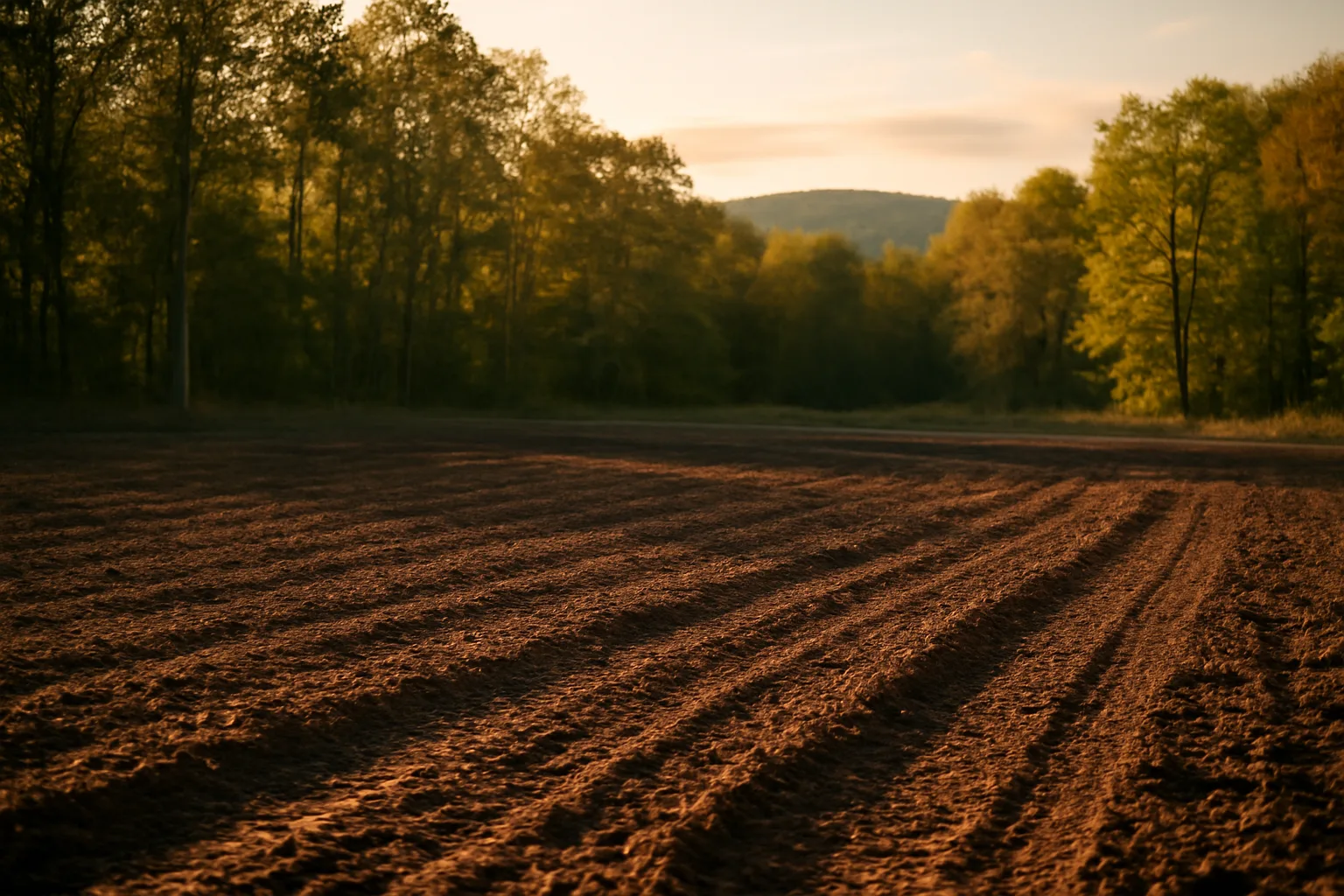
Yes. Pennsylvania law does not restrict landowners from planting food plots on private property. There's no permit required to till a field, plant clover, brassicas, corn, or a cereal grain blend, and let deer feed on it standing in place. The confusion usually comes from Pennsylvania's baiting and feeding ban, which is real and carries actual teeth, but it targets a different activity: dumping or scattering feed to attract deer, not growing a crop. The Pennsylvania Game Commission's baiting regulation (58 Pa. Code Section 141.11) defines bait as food placed or scattered to attract game, and it explicitly excludes "food resulting from normal agricultural planting, harvesting or post-harvest manipulation" [1]. A food plot, planted with a drill or broadcast spreader and left to grow, falls squarely into that agricultural exclusion. Pull corn out of a bag and pour it in a pile, though, and you're baiting, which is illegal statewide. So the legal line isn't about food plots at all. It's about the method: standing crop versus placed feed. Keep that distinction straight and you're on solid ground anywhere in the state. If you want a structured plan before you break ground, a food plot whitetail guide is a good starting point for matching species to your acreage and soil.
What counts as baiting versus a legal food plot in PA?
Baiting means placing, exposing, depositing, distributing, or scattering food to attract deer or other game, and Pennsylvania has banned it statewide since 2019 for all game species, largely as a Chronic Wasting Disease control measure [2]. That covers corn piles, mineral blocks poured on the ground, gravity feeders, and spin-cast feeders. A food plot is different because nothing is placed for immediate attraction. You're growing a crop the same way a farmer grows soybeans, just at smaller scale and with deer as the intended beneficiary. The Game Commission's own guidance says agricultural crops planted and left standing, or crop residue left after normal harvest, are not bait [1]. Here's the practical test wardens use: is the food attached to the ground and growing (or was it grown there and left as residue), or was it moved and dumped? Standing clover, a strip of unharvested corn, or turnips left in the dirt after a normal harvest all pass. A 50-pound bag of corn poured next to a stand does not. Mineral licks deserve a specific mention because hunters ask about them constantly. Pennsylvania's baiting rule applies to minerals too. Salt blocks and mineral mixes placed to attract deer are baiting under the same regulation, so a poured mineral site is treated the same as a corn pile, not the same as a food plot [1] [2].
Do I need a permit to plant a food plot in Pennsylvania?
No permit is required to plant a food plot on private land in Pennsylvania. You don't need to notify the Game Commission, register the plot, or get sign-off from anyone. It's your land and your crop. The picture changes on leased or public ground. If you hunt a lease, check the lease agreement, because some landowners and hunting clubs restrict plot size, species, or chemical use in the contract itself, separate from any state law. If you hunt state game lands, food plots there are planted and managed by the Game Commission as part of its habitat program, not by individual hunters or lessees; private planting on state game lands is not permitted [3]. County parks, state forests, and other public tracts each have their own rules set by the managing agency (DCNR for state forests, county parks departments for county land), so check with that specific agency before assuming you can plant there. There's no statewide "public land food plot" pass.
What is a food plot, exactly?
A food plot is a planted patch of forage, usually somewhere between a quarter acre and several acres, put in specifically to feed and hold deer or other wildlife on a property. It's not a garden and it's not a crop meant for sale; the entire point is deer nutrition and hunting opportunity. Most plots fall into one of two buckets. Annual plots get replanted every year or two: brassicas, oats, cereal rye, soybeans, and corn are common annual choices. Perennial plots, mostly clover and chicory blends, get established once and then mowed and fertilized for three to five years before they need a full reseed. A basic plot needs four things: reasonably drained soil, at least four to six hours of sun for most species, a soil test to guide lime and fertilizer, and equipment to work the ground (even if that's just a hand seeder and a rake on a small plot). For a rundown of the actual seed choices by region and goal, see deer food plot seed or the broader deer food plots overview.
When should you plant food plots for deer in Pennsylvania?
| Clover/chicory (perennial) | Late April to late May | Needs warm soil, slow establishment |
|---|---|---|
| Soybeans/corn (summer annual) | Mid-May to early June | Frost-sensitive, needs full season |
| Brassicas (turnips, radish) | Mid-July to mid-August | Needs 60-90 days before hard frost |
| Oats/cereal rye (fall annual) | Mid-August to mid-September | Fast establishment, frost-tolerant |
Timing splits into two windows: spring plantings for summer-long perennials and warm-season annuals, and late-summer plantings for fall annuals that peak during hunting season. Spring plot windows in Pennsylvania run roughly late April through May once soil temperatures warm and frost risk drops. This is when you'd put in clover, chicory, and warm-season annuals like soybeans or corn. Fall plot windows run late July through early September, depending on elevation and the specific crop. Brassicas want more lead time (mid to late July through early August) because turnips and radishes need roughly 60 to 90 days to bulb and mature before a hard frost sweetens them up. Cereal grains like oats and winter rye can go in later, from mid-August into September, since they establish fast and tolerate cooler soil. Pennsylvania spans a real climate gradient, from the milder southeast corner to the higher, colder ridges of the north-central region, so first frost dates vary by three to four weeks across the state. A plot timed for the Poconos should go in noticeably earlier than one in the Philadelphia suburbs. Check with your county extension office for local frost date averages if you're not sure where your property falls on that gradient. | Crop | Best PA planting window | Why |
When to plant oats for deer in PA
Plant oats for a fall Pennsylvania plot between mid-August and mid-September, aiming to get seed in the ground at least 45 to 60 days before your area's first hard frost. Oats germinate fast, usually within a week in warm, moist soil, and they hit peak palatability in the six or so weeks after emergence, which is exactly when early archery season opens. Oats are cold-tolerant but not indestructible. A hard freeze in the low 20s will eventually kill the plant back, though deer will keep hitting the wilted, sugar-concentrated leaves for a while after that first frost. In Pennsylvania's colder counties, oats planted in early September often get hunted hard through October and then fade by December. In the milder southeast, oats can hang on into early winter. Drill oats at roughly 2-3 bushels per acre (about 64-96 lbs/acre) if broadcasting, and cut that rate somewhat if you're drilling for better seed-to-soil contact.
When to plant turnips for deer in PA
Plant turnips for deer in Pennsylvania between mid-July and mid-August, giving the crop 60 to 90 days to mature before your first hard frost. Turnips planted too late in PA's shorter-season northern tier won't bulb out before winter shuts growth down. Turnips are a slow-burn food source. Deer often ignore the leafy tops in early fall when acorns and browse are still abundant, then hit the plot hard in November and December once a few frosts convert the plant's starches to sugars and other food sources thin out. That's by design, not a failure of the plot. If you're hunting early bow season and expecting deer on turnips in September, you'll likely be disappointed; this is a late-season plot. Seed turnips at about 4-6 lbs per acre broadcast, mixed with a nurse crop like oats or cereal rye for better ground cover and erosion control.
Do deer eat clover, and do they actually like it?
Yes, deer eat clover readily, and it's one of the most consistently preferred forages in whitetail research. Clover is a high-protein legume, often testing in the 25-30% crude protein range in good growing conditions, and it stays palatable through most of the growing season because it regrows quickly after grazing. Deer like clover because it's easy to digest, high in protein for antler and body growth, and available for months at a stretch rather than a single narrow window. White clover and red clover blends are standard in food plot mixes nationwide, and Pennsylvania's climate suits both well. Clover does need decent soil pH, generally in the 6.0-6.5 range for good legume growth, and won't perform on acidic, unlimed ground, which is exactly why a soil test matters before planting. The tradeoff with clover is establishment time and shade tolerance. It's a perennial that needs a full season to get rooted well, and it struggles in heavy shade or standing water. Once it's established, though, a clover plot can produce for three to five years with just mowing, spot-spraying, and an annual fertilizer top-off based on soil test results.
Do deer eat sorghum, and does it make a good plot crop?
Yes, deer eat sorghum, particularly the grain heads once they mature, and standing sorghum also works as cover and a late-season food source in colder climates. It's less common as a dedicated Pennsylvania food plot crop than corn or soybeans, mostly because corn generally outproduces it in the Northeast's growing conditions and gets more attention in extension variety trials. Where sorghum earns a place in a plot is as a cover crop or a mixed planting with something like soybeans, giving deer both grain and standing structure into winter. Grain sorghum is also more drought-tolerant than corn, which can matter on thin, sandy plots or in a dry summer. If you're set on a grain plot and corn feels overkill for your acreage, sorghum is worth trying on a smaller test strip before committing bigger ground to it. One caution: sorghum and related plants (including some sudangrass hybrids) can produce toxic levels of prussic acid (cyanide) under stress conditions like frost damage or drought. This is a well-documented risk in forage management for livestock, where young, drought-stressed, or frost-damaged sorghum-family plants can accumulate dangerous cyanogenic compounds. It's mostly a livestock grazing concern rather than a documented deer food plot problem, but it's worth knowing if you're mixing species and want to be cautious.
What are deer's favorite foods overall?
Deer preference shifts by season, but research and long-term food plot data point to a consistent short list: acorns, soybeans, clover, and standing corn rank at or near the top almost everywhere whitetail have been studied. Acorns are especially important in the fall; they're calorie-dense and deer will often bypass a planted plot entirely during a heavy acorn drop. Among planted crops, soybeans are a standout in summer for their high protein content, and clover holds that role through spring and much of summer. In fall and winter, brassicas (turnips, radish) and cereal grains (oats, wheat, rye) take over as the preferred late-season foods, partly because they're some of the only green, digestible forage left once frost hits everything else. Deer are also opportunistic browsers of natural vegetation, agricultural crops, and mast, so "favorite food" really depends on what's available, what's timed to that plot's typical hunting window, and what stage of growth the plant is in. A well-designed plot plan usually mixes a summer legume, a fall brassica, and a cereal grain rather than betting on one crop to carry the whole season. That's the logic behind a food plot seed blend approach versus planting a single species.
Do deer like honey, and does that matter for food plots?
There's no real evidence that deer specifically seek out honey, and it's not a practical food plot input in any sense; you can't plant honey, and it's not part of standard whitetail nutrition research. This question usually comes up because of "honey hole" terminology or products marketed with honey scent as an attractant, which is a different category entirely from a growing food plot crop. If you're thinking about attractant sprays or scent products with honey or sugar as an additive, remember Pennsylvania's baiting rules again: placing any food-based attractant to draw deer, including sprayed or poured sweeteners, can cross into baiting territory depending on how it's used [1] [2]. Standing food plot crops remain the legal, unambiguous path. Don't substitute a bottled attractant for actual planted forage if you're trying to stay clearly inside the agricultural exclusion.
How does PA's food plot law compare to neighboring states?
| Pennsylvania | Yes, private and some public | No, statewide ban since 2019 [2] | |
|---|---|---|---|
| New York | Yes | Feeding banned in most of the state due to CWD/EHD concerns; check current DEC guidance | |
| Ohio | Yes | Baiting legal in many areas, but check current ODNR rules | |
| Maryland | Yes | Baiting restricted in CWD-affected counties | |
| West Virginia | Yes | Feeding banned statewide for deer | This table is a general snapshot, not a legal guarantee; every one of these states updates baiting and feeding rules periodically, often in response to Chronic Wasting Disease detections. If you hunt across state lines or near a border, check the current regulation for each state you hunt rather than assuming PA's rule travels with you. |
Pennsylvania's approach (standing crops are legal, placed feed is not) is common but not universal across the region. Some neighboring states draw the line differently or add extra restrictions. | State | Food plots legal? | Baiting/feeding allowed? |
Where can you get help planning a legal, effective PA food plot?
Start with a soil test. Penn State Extension's Agricultural Analytical Services Laboratory and most county extension offices offer soil testing for a modest fee, and the results tell you exactly how much lime and fertilizer your specific plot needs, which matters more to plot success than seed choice . Your soil test lab is the real authority on your dirt; treat any general planting guide, including this one, as a starting framework rather than a substitute for your actual results. From there, match species to your region's frost dates, your soil drainage, and how much sun the plot gets. If you want a structured, one-time plan pulling those pieces together for your specific property (species picks, seeding rates, and a fall/spring calendar), a $99 Custom Food Plot Plan is built around exactly that kind of input; you can start one at /plot-plan-builder. It's general planning guidance based on what you tell us about your ground, not site-specific agronomy advice, and it doesn't replace your soil test lab's lime and fertilizer recommendations. For seed selection across annual and perennial options suited to Pennsylvania's growing zones, deer food plot seed and domain food plot seed both cover species-by-species breakdowns worth reading before you order seed.
Frequently asked questions
Are food plots legal in Pennsylvania?
Yes. Food plots are legal on private land in Pennsylvania and don't require a permit. They're not covered by the state's baiting and feeding ban because standing, growing crops planted through normal agriculture are specifically excluded from the definition of bait under 58 Pa. Code Section 141.11.
Is it illegal to bait deer in PA?
Yes, baiting deer is illegal statewide in Pennsylvania. The Game Commission's rule bans placing, scattering, or distributing food to attract game, a policy adopted largely to slow Chronic Wasting Disease spread. This applies to corn piles, mineral blocks, and feeders; it does not apply to standing food plot crops.
Do I need a permit for a food plot on my own land in PA?
No. Pennsylvania doesn't require a permit, registration, or Game Commission approval to plant a food plot on private property. Leased land may carry restrictions written into the lease itself, and public land like state game lands has its own separate rules where private planting generally isn't allowed.
What is a food plot?
A food plot is a planted area, usually a quarter acre to several acres, grown specifically to feed deer or other wildlife and improve hunting opportunity. Common plantings include clover and chicory for perennial plots, and brassicas, oats, soybeans, or corn for annual plots timed to specific hunting windows.
When should you plant food plots for deer?
Spring plots (clover, chicory, soybeans, corn) generally go in late April through early June once soil warms. Fall plots split further: brassicas need mid-July to mid-August for 60-90 days of growth before frost, while oats and cereal rye can wait until mid-August through September since they establish faster.
When should you plant oats for deer in Pennsylvania?
Plant oats between mid-August and mid-September, roughly 45-60 days before your area's first hard frost. Oats germinate quickly and stay palatable for about six weeks after emergence, which lines them up well with early bow season in most of Pennsylvania.
When should you plant turnips for deer?
Plant turnips 60 to 90 days before your first expected hard frost, which in most of Pennsylvania means mid-July through mid-August. Turnips are a late-season food; deer usually ignore the tops early on and hit the plot hardest in November and December after frost sweetens the plant.
Do deer eat clover, and do they prefer it over other forages?
Yes, deer readily eat clover, and it's consistently one of the most preferred food plot forages because of its high protein content (often 25-30% crude protein) and long growing window. It requires decent soil pH, generally 6.0-6.5, so a soil test before planting matters.
Do deer eat sorghum?
Yes, deer eat sorghum, especially the grain heads once mature, and it also provides winter cover. It's less commonly planted than corn in Pennsylvania food plots but works as a drought-tolerant alternative or mixed planting. Frost-stressed sorghum can develop prussic acid, a known livestock grazing risk worth knowing about.
What are deer's favorite foods?
Acorns, soybeans, clover, and standing corn consistently rank among whitetail deer's most preferred foods. Preference shifts seasonally: clover and soybeans dominate spring and summer, while brassicas and cereal grains like oats and wheat take over in late fall and winter once other food sources decline.
Do deer like honey?
There's no solid evidence deer specifically seek out honey, and it isn't a practical food plot ingredient since you can't plant it. The question usually comes from attractant products or scent sprays with honey or sugar additives, which are a separate category from planted forage and can raise baiting concerns depending on how they're used.
Can you plant a food plot on Pennsylvania state game lands?
No, not as a private individual. Food plots on Pennsylvania state game lands are planted and managed directly by the Game Commission as part of its habitat program. Private hunters and lessees generally cannot plant their own plots there; check with the regional Game Commission office for specifics on a given tract.
Are mineral licks legal in PA food plots?
No. Placing mineral blocks or mineral mixes to attract deer counts as baiting under Pennsylvania's statewide ban (58 Pa. Code Section 141.11), regardless of whether it's near a food plot. Standing food plot crops are exempt from the baiting rule; poured minerals are not.
Sources
- Pennsylvania Code, Title 58, Section 141.11 (Taking of Game or Wildlife): Definition of bait and the agricultural planting exclusion for standing crops
- Pennsylvania Game Commission, statewide feeding and baiting ban announcement: Pennsylvania's statewide ban on baiting and feeding of deer and other wildlife
- Pennsylvania Game Commission, State Game Lands habitat management overview: Food plots on state game lands are managed by the Game Commission, not private individuals
- Oklahoma State University Extension, PSS-2586 Forage Oats: Standard forage oats seeding rates of roughly 2-3 bushels (64-96 lbs) per acre
- USDA NRCS Plant Guide, White Clover (Trifolium repens L.): Recommended soil pH range of roughly 6.0-6.5 for clover and other legume forages
- Oklahoma State University Extension, PSS-2904 Prussic Acid Poisoning: Frost-stressed sorghum and related species can develop toxic prussic acid levels
- Penn State Agricultural Analytical Services Laboratory, soil testing services: Availability of Penn State soil testing services to guide lime and fertilizer decisions