Last updated 2026-07-25
TL;DR
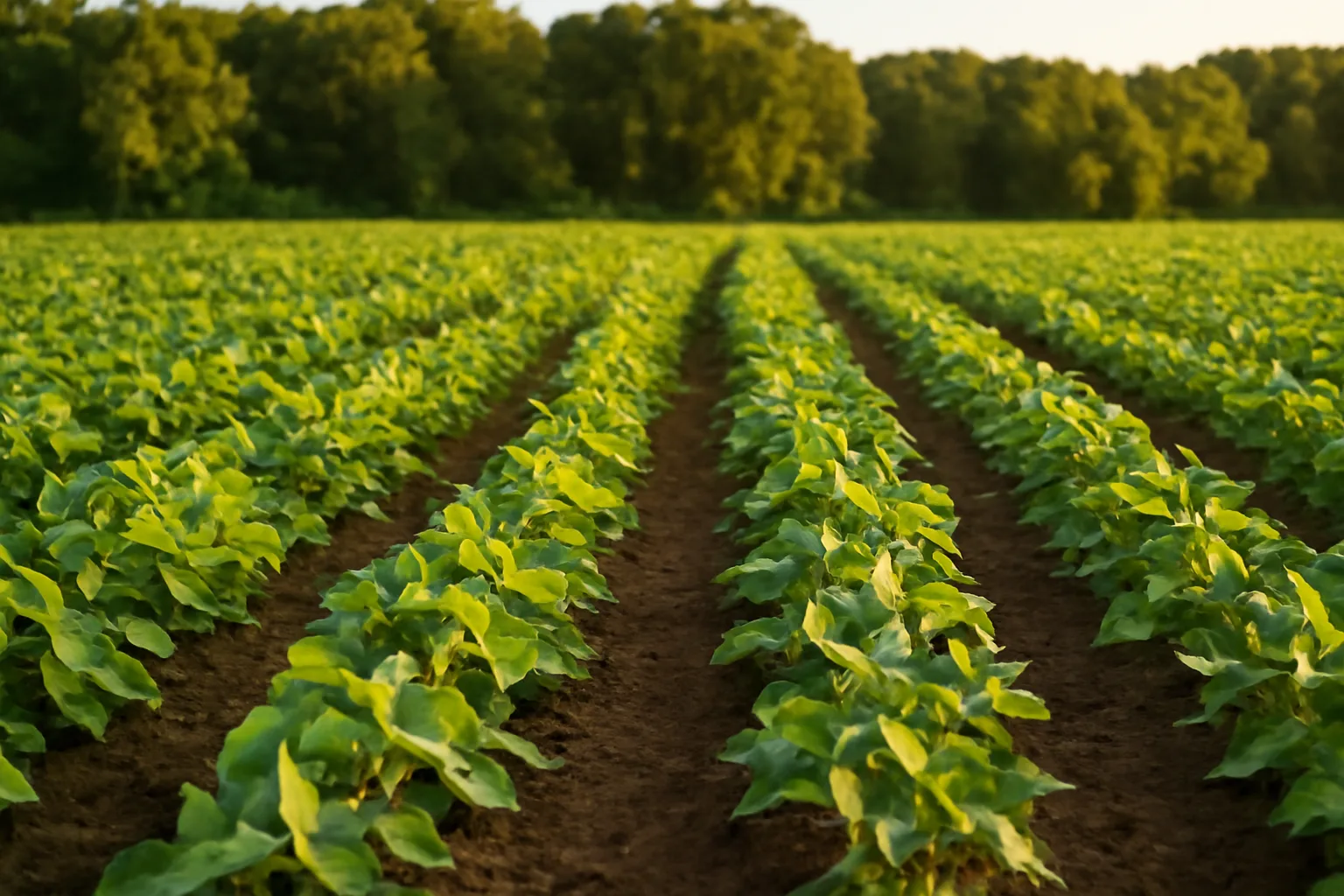
Summer plots should focus on warm-season annuals like soybeans, cowpeas, lablab and grain sorghum, planted after soil temps hit 65 degrees F. These give deer high-protein forage through the antler-growth and lactation months, then can transition into fall cover or standing grain. Clover and oats are cool-season crops, not summer plantings.
What should you plant in summer for deer?
The short answer: warm-season annual legumes and grains, not the clover or brassica mixes people plant in spring or fall. Soybeans, cowpeas, lablab, and grain sorghum are the workhorses for summer plots because they tolerate heat, grow fast, and pump out protein when does are nursing fawns and bucks are building antlers. This is a different planting window than most food plot advice you'll read, which tends to focus on fall attraction plots. Summer plots serve a nutritional purpose more than a hunting purpose. You're not hunting over them in July. You're feeding the herd through the toughest nutritional stretch of the year, late spring through late summer, when natural browse is often lower in protein than deer actually need. Lactating does have measurably higher protein requirements during this window, and bucks are actively growing antler tissue, so the timing isn't arbitrary. Native browse frequently falls short of what deer need during the hottest, driest parts of summer, which is exactly why a well-timed soybean or cowpea plot matters. If you want a plan built around your specific region and soil test, that's the kind of thing a food plot whitetail plan should account for, since planting dates and species choices shift a lot from Alabama to Minnesota.
Do deer eat sorghum?
Yes, deer eat grain sorghum, both the standing plant as browse and the mature grain heads later in the season. Sorghum (milo) is a warm-season annual that's drought-tolerant and often planted as a nurse crop or mixed with soybeans and cowpeas to add structure and cover. Sorghum isn't usually a deer's first choice while it's green and other options are around, but it becomes a solid late-season food source once the heads mature and other food thins out. It also stands up well and holds seed heads through winter weather better than corn does on a lot of ground, which is one reason it shows up in fall and winter blends too. One caution: sorghum can produce dhurrin, a compound that converts to cyanide-like compounds under certain stress conditions such as drought or frost damage. Kansas State University Research and Extension describes this prussic acid poisoning risk in detail for forage sorghum grazed by livestock [1]. This is a livestock grazing concern more than a wild deer concern, but it's worth knowing if you're mixing sorghum into any grazing rotation on the same ground.
Do deer eat clover, and do deer like clover?
Deer eat clover readily and it's one of the most consistently preferred forages in food plot systems, but clover is a cool-season perennial, not a summer planting. Ladino and red clover green up in spring, hold through summer in decent soil with moisture, and come back the following year if managed right. Do deer like clover? Yes, it's near the top of most preference studies and observational data from extension programs across the whitetail's range. Clover is high in protein and highly digestible, which is why it's a staple in spring and fall plot plans. The catch in summer: clover can struggle under drought stress and heavy heat, and it often goes semi-dormant in July and August in the southern half of the whitetail's range. That's part of why hunters pair clover fields with a warm-season annual planting nearby, so there's still quality forage available when clover slows down. If you're deciding between a perennial clover stand and an annual summer blend, that's a call worth making plot by plot rather than assuming one covers the whole year. See deer food plot seed for how blends typically combine both.
When should you plant food plots for deer?
| Deep South (zones 8-9) | mid-March to early May | late Aug to mid-Oct |
|---|---|---|
| Mid-South / Transition (zones 7) | mid-April to late May | late Aug to late Sept |
| Midwest / Upper South (zones 5-6) | mid-May to mid-June | mid-Aug to mid-Sept |
| Northern tier (zones 3-4) | late May to mid-June | early Aug to early Sept |
Timing depends on whether you're planting a cool-season crop (clover, brassicas, oats, wheat) or a warm-season crop (soybeans, cowpeas, sorghum, lablab), and both depend heavily on your region's frost dates and soil temperature. General rule from university extension guidance: warm-season annuals go in after the last frost date and once soil temps are consistently above 60 to 65 degrees F, since seed sits and rots in cold, wet soil instead of germinating [2]. In the Deep South that might be late April. In the Upper Midwest or Northeast it's often late May into early June. Cool-season plantings (your fall clover, brassica, and cereal grain plots) generally go in 60 to 90 days before your average first frost date, timed so the plants establish before growth slows in the cold. That's usually August into September depending on latitude. Here's a simplified regional table for reference. Always check your local extension office or state agency for actual frost date data specific to your county, since these vary by more than a month even within one state. | Region | Warm-season plot window | Cool-season plot window |
When should you plant oats for deer?
Oats are a cool-season crop, planted in late summer to early fall for fall and winter grazing, not a summer planting. Most extension guidance puts oats in the ground 6 to 8 weeks before your first expected frost, which lines up with late August through mid-September across most of the whitetail range. Oats germinate fast and put on a lot of tonnage quickly, which makes them a favorite as a nurse crop mixed with clover or brassicas going into fall. Deer often hit fresh oat plots hard the first few weeks after emergence because the young shoots are tender and high in sugars. Some hunters in the Deep South plant a second oat crop in late winter for a quick spring bite, but that's a shoulder-season play, not a summer strategy. If your goal is specifically a summer food source, oats aren't the tool. Save them for your fall rotation.
When should you plant turnips for deer?
Turnips are planted in late summer, typically 90 to 100 days before your first fall frost, so the bulbs and tops mature right as cold weather hits and deer shift toward high-carb, high-energy foods. Most land-grant extension guidance puts this window from late July through August depending on region. Turnips are a brassica, and brassicas go through a sugar conversion process after a hard frost that makes the leaves and bulbs sweeter and more attractive. That's why turnip plots often get ignored in September and hammered in November and December. It's not that deer dislike turnips early, it's that they don't need the sugar boost until temperatures drop. Don't plant turnips in June or July expecting a summer food source. They'll bolt, get tough, and won't have the maturity timing that makes them work as a late-season draw. If cold-season tonnage is the goal, turnips paired with a cereal grain is a proven combination; see deer food plots for blend ideas.
What is a food plot, exactly?
A food plot is a planted area, usually somewhere between a quarter acre and several acres, established specifically to provide deer (or other wildlife) with a concentrated, higher-quality food source than what naturally occurs on the property. It's a wildlife management tool, not a garden and not a bait pile. Food plots range from small hidden "kill plots" tucked in timber, meant mainly to draw a shot opportunity during hunting season, to large agricultural-style fields planted for herd nutrition across the year. Both approaches are legitimate; they just serve different goals. The legal distinction matters here. In most states, a properly planted and maintained food plot is treated differently under law than baiting or feeding, which usually involves piling loose grain, minerals, or feed on the ground. Baiting and feeding regulations vary significantly by state, and some states restrict or ban feeding outright due to Chronic Wasting Disease concerns, so check your state wildlife agency's current regulations before combining plots with any supplemental feeding. A planted, rooted crop is not the same thing as bait in the eyes of most state agencies, but rules differ, so don't assume.
What are deer's favorite foods overall?
There's no single universal answer since preference shifts by season, region, and what's locally available, but extension research and browse studies consistently show acorns, soybeans, and clover near the top of the list where they're available. Acorns in particular are a preferred fall food because of their fat and carbohydrate content, which helps deer build fat reserves before winter. In a planted food plot context, soybeans and cowpeas tend to top summer preference, clover and cereal grains top fall and spring preference, and brassicas plus standing corn or sorghum top late-season preference when energy needs peak. Preference also depends heavily on what else is available. Deer on ag-heavy ground surrounded by soybean fields may barely touch a small plot planted with the same thing, while deer in solid timber with little agriculture nearby will hit that same plot hard. This is part of why a generic "best food plot seed" answer doesn't really exist without knowing your region, soil, and surrounding land use. See food plot seed for how species selection actually works property by property.
Do deer like honey?
There's no real basis to this claim and it's not something wildlife biologists or extension programs recommend or study as a deer food source. Deer are herbivores built to digest plant fiber through a four-chambered rumen system, not concentrated sugars like honey. This question usually comes up because of confusion with commercial deer attractant products that use sweet scents (some contain sugar, molasses, or apple or persimmon extracts) to draw deer by smell, not because deer seek out honey itself in the wild. Straight honey isn't a natural or recommended deer food, and there's no published wildlife research supporting it as an intentional food plot or attractant ingredient. If you're looking for a genuine sugar and energy draw in late season, standing corn, sorghum, or frost-sweetened brassicas do that job through an actual forage crop, which is a more useful and legal approach than trying to use honey or syrup products, some of which run into state baiting definitions anyway.
What's actually the best summer food plot mix?
| Soybeans (forage type) | after last frost | 25-35% (young growth) | moderate | needs some browse pressure management | |
|---|---|---|---|---|---|
| Cowpeas | after last frost | 20-30% | good | fast establishing, good nurse crop partner | |
| Lablab | after last frost, warm soil | 20-28% | good to very good | tolerates repeated browsing well | |
| Grain sorghum | after last frost | lower, mainly a grain/cover crop | very good | best as nurse crop or late-season grain | One honest caveat: none of these numbers are guarantees. Protein content in forage shifts with soil fertility, plant maturity, and moisture, and the ranges above come from general forage analysis work, not a promise about what your specific plot will test at. That's where a soil test still does more for you than any seed bag label. |
For most of the whitetail's range, a mix of soybeans (or forage soybeans), cowpeas, and a small percentage of grain sorghum as a nurse crop is hard to beat for summer nutrition. This combination handles heat and moderate drought reasonably well, fixes nitrogen in the soil through the legumes, and gives deer high-protein forage through the hardest stretch of summer. Lablab is another strong option, especially in the South, since it tolerates heat and grazing pressure better than standard soybeans in some conditions and keeps producing new growth even under heavy browse. Here's a rough comparison of common summer plot options. | Species | Planting window (soil temp 65°F+) | Crude protein range | Drought tolerance | Notes |
How does soil fertility affect summer plot success?
A soil test is the starting point for any summer plot, full stop. Soybeans, cowpeas, and lablab all perform best in soil with a pH in the 6.0 to 6.8 range, and most legumes will underperform badly in acidic soil below pH 5.5 regardless of how much seed you put down. Your soil test report from your local extension lab is the actual authority here, not a general article like this one. It tells you your specific pH, phosphorus, potassium, and organic matter levels, and gives lime and fertilizer recommendations calibrated to your actual dirt, not a regional average. If you haven't pulled a soil sample in the last 2 to 3 years, that's the first move before buying seed. Legumes like soybeans and cowpeas fix their own nitrogen if properly inoculated, so heavy nitrogen fertilizer usually isn't needed and can actually push excess vegetative growth at the expense of pod and seed production. Phosphorus and potassium, plus lime to correct pH, are usually the bigger levers for legume-heavy summer plots. This is also where a lot of hunters waste money, buying premium seed blends and dumping them into soil that's sitting at pH 5.2 with low phosphorus. The seed genetics rarely fail. The dirt does. If you want help translating a soil test into an actual seed and fertilizer plan for your property, PlotSeason's $99 one-time Custom Food Plot Plan (/plot-plan-builder) walks through species selection and rates based on your soil test numbers and region, though your soil-test lab's specific lime and fertilizer recommendations are still the final word on your ground.
Do you need different equipment for summer plots?
Not dramatically different from spring or fall plots, but a few things matter more in summer. Soybeans and cowpeas need decent seed-to-soil contact and a planting depth around 1 to 1.5 inches, deeper than the light broadcast-and-cultipack approach that works fine for tiny clover or brassica seed. A drill or a disc plus cultipacker setup does better with these larger-seeded legumes than pure broadcasting, especially on ground with any weed pressure, since broadcast seed left on the surface in hot, dry conditions can fail to germinate reliably. If you're broadcasting anyway, dragging or lightly disking after helps get seed covered. Weed control is also a bigger summer issue than in fall plots, since warm-season weeds explode right alongside your beans and peas. A pre-plant burndown with glyphosate on a Roundup Ready bean variety, or a grass-selective herbicide on conventional beans, is common practice. Mowing standing weeds before planting also helps a lot on ground that's been sitting fallow. For more on gear choices across the whole season, deer for food and domain food plot seed cover species-specific planting depth and equipment notes in more detail.
Frequently asked questions
Do deer eat sorghum?
Yes. Deer browse young sorghum plants and eat mature grain heads later in the season. It's more valued as a late-season energy source and cover crop than as a preferred summer forage, and it's often mixed with soybeans or cowpeas rather than planted alone.
Do deer eat clover?
Yes, clover is one of deer's most consistently preferred forages, often testing at 25 to 30 percent crude protein in vegetative growth. It's a cool-season perennial though, so it's planted in spring or fall, not summer, and can go semi-dormant during peak summer heat.
When should you plant food plots for deer?
Warm-season annuals (soybeans, cowpeas, sorghum) go in after last frost once soil hits 60-65°F. Cool-season crops (clover, oats, brassicas) go in 60-100 days before first fall frost. Exact dates shift by over a month depending on your latitude, so check local extension frost data.
Do deer like clover?
Yes, clover ranks near the top of most food plot preference lists and extension forage studies. It's palatable, high protein, and digestible, which is why it's a staple in both spring green-up plots and fall plot rotations across the whitetail's range.
When should you plant oats for deer?
Oats are a cool-season crop planted 6 to 8 weeks before first frost, typically late August through mid-September in most of the whitetail range. They're not a summer planting; they're built for fall and winter grazing, often mixed with clover or brassicas as a nurse crop.
When to plant food plots for deer if I only get one planting a year?
Most hunters prioritize a fall plot since that lines up with hunting season, planted 60-90 days before first frost. If you want summer nutrition too, a second warm-season planting after last frost (soybeans, cowpeas) covers the nutritional gap fall plots miss.
When should you plant turnips for deer?
Turnips go in 90 to 100 days before first fall frost, usually late July through August depending on region. They're timed to mature right as cold weather sweetens the bulbs and leaves through a starch-to-sugar conversion, making them a late-season draw, not a summer one.
What is a food plot?
A food plot is a planted area, from a quarter acre to several acres, established to give deer a concentrated, higher-quality food source than natural browse alone. It's a management tool distinct from baiting, though state rules on baiting versus planted plots vary, so check your state wildlife agency.
What are deer's favorite foods overall?
It varies by season and region, but acorns, soybeans, and clover consistently rank high in extension browse studies. Summer preference tends to run toward soybeans and cowpeas; fall and spring toward clover and cereal grains; late season toward brassicas and standing corn or sorghum.
Do deer like honey?
There's no wildlife research supporting honey as a deer food or attractant. Deer are herbivores adapted to digest plant fiber, not concentrated sugar. Confusion likely comes from commercial attractant scents using sweet extracts, not deer actually seeking out honey in the wild.
What's the best food plot to plant in July?
By July, most warm-season annuals should already be established, since planting soybeans or cowpeas that late risks poor yield before frost in northern and mid-latitude areas. In the Deep South, July planting can still work for a late soybean or cowpea crop given a longer growing season.
Can you plant clover and soybeans together?
Not typically in the same plot, since soybeans grow tall and can shade out low-growing clover, and their planting windows and management (herbicide choices especially) differ. Most hunters run them as separate plots side by side rather than mixed in one planting.
Do summer food plots help antler growth?
Indirectly, yes. Antler growth demands high protein and mineral intake during the summer growth period. A quality summer plot supplements what natural browse may lack, though genetics and age still drive most antler potential.
Sources
- Mississippi State University Extension, "Feeding and Nutrition of White-tailed Deer" (Publication P2632): Lactating does and antler-growing bucks need high dietary protein (roughly 14-20%+) during summer months
- Kansas State University Research and Extension, "Prussic Acid Poisoning" (MF3029): Sorghum species can produce cyanogenic (dhurrin) compounds under drought or frost stress
- Oklahoma State University Extension, "Forage Quality Interpretations" (PSS-2117): Legume forages like clover commonly test in the mid-20s to 30 percent crude protein range in vegetative growth stages
- University of Georgia Extension, "Establishing and Managing Wildlife Food Plots" (Bulletin 1466): Warm-season annual food plots should be planted after soil temperatures reach roughly 60-65°F
- University of Tennessee Extension, "Wildlife Food Plots" (PB1769): Turnips and other brassicas are planted roughly 90-100 days before first fall frost to mature at the right time
- Mississippi State University Extension, "Soil Testing for Wildlife Food Plots" (Publication 2614): Legume food plots perform best at soil pH 6.0-6.8 and underperform significantly below pH 5.5