Last updated 2026-07-26
TL;DR
Plant turnips 60 to 90 days before your area's first killing frost, into soil with pH 6.0-6.5, seeded at 4-6 lbs per acre and only 1/4 to 1/2 inch deep. Deer often ignore the leaves until a hard frost sweetens the bulbs, so turnips are a late-season plot, not an early-season draw.
What is a food plot, exactly?
A food plot is a planted area, usually somewhere between a quarter acre and several acres, that's put in specifically to grow forage for deer and other wildlife rather than for human harvest. Landowners plant them on field edges, interior clearings, or old ag ground, and manage them with the same basic tools as small-scale farming: soil tests, lime, fertilizer, and a planting calendar tied to the local frost dates. Food plots serve two different jobs and it helps to know which one you're building. Some are "attraction" plots meant to pull deer into range during hunting season. Others are "nutrition" plots meant to help deer (especially does and growing bucks) get through late winter or build antler and body mass in summer. Turnips can do both jobs depending on when you plant and hunt them, but they shine hardest as a late-season food source once a frost hits. State wildlife agencies generally treat planted food plots as normal agriculture, not as baiting, but the line between "food plot" and "bait pile" varies by state and matters a lot legally. A planted, growing crop is almost universally legal to hunt over. Piling up grain, minerals, or turnip bulbs that were pulled and dumped is a different story in many states. Always check your state wildlife agency's baiting regulations before you assume a practice is legal [1]. For a broader look at plot types and how turnips fit alongside clover, brassicas, and grain plots, see food plot whitetail.
When should you plant turnips for deer?
| Zone 3-4 (northern Midwest, upper Great Lakes) | mid-July to early August | late Sept-early Oct | |
|---|---|---|---|
| Zone 5-6 (Ohio Valley, mid-Atlantic, KS/NE) | early to late August | mid-to-late Oct | |
| Zone 7 (mid-South, VA/TN/NC piedmont) | late August to mid-September | late Oct-mid Nov | |
| Zone 8 (Deep South, Gulf Coast) | mid-September to early October | mid-late Nov | These are general USDA hardiness zone ranges; your county extension office will have a more precise local frost date than any national chart, so it's worth a quick call before you lock in a date. Planting too early in hot, dry August conditions in the South can burn up germination. Planting too late anywhere risks bulbs that never size up before the ground freezes. If you're unsure, err a couple weeks earlier rather than later, brassicas tolerate an early frost better than they tolerate running out of growing season. |
Plant turnips 60 to 90 days before the average first killing frost in your area. That timing lets the bulbs bulk up before cold weather and lets the plant's starches convert to sugars right when deer start hammering the plot. Most land-grant extension guidance for brassica-type forage crops (turnips, rape, kale) points to a summer planting window, generally late July through early September in the northern half of the whitetail's range, and into September in the mid-South. The University of Tennessee Extension recommends brassicas be planted "60 to 90 days prior to the first killing frost" for deer plot use, which lines up with turnips reaching bulb maturity right as hunting season opens in most states [2]. Here's the timing broken out by rough climate zone: | Zone (USDA Plant Hardiness) | Typical planting window | First frost reference |
When to plant food plots for deer in general (more than turnips)?
Food plot timing splits into two seasons: spring/summer plots for clover, chicory, and warm-season annuals, and late-summer plots for brassicas, cereal grains, and fall blends. Turnips fall squarely in the second category. Spring plantings (April through June in most of the whitetail range) are for perennial clover, alfalfa, and summer annuals like soybeans, sorghum, or cowpeas. These need soil temperatures consistently above 50-55°F and give deer high-protein forage through spring and summer when does are nursing fawns and bucks are growing antlers. Late-summer plantings (late July through September, depending on zone) are for brassicas like turnips and rape, cereal grains like oats, wheat, and rye, and annual clovers overseeded for fall. These are timed to mature right as hunting season opens and to stay attractive into winter. A lot of plotters run both: a perennial clover plot for spring/summer nutrition and a brassica or grain plot for fall/winter hunting pressure. If you're picking a species mix for your ground, deer food plot seed and deer food plots walk through matching species to season and plot size.
When to plant oats for deer?
Plant oats 45 to 60 days before your first fall frost, which usually lands in the same August-to-September window as brassicas in most zones, sometimes a couple weeks later since oats grow faster than turnips. Oats are a cool-season annual grain that germinates fast (often 5-7 days in warm soil) and gets grazed hard by deer almost immediately, unlike turnips which deer often ignore until a frost sweetens them. That makes oats a good complement in a mixed brassica/grain plot: oats give early season attraction while the turnip bulbs are still bulking up underground, then the turnips take over as the late-season draw once cold weather hits. Oats aren't very frost-hardy compared to wheat or rye. A hard freeze will kill oats back where wheat and rye keep growing, so in the coldest zones many hunters mix oats with a hardier grain to extend the plot's life into winter.
How do you actually plant turnips: soil prep, depth, and rate?
Turnips need a fine, firm seedbed, a soil pH close to neutral, and a shallow planting depth, no more than 1/2 inch. Get any of those three wrong and you'll see thin, patchy stands. Start with a soil test. Turnips and other brassicas grow best in a pH range of roughly 6.0 to 6.5. If your test comes back below 6.0, you'll need lime, and lime takes months to fully react in the soil, so ideally you're testing and liming in spring for a late-summer planting, not the week before you seed. Your soil test lab's recommendation is the final word on how much lime and fertilizer your specific field needs; treat any general guidance here as a starting point, not a substitute for that report. Work the seedbed to a fine, firm finish, similar to what you'd want for a garden bed. Turnip seed is tiny (roughly 175,000 seeds per pound) and can't push through a cloddy or crusted surface. Broadcast seeding works fine for turnips; you don't need a drill. Seeding rate for turnips alone runs 4 to 6 lbs per acre. If you're blending turnips into a brassica mix with rape, radish, or clover, cut the turnip rate down proportionally, most commercial blends spec their own rate on the bag and that number reflects the whole mix, not turnips alone. Depth matters more than most people think. Cover seed no deeper than 1/4 to 1/2 inch, ideally by cultipacking or dragging a chain harrow over broadcast seed rather than disking it in. Too deep and the tiny seed never emerges. Fertility-wise, brassicas are heavy nitrogen feeders. A common recommendation is 300-400 lbs per acre of a balanced fertilizer like 19-19-19 at planting, plus a nitrogen topdress 3-4 weeks later if the crop is looking pale, but again, let your soil test drive the actual numbers for P and K since those vary a lot by field history [3].
When to plant turnips for deer, zone by zone (with a calendar)
The single biggest mistake new plotters make with turnips is planting on the same calendar date every year regardless of where they hunt. Turnips need 60-90 days of growing season before a killing frost, so your actual planting window depends entirely on your local frost date, not a generic "Labor Day" rule of thumb. Use this as a working calendar, then confirm against your county extension's frost date data: - Northern tier (MN, WI, MI upper peninsula, ND): plant July 15 - August 5
- Upper Midwest / Northeast (IA, southern MN/WI, NY, PA): plant late July - mid August
- Mid-Atlantic / Ohio Valley (OH, IN, IL, VA, MD): plant early - late August
- Mid-South (TN, KY, NC, AR): plant mid-late August into early September
- Deep South / Gulf Coast (GA, AL, MS, FL panhandle, TX): plant mid-September into early October If you're building a plan around your specific coordinates rather than a broad zone, that's exactly the kind of site detail a soil test and a written plan account for. Plotseason's $99 one-time Custom Food Plot Plan takes your soil test results and location and builds out species, rates, and timing specific to your ground rather than a generic zone chart; you can start one at /plot-plan-builder.
Do deer eat turnips, and will they actually show up early?
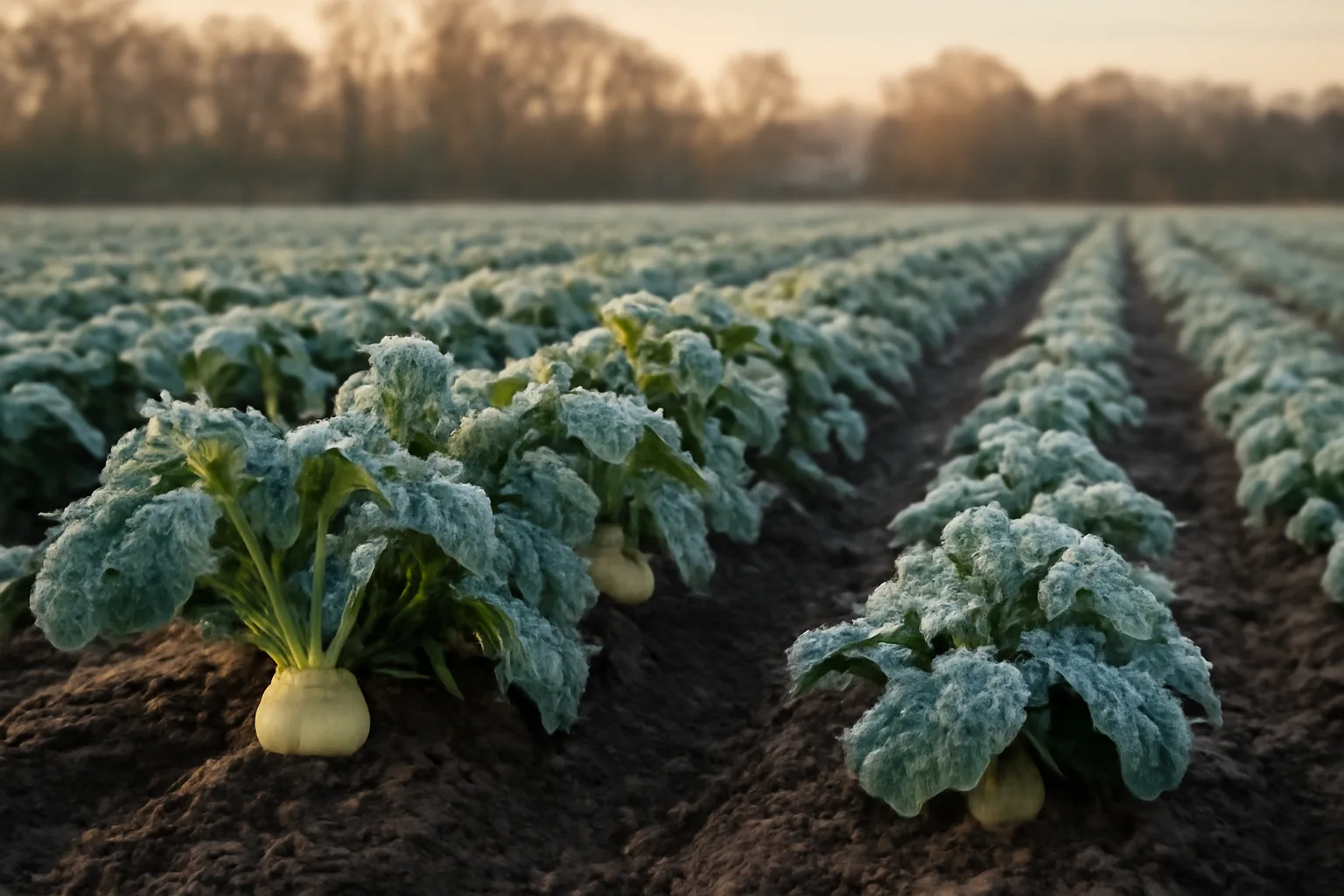
Deer do eat turnips, but they usually eat the leaves first and often skip the plot entirely until after a hard frost converts the bulb's starches to sugar. That's the single most important thing to understand about turnip plots: they're built for December, not October. Before a frost, turnip foliage is edible but not especially sweet, and deer in areas with other options (acorns, ag fields, soybeans) will often walk right past a turnip plot in early fall. After several nights in the low 20s°F or a hard freeze, the plant converts starch to sugar as a cold-tolerance response, and that's when deer often switch to eating the bulbs themselves, sometimes digging them out of frozen ground. Wildlife extension programs and state agency deer management guides commonly describe this frost-triggered palatability shift in brassica forage crops as the reason brassica plots are recommended specifically as late-season, post-frost food sources [4]. If your hunting season closes before your first hard frost, a pure turnip plot may look great and get almost no deer traffic during your actual hunting window. That's a real planning failure, not bad luck, and it's avoidable by checking your season dates against your average frost date before you commit acreage to turnips alone.
Do deer eat sorghum?
Yes, deer eat grain sorghum, both the standing seed heads and the young foliage, though it's generally considered a lower preference food than corn, soybeans, or a good brassica mix. Sorghum is more often planted as a summer annual for cover and as a drought-tolerant grain option in dry regions than as a primary deer attractant crop. Sorghum's real value in a lot of food plot programs is as a nurse crop or screening cover (tall stalks that block wind and sightlines into a plot) rather than as the headline forage. Deer will browse young sorghum shoots and will eat mature grain heads, especially once other food sources thin out in fall, but if you're choosing one summer annual for straight deer attraction, soybeans or cowpeas generally out-draw sorghum in most published deer forage preference work.
Do deer eat clover, and do they actually prefer it?
Yes, deer eat clover readily, and it's one of the most consistently preferred food plot forages across seasons. Clover is a perennial or biennial legume that regrows after grazing, which is exactly why it's a food plot staple rather than a one-and-done planting. Clover's protein content (often 20-25% crude protein in vegetative growth) makes it valuable during spring and summer when does are lactating and bucks are growing antlers, a nutritional need brassicas don't fill as well since turnip forage protein runs lower. A lot of experienced plotters run clover as the year-round nutrition base and add turnips or oats as a late-season hunting plot layered in on top, rather than picking one or the other. For species selection across a whole property, deer food plot seed and food plot seed both cover how clover, brassicas, and grains pair together across a planting calendar.
What are deer's favorite foods, and where do turnips rank?
Deer preference studies and state agency forage guides consistently rank acorns, soybeans, and clover among the most preferred whitetail foods, with brassicas like turnips ranking as a strong but seasonal, frost-dependent preference rather than a year-round favorite. Acorns (especially white oak acorns, which are lower in tannins than red oak acorns) are frequently cited by state wildlife agencies as one of the highest-value natural fall foods because of their fat and carbohydrate content [5]. Among planted crops, soybeans and clover tend to top most food plot preference lists during the growing season, while corn and standing grain hold appeal in winter for pure caloric density. Turnips and other brassicas are a legitimate favorite, but a conditional one: low preference before frost, high preference after. That's not a weakness if you plan around it. It's actually a strength for hunters targeting the late muzzleloader or late-season rifle/bow windows, since a frosted turnip plot can pull deer in hard exactly when acorns and ag crops are getting picked clean.
Do deer like honey, and does it matter for food plots?
There's no real evidence deer seek out honey in the wild, and it has no established role in food plot planting since honey isn't a forage crop, it's a bee product, not something you plant or spread on a field. This question sometimes comes up because of scent-based deer attractants sold in hunting stores that use sweet, sugary smells (including honey-based scents) to draw deer to a mock scrape or feeder site. Those products are attractant scents, not food plot inputs, and their effectiveness is debated; there's no peer-reviewed wildlife research establishing that honey or honey-scent products reliably increase deer visitation compared to a well-timed food plot. If you're trying to pull deer into range, a frosted turnip plot or a soybean field has a lot more research and on-the-ground track record behind it than any bottled scent product.
What equipment do you actually need to plant turnips?
You can plant a turnip plot with genuinely basic equipment: something to work the seedbed, a broadcast spreader, and something to firm the soil after seeding. You don't need a no-till drill for turnips specifically, though one doesn't hurt if you already own one for other crops. Minimum viable setup: an ATV or small tractor with a disk or tiller to prep ground, a handheld or ATV-mounted broadcast spreader (a $40-$150 spreader works fine for a food-plot-sized field), and a drag harrow, chain-link section, or cultipacker to press seed into firm contact with soil. Because turnip seed is so small and shallow-planted, that final firming step matters more than the tillage equipment you use to prep the ground. If you're comparing gear setups or deciding between drilling and broadcasting for your specific field conditions, domain food plot seed and deer for food go deeper on equipment tradeoffs by plot size and budget.
Frequently asked questions
How long do turnips take to grow for a deer plot?
Turnips need roughly 60 to 90 days from planting to bulb maturity, which is why extension guidance times planting 60-90 days before the local first killing frost. Foliage grows fast (within a few weeks) but bulb sizing and the frost-triggered sugar conversion that deer respond to takes the full season.
How deep should you plant turnip seed for a food plot?
Plant turnip seed no deeper than 1/4 to 1/2 inch. Turnip seed is very small, and seed buried deeper than that often fails to emerge. Broadcast the seed onto a fine, firm seedbed and press it in with a cultipacker or drag harrow rather than disking it in.
What's the best seeding rate for turnips in a deer plot?
Plant straight turnips at 4 to 6 lbs per acre. If turnips are part of a blended brassica mix with rape, radish, or clover, follow the bag's total rate instead, since that number already accounts for the mix, not turnips alone.
Do turnips need lime or fertilizer?
Most turnip plots need a soil pH of 6.0-6.5 and benefit from 300-400 lbs per acre of a balanced fertilizer like 19-19-19 at planting, but your own soil test is the real authority on your field's actual lime and fertilizer needs since soil chemistry varies a lot by history and location.
Why aren't deer eating my turnip plot in October?
Turnip foliage isn't very palatable to deer until after a hard frost converts the plant's starches to sugar, a common trait in brassica forage. If your hunting season runs mostly before your area's first hard freeze, expect low traffic on a pure turnip plot until temperatures drop into the low 20s°F or below for several nights.
Can you plant turnips with other food plot seeds?
Yes, turnips are commonly blended with oats, rape, radish, or cereal grains. Oats give early-season attraction and fast germination while the turnip bulbs bulk up underground, then the turnips take over as the late-season draw once frost sweetens them.
When should you plant turnips for deer specifically?
Plant turnips 60 to 90 days before your area's average first killing frost date. That's roughly mid-July in the northern tier, August in the mid-Atlantic and Midwest, and September into early October in the Deep South. Check your county extension's frost date rather than using a fixed calendar date.
Is it legal to hunt over a turnip food plot?
A planted, standing crop is legal to hunt over in nearly every U.S. state, since it's treated as normal agriculture rather than baiting. Rules diverge on pulled or piled bulbs and supplemental feed, so check your state wildlife agency's specific baiting and feeding regulations before assuming a practice is legal.
Do deer prefer clover or turnips?
It depends on the season. Clover is higher in protein and gets grazed steadily through spring and summer, while turnips get largely ignored until frost sweetens the bulbs, after which deer often prefer them heavily for the late season. Many plotters run both rather than choosing one.
What's the difference between a food plot and just feeding deer?
A food plot is a planted, growing crop, generally treated as agriculture under state law. Feeding usually means piling up grain, minerals, or produce rather than planting it, which many states regulate separately as baiting. Check your state wildlife agency's rules, since the legal line varies significantly state to state.
Do deer eat sorghum in food plots?
Yes, deer browse young sorghum foliage and eat mature grain heads, but sorghum is generally a lower preference forage than soybeans, clover, or corn. It's more commonly planted for drought tolerance and as screening cover than as a primary attraction crop.
When is the best time to plant oats for deer versus turnips?
Oats and turnips are planted in roughly the same window, 45-90 days before first frost depending on zone, with oats on the shorter end since they germinate and grow faster. Many hunters plant them together so oats provide early attraction while turnip bulbs mature for late season.
Sources
- Association of Fish & Wildlife Agencies / example state agency baiting rule reference: State wildlife agencies regulate baiting and feeding separately from planted food plots, and rules vary by state
- University of Tennessee Extension, Establishing Wildlife Food Plots: Brassicas including turnips should be planted 60 to 90 days prior to the first killing frost
- Mississippi State University Extension, Establishing and Managing Wildlife Food Plots: Fertilizer recommendations for brassica food plots including nitrogen topdressing guidance
- North Carolina Wildlife Resources Commission, Food Plots for Wildlife: Brassica forage palatability increases after frost due to starch-to-sugar conversion, making them late-season food sources
- Mississippi State University Extension, White Oak Acorns and Deer: Acorns, particularly white oak acorns, are among the highest-value natural fall foods for deer due to fat and carbohydrate content